
Nothing derails a felting project faster than wool that won’t lock fibers, sheds constantly, or turns out to be a synthetic blend disguised as natural fiber. The difference between a crisp, professional finish and a frustrating, fuzzy mess often comes down to the specific micron count, staple length, and preparation of the roving or batting you choose. Getting this decision right saves hours of poking and reworking.
I’m Min — the co-founder and writer behind Gadgets Feed. I’ve spent countless hours analyzing the technical specifications, customer feedback, and real-world performance data of natural wool fibers to separate the top-tier felting materials from the cheap filler that wastes your time.
Whether you sculpt detailed animal figures, wet-felt seamless hats, or spin chunky yarn, choosing the right supply defines your final result. This guide breaks down seven proven options to help you confidently pick the best 100% wool for felting for your next project.
How To Choose The Best 100% Wool For Felting
Buying felting wool is not like grabbing any yarn off a shelf. You need to match the fiber’s physical properties to your technique. A Merino roving with a 23-micron fiber feels silky but felts slower, while a Corriedale with a 28-micron staple locks faster and holds shape better for core work. Understanding three variables — breed type, preparation method, and staple length — filters out disappointing purchases before you unbox.
Corriedale versus Merino: Speed of Felting
Corriedale wool has a slightly coarser fiber diameter and a natural crimp that grabs neighboring strands quickly during needle agitation. This makes it the go-to for building armatures, sculpting large animals, and wet felting hats or slippers where you want the fibers to fuse in fewer passes. Merino wool, with its finer micron count in the 23-26 range, produces a smoother surface finish and is preferred for detailed surface work, doll faces, and projects that contact the skin — but it requires more needling to achieve the same density.
Carded Roving Versus Combed Top
Carded roving has fibers running in multiple directions because the carding machine interlaces them. This multidirectional structure accelerates felting — the barbs on your felting needle catch fibers from all angles, locking the mass into a solid form quickly. Combed top, in contrast, has all fibers aligned parallel. It drafts smoothly for spinning but felts noticeably slower because the needles catch mostly in one direction. For pure felting projects, carded roving is almost always the better choice.
Staple Length and Its Effect on Durability
Staple length refers to the average length of individual wool fibers. A staple of three to five inches creates a strong mechanical bond because each fiber has enough length to weave through the mass multiple times. Very short staples — under an inch — often shed fibers during felting and produce surfaces that pill later. Look for roving labeled with staple length between three and five inches if you want your sculptures or wearable items to hold their shape over time.
Quick Comparison
On smaller screens, swipe sideways to see the full table.
| Model | Category | Best For | Key Spec | Amazon |
|---|---|---|---|---|
| Woolbuddy 24 Corriedale Colors | Premium | Color-rich needle felting | 100% Corriedale, carded roving | Amazon |
| Revolution Fibers Merino | Premium | Soft merino for spinning & skin-contact wear | 23-26 micron, 1 lb | Amazon |
| T.F GHG Natural Roving | Premium | Core filler & stuffing | 25-27 micron, vacuum-sealed | Amazon |
| Woolbuddy 24 Merino Colors | Mid-Range | Color variety for beginners & mixed media | 100% Merino, 24 colors | Amazon |
| Kondoos Corriedale 1 lb | Mid-Range | Bulk arm knitting & wet felting | 1 lb, ecru, combed & cleaned | Amazon |
| Kondoos Cheviot Roving | Mid-Range | Resilient 3D animal structures | 27-29 micron Cheviot, 1 lb | Amazon |
| Kondoos Corriedale 8 oz | Budget | Core wool & small projects | 8 oz, carded roving, ecru | Amazon |
In‑Depth Reviews
1. Woolbuddy Wool Roving Kit – 24 Assorted Corriedale Colors
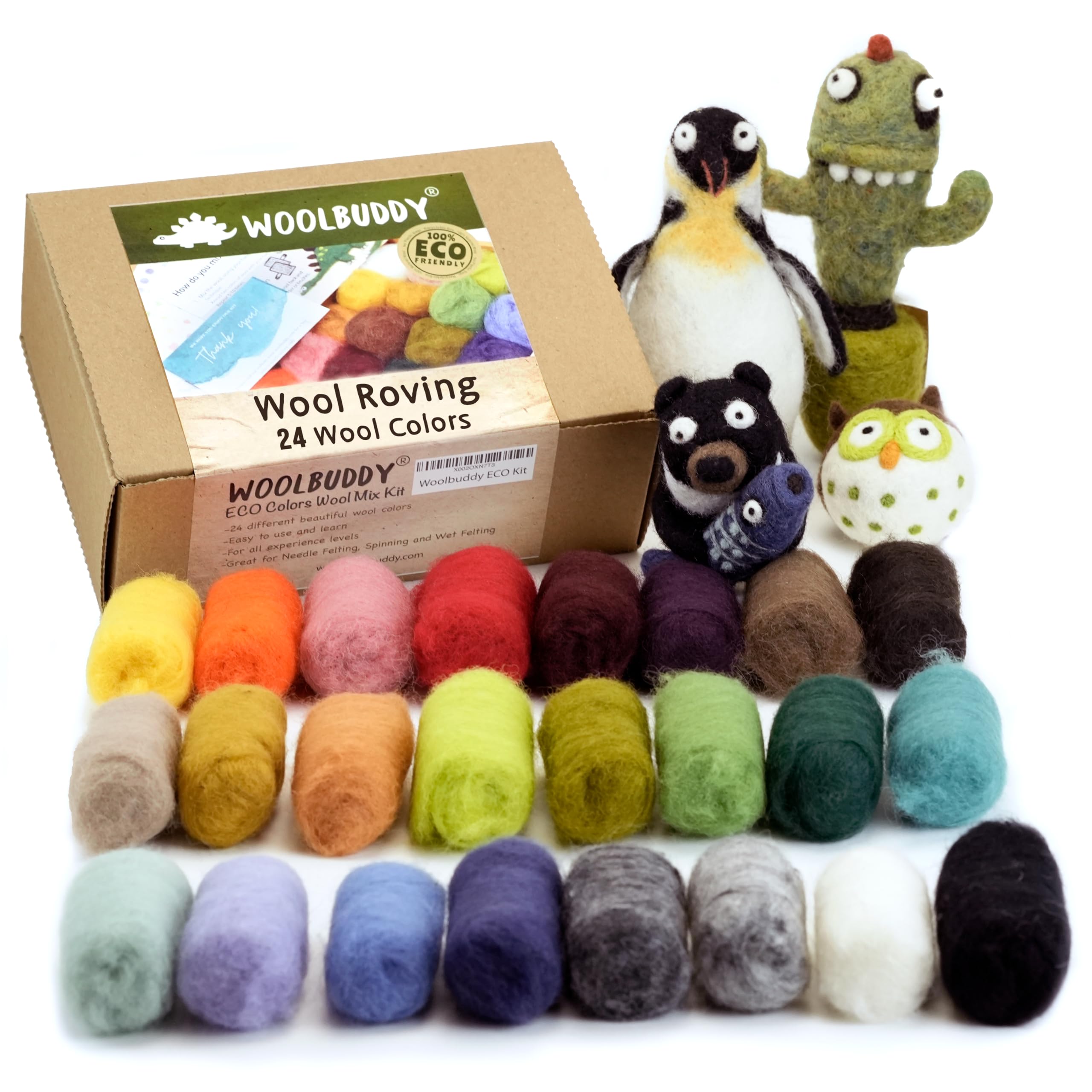
Woolbuddy’s 24-color Corriedale kit delivers the sweet spot between felting speed and surface finish. Corriedale’s natural crimp and 28-micron average diameter make this roving lock onto itself faster than Merino, which is why experienced sculptors reach for it when building 3D animals or layered paintings. Each color comes as a neatly separated pile inside a box, so you can grab the shade you need without cross-contamination.
The carded preparation means the fibers are already oriented in random directions — this cuts the needling time to reach firm density by roughly a third compared to combed top. Colors blend evenly when you layer two shades, and the wool holds fine detail like eye sockets and paw contours without collapsing. A color chart and felting tip sheet are included, which helps if you are transitioning from cheaper starter kits.
Some users note tiny vegetable bits in the roving, which is normal for natural Corriedale and picks out easily with your needle tip. The eco-friendly packaging and ethically sourced wool match what mindful crafters look for in a premium refill set. If you want one kit that covers sculpting, wet felting, and ornament making without switching brands, this is the most versatile single purchase.
Why it’s great
- Carded Corriedale felts quickly with strong fiber lock
- 24 rich, blendable colors in separated piles
- Includes color chart and felting guide for easy start
Good to know
- Small vegetable bits can appear; easily removed
- 10 grams per color is moderate for large projects
2. Revolution Fibers Merino Wool Roving 1 lb
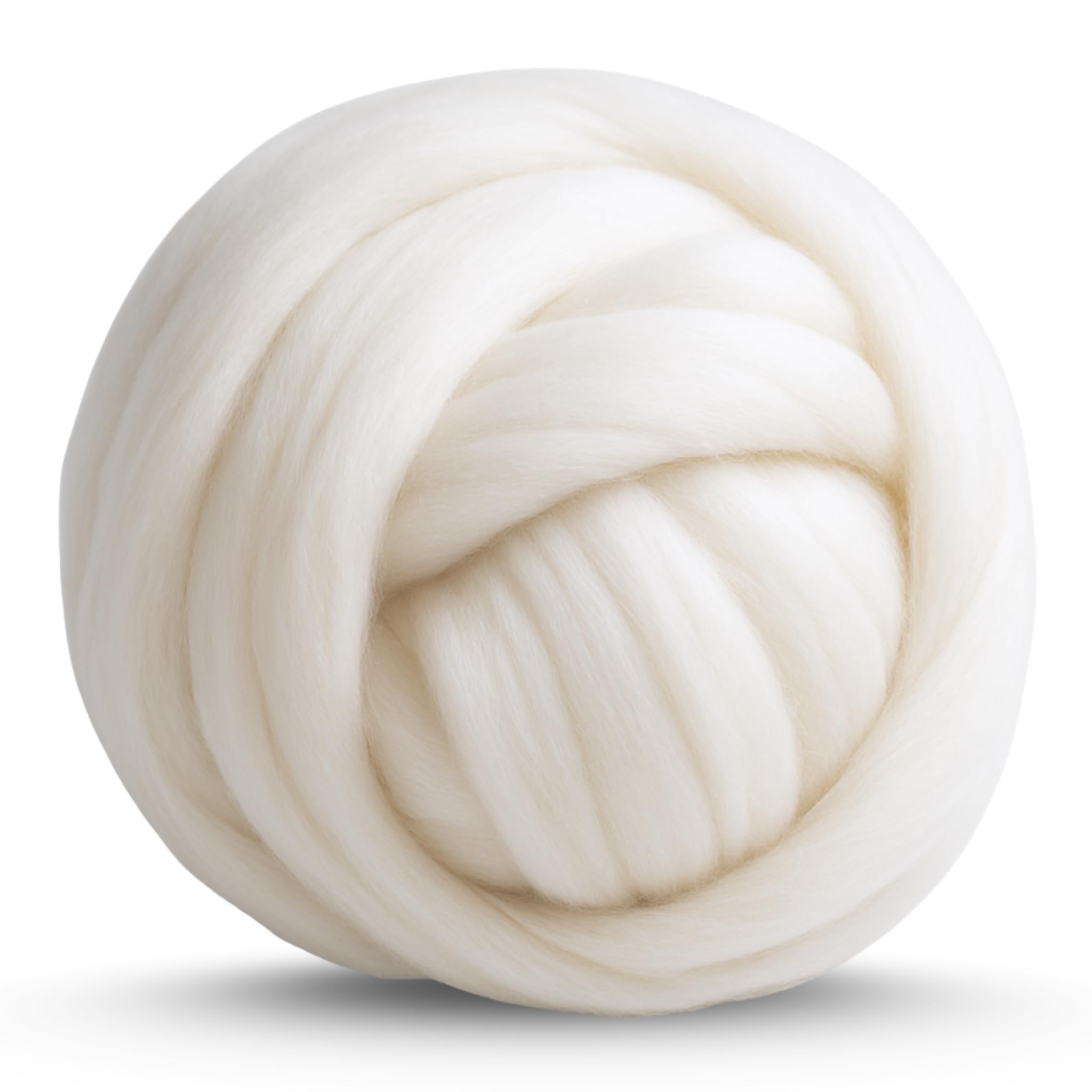
Revolution Fibers packs a full pound of 100% Merino wool with a micron average between 23 and 26, placing it squarely in the fine-wool category. This softness makes it the right choice when your finished piece will touch bare skin — think scarves, hats, or felted soap wrappers. The staple length runs three to four inches, which drafts smoothly on a spinning wheel or drop spindle without snapping mid-pull.
For needle felting, expect a slower densification compared to Corriedale because the finer fibers lack the aggressive crimp of coarser breeds. However, the trade-off is a surface finish that looks almost fabric-like — ideal for doll faces or animal noses where you want smooth transitions. The roving is washed and carded, and most customers report zero vegetable matter or debris straight out of the bag.
One batch inconsistency shows up in customer reports: some packages weigh 14 ounces instead of the advertised 16 ounces, so check the weight on arrival if you are buying for bulk projects. The wool takes dye beautifully if you want to hand-paint gradients, and the undyed off-white serves as a blank canvas for custom coloring. For spinners and fine-fiber enthusiasts, this is the most satisfying single-pound lot on the list.
Why it’s great
- Fine 23-26 micron merino is luxuriously soft against skin
- Clean, carded, and nearly free of debris
- Excellent for spinning smooth, even yarn
Good to know
- Some packages arrived light (14 oz vs 16 oz)
- Felts slower than Corriedale for 3D sculpting
3. T.F GHG 1LB Natural Wool Roving

T.F GHG uses 58S grade Merino wool with a 25-27 micron diameter, placing it slightly coarser than typical fine Merino but still soft enough for pillow stuffing and dryer balls. The fiber diameter at this range offers a medium-soft texture that felts more efficiently than superfine Merino, making it a smart compromise between speed and feel. Each bag comes vacuum-sealed, which saves storage space and keeps the roving dust-free until you open it.
The primary use case here is core building: wrapping this wool around a wire armature and covering it with dyed Corriedale or Merino top coat. The natural ecru color disappears under surface layers, and the 25-27 micron fibers grab the outer layers firmly without adding bulk. Reviewers who make dolls and stuffed animals consistently report that this filler holds shape better than polyester stuffing and produces a more realistic weight.
A small number of customers noticed a chemical smell upon opening, likely from the vacuum-sealed packaging, which dissipates after a few hours of airing out. The roving is clean of hay and seeds, which is a common complaint with budget core wools. If you go through large volumes of core wool for production-scale felting, this one-pound bag offers one of the best cost-per-ounce ratios without sacrificing 100% wool purity.
Why it’s great
- Medium softness felts faster than superfine merino
- Vacuum-sealed packaging keeps wool dust-free
- Excellent core filler that holds shape under top layers
Good to know
- Mild chemical smell reported by some on opening
- Not bright white; natural ecru color
4. Woolbuddy Felting Wool Kit – 24 Vibrant Merino Colors

Woolbuddy’s Merino set brings 24 saturated colors to the table, each bundle separate so you never have to pick individual fibers out of a mixed lot. The Merino fiber is noticeably softer than the Corriedale version from the same brand, which makes it better suited for projects where texture matters — felted jewelry, garment embellishments, and mixed-media art. The carded preparation is consistent across all colors, so you get the same felting behavior from black to white.
Color accuracy is where this kit shines. The reds are deep, the blues are true, and the neutral tones blend without turning muddy. Customers who upgrade from the cheap acrylic-packed starter kits report an immediate improvement in how easily the fibers mat together. The included instructions cover mixing custom colors, which is rare at this price tier and helps beginners understand subtractive color blending with natural fibers.
Each color bundle is relatively small, so if you plan to make large monochrome projects, you will burn through individual colors quickly. The wool is clean with minimal vegetable matter — a few dry grass bits show up in maybe one out of every five bundles, but nothing that ruins the work. For variety seekers and mixed-media artists who want to keep multiple shades on hand without buying ten separate bags, this is the most efficient color library available.
Why it’s great
- 24 vibrant, true-to-hue colors in separate bundles
- Soft Merino texture ideal for surface finish
- Instructions included for custom color mixing
Good to know
- Individual color quantities are small for large projects
- Occasional tiny debris requires picking out
5. Kondoos Corriedale 1 lb Wool Bulk Roving
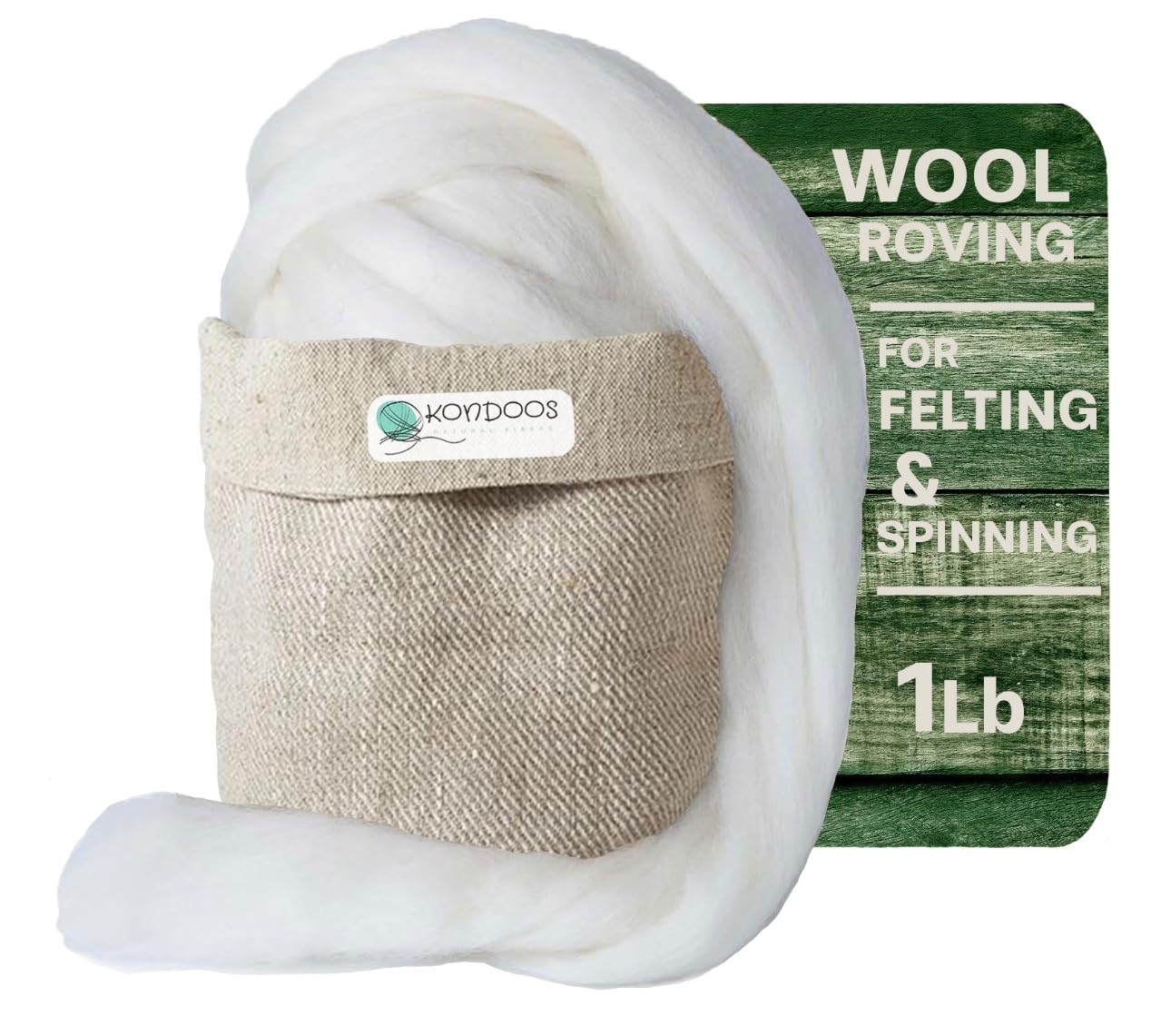
Kondoos delivers a full pound of Corriedale roving in an eco-friendly zip bag, making this the go-to option when you need volume for arm knitting, wet felting large panels, or making a dozen dryer balls at once. The Corriedale breed has a staple length of roughly four to five inches and a crimp structure that grabs aggressively during felting, so you can build thick shapes fast without excessive needling.
This wool is combed and cleaned before packaging, and most customers report zero vegetable matter and no lanolin smell — just a faint natural wool scent that fades quickly. The ecru color is a warm off-white that works as a base for dyeing, or you can use it as-is for core building under dyed surface wool. Spinners appreciate the consistent staple length for drafting, and the roving splits easily into smaller sections for blending on a drum carder.
A few reviews note that the roving runs slightly brown in hot water during the first wash, which is a sign of residual natural oils rather than dye — the product is undyed. If you plan to wet-felt garments, rinsing the roving in hot water before use eliminates any color transfer risk. For the price per pound, this is the most economical entry point into bulk Corriedale without cutting quality corners.
Why it’s great
- Full pound of Corriedale for large-scale projects
- Long staple length (4-5 inches) drafts and felts efficiently
- Eco-friendly zip bag for convenient storage
Good to know
- Runs slight brown in first hot water rinse
- Undyed ecru only — no color options
6. Kondoos 1 lb Wool Roving Cheviot Blend

Kondoos offers a Cheviot wool roving that stands apart from the Corriedale and Merino options on this list. Cheviot has a helical crimp structure — a spring-like curl — that gives finished pieces remarkable resilience and bounce. The 27-29 micron range makes it slightly coarser than Merino but firmer than Corriedale, which is why it holds its shape so well for 3D animal structures that need to maintain posture without collapsing.
The staple length runs three to five inches, and the roving is carded, not combed, so you get multidirectional fibers that felt quickly. Spinners report it drafts smoothly on a lace spindle without snapping, and the natural off-white color takes dye evenly if you want to color it later. Customers making large dolls and stuffed animals prefer this Cheviot roving for its ability to maintain a defined edge during needle sculpting.
Some reviews mention occasional dark hairs and debris mixed in, which is typical for Cheviot wool and reflects the breed’s coarser guard hairs rather than contamination. A few users detected a slight chemical odor on opening, though it dissipates within an hour. The packaging is simple — a plastic bag rather than a zipper closure — so you may want to transfer the wool to your own storage container. For sculptors who prioritize structural integrity over softness, this Cheviot roving is a hidden gem.
Why it’s great
- Helical crimp provides superior bounce and shape memory
- Carded preparation felts quickly for 3D structures
- Long staple length (3-5 inches) drafts reliably
Good to know
- Occasional dark guard hairs typical of Cheviot breed
- Simple packaging without resealable closure
7. Kondoos Natural Wool Roving 8 oz

Kondoos’ 8-ounce Corriedale roving is the entry-level option that proves you do not have to overspend to get 100% wool suitable for felting. The Corriedale breed felts quickly — a feature that benefits beginners who may not have the patience or needle technique to work with fine Merino. The carded preparation means the fibers are already pre-layered, so you get visible progress within minutes of starting a new project.
Customers praise this wool for wet felting soap, where the Corriedale fibers bond tightly to the soap surface without slipping. The ecru color is a warm natural sheep tone — not bright white — so if you need a pristine base for light-colored surface wool, you may want to use this as an armature layer rather than a top coat. The 8-ounce size is ideal for small sculptures, one or two dryer balls, or testing the Corriedale breed before committing to a larger bulk purchase.
A few users found minimal hay or seed bits in the roving, which is less common in Corriedale than in some coarser wools but can still happen. The packaging is transparent wrap that protects the wool during shipping but is not resealable, so plan to store it in a bag or bin once opened. For the price, this is the most accessible way to start working with real Corriedale wool and decide if needle felting will become a regular hobby.
Why it’s great
- Low-cost entry to 100% Corriedale felting wool
- Felts quickly, ideal for beginners and wet felting
- Versatile 8-ounce size suits small projects and testing
Good to know
- Occasional vegetable matter requires picking out
- Not a bright white; natural ecru sheep color
FAQ
Can I use Merino wool for wet felting or is it only for needle felting?
Why does some felting wool smell like chemicals and is it safe to use?
Final Thoughts: The Verdict
For most users, the best 100% wool for felting winner is the Woolbuddy 24 Corriedale Colors Kit because it combines fast-felting carded Corriedale with a comprehensive color range that suits both 3D sculpting and wet felting without needing a separate purchase. If you need a soft, fine Merino for spinning or skin-contact projects, grab the Revolution Fibers Merino 1 lb. And for bulk core filler that disappears under surface wool without adding cost, nothing beats the T.F GHG Natural Roving.