
Our readers keep the lights on and my morning glass full of iced black tea. As an Amazon Associate, I earn from qualifying purchases.
Specs are compiled from manufacturer listings and verified buyer reviews and can change over time — please confirm the key details on the product page before buying.
You want a ring that makes her catch her breath without wrecking your savings. That is exactly what the modern budget band gets you, because lab-grown diamonds look like mined ones and cost a fraction as much. This guide sorts out which rings deliver, which certificates mean something, and which bands still look right in ten years.
I’m Min — the founder and writer behind Gadgets Feed. This guide is built by comparing the manufacturers’ published specifications and the patterns across verified customer reviews, so you get each pick’s real strengths and trade-offs instead of marketing spin.
Every pick here is judged on both the stone and the band. Here is how to land the right $1000 engagement ring.
Our Picks at a Glance
How To Choose The Best $1000 Engagement Ring
These four specs decide whether a $1000 ring looks right in ten years.
Certificate first, sparkle second
An IGI certificate is an independent lab report that grades your specific stone — cut, color, clarity, and carat — and gives it a unique number you can look up online. Without one, you are taking a seller’s word. With one, you know what you are paying for. Several rings on this list ship with a report, and two of them are also checked by a jeweler after delivery, which is the pattern to copy: buy, then verify.
Band width decides how the ring ages
A thin band looks delicate and uses less metal, but it also leaves less material to grip the setting. Band width is a real spec, measured in millimeters (mm), and it is among the most common complaints buyers raise after purchase in this price band. If she works with her hands or wears the ring every day, a wider band holds up better.
Metal type controls the long game
Solid 14K gold is the same gold all the way through, so it can be polished back to new. Plated gold is a thin layer over a cheaper metal, and that layer can wear through. When you read “gold plated” or “gold over sterling silver,” you are choosing a lighter wallet today for a shorter finish life.
Adjustable ring sizes are worth checking
Most sellers here run sizes 5 through 9, and buying the wrong size is the number-one reason rings get returned. Measure a ring she already wears, or measure her finger with a strip of paper marked in millimeters. A loose band is fixable; a tight one is a daily annoyance.
Quick Comparison
| Model | Best For | Stone & Carat Range | Metal | Setting Style | Amazon |
|---|---|---|---|---|---|
| 1-6 Carat LAB GROWN Round Cut Prong Set Solitaire★ Best Overall | Best overall value | Lab diamond, 1–6 ct, E–F color, VS1–VS2 | 14K gold | Prong-set solitaire | Amazon |
| SAVEARTH DIAMONDS Double Halo Bridal SetBudget Champion | Budget two-ring set | 1.25 CT | Sterling silver with white gold plating | Double halo bridal set | Amazon |
| IGI Certified LAB Grown Diamond 14K White Gold SolitaireBiggest Certified Stone | Biggest certified stone | Lab diamond, D–E–F color, VVS1–VS1 | 14K white gold | Round brilliant solitaire | Amazon |
| Solid 14K Gold 1.5–3CT Moissanite Ring | Daily-wear durability | D color moissanite, 1–3 ct | Solid 14K white or yellow gold | Prong-set solitaire | Amazon |
| 1/2 Carat Double Halo Diamond Ring in 10K Gold | Most reviewed halo | 1/2 carat, I2–I3 clarity | 10K gold (white, yellow, or rose) | Double halo | Amazon |
| 1-4 Carat Lab Grown Diamond 14K White Gold Ring | Certified and true to size | Lab diamond, 1–4 ct, E color, VS1 | 14K white gold | Four-prong solitaire | Amazon |
| Gem Stone King 1-5 Ct Lab Grown Diamond Solitaire | Highest-rated pick | Lab diamond, 1–5 ct | 14K yellow gold | Solitaire | Amazon |
| Halo IGI Certified LAB Grown Diamond 14K White Gold | Halo silhouette | Lab diamond, 0.5–2.5 Cttw | 14K white gold | Halo with side stones | Amazon |
| 1 to 6 Carat 14K White Gold Oval Engagement Ring | Oval-cut lovers | Lab diamond, 1–6 ct, E–F color, VS2–SI1 | 14K white gold | Pave side-stone prong set | Amazon |
| 1-5 Carat Round Cut Classic Solitaire Ring | Metal options | Lab diamond, 1–5 ct | 14K gold, 18K gold, 925 sterling silver, or platinum | Classic solitaire | Amazon |
| 1 to 10 Carat Lab Grown Diamond Engagement Ring | Custom builds | Lab diamond, 1–10 ct, D–E color, VVS2 | 14K gold, 18K gold, or platinum 950 | Customize-your-band prong set | Amazon |
In‑Depth Reviews
1. 1-6 Carat LAB GROWN Round Cut Prong Set Solitaire Diamond Engagement Ring
Our pick — over 4.5★ from 90+ verified ratings; the strongest balance of quality and price.
A lab-grown solitaire that tested real, sparkled over a mined stone, and came in ready to propose.
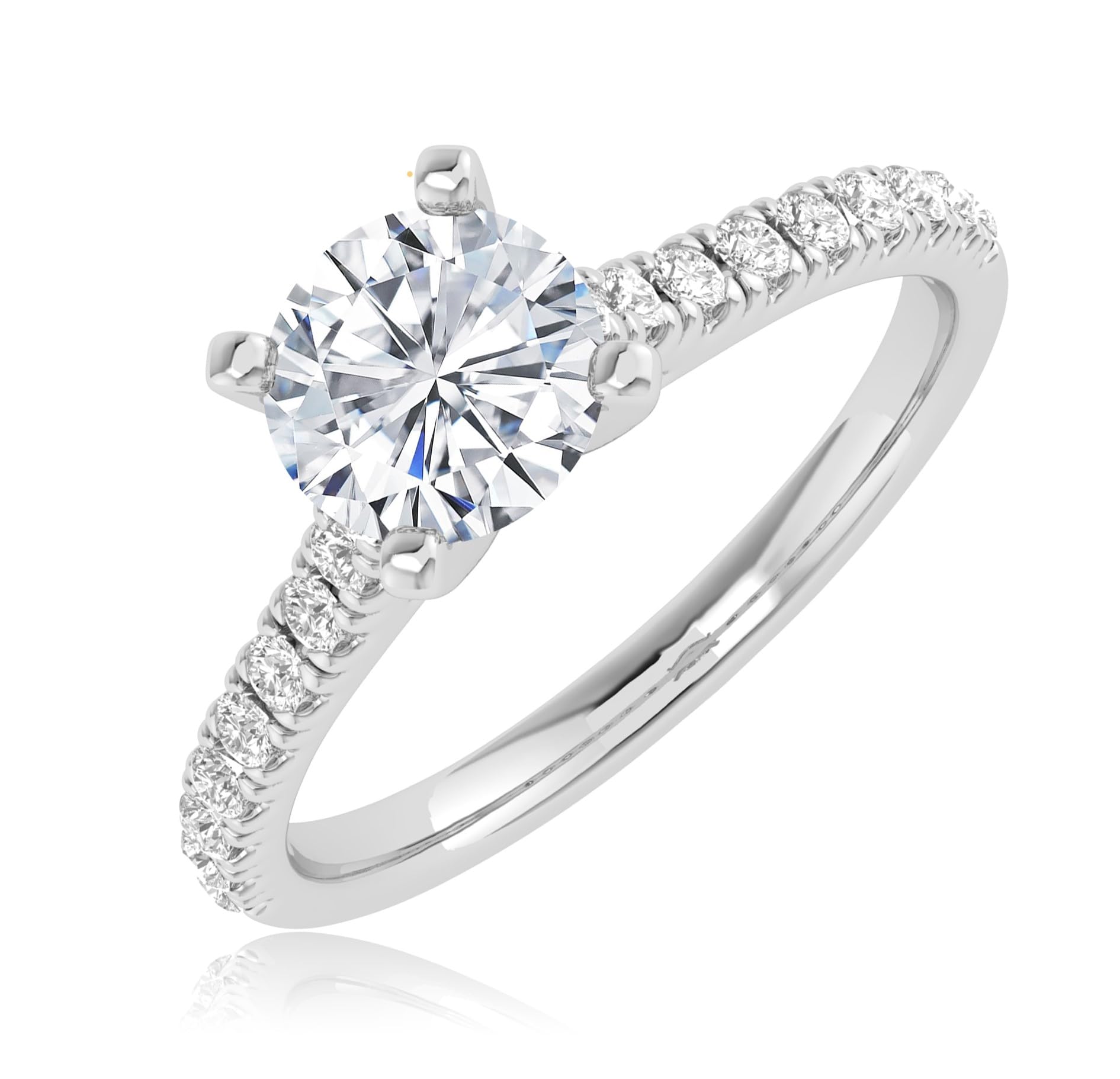
This is the safest all-around pick on the list. Houston Diamond District builds it around a lab-grown stone (a diamond grown in a lab, not mined) with E–F color and VS1–VS2 clarity — that means near-colorless and very clean to the eye, so it looks bright and clear in person. It comes in 1 to 6 carats, so you choose how much stone lands on her finger. It is the most-loved pick in this group at 4.6 stars across 99 ratings.
What wins people over is the look. The report from one buyer captures the reaction perfectly: the stone “sparkling like a rainbow,” verified as real, and the ring sized in many options. It also arrives fast, which matters more than you think when the proposal date is already on the calendar.
Weigh the trade-off honestly. A few buyers feel the band runs light for the stone, and one size-6 buyer found it a touch big, so measure before you commit. The setting is a simple prong solitaire — elegant, but it means the stone sits proud where it can catch on a sleeve or a doorframe. That is the deal with any prong set, not a flaw in this one.
What lands it on top
- Sparkle is the most-praised trait by a wide margin — 25 owners single out the appearance
- Certified lab-grown stone in E–F color and VS1–VS2 clarity
- Choose your carat between 1 and 6 for the same band style
Worth knowing before you buy
- Band thickness draws occasional notes — the stone outshines the metal
- Sizing can run slightly generous, so check her actual finger measurement
Pick this when: you want the safest all-around lab-grown solitaire and you are ready to order today.
Think twice when: you need a wide, heavy band for a rough-and-tumble daily wearer.
2. SAVEARTH DIAMONDS Double Halo Bridal Engagement Ring Set Women 1.25 CT
Two rings in one box, wrapped around a 1.25 CT stone — but keep it away from the pool.
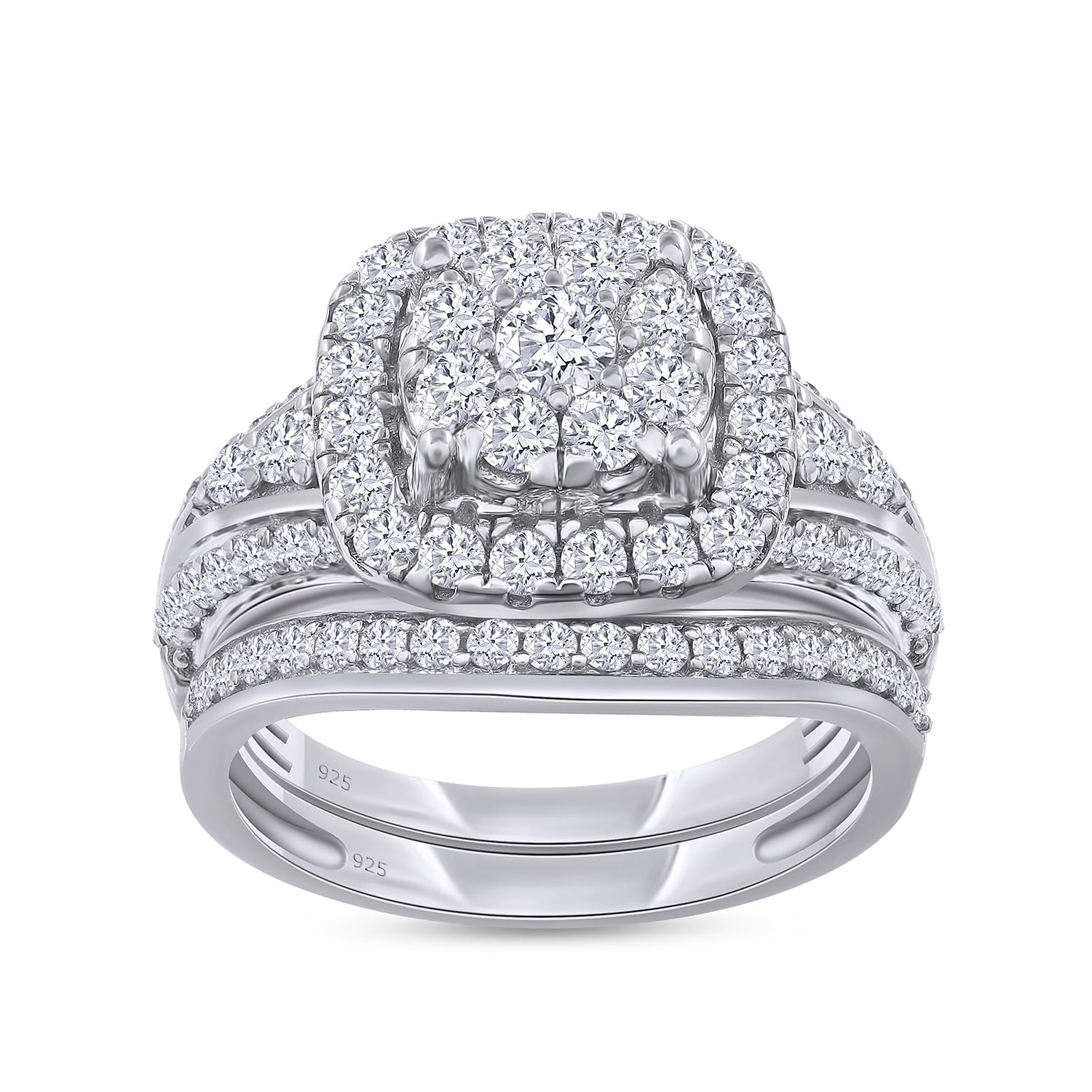
This set runs 1.25 CT (carats, the weight of the stone) against the 2.50ct certified solitaire further down — a straight 2.0x gap in stone weight, the widest spread on the list. That gap is the whole story of this price band. A double halo — a ring of small stones circling the center — makes the middle diamond look bigger than its carat, so you get more visual size for the weight. The bridal set also gives you both the engagement ring and the matching band in one purchase.
A size 6.5 lands exactly as it should, and the lab-created stones deliver what buyers describe as spectacular bling. The catch is the finish. Gold plating is a thin layer over a cheaper metal rather than solid gold, and the recurring complaint here is exactly that — plated gold fading and, in one buyer’s case, coming off entirely after swimming. One reviewer describes it plainly: “the gold plating completely came off the underside of the ring.”
If white gold over sterling silver suits you, that version sidesteps the fade complaint, and a protection plan is worth considering given the range of experiences. Know that this is not the pick for a pool or a hot tub, and check that the halo width matches the photos — one buyer felt the real ring read smaller than the listing image.
Why the set works
- Two rings — engagement plus matching band — in a single purchase
- Double halo makes the 1.25 CT center read larger than its weight
- Size 6.5 fit reported as spot-on
The honest trade-offs
- Plated gold is the most common gripe — it can discolor quickly with water exposure
- Halo can appear smaller in person than in the listing photos
Best for: the couple who wants a full bridal set on a tight entry-level budget and will treat the ring gently.
Not for: anyone who swims, works out, or washes up in the ring daily.
3. IGI Certified LAB Grown Diamond Engagement Rings in 14K White Gold
A near-flawless grade at a third of mined prices — with a band you need to handle with care.
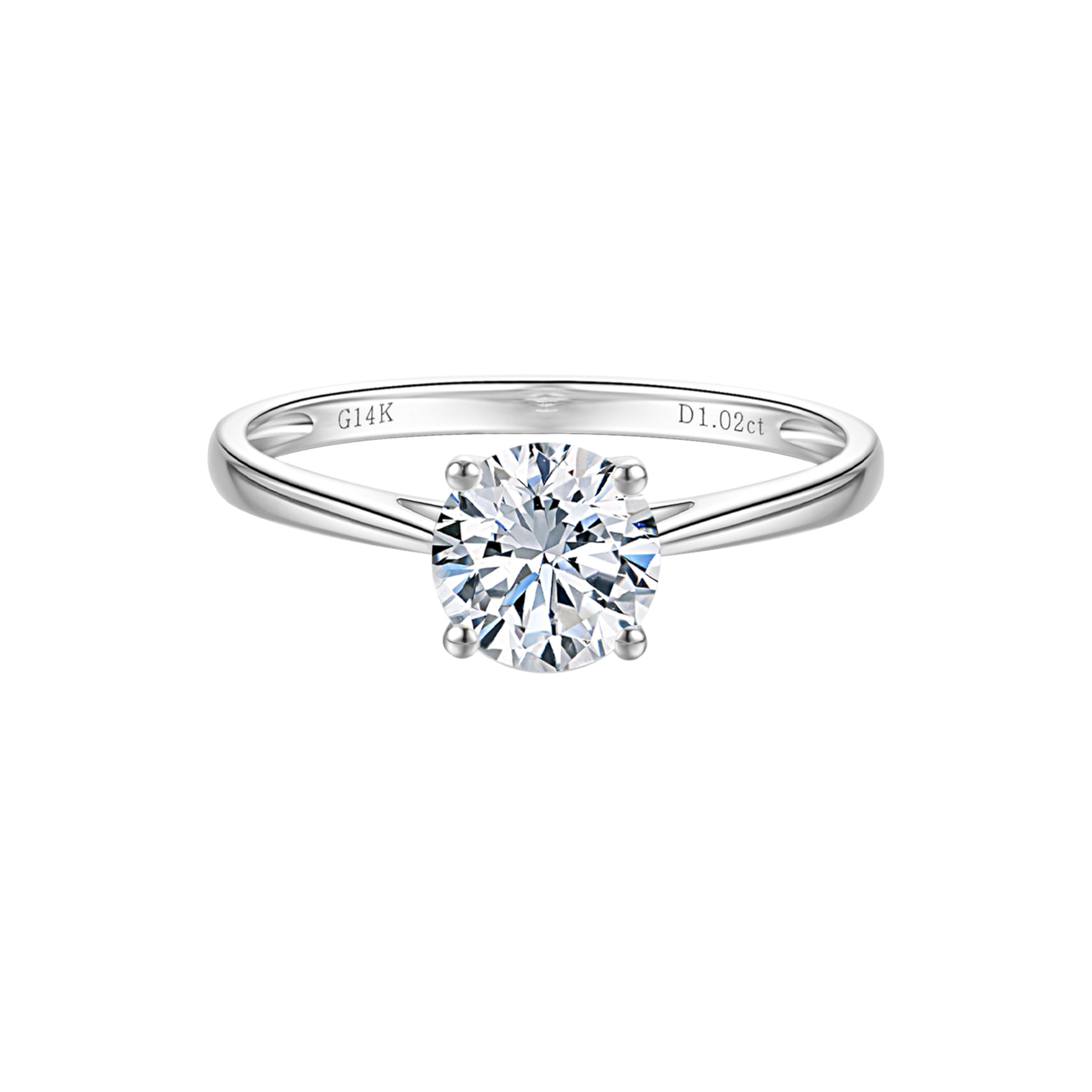
This is the cleanest stone on the list. The IGI certificate grades it D–E–F colorless — the top three color tiers, where a stone shows no visible yellow — and VVS1–VS1 clarity, meaning flaws so small a jeweler needs a loupe to find them. The IGI report is the piece that matters: it is an independent grading document with its own number, so you are buying a graded stone, not a promise.
Sparkle is the headline. Owners send these straight to a jeweler and come back with the same answer, and one points out the visual punchline — you genuinely cannot pick this out from a mined diamond across a table. Two buyers had their rings appraised after purchase. The practical angle that sells it is spelled out in a buyer’s own math: at roughly a third of what a mined diamond of the same size would cost.
Now the caveat that keeps showing up. The band is thin — thin enough that more than one buyer flags it as the letdown — and a 2ct owner notes the low-profile setting will not let a straight wedding band sit flush against it, so plan on a curved band if you want them to nest. Neither is a defect; both are things to design around before you buy.
Where it wins: the grading is top-tier — D–E–F colorless and VVS1–VS1 clarity, independently certified by IGI — and buyers who had it appraised came out ahead.
Where it asks patience: the band is slim, and the low setting will not sit flush with a standard straight wedding band. Budget for a curved one.
Choose it if: the certificate and near-flawless grades matter more to you than band heft — this is the most precisely graded pick in the group.
Reconsider if: you want a substantial band or plan to pair a thick straight wedding band flush against it.
4. Solid 14K White Gold/Yellow Gold 1.5-3CT Moissanite Ring
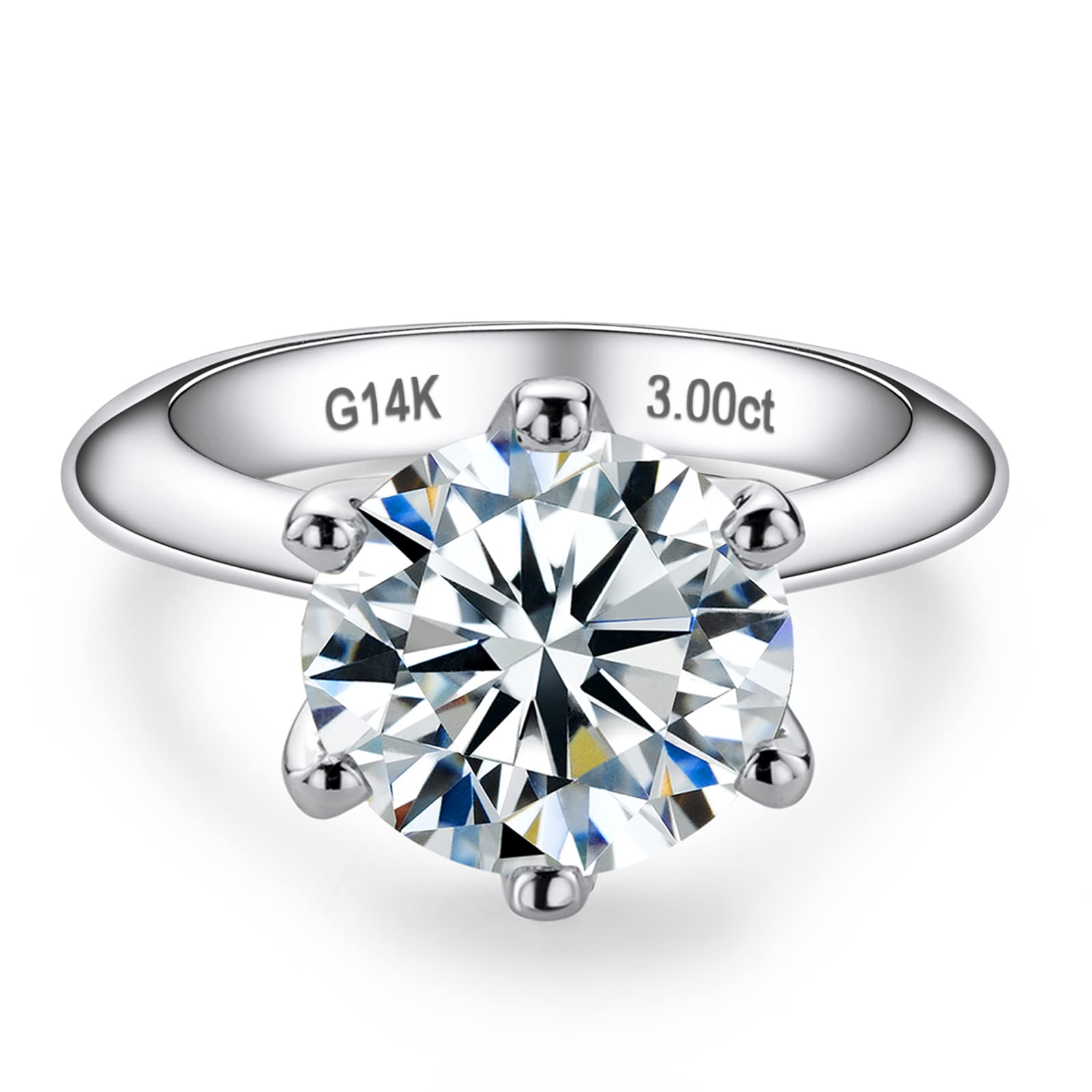
Real solid gold, a D-color moissanite, and a shine that convincingly plays the part of a diamond.
The metal is the point here. Solid 14K gold runs the same gold all the way through, so a scratch polishes out and the ring keeps its color for the long haul — unlike plated bands, where a thin gold layer wears away. The stone is D-color moissanite, the top color grade, cut as a 1.5 to 3 CT solitaire, and moissanite throws a livelier fire than most stones at this size.
Owners describe a stone that holds its own against real diamonds, with the cut showing the same arrows pattern you would look for in a diamond cut, and the quality drawing the most praise overall. Fit confusion is easy to avoid — the ring runs a bit loose, so size down if her finger sits between sizes.
Two small things worth knowing before you order. The maker includes a certificate, but at least one buyer received the ring without it, so ask the seller to confirm it ships. And the 14K stamp on the inside of the band is small enough that more than one person needed a magnifier to read it — the gold is solid, the marking is just faint.
The real selling point: solid 14K gold means the metal is 14K throughout, so it holds up to daily wear far better than a plated finish.
Small print to check: certificate delivery was hit-or-miss for at least one buyer, and the 14K hallmark inside the band is faint. Confirm the paperwork when you order.
The pick for: a ring that gets worn every single day and needs metal tough enough to take it.
Skip if: you are set on a diamond certificate rather than a moissanite stone — that is a different purchase.
5. 1/2 Carat Double Halo Diamond Ring in 10K Gold
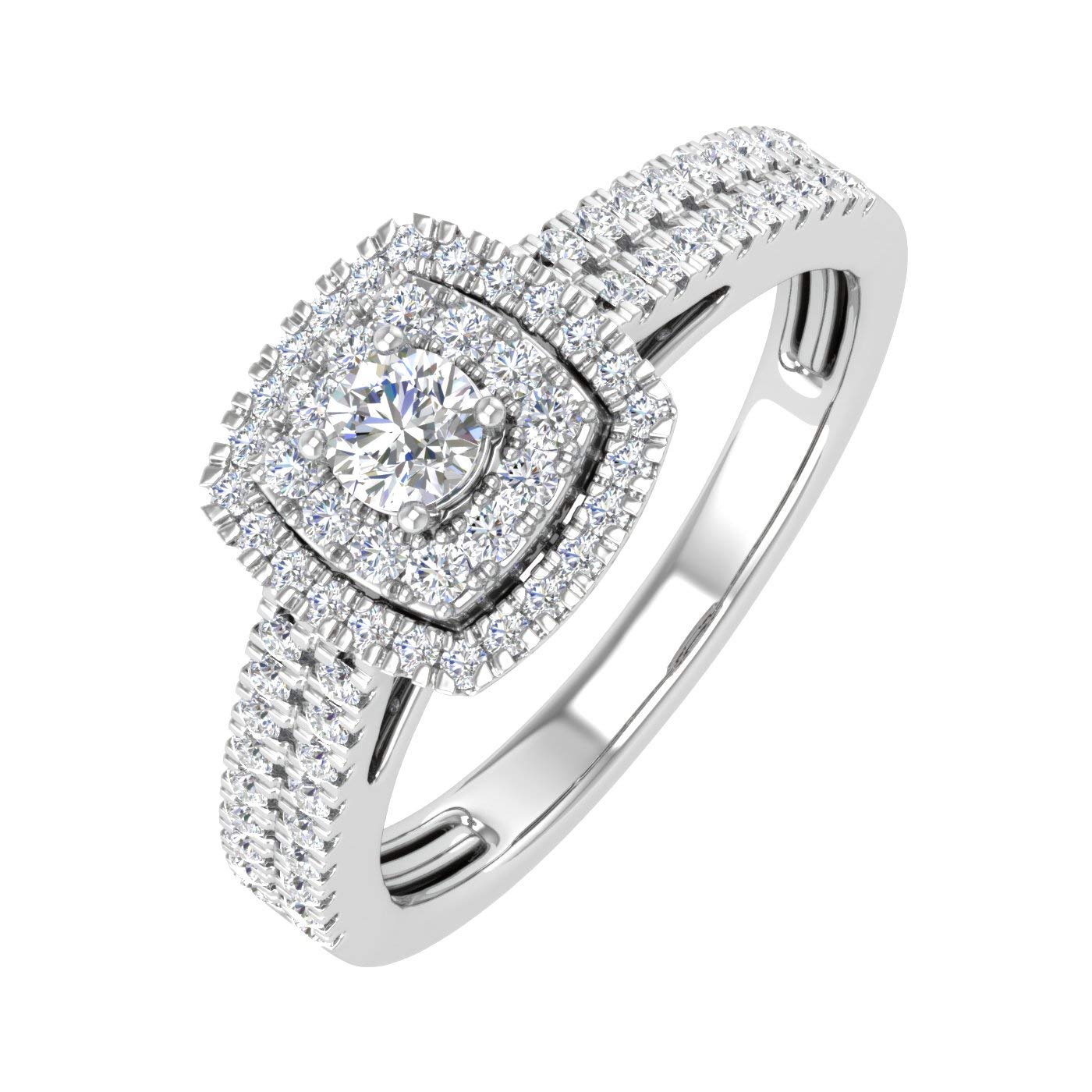
The seasoned halo — years on the shelf, real 10K gold, and a following that keeps coming back.
Six years of sales will settle a product’s reputation, and this one has the most feedback of anything in the group. It is a half-carat halo in real 10K gold — a solid gold alloy, not a plated shell — available in white, yellow, or rose gold. A halo is a ring of small diamonds around the center stone, and doubling it makes the center read larger than half a carat would on its own.
Quality is the trait buyers keep coming back to, and the shine gets its own share of praise. A jewelry report ships with the ring, and one buyer passes on the thing that counts most about a halo: it looks bigger on the hand than a half-carat has any right to. Sizing is true in most cases.
Be aware of two things. The setting is the one weak point — a handful of buyers have had a small stone fall out after a short time, so a quick monthly check of the halo prongs is a smart habit. And this is a petite center stone; if she has her heart set on a big sparkler, this is a halo’s illusion, not a carat count.
What buyers love
- Real solid 10K gold in white, yellow, or rose — not plated
- A jewelry report is included with the ring
- Wears larger than a half carat thanks to the double halo
Small things to watch
- Occasional reports of a small stone working loose — check the setting now and then
- Center stone is half a carat; the halo creates the size impression
Made for: a ring worn daily for years, where the gold itself is bought to last rather than the carat count.
Not the one if: a large center stone is the priority — half a carat is a modest stone.
6. 1-4 Carat Lab Grown Diamond 14K White Gold Engagement Ring for Women, IGI Certified Round Cut
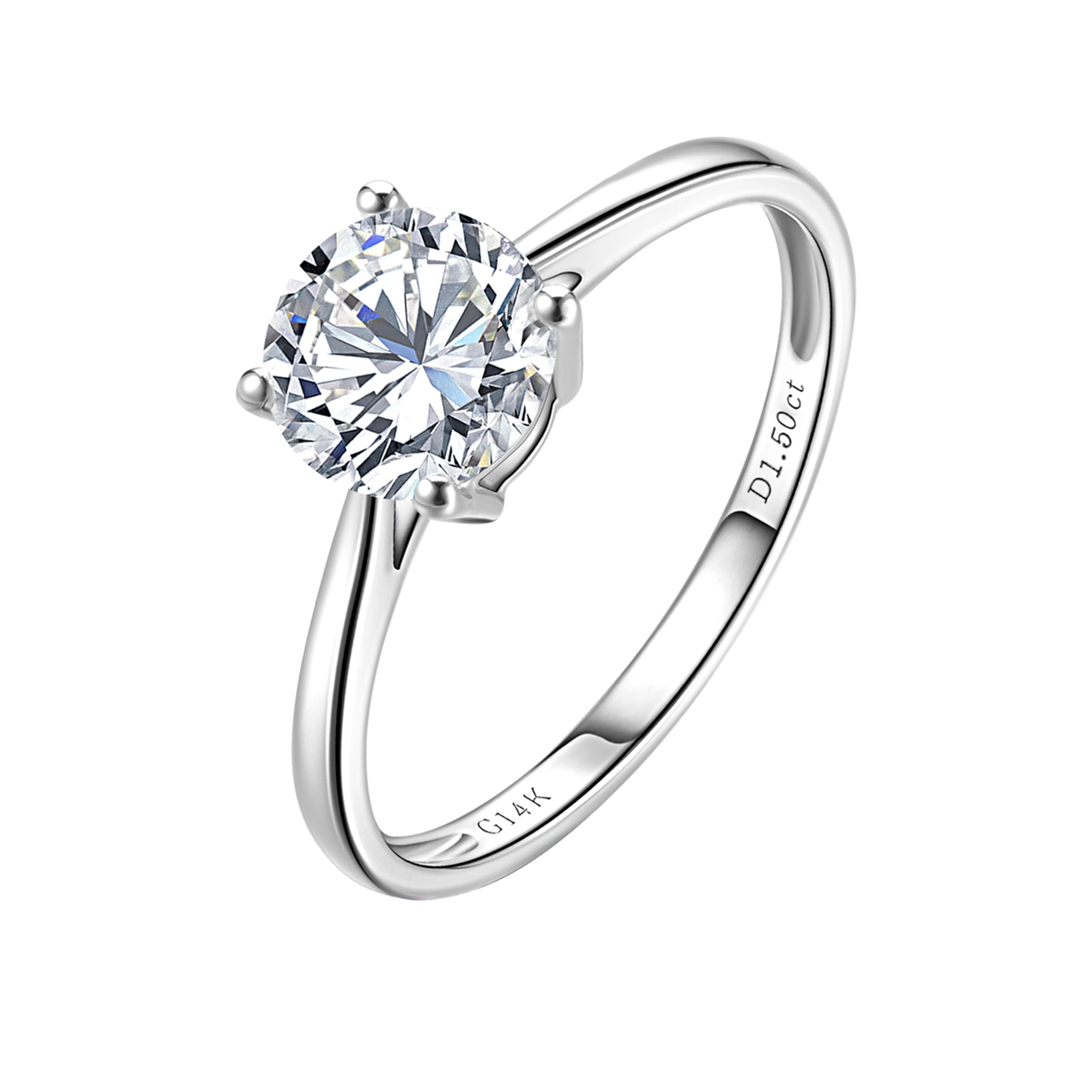
Certified E-color stone, a low four-prong setting, and sizing that arrives exactly as ordered.
This is the ring to buy if getting the size right on the first try is your biggest worry. It runs 1 to 4 carats in an E color, VS1 clarity lab-grown diamond — near-colorless and very clean — set in 14K white gold. The design is a four-prong tapered solitaire married to a low-profile setting, which keeps the stone close to the finger so it catches on less and sits comfortably all day.
Every stone ships with its own IGI certificate, a unique-number report you can look up on the IGI site to verify, and buyers confirm it arrives as promised alongside the 14K gold. Sparkle draws the most compliments, and the sizing gets its own praise — several say it lands right on target, and one notes the slim band runs a touch generous, so measuring first is still smart.
The one thing to plan around: that thin band. It looks delicate and feels light on the finger, which is the trade for the low-profile comfort. Anyone who bends or grips things all day should weigh whether a beefier band suits her better.
Why it earns a slot: arrive-and-verify is the whole idea here — a unique IGI report number per stone plus sizing that buyers report is right on point.
One thing to weigh: the band is slim and the setting low; great for comfort, less forgiving for hands that take a beating.
Reach for this if: you want certified proof in the box and a fit that arrives correct the first time.
Look elsewhere if: a chunky band with a raised setting is the style she wants.
7. Gem Stone King 1-5 Ct Lab Grown Diamond Solitaire Ring
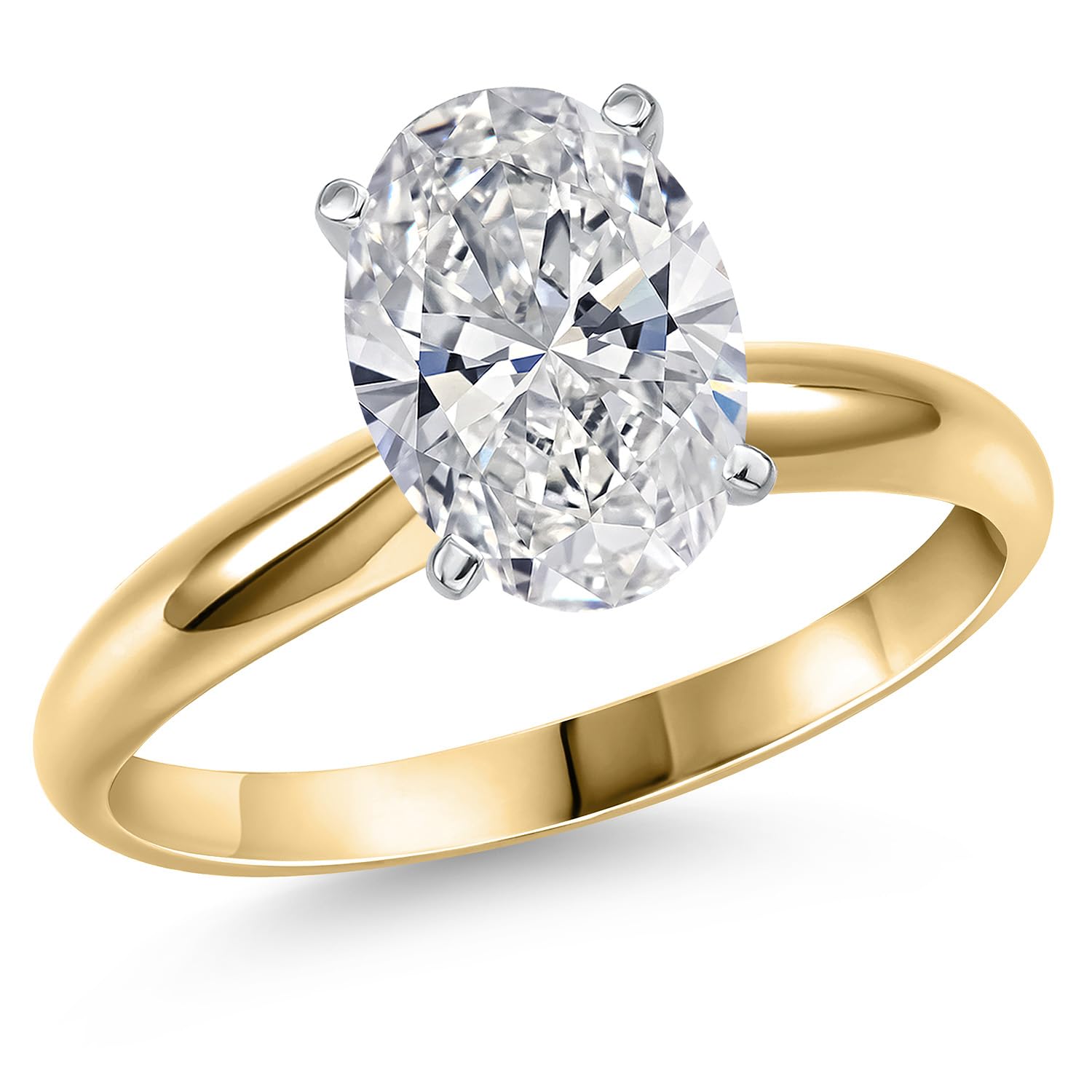
The best-reviewed ring here — a certified solitaire with a GIA-style lab report and no weak spot buyers agree on.
On paper this is the sharpest pick on the list. It scores 4.9 stars across 28 ratings — the highest score in the group — and it is a 1 to 5 CT lab-grown solitaire on solid gold, sized 5 through 9. Lab-grown stones are certified the same way mined ones are, and this maker grades its stones through IGI, the independent lab that issues the 4 C’s report: cut, color, clarity, and carat.
Owners who wear it over years call it a keeper, and none of the eight reviews flags a single recurring flaw. The fit and finish hold up — a size 5 buyer in a 3ct oval describes it as stunning, and a 1.5ct owner says the same. One buyer got the wrong size, returned it, and reordered the correct one with the same flawless result both times, which tells you the exchange process works cleanly if you guess wrong.
The honest note: at 4.9 stars with only 28 ratings, this is the smallest sample in the group — the score is sky-high but built on fewer voices than the halo down the list.
The case for it
- 4.9 stars — the top score on this list — with zero recurring complaints in the reviews
- 1 to 5 CT certified lab-grown solitaire on a solid gold band
- Order, return, and reorder ran without a hitch for at least one buyer
Before you commit
- Smallest review sample of the list, so the score is young
- No matching band included — budget for one separately
The smart-money pick: the highest-rated lab-grown solitaire in the group, backed by actual years of wear.
Save up if: you want a graded report with top-tier color-clarity certainty — the IGI-certified solitaire goes further on that front.
8. Halo IGI Certified LAB Grown Diamond Engagement Rings 14K White Gold
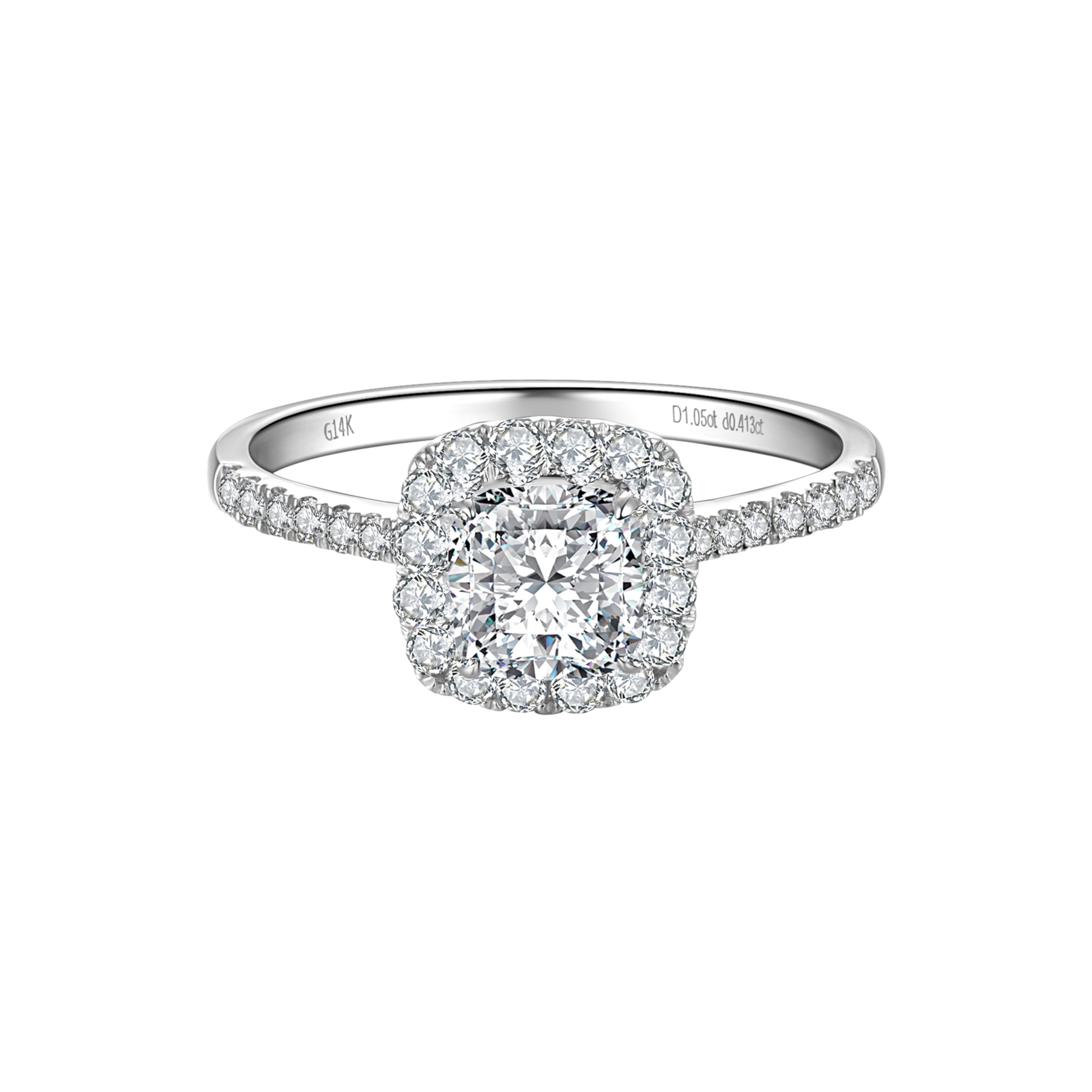
A halo-framed center stone that owners say looks better in person than in the photos.
Here the halo goes upscale. The center stone is edged in a ring of side stones that push the sparkle outward, available from 0.5 to 2.5 Cttw — that is total carat weight across the whole set of stones, so the sparkle adds up across the ring. It is set in 14K white gold (14 parts gold out of 24, a durable everyday mix) and certified by IGI (an independent gem lab that grades the stone). You also get a choice of a white or blue center stone, which is unusual in this price band.
Owners who have researched for weeks land here and stop. The recurring theme is that the ring beats the listing images, and reviewers with lab-grown rings from bigger brands at higher prices say this one holds its own against the more expensive stone. It arrives true to the size you order and the seller ships it well packed.
The single honest flag: one buyer felt the finish did not stay white and yellowed over time. That is an isolated report on a ring with 17 ratings, not a pattern — but if color stability is a dealbreaker for you, ask the seller how the white gold is finished before you buy.
Where it shines: the halo and side stones amplify the center stone’s sparkle, and owners consistently say it looks better on the hand than in the photos.
Who should check twice: if a ring losing its white tone over time would bother you, confirm the finish with the seller first.
The one to pick: if the halo silhouette is the look she wants, and you want the option of a blue center stone.
Steer around if: you want just one clean stone and no side-stone upkeep.
9. 1 to 6 Carat 14K White Gold LAB GROWN IGI CERTIFIED Oval Engagement Ring

An elongated oval stone with pave side stones — the shape that makes fingers look longer.
An oval cut covers more of the finger than a round stone of the same weight, and that elongation is why ovals look bigger on the hand. This one runs 1 to 6 carats in E–F color and VS2–SI1 clarity (near-colorless, with tiny inclusions you would need magnification to spot), set in 14K white gold with pave side stones — small accents set along the band that add a line of sparkle up each shoulder of the ring.
It is certified by IGI, and buyers do the thing you should always do with a lab-grown diamond: take it to an independent jeweler. Two owners confirm their stones came back as real diamonds and 14kt gold, and both report the ring beating the store price on the identical size. Arrival is fast too, with one buyer noting the ring literally landed the next night.
One review worth reading carefully: a buyer was told by a jeweler that their stone was moissanite rather than diamond. That is one report out of nineteen ratings, but it is exactly why the IGI certificate matters — verify your stone’s report number before you take delivery, and you will know what is in the setting.
What it delivers: an elongated oval in E–F color with pave side stones, IGI-certified, independently confirmed by two buyers’ jewelers.
The one bad note: one buyer reports a jeweler disagreement over the stone’s identity — a rare flag rather than a pattern, but an argument for checking your certificate number yourself.
For the person who wants: an oval silhouette with side-stone sparkle and a stone that gets compliments on sight.
Not ideal if: you want a cut that hides flaws — this stone’s color grade holds up, but ovals reveal more than rounds.
10. 1-5 Carat 14K 18K Gold Platinum/Silver Round Cut Classic Solitaire Ring
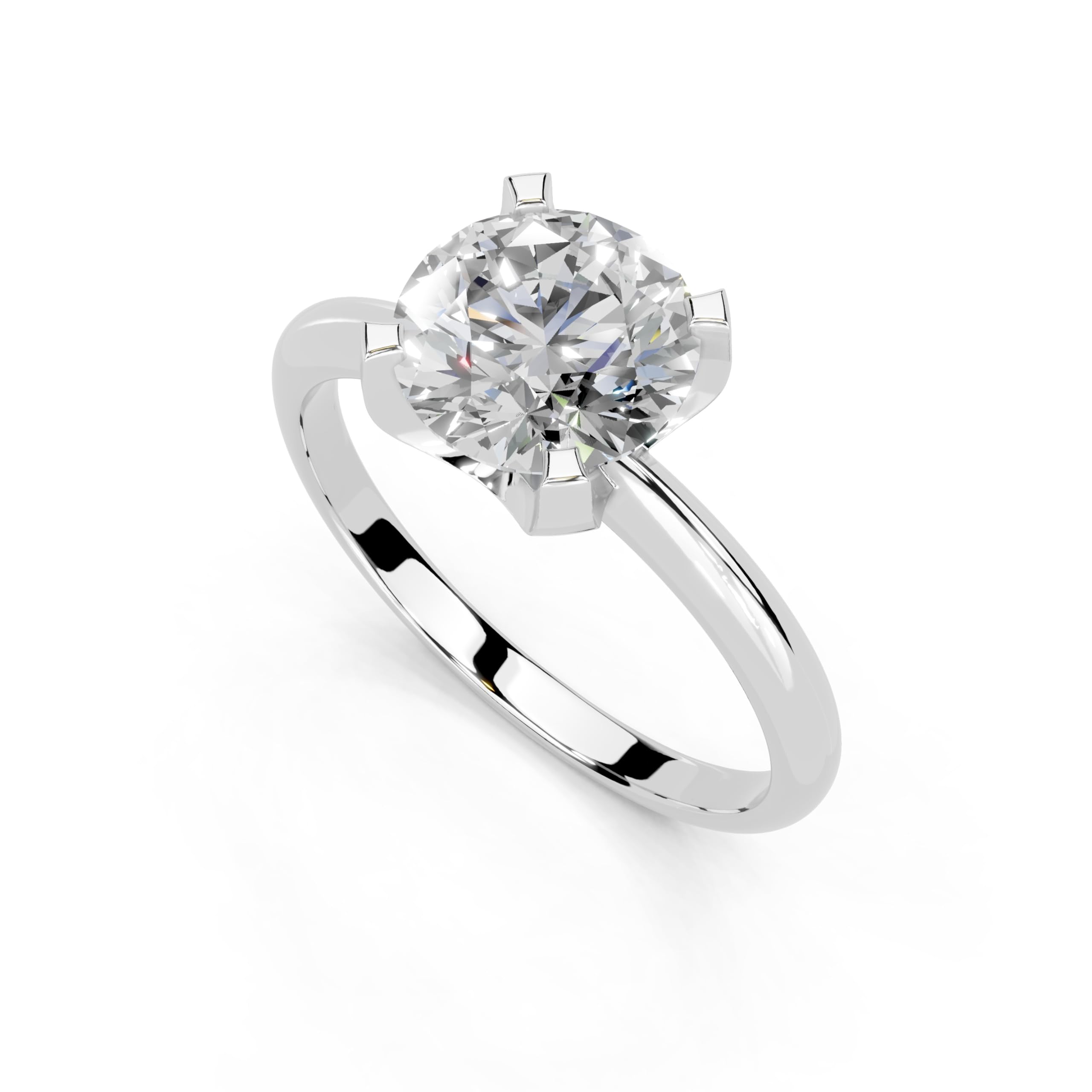
Four metal choices — including platinum — around one certified 1 to 5 carat round solitaire.
This is the pick for anyone who has already decided on the cut and now cares about the metal. You choose from 14K gold, 18K gold, 925 sterling silver (92.5% silver, the standard for fine silver), or platinum — a rarity in this price band — and each option holds an IGI-certified lab-grown diamond in a classic prong setting that lets the most light into the stone, so it throws more sparkle. The 1 to 5 carat range covers the whole realistic span from modest to statement.
The design is a clean classic solitaire, and the sparkle is what most reviews lead with. A handful of buyers describe the sparkle as show-stopper level, and the fit lands as expected in most cases — one wife’s verdict was simply that she loved it and it fit perfectly.
Two things to weigh honestly. One buyer saw the stone come loose from the setting within a couple of months and then found the maker’s warranty required a shipping charge to use — that is the vote for a local jeweler’s inspection early on. Another found the real setting looked different from the listing photo. Neither is a dealbreaker, but both are reasons to look hard at what you receive on arrival.
The winning cards
- Choose 14K gold, 18K gold, 925 sterling silver, or platinum
- IGI-certified round lab-grown diamond from 1 to 5 carats
- Classic prong setting for maximum light through the stone
Worth checking up front
- One buyer had the stone loosen quickly, and warranty use carries a shipping charge
- Setting can look different from the listing photo
Go here when: platinum or an 18K band is a must, and you want the diamond certified before it ships.
Not for you if: you want zero setup work after delivery — this one rewards a prompt jeweler check.
11. 1 to 10 Carat Lab Grown Diamond Engagement Ring, IGI Certified D–E Color, VVS2 Clarity
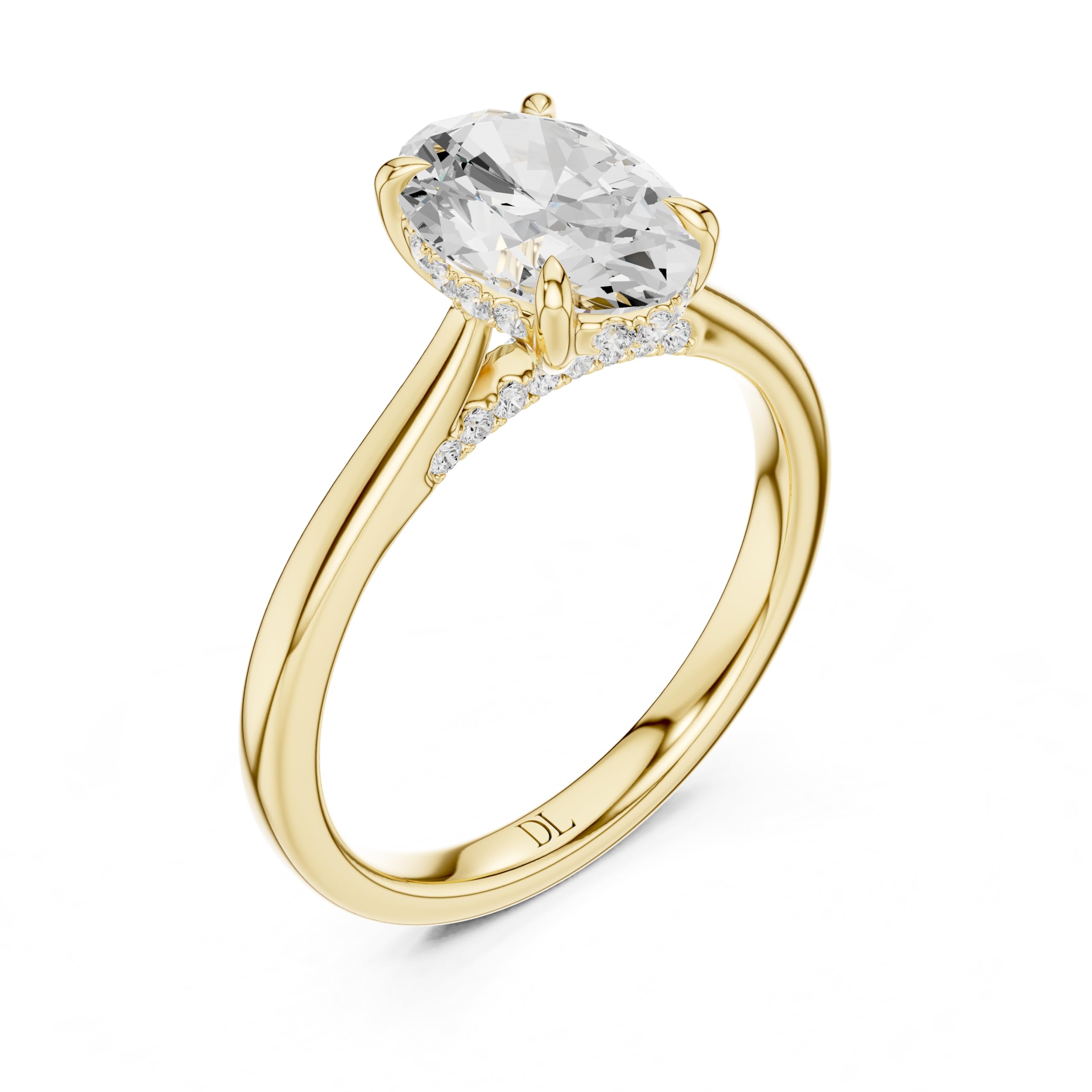
Built your way — pick the carat, the metal, and the band, and it arrives with two authenticity reports.
Nothing else on this list goes this far up the size range. This is a made-to-order ring running from 1 to 10 carats in D–E color and VVS2 clarity — VVS2 is a very-high clarity grade, where a grader is looking at minute inclusions under magnification. You also get real say over the build: band sizes of 2 MM, 2.20 MM, or 2.40 MM, a 3.0 MM double-sided pave option, and metal choices spanning 14K gold, 18K gold, or platinum 950.
The reviews are the strongest part. Every one lands at five stars, and the theme is expectation-beating quality — a buyer who ordered a 5 carat crushed ice radiant (a cut with a hazy, crushed-glass sparkle) calls the shine amazing and is already coming back for an oval, and another notes that the heftier 18K option balances a large stone nicely. One buyer got the diamond inscription matched against the certificate and separately confirmed the gold purity, which is the exact check you should run.
Because it is a custom order, plan ahead: choose your size and metal at checkout and leave time for the build before a proposal date. The paperwork side is thorough — an IGI lab report plus a gold purity XRF report card — so you have documentation for both the stone and the metal.
The strength here: D–E color at VVS2 clarity with the widest carat choice on the list — 1 all the way to 10 — plus 14K, 18K, or platinum 950 and three band widths.
Timing note: this is a made-to-order piece, so ordering early matters if you have a date locked in.
Order this if: you want a specific carat, metal, and band width and are willing to wait for a made-to-order build.
Skip if: you need a ring in hand this week — the customization is the whole point, and that takes time.
Understanding the Specs
Carat, Color, Clarity — the Three Live Ones
Carat is the stone’s weight, not its size in millimeters, and two stones of the same weight can look different depending on the cut. Color is graded on a scale where D, E, and F are the colorless tiers and G through J show faint warmth that a trained eye can spot. Clarity runs from flawless down through VVS, VS, SI, and I, and anything at VS2 or better usually reads clean to the naked eye. When a listing says E–F color and VS1–VS2 clarity, it means the stone sits in the top end of the everyday range.
Metal Type and Band Width — the Long Game
Solid 14K gold, 18K gold, and platinum 950 (95% platinum, the standard for fine platinum) are gold or platinum all the way through, so they take polish and hold their color for years; plated finishes are a thin layer over a cheaper metal and are the source of most wear complaints in this price band. Band width, measured in millimeters, controls both the look and how securely the setting is held — a 2 MM band is slim and dainty, a 3 MM band feels more substantial. A wider band and a low-profile setting are the two spec choices that most affect how a ring holds up to daily wear.
FAQ
Will a lab grown diamond pass as real to a jeweler or a testerYes. Lab-grown diamonds share the same physical, chemical, and optical structure as mined diamonds, so they read as diamonds on a standard tester. What proves the difference is paperwork, not a tester: an IGI report assigns each stone a unique number you can verify online. Several buyers on this list took their rings to a jeweler and had the stone confirmed, and one went further and matched the diamond’s inscription to the certificate.?
How do I know what ring size to order without her finding out?
Is a moissanite ring a good substitute for a diamond engagement ring?
Will a gold plated ring fade if she wears it in water?
How thin is too thin for an engagement ring band?
Does the IGI certificate travel with the ring when it ships?
Can I pair a straight wedding band with a low-profile solitaire setting?
Do lab grown diamond rings hold value the way mined diamonds do?
What is the difference between VS1, VVS2, and SI1 clarity grades?
Is it safe to buy an engagement ring this expensive online?
Final Thoughts: The Verdict
For most buyers, the $1000 engagement ring winner is the 1-6 Carat LAB GROWN Round Cut Prong Set Solitaire because it delivers a near-colorless, VS1–VS2 lab-grown stone in a simple prong solitaire and covers the whole 1 to 6 carat range, and it is the most-loved pick here. If a bigger, top-graded certificate is what you are after, the IGI Certified LAB Grown Diamond in 14K White Gold brings D–E–F color and VVS1–VS1 clarity. And for a ring worn every day where the metal matters most, reach for the Solid 14K Gold Moissanite Ring — real gold all the way through, in a cut that throws plenty of fire. Whichever way you go, order early enough to have a jeweler confirm the stone and the gold before the big day.
How We Picked
We do not accept paid placement. Every pick is matched to a real buyer and a real use-case; we do not hands-on test units.
Sources & Methodology
Specifications: manufacturer listings and product documentation. Review insights: verified customer reviews, as of September 2026. Pricing: not shown on this page (it changes often); check the current price via the retailer link.
As an Amazon Associate, Gadgets Feed earns from qualifying purchases. This does not affect which products we feature.