
Our readers keep the lights on and my morning glass full of iced black tea. As an Amazon Associate, I earn from qualifying purchases.
Specs are compiled from manufacturer listings and verified buyer reviews and can change over time — please confirm the key details on the product page before buying.
You are here because you need a screen you can actually see in a bright room, a sunlit office, or even outdoors. The magic number everyone quotes is 1000 nits — peak brightness high enough to punch through glare and make HDR content look genuinely alive. But here is the honest catch: not every screen labeled “1000 nits” delivers that light the same way, and some of the best-looking options come with real trade-offs in reliability and software.
I’m Min — the founder and writer behind Gadgets Feed. This guide is built by comparing the manufacturers’ published specifications and the patterns across verified customer reviews, so you get each pick’s real strengths and trade-offs instead of marketing spin.
You want a 1000 nit monitor that actually looks bright in your room, not just on paper. This guide separates true high-brightness performers from cleverly spec’d screens, and translates every nit and refresh rate into what it means for your daily viewing, so you can buy with confidence and zero jargon headaches.
In this article
Note on matching: this list uses flexible, human-like matching for — peak brightness 1000 nits or higher (accept 1000+ nits) — so not every pick is the EXACT number searched; the nearest same-type size/watt serves the same purpose. This is intentional so you are never misled.
Our Picks at a Glance

How To Choose The Best 1000 Nit Monitor
Buying a high-brightness monitor is a different game from picking a standard desk display. You are paying a premium for light output and contrast, so you need to know which specs actually deliver that experience and which ones are just marketing numbers on a box.
Peak Brightness vs. Sustained Brightness
The “1000 nits” (a unit of screen brightness) you see quoted is almost always a peak figure — the absolute maximum the panel can hit for a small, bright area like a sun or an explosion in a game. It is not the brightness you get across the whole screen all the time. A monitor that sustains high brightness across the full display is rarer and more expensive, and it matters if you work in a very bright room all day. When comparing, remember a peak number is the ceiling, not the average.
Local Dimming Zones and Contrast
Brightness alone is only half the picture; contrast is what makes HDR (High Dynamic Range — a format that expands the range between the darkest and brightest parts of an image) look spectacular. Mini-LED (a backlight technology using thousands of tiny LEDs instead of a few large ones) panels split the screen into zones that can dim or brighten independently. More zones mean a bright explosion can sit next to true black without a glowing halo around it. Look at the zone count, not just the nit number, to understand real-world contrast.
Refresh Rate and Your Hardware
A 1000-nit gaming monitor usually also boasts a high refresh rate (how many times per second the image redraws, measured in Hz). But reaching that full speed takes more than a good monitor — you need a graphics card and a cable that can carry the data. A DisplayPort or HDMI cable with insufficient bandwidth will lock you to a lower refresh rate. Check your PC’s ports and your cable’s version before you buy, or you will leave performance on the table.
Quick Comparison
| Model | Best For | Peak Brightness | Resolution | Refresh Rate | Amazon |
|---|---|---|---|---|---|
| Samsung Odyssey G9★ Best Overall | rich Ultrawide Gaming | 1000 nits | 5120×1440 | 240Hz | Amazon |
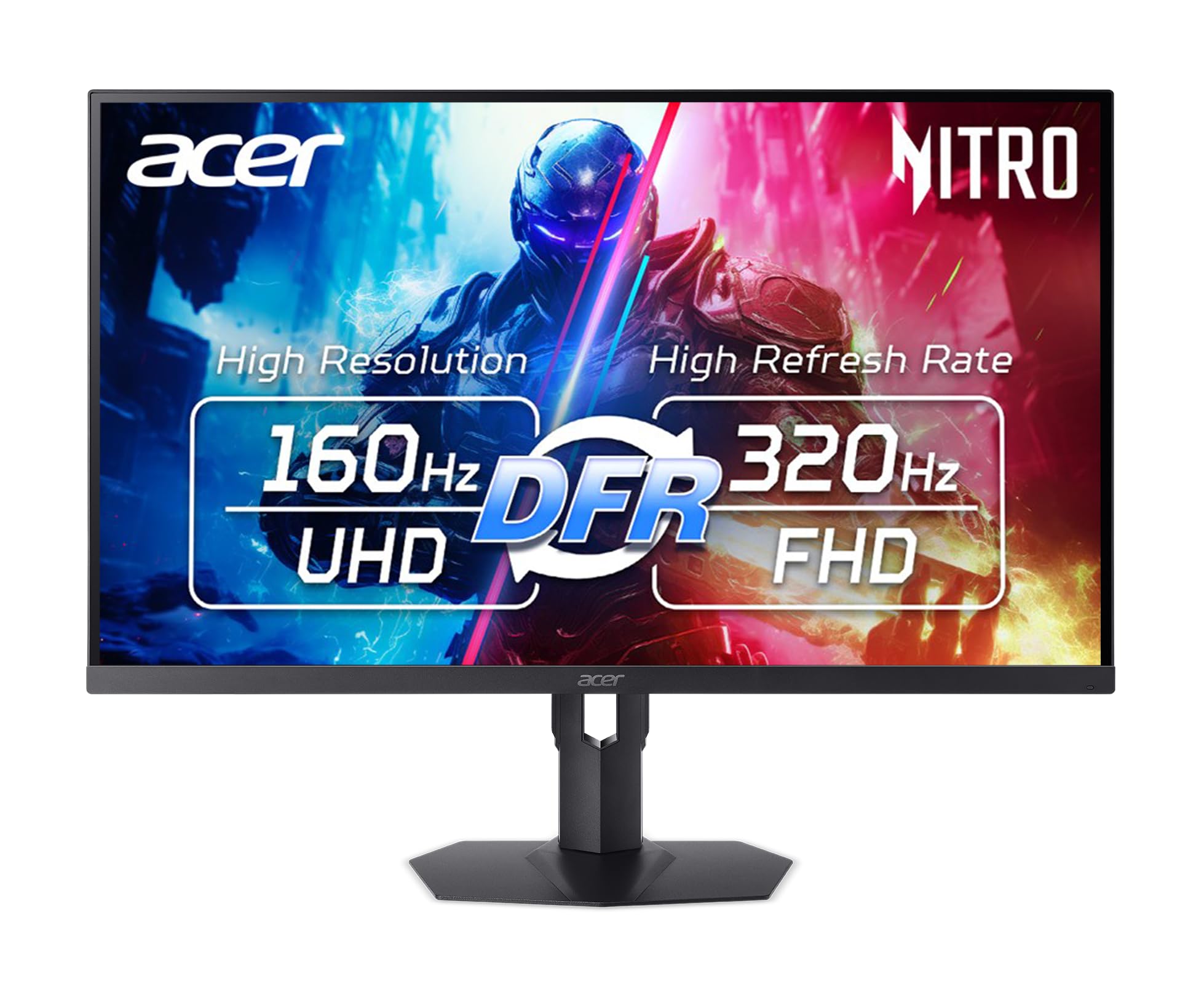
| Acer Nitro XV325QKBest Value | 4K HDR Value | 1000 nits | 3840×2160 | 160Hz | Amazon |
| Samsung Odyssey G9 (Renewed) | Budget Ultrawide HDR | 1000 nits | 5120×1440 | 240Hz | Amazon |
| ASUS ProArt PA32UCR-K | Professional Color Work | 1000 nits | 3840×2160 | 60Hz | Amazon |
| Canlarriz 50″ Signage | Commercial Displays | 1000 nits | 3840×2160 | — | Amazon |
| LG UltraGear evo 5K | High-Density 5K Gaming | 1250 nits | 5120×2880 | 165Hz | Amazon |
| Atomos Sumo 19″ | On-Set Video Monitoring | 1200 nits | 1920×1200 | — | Amazon |
In‑Depth Reviews
1. Samsung 49″ Odyssey G9 DQHD Curved Gaming Monitor
Our pick — over 4★ from 500+ verified ratings; the strongest balance of quality and price.
The ultrawide king that wraps 1000 nits of action around your entire field of view.
The defining spec here is the sheer canvas: a 49-inch screen with a 1000R curve (a curve radius measured in millimeters that wraps noticeably around you) and a 32:9 aspect ratio — that is two standard monitors side by side with no bezel in the middle. At 5120×1440 resolution and 240Hz refresh, this is built to make fast games feel fluid and almost unfairly visible, which is exactly what owners rave about: for competitive play it can feel like cheating because you simply see more of the battlefield.
On brightness, it delivers a 1000 nit peak with a 1,000,000:1 contrast ratio — a massive number that creates deep blacks next to scorching highlights. The 1ms (GtG) response time (the speed a pixel takes to change color, measured in milliseconds) keeps motion blur low. Owners love the color pop and find the setup easy, with one noting the brightness is unreal for a VA panel (a panel type known for good contrast) without FALD (full-array local dimming — many LEDs behind the screen that dim in zones).
The honest trade-off is durability. The most-discussed fear is reliability, and there are reports of units dying after roughly six months with a pop and a black screen, plus frustrating warranty support. The screen’s sheer width is also a personal taste thing — some find it too wide for daily work, while others say it eliminates their dual-monitor setup entirely. This is a monitor for buyers who want maximum immersion and accept some quality-control risk for the privilege.
Why It Wins
- Massive 49-inch ultrawide with a 32:9 aspect ratio replaces two monitors smoothly
- 240Hz refresh rate makes competitive gaming exceptionally smooth
- 1000 nit brightness with a 1,000,000:1 contrast ratio for vivid HDR
- Height-adjustable stand and VESA compatibility for flexible positioning
The Trade-Offs
- Reliability is the recurring worry, with some units failing after months
- The extreme width is a personal preference, not for every workspace
- Warranty support has drawn sharp criticism from affected owners
Pick it if: you want the most rich ultrawide 1000-nit experience for gaming and productivity, and you have the desk space to handle a 49-inch curve.
Think twice if: a long warranty and flawless reliability matter more to you than sheer screen real estate.
2. Acer Nitro XV325QK 31.5″ 4K MiniLED Gaming Monitor
A 4K Mini-LED panel that brings 1152 dimming zones to a mid-range price.
The reason to look at this Acer is the backlight: 1152 local dimming zones (individual areas of the backlight that can brighten or dim independently) on a 31.5-inch IPS (In-Plane Switching — a panel type known for wide viewing angles) screen. That zone count is what makes HDR content look genuinely dynamic, letting a bright highlight sit beside deep black without a distracting halo. At 1000 nits peak luminosity with VESA DisplayHDR 1000 certification, the brightness is real enough that buyers report using it comfortably in a sun room.
It is also a shape-shifter. The DFR (Dynamic Frequency Resolution) technology lets you choose between 4K at 160Hz for detail-heavy games or work, and a boosted 320Hz for ultra-competitive play. The 0.5ms GtG response time keeps fast action crisp. Owners praise the color quality and value, noting it rivals far pricier OLEDs (Organic Light-Emitting Diode panels — each pixel lights itself) for mixed gaming and productivity use.
The catch is consistency. While some buyers get a fantastic panel, others report dead pixels and a warped display, and the highest-count feedback on display quality is genuinely mixed. There are also quirks: severe blooming (a glowing halo around bright objects on dark backgrounds) on small bright items in HDR, and a need for a quality DisplayPort 1.4 or higher cable to reach full refresh rates. The included cable does work for high refresh rates, per owners, but software and firmware updates are a noted weak point.
What wins people over: the contrast and color in bright rooms genuinely impress, and at this tier the value is hard to argue.
The honest caveat: quality control is a lottery, and the HDR blooming on text and small objects is a real, visible drawback.
Reach for this if: you want 4K HDR and a high refresh rate without paying a premium, and you are comfortable using the included cable with a capable graphics card.
Look elsewhere if: you need guaranteed panel perfection or flawless software, since quality control is the roughest edge here.
3. Samsung 49″ Odyssey G9 DQHD (Renewed)

The same 49-inch immersion as the flagship, at a friendlier price point.
This is the renewed version of Samsung’s celebrated ultrawide, and it keeps the headline specs: 49 inches, a 1000R curve, 5120×1440 Dual QHD resolution, and a 240Hz refresh rate. It delivers 1000 nit peak brightness with VESA DisplayHDR 1000, so HDR games and movies get that punchy highlight detail. Buyers describe the picture quality as outstanding, with fantastic resolution, and find it great for gaming while still being good enough for everyday work.
A common workflow here is splitting the screen — the 32:9 aspect ratio lets you treat it as two 25-inch monitors side by side, which is a strong productivity play. The renewed units arrive in original boxes with cables, and assembly is reported as straightforward. Owners moving from dual-monitor setups call it a major upgrade for both gaming and browsing, and the height-adjustable stand with Adaptive Picture (a sensor that adjusts brightness to room light) adds daily comfort.
The honest notes: it is physically large and heavy, and some owners mention needing a new, sturdier desk to support it. There is also a report of heat radiating from the screen after extended use, and an occasional unit arrives with dead pixels in a corner. For the price, owners find these acceptable — one explicitly said you cannot complain too much given the savings, though shipping can run slower than the advertised two-day prime window.
Strongest trait: the monitor quality and picture quality earn the most praise, with owners calling the resolution fantastic for the price.
Who should pause: anyone without solid desk space or who finds a refurbished unit’s cosmetic and pixel risks unacceptable.
Best for: shoppers who want the flagship Odyssey G9 experience — 1000 nits, 1000R curve, 240Hz — but want to spend less.
Best avoided by: those who demand a pristine, brand-new panel and cannot tolerate the slight risk a renewed unit carries.
4. ASUS ProArt PA32UCR-K 32″ 4K HDR Professional Monitor

A colorist’s tool that pairs 1000 nits of brightness with factory-level accuracy.
This is not a gaming monitor; it is a professional display aimed at Mac users and color-critical work. The 32-inch Mini-LED panel hits 1000 cd/m² peak brightness, and the quantum-dot technology (a layer that produces very pure, vivid colors) covers 99.5% Adobe RGB, 98% DCI-P3, and 100% sRGB color spaces. A delta-E (a measurement of color difference from the true value; lower is better) of less than 1 means colors are exceptionally faithful from the start, and the included X-Rite i1 Calibrator lets you maintain that accuracy over time.
It supports HDR-10 and HLG formats, and the built-in ability to store color space profiles lets you switch quickly between projects with different color standards. Owners who do color grading professionally call it a dream monitor and a strong complement to Apple’s XDR displays, noting it sustains 1200 nits in practice and offers great value against far more expensive reference monitors. The 5-year warranty, extendable with online registration, is a serious commitment for a serious tool.
The hurdles are real for novices. Calibration is not plug-and-play — the included software link is reportedly dead, and owners describe the calibration process as difficult, sometimes taking hours. The color accuracy itself draws mixed feedback, with a hard-to-ignore warning that it may not satisfy someone serious about color management from the start. It is also a 60Hz panel with no Dolby Vision, which is fine for grading but not for high-refresh gaming. This is a precise instrument for professionals who understand calibration, not a casual display.
Where it shines: the color gamut and HDR capability are the headline, with owners calling the picture quality astounding for print design and film work.
The steep part: calibration is a genuine struggle for non-experts, and the included software instructions are outdated.
Choose it if: you are a video editor, photographer, or color grader who needs accurate HDR and is ready to invest time in calibration.
skip it if: you want a simple, bright monitor for mixed use — novices should be prepared for a steep learning curve.
5. Canlarriz 50″ Digital Signage Display 1000-Nit

A commercial workhorse built to run menus and ads all day in bright retail light.
This is a purpose-built commercial screen, not a desktop monitor, and its specs reflect that mission. The 50-inch 4K UHD (3840×2160) LCD panel delivers 1000 nits brightness, designed to stay readable in well-lit stores and lobbies. A 50,000-hour lifespan and 178° ultra-wide viewing angle mean it is engineered for continuous 24/7 loop playback in environments where a consumer TV would struggle. The 6.8mm ultra-narrow bezel and 3.5cm slim profile allow for gap-free wall mounting, and you can tile multiple units for a smooth video wall.
It runs on Android with the Google Play Store pre-installed, so you can load menu or content apps directly. The included CMS (Content Management System — software to control what displays on the screen) software lets you automate breakfast, lunch, and dinner menus, bulk-edit schedules from a phone or computer, and adjust brightness and volume remotely. Owners like the premium frameless look, the flush wall mount, and the ability to switch between landscape and portrait orientation instantly, calling the colors vibrant and the screen bright in lit rooms.
The honest concerns center on software and build. Setup gets mixed feedback — some find it straightforward, others tedious. The build quality itself is the most-discussed topic and it is mixed, with a notable minority calling it a bad product and reporting brightness and clarity below claims. Owners also note it is heavier than expected, so mounting to a solid wall is a must, and the software could be better at letting multiple people edit the same sign. This is for commercial buyers who need a bright, always-on display and accept some software roughess.
What stands out: the ultra-thin bezel and flush mount create a clean, premium look, and the brightness holds up in lit commercial spaces.
The risk: build quality is split down the middle in feedback, and the software can be frustrating to configure.
Ideal for: restaurants, retail stores, and offices that need a reliable 1000-nit screen running content around the clock.
Not for: buyers wanting a consumer monitor with polished software — this demands commercial patience and a solid wall.
6. LG 27GM950B-B UltraGear evo 5K Gaming Monitor
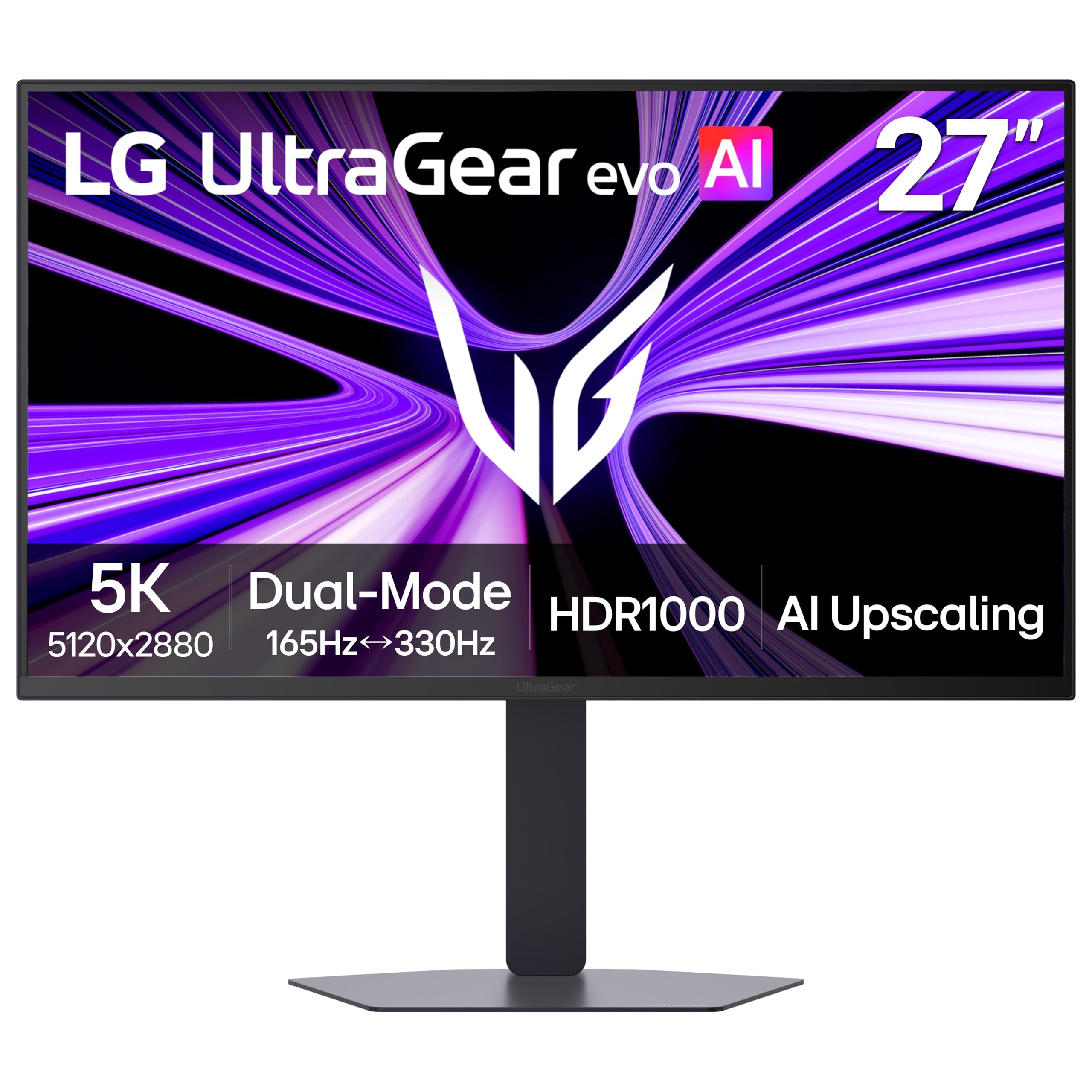
A 27-inch 5K panel that out-brightens the 1000-nit club at 1250 nits peak.
The headline here is raw light: this 27-inch monitor reaches up to 1250 nits peak brightness, beating the 1000-nit standard and earning VESA DisplayHDR 1000 certification. Under the hood is Hyper Mini LED technology with 9,216 LEDs — enough to create rich contrast with minimal light bleed. The resolution is a stunning 5120×2880 (that is 5K) on a 27-inch screen, producing a dense 218 PPI (pixels per inch — how sharp the image looks up close), which makes text, code, and fine details exceptionally crisp.
It is also a dual-mode performer. You can switch between 5K at 165Hz for cinematic AAA titles and QHD at 330Hz for ultra-responsive competitive play, and an AI upscaler (a processor that enhances lower-resolution content toward 5K) sharpens older games without needing a GPU upgrade. Connectivity is genuinely future-proof: DisplayPort 2.1 (UHBR20), USB-C with 90W power delivery (so it can charge a laptop), and HDMI 2.1. Owners who got a good unit love it as a single display for both a MacBook Pro and a gaming PC, praising the brightness and adjustable colors.
This is the riskiest pick on the list. The most-discussed feedback on image quality is mixed, and there are serious, repeated reports of a right-side dark filter glitch on macOS, text blur on the right edge, overheating with a full-speed fan, and even shutdowns. Matte coating (a finish that reduces glare but can soften text) is a recurring complaint versus glossy Apple displays, and color quality draws negative feedback. Some owners got fabulous units after a firmware update; others returned them within days. This is a brilliant spec sheet with a real quality-control lottery attached.
The Brilliant Side
- 1250 nits peak brightness exceeds the 1000-nit class for bold HDR
- Sharp 5K resolution with 218 PPI for exceptional text clarity
- Dual Mode switches between 5K 165Hz and QHD 330Hz
- DisplayPort 2.1 and USB-C with 90W power delivery
The Serious Risks
- Mixed image-quality feedback with reports of a right-side dark glitch on macOS
- Overheating reports including a full-speed fan and shutdown
- Matte coating softens text versus glossy competitors like Apple’s Studio Display
Buy it for: the absolute highest brightness and pixel density in a desktop format, with dual-mode versatility.
Steer clear if: you rely on macOS and need zero risk — the compatibility and quality-control reports are too frequent to ignore.
7. Atomos Sumo 19″ HDR High Bright Monitor
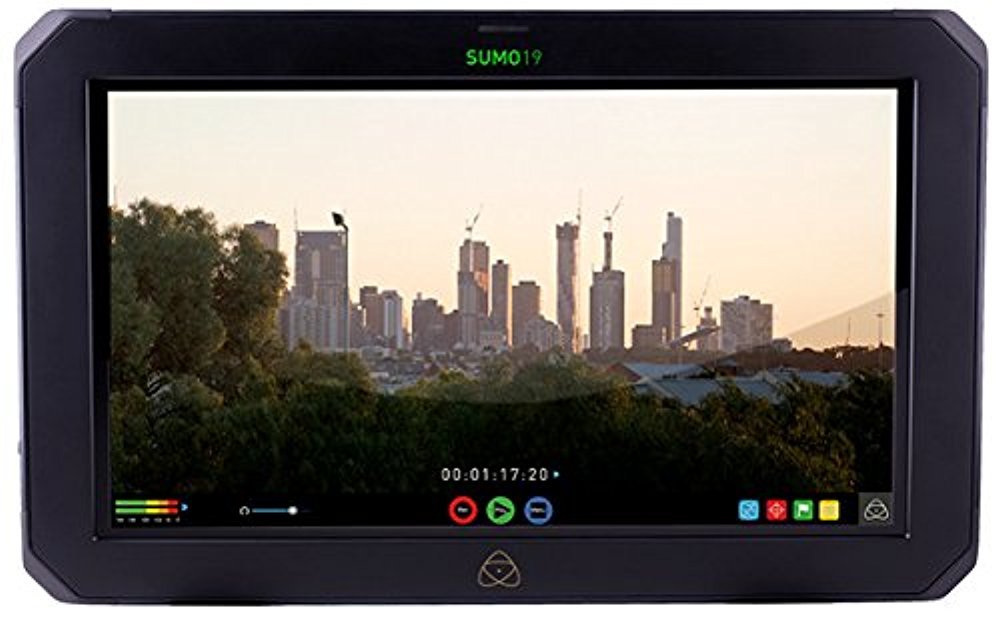
A 19-inch on-set monitor built for video pros who need to see HDR outdoors.
This is a specialized tool for filmmakers and video professionals, not a desk monitor. The Atomos Sumo is a 19-inch high-brightness monitor rated at 1200 nits — bright enough to judge HDR footage in daylight on a film set. It is a 10-bit HDR display with a 1920×1200 resolution in a 16:9 native aspect ratio, and it accepts up to 4Kp60 or HDp240 signals over HDMI or dual 12/6/3G-SDI inputs (SDI being the professional broadcast connection standard).
Its a neat extra for on-set work is realtime exposure conversion from Log footage (a flat, low-contrast camera profile) to both HDR and SDR, so you can preview the final look live. You can also load an unlimited number of custom LUTs (Look-Up Tables — color grading presets) via the HDD/SSD slot. Owners praise the unit as a fantastic monitor with glorious image quality, noting the 4 x SDI input switching and HDMI input/output make it a versatile hub that beats pricier alternatives.
The frustration here is support, not the screen itself. While the monitor works like a charm once you learn its controls, customers note that customer support is effectively non-existent — phones go unanswered and warranty promises go unmet. There is also a serious caution about the newer “SE” units, which reportedly suffer a severe orange color cast that cannot be calibrated away across multiple tested units, while the original Sumo 19 and 19M models were excellent. The 1-year warranty and 11.99-pound weight (it needs a proper C-stand bracket) round out the physical reality of this pro tool.
The pro appeal: the 1200-nit brightness and 4 x SDI switching make it a powerful on-set monitor that owners genuinely love when it works.
The professional warning: nonexistent support and a known color-cast issue on newer units make this a gamble without a safety net.
Get it for: professional video work where a bright, SDI-equipped field monitor is essential and you can verify the specific unit’s quality.
Avoid it if: you cannot risk a defective unit with no functional support channel, or if you need a general-purpose computer monitor.
Understanding the Specs
Nits and Peak Brightness
A nit is simply a unit of brightness — the amount of light a screen emits. “1000 nits” means the panel can output 1000 candelas per square meter (cd/m²) at its brightest. The key word is “peak”: this is the maximum for a small, bright portion of the screen, not the whole display at once. For a bright living room or an office near a window, 1000 nits is the level where HDR highlights (like sunlight or explosions) actually look vivid instead of washed out. Below roughly 600 nits, HDR content can look flat, and glossy screens will show heavy glare in daylight.
Local Dimming and Contrast Ratio
Local dimming is the technology that lets a screen darken specific areas of the backlight independently. A Mini-LED monitor with hundreds or thousands of dimming zones can show a bright star next to a black void without spilling light (called blooming — a halo effect around bright objects). The contrast ratio (like 1,000,000:1) describes the difference between the brightest white and the darkest black a screen can produce. High brightness without good local dimming just makes blacks look gray; the two specs work together to create the depth you see in true HDR.
FAQ
Is a 1000-nit monitor worth it for everyday use?
Will my graphics card run a 1000-nit 4K monitor at full refresh rate?
What is the difference between a 1000-nit gaming monitor and a 1000-nit commercial display?
Does a higher nit number always mean a better picture?
Is HDR10+ better than standard HDR10 on a 1000-nit screen?
What cable do I need to get the full brightness and refresh rate?
Are renewed or refurbished 1000-nit monitors a good idea?
Why does my 1000-nit monitor look dim or have problems on a Mac?
Final Thoughts: The Verdict
For most buyers, the 1000 nit monitor winner is the Samsung Odyssey G9 because it delivers the most dramatic rich experience — a 49-inch, 240Hz ultrawide with real 1000-nit HDR. If you want 4K resolution with strong HDR value, grab the Acer Nitro XV325QK. And for professional color work that demands accuracy, the ASUS ProArt PA32UCR-K is the one to reach for. Whichever you choose, remember that brightness is just the beginning — the best monitor is the one that fits your room, your hardware, and your tolerance for trade-offs.
How We Picked
We do not accept paid placement. Every pick is matched to a real buyer and a real use-case; we do not hands-on test units.
Sources & Methodology
Specifications: manufacturer listings and product documentation. Review insights: verified customer reviews, as of August 2026. Pricing: not shown on this page (it changes often); check the current price via the retailer link.
As an Amazon Associate, Gadgets Feed earns from qualifying purchases. This does not affect which products we feature.