
Our readers keep the lights on and my morning glass full of iced black tea. As an Amazon Associate, I earn from qualifying purchases.
Specs are compiled from manufacturer listings and verified buyer reviews and can change over time — please confirm the key details on the product page before buying.
Here is the short answer: a 10,000-watt solar generator is a whole-home battery system, not a suitcase you wheel to a campsite. What actually decides whether one of these works for you is usable energy storage (measured in kilowatt-hours, or kWh) and whether the inverter can push 240 volts to the heavy appliances in your house. Watts decide which appliances can run at once; kilowatt-hours decide how long they keep running. One note before you scroll: this list uses flexible matching for the 10,000-watt output class, so it accepts roughly 8,000 to 12,000-watt units of the same type. Not every pick hits the exact number you typed in, but every one serves the same job — backing up a home.
I’m Min — the founder and writer behind Gadgets Feed. This guide is built by comparing the manufacturers’ published specifications and the patterns across verified customer reviews, so you get each pick’s real strengths and trade-offs instead of marketing spin.
You will see three systems here: two rack-style inverter-and-battery bundles and one modular whole-home station with the deepest review history in the group. Each is a different answer to the same question — how much of your house do you want to keep running, and for how long. If you want the deepest storage in this lineup, the 10000 watt solar generator conversation starts with how much usable capacity sits behind that inverter.
Our Picks at a Glance
How To Choose The Best 10000 Watt Solar Generator
Most people shopping this class make the same mistake: they compare wattage numbers and ignore the tank behind them. A 10,000W inverter with a small battery is a fast runner with no fuel. Your first decision is capacity. Your second is whether the inverter speaks split-phase.
Start With Usable Energy, Not the Wattage Badge
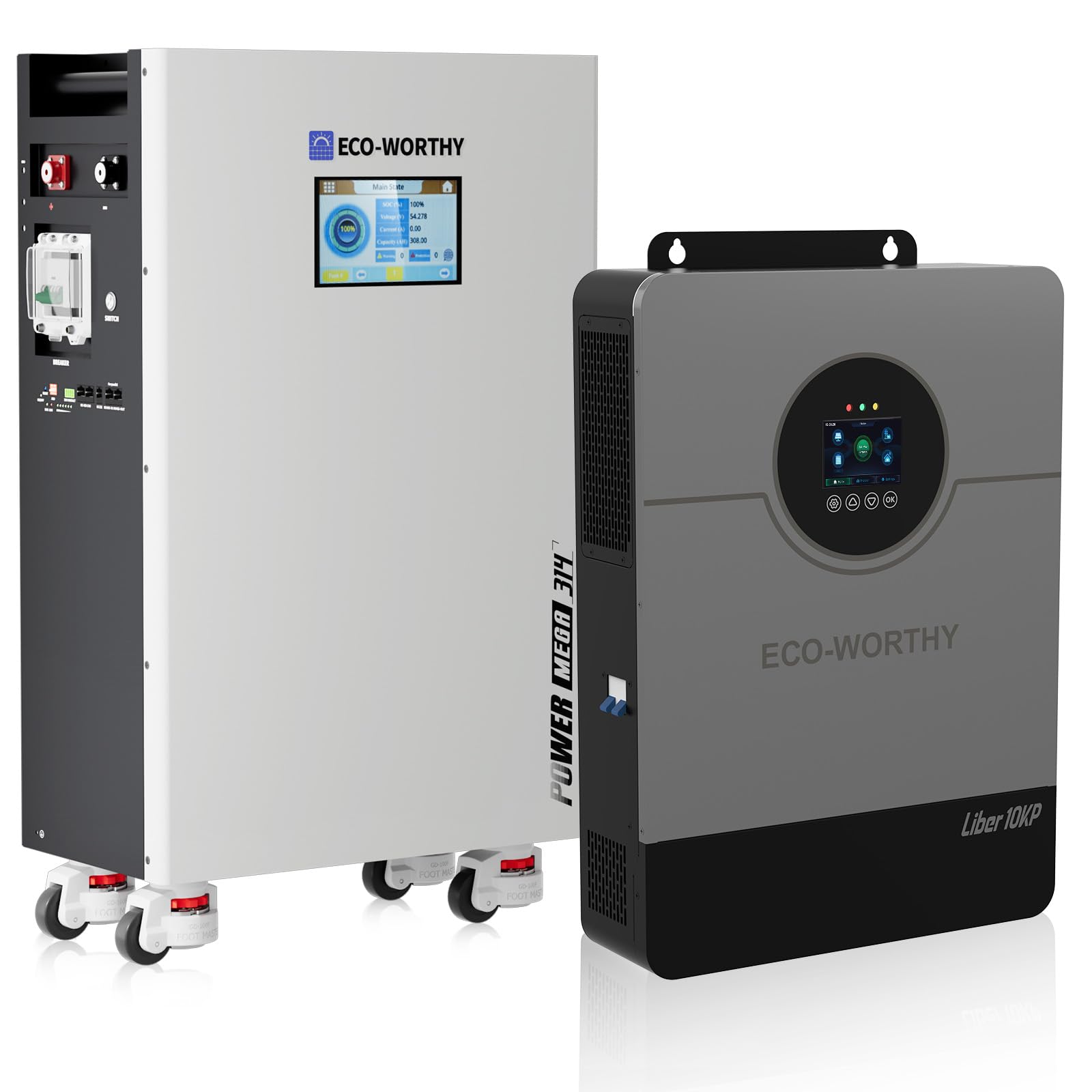
Capacity tells you how long the system runs, and it is quoted in watt-hours or kilowatt-hours. The Powermega pairs a 314 amp-hour battery with its inverter and quotes 16.1kWh of usable energy. The Liber 10KP kit bundles two 100Ah batteries for 10240Wh. Those two numbers are the real measure of whether your fridge survives a two-day outage — wattage only decides which appliances can start at once.
Check the Output Phases Before You Buy
Split-phase 240V output is what lets a system run the appliances wired for 240 volts, such as a well pump, a dryer, or a larger air conditioner. Both ECO-WORTHY systems support 120V single-phase and 240V split-phase. Confirm the models you plan to back up actually run on those circuits before you buy, because a 120V-only setup leaves half your panel dead.
Battery Chemistry and Cycle Life Decide the Long Game
These systems use LiFePO4 (lithium iron phosphate) cells, a chemistry chosen for thermal stability and long service. The Powermega rates its cells at 9,000+ cycles at 80% DoD — depth of discharge, meaning you get that cycle count even when you drain most of the battery each time. That rating is the number to compare when a cheaper pack looks tempting.
Plan for Delivery, Weight, and Placement
These are heavy, freight-shipped systems, not parcel deliveries. The Powermega battery arrives on a pallet by truck and may show up in multiple packages at different times. Decide where the system will live before it lands — a garage wall, a utility room, or a rack in a shed — and make sure you can move the components into that spot.
Quick Comparison
| Model | Best For | Usable Capacity | Inverter Output | System Weight | Amazon |
|---|---|---|---|---|---|
| ECO-WORTHY Powermega 48V 314Ah with Liber 10KP★ Best Overall | Deepest storage in a rack-style kit | 16.1 kWh (314Ah) | 10000 VA | 293.2 lb | Amazon |
| ECO-WORTHY 48V Home Backup Power with Liber 10KP | Scalable expansion on a tighter footprint | 10240 Wh (200Ah) | 10000 VA | 265.5 lb | Amazon |
| EF ECOFLOW Delta Pro Ultra X | Whole-home coverage with app control | 12288 Wh | 12000 W | 350 lb | Amazon |
In‑Depth Reviews
1. ECO-WORTHY Powermega 48V 314Ah UL1973 LiFePO4 System with Liber 10KP 10kW Hybrid Inverter
Our pick — 4.5+★ from 40+ verified ratings; the strongest balance of quality and price.
The biggest tank here — a 314 amp-hour battery that keeps the fridge, lights, and router alive long past the first night of an outage.
If your outage plan means “everything normal, just quieter,” this is the one to look at first. The powertrain is straightforward: a 10kW hybrid inverter bolted to a UL 1973-certified 48V 314Ah LiFePO4 battery, which ECO-WORTHY quotes as 16.1kWh of usable energy. Put plainly, that is a deep reserve — you can run a house through a multi-day grid drop without rationing the coffee maker. Both phases are covered too: the inverter outputs split-phase 240V and single-phase 120V, so a well pump or a 240V dryer can share the system with ordinary outlets.
The battery side is where the engineering actually shows. An Active Balancing Smart BMS (the circuit board that watches each cell and evens them out) sits alongside a built-in circuit breaker, an aerosol fire suppression module, and a buzzer alarm. That stack guards against over-charge, over-discharge, over-current, short circuit, and extreme temperature swings — the five ways a big lithium pack usually fails. Cycle life is rated at 9,000+ cycles at 80% depth of discharge, and the maker backs the battery with a 10-year warranty. The inverter’s MPPT (the solar-tracking circuit that squeezes the most power from panels) is rated up to 99.9% efficiency, so high-wattage solar arrays are not wasted.
Day-to-day you get built-in WiFi and Bluetooth, an LCD on the battery showing real-time data, and RS485, CAN, and RS232 ports for talking to the inverter or a monitoring app. Physically, plan for a heavy install — the system lists 293.2 lb, and the battery itself ships by truck freight on a pallet, sometimes in separate packages on different days. Reinforced casters make it movable once assembled. One honest note: this single-battery listing does not include parallel connection cables, so if you plan to stack a second battery later, check the bundle options. It has fewer reviews than the EcoFlow but a higher rating, 4.5+ against 4.0+, from owners running it as a whole-home backup.
Where It Pulls Ahead
- 16.1kWh usable from a single 314Ah battery — the largest reserve on this list versus the Liber 10KP kit’s 10240Wh.
- Layered safety: Active Balancing BMS, built-in breaker, aerosol fire suppression, and buzzer alarm in one package.
- 9,000+ cycles at 80% depth of discharge paired with a 10-year battery warranty.
- RS485, CAN, and RS232 communication plus WiFi and Bluetooth for app monitoring.
What To Know Before Ordering
- 293.2 lb of system plus pallet freight — set up delivery access before it lands.
- Parallel cables are not in this single-battery listing.
- Two inverter versions ship at random; the differences are cosmetic only, per the listing.
Reach for this if: you want the deepest storage per system and a home backup that runs through a multi-day outage without triage.
Think twice if: you cannot handle pallet freight and a 293.2 lb install, or you need a lighter system you can relocate.
2. ECO-WORTHY 48V Home Backup Power, 10240Wh Battery, Liber 10KP 10KW Inverter
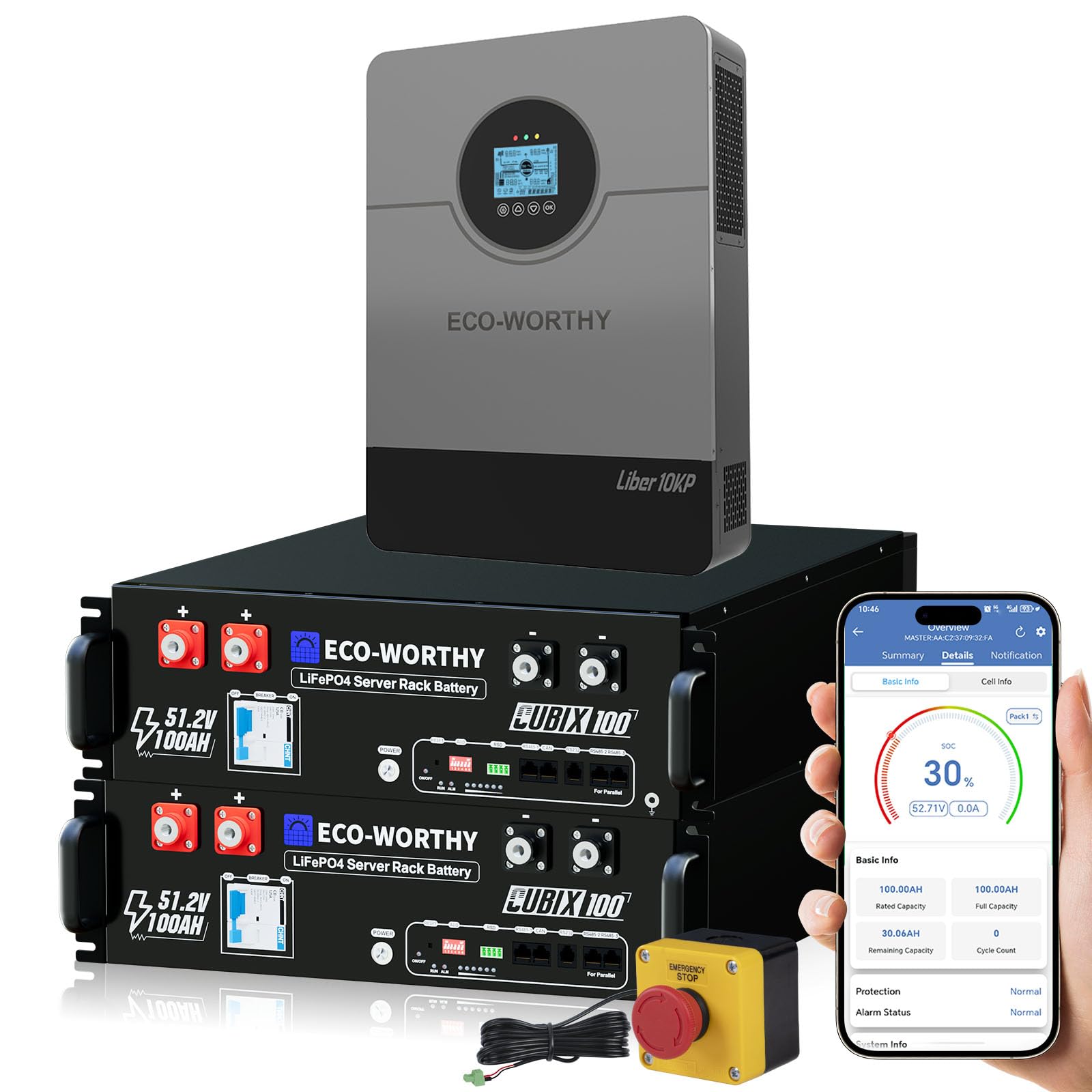
A two-battery starter kit built to grow — six inverters and up to 32 batteries in parallel if you ever want to keep scaling.
The pitch here is headroom. You get one 10kW MPPT inverter and two 51.2V 100Ah LiFePO4 batteries, listed at 10240Wh and 200Ah total, with a rated output of 10000W and a peak of 20000W. That peak number matters for start-up surges — the brief spike a fridge compressor or well pump draws the instant it kicks on. As a system it is lighter than the EcoFlow, at 265.5 lb against 350 lb, which makes the physical install a little friendlier if stairs or a tight utility closet are in your future.
The expansion story is the reason to pick this one. ECO-WORTHY lists support for up to six inverters in parallel for up to 60kW of AC output, and up to 32 batteries in parallel for 163.84kWh of total storage. If you want to start modest and add batteries as budget allows, that is a genuinely different path from a fixed-capacity box. The inverter is a 3-in-1 unit: pure sine wave output plus two independent MPPT controllers plus a battery charger rated to 200A on solar and 200A on a hybrid setup. Closed-loop communication over CAN and RS485 lets it talk to leading integrated solar inverters, and built-in WiFi and Bluetooth push status to the ECO-WORTHY app.
Safety documentation is strong for the category — the battery and inverter have passed UL1973 and UL1741 testing by Intertek and meet California Energy Commission standards. One practical quirk to expect: each item ships separately for safety reasons, and tracking numbers arrive through Amazon messaging, so do not schedule an electrician until every box has a number. Compared with the Powermega above, you give up capacity — 200Ah against 314Ah — in exchange for a lighter footprint and the parallel-expansion roadmap.
Expansion math that actually scales: Six inverters and 32 batteries is a real path from a starter kit to a whole-property system without replacing hardware you already bought.
The catch to plan around: Split shipments mean your kit arrives in pieces on different days, so build a buffer into your install timeline rather than booking labor for the first delivery date.
Built for: the buyer who wants to start with 10240Wh today and bolt on more batteries and inverters later without a full do-over.
Look elsewhere if: you want maximum storage in one delivery and no interest in a modular build-out.
3. EF ECOFLOW Power Station 12288Wh Delta Pro Ultra X with AC Cable
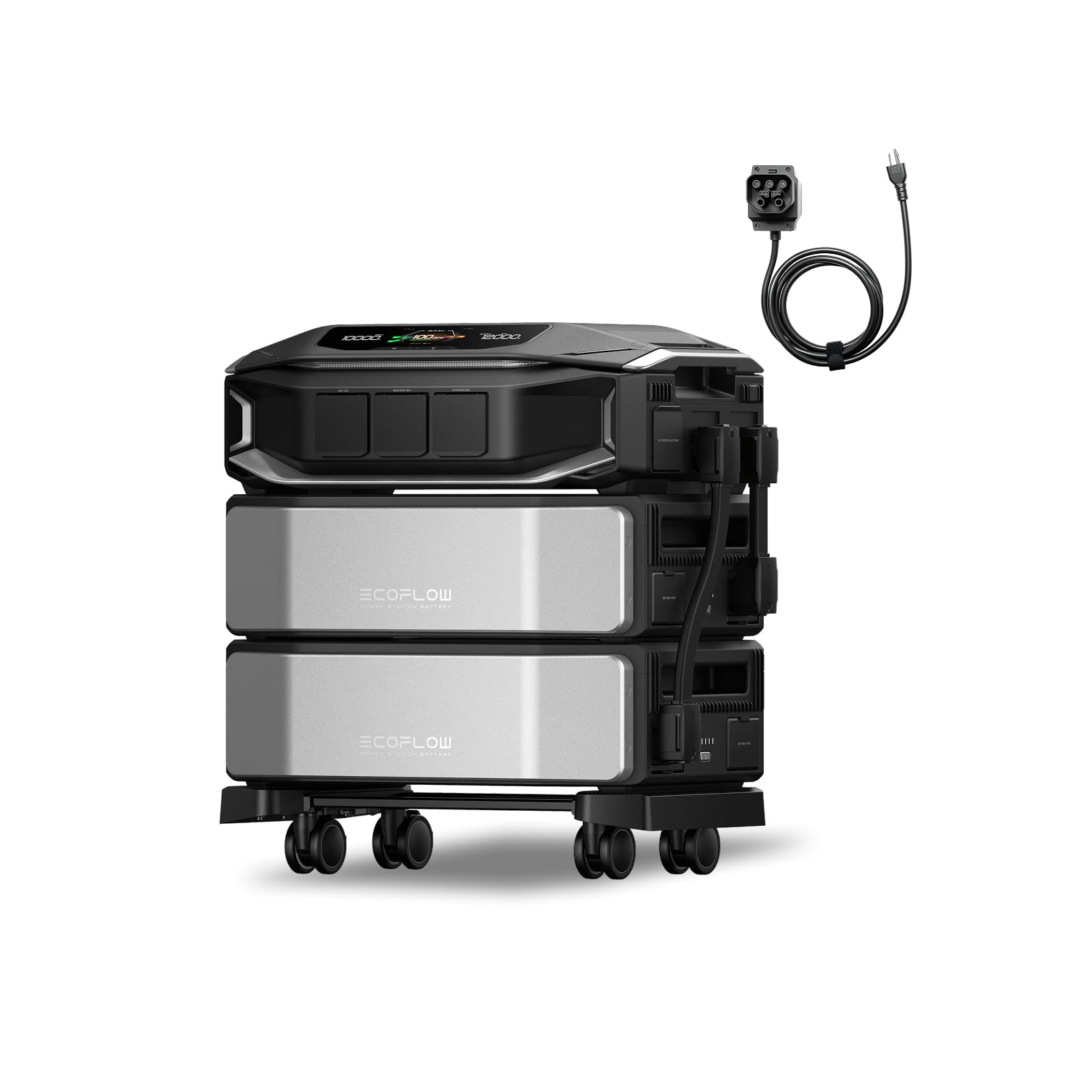
The plug-in-and-take-it-with-you option — no hardwiring, and it restores power in under 20 milliseconds when the grid drops.
EcoFlow’s angle is a different kind of flexibility. The Delta Pro Ultra X lists 12288Wh of capacity in this configuration and 12000W of output, with the ability to expand up to 12–180 kWh, and it does it without permanent hardwiring. That matters if you rent, if you plan to move, or if you want to add panels and plug-and-play batteries yourself without calling an electrician. The switchover claim is the eye-catcher: it restores power in under 20 milliseconds when the grid fails, so your fridge, Wi-Fi, and any medical gear do not even blink.
What wins people over, though, is how little friction there is on day one. Ease of use is the most-praised quality in the feedback, and buyers report running computers, a TV, lights, and an EG4 Mini Split 12k BTU on it at once. Reliability and value for money are the mixed signals in the feedback, so treat this as a strong performer rather than a perfect one. Charging performance and weight land as mixed too, and at 350 lb it is the heaviest system on this list — 350 pounds against the Liber 10KP kit’s 265.5 lb.
The safety engineering is serious: EV-grade LiFePO4 cells, dual BMS, and 100+ real-time safety checks across a 3-level system that isolates faults while essentials stay powered. It self-heats or cools to run from freezing nights to 122 °F heat. Footprint is the tightest here at 26.6″L x 18.7″W x 9.06″H, against the Powermega’s 32.56″L x 20.47″W x 9.92″H — useful if your install wall is short. The inverter and extra batteries ship in separate packages.
A footprint and plug-in story: The smallest cabinet dimensions in the lineup plus no hardwiring requirement is a genuine advantage if you rent or plan to relocate the system with you.
Where the feedback turns uneven: Reliability, value, and charging speed draw mixed reactions, so read the support and warranty terms before committing.
Pick this one when: you want the least installation friction and the fastest grid-failure response, and portability after install is worth paying for.
Not your system if: pure dollars-per-kilowatt-hour is the deciding factor, or you need the lightest possible physical install.
Understanding the Specs
Watts vs. Watt-Hours
Watts measure how much power flows at one moment — how many appliances can run at once. Watt-hours measure how long they keep running. A 10,000W inverter is the size of the pipe; the battery in kWh is the size of the tank. When you compare systems, check both: high wattage with a small battery gets you a short, powerful burst, and the tank is what carries you through a multi-day outage.
Split-Phase 240V Output
Split-phase output delivers both 120V and 240V, so a system can run standard outlets and the heavier 240V circuits in a house. That is where well pumps, dryers, and larger air conditioners live. Confirm your critical loads run on the phases the inverter supports before you buy — a 120V-only setup leaves the 240V side dark.
LiFePO4 Cycle Life and Depth of Discharge
LiFePO4 (lithium iron phosphate) is chosen for thermal stability and long service. Cycle life tells you how many full charge-and-drain rounds the battery survives. Depth of discharge (DoD) is how much of the battery you use each cycle — a rating at 80% DoD means the cycle count holds even when you drain most of the pack. Compare cycle ratings at the same DoD to keep it apples-to-apples.
Communication and App Monitoring
RS485 and CAN are wired data links that let a battery talk to an inverter, so they coordinate charging and discharging instead of guessing. WiFi and Bluetooth add phone-app monitoring, so you can watch battery state and output without standing in front of the unit. Closed-loop communication is what makes a mixed inverter-and-battery system behave as one.
FAQ
Will a 10kW solar generator run my whole house?
How long will 10240Wh actually power my fridge and lights?
Do these systems need to be hardwired by an electrician?
What is the difference between 120V and 240V output on these units?
Are these systems UL certified?
Can I add more batteries or inverters later?
How do I get a 300-pound system delivered and installed?
Will losing grid power flip my appliances off and back on?
How cold can these batteries run?
What does a 10kW inverter’s MPPT efficiency mean in practice?
Final Thoughts: The Verdict
For most households chasing a 10000 watt solar generator, the ECO-WORTHY Powermega 48V 314Ah is the pick because it stacks the deepest usable storage in this lineup — 16.1kWh from a 314Ah battery — onto a 10kW inverter with split-phase 240V and a layered safety stack. If you want a lighter starter kit with a real path to 163.84kWh through parallel expansion, the ECO-WORTHY Liber 10KP kit is the one to reach for. And if fast switchover and a no-hardwiring install matter more than capacity, the EF ECOFLOW Delta Pro Ultra X fits that brief. The Powermega wins here on the deepest usable storage in the lineup, 16.1kWh, and a 4.5+ rating against the EcoFlow’s 4.0+.
How We Picked
We do not accept paid placement. Every pick is matched to a real buyer and a real use-case; we do not hands-on test units.
Sources & Methodology
Specifications: manufacturer listings and product documentation. Review insights: verified customer reviews. Pricing: not shown on this page (it changes often); check the current price via the retailer link.
As an Amazon Associate, Gadgets Feed earns from qualifying purchases. This does not affect which products we feature.