
The search for immense storage that still works with older SATA-only motherboards, laptops, or PS4s usually ends in frustration — mechanical drives are too slow, and consumer NVMe slots max out at 2TB or 4TB. Bridging that gap requires a high-capacity SATA SSD that delivers reliable sequential speeds without the latency of spinning platters, all while fitting the standard 2.5-inch bay that hasn’t changed in a decade.
I’m Min — the co-founder and writer behind Gadgets Feed. My analysis of this category focuses on comparing controller reliability, NAND flash type (TLC vs. QLC), and the real-world endurance ratings (TBW) that determine whether a massive drive like this survives years of read-heavy use or professional workloads.
Whether you’re filling a network-attached storage array, upgrading a media server, or just tired of juggling multiple smaller drives, this guide breaks down the key specs and real performance trade-offs to help you pick the right 10tb sata ssd for your needs.
How To Choose The Best 10Tb SATA SSD
Not all SATA SSDs handle the strain of 8TB or 10TB capacities the same way. Picking the wrong one can mean painfully slow write speeds after the SLC cache fills up, or a drive that wears out prematurely under constant use. Focus on four critical factors before clicking buy.
NAND Flash Type: TLC vs. QLC
TLC NAND stores three bits per cell, offering better write endurance (higher TBW rating) and faster sustained write performance than QLC, which stores four bits per cell. Most budget-friendly high-capacity SSDs use QLC to keep costs down, but if you plan to write large amounts of data daily — video editing, data logging, or frequent backups — a TLC-based drive will last significantly longer.
SLC Cache Behavior
Every modern SATA SSD uses a portion of its NAND as a fast SLC write cache. The size of this cache determines how much data you can write at full speed before the drive drops to native NAND speeds. On an 8TB QLC drive, the cache may be relatively small (tens of GB), causing a massive slowdown during sustained writes. Premium drives with dynamic SLC caching and DRAM buffers handle this better.
Endurance Rating (TBW)
Terabytes Written (TBW) is the manufacturer’s guarantee of how much total data you can write to the drive before it may fail. For an 8TB SSD used as a media archive, 800TBW is fine. For a workstation scratch disk, look for 1,000TBW or higher. This spec directly correlates with NAND quality, controller efficiency, and overall build reliability.
Controller & DRAM
A drive with a dedicated DRAM cache (usually 1-2GB on these sizes) provides much more consistent random and sequential performance than DRAM-less designs, which rely on host memory buffer (HMB) and system RAM. For a primary boot drive or a drive handling multiple simultaneous read/write streams, a DRAM-equipped SSD is worth the premium.
Quick Comparison
On smaller screens, swipe sideways to see the full table.
| Model | Category | Best For | Key Spec | Amazon |
|---|---|---|---|---|
| Samsung 870 QVO 8TB | Premium | Reliable archive & Mac upgrade | 560/530 MB/s, QLC, 8TB | Amazon |
| VectoTech V-MAX 8TB | Premium | Fastest write speeds in 8TB | 550/530 MB/s, TLC, 8TB | Amazon |
| KingSpec 8TB | Mid-Range | PS4 Pro & PC game storage | 550/520 MB/s, TLC, 8TB | Amazon |
| Crucial BX500 4TB | Mid-Range | Budget OS upgrade & cloning | 540 MB/s, QLC, 4TB | Amazon |
| TEAMGROUP QX 4TB | Mid-Range | Secondary drive for gaming | 500/460 MB/s, QLC, 4TB | Amazon |
| SP Silicon Power A55 4TB | Mid-Range | Legacy laptop & basic systems | 500 MB/s, QLC, 4TB | Amazon |
| fanxiang S101 4TB | Budget | Low-cost capacity for older PCs | 500 MB/s, TLC, 4TB | Amazon |
| SanDisk SSD Plus 2TB | Budget | Security camera & simple boot | 545/515 MB/s, TLC, 2TB | Amazon |
| Bestoss 2TB | Budget | Entry-level office & student PC | 550 MB/s, TLC, 2TB | Amazon |
In‑Depth Reviews
1. Samsung 870 QVO 8TB

The Samsung 870 QVO is the gold standard for high-capacity SATA SSDs, offering 8TB of QLC storage with Samsung’s proven controller and V-NAND technology. Its sequential read speed hits 560 MB/s, matching the SATA III ceiling, while the Intelligent TurboWrite 2.0 algorithm provides a larger SLC buffer area than most QLC rivals, maintaining faster writes for longer during multi-GB file transfers. It also includes 256-bit AES encryption and full Microsoft eDrive support for professional environments.
Users upgrading from 4TB versions report seamless migration using Samsung’s Data Migration software, and RAID arrays built with multiple 870 QVOs show performance exceeding single Gen4 NVMe drives in sustained throughput tests. The drive’s 2.5-inch 7mm profile fits Ultrabooks and desktop bays equally well, and it operates silently with very low power draw under idle conditions — critical for always-on NAS systems.
Endurance isn’t its strength — the 8TB model offers 1,440 TBW, which is ample for archival and media playback but not ideal for constant rewriting. The price premium reflects Samsung’s warranty support and reliability track record, making this the safest long-term bet among the high-capacity options.
Why it’s great
- Industry-best reliability and 3-year warranty from Samsung
- Intelligent TurboWrite 2.0 improves sustained write performance
- Silent, cool operation — perfect for NAS and media servers
Good to know
- QLC NAND limits write endurance compared to TLC drives
- Premium price per terabyte of storage
2. VectoTech V-MAX 8TB

The VectoTech V-MAX stands out in the large-capacity SATA market by using 3D NAND TLC rather than the more common QLC, which translates directly into superior write endurance and more consistent sustained write speeds. It pushes up to 550 MB/s sequential read and 530 MB/s write, powered by the Phison PS3112 controller — a well-regarded chipset found in enterprise-grade drives. The controller includes full TRIM, S.M.A.R.T., and Wear Leveling support for day-to-day data integrity.
The 1.5 million-hour MTBF rating gives confidence for always-on use, and user reports confirm successful cloning from older Crucial drives without complications. The 8TB capacity approaches the maximum available in the 2.5-inch SATA form factor, offering a genuine alternative to the discontinued Samsung 870 QVO with better write performance backup. The drive fits 7mm bays and runs cool even under load, thanks to the efficient controller.
VectoTech is a less established brand than Samsung, which makes warranty and support less predictable long-term. Early adopters report good initial experiences, but the track record is shorter. Still, for buyers who need TLC endurance at this capacity, the V-MAX offers the best write performance available today in an 8TB SATA SSD.
Why it’s great
- TLC NAND means better write endurance and sustained speed
- Phison PS3112 controller is proven and reliable
- Excellent alternative to discontinued Samsung 8TB models
Good to know
- Niche brand with limited long-term reputation data
- Premium pricing for the performance tier
3. KingSpec 8TB
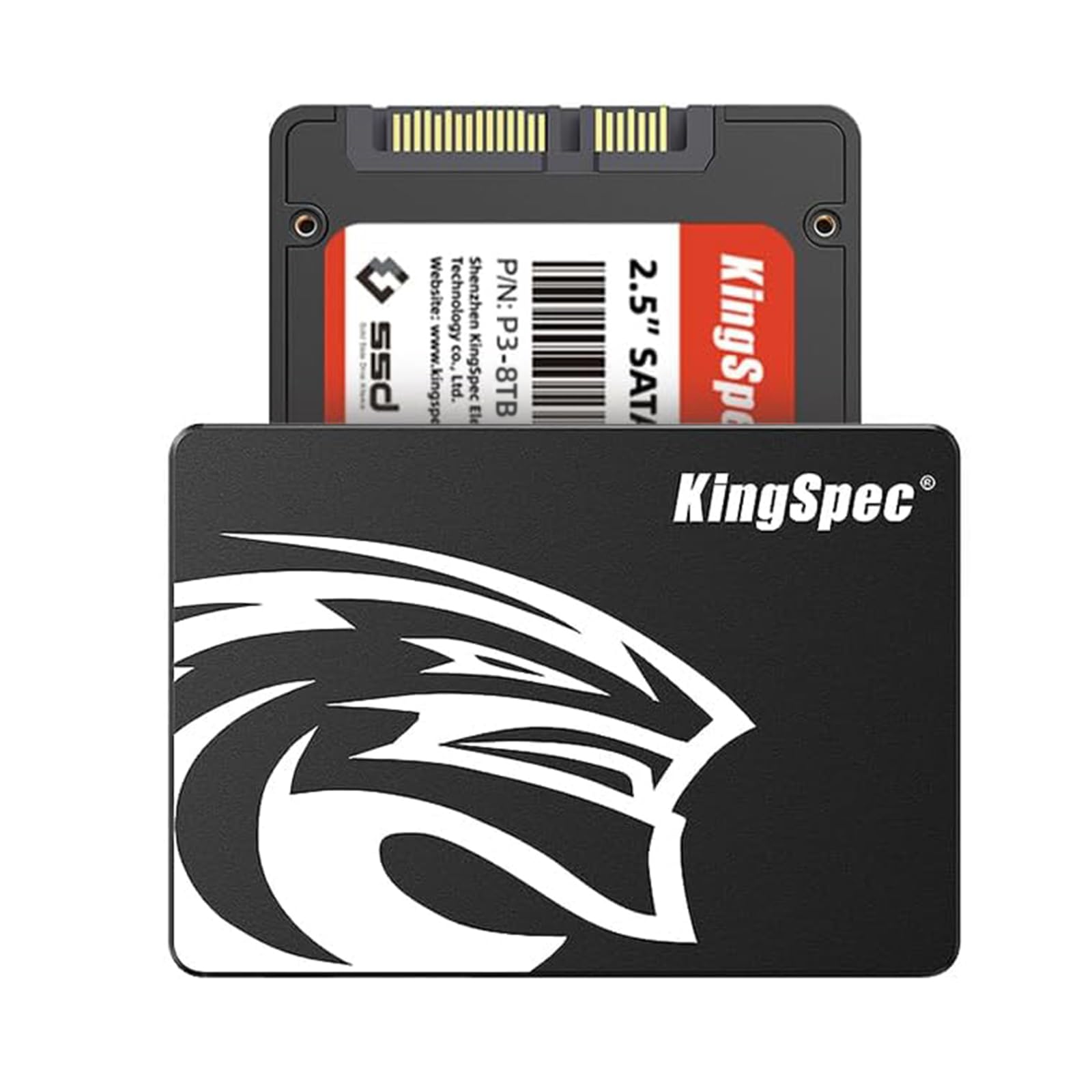
The KingSpec 8TB SATA SSD uses 3D NAND flash (reported as TLC in customer testing) and achieves up to 550 MB/s read and 520 MB/s write speeds, making it one of the fastest large-capacity drives in its price tier. It specifically lists compatibility with PS4 and PS4 Pro in addition to standard desktop and laptop support, which is unusual for drives this size and shows attention to the console upgrade market. The ABS enclosure keeps weight low at roughly 50g, and the drive supports NCQ, TRIM, and S.M.A.R.T. monitoring.
Customer reviews highlight its transformative effect on old Dell and HP laptops — Windows boot times drop from over a minute to under fifteen seconds. The drive appears to use quality TLC chips even at budget pricing, which gives better write longevity than QLC competitors at similar sizes. The 3-year warranty is standard, but KingSpec provides lifetime technical support for troubleshooting.
The brand is less known than Samsung or Western Digital, so consistency across production batches can vary. Some users note that the drive required a quick format on initial install to ensure optimal performance. For the price, the capacity-to-performance ratio is exceptional, especially for media archives or game libraries.
Why it’s great
- Affordable 8TB capacity with TLC-grade NAND performance
- Explicit PS4/PS4 Pro support for console storage upgrades
- Very fast boot times in older laptops
Good to know
- Brand reliability is less established than major OEMs
- Initial formatting may be required on some systems
4. Crucial BX500 4TB

The Crucial BX500 4TB is the value king of mainstream SATA SSDs, using Micron’s 3D NAND and Dynamic Write Acceleration to hit up to 540 MB/s sequential reads. It includes free Acronis True Image HD cloning software — a major convenience for users migrating from a failed HDD or smaller SSD — and supports 256-bit AES hardware encryption with eDrive and TCG Opal 2.0 compliance for business-grade security. The drive is DRAM-less, relying on host memory buffer to maintain random performance.
Customer reports confirm it can resurrect decade-old laptops, with boot times dropping from over two minutes to under twenty seconds. It runs cool and quiet, making it ideal for laptops with limited airflow. The 3-year warranty is backed by Micron’s massive supply chain, so replacement is straightforward if issues arise. The 4TB capacity provides ample headroom for storing large 4K video libraries and modern game installations.
The lack of a DRAM cache means sustained write speeds drop significantly once the SLC cache fills — expect slower performance during multi-hundred-gigabyte transfers. For a primary OS drive under light daily use, this is rarely noticed, but media professionals editing directly from the drive may want a DRAM-equipped model.
Why it’s great
- Excellent value with great reliability from Micron
- Includes Acronis cloning software for easy migration
- Hardware encryption support for data security
Good to know
- DRAM-less design slows sustained writes after SLC cache fills
- Not ideal for video editing or heavy write workloads
5. TEAMGROUP QX 4TB

The TEAMGROUP QX 4TB uses 3D NAND QLC with SLC caching technology and a Smart Dual Cache to achieve read/write speeds of up to 500/460 MB/s. It carries an 800TBW endurance rating, which is standard for QLC drives at this capacity and suitable for a secondary storage drive holding games, media, and less frequently modified files. The polycarbonate enclosure is lightweight and shock-resistant, and the drive works in both 2.5-inch laptop bays and desktop 3.5-inch adapters.
Customers consistently report full SATA III speeds in CrystalDiskMark benchmarks, with fast game loading times in Steam libraries and external USB enclosures. The drive runs silent and barely warms up, even during extended gaming sessions. Many users pair it as a secondary drive in gaming laptops or use it in a USB 3.0 enclosure to expand console storage.
The QLC NAND means write speeds slow considerably after the SLC cache is exhausted — copying a 200GB game folder will drop from ~450 MB/s to under 100 MB/s. This is normal for the NAND type and does not affect read-intensive gaming workloads. The 3-year TBW warranty is clearly defined by JEDEC standards.
Why it’s great
- Good value for large game storage with fast read speeds
- Lightweight and runs cool in tight laptop bays
- Works perfectly in external USB enclosures
Good to know
- SLC cache limited; sustained large writes slow down
- QLC endurance lower than TLC alternatives
6. SP Silicon Power A55 4TB

The SP Silicon Power A55 4TB uses 3D NAND flash with an advanced SLC Cache Technology that enhances both boot performance and the drive’s overall lifespan. Its 7mm slim form factor is specifically designed for Ultrabooks and slim notebooks where clearance is tight, and it delivers sequential read speeds up to 500 MB/s. The drive is shock-resistant and operates without moving parts for silent performance in any environment.
Reviews from users with 20+ years in computer repair highlight how the A55 transformed old business laptops — a clean Windows 10 install takes under 10 minutes, and cold boot drops to roughly 10 seconds from over 90 seconds on a traditional HDD. The drive works reliably as a boot drive for lightweight server builds and older PC appliances where NVMe isn’t an option. The 3-year limited warranty requires product registration via the SP website for full coverage.
Sustained write speeds after the SLC cache is exhausted are typical for QLC drives — expect drops for very large file transfers. Some users reported the drive ships with a GPT partition table that may need manual conversion to MBR for BIOS-based systems, adding a setup step for legacy hardware.
Why it’s great
- 7mm slim design fits Ultrabooks and slim laptops
- Very fast boot times for legacy hardware upgrades
- Shock-resistant and silent operation
Good to know
- Warranty registration required for full coverage
- May need partition table conversion for older systems
7. fanxiang S101 4TB

The fanxiang S101 4TB is a budget-friendly SATA SSD that surprisingly uses TLC NAND rather than the cheaper QLC often found at this price point. It delivers read speeds up to 500 MB/s with SLC Cache Technology, which helps maintain performance during typical desktop workloads. The drive supports garbage collection, advanced wear-leveling, RAID, ECC, TRIM, and S.M.A.R.T., ensuring stable operation as a boot drive or mass storage unit.
Users report it works well in older laptops where the SATA interface is the bottleneck, with boot times under 10 seconds and fast application loading. The TLC flash gives it a longer write life than many competing 4TB drives, making it a more durable choice for users who write data moderately. The S101 is also compatible with Windows, Linux, and Mac OS, and the plastic enclosure keeps weight minimal for portable external use.
A few customers experienced corruption after a couple of months, though this was often linked to old or failing laptop hardware rather than the drive itself. The 3-year warranty includes lifetime technical support, but fanxiang’s customer service response times can vary compared to larger brands.
Why it’s great
- TLC NAND provides longer write endurance than QLC rivals
- Fast boot times in legacy PC upgrades
- Very affordable for the capacity
Good to know
- Reports of occasional drive corruption in very old systems
- Customer support responsiveness is inconsistent
8. SanDisk SSD Plus 2TB
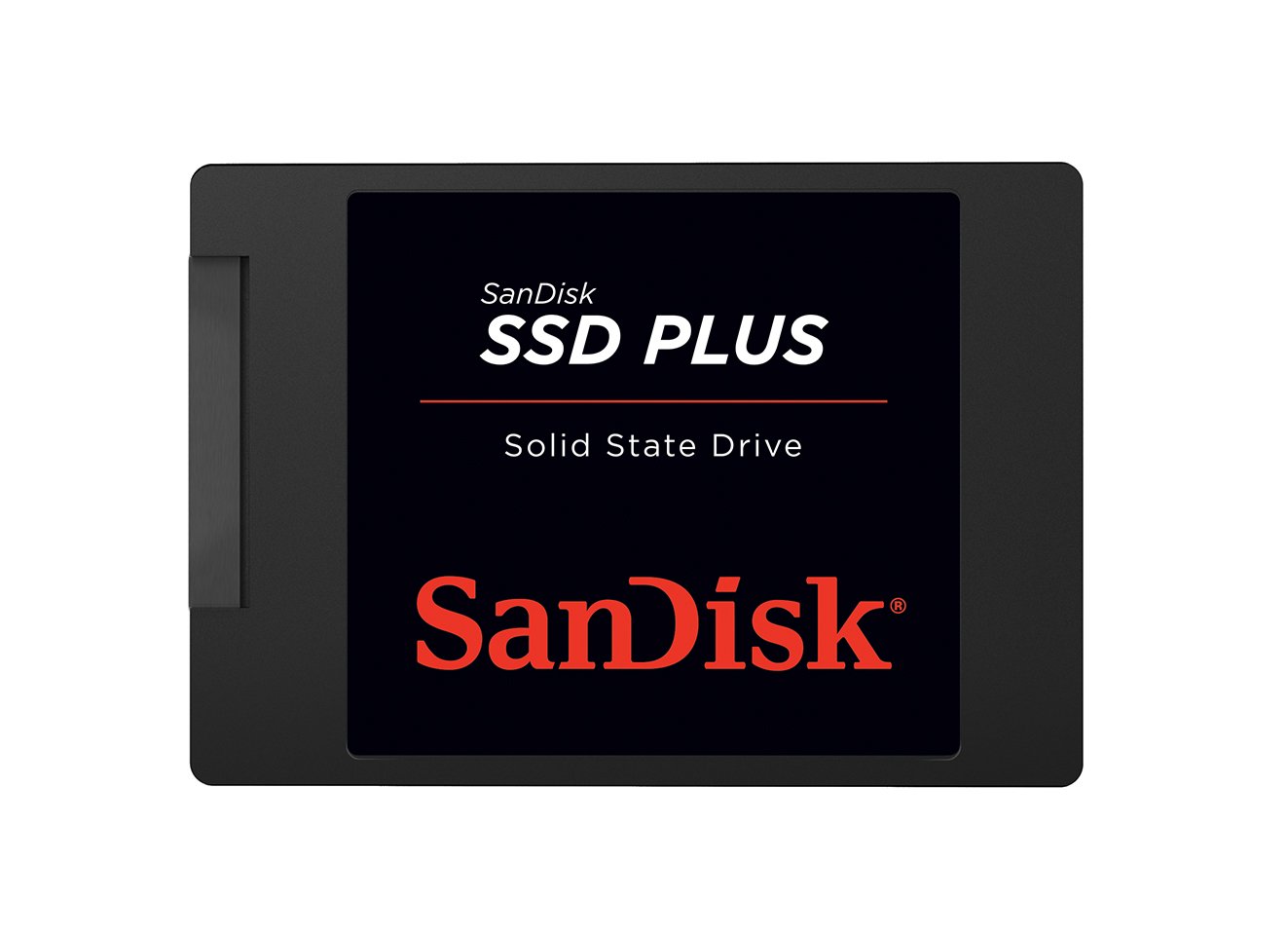
The SanDisk SSD Plus 2TB achieves sequential read speeds up to 545 MB/s and write speeds up to 515 MB/s, making it one of the faster entries in the budget segment. It is shock-resistant for proven durability, even if the host device is dropped, and the 2.5-inch 7mm form factor fits easily into laptops, desktops, and even modded retro gaming consoles. The drive uses 3D NAND flash with no DRAM, leaning on host memory buffer for random performance.
Customer reviews reveal creative use cases — several users installed it in modded PS2 consoles for silent, fast game loading via OPL, and security camera systems rely on it for 24/7 recording due to its quiet operation and consistent write performance. It works as a straightforward boot drive upgrade for older PCs, providing instant responsiveness improvement over mechanical drives. The SanDisk brand carries strong trust regarding flash memory reliability.
The 2TB capacity is modest compared to the 8TB drives in this list, so it serves best as a supplemental drive or a budget-friendly primary drive for users who don’t need massive capacity. Being DRAM-less, sustained write performance drops under heavy load, but for typical home and office use, it remains snappy and responsive.
Why it’s great
- Fast read/write speeds for the price tier
- Shock-resistant design for rugged builds
- Trusted brand with strong flash memory reputation
Good to know
- DRAM-less architecture affects sustained writes
- 2TB capacity may not satisfy heavy storage users
9. Bestoss 2TB
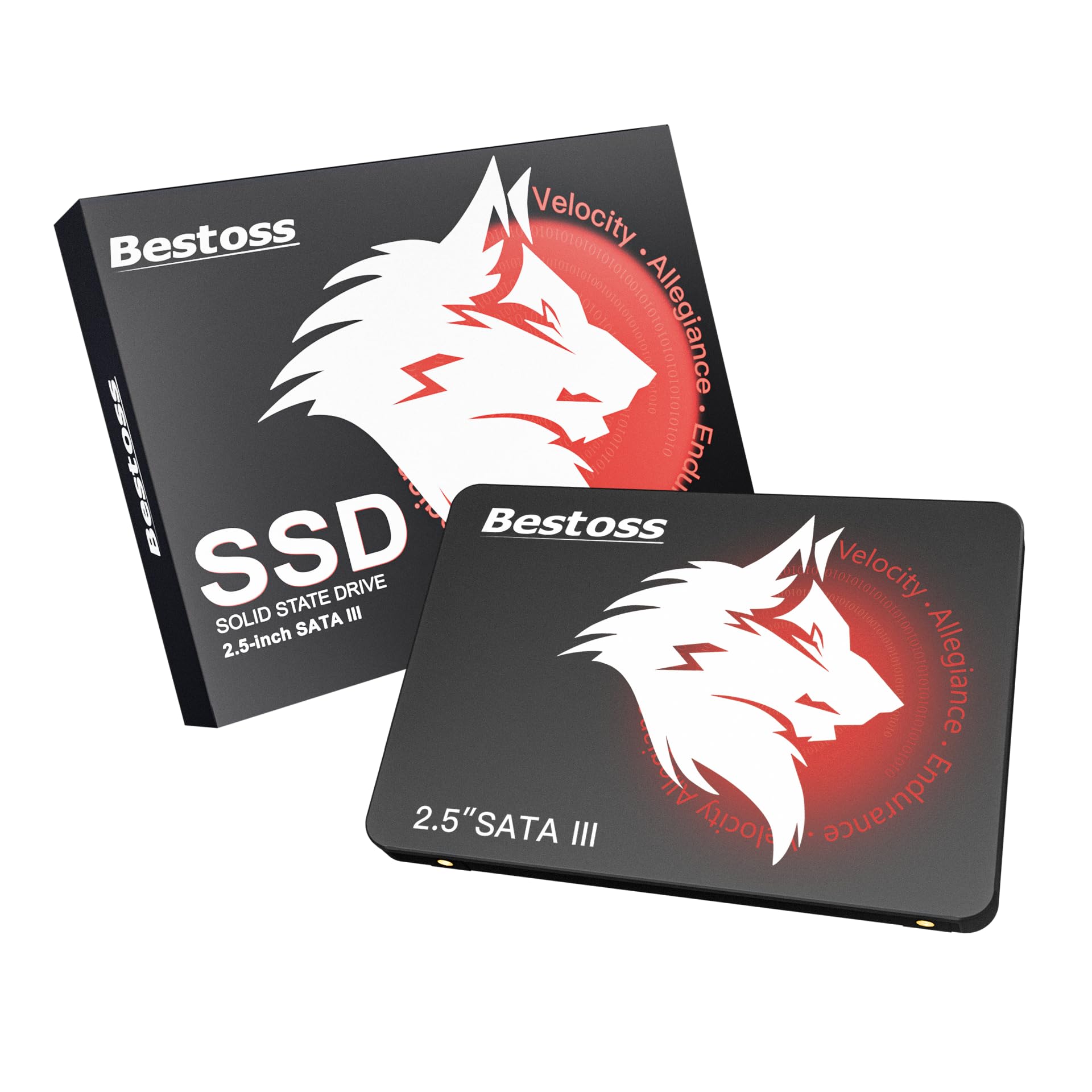
The Bestoss 2.5-inch 2TB SATA III SSD uses TLC NAND chips, offering a longer write life than the QLC-based drives found at similar entry-level price points. It delivers up to 550 MB/s sequential read speeds, which can make a PC boot at least 50% faster than a traditional HDD, according to the manufacturer. The drive supports TRIM, NCQ, and S.M.A.R.T., and is backward compatible with SATA II and SATA I interfaces for very old hardware upgrades.
Customers find it a solid budget option for office work, student laptops, and light gaming, with easy installation and immediate system recognition. One reviewer uses it with a Raspberry Pi, appreciating the speed and reliability over microSD cards. The drive offers capacities from 120GB to 4TB, though the 2TB model reviewed here hits the sweet spot for value per gigabyte.
Being a lesser-known brand, long-term reliability data is scarce, and the 3-year warranty is supported by lifetime technical support. The red and black color scheme is unconventional compared to the standard black enclosures of most competitors, which may or may not matter depending on the build.
Why it’s great
- TLC NAND provides better endurance than budget QLC drives
- Backward compatible with SATA II for old hardware
- Great for Raspberry Pi and other single-board computers
Good to know
- Less established brand with limited long-term data
- 2TB max capacity limits heavy storage users
FAQ
Do 8TB or 10TB SATA SSDs exist at standard 2.5-inch heights?
Will a high-capacity SATA SSD work in my PS4 or PS4 Pro?
What is the biggest difference between TLC and QLC NAND for large SATA SSDs?
Final Thoughts: The Verdict
For most users, the 10tb sata ssd winner is the Samsung 870 QVO 8TB because of its unmatched reliability, strong 560 MB/s read speed, and proven track record in NAS and media archive setups. If you need faster sustained write performance with TLC endurance, grab the VectoTech V-MAX 8TB. And for the best value in massive capacity, nothing beats the KingSpec 8TB.