
Our readers keep the lights on and my morning glass full of iced black tea. As an Amazon Associate, I earn from qualifying purchases.
Specs are compiled from manufacturer listings and verified buyer reviews and can change over time — please confirm the key details on the product page before buying.
If your engine is ticking on cold mornings, burning a quart between changes, or you simply want to stop changing oil every few thousand miles, the right 10W30 is the fix. This guide cuts to the nine that actually earn their spot — what each one protects, how long it lasts, and which engines it suits.
I’m Min — the founder and writer behind Gadgets Feed. This guide is built by comparing the manufacturers’ published specifications and the patterns across verified customer reviews, so you get each pick’s real strengths and trade-offs instead of marketing spin.
Below you’ll find a quick comparison, full reviews, and plain-English explanations of the numbers on the bottle so you can choose with confidence. The right 10w30 motor oil depends on your mileage, your engine, and how far you drive between changes.
Our Picks at a Glance


How To Choose The Best 10W30 Motor Oil
You never see motor oil work, so you buy it blind. Your choice depends on three things: what your engine needs, how far you drive between changes, and your budget per quart.
Match the grade to your manual, then match the formula to your mileage
The 10W30 on the cap is not a suggestion. The “10W” is the cold-weather number — it tells you how thick the oil stays when the engine is cold, which is when most wear happens. The “30” is the hot-running number, the thickness at operating temperature.
If your odometer is past 75,000 miles, a high-mileage formula is worth the extra. These blends carry seal conditioners — additives that soften and swell hardened seals so they grip again. That is what slows the drips and the burning.
Full synthetic, blend, or conventional
Full synthetic oil is engineered at the molecular level and resists breakdown far longer than conventional oil, which is why some bottles advertise extended drain intervals. Conventional oil is the old standard — it works fine, just change it more often. A synthetic blend sits between the two on both endurance and cost.
One warning for older engines: if your car was built before the era of zinc-reduced oils, check whether the formula still carries anti-wear additives like zinc and phosphorus. Flat-tappet cam engines in particular want that protection.
Quick Comparison
| Model | Best For | Type | Volume | Advertised Protection | Amazon |
|---|---|---|---|---|---|
| Mobil 1 Extended Performance 10W-30 (6 Qt)★ Best Overall | Long drain intervals, daily drivers | Full synthetic | 192 fl oz | Up to 20,000 miles | Amazon |
| Red Line 11304 SAE 10W30Top Performer | Performance and crate engines | Full synthetic | 1 quart | Ester/PAO formula | Amazon |
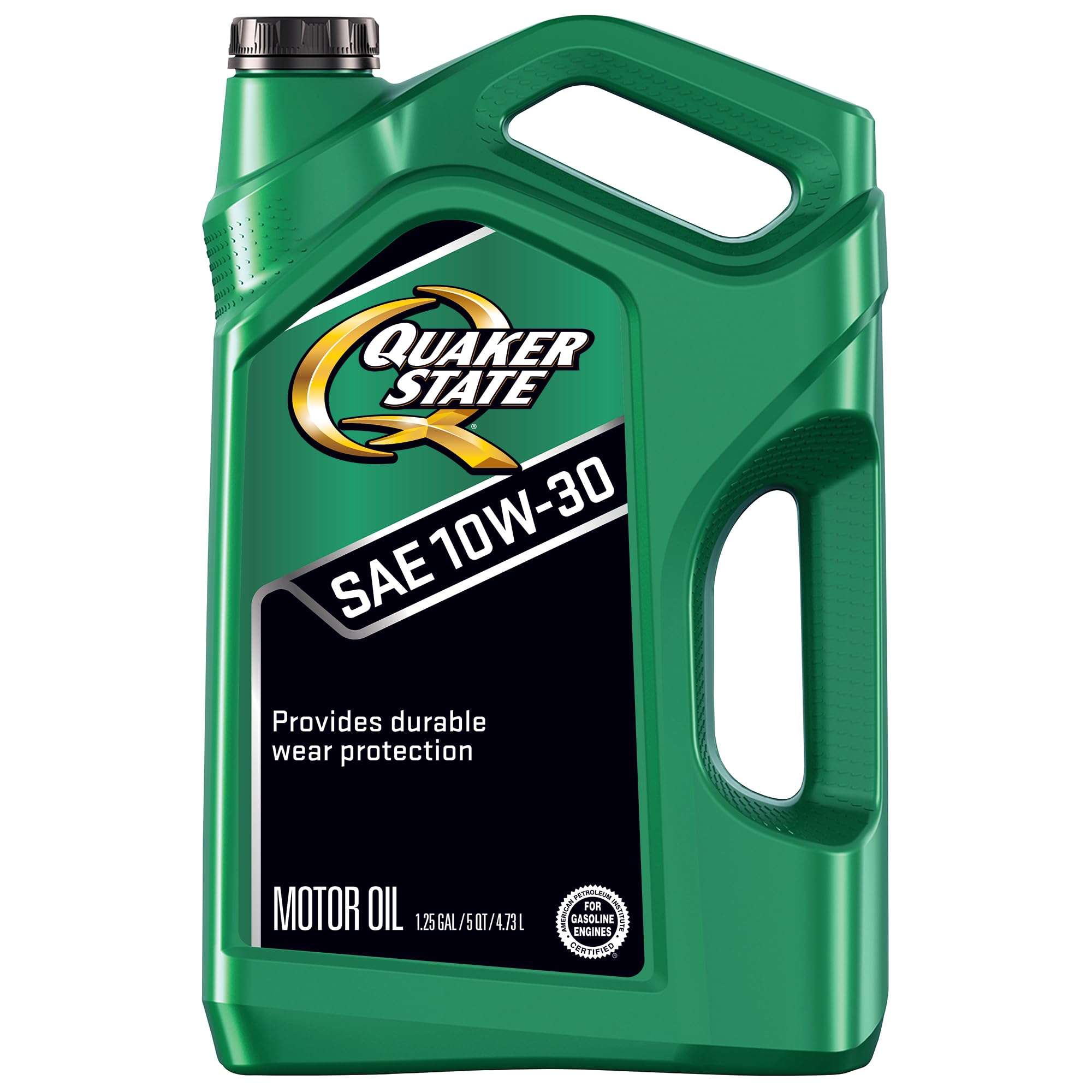
| Quaker State 10W-30 (5 Quart)Budget Champion | Older cars and lawn equipment | Conventional | 160 fl oz | Daily-commute wear protection | Amazon |
| Delo 400 XLE Synblend 10W-30 | Diesel and mixed fleets | Synthetic blend | 1 gallon | Extended service protection | Amazon |
| Havoline High Mileage 10W-30 (6 Qt) | High-mileage and turbo engines | Synthetic technology | 6 quarts | Leak and consumption reduction | Amazon |
| Valvoline MaxLife High Mileage 10W-30 | 75,000+ mile engines | Full synthetic | 5 quarts | Seal conditioners, 2.5X heat protection | Amazon |
| Mobil 1 High Mileage 10W-30 (5 Quart) | Older engines, long drain cycles | Full synthetic | 160 fl oz | Up to 15,000 miles | Amazon |
| Royal Purple 51130 10W-30 | Trucks and ethanol-blend fuels | Full synthetic | 5 quarts | Corrosion and catalyst protection | Amazon |
| Royal Purple HMX 10W-30 (6 Qt) | High-mileage engines past 75,000 miles | Full synthetic | 192 fl oz | Zinc/phosphorus anti-wear | Amazon |
In-Depth Reviews
1. Mobil 1 Extended Performance Full Synthetic Motor Oil 10W-30, 1 QT (6 Pack)
Our pick — over 4.5★ from 900+ verified ratings; the strongest balance of quality and price.
A six-quart case built to go a full year between changes for most drivers
If you want to open the hood as little as possible, this is your pick. Mobil 1 rates the Extended Performance formula for up to 20,000 miles between oil changes, so most people change it once a year instead of every season. The 6-quart pack helps it win overall: 192 fluid ounces in the box versus 160 fluid ounces in the Quaker State five-quart jug, enough for a full change on a typical sump with top-off left over.
It resists heat up to 500 degrees Fahrenheit and still pours at minus 40 degrees Fahrenheit, so cold-climate winter starts are not a grind. Mobil 1 also states this oil meets the ILSAC GF-6 standard, which is the spec that covers low-speed pre-ignition protection and timing-chain wear in modern direct-injection and turbocharged engines. In plain terms, it is safe for the engines that are pickiest about oil.
Consistency is what wins people over. Owners agree on the quality of this oil more than anything else, and the long-term picture holds: buyers report it keeps an old Chevy running like new, and several say the same case services both a daily driver and a weekend sports car. Cold starts sound cleaner, highway runs stay quiet, and the viscosity stays put instead of thinning out and finding weak seals. A small handful mention nothing worse than wanting more bottles per case. It is the most-reviewed 10W30 here and the highest-rated, earning the top spot on both counts.
Where The Money Goes
- Rated for up to 20,000 miles between changes — one change covers most drivers for a year
- Six-quart case means one purchase covers a full drain with top-off spare
- Withstands 500 degrees Fahrenheit internally and still pours at minus 40 degrees Fahrenheit
- Meets ILSAC GF-6 for low-speed pre-ignition and timing-chain protection
Where It Falls Short
- You pay full-synthetic money for six bottles even if your engine only takes four quarts
- Extended intervals still require you to check the level between changes
Reach for this if: you drive a modern car or truck and want to change your oil once a year with confidence.
Look elsewhere if: your engine has a known leak and you would rather not run a long interval on any oil.
2. Red Line 11304 SAE 10W30 Fully Synthetic Motor Oil – 1 Quart
The boutique blend for crate motors and anyone who tears down engines for fun
Red Line builds this on an ester and PAO base — those are synthetic base-stock types chosen for how well they cling to hot metal rather than how cheap they are to make. Red Line states the film at operating temperature runs thicker than a petroleum 10W40, which is a notable claim given 10W40 is normally the heavier grade. The blend relies on natural multi-grade base stocks instead of extra additives, which Red Line says preserves lubricity.
For a neglected engine, detergency is the real story. High detergent content means the oil carries contaminants to the filter instead of letting them settle, and Red Line ties that to longer drain intervals and a cleaner interior. Long-time owners point to a teardown at 260,000 miles with clear hone marks, pristine cam lobes, and minimal bearing wear. A retired mechanic stretches changes to 12,000 miles with a filter swap in between, and a 91 Miata owner says it cleared a cold-start tick and washed 30 years of buildup off the oil cap underside.
Two things temper the enthusiasm. Value is the one split note among buyers: some call it the best oil money can buy, others find it steep per quart, and you notice this most on a fill that takes five or six bottles. It is also licensed to the older API SN/SM/SL/SJ/SH/SG/CF and ACEA A3/B3/B4 specs rather than the newest seal. For a high-revving V8 or another engine that spends time at the redline, that trade is usually fine.
Built for heat and revs: a thicker hot film than a petroleum 10W40 and additive-light base stocks make this the pick for crate engines and performance V8s.
The honest catch: you buy it one quart at a time, so a full six-quart fill adds up fast.
Who it beats: any conventional oil in an engine that sees track days or long highway pulls.
Who should pass: a commuter car owner who just wants a cheap jug and an annual change.
3. Quaker State Motor Oil, 10W-30, 5 Quart
The straightforward jug that keeps older engines and lawn gear running without drama
Not every engine wants a boutique synthetic, and not every owner wants to pay for one. Quaker State’s conventional 10W-30 covers daily commuting — from high-speed highway runs to repetitive stop-and-go — and states it maintains viscosity from start to finish so the oil film stays intact. It also carries corrosion protection against the acids that form as engine contaminants build up.
Where this earns its place is the 5-quart jug. Buyers who run a tiller, a mower, and an older vehicle off the same container point out that one jug beats five separate bottles for storage and cuts down on waste. Others note it is simply the oil they have used for years and it has never let them down. Three hundred sixty-nine ratings land it under five stars, though, so it is not flawless in every garage.
The trade-off is honest and simple: this is conventional oil, which means it breaks down sooner than a synthetic and is better suited to shorter change intervals. A couple of buyers specifically call it good for older cars or lawn mowers, and one admits it is harder to find in this weight than it used to be. If your manual calls for conventional and your engine is not fussy, none of that matters.
Best math in the list: a full 5-quart change from a single jug that costs less per quart than anything else here.
Know what you are buying: conventional base oil means shorter drain intervals than the full synthetics above.
The right call for: older cars, mowers, tillers, and anyone running a conventional schedule.
Skip if: your manual specifies a full synthetic or you want a 15,000-mile change window.
4. Delo 257000470 400 XLE 10W-30 Synblend Motor Oil – 1 Gallon
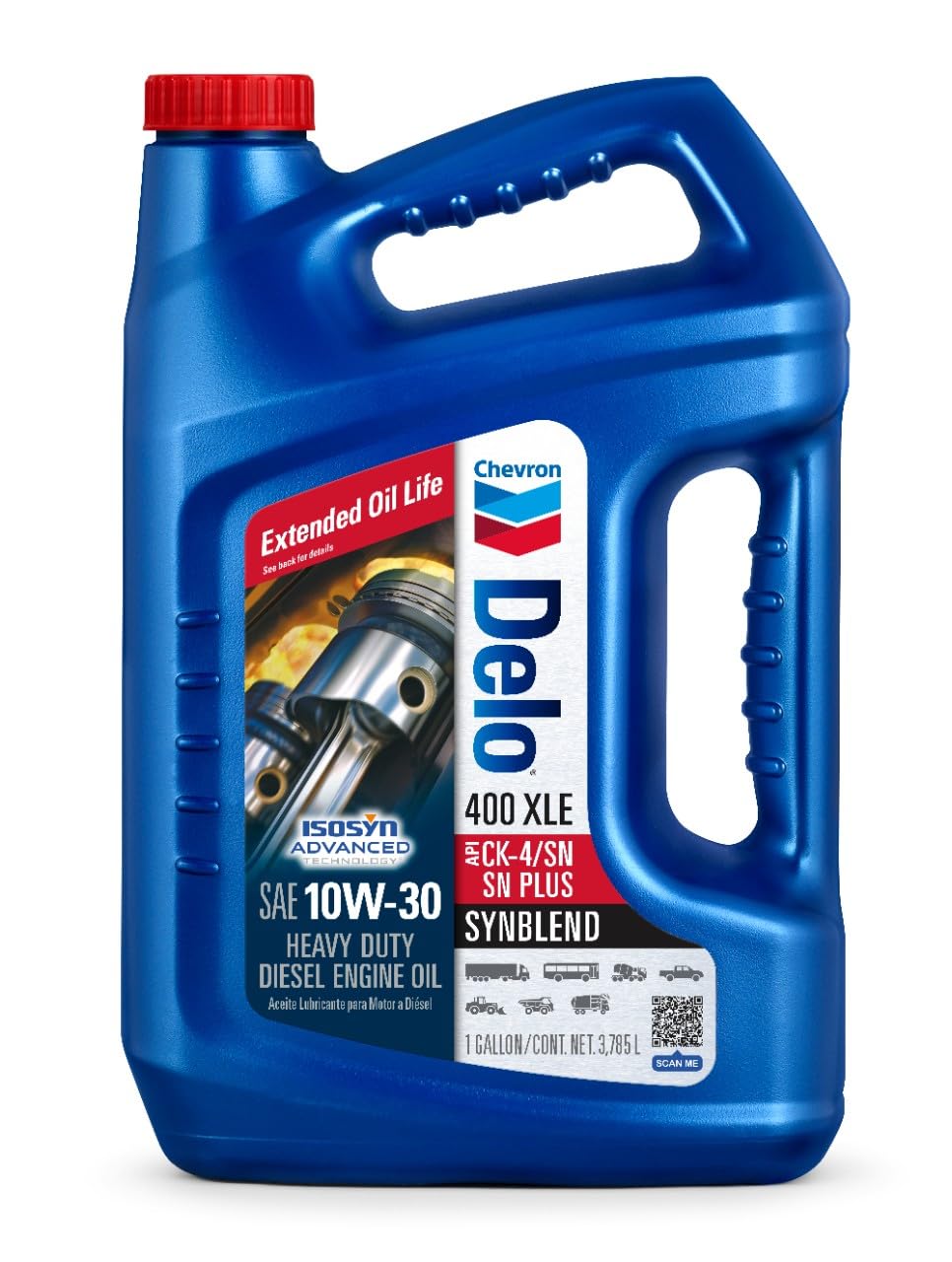
Heavy-duty chemistry for the guy running gas and diesel engines off one shelf
This is a synthetic blend built with what Chevron calls ISOSYN Technology — premium base oils paired with a high-performance additive package. The standout use case is soot. Diesel engines produce it, and Delo’s detergent and dispersant additives are designed to keep soot suspended rather than letting it grind against cylinders, pistons, rings, and valvetrain parts. The same additive set is pitched at turbocharger protection through oxidation resistance.
Buyers with real diesel experience treat it as settled. One buyer reports 250,000 miles on a Tahoe with no engine problems, and notes this weight is now hard to find. Another switched a Powerstroke over and says the truck runs better on this blend than on a conventional 15W40. The reputation reaches beyond the owner, too — mechanics and friends have picked it up after seeing the results.
The gallon format is the practical wrinkle. At 128 fluid ounces you get a full change for many older trucks, but if your sump takes more, you are buying two jugs and storing the remainder. Buyers also flag that the bottle arrived in the older blue packaging, though they confirm the oil inside is the same. Verify the service category on the back matches your owner’s manual before you pour.
The Diesel Case
- SoOt dispersancy keeps cylinders, rings, and valves protected in diesel service
- Fine for gas engines too — buyers use it across a mixed fleet
- Synthetic blend durability at a per-gallon cost that undercuts boutique brands
Worth Knowing First
- One gallon may not cover a full drain on larger sumps, so buy two
- Some units ship in the older blue bottle design
A strong fit when: you maintain a diesel truck, a work van, or a mixed gas-and-diesel fleet.
Probably overkill if: you drive a small modern gas car that never sees a heavy load.
5. Havoline Motor Oil 10w30 High Mileage Synthetic Technology Smart Change Engine Oil, 10W-30, 6 Quarts, Pack of 1
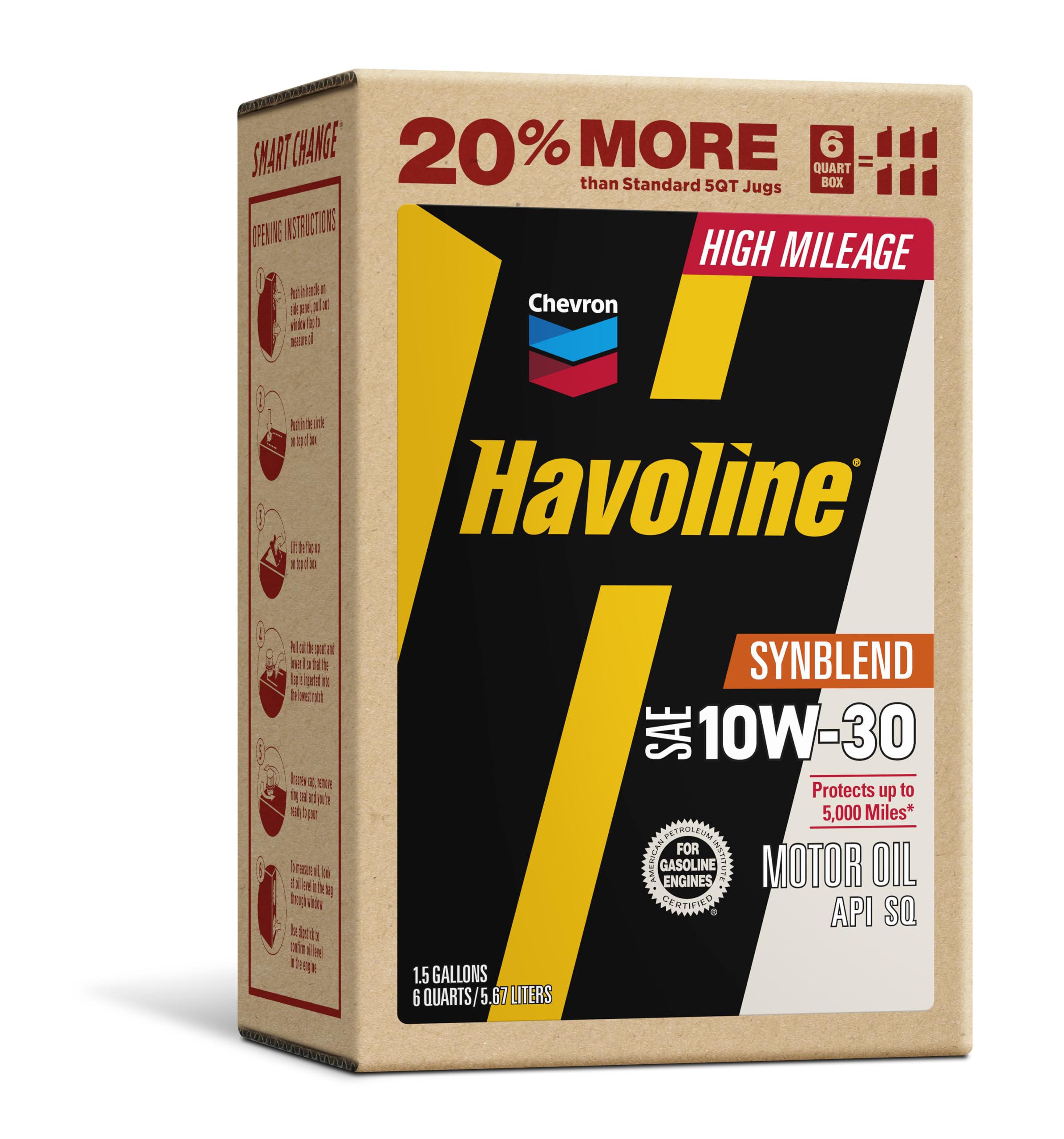
High-mileage additives in a six-quart pouch, with one packaging quirk to plan around
Havoline aims this at two crowds at once — engines past their prime and new turbocharged motors that demand the latest spec. It states it meets ILSAC GF-6 and API SP, which are the current standards for turbocharged and high-revving engines, so it is safe in the newer cars most oils lag behind on. For higher-mileage engines it is formulated to reduce leaks, cut oil consumption, and fight sludge and deposits.
The oil quality is what people come back for, and the six-quart count is a genuine convenience — most of a change taken care of in one pour. Buyers also consistently call it a fair deal for the volume, which matters when a single quart at the parts store costs real money. It handles both a newer engine and an older one, which is unusual for a high-mileage formula.
The catch is the container. It arrives as a flexible pouch rather than a rigid jug, so you want a large, steady funnel on hand and a deliberate pour. A few buyers also point out the empty pouch is not the best shape for catching used oil to take to recycling. Neither is a dealbreaker, but they are the realities of the format.
Good for a mixed driveway: current ILSAC GF-6 and API SP coverage means a turbocharged car and a high-mileage truck can share the same box.
Plan your funnel: the pouch format pours differently than a jug, and the empty is awkward for oil recycling.
The one to grab if: you want high-mileage protection and modern spec coverage in a single six-quart box.
Think twice if: you refill from the same container for multiple small engines and want a jug with a spout.
6. Valvoline MaxLife High Mileage Full Synthetic 10W-30 Motor Oil 5 Quart
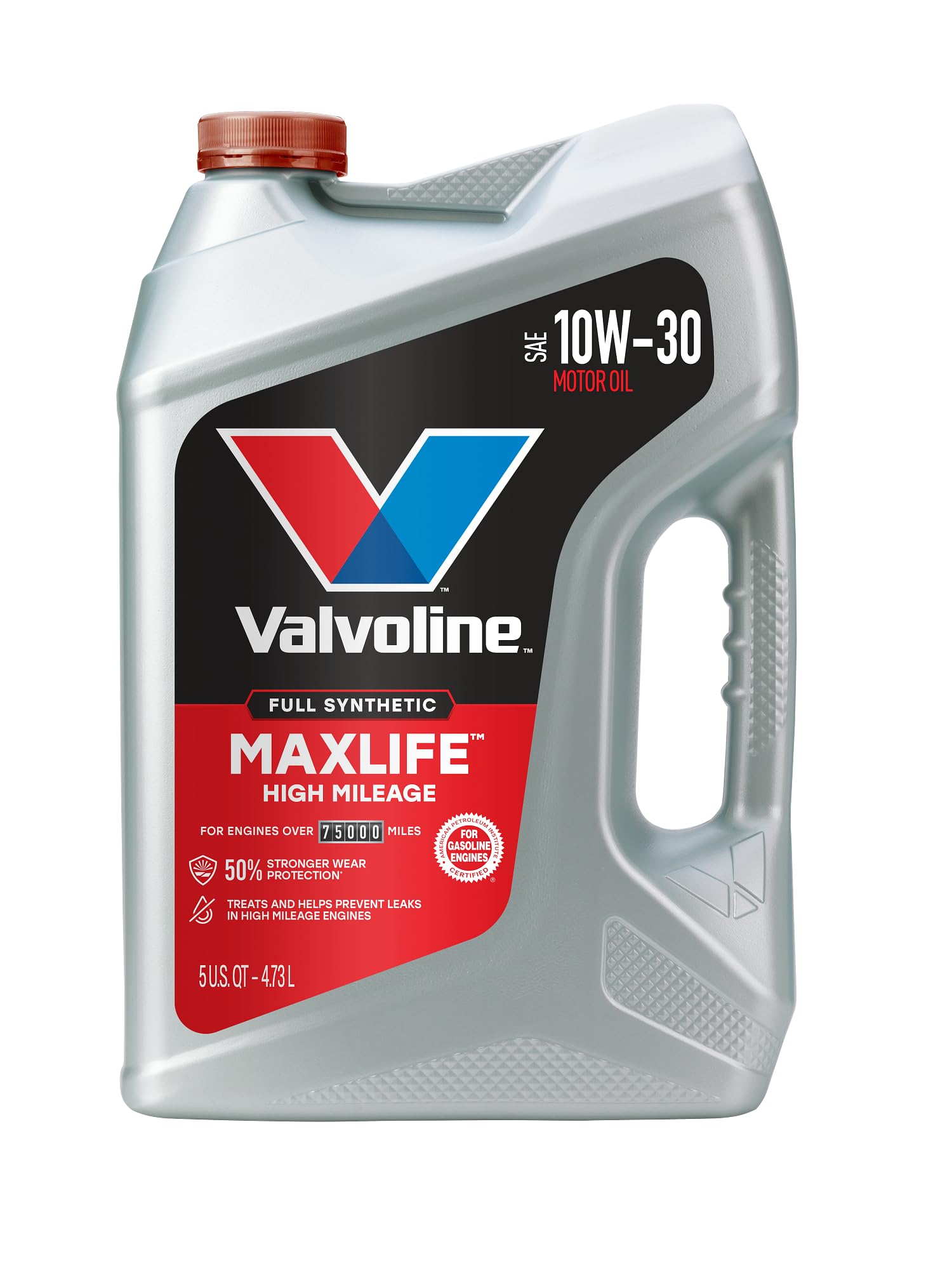
Seal conditioners aimed at the leak-prone years, with spec coverage built for newer engines too
Once an engine passes 75,000 miles, the seals that used to hold oil start to harden. Valvoline MaxLife is designed for exactly that stage — it carries seal conditioners to help prevent leaks, reduce oil consumption, and improve fuel economy. Valvoline claims 50% stronger wear protection, 20% stronger sludge defense, and 2.5X better heat protection than industry standards. Those are Valvoline’s own claims against the standard, not independent lab results, so treat them as the manufacturer’s target rather than a proven head-to-head.
Owners praise how clean the engine runs. It is built to meet the current ILSAC GF-7A and API SQ standards along with the earlier API and ILSAC gasoline categories, plus the Chrysler MS-13340 spec, so a modern car and a high-mileage one can both take it. Owners running it in a 29-year-old Wrangler and other older vehicles report the engine sounding and running like new, and the 5-quart jug pours and stores well.
The one quirk is the container shape. If you top off smaller engines, a wide-mouth jug is clumsier than a quart bottle, and one buyer took to refilling old quart containers to keep control at the crankcase. That is a preference, not a fault. With well over 600 ratings and a 4.8 rating, the MaxLife formula has clearly won the high-mileage crowd.
Sized for the second half of your engine’s life: seal conditioners plus ILSAC GF-7A coverage make this the pick for anything past 75,000 miles.
Minor gripe: the wide-mouth 5-quart jug is harder to pour into small engines than a quart bottle.
Best match for: a high-mileage daily driver that you plan to keep for another hundred thousand miles.
Not your oil if: you want a single quart for topping off between changes.
7. Mobil 1 High Mileage Full Synthetic Motor Oil 10W-30, 5 Quart
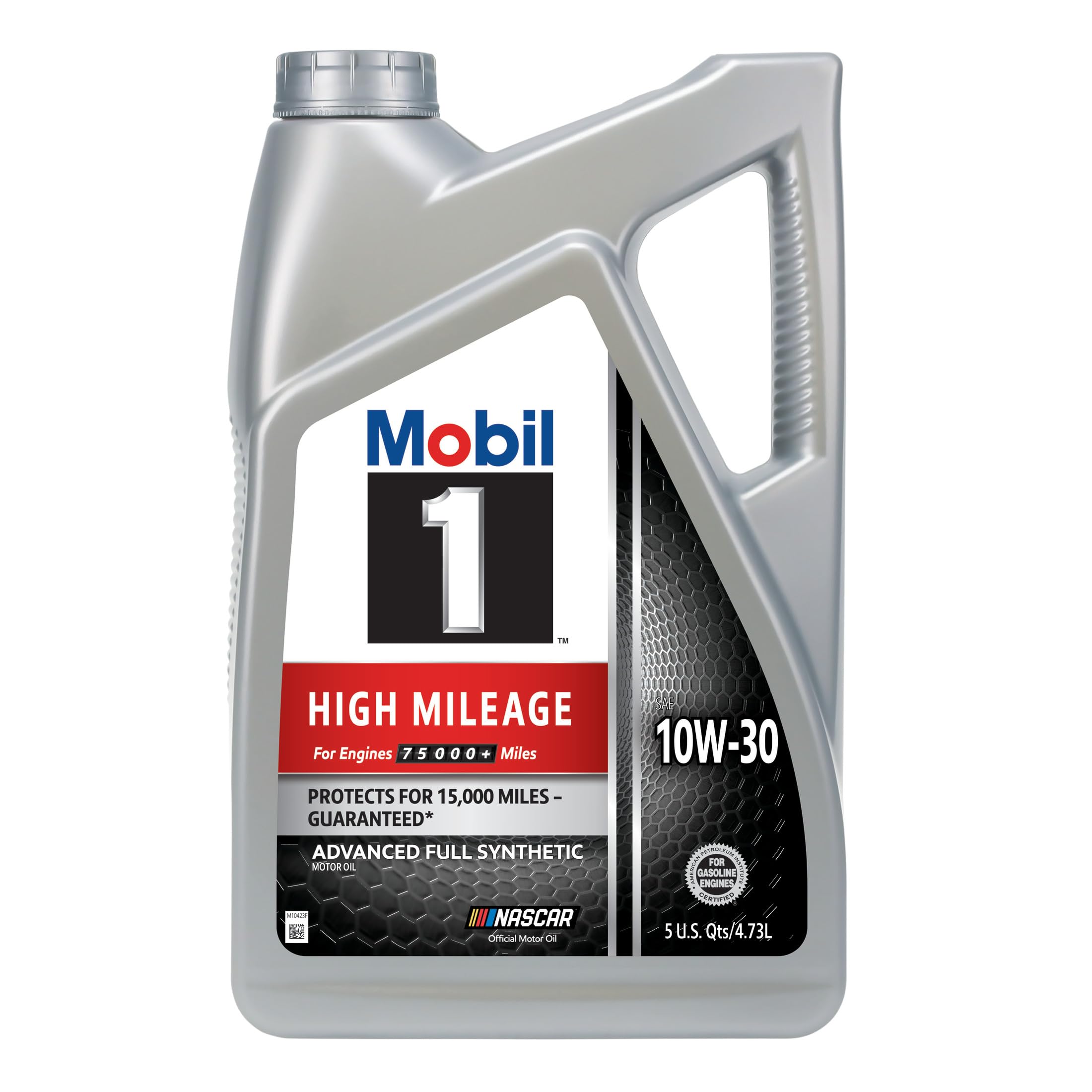
The everyman high-mileage jug — widely stocked, widely trusted, and built for older engines
This is the high-mileage sibling to the Extended Performance oil at the top, aimed specifically at engines over 75,000 miles. Mobil 1 rates it for 15,000 miles between changes and adds seal conditioners to help extend engine life along with additives to fight sludge. If your engine is older and you want a full synthetic with a long interval, this is the straightforward answer.
The volume of feedback is the real story. Tens of thousands of buyers back this oil, and the pattern is consistent — engines running quieter and smoother, fuel efficiency gains of 3 to 4 MPG reported, and fewer oil changes needed. What you pay for a 5-quart jug is the single most-praised feature of the whole package; owners repeatedly call it strong value for the protection you get. An engine that sounds and runs like new is the phrase that keeps coming up from drivers of older vehicles.
Two caveats, both small in context. A few owners mention that the jug comes up slightly short of a full fill on engines that take close to five quarts. And the one split note in the data is leakage — some cite zero drips, while a small minority report seal seepage, more common in engines that were already tired. Neither changes the verdict on an oil this broadly trusted.
The High-Mileage Case
- 15,000-mile drain interval backed by Mobil 1’s guarantee
- Seal conditioners and sludge-fighting additives suited to older engines
- Smooth running and fuel efficiency gains reported across a broad range of vehicles
Honest Caveats
- A handful of customers note the jug falls a bit short on engines near a full 5 quarts
- Seepage reported on a small number of high-mileage engines, not all
For most high-mileage drivers: the safest full-synthetic pick if you want to buy what everyone else is buying.
Worth a look if: your engine has been leaking and you want an oil with seal conditioners to slow it.
8. Royal Purple 51130 API-Licensed SAE 10W-30 High Performance Synthetic Motor Oil – 5 qt., Model:ROY51130
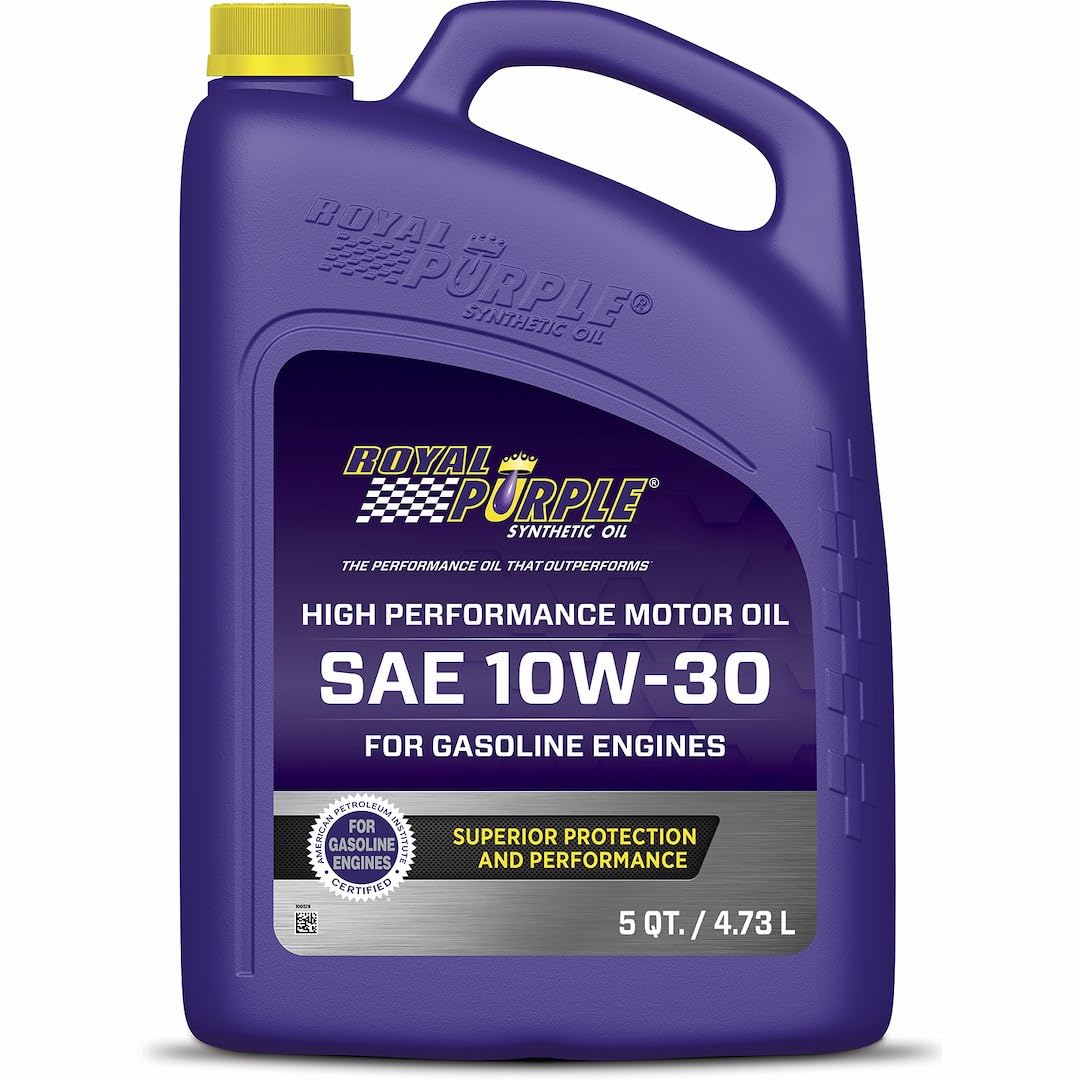
The purple-tinted synthetic truck owners stretch to ten months between changes
Royal Purple’s standard 10W-30 is the API-licensed version of the brand’s high-performance synthetic — noteworthy because API-licensed means it meets a formal industry standard, not just the maker’s own testing. It is sold specifically with compatibility for ethanol-blended fuels, protection for the catalytic emission system, and superior corrosion resistance, all of which matter for trucks that burn E10 or E15 without a second thought.
Owners describe a distinct before-and-after. Smoother operation, faster acceleration, and reduced engine noise are common reports, and the oil’s namesake purple tint — visible going in and darkened coming out — is a minor point but one that clearly sticks with people. The longevity note is a real draw too: one owner runs up to 10 months between oil changes without issue, which is where the cost per jug stops looking high. Mower owners and Jeep Wrangler drivers both use it for daily service and heavy use.
Royal Purple also markets this as good for ethanol fuels and emission systems, but it is a straight API-licensed oil rather than a high-mileage or zinc-heavy formula. If your classic engine needs the anti-wear additives old flat-tappet cams were designed around, look at the HMX version below instead — that product carries the zinc and phosphorus that this one does not advertise.
Why Truck Owners Pick It
- API-licensed, so it meets a formal industry standard
- Formulated for ethanol-blended fuel and catalytic-system compatibility
- Reviewers point out noticeably smoother running, faster acceleration, and less engine noise
Where It Does Not Shine
- No zinc-heavy formula advertised, so it is not the pick for vintage flat-tappet engines
- Premium pricing compared to the mainstream full synthetics above
Worth the splurge for: a modern truck engine running ethanol-blend fuel that you want feeling sharper between changes.
Not your bottle if: you have a classic engine that wants a zinc-rich oil — that is the HMX below.
9. Royal Purple (11746-6PK HMX SAE 10W-30 High-Mileage Synthetic Motor Oil – 1 Quart, (Case of 6)

A high-mileage synthetic built to quiet tired lifters and hold oil in the engine
HMX stands for high-mileage extreme, and Royal Purple designed this 10W-30 for engines past 75,000 miles. The formula carries zinc and phosphorus anti-wear compounds — the additives old-style camshafts rely on — paired with the brand’s proprietary chemistry. It is also described as chemically enhanced to revitalize hardened seals so consumption drops and oil stays inside the engine instead of burning off. It adds oxidation resistance to safely stretch drain intervals, and an ionic attraction to metal surfaces for protection at start-up before oil pressure builds.
The owner experience is unusually specific. One owner describes a 1990 Dakota at 300,000 miles that went from lifter knock on another brand to silence within one change, with oil pressure rising to mid-gauge. Another reports a 1991 Miata losing its cold-start tick, and a generator reaching 2,000 service hours with like-new internals. Quieter cold starts, less burn-off between changes, and better fuel economy come up again and again. The performance of the formula — cooler running, cleaner internals — is what buyers single out most.
The one honest trade is cost. This is the most expensive option here, which buys roughly six months of changes for a single-fill car. Buyers tend to describe it as worth the price rather than cheap, and the extended intervals steady that math. If your engine is younger or shows no wear symptoms, the standard Purple below handles it just as well at a lower entry price.
What it fixes: hardened seals and tired valvetrain in engines past 75,000 miles.
What it costs: the highest sticker here, softened by drain intervals you can stretch safely.
The premium pick for: high-mileage engines that tick on cold start, burn oil, or have seen a decade of use.
Overkill for: a fairly new engine that has no wear symptoms and no history of consumption.
Understanding the Specs
Viscosity Grade (10W30)
The first number, “10W,” rates cold-weather flow — how thin the oil stays on a cold start, which is when most engine wear happens. The “30” is the hot-running thickness at operating temperature. A 10W30 sits in the middle: thick enough for older and hotter-running engines, thin enough for a winter start in most climates. Always match the grade printed in your owner’s manual rather than guessing.
Drain Interval
Drain interval is how many miles the maker says the oil can safely stay in the engine. Full synthetics resist breakdown and can stretch to 15,000 or 20,000 miles in the right engine, while conventional oils usually call for shorter cycles. The interval is a ceiling, not a target — if your manual says 5,000 miles, follow the manual.
API and ILSAC Ratings
API letters (like API SP or API SQ) and ILSAC grades (like ILSAC GF-6 or GF-7A) are industry standards the oil is built to meet. The newer the letter, the more demanding the test. Turbocharged and direct-injection engines in particular want the latest grade for low-speed pre-ignition and timing-chain protection.
Seal Conditioners
High-mileage oils add compounds called seal conditioners that soften and swell dried-out rubber seals so they grip better. That slows leaks and reduces oil consumption. They are not a repair — they help a tired engine hold oil, not fix a failed seal.
FAQ
Can I use 10W30 instead of 5W30 in my car?
How many miles between oil changes on a full synthetic 10W30?
Is high-mileage oil worth it for an older engine?
What does the 10W in 10W30 actually mean?
Can I mix 10W30 synthetic with conventional oil?
Do I need zinc in my motor oil?
Will a 5-quart jug cover my oil change?
How do I know if my car needs a full synthetic?
Can I put 10W30 in a lawn mower or generator?
Is it safe to switch oil brands mid-life on an engine?
Final Thoughts: The Verdict
For most drivers, the winner is the Mobil 1 Extended Performance 10W-30 six-quart case: it carries the longest stated drain interval here at up to 20,000 miles and the highest rating, 4.9 stars across 900+ reviewers, so you earn its top spot with a change that comes around roughly once a year. If your engine is past 75,000 miles and wants seal conditioners, the Valvoline MaxLife High Mileage 10W-30 is the value play with the broadest spec coverage. And if you run a diesel, an older truck, or a mixed fleet, the Delo 400 XLE Synblend 10W-30 gallon is the one to reach for. One nudge before you buy: the highest-rated oil in this list is also the most authoritative on long-drain engineering, so when in doubt, buy the oil with the interval that matches how far you actually drive.
How We Picked
We do not accept paid placement. Every pick is matched to a real buyer and a real use-case; we do not hands-on test units.
Sources & Methodology
Specifications: manufacturer listings and product documentation. Review insights: verified customer reviews, as of September 2026. Pricing: not shown on this page (it changes often); check the current price via the retailer link.
As an Amazon Associate, Gadgets Feed earns from qualifying purchases. This does not affect which products we feature.