
The 110 film format is the smallest mass-market cartridge ever made — a tiny, pocket-sized negative that delivers a distinctly grainy, nostalgic look no other camera can quite replicate. But finding a reliable body that actually loads the cartridge correctly and exposes that minuscule frame consistently is a hunt most digital-native shooters aren’t prepared for. The trade-offs between build quality, lens sharpness, and the simple joy of handling a true compact are real, and the wrong choice means a roll of wasted shots before you even get started.
I’m Min — the co-founder and writer behind Gadgets Feed. I’ve spent hundreds of hours combing through technical datasheets, customer experiences, and forum debates to separate the functional shooters from the frustrating paperweights in this narrow niche of analog photography.
If you want to skip the false starts and get straight to the best shooter for your needs, this guide to the best 110 film camera cuts through the noise to show you exactly which models actually work.
How To Choose The Best 110 Film Camera
The 110 format is defined by its cartridge — a drop-in plastic cassette that contains both the film spool and the pressure plate. Because of this, the camera body itself is simply a light-tight box with a lens and shutter. Your choice boils down to lens quality, flash reliability, and build integrity, not sensor resolution or autofocus speed.
Lens Quality and Fixed Focus
Nearly every 110 camera uses a fixed-focus plastic lens. The key spec is the aperture — a wider aperture (like f/2.8) lets in more light, reducing grain on the tiny negative but requiring more careful focusing distance. Most fixed-focus models are set to hyperfocal distance, meaning everything from about 4 feet to infinity is acceptably sharp. Lens coating (or lack thereof) directly impacts flare and contrast.
Flash Reliability and Syncing
Built-in flash on a 110 camera is either a simple bulb-and-reflector system or a small electronic xenon tube. Electronic flash units are more consistent but require a fresh battery. The real issue is sync — some older vintage cameras have flash contacts that corrode, leaving you with a dead pop-up. Look for models with a known working flash circuit or a hot shoe for external units.
Film Advance Mechanism
The 110 cartridge uses a thumb wheel on the bottom of the cartridge itself to advance film. The camera body must engage this wheel smoothly. A rough or slipping wheel means blank frames or overlapping exposures. Metal gear trains inside the camera are far more durable than plastic ones, especially for frequent shooters.
Quick Comparison
On smaller screens, swipe sideways to see the full table.
| Model | Category | Best For | Key Spec | Amazon |
|---|---|---|---|---|
| Lomography Diana Baby 110 | Premium Compact | Creative double-exposures & interchangeable lenses | 12mm f/11 wide-angle lens | Amazon |
| Kodak 110 Gold GC Film | Consumable Film Pack | Shooting fresh ISO 400 color negative stock | 24 exposures per cartridge | Amazon |
| Kodak EKTAR H35 | Half-Frame 35mm | Getting 72 shots from a 36-exposure roll | Half-frame format: 18x24mm per shot | Amazon |
| Fujifilm QuickSnap Flash 400 | Disposable 35mm | Instant grab-and-go party camera | 27 exposures, ISO 400, built-in flash | Amazon |
| Holga 120N | Toy Medium Format | Unpredictable light leaks & dreamy vignettes | 60mm f/8 plastic lens | Amazon |
| DigitPro C190 Film Scanner | Digitization Tool | Digitizing old 110 negatives at home | 5″ LCD, supports 110, 126, 135 film | Amazon |
| PORTTA NS10 Film Scanner | High-Resolution Scanner | 22MP scans with instant preview | 22MP output, 5″ LCD, HDMI output | Amazon |
In‑Depth Reviews
1. Lomography hp620 Diana Baby 110 Camera

The Diana Baby is the rare 110 camera that gives you real creative control. Its 12mm f/11 wide-angle lens captures the entire tiny frame with notable vignette at the edges — a signature Lomography look that the Diana system is famous for. The camera includes a PC socket for external flash, letting you bypass the weak built-in flash most 110 bodies suffer from.
At just half a pound and measuring 3 x 2 x 2 inches, it’s genuinely pocketable — smaller than many 110 cartridges themselves. The bulb shutter setting enables long exposures, and the ability to do double exposures in-camera is a huge bonus for experimental shooters. Build quality feels durable for a plastic camera, with metal sliders for the flash connections.
Image quality is best in bright daylight. In low light, even with the bulb mode, you’ll need a steady hand or tripod. The 110 format’s tiny negative size (13x17mm) means grain is always present, and the Diana’s plastic lens adds its own soft-focus character. If you want sharp, clinical results, look elsewhere — but for creative, lo-fi charm, this is the benchmark.
Why it’s great
- Interchangeable lenses and PC flash port offer real creative flexibility
- Bulb shutter and double-exposure mode for experimental work
- Extremely compact and light — a true pocket camera
Good to know
- Plastic lens produces heavy vignette and soft corners
- Poor low-light performance without a flash attached
- Dimensions are not listed on the product page — it’s genuinely tiny
2. Kodak 110 Gold GC 110-24 Multi-Purpose Film
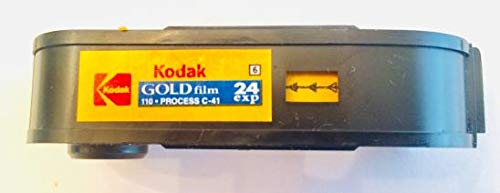
The single most important thing for shooting 110 format is having fresh, properly stored film. Kodak Gold GC 110 is one of the few color negative stocks still manufactured for this cartridge. At ISO 400, it’s the perfect speed for the fixed-focus, small-aperture lenses typical of 110 cameras — you get enough sensitivity for indoor ambient light without the grain exploding into mud.
Each cartridge holds 24 exposures, which is standard for 110. The Gold chemistry reproduces classic warm skin tones and punchy greens, giving your tiny negatives that unmistakable 70s/80s snapshot look. Because the 110 frame is so small, the grain of ISO 400 film is visible but pleasing — it adds texture without destroying detail.
The biggest challenge with 110 film today is development. Very few local labs process 110 anymore; you’ll likely need to mail it out. Some DIY developers spool the film out of the cartridge in a dark bag and develop it in standard chemicals, but the film base is different from 35mm. For most shooters, using a dedicated mail-in service is the reliable path.
Why it’s great
- Fresh factory stock — not expired film with unknown storage history
- ISO 400 is versatile for both sunny outdoor and indoor flash use
- Classic Kodak Gold color science: warm tones, saturated greens
Good to know
- Finding a lab to develop 110 film requires mail-order service in most areas
- 24 exposures per cartridge means fewer shots per roll than 35mm
- Results are grainier than larger formats due to the tiny negative size
3. Kodak EKTAR H35 Half Frame 35mm Camera

The EKTAR H35 isn’t a 110 camera — it’s a half-frame 35mm camera, meaning it exposes two 18x24mm frames on a single 35mm frame. That’s still significantly larger than the 13x17mm 110 negative, but the spirit of getting more shots per roll is similar. You get 72 exposures from a standard 36-exposure roll, which is exactly the economy advantage 110 offers.
The H35 is focus-free with a built-in flash activated by a silver ring around the lens. It weighs 200 grams and is 4.33 inches wide, making it slightly larger than a true 110 body but still very pocketable. Image quality is best in bright sunlight or with the flash engaged indoors; without flash in low light, the fixed aperture struggles and images come out dark and muddy.
For beginners who want the analog experience without hunting down 110 film and mail-order development, the H35 is a far more accessible entry point. It uses standard 35mm film you can buy anywhere, and any lab can develop it. The trade-off is that you lose the specific tiny-negative aesthetic that makes 110 photography unique — the grain and contrast signature is different.
Why it’s great
- 72 shots per roll — incredible economy for analog shooting
- Uses standard 35mm film, widely available and easy to develop
- Lightweight and simple to operate, perfect for beginners
Good to know
- Not a true 110 camera — larger negative, different aesthetic
- Poor low-light performance without flash engaged
- Plastic build feels less durable than vintage 110 metal bodies
4. Fujifilm QuickSnap Flash 400 2-Pack

The Fujifilm QuickSnap Flash 400 is a disposable 35mm camera, not a true 110 body. But its place in this guide is earned because many shooters turn to disposable cameras specifically to capture the same rough, grainy, nostalgic look that 110 film is famous for. This 2-pack gives you 54 exposures total (27 each) with pre-loaded ISO 400 film and a built-in flash.
The flash has a 10-foot effective range and a continuous flash switch — you can leave it on for all shots, which is recommended since the fixed-focus lens needs extra light even outdoors in overcast conditions. Customer feedback confirms the classic warm film look, strong flash output, and nostalgic grain. Several reviewers noted that imperfect photos add charm rather than frustration.
If you’re after the specific experience of 110 — loading cartridges, advancing with a thumb wheel, the unique negative size — this won’t satisfy that. But if you just want the analog look without investing in a body and ongoing film sourcing, the QuickSnap is a zero-commitment entry. Use it for parties, trips, and throwback photo projects where the 110 aesthetic is the goal, not the format itself.
Why it’s great
- Zero learning curve — point, shoot, send for development
- Reliable flash with 10-foot range and continuous switch
- Two cameras for 54 total exposures — great value for groups
Good to know
- Not a reusable 110 camera — single-use disposable
- Requires flash even in bright overcast conditions for best results
- 35mm format, not 110 — larger negative, different grain character
5. Holga 120N Medium Format Camera with Ilford HP5 Plus Film
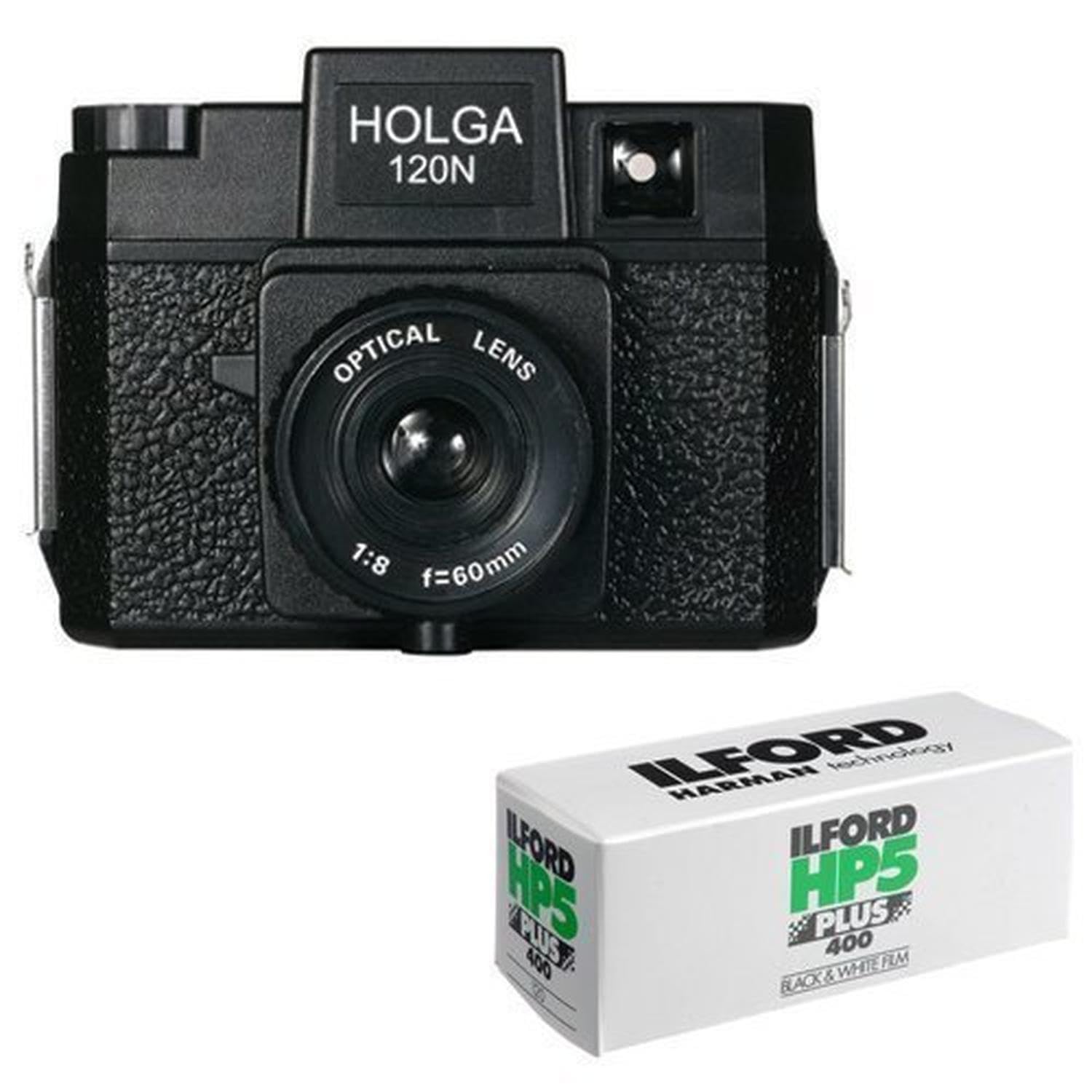
The Holga 120N is a medium format camera, not a 110 body — it shoots 120 roll film that produces negatives 6×4.5cm, many times larger than a 110 frame. Its inclusion here is for the reader who loves the lo-fi, unpredictable aesthetic of 110 but craves a larger negative for better detail and easier scanning. The Holga is the definitive toy camera for that purpose.
The 60mm f/8 plastic lens is known for intense vignetting, soft focus, and unpredictable light leaks — features that purists love. The zone focusing system has four distance settings (1m, 2m, 3m, and infinity), but in practice it’s mostly guesswork. Shutter speeds are 1/100 second and bulb. This bundle includes a roll of Ilford HP5 Plus ISO 400 black-and-white film, which pairs beautifully with the Holga’s contrasty output.
Build quality is famously fragile — the plastic body is lightweight at 295 grams, but the film advance and shutter mechanisms can fail. Reviews report loose wheels and complete camera failures. It’s a toy camera in the truest sense: cheap, fun, and unreliable. For the price, you’re paying for the look, not the longevity. If you want the 110 pocket-size experience but dream of 120’s resolution for printing, this is a compromise worth considering.
Why it’s great
- Large 120 negative delivers much better image quality and easier scanning
- Signature Holga look: vignette, light leaks, soft focus
- Comes with Ilford HP5 Plus film — a classic black-and-white emulation
Good to know
- Unreliable build quality — reported issues with advance wheel and shutter
- Not pocketable at all compared to a true 110 body
- 120 film is more expensive and harder to find than 35mm
6. DigitPro C190 Film & Slide Scanner
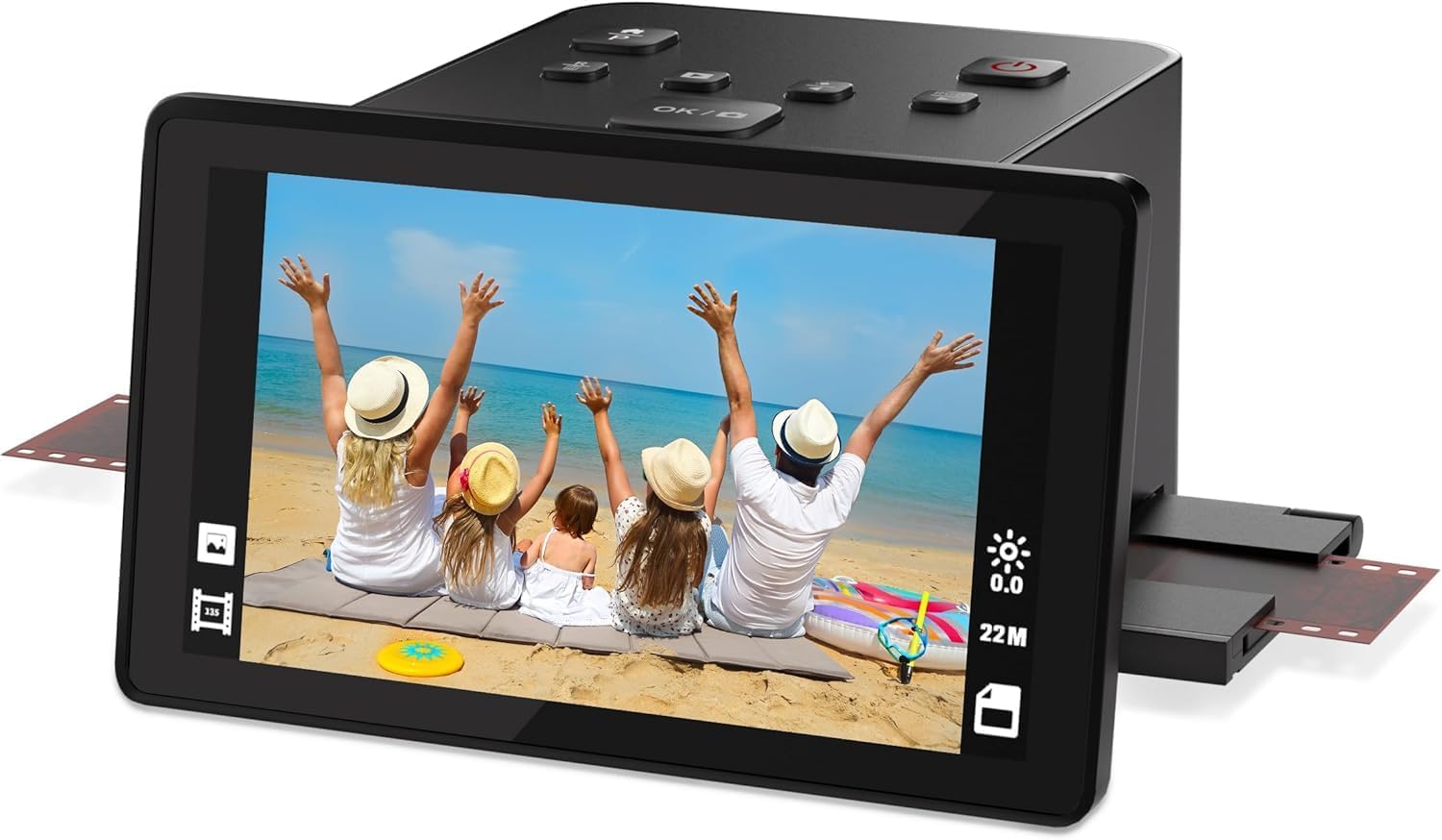
The DigitPro C190 is a dedicated film scanner that supports 110 negatives alongside 35mm, 126, and 50mm slides. This makes it one of the few consumer-level devices that can handle the tiny 110 frame directly. The 5-inch LCD screen provides instant preview, letting you adjust brightness, color, and orientation before saving.
It outputs at 22MP interpolated or 1080p native resolution — sufficient for sharing online, small prints, and social media. The one-touch scanning workflow is simple enough that anyone can digitize old 110 negatives without a steep learning curve. Built-in 128MB memory stores a handful of scans; for bulk work, an SD card up to 64GB (FAT32/EXFAT) is required.
Build quality is acceptable for the price point, but the manual handling of negatives is a minor annoyance — you have to position each frame individually. Batch processing is not truly batch; each frame is scanned one at a time. The sensor-based capture (not true optical scanning) means color accuracy and dynamic range are limited compared to a dedicated flatbed scanner, but for quickly seeing what’s on your old 110 cartridges, it gets the job done.
Why it’s great
- Specifically supports 110 negatives with dedicated inserts
- Large 5-inch screen for live preview and editing
- No computer required — standalone operation with SD card storage
Good to know
- One-by-one scanning is slow for large batches
- Sensor-based capture limits dynamic range versus optical scanners
- Output resolution is interpolated 22MP, not native 22MP
7. PORTTA NS10 Film Scanner
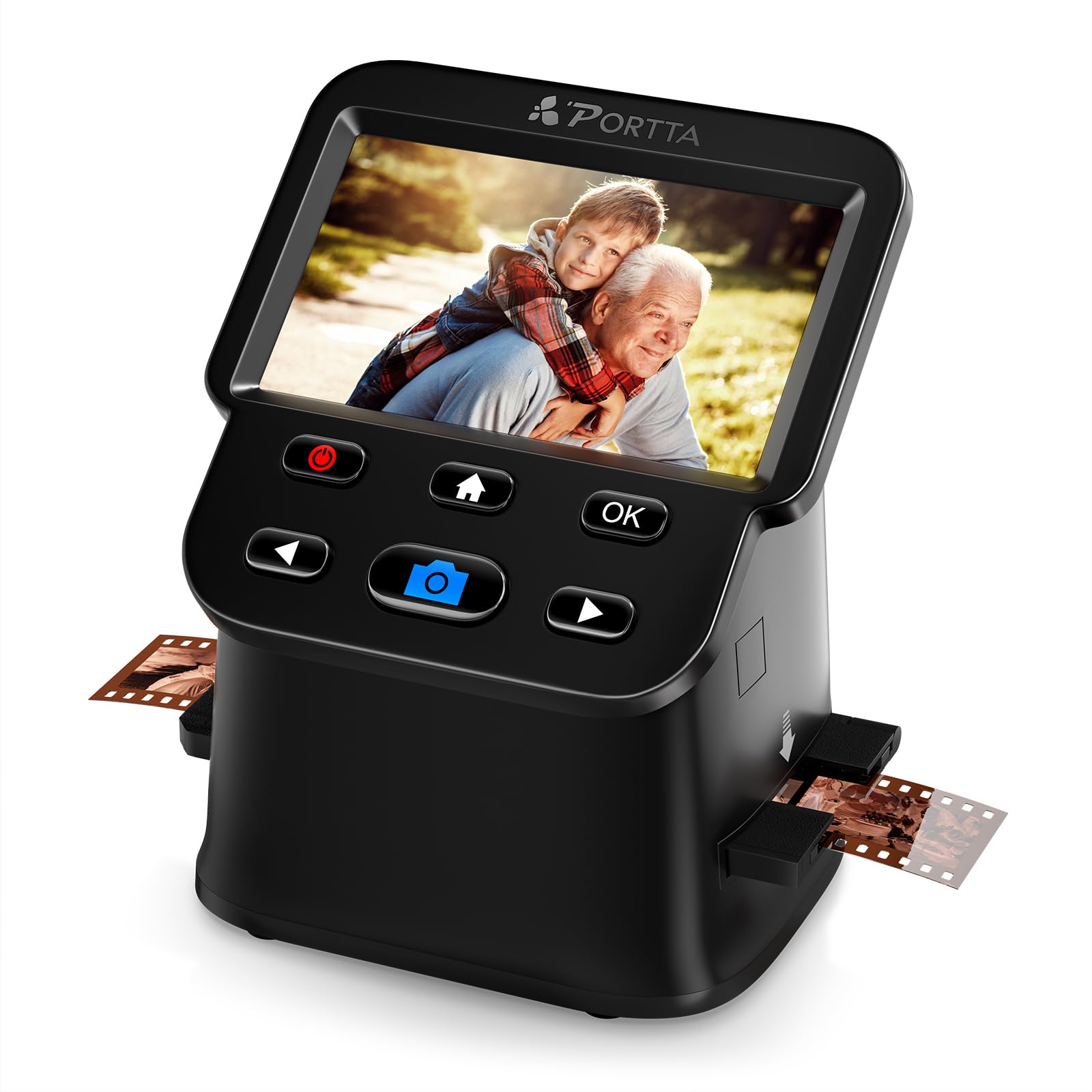
The PORTTA NS10 is a step up in both resolution and build from the DigitPro C190. It offers a choice between 16MP standard and 22MP enhanced output, making it one of the highest-resolution consumer scanners for 110 film. The 5-inch LCD screen is bright and offers a wide viewing angle, making real-time preview of those tiny 110 frames much easier.
Compatibility covers 110, 126, 135, and Super 8 film. The bundled inserts are well-labeled and easy to load. HDMI output lets you display scans on a TV for group viewing, which is a nice bonus for family photo digitization projects. The scanner writes directly to SD card up to 128GB, so no computer is needed for transfer.
Customer reviews highlight the intuitive interface and accurate color reproduction — the NS10 does a good job preserving the original negative’s color cast without adding unwanted shifts. The primary caveat is that this is still a sensor-based scanner, not a true optical scan. For archival-quality work with 110 film, a dedicated macro setup with a digital camera yields better results. But for everyday digitization of 110 negatives, the NS10 is a solid tool that produces clean JPEGs with minimal fuss.
Why it’s great
- 22MP enhanced resolution captures more detail from 110 negatives
- 5-inch bright screen makes framing tiny 110 frames easier
- HDMI output for instant TV viewing without computer connection
Good to know
- Sensor-based capture, not true optical scan — limited dynamic range
- One-frame-at-a-time processing slows batch digitization
- Requires large SD card (8GB stores only ~14 high-res images)
FAQ
Can I still get 110 film developed?
Is 110 film the same as 35mm film?
What battery does a vintage 110 camera flash use?
Can I use expired 110 film that I found at a thrift store?
Final Thoughts: The Verdict
For most users, the best 110 film camera is the Lomography Diana Baby 110 because it gives you interchangeable lenses, a bulb shutter, and double-exposure capabilities in a genuinely pocketable body. If you want fresh film stock that actually works, grab the Kodak 110 Gold GC film — it’s one of the last color-negative 110 films still manufactured. And for digitizing existing 110 negatives without sending them out to a lab, the PORTTA NS10 scanner offers the highest resolution and a bright preview screen for careful framing of those tiny frames.