
A 12-foot kayak represents the sweet spot of paddling: long enough to track straight and cover distance efficiently, yet short enough to maneuver through tighter inlets and load onto a roof rack without a second pair of hands. The best models in this class balance glide speed with primary stability, letting you fish, explore, or simply cruise without fighting the boat every time a breeze kicks up. Choosing the wrong hull design or seating system introduces fatigue that turns a day on the water into a workout you did not sign up for.
I’m Min — the co-founder and writer behind Gadgets Feed. I’ve spent countless hours analyzing hull material densities, seating ergonomics, and weight capacities across the 12-foot kayak segment to separate genuinely capable designs from those that only look good in product photos.
Whether you are a weekend angler or a recreational paddler covering miles of shoreline, finding the right 12 foot kayak means matching your body size, storage needs, and water conditions to a specific combination of beam width, weight, and seat adjustability.
How To Choose The Best 12 Foot Kayak
The 12-foot class demands attention to hull design and seat ergonomics more than any other length category. Shorter boats wobble; longer boats refuse to turn. A well-chosen 12-footer disappears beneath you, letting you focus on the water ahead rather than compensating for bad geometry.
Beam Width and Primary Stability
Beam width measured at the widest point of the hull directly determines how stable the kayak feels when you first sit down. A beam of 32 to 34 inches provides a wide, forgiving platform that suits beginners and anglers who shift weight to cast or net fish. Narrower beams under 30 inches improve glide speed but increase the tippy sensation during entry and exit — a trade-off experienced paddlers accept for better efficiency across open water.
Hull Profile and Tracking Performance
A deep V-chine hull cuts through chop and tracks straight with minimal paddle correction but reduces secondary stability when leaned onto its edge. Flat-bottom or tunnel hulls offer reassuring initial stability for standing and casting but require a skeg or rudder to hold a line in crosswinds. For the 12-foot length, a moderate V-hull with a defined chine edge delivers the best compromise for mixed conditions.
Seat Adjustability and Material Density
Lawn-chair style seats with adjustable back angle and height above the deck prevent the hip fatigue that plagues low-profile bucket seats after 90 minutes. High-density polyethylene (HDPE) construction adds rigidity and UV resistance but increases overall weight — expect 45 to 78 pounds depending on the molding process. Rotomolded single-piece hulls resist impact better than two-piece assemblies but cost more to ship and transport.
Storage Layout and Accessory Mounting
Anglers need at least two flush-mount rod holders behind the seat and a tankwell with bungee lacing for crates and coolers. Recreational paddlers prioritize a watertight front hatch and a cockpit dashboard with cup holders and a dry box. Integrated accessory tracks let you mount fish finders, camera arms, and rod holders without drilling into the hull, preserving resale value.
Quick Comparison
On smaller screens, swipe sideways to see the full table.
| Model | Category | Best For | Key Spec | Amazon |
|---|---|---|---|---|
| Perception Pescador Pro 12 | Sit-on-Top Fishing | All-day angling comfort | 375 lb capacity, 32.5″ beam | Amazon |
| Wilderness Systems Tarpon 120 | Sit-on-Top Fishing | Straight tracking and speed | 350 lb capacity, 63 lb weight | Amazon |
| Wilderness Systems Pungo 120 | Sit-in Recreational | Speed and glide efficiency | 325 lb capacity, 49 lb weight | Amazon |
| Perception Outlaw 11.5 | Sit-on-Top Fishing | Large paddler stability | 425 lb capacity, 35″ beam | Amazon |
| Pelican Catch Mode 110 | Sit-on-Top Fishing | Stand-up casting platform | 375 lb capacity, 34.5″ beam | Amazon |
| BKC Brooklyn 12.5 Tandem | Tandem Sit-on-Top | Family and group fishing | 600 lb capacity, 34″ beam | Amazon |
| Lifetime Yukon Angler 116 | Fishing Kayak | Stand-up casting with skeg | 78 lb weight, 32″ beam | Amazon |
| Pelican Sprint 120XR | Sit-in Performance | Performance tracking in chop | 300 lb capacity, 41 lb weight | Amazon |
| Reel Yaks Radar | Modular Fin Drive | Hands-free pedal propulsion | 430 lb capacity, modular 31 lb sections | Amazon |
| Lifetime Kokanee 10’6″ | Sit-on-Top Tandem | Budget tandem flexibility | 76 lb weight, 36″ beam | Amazon |
| Emotion Spitfire | Sit-on-Top Recreational | Lightweight portability | 45 lb weight, 31″ beam | Amazon |
In‑Depth Reviews
1. Perception Pescador Pro 12

The Pescador Pro 12 hits the balance that most 12-foot kayaks miss: a 32.5-inch beam delivers a stable fishing platform without turning the hull into a barge, while the adjustable lawn-chair seat lifts you off the deck for better visibility and reduced hip strain during six-hour sessions. The rotomolded polyethylene construction keeps the boat at 64 pounds — manageable for one person to slide off a roof rack with a decent cart.
Storage is generous: a large front storage area accommodates a dry bag and tackle crate, while the rear tankwell with bungee lacing swallows a cooler or gear crate. Two flush-mount rod holders sit behind the seat within easy reach, and the integrated accessory tracks let you mount a fish finder or camera arm without drilling. The hull tracks reliably through moderate chop and responds to paddle input without excessive yaw.
Taller paddlers report ample legroom even at 6’2″, and the 375-pound weight capacity means you can load a weekend’s worth of gear without pushing the boat past its designed waterline. The seat sits lower than some competitors, which improves secondary stability when leaning into turns but limits standing capability — this is a seated fishing kayak, not a stand-up casting deck.
Why it’s great
- Lawn-chair seat with multiple recline positions reduces back fatigue
- Large front and rear storage with accessory track mounting
- Hull tracks straight in wind without a rudder
Good to know
- Not stable enough for confident stand-up casting
- Rod holders are positioned for storage, not active trolling
2. Wilderness Systems Tarpon 120
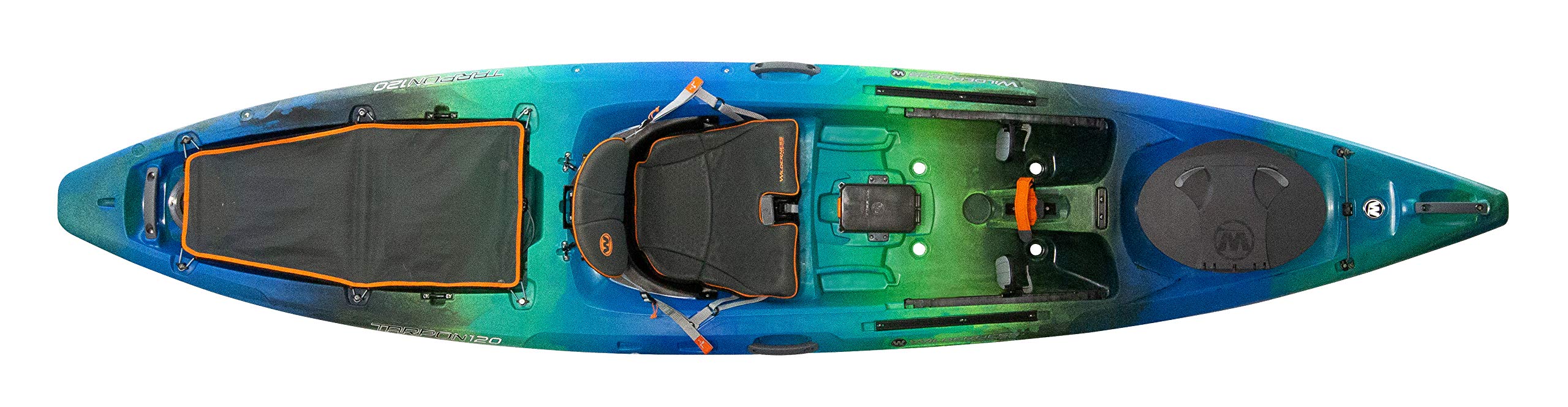
The Tarpon 120 has earned a reputation among paddlers who prioritize glide and tracking over raw deck space. The Phase 3 Air Pro seating system uses mesh-covered honeycomb foam that stays cool in direct sun and provides lumbar support adjustable through a range that accommodates both upright fishing positions and leaned-back cruising. The hull cuts through the water with minimal resistance, holding a straight line with fewer corrective strokes than any other sit-on-top in its class.
Storage is organized around real fishing trips: a large rear tankwell fits a standard milk crate or cooler, while the front dry hatch with removable Dry Tec box keeps your phone, keys, and wallet accessible and sealed. The magnetic water bottle holder and SideTracks accessory rails let you add rod holders, a fish finder, or a camera mount without permanent modifications. At 63 pounds, it is light enough for one person to load onto a roof rack using a simple roller.
The 31-inch beam is narrower than the Pescador Pro, which improves glide speed but makes entry and exit feel slightly tippy for inexperienced paddlers. The low-profile seat keeps your center of gravity low, enhancing secondary stability when leaning into eddies or navigating wind waves. Experienced paddlers will appreciate the responsiveness; beginners may find it nervous during the first few launches.
Why it’s great
- Phase 3 Air Pro seat is ventilated and fully adjustable
- Fast, efficient hull that tracks without a rudder
- Dry Tec box and magnetic bottle holder add real utility
Good to know
- Narrower beam feels tippy during entry and exit
- Some units arrive with scratches from packaging
3. Wilderness Systems Pungo 120

The Pungo 120 is the fastest sit-in kayak in the 12-foot category, thanks to a narrow 29-inch beam and a refined hull shape that slices through flat water with minimal drag. The Phase 3 Air Pro seat carries over from the Tarpon, providing the same ventilated back support and independent adjustability, but the sit-in cockpit keeps you drier and more protected from wind chill on cool mornings. At 49 pounds, it is the lightest kayak on this list, making rooftop transport trivial for smaller paddlers.
The front dashboard integrates a removable Dry box, two cup holders, and Slidetrax accessory rails for mounting electronics or a phone holder. The rear Orbit hatch with sealed bulkhead provides dry storage for camping gear or a change of clothes, and the cockpit offers enough room for average-sized paddlers to stretch their legs without feeling cramped. The hull exhibits excellent primary stability for a sit-in design, allowing you to lean into turns without the edge catching unexpectedly.
The trade-off for speed and lightness is a lower maximum capacity of 325 pounds, which limits gear-heavy trips for larger paddlers. The cockpit sits low enough that water can slosh over the coaming in choppy conditions, and the shallow cup holders are more decorative than functional with taller water bottles. Paddlers over 6 feet may find the cockpit footroom tight during extended sessions.
Why it’s great
- Fastest hull in the 12-foot class with excellent glide
- Phase 3 Air Pro seat with independent angle adjustability
- Lightweight 49-pound design for easy transport
Good to know
- Low cockpit allows water entry in chop
- 325 lb capacity limits heavy gear loads
4. Perception Outlaw 11.5

The Outlaw 11.5 is built for paddlers who prioritize stability above all else. With a 35-inch beam and a 425-pound weight capacity, this sit-on-top deck functions as a floating platform that handles 300-pound paddlers with gear without feeling overloaded. The fold-away lawn-chair seat provides excellent lower back support, and the open deck layout offers enough legroom for paddlers up to 6’4″ to stretch out and shift positions throughout the day.
Fishing features are comprehensive: four integrated rod holders — two flush-mount behind the seat and two on the rear tankwell — plus integrated tackle trays that keep lures and hooks organized within arm’s reach. The front and rear tankwells with bungee lacing accommodate a cooler, dry bag, and crate, and the deck has multiple RAM mount attachment points for electronics. The hull is rotomolded in the USA from high-density polyethylene, which adds impact resistance and UV stability.
The wide beam that provides stability also makes the Outlaw slower to paddle than narrower models, and the 77-pound weight makes solo roof-rack loading difficult. The front storage area is difficult to access for larger paddlers, and the two accessory rails forward of the seat interfere with oar strokes. This is a kayak designed for fishing from a seated or standing position, not for covering long distances quickly.
Why it’s great
- 425 lb capacity supports large paddlers and heavy gear
- Fold-away seat is comfortable for 6+ hour sessions
- Integrated tackle trays and four rod holders
Good to know
- 77 lb weight is heavy for solo transport
- Wide beam reduces paddling speed and glide
5. Pelican Catch Mode 110

The Catch Mode 110 delivers premium stability and stand-up fishing capability at a price point that undercuts most competing fishing kayaks by a significant margin. The tunnel hull design creates a wide 34.5-inch platform that allows confident standing for casting, even for paddlers who weigh up to 200 pounds. The ERGOBOOST seating system raises your sitting height above the deck, improving visibility for spotting fish and reducing knee angle during long paddles.
Fishing-specific features include three flush-mount rod holders, two 4-inch rigging tracks for accessory mounting, front and rear tankwells with bungee lacing, and an anti-slip deck carpet that provides traction when standing. The hull includes additional internal flotation to meet ABYC safety standards, and the 63-pound weight makes it one of the lighter fishing kayaks for its stability class. The included skeg improves tracking enough that most users report no need for a rudder upgrade.
The 10-foot-8-inch length is slightly shorter than the 12-foot target, which affects glide speed and straight-line tracking in open water. The paddle tie-downs feel less durable than the rest of the build, and the front storage area is shallow — large tackle boxes may not fit. Shorter paddlers should note that the seat height adjustment range is limited, and the cockpit lacks a dedicated dry storage hatch.
Why it’s great
- Tunnel hull provides exceptional stand-up stability
- ERGOBOOST seat is comfortable and adjustable
- Lightweight 63 lb build for a fishing kayak
Good to know
- 10’8″ length is shorter than true 12-foot models
- No dedicated dry storage hatch for electronics
6. BKC Brooklyn 12.5 Tandem
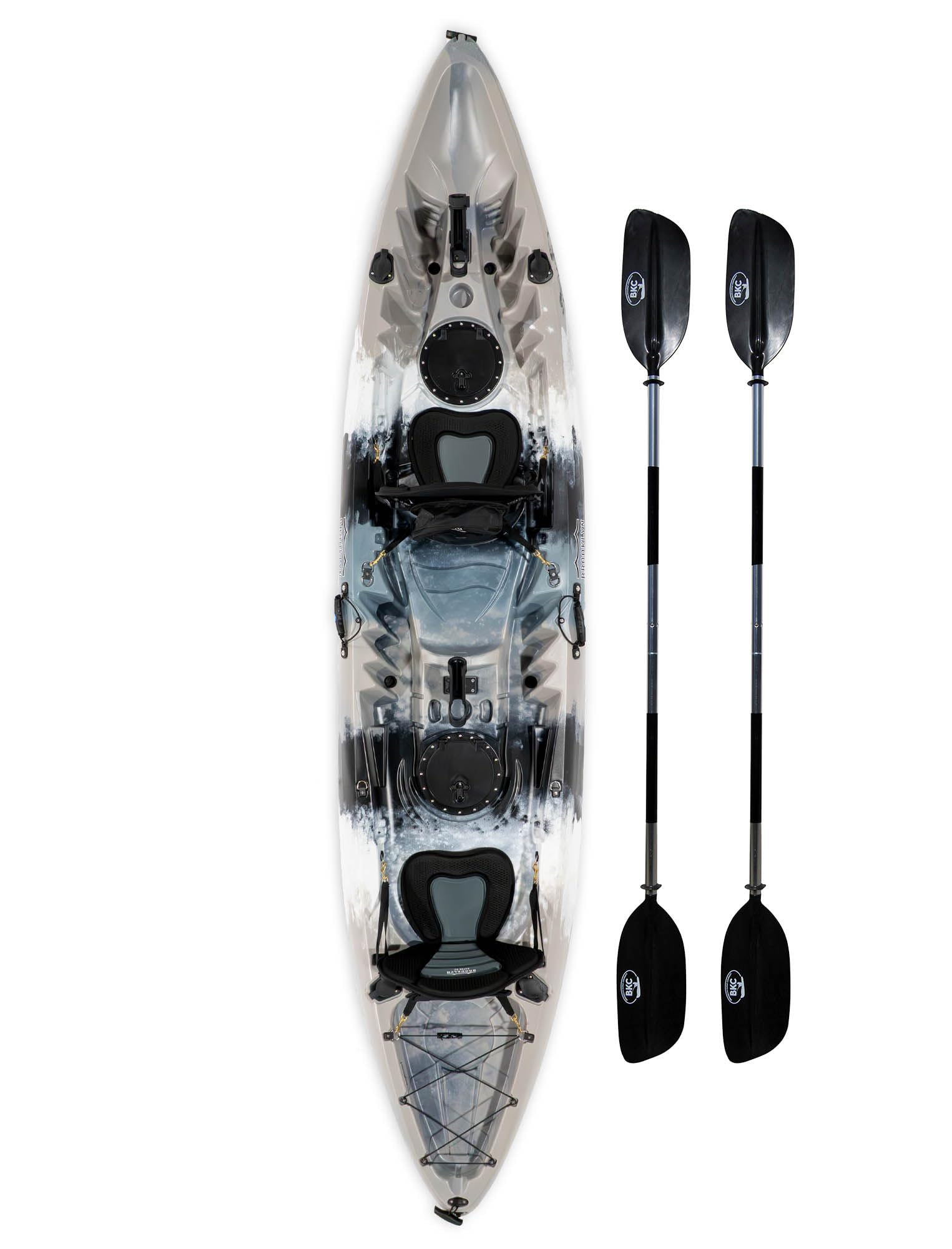
The Brooklyn 12.5 Tandem is the only kayak on this list designed to carry two adults plus a child, making it the go-to choice for families who want to fish and explore together without buying two separate boats. The 34-inch beam and 600-pound weight capacity allow for a combined paddler weight of around 500 pounds plus gear, and the included memory foam seats provide decent support for full-day outings. The dual paddles are basic but functional, and the multiple footrest positions accommodate paddlers of different heights on the same trip.
Fishing features are generous for a tandem: six rod holders (four flush-mount and two articulating) let both anglers rig multiple lines, and the motor-ready mount area accepts a trolling motor for extended range. The rotomolded HDPE construction feels solid, and the 68-pound weight is manageable for two people to carry to the water. The hull tracks well enough for a tandem, and the wide beam provides reassuring stability when a passenger shifts weight unexpectedly.
The seats lack tethers and tend to slide forward during paddling, requiring constant readjustment — many owners replace them with upgraded models. The front hatch seal is prone to misalignment, which can cause the lid to warp and allow water ingress. At 12.5 feet, the kayak is longer than standard 12-foot models, making it harder to store and transport in compact vehicles.
Why it’s great
- 600 lb capacity fits two adults plus child and gear
- Six rod holders and motor-ready mount
- Stable platform for family fishing trips
Good to know
- Seats slide forward and lack tethers
- Front hatch seal prone to misalignment
7. Lifetime Yukon Angler 116

The Yukon Angler 116 is purpose-built for the angler who wants to stand and cast without sacrificing storage or comfort. The high initial stability hull supports confident standing, and the stability strap provides additional security for those still building their sea legs. The adjustable frame seating system offers two settings: an upright position for active paddling and a reclined position for relaxing between catches, with a quick-dry foam-back mesh seat that sheds water and dries fast.
Fishing features are comprehensive out of the box: two flush-mount rod holders, two horizontal rod storage cradles, a molded-in 28-inch ruler for measuring fish, and an integrated 1/4-inch universal mount for accessory attachments. The 12-inch universal track sections on each side let you mount rod holders or electronics, and the skeg wheel improves tracking while also serving as a transport wheel for rolling the 78-pound kayak across parking lots. The deck channel draining system with eight self-bailing scupper holes keeps the cockpit dry.
The 78-pound weight is the heaviest on this list, making solo transport a real challenge — the luggage-style handles help, but you will need a cart or a second person for any significant carry. The skeg wheel assembly has a reputation for breaking off during transport, and the seat sits directly on the deck rather than raising you up, which limits visibility and can cause hip fatigue on long days.
Why it’s great
- Stable enough for confident stand-up casting
- Adjustable seat with upright and reclined positions
- Built-in ruler, rod holders, and accessory tracks
Good to know
- 78 lb weight makes solo transport difficult
- Skeg wheel assembly breaks off during transport
8. Pelican Sprint 120XR

The Sprint 120XR combines a sit-in cockpit with a performance hull that prioritizes tracking and glide efficiency over raw storage. The deep V-chine design cuts through choppy water with minimal drift, making it a strong choice for paddlers who frequent lakes and coastal areas where wind and current are constant factors. At 41 pounds, it is the lightest kayak on this list by a significant margin, and the adjustable ERGOFLEX G2 seating system provides breathable back support that keeps you comfortable on long crossings.
The cockpit layout is clean and functional: a rear quick-lock hatch provides secure storage for dry gear, and the front storage platform with bungee cords keeps a dry bag or small tackle box within reach. The built-in bottle holder fits most water bottles, and the cockpit table with a 4-inch day hatch offers additional storage for items you need during the paddle. The stern bulkhead and side foam blocks add flotation for safety, and the keel extension helps maintain a straight line without a rudder.
The 300-pound weight capacity limits gear-heavy trips for larger paddlers, and the 28-inch beam makes entry and exit feel tippy for beginners. The cockpit lid is difficult to secure properly, and the front water bottle holder is too narrow for standard Nalgene bottles. Some units arrive with shipping damage due to inadequate packaging, and the color may differ significantly from product photos.
Why it’s great
- Deep V-hull provides excellent tracking in chop
- Ultra-light 41 lb weight for easy transport
- ERGOFLEX G2 seat with adjustable back support
Good to know
- 28″ beam feels tippy during entry and exit
- 300 lb capacity limits heavy gear loads
9. Reel Yaks Radar
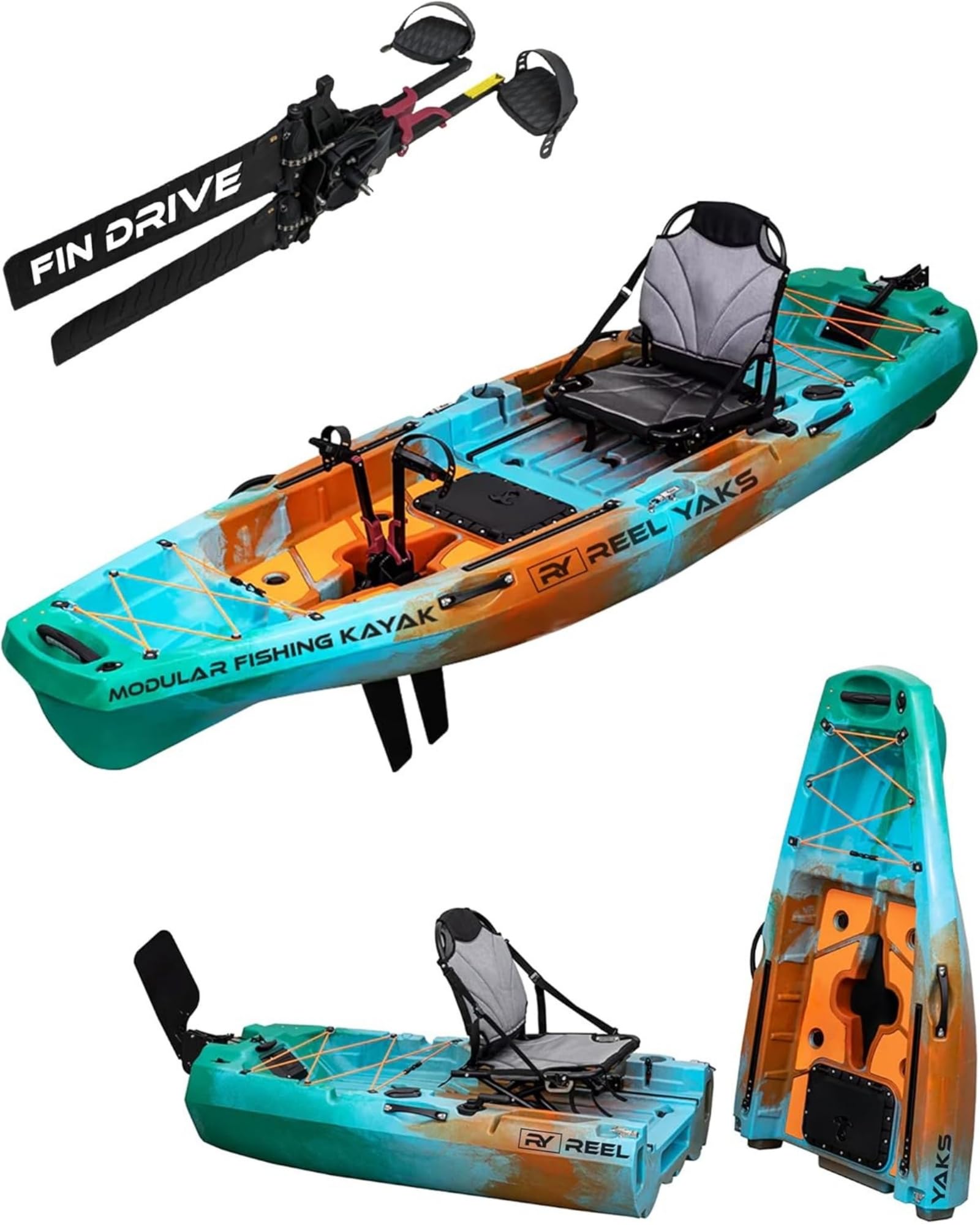
The Reel Yaks Radar solves the two biggest problems with pedal kayaks: storage and transport weight. The modular design breaks down into three 31-pound sections, each with built-in handles, that fit in a car trunk or small apartment closet. The fin drive system provides hands-free propulsion through shallow, weedy water without the snagging issues common with propeller drives, and the W-hull design delivers stability that rivals wider sit-on-top models.
Assembly takes under five minutes with four simple steps, and the included 360-degree rod holder keeps your rod within reach while pedaling. The stadium seat provides excellent back support, and the 430-pound capacity accommodates larger paddlers with gear. The pedal drive is knee-friendly and quiet, making it ideal for stealth fishing in clear water where paddle noise would spook fish. The US Coast Guard-registered manufacturer backs the hull with a two-year warranty.
The 10-foot length is shorter than the 12-foot target, which reduces glide speed and makes the kayak more susceptible to wind drift on open water. Paddlers over 200 pounds report water entering through the pedal hole when standing, soaking gear stored in the front compartment. The included paddle is too short for taller users, and the drive seat straps have shown early wear in some units. Fin drive lacks height adjustment for shorter paddlers.
Why it’s great
- Modular design fits in any car trunk or closet
- Fin drive is quiet and weed-free
- 430 lb capacity with high stability
Good to know
- 10-foot length drifts in wind
- Water enters through pedal hole when standing
10. Lifetime Kokanee 10’6″

The Kokanee offers tandem paddling capability at a price that makes family kayaking accessible without cutting corners on build quality. The 36-inch beam is the widest on this list, providing exceptional stability for two adults or one large paddler with a dog in the front. The UV-protected HDPE construction resists fading and cracking over years of sun exposure, and the adjustable quick-release seat backs allow each paddler to find their preferred recline angle.
The versatile design supports solo or tandem paddling with multiple footrest positions to accommodate different leg lengths. The front 6-inch storage hatch provides basic dry storage, and the bungee system on the rear deck keeps loose items secured. The hull tracks adequately for its width, and the weight capacity is generous enough for two average-sized adults plus a small cooler. At 76 pounds, it is manageable for two people to load onto a roof rack.
The seats lack padding, which leads to discomfort after about 40 minutes — most owners add a foam pad for extended trips. The storage holes on the rear deck are too shallow to secure items effectively, and the kayak is slow to paddle due to the wide beam. Some units arrive with shipping damage, and the initial fulfillment process can be slow depending on the seller.
Why it’s great
- 36-inch beam provides excellent stability for tandems
- Versatile solo or tandem configuration
- UV-protected HDPE for long-term durability
Good to know
- Hard seats need aftermarket padding for comfort
- Wide beam makes paddling slow
11. Emotion Spitfire Sit-On-Top
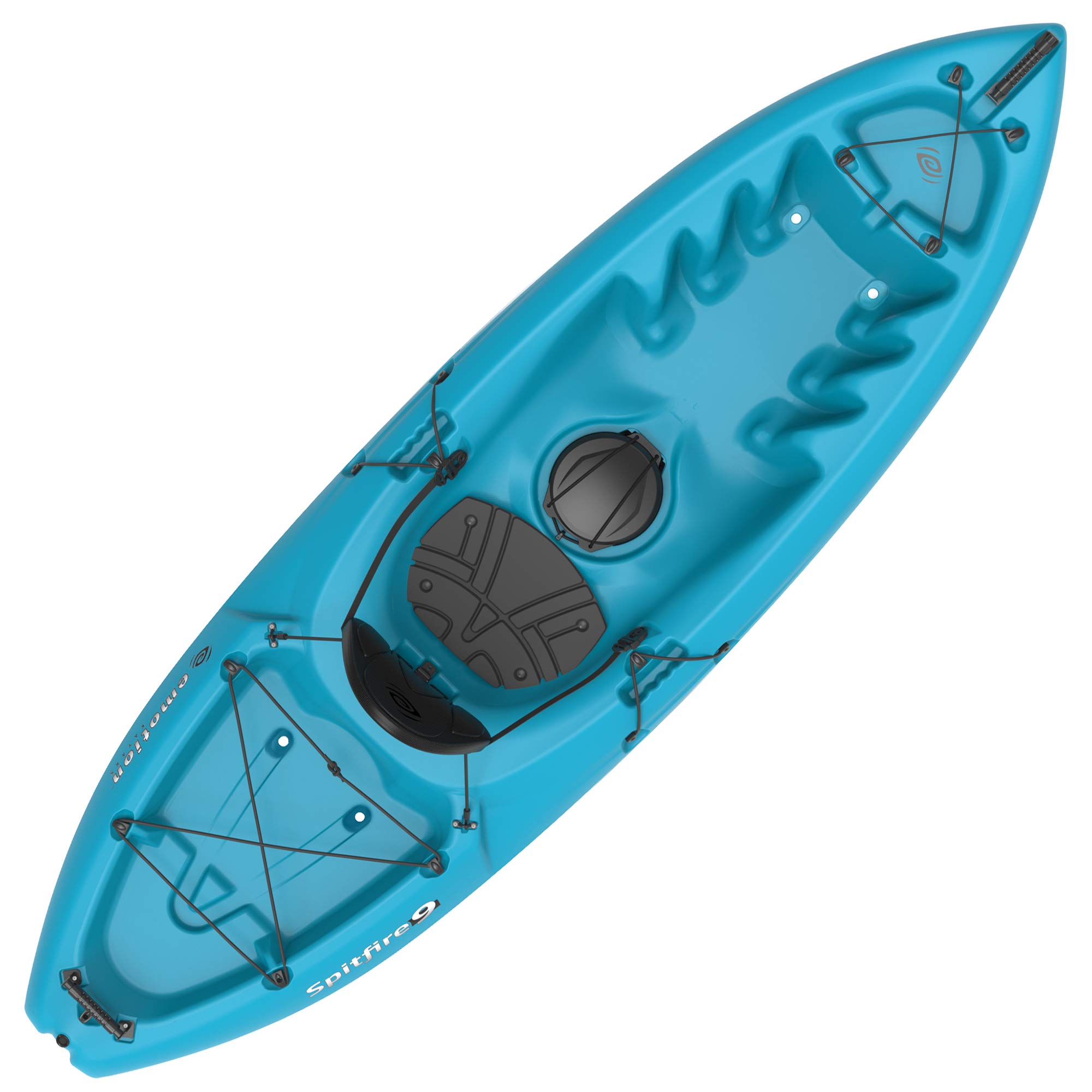
The Spitfire proves that an entry-level kayak can still deliver a solid day on the water. At 45 pounds and 9 feet long, it is the lightest and most portable option here, fitting inside a Honda Civic or small SUV with the seats folded down. The padded CRS UltraLite seat provides decent support for paddlers under 200 pounds, and the self-bailing scupper holes keep the cockpit draining quickly after waves or splashes.
The rear tankwell with cargo net lacing offers enough storage for a small cooler or dry bag, and the molded-in paddle keepers prevent losing your paddle during portage. The footwells are molded into the hull rather than adjustable, which simplifies the design but limits the fit range. The UV-protected HDPE construction resists fading, and the hull provides enough stability for calm lake and slow river paddling.
The tracking is adequate for a 9-foot boat but requires constant correction in crosswinds — this is not a kayak for covering long distances in open water. The seat attachment system is difficult to install and inconvenient for storage between trips, and the 350-pound weight capacity is optimistic for larger paddlers, who report seat failures and poor tracking under load. The watertight storage compartment has a tendency to leak.
Why it’s great
- Ultra-light 45 lb weight fits in small cars
- Self-bailing scupper holes keep cockpit dry
- Padded UltraLite seat is comfortable for 2+ hours
Good to know
- 9-foot length requires constant tracking correction
- Seat and tracking degrade under heavy loads
FAQ
Is a sit-in or sit-on-top kayak better for a 12-foot model?
How much weight can a 12-foot kayak safely carry?
Do I need a rudder or skeg for a 12-foot kayak?
Can a 12-foot kayak fit in a standard SUV or truck bed?
What paddle length works best with a 12-foot kayak?
Final Thoughts: The Verdict
For most users, the 12 foot kayak winner is the Perception Pescador Pro 12 because it combines a comfortable lawn-chair seat, ample storage, and stable tracking in a 64-pound package that one person can still manage alone. If you want straight-line speed and lightweight portability, grab the Wilderness Systems Pungo 120 . And for a stable fishing platform that supports stand-up casting without breaking the budget, nothing beats the Pelican Catch Mode 110 .