
A dead battery on a cold morning isn’t just an inconvenience—it’s a breakdown of trust between you and your vehicle. The internal resistance of a worn-out lead-acid cell creates a voltage sag that the starter motor can’t overcome, leaving you stranded. Finding the right replacement means cutting through the noise around Cold Cranking Amps (CCA), reserve capacity, and battery chemistry.
I’m Min — the co-founder and writer behind Gadgets Feed. I’ve spent countless hours analyzing spec sheets, decoding manufacturer warranties, and correlating real-user data on 12-volt starting and deep-cycle batteries to pinpoint which models actually deliver on their promises.
After sifting through thousands of reviews and technical specifications, this guide will help you find the most reliable 12 volt car battery for your specific driving and power needs.
How To Choose The Best 12 Volt Car Battery
Selecting the right battery is a balance of starting power, cycle life, and physical fit. Your vehicle’s engine size, climate, and accessory load all dictate which specifications matter most.
Match the BCI Group Size
The Battery Council International (BCI) group size defines the physical dimensions, terminal location, and polarity of the battery. A Group 34 battery, for instance, measures roughly 10.9 x 6.6 x 6.9 inches and places the positive terminal on the right. Installing a battery that doesn’t match your vehicle’s group size can lead to loose mounting, shorted terminals, or a failure to secure the hold-down bracket.
Prioritize Cold Cranking Amps for Starting
CCA measures a battery’s ability to start an engine at 0°F. A higher CCA rating delivers more current to the starter motor in low temperatures. For most passenger cars, a rating of 600 to 800 CCA is sufficient, while large V8 engines or diesel trucks may require 850 CCA or more. If you live in a region with harsh winters, never undercut your vehicle manufacturer’s minimum CCA recommendation.
Choose the Right Chemistry
Flooded lead-acid batteries are the most affordable but require periodic water checks and are prone to vibration damage. AGM (Absorbent Glass Mat) batteries are sealed, maintenance-free, and handle deep discharges better. Gel batteries use a silica-based electrolyte, making them ideal for slow, deep-cycle applications like solar storage. Lithium Iron Phosphate (LiFePO4) offers the lightest weight and longest cycle life but requires a compatible charger and may not suit starter duties in freezing conditions without built-in low-temperature protection.
Quick Comparison
On smaller screens, swipe sideways to see the full table.
| Model | Category | Best For | Key Spec | Amazon |
|---|---|---|---|---|
| ACDelco Gold AUX14-200 | AGM | OEM auxiliary replacement | 200 CCA, 12 Ah | Amazon |
| MARXON Group 34 | AGM | Start-stop vehicles | 650 CCA, 55 Ah | Amazon |
| HRBEENERGY 12.8V 100Ah | LiFePO4 | Off-grid solar and trolling motors | 1280 Wh, 100A BMS | Amazon |
| DUMFUME 12V 150Ah | LiFePO4 | High-capacity RV storage | 1920 Wh, 4000+ cycles | Amazon |
| Goodyear 35-AGM | AGM | Premium main battery upgrade | 650 CCA, 100 min RC | Amazon |
| WEIZE Group 31M | AGM | Marine and RV dual-purpose | 825 CCA, 240 RC | Amazon |
| OPTIMA RedTop 34 | AGM | High-performance starting | 800 CCA, 50 Ah | Amazon |
| OPTIMA YellowTop DH7 | AGM | Dual-purpose luxury/SUV | 880 CCA, 155 min RC | Amazon |
| Mighty Max ML35-12 GEL | GEL | Solar gate and wheelchair | 35 Ah, GEL chemistry | Amazon |
In‑Depth Reviews
1. ACDelco Gold AUX14-200
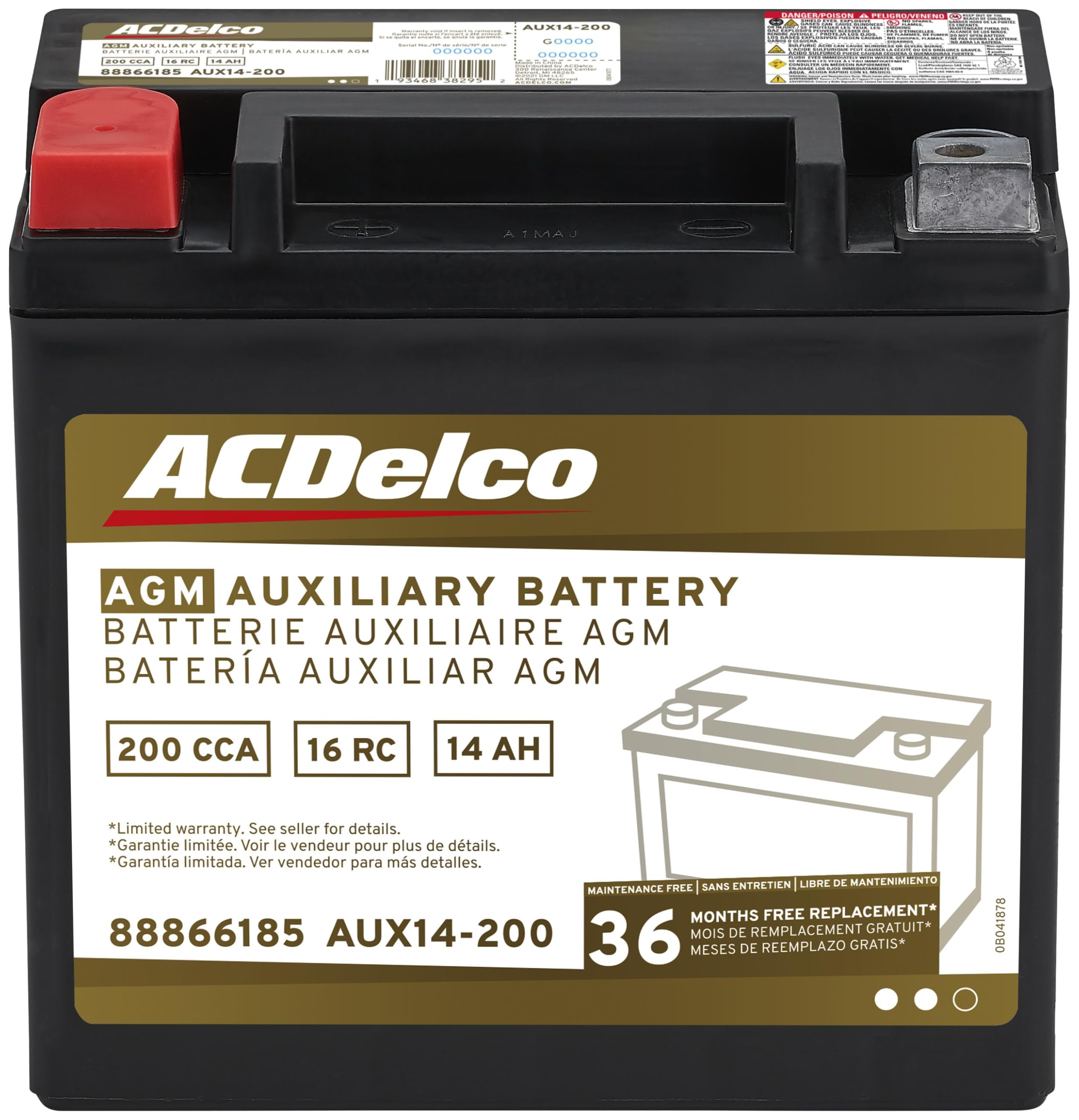
The ACDelco Gold AUX14-200 is an auxiliary AGM battery designed to handle the high cycling demands of modern start-stop systems and electrical loads. With a compact footprint of 5.9 x 3.4 x 5.7 inches and a weight of just 10.9 pounds, it fits snugly in trunk or fender wells of vehicles like the Mercedes SL 550 and Chrysler Pacifica. Its 200 CCA rating is modest, but the internal resistance of 0.33 milliohms ensures rapid current delivery when the main battery calls for backup.
Leak-proof pressurized valve construction and high-density plate oxide give this battery a 36-month free replacement warranty, which is generous for a Group-sized auxiliary unit. Multiple verified buyers reported plug-and-play installation with zero modification, and the stop-start error codes cleared immediately after swapping out the old flooded cell. The AGM chemistry also eliminates the need for periodic water checks, a common pain point in older auxiliary battery compartments.
While the AUX14-200 is not intended to be a primary starting battery for large engines, its role in supporting electronics and restart functions is critical. The one negative review citing a failure under a year suggests that individual unit quality can vary, but the warranty path through Amazon is stated in the product literature. For anyone needing a reliable, OEM-spec auxiliary battery for a modern luxury or hybrid vehicle, this is a strong choice.
Why it’s great
- Perfect OEM fit for German and American luxury sedans
- 36-month free replacement warranty is market-leading for this form factor
- Maintenance-free AGM design with no spill risk
Good to know
- Only 12 Ah capacity limits use to auxiliary, not primary starting
- Some users report inconsistent warranty support via third-party sellers
2. OPTIMA RedTop 34

The OPTIMA RedTop 34 is a benchmark in the high-performance starting battery segment, delivering 800 CCA from a compact BCI Group 34 package that weighs only 37.9 pounds. Its proprietary SpiralCell technology uses 99.99% pure lead wound into tight spirals, providing 15 times more vibration resistance than standard flooded batteries. This makes it a favorite for off-road trucks, high-compression engines, and vehicles that see rough terrain.
With a reserve capacity of 100 minutes and a C20 capacity of 50 Ah, the RedTop is exclusively a starting battery—it isn’t designed for deep-cycle loads like running a winch or powering an inverter for extended periods. Verified users report lifespans of 6 to 8 years in daily-driven vehicles, which is exceptional for any lead-acid chemistry. The faster charging capability also means short commutes are less likely to leave the battery in a partial state of charge.
There are two caveats: the RedTop’s SAE posts may require adapter plates for some German or Asian vehicles that use side terminals or different spacing, and a small percentage of buyers report receiving units that are old stock and fail within months. Given the brand’s reputation and the 2/3 price savings over local parts stores, this battery remains a top-tier choice for drivers who prioritize reliable starting above all else.
Why it’s great
- 800 CCA ensures confident starts even in sub-zero conditions
- SpiralCell construction resists vibration damage effectively
- Multiple verified 6+ year service lives for excellent long-term value
Good to know
- Not designed for deep-cycle use—avoid draining below 12.0V
- Some units may be old stock with shorter remaining lifespan
3. OPTIMA YellowTop DH7

The OPTIMA YellowTop DH7 is the dual-purpose powerhouse in the OPTIMA lineup, offering 880 CCA and a 155-minute reserve capacity from a BCI Group 94R case weighing 54 pounds. This battery is engineered for vehicles with high electrical demands—luxury sedans, large SUVs, and trucks that power multiple electronics even when the engine is off. The PureFlow technology uses 99.99% pure lead in radial grid plates to maximize both starting power and cyclic durability.
Verified owners report that the YellowTop fits exactingly in vehicles like the BMW 330Ci and Chevy Silverado High Country, though the vent hose coupler is a molded part of the red shipping cap and can deform if not handled carefully. On a whole-house generator application, one user recorded 8 years of service with a float charger, proving the battery’s long-term storage capability. The DIN-type A1 terminals are standard for European vehicles, but may require adapter posts for American top-post clamps.
The premium pricing puts the YellowTop DH7 in a niche for owners who need both starting grunt and the ability to run accessories without killing the battery. While there is a concerning report of a unit arriving at 10.5V and self-discharging quickly—suggesting possible quality drift—the long-term data from multiple sources still favors the OPTIMA reputation. For a luxury SUV or sports car that sees weekend use, the YellowTop’s dual nature is a distinct advantage.
Why it’s great
- Highest CCA (880) and RC (155 min) in its group size for dual-purpose use
- Proven 8-year service life in standby applications
- Sealed, maintenance-free design with superior vibration resistance
Good to know
- Vent hose coupler is fragile—insert carefully before installation
- Some recent units show high self-discharge, indicating possible quality variation
4. MARXON Group 34

The MARXON Group 34 bridges the gap between economy flooded batteries and premium AGM units, offering 650 CCA and 55 Ah from a BCI Group 34 case that weighs 42 pounds. It is specifically designed for start-stop vehicles, with the manufacturer claiming a 10% fuel savings and a 40% faster charging acceptance compared to standard SLI (Starting, Lighting, Ignition) batteries. The A1 terminal layout is standard for most domestic and Asian applications.
Verified users have installed this battery in 2012 Chevy Tahoes and 2011 Jeep Libertys without issues, noting that the AGM chemistry handles deep discharges better than flooded alternatives. One buyer deliberately discharged it to 11V and reported successful recharging, which is a stress test that would damage a conventional lead-acid cell. The 3-year warranty from a U.S.-based office provides reasonable peace of mind for the price point.
The main trade-off is that MARXON appears to manufacture under a rebranded OEM arrangement (suspected Chinese Uplus cells), and a small number of units arrive with bent terminal posts from shipping. However, the vendor is responsive to replacements. For a driver who wants AGM benefits without paying the premium for a household name, the MARXON Group 34 delivers solid performance at a price that undercuts many competitors significantly.
Why it’s great
- AGM chemistry for deep-cycle resilience at a near-flooded battery price
- Fast charging acceptance works well with short commutes
- 3-year warranty with U.S.-based support
Good to know
- Occasional shipping damage to terminal posts
- Long-term reliability beyond 3 years is not yet well-documented
5. HRBEENERGY 12.8V 100Ah LiFePO4

The HRBEENERGY 12.8V 100Ah LiFePO4 battery represents a shift from lead-acid to lithium for deep-cycle applications, packing 1280 Wh into a BCI Group 24 case that weighs only 19.4 pounds. That’s over 40% lighter than a comparable AGM battery, which matters enormously for RV and marine installations where every pound counts. The built-in 100A BMS provides overcharge, over-discharge, short circuit, and temperature protection, making this a safe drop-in replacement for lead-acid.
With a rated lifespan of 8000 cycles at 80% depth of discharge, this battery will outlast a vehicle chassis by a significant margin. Verified users confirm that the capacity is accurate and slightly exceeds the 100Ah rating when new. Three of these units wired in series power a 36V golf cart for 10 hours, while two in parallel serve an RV for 3–4 days off-grid. The IP67 waterproof rating also makes it suitable for marine environments where moisture is a constant threat.
The primary limitation is that LiFePO4 batteries cannot be used as direct replacements for starting batteries in freezing weather unless they have built-in low-temperature charging protection—which this unit does. However, its BMS cuts off discharge at 9.5V rather than the ideal 10V, which is a minor quibble. For anyone building a solar system, upgrading a trolling motor battery, or reducing weight on a camper, this battery offers compelling benefits over lead-acid.
Why it’s great
- 8000-cycle lifespan is 5x to 10x longer than any lead-acid battery
- 19.4 lb weight halves the burden of equivalent AGM batteries
- IP67 waterproof case expands use to marine and wet environments
Good to know
- Not designed for engine starting in vehicles below freezing
- BMS low-voltage cutoff allows discharge to 9.5V, which is slightly lower than ideal
6. DUMFUME 12V 150Ah LiFePO4
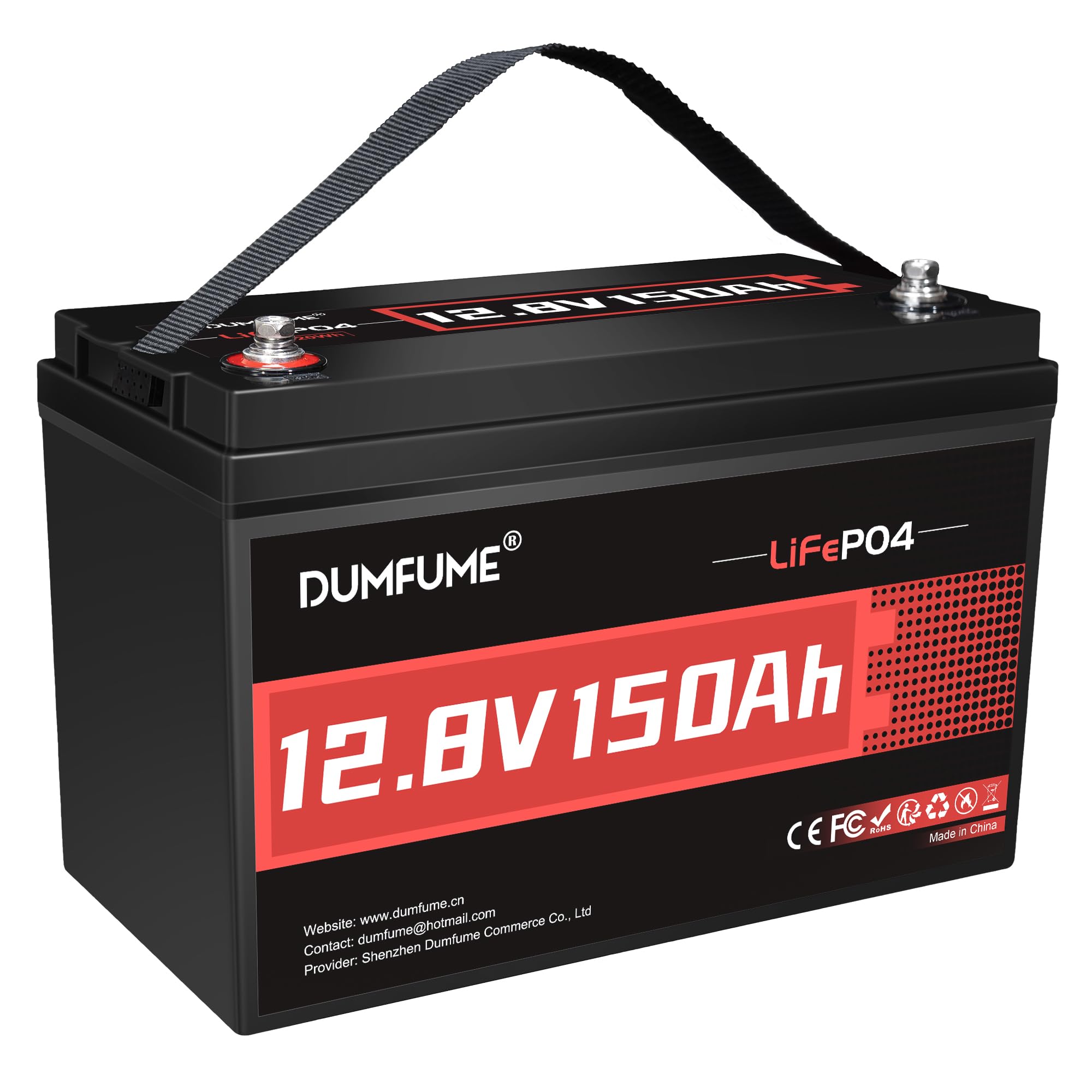
The DUMFUME 12V 150Ah LiFePO4 battery provides substantial 1920 Wh of energy storage for solar arrays, RVs, and off-grid cabins. Weighing only 22.05 pounds, it is 60% lighter than a lead-acid battery of similar capacity, making installation in tight campervan cabinets significantly easier. The built-in 100A BMS handles safety monitoring, and the battery supports series and parallel connections up to 4S4P, giving the user a theoretical maximum of 60,000+ Wh of storage.
Laboratory-level testing from a verified buyer showed that all four units purchased delivered roughly 7 Ah over the rated capacity, which is an excellent sign for quality control. Another user reported that after one year of twice-weekly charging, the battery still exceeded its nameplate capacity. The 5-year warranty is a solid backstop, though one buyer noted that the warranty is only valid when purchased directly from Dumfume, not through Amazon marketplace sellers.
The main risk with DUMFUME is the same as many budget lithium brands: some units arrive at a voltage below 12V and require a “jump charge” from another battery to wake the BMS. In the small sample of 4 batteries from one user, 50% needed this wake-up procedure, which could frustrate less experienced installers. This battery is explicitly not designed for engine starting, and the manual should be followed closely for storage maintenance every 6 months.
Why it’s great
- 1920 Wh capacity in a 22 lb package outperforms equivalent lead-acid by 3x
- Capacity often exceeds rated spec in real-world tests
- Expandable up to 4S4P for very large off-grid setups
Good to know
- 50% of units in one batch required a jump charge to wake the BMS
- Warranty only covers direct purchases, not Amazon orders
7. Goodyear 35-AGM Platinum Series
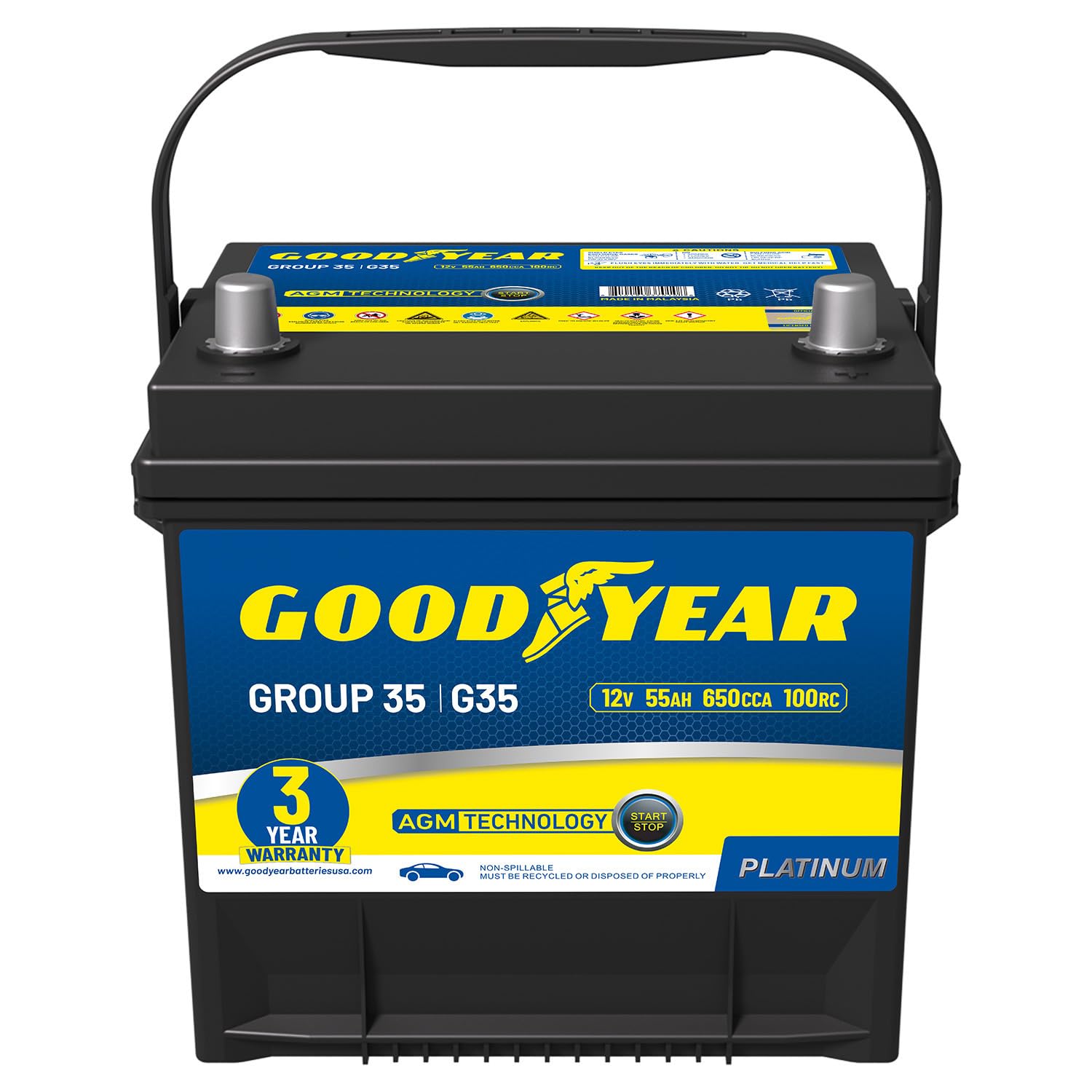
The Goodyear 35-AGM Platinum Series battery combines a recognizable brand with legitimate AGM engineering in a BCI Group 35 package. It delivers 650 CCA and a 100-minute reserve capacity, making it a strong candidate for upgrading a standard flooded battery in most passenger cars. The AGM chemistry is spill-proof, can be mounted in multiple positions (except inverted), and offers up to twice the cycle life of conventional lead-acid batteries.
Verified users have installed this battery in vehicles ranging from a 2016 Mercedes E350 auxiliary slot to a 2021 Jeep Wrangler Rubicon, where it restored the stop-start system to full functionality. The 36-month warranty adds confidence, and the CE certification from an ISO-certified factory suggests quality manufacturing processes. One owner noted that upgrading from a flooded battery to this AGM unit noticeably improved headlight brightness and eliminated flicker
There is one alarming report claiming the Goodyear 35-AGM caused engine damage in a Chrysler Pacifica, though this is an outlier among overwhelmingly positive reviews. It’s possible that an incorrect installation or a pre-existing vehicle issue was responsible. Overall, the Goodyear 35-AGM represents a solid mid-range AGM option for drivers who want improved performance over flooded and a trusted brand name backing their purchase.
Why it’s great
- AGM upgrade delivers better voltage stability and brighter headlights
- 36-month warranty from a recognized tire and battery brand
- Spill-proof design allows flexible mounting positions
Good to know
- One isolated but serious report of engine damage after installation
- Wire harness and mounting hardware are sold separately
8. WEIZE Group 31M Dual Purpose AGM
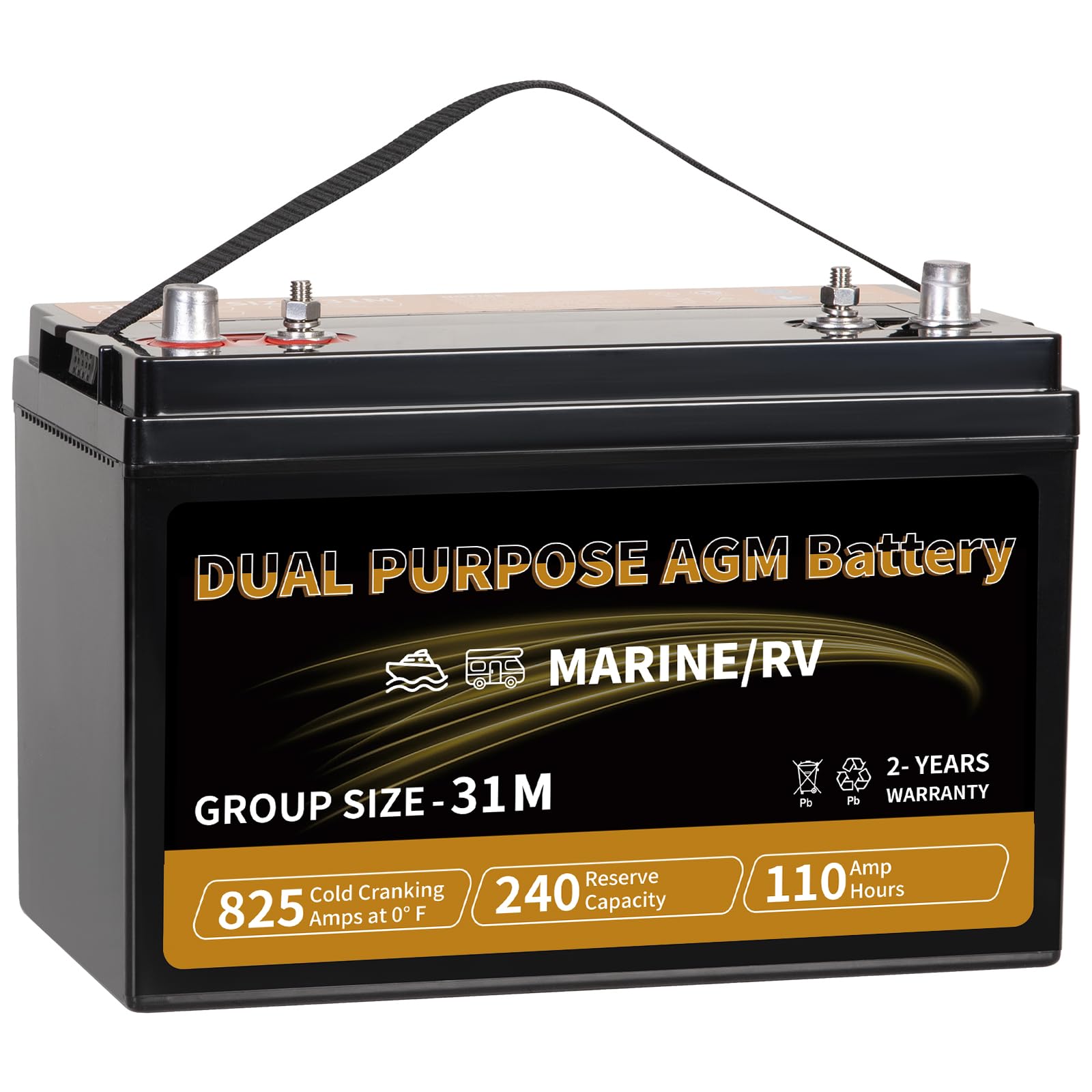
The WEIZE Group 31M is a dual-purpose sealed AGM battery designed for marine and RV applications where both starting power and deep-cycle endurance are needed. With 825 CCA and a massive 240-minute reserve capacity, this 67-pound battery can spin a large marine diesel while also powering a trolling motor or cabin lights. The advanced AGM technology promises twice the cycle life of a traditional flooded marine battery and 20 times more vibration resistance.
Verified owners report using 3 of these in parallel to start a Caterpillar diesel engine in a motorhome, and another user praised its quick-charge capability after running a sump pump backup system. The M8 stud terminals provide secure connections for high-current applications. WEIZE includes both SAE posts and threaded inserts for flexible wiring options, making it adaptable for various marine and RV electrical systems.
The key physical constraint is the weight—at nearly 70 pounds, installation is a two-person job or requires a battery lift strap. There is also a minor risk of receiving a “dud” unit, as with any high-volume AGM battery, but the warranty path is clearly defined. For boaters or RV owners who need a single battery to handle both starting and house loads without separate banks, the WEIZE Group 31M offers exceptional value per pound of lead.
Why it’s great
- 825 CCA and 240 RC in a single dual-purpose battery
- 20x more vibration resistant than flooded, ideal for boats
- Quick-charge capability saves time between dock visits
Good to know
- Very heavy at 67 pounds—requires careful installation planning
- Small QC risk of receiving a defective unit
9. Mighty Max ML35-12 GEL

The Mighty Max ML35-12 GEL is a 12V 35Ah sealed GEL battery designed for applications requiring a slower, deeper discharge cycle rather than high-cranking current. Its GEL chemistry uses a thickened silica-based electrolyte that is less prone to leaking and can withstand higher temperatures and vibrations than AGM or flooded equivalents. This makes it a popular choice for gate openers, electric wheelchairs, solar lighting systems, and small off-grid pumps.
One verified user has been running 3 of these batteries for over 5 years at a rain catchment pump station with zero complaints, and another uses it with a 50W solar panel to power a Wyze camera and gate opener without voltage sag. The GEL electrolyte’s slower self-discharge rate—lower than standard AGM—means the battery retains a usable charge longer when sitting idle between cycles. The nut-and-bolt terminal design provides a secure connection for permanent installations.
The limitation is clear: at only 35 Ah, this battery cannot start a car or truck engine. It’s a deep-cycle specialty battery meant for low-current, continuous-drain applications. One buyer found that the batteries didn’t hold charge as long as expected for an electric wheelchair, which may indicate that GEL chemistry is less tolerant of high-discharge pulses. For the right use case—solar-powered gates, backup sump pumps, or mobility scooters—the Mighty Max GEL is a reliable, low-maintenance workhorse.
Why it’s great
- GEL chemistry offers lower self-discharge than AGM for standby use
- Proven 5+ year service life in real-world off-grid installations
- Non-spillable design enhances safety in enclosed spaces
Good to know
- Not a starting battery—insufficient CCA for engine cranking
- Some users report shorter runtime than expected in wheelchair use
FAQ
Can I replace a flooded battery with an AGM battery?
What does BCI group size mean for my car battery?
Is a higher CCA always better?
Can I use a deep-cycle battery for starting my engine?
Final Thoughts: The Verdict
For most users, the 12 volt car battery winner is the ACDelco Gold AUX14-200 because it is the gold standard for auxiliary starting duties with a 36-month warranty and OEM fitment for modern luxury vehicles. If you want a high-performance primary starting battery for off-road or extreme conditions, grab the OPTIMA RedTop 34. And for complete off-grid energy storage that weighs half as much as lead-acid, nothing beats the HRBEENERGY 12.8V 100Ah LiFePO4.