
Our readers keep the lights on and my morning glass full of iced black tea. As an Amazon Associate, I earn from qualifying purchases.
Specs are compiled from manufacturer listings and verified buyer reviews and can change over time — please confirm the key details on the product page before buying.
You are here because your steering wheel is frigid and your windshield is fogged to white. A 12 Volt Car Heater solves that by pushing warm air at your hands and clearing the glass fast, so you do not wait minutes for the engine to warm up. Your choice depends on how much heat you need and how much wiring you will do: a plug-in unit for the cigarette lighter or a permanent under-dash install that taps into engine coolant.
I’m Min — the founder and writer behind Gadgets Feed. This guide is built by comparing the manufacturers’ published specifications and the patterns across verified customer reviews, so you get each pick’s real strengths and trade-offs instead of marketing spin.
Ask yourself one question to pick the best 12 volt car heater for you: do you want instant plug-in defogging or real engine-powered warmth for the whole cabin?
Our Picks at a Glance
How To Choose The Best 12 Volt Car Heater
There are two completely different machines hiding under the same name. Electric plug-in heaters use a PTC element (a ceramic heating core that warms up fast) and a fan to push air; they are cheap, instant, and limited. Coolant-based under-dash heaters are miniature versions of your car’s own heater core — they pull hot engine coolant through a small radiator and blow air over it, producing real heat but needing hose connections. Know which type you are buying before you compare anything else.
Match the Power to the Job
Wattage is the honesty test for electric units. A 150W or 200W heater (measured in watts, the rate of electrical heating) will warm your hands and clear light fog — it is a supplement, not a replacement for your car’s heater. A 500W unit (500 watts) puts out noticeably more heat but needs a direct battery connection, not the cigarette lighter. Compare the numbers and set your expectations accordingly.
Installation Is the Real Differentiator
Plug-in models are ready in seconds — push into the 12V socket (your car’s cigarette lighter port) and go. Coolant-based models are a bigger commitment: you are cutting into a water hose (often a 5/8-inch or 16mm inner-diameter hose), connecting clamps, finding a 12V power source, and mounting a 7-pound box under the dash. If you are not comfortable with basic wiring and hose work, a plug-in unit is the honest choice.
Quick Comparison
| Model | Best For | Heat Source | Output | Airflow | Amazon |
|---|---|---|---|---|---|
| Blytra 200W★ Best Overall | Plug-in defogging | Electric PTC | 200 watts | 360° rotatable | Amazon |
| Blytra 150WBest Value | Instant cabin warmth | Electric PTC | 150 watts | 360° rotatable | Amazon |
| CYDZSW 500W | High-power defrosting | Electric PTC | 500 watts | 4 ports | Amazon |
| XuSha 8000 BTU | Coolant-powered heat | Engine coolant | 8000 BTU | 4 ports | Amazon |
| Sallurmose 4-Port | Under-dash foot warmth | Engine coolant | Coolant temp | 4 ports | Amazon |
| Therwen 4-Port | Focused windshield clearing | Engine coolant | Coolant temp | 4 ports | Amazon |
| Saihisday 4-Port | Budget cab heating | Engine coolant | Coolant temp | 4 vents | Amazon |
In‑Depth Reviews
1. Blytra Portable Car Heater — 200W
Our pick — over 4.5★ from 80+ verified ratings; the strongest balance of quality and price.
The plug-and-play pick that clears fog in seconds and sits quietly in any cup holder spot.
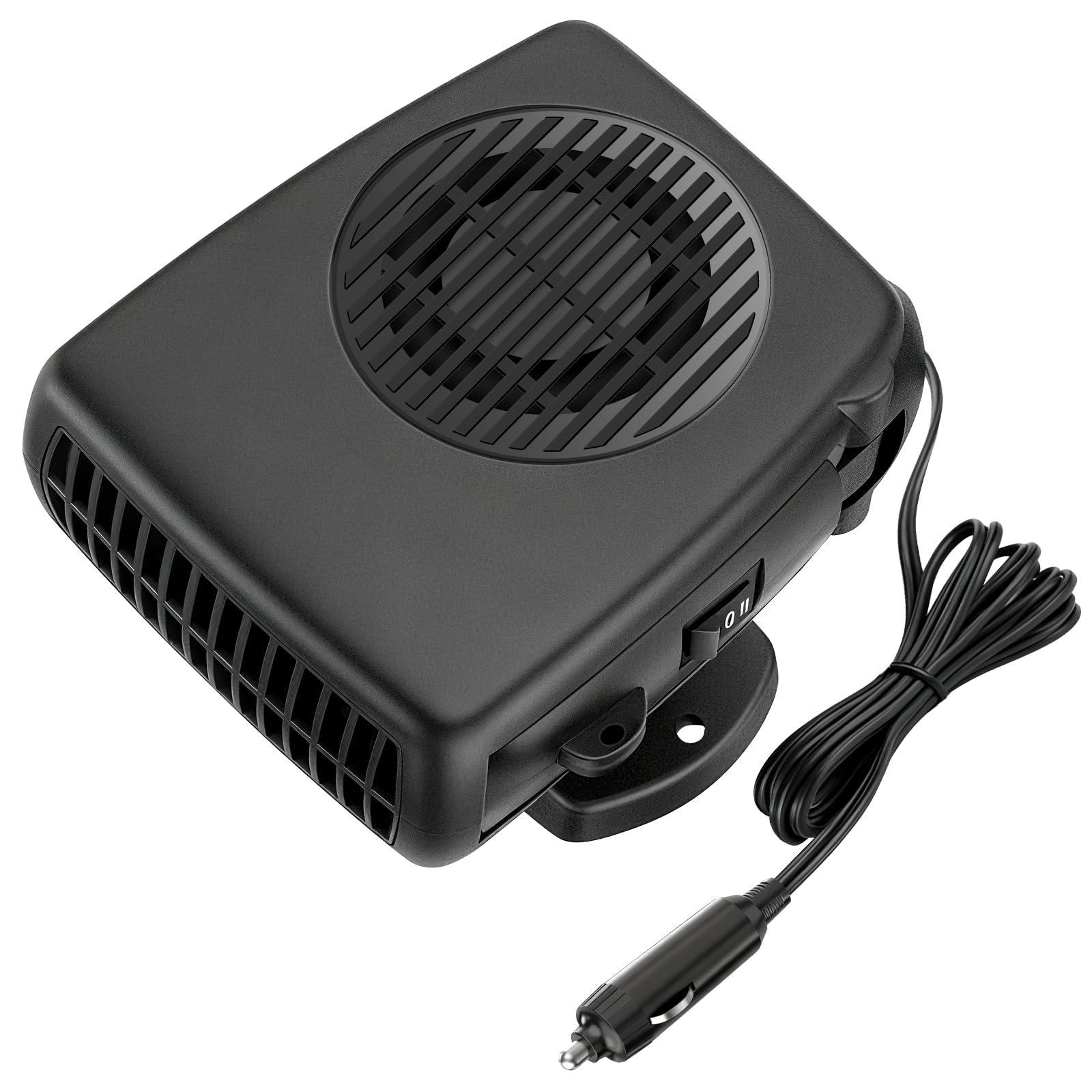
If you want warmth without a wrench, this Blytra is your answer. Its 200-watt PTC element (a ceramic core that heats up fast) plus a 360° rotatable outlet lets you aim warm air straight at your hands, the windshield, or the floor. The crowd favorite — 4.7 stars across 80+ owners — because it genuinely does what the label promises: buyers report it warms in about 2 minutes and clears a fogged windshield in seconds.
The build matches the promise. It wraps a high-quality ABS plastic shell (a tough, impact-resistant plastic) around pure copper cables, so it shrugs off the heat it generates. A self-adhesive base lets you stick it on a clean, dry surface near the console; the long cable gives you placement freedom. Owners running it in 24V trucks and UTVs report it holds up fine, and nobody mentions a burnt smell — just soft, comfortable heat.
Set expectations honestly: this is a supplemental heater, not a replacement for your car’s main system. As buyers put it, it is “great for initial cold/foggy starts and short drives” but won’t warm a whole cabin on a bitter day. For a quick warmup and a clear windshield on the morning commute, it’s the best value of the group.
Why It Wins People Over
- Genuine 2-minute warmup time for fast fog clearing
- 360° rotating outlet aims heat exactly where you need it
- Heat and fan modes give you ventilation without warmth in summer
- Simple plug-in install with no tools or wiring
Know the Limit
- 200 watts means supplemental warmth, not full-cabin heat
- Needs a working 12V socket — heavy draw can tax older outlets
Reach for this if: you want instant, no-tool defogging and hand-warming for short cold drives.
Look elsewhere if: you need to heat the entire cabin on a freezing commute — that needs a coolant-based unit.
2. Blytra Portable Car Heater — 150W
A compact 150-watt sibling with instant heat and a rotating head that travels between vehicles.
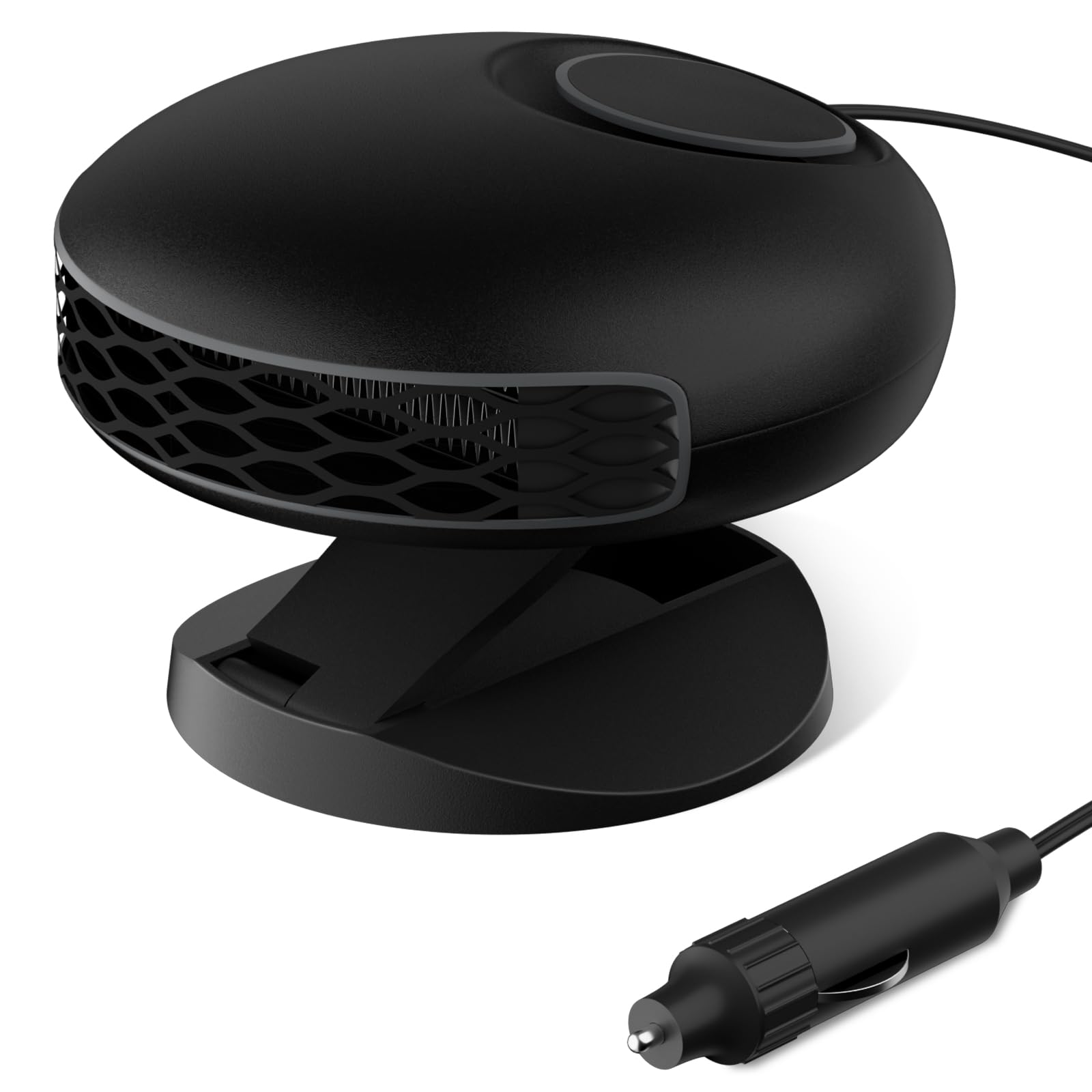
This is the lighter-duty twin of our top pick, sharing the same rotating head and plug-and-play style but at 150 watts instead of 200. The lower power is the trade-off for a slightly smaller footprint and the same easy adhesive mount. It still earns its keep: owners say it delivers instant warmth in seconds, defrosts quickly, and stays quiet enough for a cold commute without adding noise to your morning.
The 360° rotatable head is the star here — you can slide it to point heat at the windshield, your feet, or the passenger seat without moving the base. Built from the same high-quality ABS plastic with pure copper cables, it resists wear and aging for daily winter use. A built-in overheating protection (a safety cutoff that stops the element from getting dangerously hot) supports safe, long-lasting operation.
Keep your expectations in line with the 150-watt rating: this is quick cabin warmup and windshield defrost, not a replacement for your car’s heater. It shines for cold commutes and short drives, and it’s portable enough to move between cars, SUVs, and vans with zero effort.
The right pick for: commuters who want instant heat at the lowest cost and the flexibility to move one heater between vehicles.
The honest limit: at 150 watts it warms a small area fast, but a whole frozen cabin is beyond its reach.
3. CYDZSW 500W 4-Hole Battery Heater

The highest-wattage electric option here, with 500 watts and four outlets for serious defrosting power.
This electric heater skips the cigarette lighter entirely, so you get more power: at 500 watts, it is more than double the plug-in Blytra units. Four aluminum foil telescopic tubes route hot air where you need it, and the metal body resists high-temperature deformation and cracking. The trade-off is wiring — you connect the red line to the positive battery terminal and the black line to negative, per the instructions, so the install is more involved.
The heat is real when it gets there. The temperature climbs as high as 86 to 100 degrees Celsius (about 187 to 212°F), and the compact size hides easily. Owners who pair it with heavy-gauge wire (thicker cable that carries high current safely) report the cable never gets hot. It’s built for 12V gasoline cars, storage battery vehicles, RVs, and trucks.
This is where expectations and feedback get honest. Buyers are split: some say it heats well, while others report nearly zero heat or limited air volume. One owner’s verdict — “may as well sit and idle to get more heat” — sums up the risk. It pulls a lot of power, so a battery can drain if the engine isn’t running; in a sealed, small space it works, but an open cab will defeat it. This one suits a confident DIYer who knows their vehicle’s battery limits.
Who it’s built for: owners of UTVs, trucks, and RVs who want maximum electric heat and don’t mind direct battery wiring.
The catch: heat output is inconsistent across buyers, and the power draw demands heavy-gauge wiring and a running engine.
4. XuSha 8000 BTU Universal Cab Heater
Engine-powered warmth that rivals your factory heater — if you can handle the hose work.
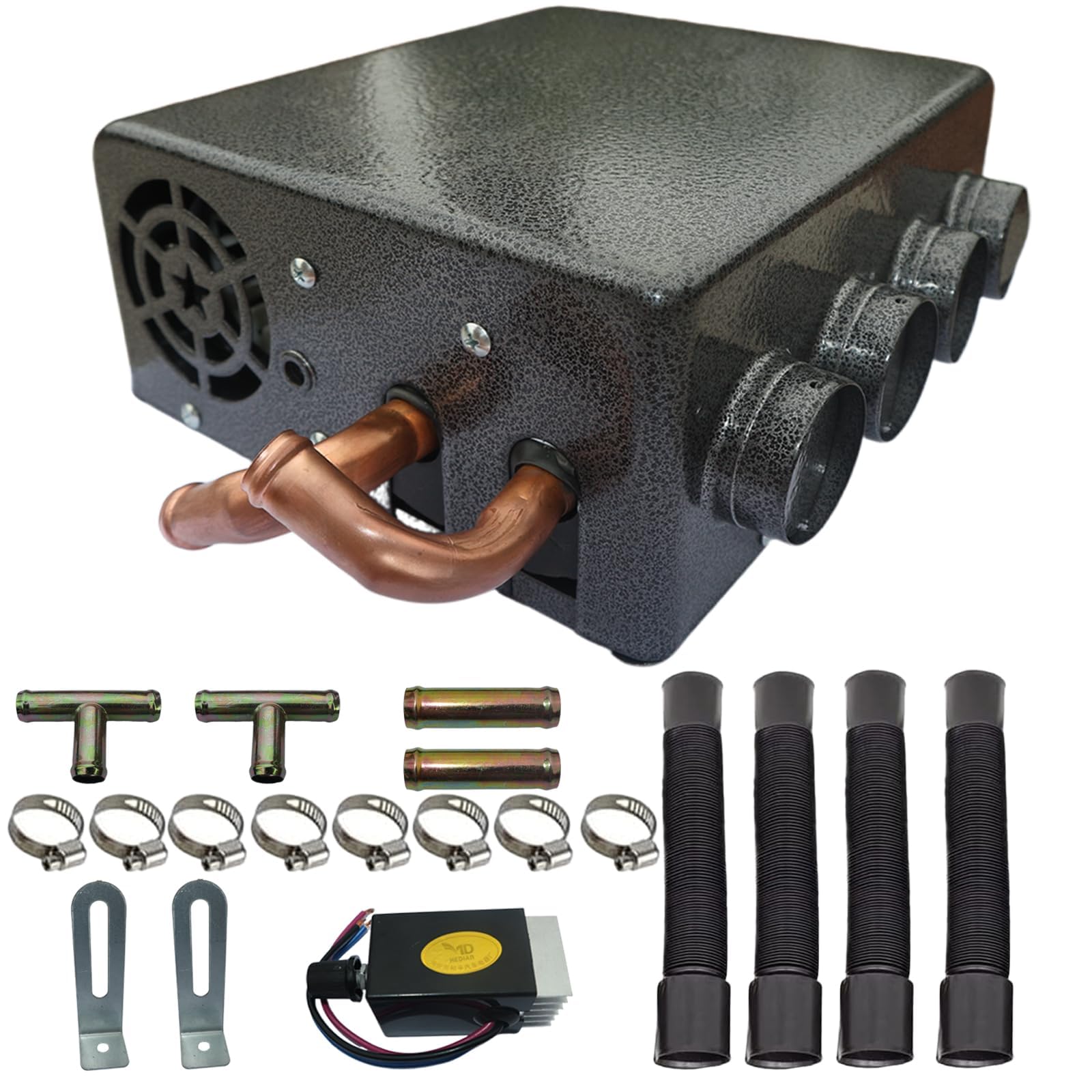
The XuSha is a completely different animal from the electric units above. It is a coolant-based heater: it connects to your vehicle’s water hose, pulls hot engine coolant (the liquid that cools your engine, which gets very hot) through a small core, and blows air over it to produce genuine heat. Its output is rated at 8000 BTU (British Thermal Units, a measure of heat energy) — far more than any electric plug-in can manage.
The catch is in the install. It requires a 5/8-inch (16mm) inner-diameter water hose, which is not included, and you’ll be cutting into that hose and clamping the heater in line. The payoff is real: owners mention no leaks and solid warmth, with one installing it in a RZR with soft doors and staying warm on a 16°F day. Another put one in a 1930 Model A hotrod and got heat “coming out like I never even expected.”
The honest trade-off: heat output depends entirely on your vehicle’s water temperature — no warm engine, no warm air. Some customers note it doesn’t provide enough warmth, and a few units arrive missing screws for the mounting brackets. It’s energy-saving since it uses engine heat rather than fuel, but it’s not a plug-and-play gadget; it’s a real installation project for someone comfortable under the hood.
What Owners Love
- 8000 BTU output delivers real, engine-driven warmth
- No fuel cost — uses waste heat from the engine coolant
- Works well for defrosting and foot-warming once installed
Plan For This
- Requires a 5/8-inch water hose, not included
- Heat only comes when the engine is warmed up
- Occasional missing hardware in the box
Built for: DIY owners of trucks, RVs, and off-road rigs who want factory-level heat without idling.
Think twice if: you want a tool-free install — this one needs hose clamps and basic mechanics.
5. Sallurmose 12V Underdash Heater — 4 Ports
A copper-and-iron coolant core with a stepless speed dial that puts comfort fully in your control.
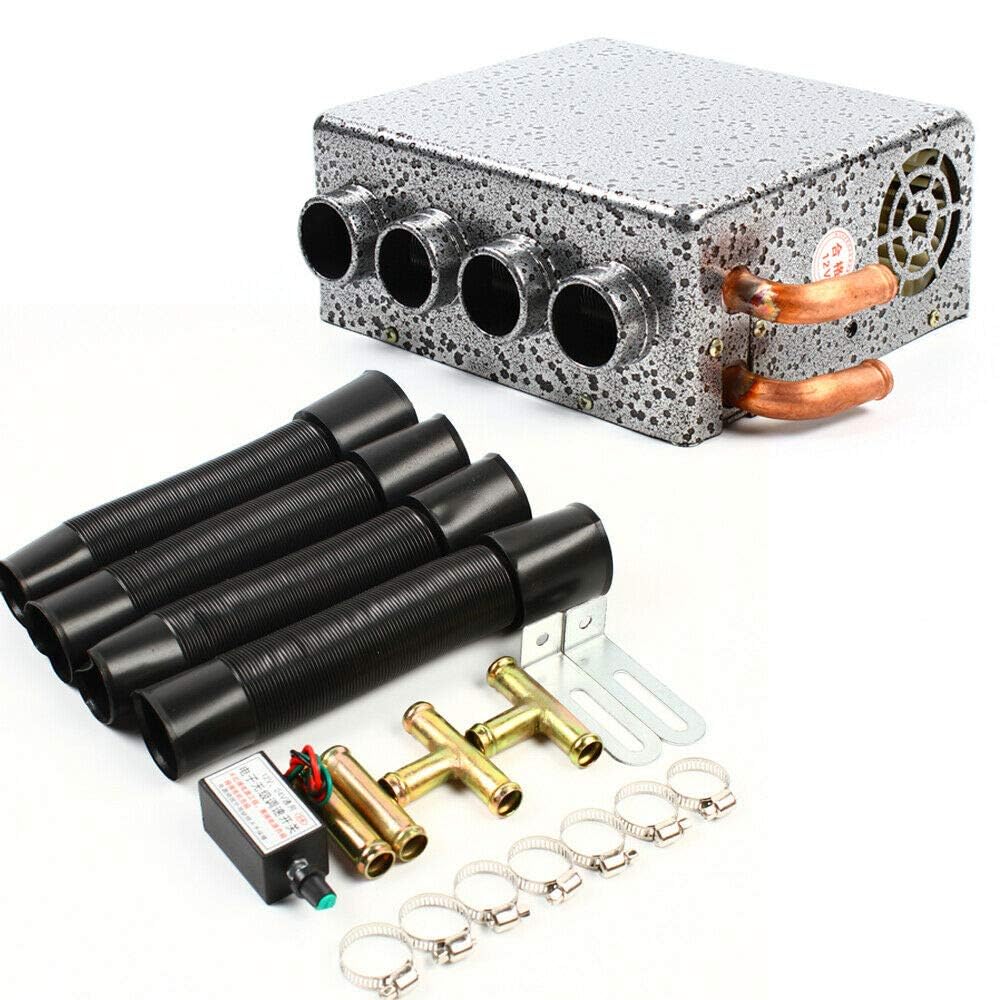
This under-dash unit runs on the same coolant principle as the XuSha but adds a stepless adjustment knob — a dial that lets you fine-tune the fan speed smoothly instead of clicking through fixed settings. It’s described as energy-saving because it uses the engine’s hot coolant flowing through the heater core, with the motor forcing air over it; it needs no fuel and only minimal electricity. The construction leans on copper and thickened iron for extended service life in tough environments.
Reviewers point out real heat: the core heats up and flows well, warming feet and clearing the windshield through all four ports. It’s earned trust as a value pick for vehicles like the 2007 Ford Edge where the factory core is buried and a replacement is a headache. One owner in a CFMOTO ZFORCE 950 Sport did some dash modifying to fit it but called the resulting heat excellent and the install easy to wire.
Honesty check: build quality gets mixed reviews. Some praise durability while others describe it as “pretty cheaply made,” with tubes that don’t fit the output ports cleanly and mismatched plugs on arrival. The clamps are a recurring weak point — they strip out. It’s compact at 11 x 9 x 3.93 inches, fits tight spaces, and the smooth surface wipes clean easily. This is a strong heater for the price if you’re handy enough to work around the rough edges.
The draw: flexible stepless fan control and genuine coolant heat at a value-minded price point.
The honest flaw: expect to replace the included clamps and possibly re-fit the hoses — the core hardware is where it saves money.
6. Therwen 12V Universal Underdash Heater — 4 Ports

A focused four-port defroster that keeps the windshield clear without trying to roast the whole cabin.
The Therwen is built with a clear mission: clear vision, fast. This coolant-powered unit delivers focused heat to the windshield, clearing fog and frost efficiently rather than heating the entire car. That design choice is great news for cold morning commutes where a clear view matters more than cabin temperature. Buyers in a 91 S10 and a short bus both report it “heats really well” where it matters.
At 6.93 pounds, it is a manageable install for SUVs, UTVs, and campers. The four ports spread air across the glass, and the sturdy construction is built around long-lasting defrosting power. It is a solid performer if you prioritize visibility over whole-cabin warmth.
The noise is the recurring conversation here. While some call it quiet, others flag the fan blower as particularly loud — one owner described it as “LOUD” and noted it may need earplugs in a truck sleeper. The switches also draw criticism, with one buyer calling them “junk.” It doesn’t come with mounting bolts, so budget for those. For a steady defogger that preserves fuel by avoiding engine idling, this is a fair choice with a noise caveat.
Best for: drivers who want a windshield-focused defroster that uses engine heat and keeps the cabin view clear.
Know before you buy: the fan is genuinely loud for some owners, and mounting bolts are not in the box.
7. Saihisday 12V Auxiliary Heater — 4 Ports

A four-vent coolant blower that delivers surprising value for basic cab warmth on a budget.
For a low-cost entry into real engine-powered heat, the Saihisday gets the job done. Its blower motor pushes air through four vent holes, serving as a windscreen defroster, demister, and heater all in one. It is the cheapest way to get coolant-based warmth, which is why owners call it “good value” and find it easy to install — one even noted it beat having no heat at all in a 1998 Chevy S10 single cab.
The value story is strong, but the airflow is the known weak spot. Several shoppers say it “doesn’t blow nearly hard enough,” and one said the fan blower is “a little weak.” Build quality also splits opinion: some find it “well worth the money,” while others describe cheap construction, strip-prone hose clamps, and one report of a unit failing after a month. The included plastic hose helps with routing, and it installs cleanly under a dash like a Polaris Ranger 900XP.
This is the pick for someone on a tight budget who needs engine-heat output and is willing to accept lighter airflow. It saves real money versus a dealer heater core replacement — but go in knowing the fan won’t blast like a factory unit.
What Makes It Worth It
- Entry-level price for genuine coolant-based heat
- Four vents cover defrosting, demisting, and cabin warmth
- Easy under-dash install on trucks and UTVs
The Reality Check
- Blower output is weaker than owners hope for
- Build quality is mixed, with some units failing early
Choose this when: budget is the priority and you need engine-heat output, not perfect airflow.
skip it if: you need strong fan force to clear a large windshield — you will be disappointed.
Understanding the Specs
Wattage and PTC Elements
Wattage (measured in watts) tells you how much electrical heat an electric unit can produce. A 150W or 200W unit (150 or 200 watts) warms hands and clears light fog but won’t heat a cabin. A 500W unit (500 watts) makes serious heat but needs a direct battery connection because it draws too much current for a cigarette lighter. PTC stands for Positive Temperature Coefficient — a ceramic element that heats up fast and self-regulates, keeping temperatures safe without a thermostat.
BTU and Coolant Heaters
BTU (British Thermal Unit) measures heat energy, and it’s the number to watch on coolant-based heaters like the XuSha at 8000 BTU. These units don’t use electricity to make heat — they pull hot engine coolant through a small radiator core and blow air over it. That means their output depends on your engine’s water temperature: no warm engine, no warm air. They’re more powerful than electric units and save fuel because they use waste heat instead of burning extra.
FAQ
Will a 12V car heater drain my battery?
Can a plug-in 12V heater replace my car’s factory heater?
What’s the difference between an electric heater and a coolant heater?
Do I need to hardwire a 12V car heater to the battery?
How long does a cup-heater take to warm the car?
What is a PTC heating element and why does it matter?
Can I use a 12V car heater in a UTV or truck?
Why do some 12V heaters need a water hose?
Final Thoughts: The Verdict
The pick that satisfies the most people is the Blytra 200W — for near-universal appeal, no other 12 volt car heater matches its 200-watt output, 360° aim, and 2-minute warmup in a tool-free package. If you want maximum power without wiring, the CYDZSW 500W brings the most heat but demands battery work. And for owners needing true engine-powered warmth for trucks, RVs, or rigs, the XuSha 8000 BTU delivers real cabin heat — as long as you are ready to cut into a water hose. Match your skill level to the install, and you will not be stuck shivering at a stoplight again.
How We Picked
We do not accept paid placement. Every pick is matched to a real buyer and a real use-case; we do not hands-on test units.
Sources & Methodology
Specifications: manufacturer listings and product documentation. Review insights: verified customer reviews, as of August 2026. Pricing: not shown on this page (it changes often); check the current price via the retailer link.
As an Amazon Associate, Gadgets Feed earns from qualifying purchases. This does not affect which products we feature.