
Our readers keep the lights on and my morning glass full of iced black tea. As an Amazon Associate, I earn from qualifying purchases.
Specs are compiled from manufacturer listings and verified buyer reviews and can change over time — please confirm the key details on the product page before buying.
Your 12 volt deep cycle marine battery choice depends on two things: how much it weighs and how long it runs. A lithium battery gives you roughly double the usable power of an old-fashioned lead-acid block at a fraction of the carry weight. A sealed AGM unit (a spill-proof lead-acid battery) costs less upfront and keeps things simple for a small kayak or jon boat. Match the chemistry to your hull, your motor, and how far you run from the ramp. Here is how each pick sorts out.
I’m Min — the founder and writer behind Gadgets Feed. This guide is built by comparing the manufacturers’ published specifications and the patterns across verified customer reviews, so you get each pick’s real strengths and trade-offs instead of marketing spin.
You will see the weight savings, the cycle ratings, and the cold-weather limits spelled out in plain terms so nothing surprises you at the dock. My goal is simple: help you land on the right 12 volt deep cycle marine battery for the way you actually fish.
Our Picks at a Glance
How To Choose The Best 12 Volt Deep Cycle Marine Battery
A bigger amp-hour number does not always mean more time on the water. It doesn’t. You have to know how deep you can safely drain the battery, because running a lead-acid pack past half its capacity shortens its life fast. Lithium handles deep drains far better, which is why a 100Ah lithium pack often delivers more usable hours than a much larger lead-acid block.
Match the chemistry to your motor and your back
A traditional lead-acid or AGM battery is heavy — often over 50 pounds — so you feel every trip from the truck to the transom. A lithium battery of the same 100Ah rating typically lands around 22 pounds, which is a real difference when you are lifting it alone on a wet dock. If you move your battery often or fish from a kayak, that weight gap should push you toward lithium. If you leave it bolted in a bigger boat and want the lowest upfront cost, AGM stays a sensible pick.
Check the cold-weather cutoff before winter fishing
Lithium cells do not like being charged below freezing, and a battery without a low-temperature cutoff can be damaged by a charger that keeps pushing current in the cold. Look for a battery management system — the small circuit board that guards against overcharge, over-discharge, and shorts — that includes low-temp protection. Some models add self-heating so you can keep charging on an ice-fishing trip. If you only fish in warm months, this matters far less.
Think about expansion before you buy
Many lithium batteries let you wire several together in series or parallel to grow your power bank later. That is useful if you plan to add a second trolling motor, an electric fridge, or a solar setup down the road. Check the model’s stated limits for series and parallel connections so you buy a battery that can grow with your plans rather than forcing an early replacement.
Quick Comparison
| Model | Best For | Capacity | Chem | Weight | Amazon |
|---|---|---|---|---|---|
| Litime 12V 100Ah Trolling Motor LiFePO4★ Best Overall | Trolling motors with app monitoring | 100 Ah | LiFePO4 | 22.2 lb | Amazon |
| Newport 12V 50Ah Deep Cycle AGMBest Value | Kayaks and small boats on a budget | 50 Ah | AGM | 32 lb | Amazon |
| HQST 12V 100Ah LiFePO4 Group 22NFSmallest Footprint | Compact footprint in tight battery trays | 100 Ah | LiFePO4 | 22 lb | Amazon |
| DJLBERMPW 12V 100Ah LiFePO4 | Budget lithium with high cycle claims | 100 Ah | LiFePO4 | 23 lb | Amazon |
| Mighty Max MM-G24M 12V 90Ah AGM | Cranking plus deep cycle in one battery | 90 Ah | AGM | 54.4 lb | Amazon |
| ECO-WORTHY 12V 100Ah LiFePO4 | Visual state-of-charge readout | 100 Ah | LiFePO4 | 25.1 lb | Amazon |
| Redodo 12V 100Ah LiFePO4 Group 31 | RVs and solar with large review base | 100 Ah | LiFePO4 | 22.04 lb | Amazon |
| VMAX MR127 12V 100Ah AGM | Heavy-duty AGM for bigger trolling motors | 100 Ah | AGM | 68 lb | Amazon |
| Power Queen 12V 100Ah Group 31 LiFePO4 | RV and solar with 5-year coverage | 100 Ah | LiFePO4 | 24 lb | Amazon |
| ECIENWELL 12V 300Ah LiFePO4 | High-capacity off-grid and 200A service | 300 Ah | LiFePO4 | 54.45 lb | Amazon |
| Power Queen 12V 100Ah Dual Purpose | Cranking and trolling from one battery | 100 Ah | LiFePO4 | 19.8 lb | Amazon |
In‑Depth Reviews
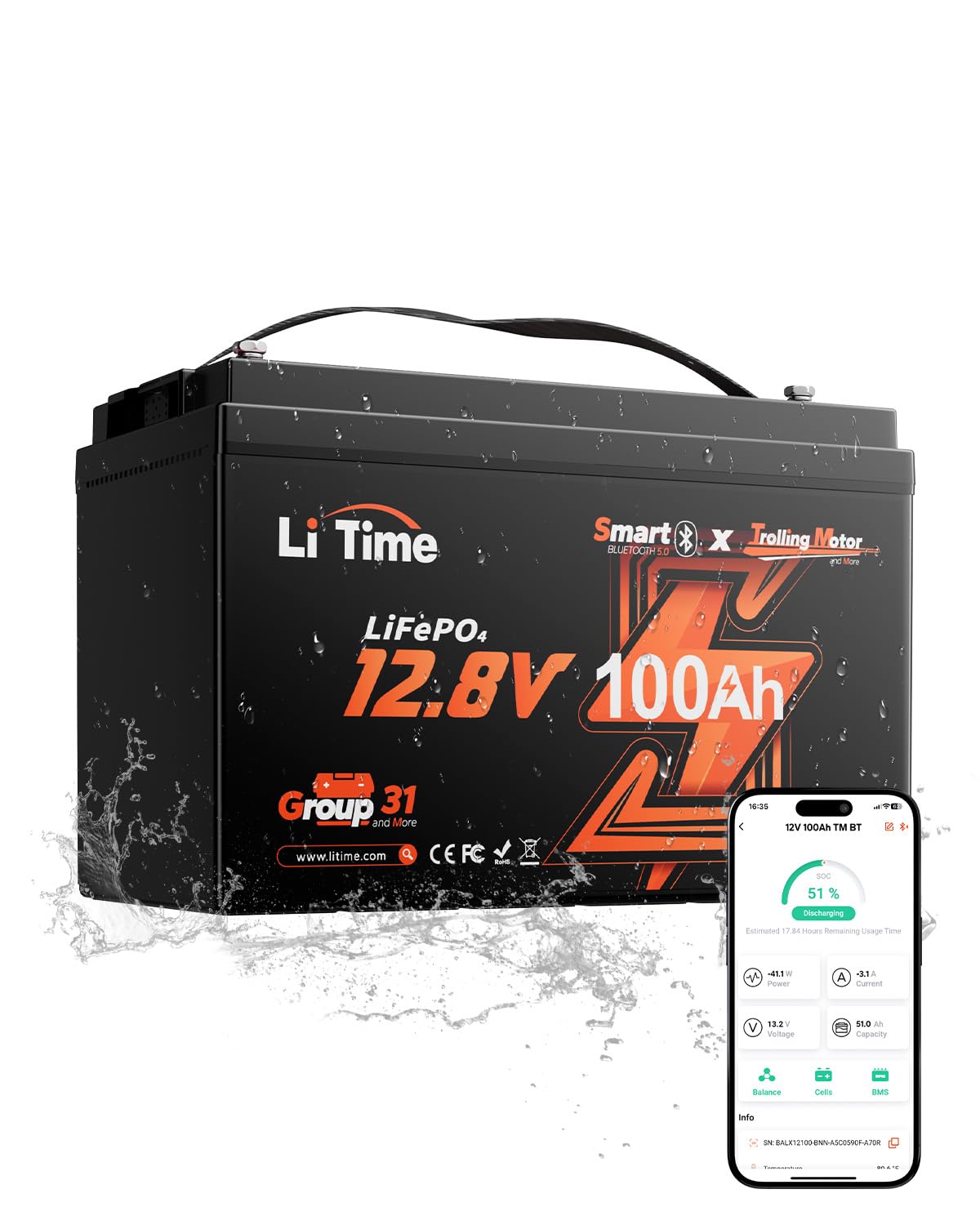
1. Litime 12V 100Ah Trolling Motor LiFePO4 Battery for Marine, Boat, Yacht
Our pick — 4.5+★ from 650+ verified ratings; the strongest balance of quality and price.
The one that lets your boat shed weight and tells your phone exactly how much juice is left.
The first thing you notice is what you pick up: 22.2 pounds in a standard Group 31 case, replacing a lead-acid block that would weigh several times that. Buyers report cutting a tongue weight by 60lbs simply by swapping to this — a change you feel every time you tow and every time you lift it onto the deck. That 60-pound drop is the reason many boat owners switch.
Underneath, the numbers back up the convenience. The 1280Wh energy capacity is built on premium LiFePO4 cells, and LiTime rates it at 4000 deep cycles at 100% depth of discharge, 6000 at 80%, up to a maximum of 15,000 at 60%. The Bluetooth app auto-connects in seconds so you can check status, control discharge, and run system checks from your phone instead of a voltmeter. Low-temp protection stops charging below 32°F and stops discharging below -4°F.
The trade-off is one worth knowing before you buy. This is an energy-storage battery, not a starting battery, and LiTime explicitly says it is not for golf carts or jacks. You also need a lithium-activation or MPPT charger to wake the Bluetooth on first use. And while the app is slick, an occasional unit needs a full discharge-and-recharge to re-establish a dropped connection — a minor speed bump, not a reason to walk away.
Why it leads the pack
- 22.2 pounds in a Group 31 footprint — a genuine one-hand carry
- 1280Wh with up to 15,000 cycles at 60% depth of discharge
- Bluetooth app for live status, discharge control, and system checks
- Low-temp cutoff stops charging below 32°F and discharging below -4°F
- IP65 dustproof and salt-resistant for harsh marine use
Where it asks patience
- Not a starting battery — LiTime rules out golf carts and jacks
- Needs a lithium-activation or MPPT charger to wake Bluetooth first time
- Trolling-motor use capped at the 30–70lb range
Anchor it to: anyone running a 30–70lb thrust trolling motor who wants to shed carry weight and see live battery data on a phone.
Second-guess it if: you need cranking amps to start an outboard — this pack is storage-only by design.
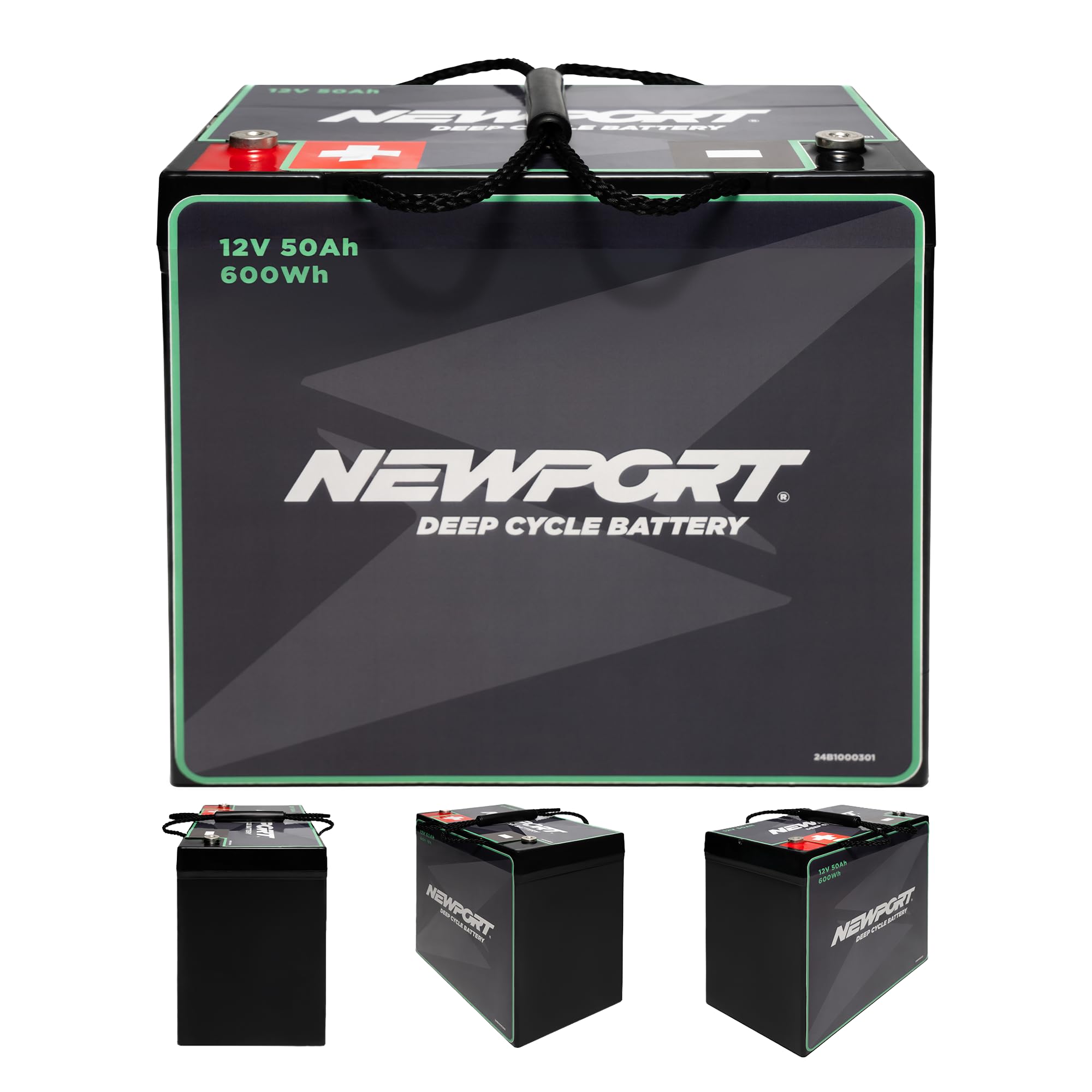
2. Newport 12V 50Ah Deep Cycle AGM Marine Battery
Half the capacity of the big lithium packs, but a fraction of the fuss for a kayak or jon boat.
For a kayak or jon boat with a modest motor, this sealed AGM is the simplest low-maintenance option. It delivers steady, consistent power for trolling motors and other 12V marine electronics, and the fully sealed design means no acid to top off and no maintenance routine. Newport tune the 12V 50Ah output specifically for its own trolling motors, though it also runs compatible 12V boating electronics.
What owners care about most is that it holds a charge and keeps going — owners mention the power output is enough to run a 40lb trolling motor. It is compact enough to fit a kayak, inflatable, or jon boat, and light enough at 32 pounds to carry from the vehicle to the shoreline by yourself. For a comparison anchor, this pack holds 50Ah where the DJLBERMPW holds 100Ah — a 50Ah pack does the shorter trips, the 100Ah pack does the longer ones.
Here is the honest part. A 50Ah AGM gives you fewer hours than a 100Ah lithium, and running it too deep shortens its life, so plan your range carefully. The supply chain note matters too: some units arrive without terminal posts as expected, and value is a mixed bag depending on what you paid on the day. For a small rig where both are minor issues, this remains a sensible, low-maintenance pick.
The dock test: 32 pounds is genuinely carry-able from truck to shoreline, and the sealed AGM design means no maintenance between trips.
The range math: a 50Ah rating means shorter trips than the 100Ah lithium options in this list — size your outings accordingly.
Reach for this if: you fish from a kayak, inflatable, or jon boat and want a low-maintenance pack that is easy to carry.
Look elsewhere if: you need all-day range on a longer run or heavy electronics load.
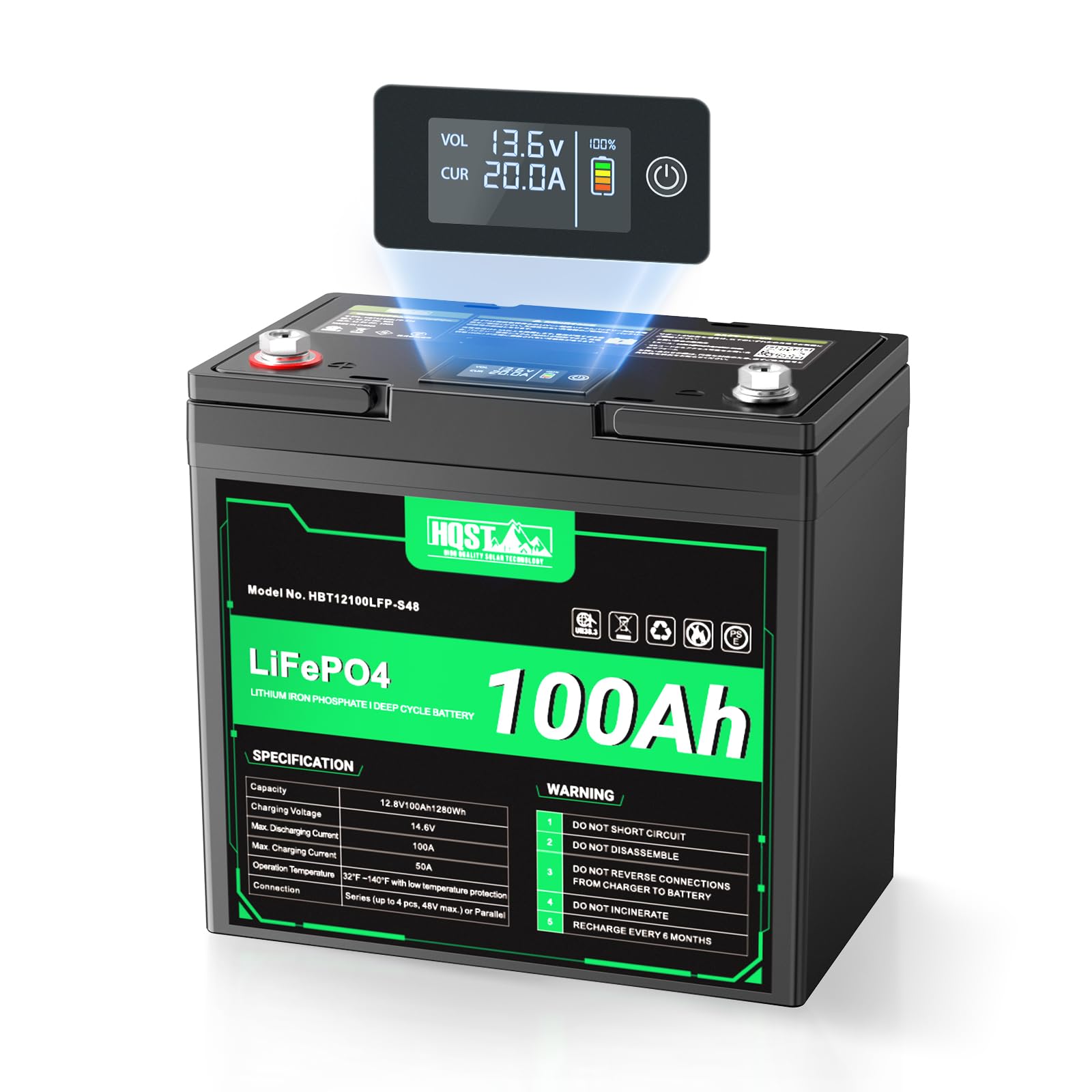
3. HQST 12V 100Ah LiFePO4 Battery, Group 22NF Mini
A 100Ah lithium pack that squeezes into tight Group 22NF trays without giving up capacity.
Battery trays are rarely generous, and the HQST answers that with a Group 22NF mini footprint of 13.07 x 6.77 x 8.66 inches — near-identical to the Litime’s 13 x 6.77 x 8.5 inches. At 22 pounds it is easy to lift in and out, and the case slides into cramped lockers and under-seat compartments where a full-size block will not. That size-to-capacity ratio is the whole pitch here.
On the power side, HQST rates it at 1280Wh with up to 100A continuous discharge, enough for a trolling motor, boat, RV, trailer, or off-grid setup. The built-in BMS manages cell balance and guards against over-current, over-charge, over-discharge, and short circuits. Temperature protection is part of the package: charging pauses below 23°F or above 140°F, and discharging stops below 5°F or above 158°F. It also expands — series wiring to 24V, 36V, or 48V, parallel to 200Ah, 300Ah, or 400Ah, and up to 16 batteries total.
Two things to know. The 4-year material warranty is shorter than the 10-year figures some rivals advertise for cycle life, so read that as a service-life commitment rather than a guarantee. And it is not suitable for golf carts, so keep it for the boat and power applications it was built for.
What buyers praise
- Group 22NF mini size fits tight trays at 13.07 x 6.77 x 8.66 inches
- 1280Wh with up to 100A continuous discharge
- Expands to 20.48 kWh with up to 16 batteries in series and parallel
- Built-in BMS with low and high temp protection
What to weigh
- 4-year material warranty is shorter than some rivals
- Not suitable for golf carts
Fits best when: space is your limiting factor and you need full 100Ah capacity in a small locker.
Pass if: you want the longest warranty terms available or plan to power a golf cart.
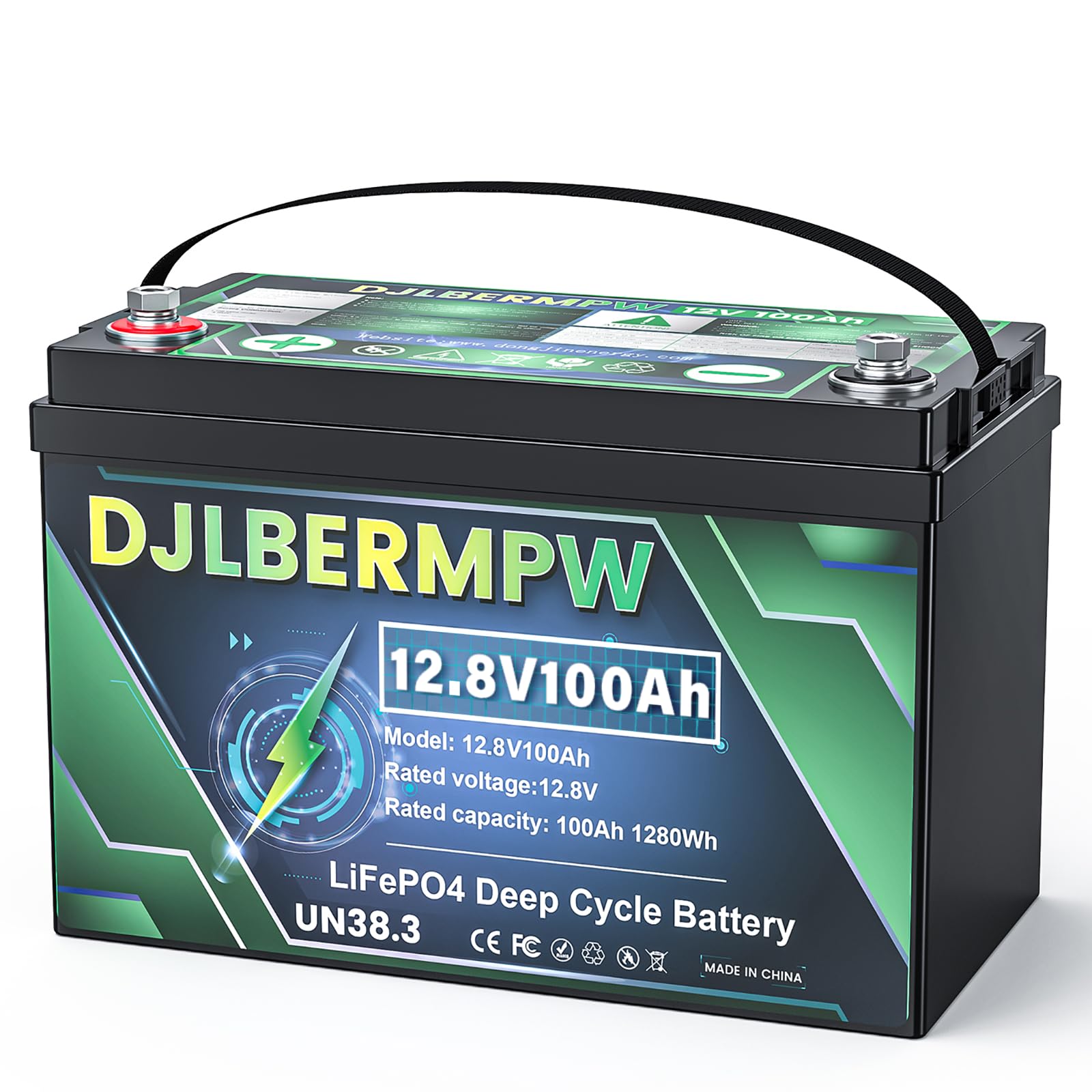
4. DJLBERMPW 12V 100Ah LiFePO4 Battery
The lithium pack for a tight budget that still brings 100Ah and a beefy management board.
For a 100Ah 12V pack (100 amp-hours, meaning about 100 amps of draw for one hour), it lands among the more affordable lithium options in this list. It still brings the features that matter: an upgraded 100A BMS (a battery management chip that watches the cells) with full protection against overcharging, over-discharging, over-current, overheating, and shorts. A low-temperature cut-off also stops charging in the cold, so winter storage is safer. It is rated IP66 waterproof (sealed against strong water jets), which suits a 30–70lb trolling motor on a wet deck.
Cycle life is the headline number. DJLBERMPW rates it at up to 4000 deep cycles at 100% depth of discharge and 15000 at 60%, with a 10-year service-life claim behind it. The max continuous discharge current is 100A, with a 200A inrush for 3–5 seconds, and a recommended charging voltage of 14.6V at under 50A. At 23 pounds it drops into Group 31 trays with room to spare.
The catch is consistency. Battery life is the one area where feedback splits — while plenty of owners find it holds its charge without loss, a smaller share report a unit dying early. That is worth knowing for anyone who needs bulletproof reliability on remote water. Buy from a seller with a clear return path and this is a strong value play.
Why it earns a spot: 100A BMS protection, IP66 waterproofing, and a 10-year service-life claim at a budget-friendly position, all in a 23-pound case.
The honest caveat: durability feedback is mixed, so buy with a return-friendly seller if reliability on remote water is critical to you.
Right for you if: you want lithium’s weight and capacity without paying premium-tier money and you mostly fish accessible water.
skip it if: you need the most consistent long-term track record for trips far from a ramp.
5. Mighty Max MM-G24M 12V 90Ah AGM Marine Battery
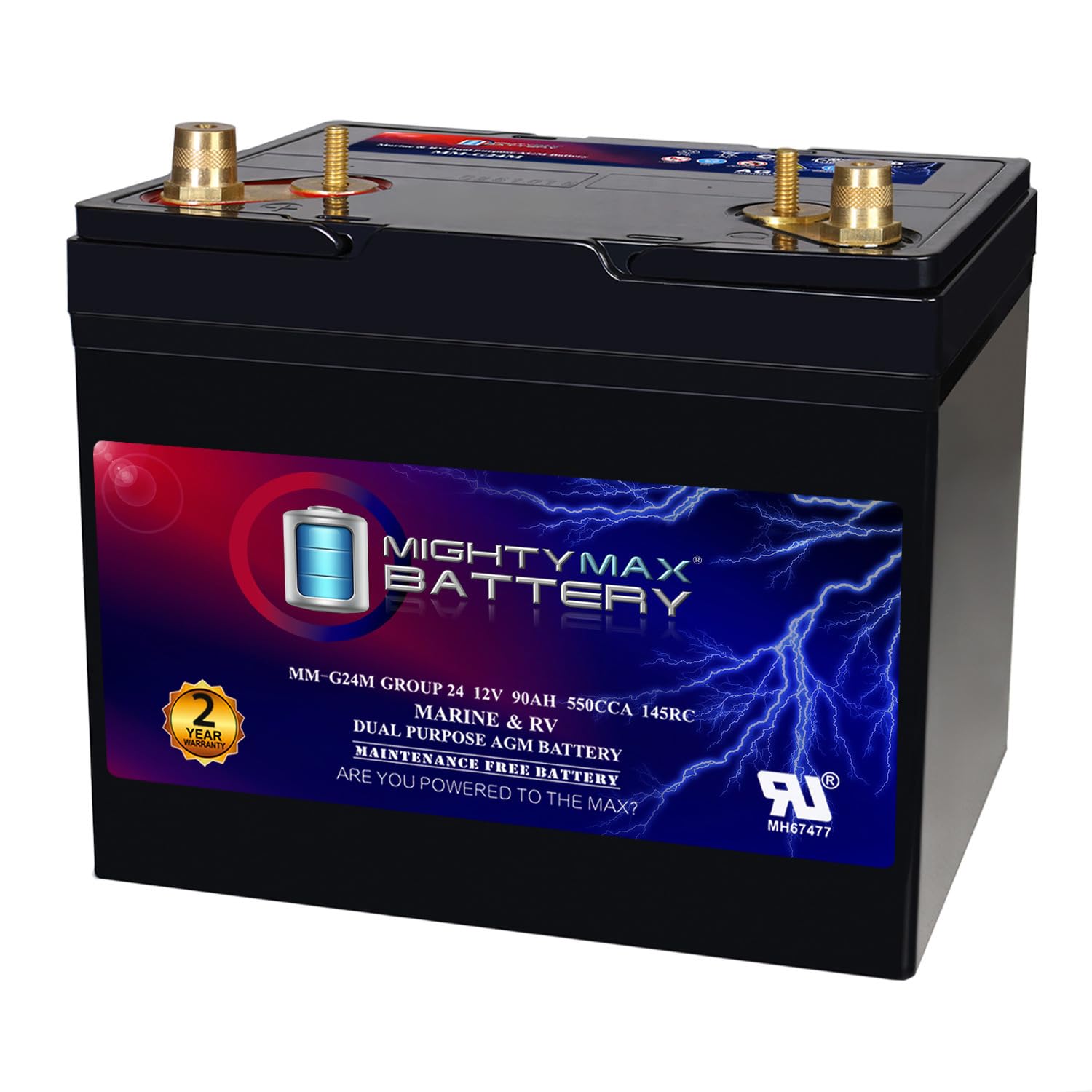
One battery that starts the outboard and then keeps the electronics running for hours.
Not every boat has room for two batteries, and this dual-purpose AGM solves that with 90Ah of deep-cycle capacity plus the cranking muscle to fire an engine. It delivers 550 cold cranking amps and 700 marine cranking amps for quick starts, giving you a single compact power source instead of a starter/deep-cycle pair. The maintenance-free, spill-proof AGM design keeps acid where it belongs even in chop.
Durability is rated at up to 700 cycles at 50% depth of discharge, and the rugged ABS shell resists impacts and heat while absorbing vibration. It measures 10.25 x 6.63 x 8.63 inches with 9.38 inches total height, so check your battery box clearance before you buy. Group 24M sizing fits a common marine tray, which makes installation straightforward.
The trade-off is weight and chemistry. At 54.4 pounds this is a heavy AGM, so plan it as a permanent install rather than a carry-in-and-out battery, and you will not get the deep-discharge flexibility a lithium pack offers. For a bolted-in boat battery that also cranks, though, it earns its keep.
Choose it for: compact boats that need one battery to both start the motor and run electronics.
Not the fit if: you pull your battery out every trip or need lithium’s light weight and deep-discharge flexibility.
6. ECO-WORTHY 12V 100Ah LiFePO4 Battery with SOC Display
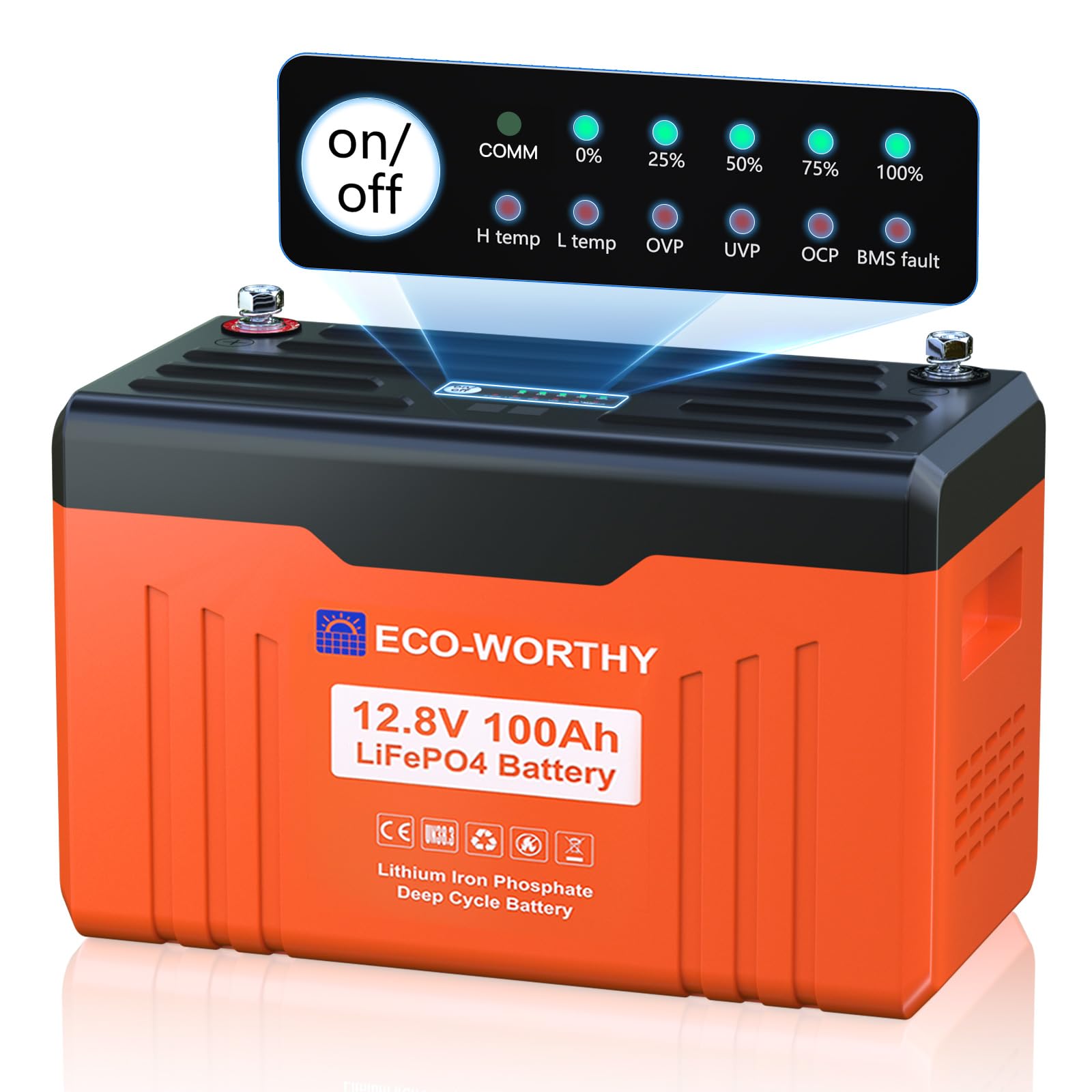
A lithium pack with two ways to check your charge — a phone app and a built-in LED panel.
The LED panel shows state of charge at a glance, no phone needed. The LED panel displays battery SOC and abnormal conditions instantly, no app required. If you want more detail, the built-in Bluetooth lets you monitor voltage, current, capacity, runtime, and cell voltages within 98 feet through the ECO-WORTHY app.
The internal build gets attention too. ECO-WORTHY says it passed over 15 strict tests, added smart abnormal detection with a built-in buzzer that alerts you to BMS faults, and used a metal fixture to secure the cells against expansion and shorts. This is a Group 27 case at 11.8 x 6.9 x 8.7 inches and 25.1 pounds, rated for 4P2S expansion up to 10.24 kWh. A 100A BMS with low-temp protection guards the cells.
One honest buying note: this battery can arrive at a low charge level, which is normal for lithium shipping. If it will not charge or discharge at first, you may need a dedicated LiFePO4 charger with pulse activation to wake it up. Set that expectation and the rest is solid.
The winning details
- LED panel shows state of charge without any phone
- Bluetooth monitoring within 98 feet of voltage, current, and cell data
- Built-in buzzer alerts on BMS faults for electrical safety
- Expands 4P2S up to 10.24 kWh for RV and solar setups
The fine print
- May arrive at low charge and need a pulse charger to wake up
- Battery life feedback is mixed — some report capacity dropping early
Worth choosing if: you like seeing charge at a glance and want fault alerts built into the battery.
Think twice if: you want the simplest plug-and-play first charge with no waking-up steps.
7. Redodo 12V 100Ah LiFePO4 Battery, Group 31
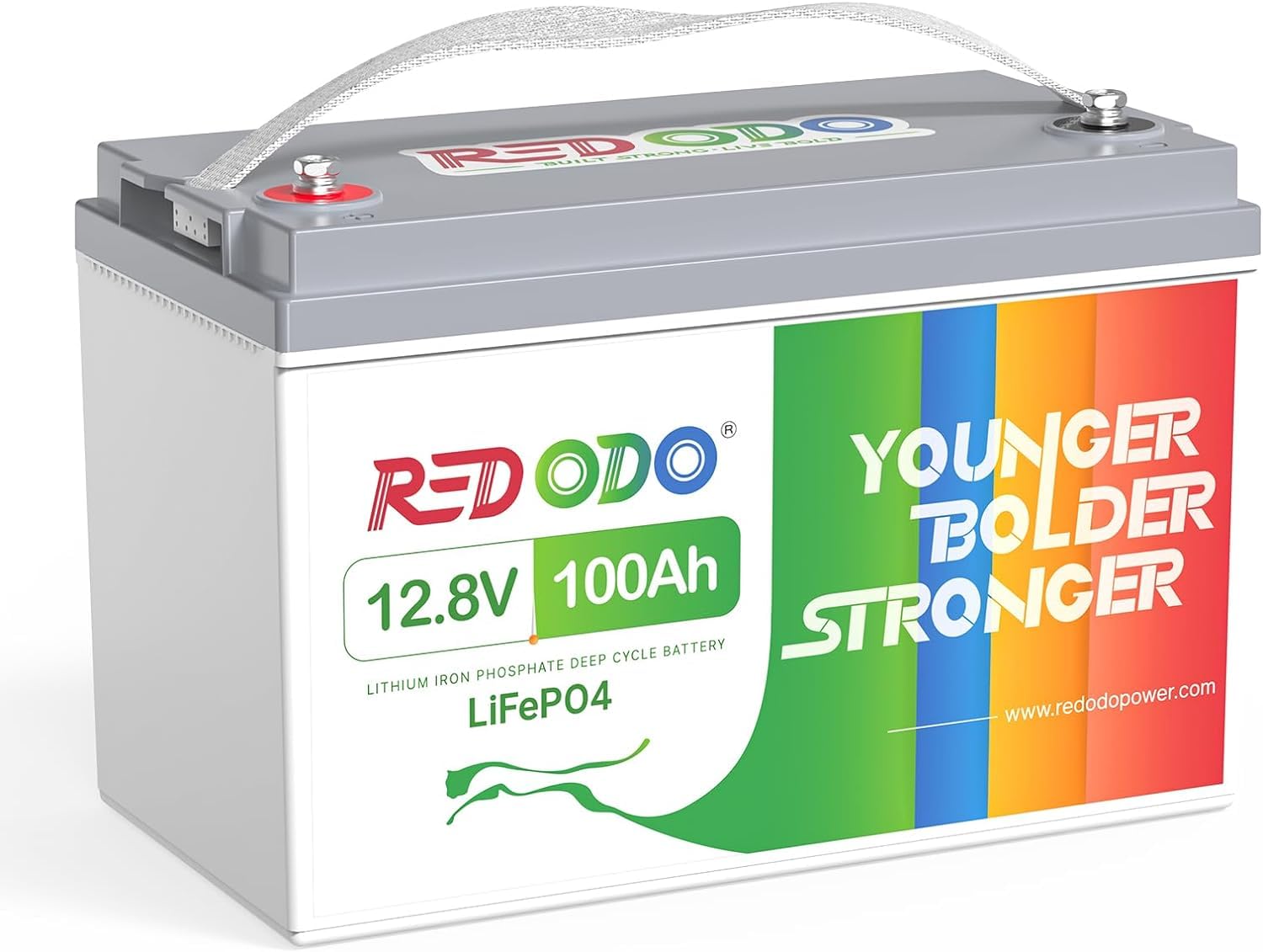
The proven lithium workhorse with the deepest bench of owner experience behind it.
When you want to lean on a long track record, this is the pack. The Redodo holds one of the larger review bases in this group, and what comes through is easy install and reliable power for high-draw appliances. Customers note about 5 hours of full sun to reach 100% charge and 3 days of use without recharging. That is the everyday reality of a well-sorted 100Ah lithium.
This one is built to sit unused for months and still start your season. Redodo uses automotive-grade LiFePO4 cells (lithium iron phosphate, a stable lithium chemistry) with a low 3% self-discharge rate, so it barely drains while stored. It is rated at 4000 cycles at 100% depth of discharge (a full drain each time), 6000 at 80%, and 15000 at 60%. A 100A BMS guards against overcharge, over-discharge, over-current, shorts, and high temperature. At 22.04 pounds and 13 x 6.77 x 8.43 inches it drops straight into a BCI Group 31 box (a standard battery tray size). Redodo puts the energy density at 58Wh/lb versus 20Wh/lb for lead-acid.
What to keep in mind: Redodo suggests it for 30–70lb thrust trolling motors and states it is not for starter batteries or golf carts. Some reviewers point out battery-life variance over time, so match it to moderate, steady loads rather than punishing draws.
Why it wins trust: automotive-grade cells, a 3% self-discharge rate, and a 22.04-pound weight in a perfect Group 31 fit.
Set your expectations: it is built for 30–70lb trolling motors and steady loads, not engine starting or golf carts.
A strong match for: RV, solar, and moderate trolling-motor duty where you want a long-proven pack.
Better to look on if: you need cranking amps or plan to push very heavy continuous draws.
8. VMAX MR127 12V 100Ah AGM Deep Cycle Marine Battery

A traditional AGM built to shrug off repeated deep discharges and keep delivering power.
Some boaters want the classic AGM approach and nothing else, and this is the heavy-duty take on it. The VMAX MR127 is a 12V 100Ah Group 27 deep cycle battery compatible with boats and 40–100lb trolling motors, including Minnkota, Cobra, and Sevylor. Shoppers say it runs the trolling motor all day with power to spare, which is exactly what you want from a 100Ah lead-acid pack.
The build is where VMAX earns its keep. Heavy-duty lead tin alloy grids provide extra margin in float or cyclic use, even after repeated over-discharges, and the electrolyte suspension system uses high-porosity AGM to fully absorb and contain the electrolyte with no silica gels or contaminants. It includes carrying handles, which help given the heft.
The weight is the honest downside. At 68 pounds this is the heaviest battery in this group, and some buyers report the handles not holding up to the weight. Treat the handles as an assist, not a lifting harness, and get help moving it. If the battery stays bolted in one spot, that is a fair trade for the rugged cycling performance.
Reach for it if: you run a 40–100lb trolling motor and want a rugged AGM that shrugs off deep discharges.
Weigh the lift: 68 pounds and handle durability are real factors — plan a permanent mount.
9. Power Queen 12V 100Ah Group 31 LiFePO4 Battery
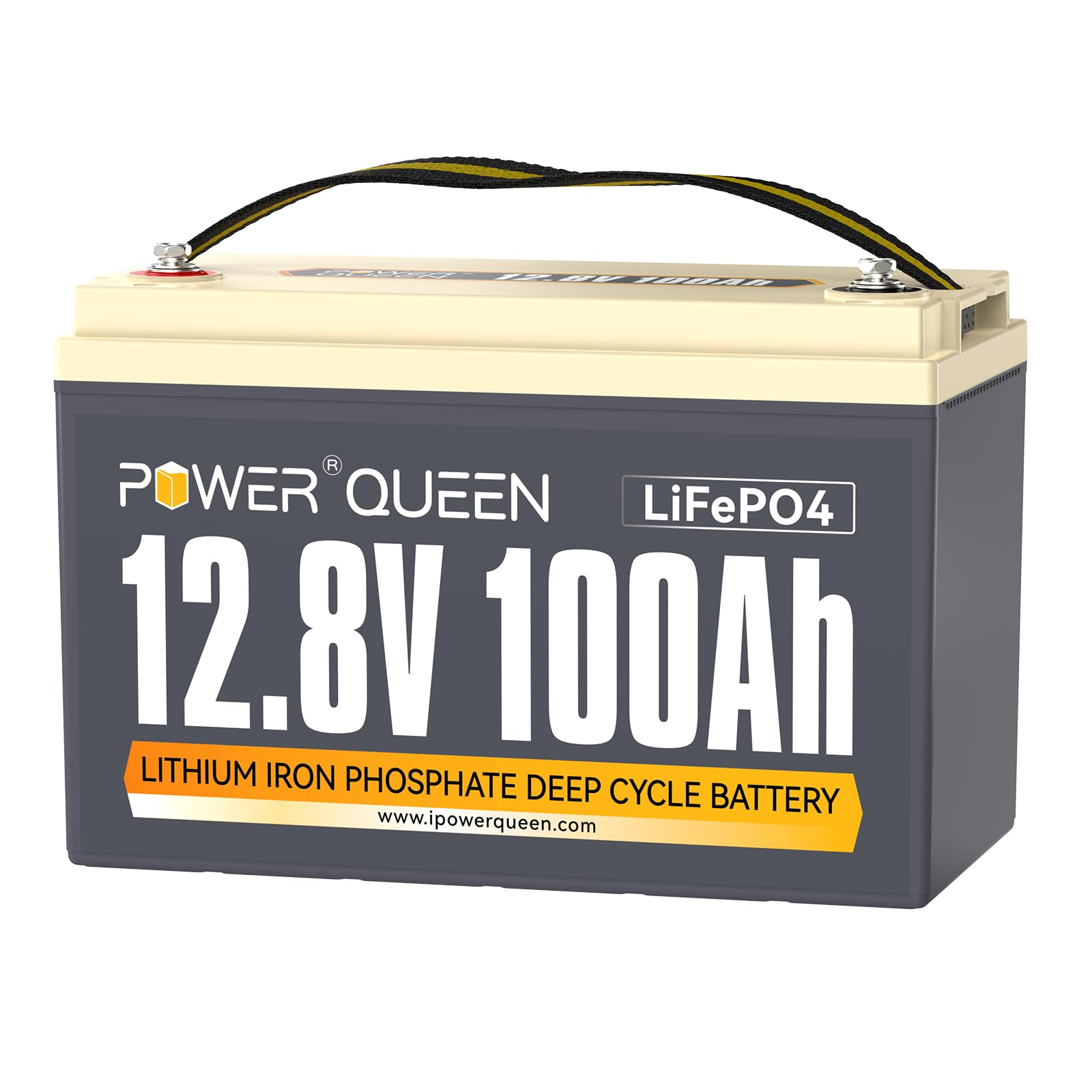
Steady voltage, a manageable 24-pound case, and a 5-year warranty backing the whole thing.
You get steady power here that works as hard on land as on the water. Grade-A LiFePO4 cells deliver stable voltage and consistent power, so it suits RV and solar use as well as marine duty. A 100A BMS provides protection against overcharge, over-discharge, shorts, and overheating. At 24 pounds in a BCI Group 31 size, it is simple to carry, install, and reposition. The 5-year warranty covers a purchase you plan to keep a long time.
Expansion is generous: up to 4S4P for a max 51.2V 400Ah (20.48kWh) system, which suits RV, 30–70lb trolling motors, and home backup. The cell advantages are spelled out — 13x more cycles than lead-acid, 3x longer lifespan, 2x higher energy density, and a low 3% self-discharging rate. The IP65 waterproofing and 1280Wh energy round out a pack that covers most marine needs.
Long-term battery-life feedback is mixed, so track capacity after the first year. Otherwise the reliability story is strong, and the 5-year warranty softens the risk.
What stands out
- 5-year warranty on top of Grade-A LiFePO4 cells
- 24 pounds in a Group 31 footprint for easy handling
- Expands 4S4P to 51.2V 400Ah for RV and backup systems
- IP65 waterproof with a low 3% self-discharge rate
What to watch
- Long-term battery-life feedback is mixed
- Not built for engine starting or high-output draws
Best for: RV, solar, and 30–70lb trolling motors where a 5-year warranty and lightweight handling matter.
Not aimed at: cranking diesel outboards or high-draw starting duties.
10. ECIENWELL 12V 300Ah LiFePO4 Battery

Triple the capacity of the other lithium packs, in a case that still lifts without a crane.
If 100Ah always felt like it was cutting your trip short, this is the upgrade. The ECIENWELL delivers 3840Wh of energy from an automotive-grade 300Ah cell bank, with 4000+ cycles at 100% depth of discharge, 6000 at 80%, and 15000 at 60%. A 200A BMS handles the higher current and protects against over-charge, over-discharge, over-load, over-voltage, over-current, over-heating, and short circuits. It measures 15.12 x 7.64 x 10.03 inches at 54.45 pounds.
Expansion is the standout: up to 4P4S for a max 48V (51.2V) 61.44kWh energy system, which covers RV, solar, home backup, and off-grid living. The IP65 waterproof rating makes it usable anywhere, and ECIENWELL points out the cells contain no lead or chromium heavy metals, with 70% of the battery materials made from recycled sources.
Here is the real picture: this is the biggest gamble in the list. Battery quality and life feedback is mixed, with some owners getting solid performance and others reporting defective units. That is worth weighing against the impressive capacity and 200A service. Buy from a seller with a clear warranty path and this becomes a serious high-capacity option.
The capacity story: 3840Wh and a 200A BMS in a 54.45-pound case make this the high-capacity pick for big draws.
The reliability question: mixed feedback on battery quality and life means a clear warranty path matters more here than usual.
Pick it when: you need high capacity and 200A service for off-grid, backup, or a power-hungry trolling setup.
Be cautious if: you want the safest reliability bet and would rather not deal with a possible defective unit.
11. Power Queen 12V 100Ah Dual Purpose Deep Cycle Starter Lithium Marine Battery
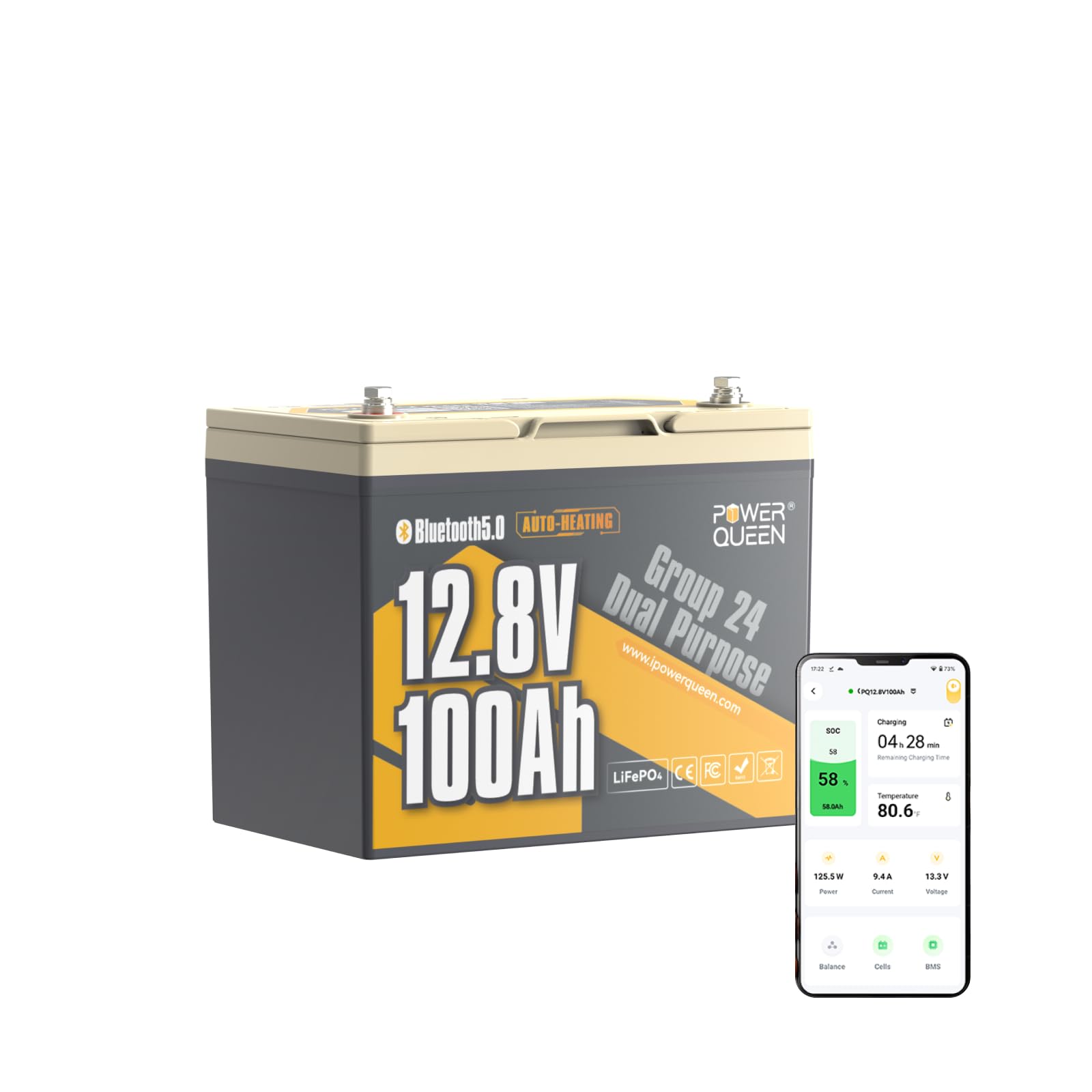
Starts a 250HP outboard, then keeps the trolling motor running all day — from one 19.8-pound pack.
Most lithium packs in this list are storage-only. This one is built to crank, and that changes everything for anglers who do not want a two-battery setup. It delivers 900CCA to start fuel outboards up to 250HP, then up to 16 hours of trolling runtime at 6.25A or 50 hours of fish finder runtime at 2A. A 15% emergency reserve plus Bluetooth monitoring helps you get home without guessing your charge.
The cold-weather work is impressive. Self-heating restores safe charging in freezing conditions, taking about 30–60 minutes at 14°F (-10°C) or 70–100 minutes at -4°F (-20°C), while low-temperature protection stops charging below 32°F (0°C). The IP67 waterproof and salt-spray resistance handle rain, spray, and moisture. At 19.8 pounds it is the lightest pack here.
Check your outboard before you commit. It supports many Mercury, Yamaha, Suzuki, and Evinrude outboards and complies with ABYC E-13 installation standards (the marine electrical wiring code). But it is not compatible with outboards that lack voltage regulators, including Evinrude, Johnson, and Mercury Black Max. Match it to your motor first — then this is a smart all-in-one solution.
Ideal for: anglers who want one battery to crank a fuel outboard and run the trolling motor all day, especially in cold weather.
Check first if: your outboard lacks a voltage regulator — models like Evinrude, Johnson, and Mercury Black Max are not supported.
Understanding the Specs
Amp-hours and depth of discharge
Amp-hours (Ah) measure how much charge a battery can hold — a 100Ah pack nominally holds twice the charge of a 50Ah pack. But the usable portion is what counts. Depth of discharge is how far you drain it before recharging. Lead-acid batteries degrade fastest when run past about half empty, while LiFePO4 cells like those here are rated for thousands of cycles even at deep drains. That is why a 100Ah lithium pack often outlasts a much larger lead-acid block in real use.
Battery management and low-temp cutoff
A battery management system, or BMS, is the internal circuit board that guards the cells against overcharge, over-discharge, over-current, and shorts. Many marine lithium packs add low-temperature cutoff, which stops charging in freezing weather to protect the cells. Look for the BMS current rating too — 100A suits most trolling motors, while a 200A board handles bigger continuous draws. In cold climates, self-heating circuitry can bring a frozen pack back to a safe charging temperature.
FAQ
Can a 12 volt deep cycle marine battery start my outboard engine?
How long will a 100Ah lithium battery run my trolling motor?
Is lithium better than AGM for a boat battery?
Can I charge a lithium marine battery in cold weather?
What size battery do I need for a 55lb thrust trolling motor?
Do I need a special charger for a LiFePO4 marine battery?
Can I connect two marine batteries in parallel for more runtime?
How much does a 12 volt marine battery weigh?
Will a deep cycle marine battery fit my existing battery box?
Final Thoughts: The Verdict
For most boat owners, the best 12 volt deep cycle marine battery is the Litime 12V 100Ah Trolling Motor LiFePO4. It pairs a 22.2-pound case with 1280Wh (watt-hours, the total energy it stores), up to 15,000 cycles at 60% depth of discharge, and app monitoring that keeps you informed on the water. If you need cranking power plus all-day trolling from one pack, grab the Power Queen Dual Purpose with its 900CCA (cold cranking amps, the burst of power that starts an engine) and self-heating. And for a rugged AGM that shrugs off repeated deep discharges on a bigger motor, the VMAX MR127 is the one to reach for.
How We Picked
We do not accept paid placement. Every pick is matched to a real buyer and a real use-case; we do not hands-on test units.
Sources & Methodology
Specifications: manufacturer listings and product documentation. Review insights: verified customer reviews, as of November 2026. Pricing: not shown on this page (it changes often); check the current price via the retailer link.
As an Amazon Associate, Gadgets Feed earns from qualifying purchases. This does not affect which products we feature.