
A failing 12-volt fuel pump turns a reliable daily driver into a frustrating paperweight. Whether your carbureted classic stumbles on hills, your lawn tractor refuses to start, or your swapped project car leans out under throttle, the fuel pump is the single component dictating whether the engine runs lean and hot or rich and smooth. Choosing the wrong pressure range—too low causes vapor lock, and too high floods the float bowl—wastes time and money with an inline unit that simply cannot meet your engine’s demand.
I’m Min — the co-founder and writer behind Gadgets Feed. I’ve spent countless hours dissecting flow charts, pressure curves, and real-world user reports across every popular universal fit and vehicle-specific 12-volt fuel pump on the market, filtering out the noise so you can match the right pump to your fuel system’s actual requirement.
After scouring hundreds of verified reviews and technical spec sheets, I’ve narrowed the field down to the seven best-performing options. This is the definitive guide to finding your ideal best 12 volt fuel pump for a precise, long-lasting installation every time.
How To Choose The Best 12 Volt Fuel Pump
Selecting the right fuel pump comes down to pressure and flow. Carbureted engines need low pressure (2–7 PSI) to avoid overwhelming the needle valve, while EFI systems require high pressure (40–75 PSI) for proper injector atomization. Universal fit pumps offer flexibility but demand careful installation below the fuel tank to prevent vapor lock and overheating. Always verify polarity and mounting hardware compatibility before committing.
Pressure Preference: Carburetor vs. EFI
A pump rated for 2–3.5 PSI is ideal for a stock carbureted engine, whereas a Holley or Edelbrock performance setup might work best at 4–7 PSI. For EFI swaps, only a high-pressure inline pump like the EVIL ENERGY 300LPH unit will maintain the 40–75 PSI rail pressure. Using a low-pressure pump on an EFI system starves the injectors; using a high-pressure pump on a carb floods the bowl and causes stalling.
Flow Rate and Engine Horsepower
As a rule of thumb, naturally aspirated engines need roughly 0.5 gallons per hour (GPH) per horsepower. A 28 GPH pump handles up to around 200 HP, while 32 GPH supports up to 400 HP. For boosted or high-CID applications, target 43+ GPH to keep the fuel rail saturated under load. The key spec is flow at operating pressure—not advertised free flow.
Installation and Positioning
Every inline electric fuel pump is a pusher, not a puller. Mounting the pump within 12 inches of the tank and below the fuel level guarantees gravity priming. A high mount forces the pump to pull fuel uphill, accelerating wear and risking cavitation. Always install a pre-filter between the tank and pump to protect the internal vanes from debris.
Quick Comparison
On smaller screens, swipe sideways to see the full table.
| Model | Category | Best For | Key Spec | Amazon |
|---|---|---|---|---|
| EVIL ENERGY 300LPH | High Flow EFI | EFI swaps & boosted apps | 300 LPH @ 43 PSI (13.5V) | Amazon |
| TREXFLOW P4070 | Premium Rotary Vane | Quiet, high-flow carb apps | 72 GPH free flow, 4–6 PSI | Amazon |
| Holley 12-427 | Branded Low Pressure | Performance carb setups | 32 GPH, 4–7 PSI | Amazon |
| Steauty DC Transfer Pump | High Volume Transfer | Bulk fuel transfer | 110 GPH @ 75W DC motor | Amazon |
| ENGINEMAN Universal Kit | Complete Low-Pressure Kit | Carb engines, small tractors | 30 GPH, 3–6 PSI | Amazon |
| ENGINEMAN 28GPH | Entry-Level Low Pressure | Budget carb replacement | 28 GPH, 2–3.5 PSI | Amazon |
In‑Depth Reviews
1. EVIL ENERGY External Inline Fuel Pump 300LPH
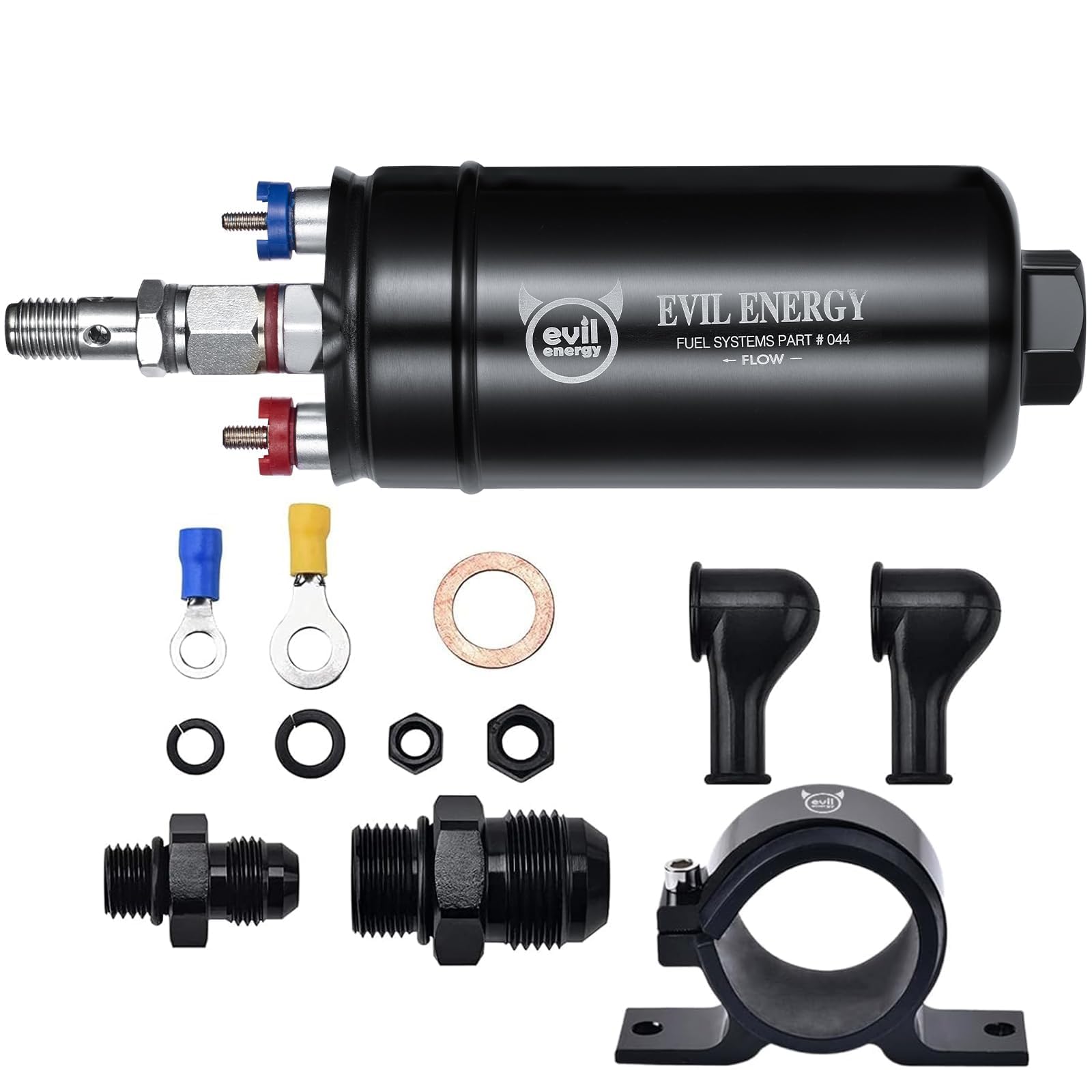
The EVIL ENERGY 300LPH inline pump is a high-pressure EFI specialist, delivering a true 200 LPH at 75 PSI and 300 LPH at 43 PSI (13.5V). It ships with AN adapters (10AN inlet / 6AN outlet), a mounting bracket, and rubber connection covers for a proper ORB-to-hose-barb conversion. The metal body and brass internals handle gasoline, race gas, and diesel without swelling or corrosion.
Installation below the tank is mandatory for this push-style pump; multiple users confirmed that gravity-fed priming and a quality pre-filter are the difference between consistent pressure and premature failure. Some early samples ran louder than expected at startup, but the pump quiets down once the system primes and maintains steady rail pressure. A few owners reported over-pressure at around 80 PSI versus the stated 75 PSI max, which is manageable with an adjustable regulator.
For EFI swaps on cars, trucks, and even Hayabusa-powered go-karts, this pump delivers the volume and pressure needed for boosted and naturally aspirated builds alike. The 1-year warranty and full adapter kit make it the most complete high-pressure option in the mid-range price tier.
Why it’s great
- True 300 LPH flow at 43 PSI supports high-horsepower EFI setups
- Comes with AN fittings, bracket, and gaskets for a complete install
Good to know
- Not for carbureted engines—pressure is far too high
- Audible whine at startup; some units exceed advertised pressure by 5 PSI
2. TREXFLOW P4070 Replacement 12V Electric Fuel Pump

The TREXFLOW P4070 is a rotary vane pump optimized for carbureted engines needing 4–6 PSI at a free flow of 72 GPH. It replaces the industry-standard P4070 footprint and comes pre-assembled on a metal bracket with multiple mounting positions. The threaded 1/4″ NPS inlet and outlet accept standard pipe fittings without the need for hose barbs or clamps on the pump body itself, simplifying future service.
Owners consistently report this unit runs significantly quieter than mechanical fuel pumps and cheaper diaphragm-style electric pumps. The constant, non-pulsing flow eliminates the “tick-tick-tick” interval noise, making it ideal for vintage cars, tractors, and show vehicles where engine bay acoustics matter. The ISO 9001 certification indicates consistent manufacturing tolerances across batches.
A few users noted that the pump’s flow capacity is overkill for a stock 4-cylinder, so an inline pressure regulator may be advisable. The wiring terminals now use worm clamps and metal clips to prevent the “pop-off” issue that plagued earlier revisions, and the 1-year warranty provides peace of mind.
Why it’s great
- Rotary vane design is whisper-quiet compared to standard electric pumps
- Pre-assembled bracket with multiple hole positions for easy alignment
Good to know
- Free flow outpaces a stock carburetor without a regulator
- Threaded fittings require NPT-to-hose adapters for rubber line
3. Holley 12-427 Mighty Mite 32 GPH Fuel Pump

The Holley Mighty Mite is a purpose-built low-pressure pump for carbureted engines up to 400 HP. It delivers 32 GPH at a regulated 4–7 PSI, self-priming with a 12-inch dry lift capability. The solid-state electronic design eliminates diaphragm failure, and the pass-through feature allows fuel to bypass the pump when off—critical for mechanical pump backup or gravity-fed applications.
It is compatible with all fuels including E85 and blended alcohol, which gives it an edge over pumps restricted to pure gasoline. Users report that a momentary push-button switch wired through a relay works perfectly for priming the carb after sitting for days. The included fuel filter, fittings, and mounting hardware cover the basics, though the steel body is heavier than modern aluminum pumps.
Fitment is vehicle-specific for some applications but the universal mounting bracket adapts easily. A small number of units arrived DOA, likely from rough shipping, but Holley’s customer service replaces defective units promptly. For a trusted name in racing fuel systems, this pump provides proven pressure regulation at a fair price.
Why it’s great
- Self-regulating, pass-through design works with E85 and high-blend ethanol
- Solid-state internals last longer than traditional diaphragm pumps
Good to know
- Steel body adds noticeable weight compared to modern alloy units
- Some units fail during initial bench testing; verify before installing
4. Steauty Portable DC 12V Electric Gasoline Transfer Pump

The Steauty transfer pump is designed for bulk fluid movement rather than permanent in-line installation. Its 75W DC motor and 39-inch suction lift capability let it transfer up to 110 gallons of gasoline or diesel per hour. The kit includes an 11.5-foot cigarette lighter cable and an alligator clip conversion cable, so you can power it directly from a car battery or auxiliary 12V source.
Priming is mandatory before each use—pour fuel into the raised inlet tube and run the pump for a few seconds to establish flow. Users moving 60+ gallons from boat tanks and farm equipment report consistent flow rates, though the included hose length could be longer for larger vessels. The metal body is more durable than the plastic pumps sold at hardware retailers, and the replaceable filter keeps debris out of the pump head.
This pump is not a replacement for an inline fuel system pump; it is strictly a transfer tool for draining tanks, filling equipment, or removing stale fuel. A handful of owners attempted to use it as a permanent lift pump and burned out the motor due to continuous duty. For its intended purpose—bottleneck-free fuel moving—it outperforms most sub- transfer pumps.
Why it’s great
- 110 GPH flow rate clears a full tank quickly
- Two power cable options fit any 12V source
Good to know
- Must be manually primed before every use or it will be damaged
- Not intended for continuous inline fuel delivery applications
5. ENGINEMAN Universal Electric Fuel Pump Kit 3–6 PSI
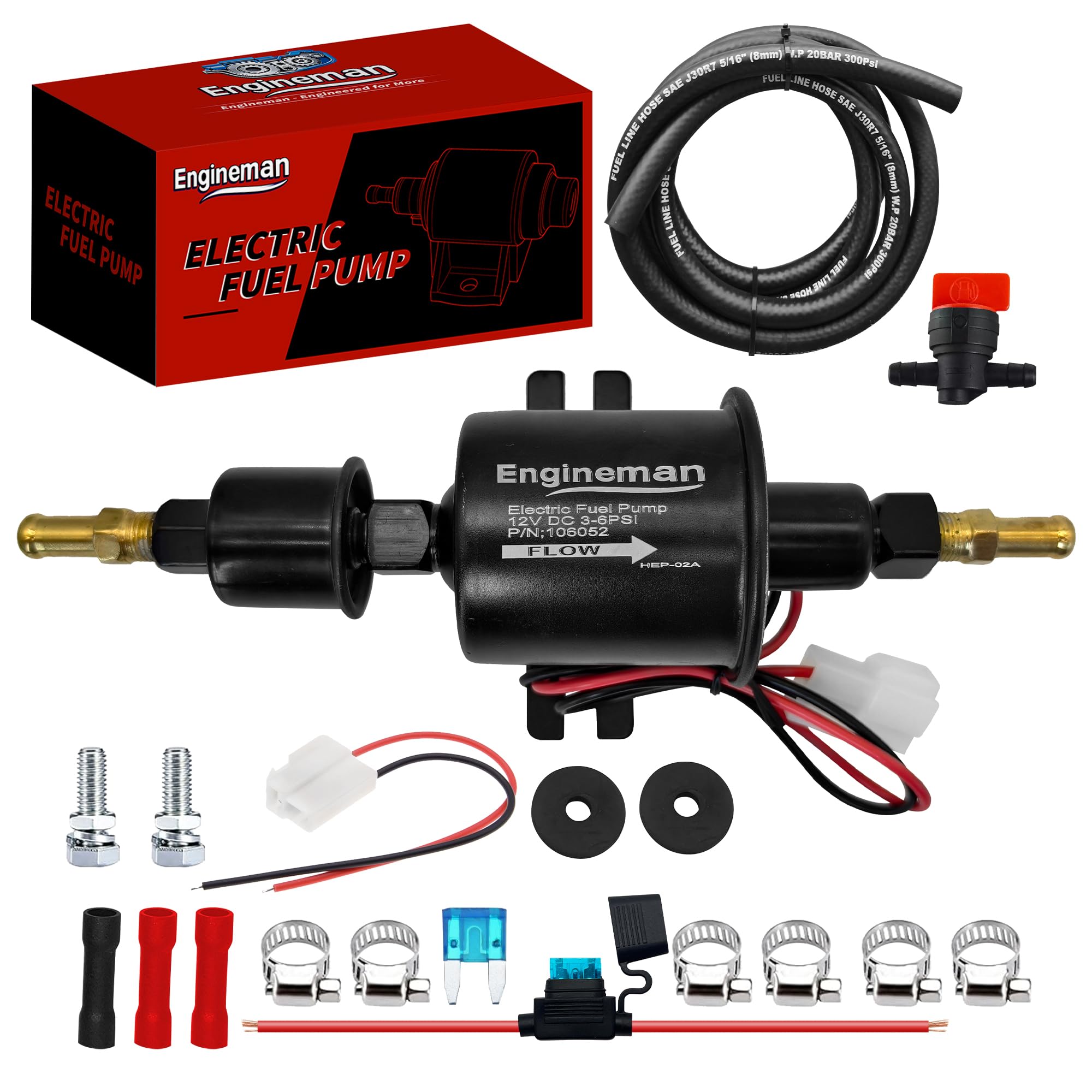
The ENGINEMAN low-pressure kit bundles everything needed to replace a failed mechanical pump on small engines, ATVs, and classic cars: the pump itself, a 6.56-foot 5/16″ ID fuel line, a spin-on filter, hose clamps, wire connectors, and a 15-amp inline fuse. The pump’s 30 GPH flow and 3–6 PSI output cover the needs of most carbureted 4-cylinder and V8 engines, with compatibility for both gasoline and diesel.
The copper-wound motor and upgraded check valve keep noise levels low enough for a golf cart or tractor, and the self-priming action means you don’t need to manually fill the line before startup. Users converting old Ariens tractors from pulse pumps to electric report immediate cold-start improvement. The kit has been used successfully on modified Club Car golf carts with Predator motors and on Gleaner combine engines to bypass worn mechanical pumps.
The pressure range is wide enough that adding an inline fuel pressure regulator is recommended for precise tuning, especially on high-compression engines. Some users found the included hose slightly smaller than their existing fuel line and had to step up to a 3/8″ line. For the price, this kit delivers the highest installation convenience of any low-pressure option here.
Why it’s great
- Includes filter, hose, clamps, fuse, and wiring for immediate drop-in use
- Works on gasoline and diesel with consistent self-priming
Good to know
- Pressure range may exceed stock carbs without an external regulator
- Included fuel line ID may mismatch larger OEM fuel hoses
6. ENGINEMAN 28GPH Low Pressure 2–3.5 PSI Fuel Pump
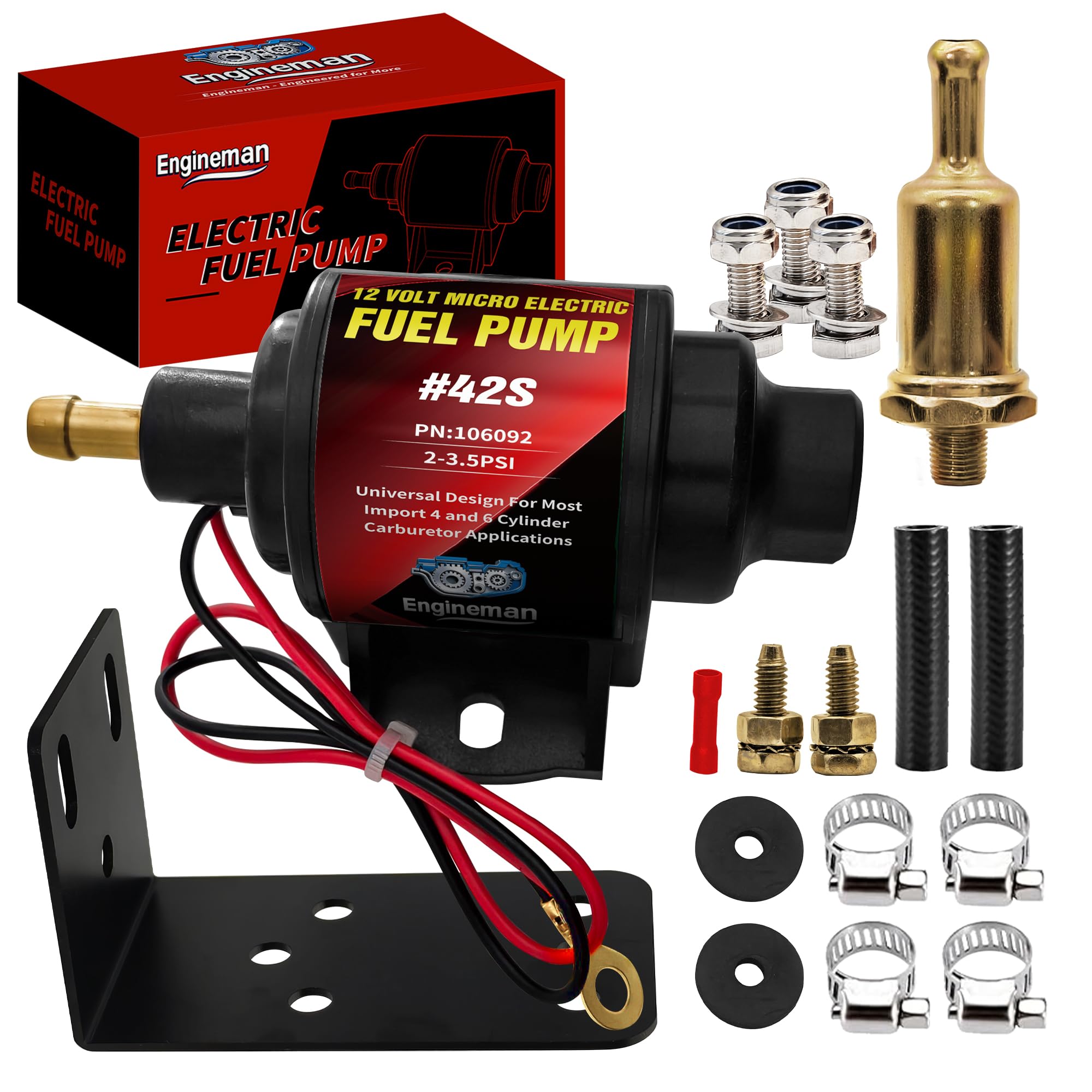
The entry-level ENGINEMAN pump is purpose-built for carbureted engines that require gentle fuel delivery. It outputs a precise 2–3.5 PSI at 28 GPH, making it a perfect match for small displacement engines, lawn mowers, generators, and vintage British cars where over-pressurization would flood the float bowl. The 5/16-inch inlet and outlet use standard hose barbs for a straightforward inline connection.
The included mounting bracket encourages a 45-degree upward angle, keeping fuel pooled inside the pump between starts for instant ignition readiness. The copper-wound motor draws 1–2 amps, preventing voltage dips in older wiring harnesses. Multiple users found it works flawlessly on RV generators and Austin-Healey 1275 engines, noting that the thumping sound of a mechanical pump is replaced by a quiet electric hum.
This pump is strictly for pure gasoline applications—manufacturer warnings explicitly advise against using it with E85, ethanol blends, methanol, race fuel, or water. The 24-hour endurance test before shipping catches most defective units, but a small number still arrive dead on arrival. For basic carbureted applications where pressure accuracy matters more than flow, this is the most affordable reliable option.
Why it’s great
- Ultra-low pressure prevents carb flooding on sensitive engines
- Copper motor draws low amperage, safe for older vehicle electrical systems
Good to know
- Not compatible with E85 or alcohol-based fuels
- Low flow rate limits use to engines under approximately 200 HP
FAQ
Can I use a 12-volt fuel pump with EFI if I install a pressure regulator?
Why does my electric fuel pump make a loud clicking noise?
Can I mount the fuel pump near the engine instead of the tank?
Final Thoughts: The Verdict
For most users, the best 12 volt fuel pump winner is the EVIL ENERGY 300LPH because it delivers the flow and pressure necessary for modern EFI conversions without the luxury price tag. If you need quieter operation for a restored carbureted classic, grab the TREXFLOW P4070. And for a direct swap on a vintage or small engine with minimal wiring fuss, nothing beats the complete ENGINEMAN Universal Kit.