
Switching from lead-acid to lithium iron phosphate is the single most impactful upgrade you can make for your RV, boat, trolling motor, or off-grid solar system. The weight savings alone — often 60% lighter for the same usable capacity — transform how your rig handles and how much power you can carry. But the real story is in the cycle life: where a lead-acid battery might give you 300 cycles before degrading, a quality LiFePO4 battery delivers 4,000 to 15,000 cycles, making the higher upfront cost a long-term bargain.
I’m Min — the co-founder and writer behind Gadgets Feed. I’ve spent countless hours cross-referencing manufacturer specs, analyzing BMS configurations, and comparing real-world customer capacity tests to separate the batteries that actually deliver their rated amp-hours from those that fall short under load.
Whether you need a drop-in replacement for your RV house bank or a lightweight deep-cycle battery for your fishing boat, this guide breaks down the nine best options for the 12 volt lifepo4 battery market, focusing on capacity, cycle life, and BMS features that matter most.
How To Choose The Best 12 Volt LiFePO4 Battery
The LiFePO4 battery market has exploded, and not all 100Ah batteries are created equal. While the chemistry is inherently safer than other lithium-ion formulations, the quality of the cells, the sophistication of the Battery Management System (BMS), and the physical footprint vary dramatically between brands. Knowing which specs to prioritize ensures you don’t overpay for features you don’t need or underspend on a battery that dies prematurely.
Capacity vs. Usable Energy
A 100Ah LiFePO4 battery delivers roughly 1,280 watt-hours of usable energy — and with LiFePO4 chemistry, you can safely discharge to 100% Depth of Discharge (DoD) without damaging the cells. This is a massive advantage over lead-acid, where discharging beyond 50% DoD dramatically shortens lifespan. When comparing batteries, look for confirmed capacity tests in customer reviews; some budget units ship with cells that test below their rated amp-hours.
BMS Features: Low-Temp Cutoff and Surge Protection
A robust BMS is the brain of your battery. The two features that separate premium batteries from basic ones are low-temperature charging cutoff (typically at 32°F or lower) and surge protection for trolling motors. If you plan to charge your battery in freezing conditions, a low-temp cutoff is non-negotiable — charging LiFePO4 below freezing permanently damages the cells. For marine use, a battery with TVS surge protection helps shield sensitive electronics from voltage spikes.
Physical Size: Group 24 vs. Group 31 vs. Custom
Most 12V LiFePO4 batteries are designed as drop-in replacements for standard BCI sizes. Group 24 batteries (roughly 10.2 x 6.6 x 8.2 inches) are popular for smaller compartments and lighter setups. Group 31 batteries (roughly 13 x 6.8 x 8.4 inches) offer higher capacity in a larger footprint. Always measure your existing battery tray before purchasing, and note that some “drop-in” batteries are slightly taller than their lead-acid counterparts, which can cause fitment issues in tight enclosures.
Quick Comparison
On smaller screens, swipe sideways to see the full table.
| Model | Category | Best For | Key Spec | Amazon |
|---|---|---|---|---|
| Power Queen 12.8V 100Ah | Premium Marine | Trolling motors up to 120lb thrust | 4000+ cycles at 100% DoD | Amazon |
| Litime 12V 100Ah TM | Premium Marine | Heavy saltwater use | ABYC E-13 compliant BMS | Amazon |
| Battle Born 100Ah | Premium Off-Grid | RV and full-time solar | 10-year warranty | Amazon |
| Redodo 12V 100Ah | Mid-Range | Electric mowers and pool cleaners | 3% self-discharge rate | Amazon |
| ECO-WORTHY 12V 100Ah | Mid-Range | DIY solar setups | Bluetooth 5.1 monitoring | Amazon |
| DC HOUSE 12V 100Ah | Mid-Range | Budget-friendly Bluetooth | SOC visual LED indicator | Amazon |
| DUMFUME 12V 150Ah | Mid-Range | High-capacity value | 1920Wh energy density | Amazon |
| Wattcycle 12V 100Ah | Entry-Level | First-time lithium swap | 15000 cycles rated | Amazon |
| HumsiENK 12V 100Ah | Entry-Level | Budget-friendly performance | IP67 waterproof rating | Amazon |
In‑Depth Reviews
1. Power Queen 12.8V 100Ah LiFePO4
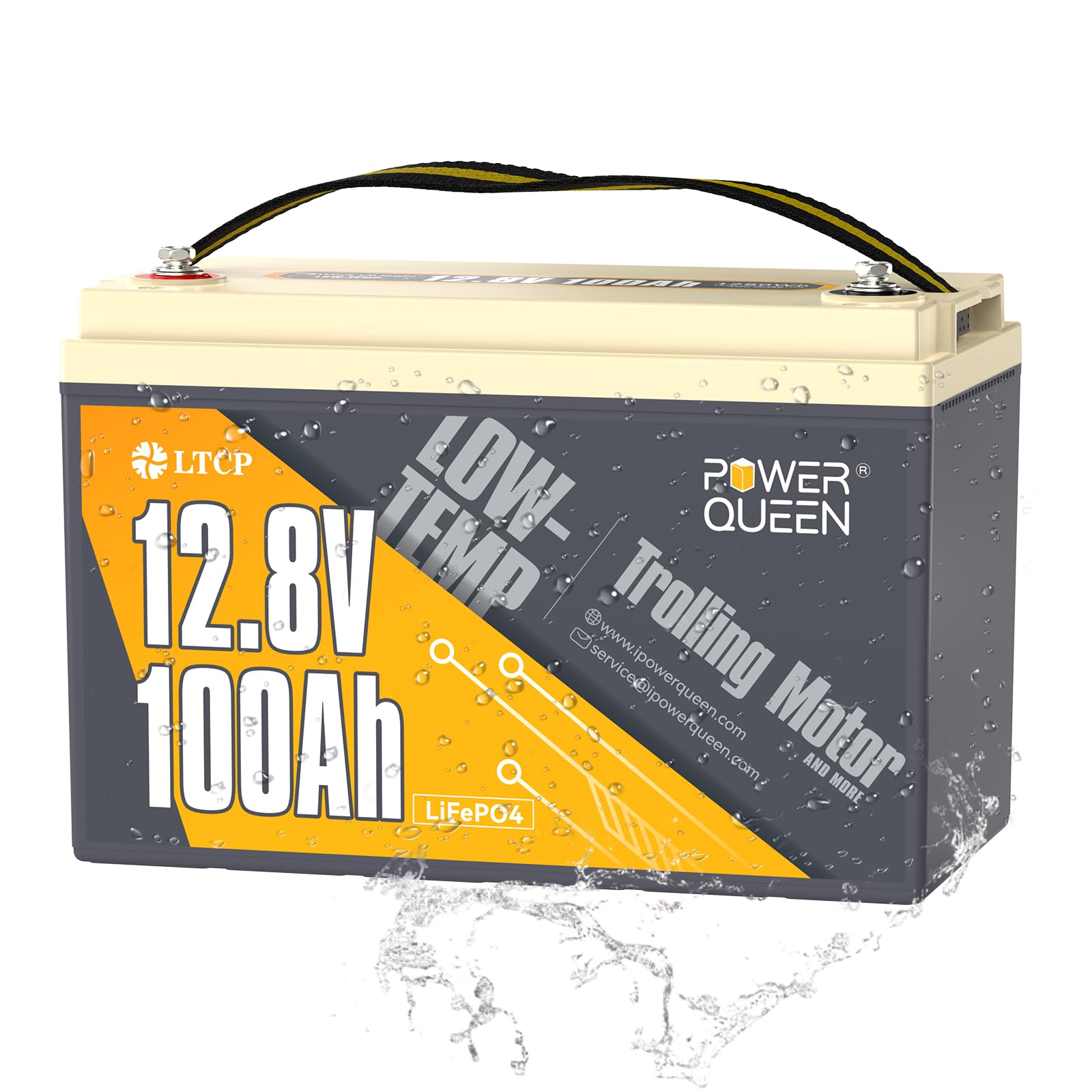
Power Queen designed this battery specifically for trolling motors up to 120lb thrust, and it shows in the details. The built-in TVS surge protector actively blocks voltage spikes that can damage sensitive electronics on your boat, while the Group 31 footprint (13 x 6.77 x 8.43 inches) fits standard battery trays without modifications. At just 22.16 pounds, it reduces your boat’s weight by roughly 64% compared to an equivalent lead-acid battery — a difference you feel immediately in handling and fuel efficiency.
The BMS provides dual low-temperature protection: charging stops at 32°F and discharging stops at -4°F, safeguarding the cells during winter storage or early-season fishing. This battery also meets ABYC E-13 marine standards, meaning the BMS has triple protection against dust, water, and salt spray. Users report running Minn Kota and MotorGuide trolling motors for full-day trips without dropping below 50% capacity, and the carrying strap with insulating caps for the M8 bolts makes installation clean.
Expandability is solid — you can wire up to 4 in series or 4 in parallel for a 48V 400Ah bank delivering 20.48kWh. The 5-year warranty and 4000+ cycles at 100% DoD mean this battery will outlast most boats. The only trade-off is the lack of built-in Bluetooth monitoring, though the stable voltage curve and consistent performance make it a set-and-forget solution for serious anglers and cruisers.
Why it’s great
- TVS surge protection for sensitive marine electronics
- ABYC E-13 compliant with triple-protected BMS
- Lightweight at 22.16 lbs for easy handling
Good to know
- No Bluetooth monitoring for real-time data
- Group 31 size may not fit smaller compartments
2. Litime 12V 100Ah Trolling Motor LiFePO4

Litime’s trolling motor battery checks nearly every box for serious marine use. It meets the ABYC E-13 standard, which means the triple-protected BMS (dust, water, salt spray) has been independently verified for safety on boats. The built-in TVS surge protector handles voltage spikes from 12V to 36V motors, keeping your trolling motor and fish finder safe even when you punch the throttle in rough water. At 22.16 pounds, it’s 64% lighter than a comparable lead-acid battery, and the Group 31 dimensions fit standard trays.
Real-world performance from owners is impressive — one bass boat user ran a 36V Minnkota Ultrex for five hours and used only 10% of the battery’s capacity, while another reported that the weight reduction improved their boat’s hole shot and top speed by 4 mph. The BMS includes smart low-temperature protection that stops charging below 32°F and discharging below -4°F, preventing cold-weather damage. Expandable up to 4P4S (51.2V 400Ah, 20.48kWh), this battery is built to grow with your power needs.
A minor gripe: some units arrived with the BMS in “sleep” mode, requiring a force mode on a compatible charger to wake up. Litime’s customer support proactively reaches out to buyers, and the 5-year warranty provides peace of mind. For the price, this battery delivers premium-grade marine protection without the Battle Born price tag.
Why it’s great
- ABYC E-13 certified for marine safety
- TVS surge protection for voltage spike prevention
- Excellent real-world capacity for long fishing trips
Good to know
- BMS may arrive in sleep mode requiring wake-up
- No built-in Bluetooth monitoring
3. Battle Born 100Ah 12V LiFePO4
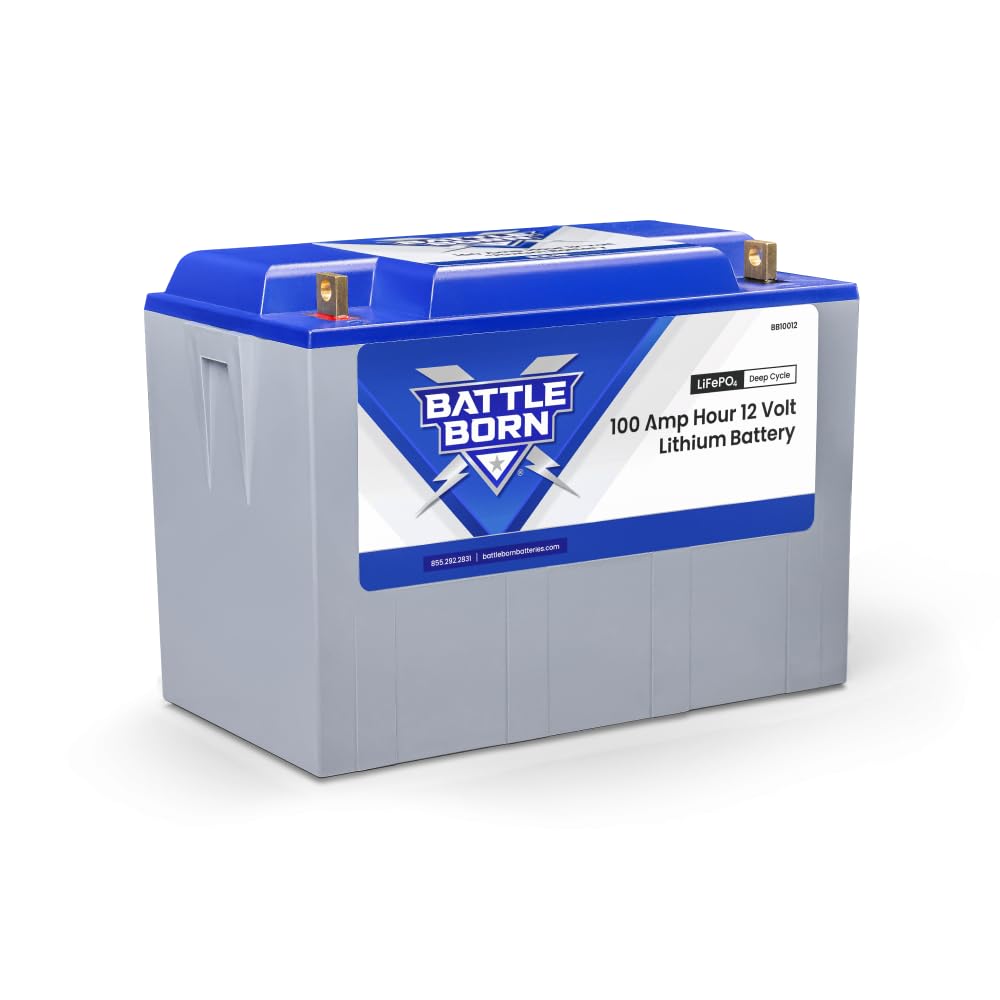
Battle Born is the benchmark that other LiFePO4 batteries are measured against, and for good reason. The BB10012 is a drop-in replacement for Group 27 and Group 31 battery trays, measuring 12.76 x 6.86 x 8.95 inches and weighing 31 pounds — still 50% lighter than the lead-acid battery it replaces, though heavier than many competitors. The internal BMS provides comprehensive protection against low temperature, high and low voltage, and short circuits, and the battery can be mounted in any orientation, including on its side.
Real-world performance from RV owners shows this battery lasts 28 hours running a standard coach load — lights, water pump, USB devices, and a refrigerator — compared to just 8 hours from a lead-acid battery of the same rating. The 3,000 to 5,000 deep discharge cycles translate to 10 to 15 years of service, and the 10-year warranty backs that claim. One user reported a minor BMS issue after one year; Battle Born paid shipping both ways and replaced the battery, which has worked perfectly for two more years. That level of customer service is why this battery commands a premium.
The downside is the price — this is the most expensive 100Ah battery in the list. You’re paying for the US-based support, the 10-year warranty, and the proven track record. If you’re building a full-time RV system or a mission-critical off-grid setup where downtime is unacceptable, the Battle Born justifies its cost. For weekend warriors or budget-conscious builds, the mid-range options deliver similar performance at a fraction of the price.
Why it’s great
- 10-year warranty with excellent US-based support
- Reliable 3000-5000 cycle lifespan
- Drop-in replacement for Group 27 and 31 trays
Good to know
- Premium price significantly higher than competitors
- Heavier than many 100Ah LiFePO4 options at 31 lbs
4. Redodo 12V 100Ah LiFePO4
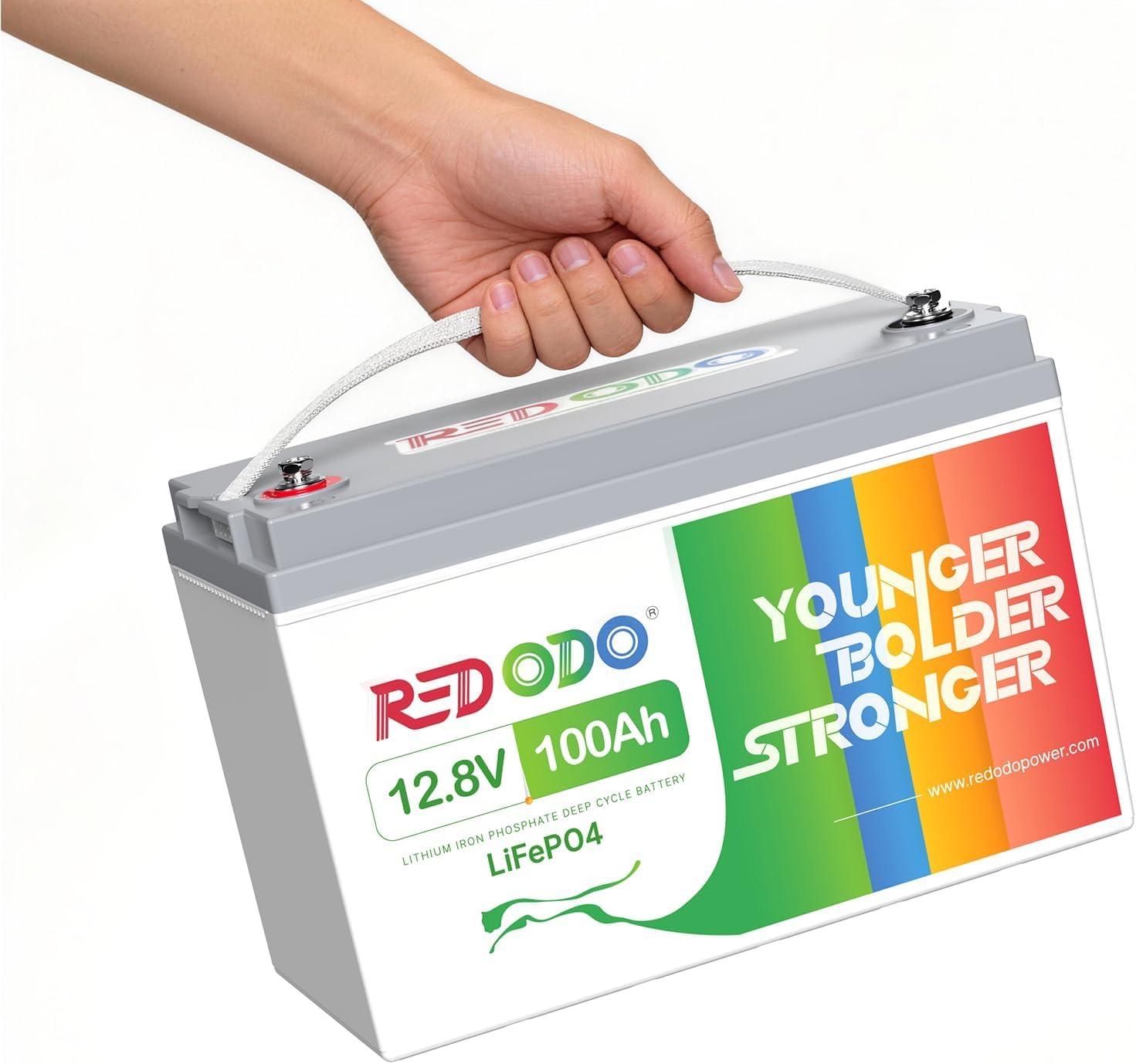
Redodo has built a strong reputation among DIY solar enthusiasts and RV owners who want Battle Born reliability without the Battle Born price. This 100Ah battery uses Automotive Grade LiFePO4 cells with a self-discharge rate of just 3%, meaning it holds its charge for months of storage. At 22.04 pounds and measuring 13 x 6.77 x 8.43 inches, it fits Group 31 trays and is 60% lighter than the lead-acid equivalent — a huge advantage for anyone lifting batteries in and out of compartments.
The built-in 100A BMS protects against overcharge, over-discharge, over-current, short circuit, and high temperature. Cycle life depends on your Depth of Discharge: 4,000 cycles at 100% DoD, 6,000 cycles at 80% DoD, and a staggering 15,000 cycles at 60% DoD. This means even if you abuse it with deep daily discharges, you’ll get a decade of service. Owners have used Redodo batteries in Ryobi electric mowers, pool cleaning vacuums, and full-time motorhome setups, with one user reporting flawless performance over three years of continuous use.
The battery supports up to 4S or 4P configurations for up to 400Ah capacity or 48V voltage. It can be charged via LiFePO4 charger, solar panel with controller, alternator, or generator. The only catch is that Redodo recommends this battery for 30-70lb thrust trolling motors, so it’s not ideal for high-thrust setups. For general RV, solar, and light marine use, this is the best balance of price and performance in the mid-range category.
Why it’s great
- Proven 3-year track record with consistent capacity
- Excellent self-discharge rate of only 3%
- Versatile charging options for any setup
Good to know
- Not recommended for trolling motors over 70lb thrust
- No Bluetooth or SOC indicator built-in
5. ECO-WORTHY 12V 100Ah LiFePO4 with Bluetooth

ECO-WORTHY brings Bluetooth 5.1 monitoring to the mid-range market, and it works exactly as advertised. The companion app shows real-time voltage, current, state of charge, and remaining working life, with a fault display page that helps you troubleshoot issues without guessing. This is a game-changer for off-grid setups where you need to monitor battery health remotely. The battery itself uses automotive-grade LiFePO4 cells that are UL and IEC tested, and the 100A BMS provides full protection with low-temperature cutoff that stops charging below 19.4°F.
In real-world use, owners report running a portable air conditioner for over 10 hours on a single charge, powering diesel heaters for days, and charging a 258Wh power station more than four times. The battery supports up to 4P2S configurations, giving you a maximum of 10.24kWh, and the Bluetooth makes it easy to identify which battery in a bank has a problem. The weight is 23.15 pounds, and the Group 24 dimensions (10.24 x 6.61 x 8.43 inches) make it a universal fit for most battery boxes.
The 3-year warranty and 24-hour customer support response time add confidence. A small number of users reported that some cells tested slightly below 100Ah (96-98Ah), though the majority tested at or above rating. For the price, the Bluetooth functionality alone makes this a compelling choice for anyone who wants to track their energy usage without adding an external monitor.
Why it’s great
- Bluetooth 5.1 monitoring with fault display
- UL and IEC tested Grade-A cells
- Supports 4P2S for up to 10.24kWh capacity
Good to know
- Some units test slightly below rated 100Ah capacity
- Bluetooth range limited to 5-10 meters
6. DC HOUSE 12V 100Ah LiFePO4 with SOC Display
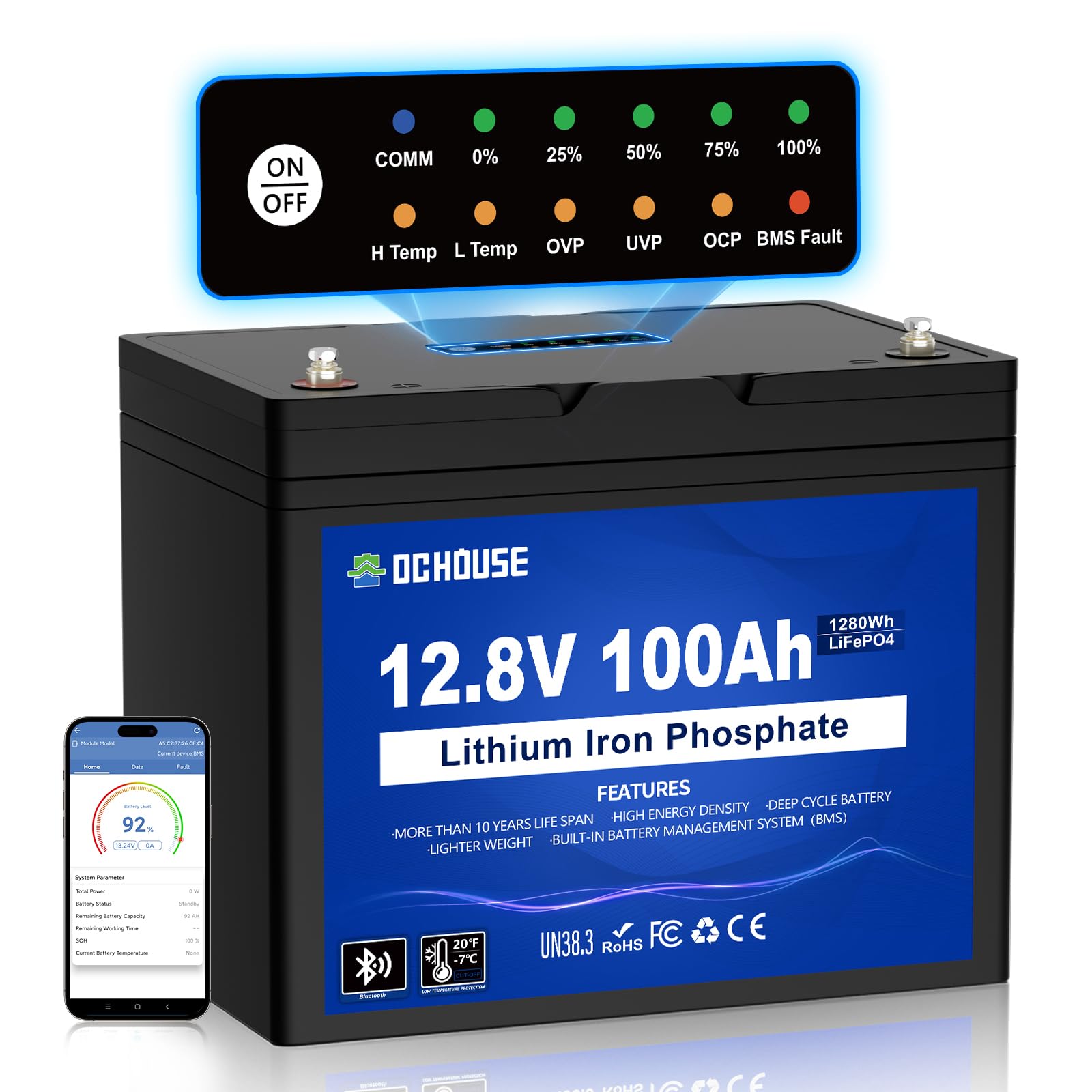
DC HOUSE covers both bases: a visual SOC LED indicator on the battery itself and Bluetooth monitoring through a dedicated app. The LED shows remaining power, high temperature, low temperature, short circuit, overvoltage, low voltage, and BMS fault conditions at a glance — no phone needed. The Bluetooth app provides cell-level data, accurate to the specific cell, with a dedicated fault display page for troubleshooting. This dual-monitoring approach is rare at this price point.
The low-temperature cutoff is particularly well-implemented: charging stops when the sensor detects temperatures below 19.4°F, discharging stops below -4°F, and the BMS automatically recovers when temperatures rise above 32°F. This protects the cells during winter storage without requiring manual intervention. The battery uses Class A LiFePO4 cells with UL/UN38.3 certification, rated for up to 15,000 cycles and a 10-year lifespan. Owners have used these as drop-in replacements for Ryobi riding mowers, noting that the lithium battery provides consistent voltage that prevents motor bogging in tall wet grass.
The BMS is also smart enough to automatically disconnect when voltage drops below 1V, preventing deep discharge damage. The 3-year warranty is shorter than some competitors, but the feature set — SOC indicator, Bluetooth, low-temp cutoff — makes this a strong contender for anyone who wants visibility into their battery’s health without spending premium money. The Group 24 size fits most setups, though some users noted the newer version with anti-swell tech is slightly taller than the original.
Why it’s great
- Visual SOC LED indicator plus Bluetooth monitoring
- Excellent low-temperature protection with auto-recovery
- Cell-level data in the app for precise troubleshooting
Good to know
- 3-year warranty is shorter than some competitors
- New version slightly taller may affect tight fits
7. DUMFUME 12V 150Ah LiFePO4
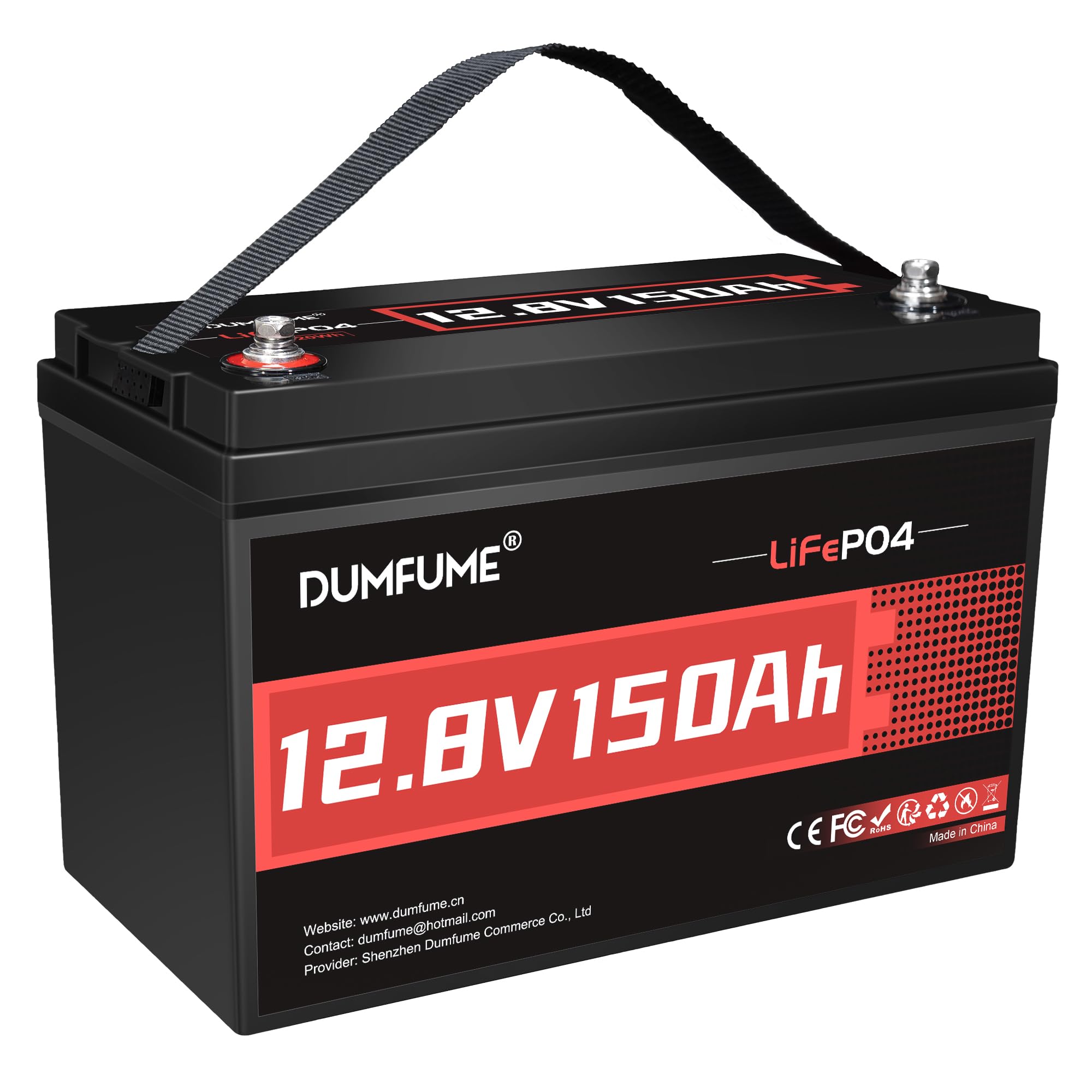
If you need more than 100Ah but don’t want to wire batteries in parallel, the DUMFUME 150Ah gives you 1920 watt-hours of energy in a single Group 31 package. It weighs just 22.05 pounds — lighter than many 100Ah LiFePO4 batteries — and measures 13.05 x 6.78 x 8.66 inches. The 100A BMS provides standard protection against overcharge, over-discharge, short circuit, and overheating, with 4,000+ cycles to 80% capacity.
Customer capacity tests confirmed that four 150Ah units each slightly exceeded their rated capacity by about 7Ah, and one owner reported that a battery still exceeded its rated capacity after a year of twice-weekly charging cycles. This is a “no frills” battery — no Bluetooth, no SOC indicator, no app — just solid capacity at a compelling per-amp-hour price. The 5-year warranty adds reassurance, though it’s worth noting that warranty claims may need to go through the manufacturer directly rather than Amazon.
The long-term reports are mixed: one owner’s battery failed after a year when it drained overnight with a 3.5A fridge draw and wouldn’t recharge, though the same user noted that the battery initially performed excellently. DUMFUME recommends a full maintenance cycle every 6 months during extended storage, and the battery requires temperatures above 5°C for optimal performance. If you need high capacity and are willing to trade smart features for pure energy density, this is a solid option, but the reliability concerns push it below the more established brands.
Why it’s great
- Highest energy density in the list at 1920Wh per battery
- Very lightweight for 150Ah capacity at 22.05 lbs
- Competitive per-amp-hour pricing
Good to know
- Some reliability concerns reported after 1 year
- No Bluetooth or smart monitoring features
8. Wattcycle 12V 100Ah LiFePO4
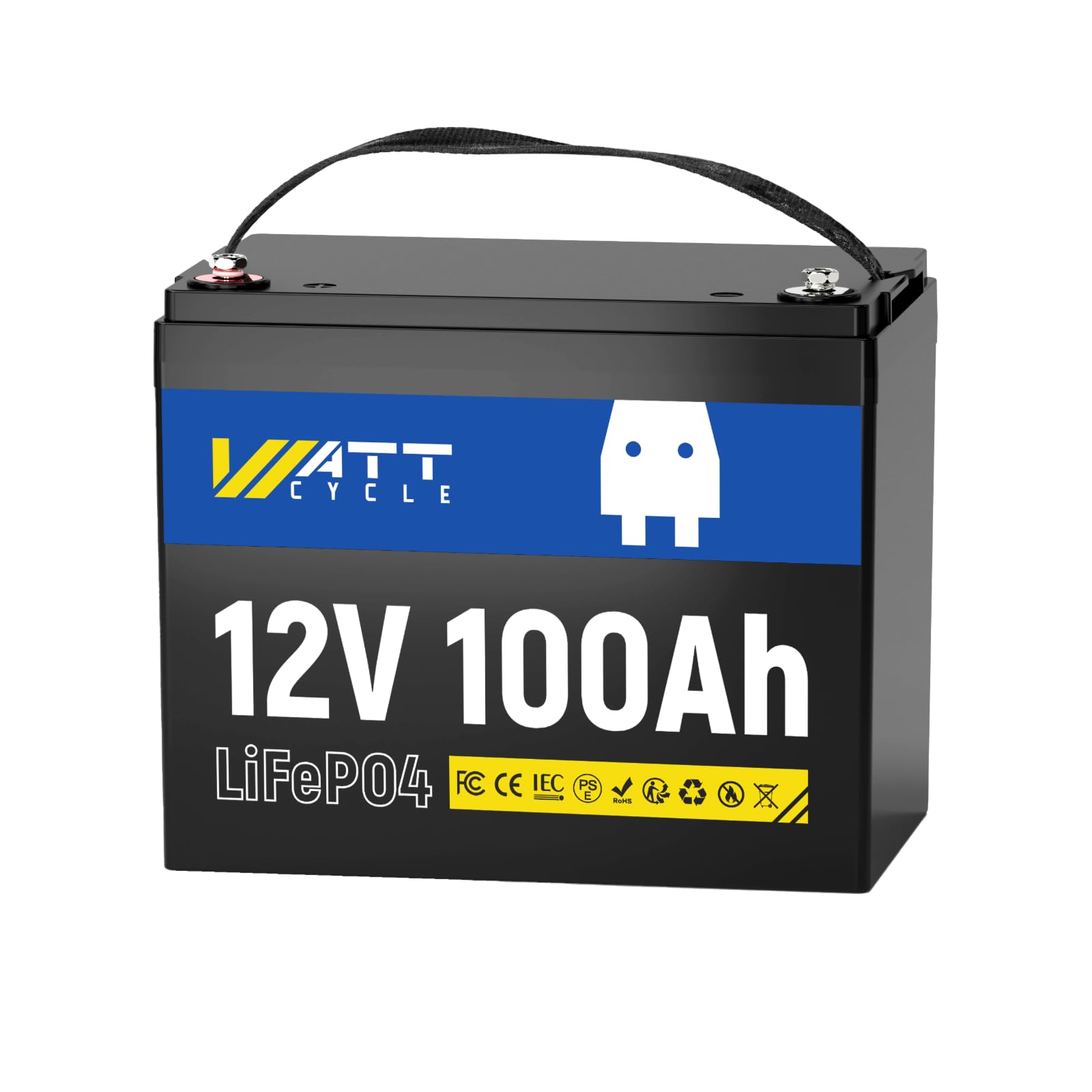
Wattcycle offers a straightforward Group 24 LiFePO4 battery that hits all the essential notes without any extra frills. At 10.2 x 6.6 x 8.2 inches and 23.2 pounds, it fits standard Group 24 battery boxes and is about 60% lighter than an equivalent lead-acid battery. The 100A BMS provides automatic disconnect when discharge current exceeds 300±50A, with standard protections against overcharge, over-discharge, and short circuits. Low-temperature protection cuts off charging below -4°F and discharging below -4°F, helping the battery survive winter conditions.
Real-world testing from owners confirms the 100Ah rating: one user charged two batteries to 14.6V and measured 47Ah and 46Ah respectively before reaching full charge, validating the rated capacity. Another owner uses these as trolling motor batteries in series, running a 42A load all day without dropping below 12.5V per battery. The battery supports up to 4S or 4P configurations for a maximum of 20.48kWh, and has SDS/UN38.3/FCC/CE/ROHS certifications.
The main complaint is the terminal bolts — they’re short at about 1/2 inch, and users who need longer bolts for parallel setups must replace them with M8x16mm bolts and washers, an additional cost of about . There’s no Bluetooth, no SOC indicator, and the case lacks a carrying handle, making it less convenient for portable use. But for a no-nonsense replacement battery that just works, Wattcycle delivers solid performance at an entry-level price.
Why it’s great
- Confirmed 100Ah capacity through user testing
- Good low-temperature protection for winter use
- Compact Group 24 size fits standard boxes
Good to know
- Terminal bolts are very short, need replacement for parallel configs
- No Bluetooth or SOC monitoring
9. HumsiENK 12V 100Ah LiFePO4

HumsiENK packs impressive features into an entry-level price point. The standout spec is the IP67 rating — this battery is fully dust-tight and can survive submersion in up to 1 meter of water for 30 minutes. For marine and outdoor applications where moisture is unavoidable, this is a significant advantage over the IP65 or non-rated competitors. The battery also comes with a nylon carrying handle, making it genuinely portable for camping and mobile setups. At 19.73 pounds, it’s the lightest 100Ah battery in this list.
The BMS claims 999 laboratory tests and has a “recover from low temperature” feature that allows the battery to automatically resume operation when temperatures rise above -4°F. The 100A BMS provides multi-protection including overcharge, over-discharge, high temperature, short circuit, and over current, with a 300±50A disconnect threshold for extreme current events. Owners have used these batteries in 36V golf cart setups, replacing 6x6V lead-acid batteries with 3x12V HumsiENK units, reporting huge weight reductions and longer runtime.
The battery supports 4S4P configurations for up to 48V and 20.48kWh, and can be fully charged in just 2 hours using a compatible charger. The 5-year warranty is strong for the price tier. The catch is that the BMS can be finicky — if the battery goes into protection mode after deep discharge, you need to use a 12V 1A lead-acid charger to slowly bring the voltage back above 9V before switching to the LiFePO4 charger. This wake-up process is common across many budget LiFePO4 batteries but requires some technical comfort.
Why it’s great
- IP67 waterproof rating for marine and outdoor use
- Lightest 100Ah battery at 19.73 lbs with carrying handle
- Fast charging in 2 hours with compatible charger
Good to know
- BMS requires manual wake-up after deep discharge
- No Bluetooth or SOC monitoring features
FAQ
Can I use a 12V LiFePO4 battery to replace my RV’s lead-acid house battery?
What does the “100A” in the BMS rating actually mean for my trolling motor?
Why does my LiFePO4 battery show 13.2V even though it’s “full” — is it defective?
Can I charge my 12V LiFePO4 battery with a standard lead-acid charger?
Final Thoughts: The Verdict
For most users, the 12 volt lifepo4 battery winner is the Power Queen 12.8V 100Ah because it combines marine-grade TVS surge protection, ABYC E-13 compliance, and proven real-world capacity at a price that undercuts premium brands by hundreds of dollars. If you want Bluetooth monitoring and cell-level data without breaking the bank, grab the ECO-WORTHY 12V 100Ah. And for a full-time RV or off-grid system where reliability is everything, nothing beats the Battle Born 100Ah with its 10-year warranty and US-based customer support that actually picks up the phone.