
Our readers keep the lights on and my morning glass full of iced black tea. As an Amazon Associate, I earn from qualifying purchases.
Specs are compiled from manufacturer listings and verified buyer reviews and can change over time — please confirm the key details on the product page before buying.
You know the drill: it is a hot, sticky night inside the camper, and the stock fan on the ceiling sounds like a jet engine taking off. It moves some air, sure, but the noise keeps everyone awake. The real question is which 12-volt roof fan actually does the job without the racket and without draining your house battery dry.
I’m Min — the founder and writer behind Gadgets Feed. This guide is built by comparing the manufacturers’ published specifications and the patterns across verified customer reviews, so you get each pick’s real strengths and trade-offs instead of marketing spin.
Whether you are upgrading a smoky bathroom fan or adding one to the bedroom, you need a 12 volt rv ceiling fan that is quiet, efficient, and built to last through every road trip.
Quick Picks
- OUTPRIZE Upgraded Remote Control RV Roof Vent — Top Performer
- Kohree RV Vent Fan, 10-Speed Reversible — Best Overall
- Furrion 10-Blade, 14″ RV Rooftop Vent Exhaust — Durable Workhorse
- Hurrventer Build-in Rain Shield RV Roof Vent Fan — All-Weather Vent
- RVLOVENT RV Vent Fan 14×14 — Great Value
- Starvent RV Roof Vent Fan 6-Speed-Reversible — Budget Champion
How To Choose The Best 12 Volt RV Ceiling Fan
Picking the right fan for your camper is not just about grabbing the cheapest one. You have to think about what you want it to do — pull hot air out, draw cool air in, or both. Here is what to keep in mind.
Airflow Rating (CFM)
This number tells you how much air the fan moves in a minute. A higher cubic-feet-per-minute (CFM) rating means faster cooling and better odor removal. Most decent 14-inch RV fans land between 950 and 1,300 CFM. If you are in a really hot climate, aim for the upper end of that range.
Reversible Airflow
A fan that only blows outward (exhaust) is fine for the bathroom, but for the main living area you want a reversible model. Flipping the blade direction lets you pull fresh air in on a cool evening or push stale air out during cooking.
Power Draw and Noise
Every fan runs on 12V DC, but they do not all sip power equally. Look for a DC motor rated around 20-30 watts at high speed — that keeps your battery happy during boondocking. Noise level matters too; a fan rated at 45dB or lower on its top speed is quiet enough for sleeping.
Quick Comparison
| Model | Best For | Airflow (CFM) | Speeds | Reversible | Amazon |
|---|---|---|---|---|---|
| Furrion 10-Blade | Reliable all-weather exhaust | — | 4 | No | $118.71Amazon |
| Starvent 6-Speed | Budget-friendly reversible airflow | 1,100 | 6 | Yes | $109.70$129.00Amazon |
| OUTPRIZE 10-Speed | Quietest high-CFM performer | 1,300 | 10 | Yes | $132.99Amazon |
| RVLOVENT 10-Speed | Ultra-quiet with rain sensor | 950 | 10 | Yes | $134.50Amazon |
| Hurrventer 10-Speed | Built-in rain shield for all-weather venting | 1,000 | 10 | Yes | $189.50Amazon |
| Kohree Deluxe | Top-tier airflow with thermostat and photocatalyst | 3,000 | 10 | Yes | $252.69$269.99Amazon |
In‑Depth Reviews
1. OUTPRIZE Upgraded Remote Control RV Roof Vent Fan
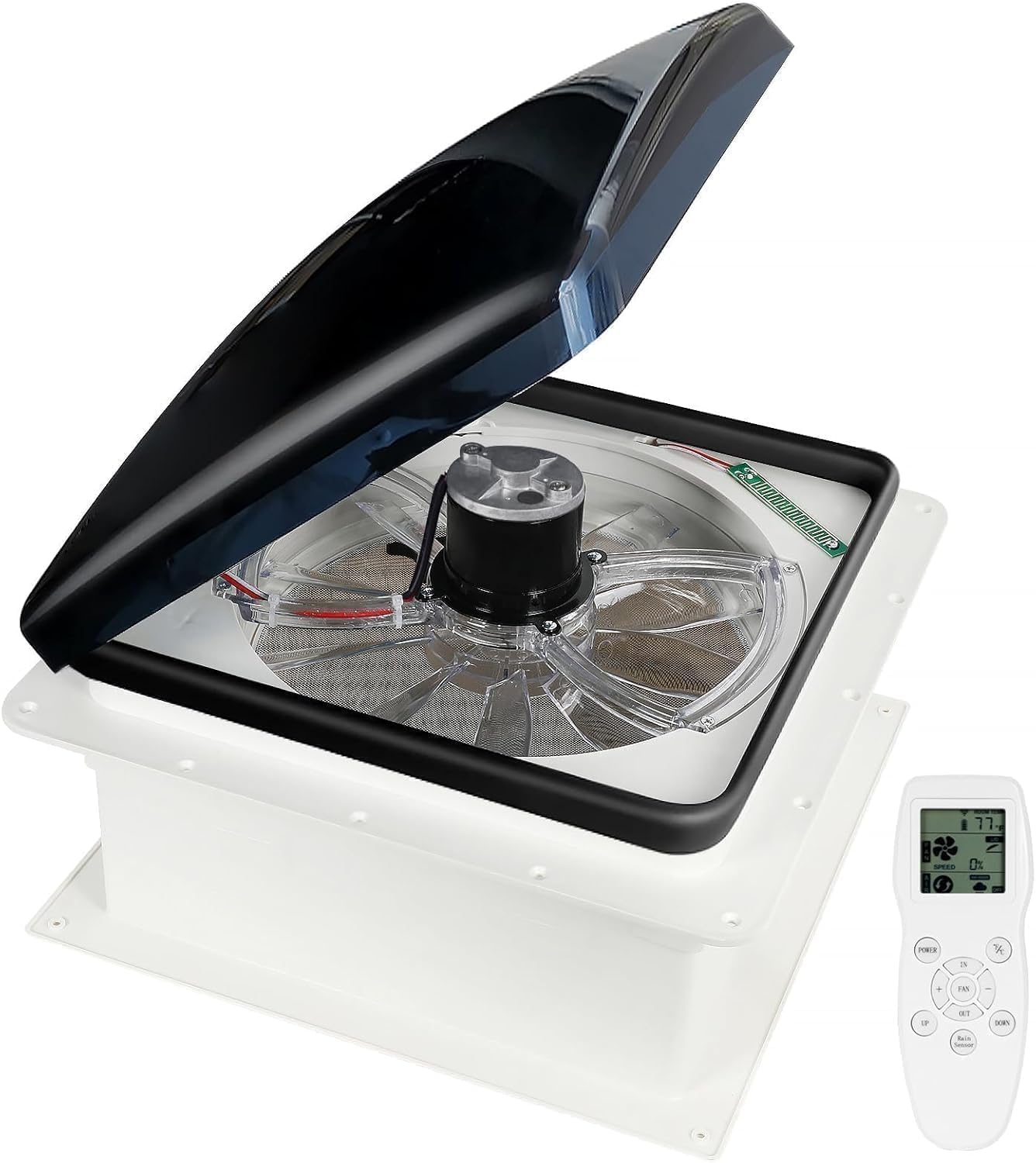
The quietest high-power fan that moves more air than anything in its class.
When you need to cool down the rig fast without shouting over the noise, this OUTPRIZE is the one to beat. It pumps out 1,300 cubic feet per minute (CFM) — at 1,300 CFM versus the RVLOVENT’s 950 CFM. — yet buyers report the fan is very quiet, even at full speeds. The 10-speed settings give you fine control from a gentle whisper to max hurricane, and the reversible blade lets you pull cool air in or push hot air out as needed.
A built-in rain sensor automatically closes the lid when it detects water, so you can leave it open without worrying about a sudden downpour soaking the bed. The fan draws just 20 watts on high, making it easy on your battery bank during extended boondocking. At 45dB max noise, it is quieter than most conversations, which matters a lot when the fan is right above your head at night.
What Makes It Stand Out
- 1300 CFM is the highest airflow in this lineup — clears heat and odors in minutes
- 45dB noise level is genuinely sleep-friendly even on high speed
- Remote control saves you from getting out of bed to adjust settings
The Compromises
- Remote feels a bit flimsy and the batteries can pop loose inside
- Some buyers mention a low hum at certain speeds
- First unit arrived defective for one reviewer, though the replacement worked fine
Reach for this if: you want the most air movement with the least noise — the combination of 1300 CFM, 45dB quietness, and a rain sensor makes it the most well-rounded pick here.
Think twice if: the cheap remote bugs you and you prefer a more premium-feeling controller from the factory.
2. Kohree RV Vent Fan, 10-Speed Reversible
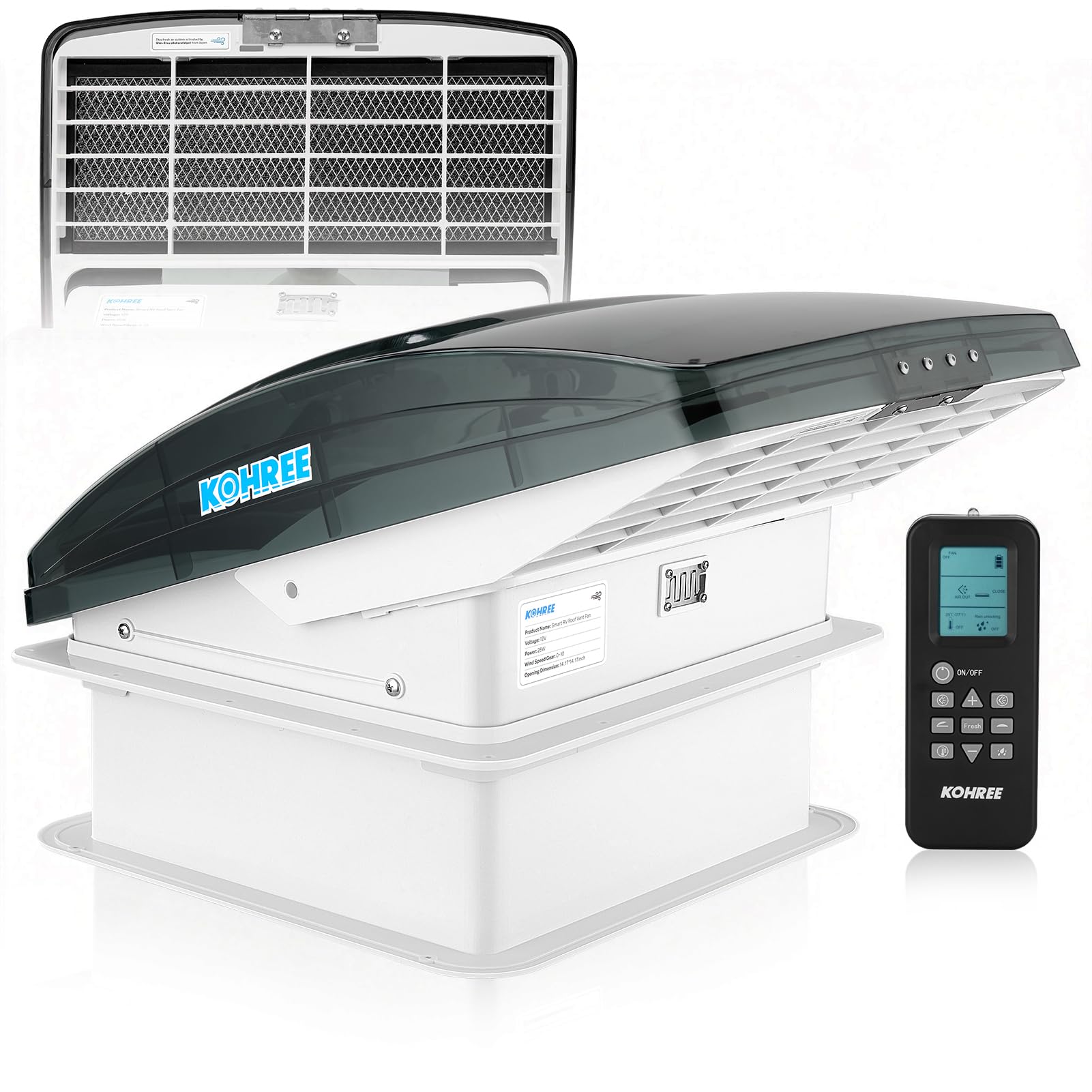
A powerhouse that delivers 3,000 CFM (compared to 1,300 CFM for rivals) and adds smart temperature control.
This Kohree Deluxe is in a different league — it pushes 3,000 CFM, which is more than double the next highest fan here. That kind of output does not just cool down the rig; it blasts out humidity, smoke, and cooking smells almost instantly. The 10-speed reversible motor is paired with a built-in thermostat, so you can set a target temperature and let the fan ramp up or down automatically as the day heats up.
Beyond raw power, the Kohree includes a Shin-Etsu photocatalyst feature that claims to break down odors when the fan is running on low. An integrated rain shield means you can run it in the rain without water sneaking in. The unit is heavier at 14.3 pounds, but that heft comes from solid construction — owners mention it is a huge upgrade over the thin OEM fans. One reviewer did mention a constant outside air leak due to a missing bulb seal, so you may want to add a bit of extra caulk during install.
Why It Wins
- 3000 CFM airflow is massive — clears the whole RV in seconds
- Built-in thermostat lets you set-and-forget the temperature
- Photocatalyst mode helps keep the air fresh even with windows closed
Things to Watch
- Some units leak air around the lid seal — may need additional sealing
- Power LED is very bright and the blinking stand-by light can keep you up at night in the bedroom
- Remote can be intermittent; one reviewer had to re-pair it regularly
This one is for you if: you need maximum airflow and automatic temperature regulation — the thermostat alone makes it a different class of fan.
Look elsewhere if: you are sensitive to bright indicator lights at night or want a truly zero-leak seal right from the start.
3. Furrion 10-Blade, 14″ RV Rooftop Vent Exhaust Fan

The no-nonsense exhaust fan that just works, and keeps working for years.
If your main goal is to yank hot air and cooking smells out of the RV and you want a fan that will not die after a season, the Furrion is your pick. It has only four speeds — compared to the 10-speed fans above — but those four speeds are backed by a sturdy 10-blade design that moves a serious amount of air without the usual roar. Customers note the fan has been used weekly for just over a year and is still running strong.
Flush-mount design gives it a clean look on the roof, and the kit includes everything you need for a DIY install: sealant, butyl tape, and a trim ring. It works with roofs from 2 to 7 inches thick. One reviewer who went through three Maxair fans that failed found the Furrion to be the only reliable one — no bells or whistles, it just works. The catch is that it is exhaust-only (not reversible), so you cannot pull fresh air in; it only pushes stale air out.
Built to Last
- 10-blade design moves a lot of air with less noise than typical stock fans
- Comes with sealant, tape, and trim ring — no extra trip to the hardware store
- Multiple long-term owners confirm it holds up for years of regular use
The Limits
- Only 4 speeds vs 6 or 10 on competitors — less fine control
- Exhaust-only, so you cannot reverse it to draw cool air in
- Push-button controls instead of a remote — you have to reach up to the ceiling
Grab this if: you want the most reliable exhaust fan money can buy, one that does one thing well and keeps doing it without fuss.
skip it if: you need reversible airflow for cooling on mild nights or want the convenience of a remote control.
4. Hurrventer Build-in Rain Shield RV Roof Vent Fan
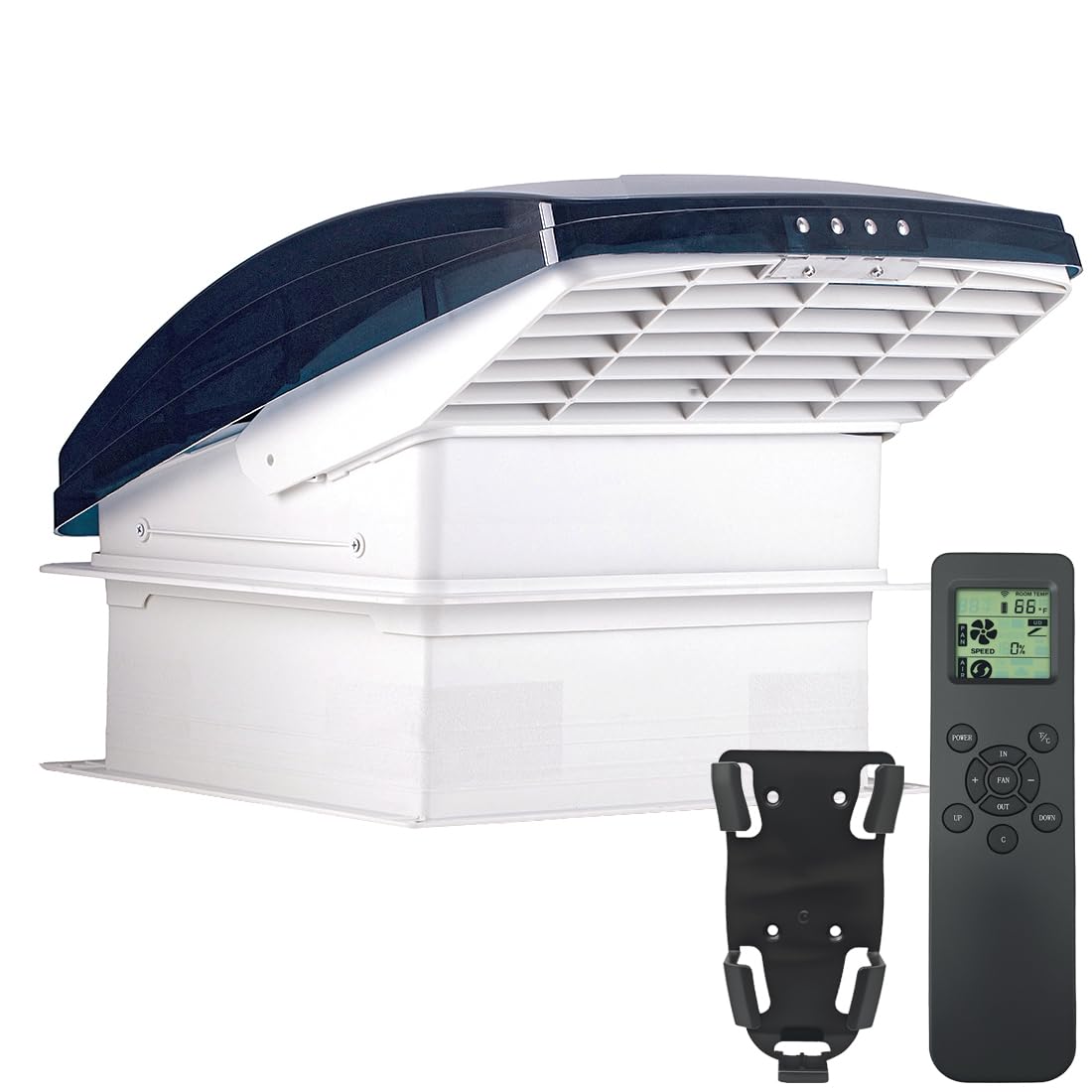
Built-in rain shield so you can run it even when the sky opens up.
Most RV fans force you to close the lid when it rains, which kills the ventilation. The Hurrventer solves that with an integrated rain shield — the lid stays open and the shield keeps water out, so you can leave the fan running no matter the weather. It delivers 1,000 CFM, which is solid for a 14-inch opening, and the 10-speed reversible motor gives you the flexibility to exhaust or intake as needed.
One thing that sets this fan apart is the ability to vent while the lid is closed. That means you can keep airflow moving even when the RV is parked in a downpour or when you want to run the fan silently at night without the lid cranked open. The remote layout is a bit odd — the and – buttons are swapped from what most people expect — but once you get used to it, everything works fine. A long-term reviewer noted the lid mechanism broke after nearly two years of daily use, so if you run it constantly, you may face that repair eventually.
Why It Shines
- Built-in rain shield means water never stops your ventilation — run it in any weather
- Vents with the lid closed for quiet, discreet airflow
- Good balance of noise and power — quiet on lower speeds
The Downside
- Remote button layout is reversed compared to every other remote you own
- Lid mechanism may break after heavy daily use (reported at ~2 years)
- No thermostat — it does not adjust speed based on room temperature
Perfect for you if: you camp in rainy regions where a standard open-vent fan would be useless half the time.
Not ideal if: you want automatic temperature control or plan to use the fan as your primary cooling method all day every day.
5. RVLOVENT RV Vent Fan 14×14, 10-Speed Roof Vent Fan
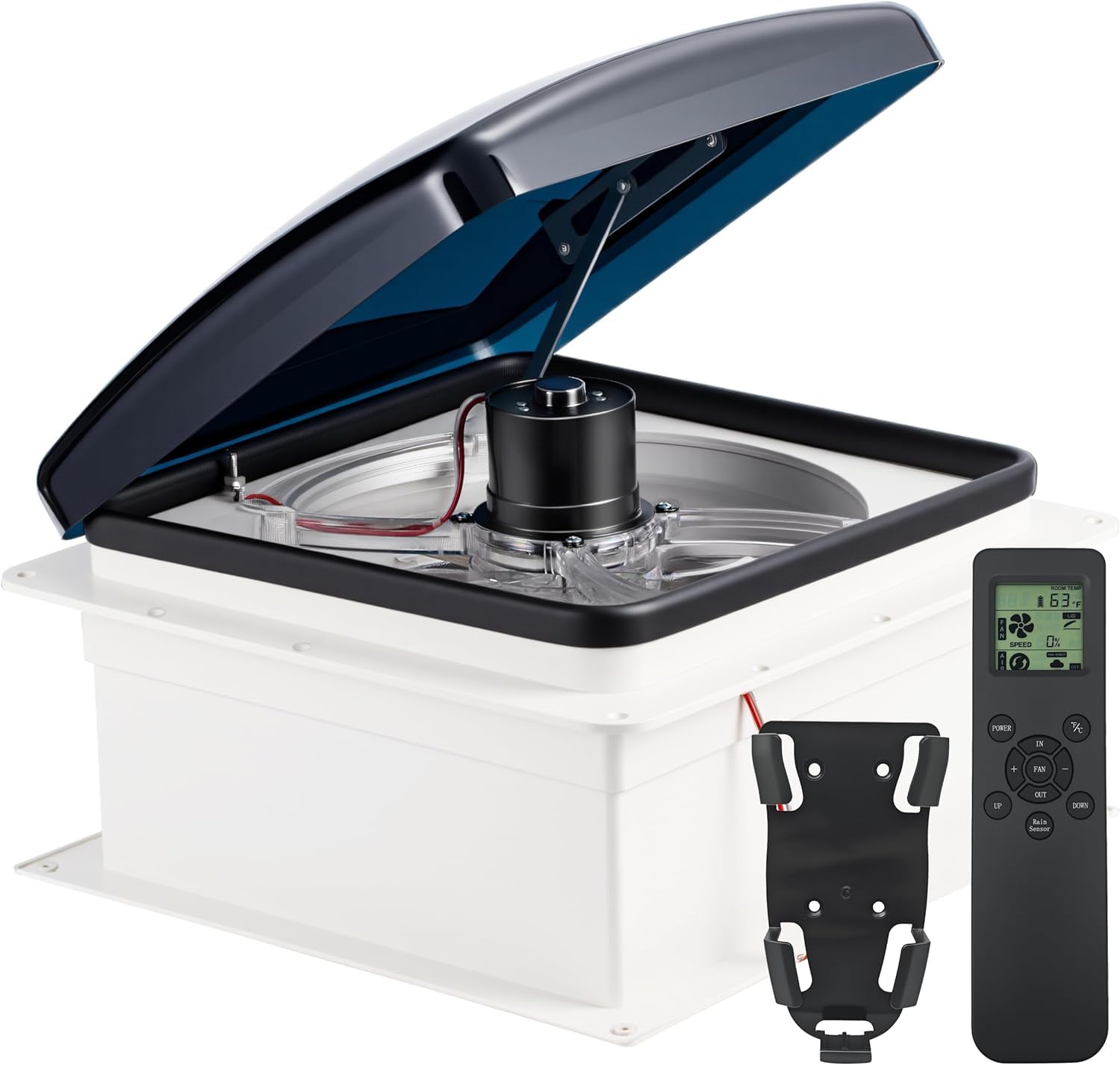
Balanced power and quietness with a smart rain sensor that beats running back to close the vent.
This RVLOVENT sits in a balance: it delivers 950 CFM of airflow — enough to clear a small trailer or bathroom quickly — while running exceptionally quietly thanks to a 24-watt DC motor. The rain sensor is a real timesaver: when the first drop hits the sensor, the lid closes automatically and the fan shuts off, so you never have to scramble back to the camper if a storm rolls in while you are away.
One clever extra is that the box includes a spare screen frame, so when the original gets clogged with road dust and debris (which one reviewer noted happens quickly), you have a clean one ready to swap in. The remote is convenient but reviewers call it unnecessarily large — it is bigger than most TV remotes. Still, that is a minor gripe for a fan that buyers describe as the best investment they have made in their RV. It is 10-speed and reversible, so you get the same flexibility as the more expensive picks, just with slightly less raw airflow.
What You Get
- 10 speeds and reversible airflow at a fair mid-range price
- Rain sensor saves you from wet beds and soggy floors
- Extra screen frame doubles the lifespan before cleaning
The Trade-offs
- 950 CFM is the lowest max airflow of the reversible fans here (OUTPRIZE hits 1300 CFM)
- Remote is comically oversized compared to the fan itself
- Screen catches dust very fast in dusty environments
A strong pick if: you want the rain-sensor convenience without paying premium prices, and 950 CFM is plenty for your rig size.
Step up if: you are in a hot climate and need the extra 350 CFM the OUTPRIZE provides.
6. Starvent RV Roof Vent Fan 6-Speed-Reversible

Surprisingly powerful for the price, with a smooth start that does not jolt you awake.
At 1,100 CFM, this Starvent actually beats several pricier rivals in raw airflow. The 6-speed reversible motor lets you dial in anything from a near-silent breeze on speed 1 (reviewers point out it is quieter than a Fantastic fan on low) to a full blast on speed 6 that pulls hot air out fast. A clever touch is the soft start — the motor slowly ramps up and ramps down, so there is no sudden jolt of noise every time you turn it on or off.
The transparent blades let natural sunlight filter through the smoke-colored dome, keeping the space bright instead of dark. Some assembly is required: shoppers say you will need butyl tape, Dicor sealant, and a drill for the install, and the inside trim ring may need about ¾ inch cut off to fit. One buyer did point out that the white lid glows pink inside when light hits it, and the crank handle can be stiff to turn. Still, for the price, you get a reversible fan with twice the speeds of entry-level models and a solid build.
Best-for-Budget Features
- 1100 CFM is more than some premium-rated fans — excellent bang for the buck
- Soft-start motor eliminates the startling noise burst of most RV fans
- Transparent blades keep the room brighter than solid plastic does
The Catch
- Install takes a bit more work — may need to trim the flange, supply your own sealant
- Lid crank can be hard to turn and the screen mesh buzzes if you touch it
- Only 6 speeds vs 10 on the mid-range models
Best for: budget-minded RVers who want reversible airflow and solid CFM without paying for extra features like a rain sensor or remote.
Pass on it if: you want a rain sensor, a remote, or a zero-effort drop-in installation with full hardware included.
Understanding the Specs
CFM (Cubic Feet per Minute)
This is the single most important number for an RV fan. It tells you how much air the fan moves every minute. A higher CFM means faster cooling and quicker removal of cooking smells or bathroom humidity. For a standard 14×14 roof opening, look for at least 900 CFM. The best models hit 1,300 CFM or more.
Reversible Airflow
Some fans only blow air out (exhaust mode). A reversible fan can switch the blade direction to pull air in instead. That is useful on cool evenings when you want to draw fresh outside air into the RV without opening windows. If you only plan to use the fan in a bathroom, exhaust-only is fine. For the main living area, reversible is a standout.
Rain Sensor vs Rain Shield
A rain sensor detects moisture on the sensor pad and automatically closes the lid and shuts off the fan. A rain shield is a physical barrier that lets you keep the lid open while blocking rain from falling into the RV. Both keep your rig dry, but the sensor is fully automatic while the shield lets you run the fan continuously in wet weather.
Power Draw and Noise
Every 12V RV fan runs on DC power, drawing between 20 and 30 watts at top speed. Lower wattage means less drain on your house battery during boondocking. Noise is measured in decibels (dB); anything under 50dB on high speed is considered quiet enough for sleeping. The best quiet fans hover around 45dB.
FAQ
Will a 12V RV fan fit my existing roof opening?
Can I leave an RV fan running while driving?
How much battery power does a 12V RV ceiling fan use?
What is the difference between exhaust-only and reversible RV fans?
How do I install a roof vent fan in my RV?
Do I need a rain sensor or a rain shield?
Are RV fans with remote controls worth it?
How quiet should a good RV ceiling fan be?
Can I install a 12V RV fan in a van conversion?
Which RV fan brand is the most reliable?
Final Thoughts: The Verdict
If you want one dependable pick, the 12 volt rv ceiling fan winner is the OUTPRIZE Upgraded Remote Control Fan because it packs the highest CFM (1,300) while staying whisper-quiet at 45dB, plus the rain sensor and 10-speed control make it a no-compromise daily driver. If you want raw power and automatic temperature management, grab the Kohree Deluxe with its 3,000 CFM and built-in thermostat. And for a reliable, no-fuss exhaust fan that will still be running years from now, the standout is the Furrion 10-Blade.
How We Picked
We do not accept paid placement. Every pick is matched to a real buyer and a real use-case; we do not hands-on test units.
Sources & Methodology
Specifications: manufacturer listings and product documentation. Review insights: verified customer reviews, as of July 2026. Pricing: not shown on this page (it changes often); check the current price via the retailer link.
As an Amazon Associate, Gadgets Feed earns from qualifying purchases. This does not affect which products we feature.
Related Guides
Product prices and availability are accurate as of the date/time indicated and are subject to change. Any price and availability information displayed on Amazon at the time of purchase will apply to the purchase of this product. As an Amazon Associate I earn from qualifying purchases.
CERTAIN CONTENT THAT APPEARS ON THIS SITE COMES FROM AMAZON. THIS CONTENT IS PROVIDED "AS IS" AND IS SUBJECT TO CHANGE OR REMOVAL AT ANY TIME.
Amazon and the Amazon logo are trademarks of Amazon.com, Inc. or its affiliates.