
Our readers keep the lights on and my morning glass full of iced black tea. As an Amazon Associate, I earn from qualifying purchases.
Specs are compiled from manufacturer listings and verified buyer reviews and can change over time — please confirm the key details on the product page before buying.
A front tire that wobbles at speed or wears out in two thousand miles ruins the ride, no matter how cheap it was. You need grip that stays predictable in corners and tread that lasts longer than a single season. This guide puts five real contenders side-by-side — from budget-friendly radials to long-haul sport-touring options — so you know which one fits your bike and your riding style.
I’m Min — the founder and writer behind Gadgets Feed. This guide is built by comparing the manufacturers’ published specifications and the patterns across verified customer reviews, so you get each pick’s real strengths and trade-offs instead of marketing spin.
Choosing the right 120/70 zr17 motorcycle tire depends on balancing grip, lifespan, and handling characteristics that match how you ride.
Quick Picks
- MICHELIN Road 6 Front Tire — Best Overall
- Pirelli Diablo Rosso II Front Tire — Sport Performer
- Dunlop Sportmax GPR-300 Sport Front Motorcycle Tire — Budget Sport
- Kenda KM1 (KM001) 120/70ZR17 Front Tire — Long-Legged Tourer
- Full Bore M1 120/70ZR17 Front Motorcycle Tire — Entry Level
How To Choose The Best 120/70 ZR17 Motorcycle Tire
A front tire does more than steer — it carries the bike’s weight through every lean, absorbs road imperfections, and fights wobble at highway speeds. Getting the right one means looking at a few key specs that matter for your specific bike and riding style.
Ply Rating and Sidewall Stiffness
The number of plies — layers of rubber and fabric inside the tire — determines how stiff the sidewall feels. A 2-ply tire typically rides softer and mounts easier, while a 4-ply tire offers a stiffer sidewall that resists flex during aggressive cornering but can be harder to seat on the rim. Stiffer construction often holds better at high speed but may follow road grooves more.
Tread Life vs Grip Trade-Off
Softer rubber compounds grip the pavement like glue in corners and in wet conditions, but they wear much faster — some sport tires last only a couple thousand miles under hard riding. Sport-touring tires use harder center compounds to stretch lifespan past eight thousand miles, though they may feel less planted when leaned over at the track. Match the compound choice to how aggressively you ride, not just the price.
Maximum Pressure and Load Capacity
Every front tire lists a maximum pressure, measured in PSI (pounds per square inch) or kPa (kilopascals), which influences how the tire contacts the road. Running near the maximum pressure reduces rolling resistance and helps longevity, while lower pressure increases grip but can cause faster center wear. The load capacity, often 520 pounds for this size, tells you the max weight the tire can safely carry — important if your bike is heavy or you carry gear.
Quick Comparison
| Model | Best For | Ply | Item Weight | Max Pressure | Amazon |
|---|---|---|---|---|---|
| MICHELIN Road 6 Front Tire | Long-haul touring and all-weather confidence | — | 10.9 Pounds | — | $225.99Amazon |
| Pirelli Diablo Rosso II Front Tire | Sport riding with responsive cornering | 2-Ply | — | 36 PSI | $121.96Amazon |
| Dunlop Sportmax GPR-300 Front Tire | Budget sport replacement with strong grip | — | 6 Pounds | 530 kPa | $111.99Amazon |
| Kenda KM1 Front Tire | High-mileage commuting and sport touring | 4-Ply | 11.9 Pounds | 58 PSI | $87.96Amazon |
| Full Bore M1 Front Tire | Entry-level street riding on a budget | 2-Ply | — | 42 PSI | $87.49Amazon |
In‑Depth Reviews
1. MICHELIN Road 6 Front Tire
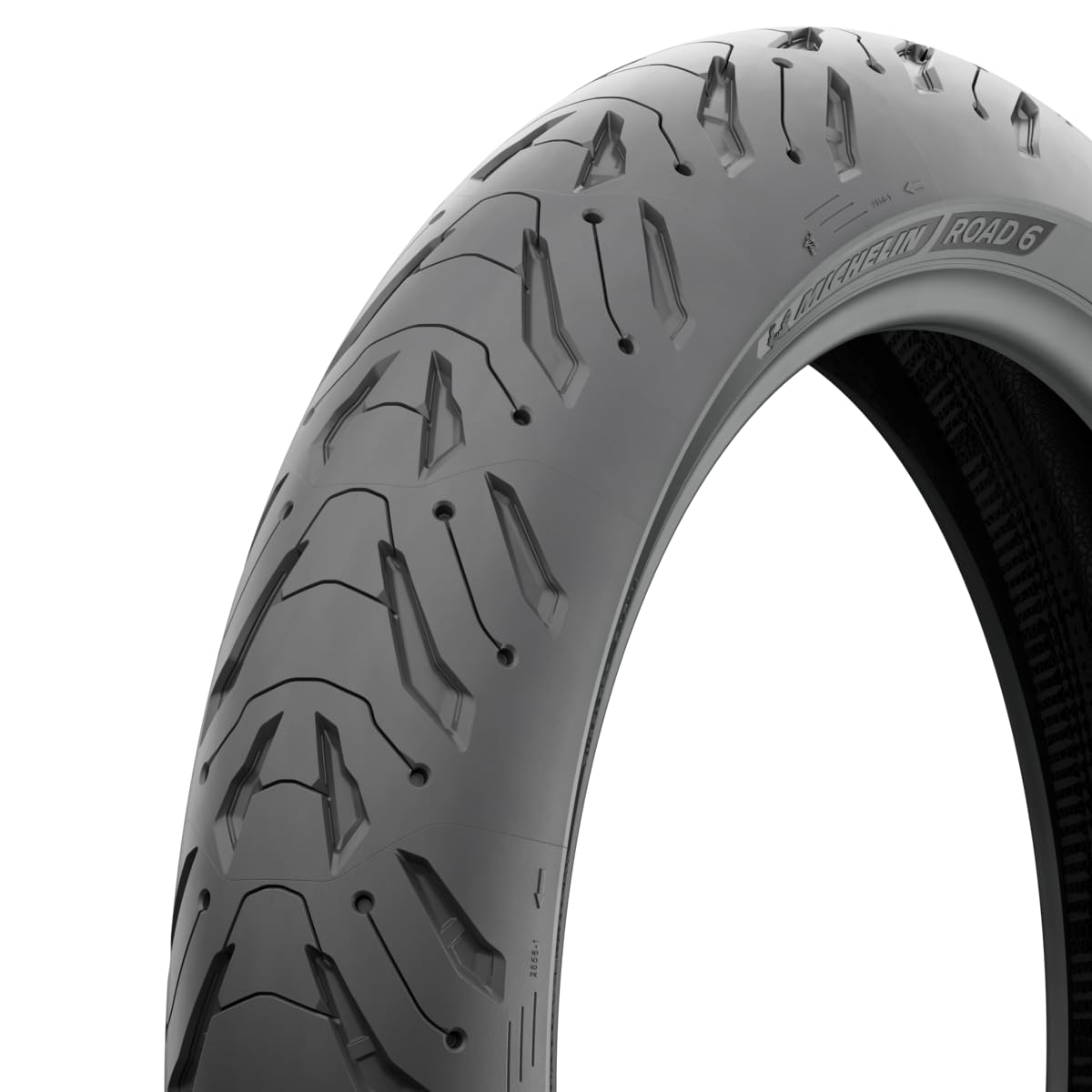
The touring champion that still looks fresh a full season later.
You get more miles before the next swap with the MICHELIN Road 6 Its 10.9-pound weight gives a planted feel on the highway without making steering heavy.
Buyers back up the long-life promise. One reviewer noted excellent wet and dry traction on both a CBR and a Ninja, with installation done using hand tools. Another rider pushed a set past nine to eleven thousand miles, calling the rain traction phenomenal and reporting smooth running up to 155 mph. If you ride sport-touring distances or commute through all weather, this tire earns its spot as the first choice.
Unlike stickier sport tires that wear in a couple thousand miles — like the Pirelli Diablo Rosso II — the Road 6 stretches lifespan while keeping cornering confidence high. The trade-off is the upfront investment, but the cost per mile works out lower if you ride long distances.
Mileage monster: Michelin claims 10% longer tread life over the prior generation, with real buyers reporting 9,000-11,000 miles per set and phenomenal rain traction.
One honest limit: Heavier feel at 10.9 lbs compared to lighter sport tires, which some riders may notice when flicking through tight turns.
Reach for this if: you ride high mileage all year and want a tire that lasts many seasons without sacrificing wet-weather confidence.
skip it if: you only ride a few thousand miles per year and want to spend less upfront — the Road 6 is an investment that pays off over distance.
2. Pirelli Diablo Rosso II Front Tire

The Rosso II leans into corners with a predictable bite.
Pirelli’s Diablo Rosso II uses dual-compound technology — a harder rubber center for straight-line wear and a softer rubber on the shoulders for grip when you lean — so you get better longevity than a full-soft tire without giving up cornering bite. Its maximum pressure is 36 PSI, a noticeably lower number than the Kenda KM1’s 58 PSI, which gives a more compliant contact patch for sport riding. The asymmetric tread pattern pushes water out of the way, keeping traction up in wet conditions.
One owner praised the dry and wet grip, responsive steering, and planted cornering. Another reviewer noted that on an MT-10 the tire felt sticky and durable. The built-in trade-off is longevity: if you hit the twisties hard, one buyer warned not to expect high mileage — the soft shoulder compound that makes cornering so confidence-inspiring also wears faster under aggressive riding.
Compared to the MICHELIN Road 6 above, the Rosso II is lighter on its feet in corners but will likely need replacing sooner if your rides are mostly straight-line commuting. The included Pirelli keychain is a fun extra, but the real draw is the handling feedback.
Cornering specialist: The dual-compound layout gives you sticky shoulders for leans and a harder center for commutes, all in a 2-ply radial package.
Wear watch: Sport riders report excellent traction but note that aggressive canyon runs shorten tread life — fair trade for the grip.
Reach for this if: you ride a sport bike and value cornering feel and responsive steering over maximum mileage.
Look elsewhere if: your daily commute is mostly straight highway miles — a sport-touring tire will stretch your dollars further.
3. Dunlop Sportmax GPR-300 Sport Front Motorcycle Tire

A lightweight front tire that delivers sport-bike feel without the premium ticket.
At 6 pounds the Dunlop GPR-300 is noticeably lighter than the Kenda KM1 at 11.9 pounds — this makes front-end steering feel quicker and less effort during direction changes. One rider swapped from a Kenda KM1 specifically because of a wobble at high speed and reported no downsides on the GPR-300 after 3,715 miles on a 2020 Suzuki GSX-S1000F. It uses a radial construction and fits a wide range of sport bikes.
Another buyer replaced Michelin Road 5 tires on a Triumph Trident 660 at half the price, noting no noticeable performance difference. That kind of real-world value makes it a go-to for riders who want sport handling without spending for premium rubber. The catch: one reviewer who used the tire for commuting and track days on a Honda CB500F described excellent grip and confidence in corners but said the center wears faster than the edges due to high traction. It is not a long-mileage touring tire — it is a sport tire that balances cost and performance.
Unlike the Pirelli Diablo Rosso II above, the GPR-300 runs a similar sporty philosophy but at a lower entry point, making it a popular alternative for riders on a tighter budget. Its max pressure is 530 kPa, which translates to roughly 77 PSI — a high-pressure spec that helps reduce rolling resistance.
Rider-highlighted strengths
- Lightest front tire in this lineup at 6 lbs for quick steering feel
- Reported as a safe alternative costing half of premium replacements
- Excellent confidence in corners and wet conditions
Rider-reported limits
- Center wears faster than edges under hard riding
- Best suited for spirited riding rather than high-mile touring
For the budget sport rider: You want the grip and feel of a sport radial without spending for a premium badge — this Dunlop delivers at a fraction of the cost.
Not for: Riders who need ten thousand miles from a front tire — the soft compound trades lifespan for grip.
4. Kenda KM1 (KM001) 120/70ZR17 Front Tire

The heavy-duty touring tire that shrugs off miles and resists wearing flat.
With a 4-ply construction and a 58 PSI maximum pressure — a full 22 PSI higher than the Pirelli Diablo Rosso II’s 36 PSI — the Kenda KM1 is built for stability under load and long straight-line travel. Buyers report that a rider doing a 140-mile commute found the rear still had half tread at 4,000 miles, with a projected lifespan of 8,000-10,000 miles on the rear. That kind of wear resistance makes it a strong value for high-mileage touring.
One thing buyers consistently mention is the stiff sidewall — it is noticeably harder to install with tire spoons, and one reviewer needed 40 PSI just to seat the beads. The same rider noted the tire runs a bit wider than expected but fits fine, grips well on wet roads, and corners more quickly than Metzelers. On the highway it smooths out well, though some report a tendency to follow road grooves and a slight weave at speed.
Against the Dunlop GPR-300 above, the KM1 weighs 11.9 pounds, which gives a planted feel at speed but can feel heavier during low-speed steering. The tune apex geometry in the design balances high-speed stability with handling, making it a solid pick for long slogs across states or multi-day tours.
Mileage-focused build: 4-ply construction and the highest max pressure of the bunch (58 PSI) combine for reduced rolling resistance and extended tread life.
Sidewall stiffness: Reportedly difficult to mount by hand; riders with home tools should plan for extra effort or professional installation.
Reach for this if: you commute over 100 miles daily or tour long distances and want a tire that keeps rubber on the pavement for thousands of miles.
Look elsewhere if: you want a light, flickable front tire for canyon carving — this one’s weight and stiff sidewall are built for stability, not agility.
5. Full Bore M1 120/70ZR17 Front Motorcycle Tire
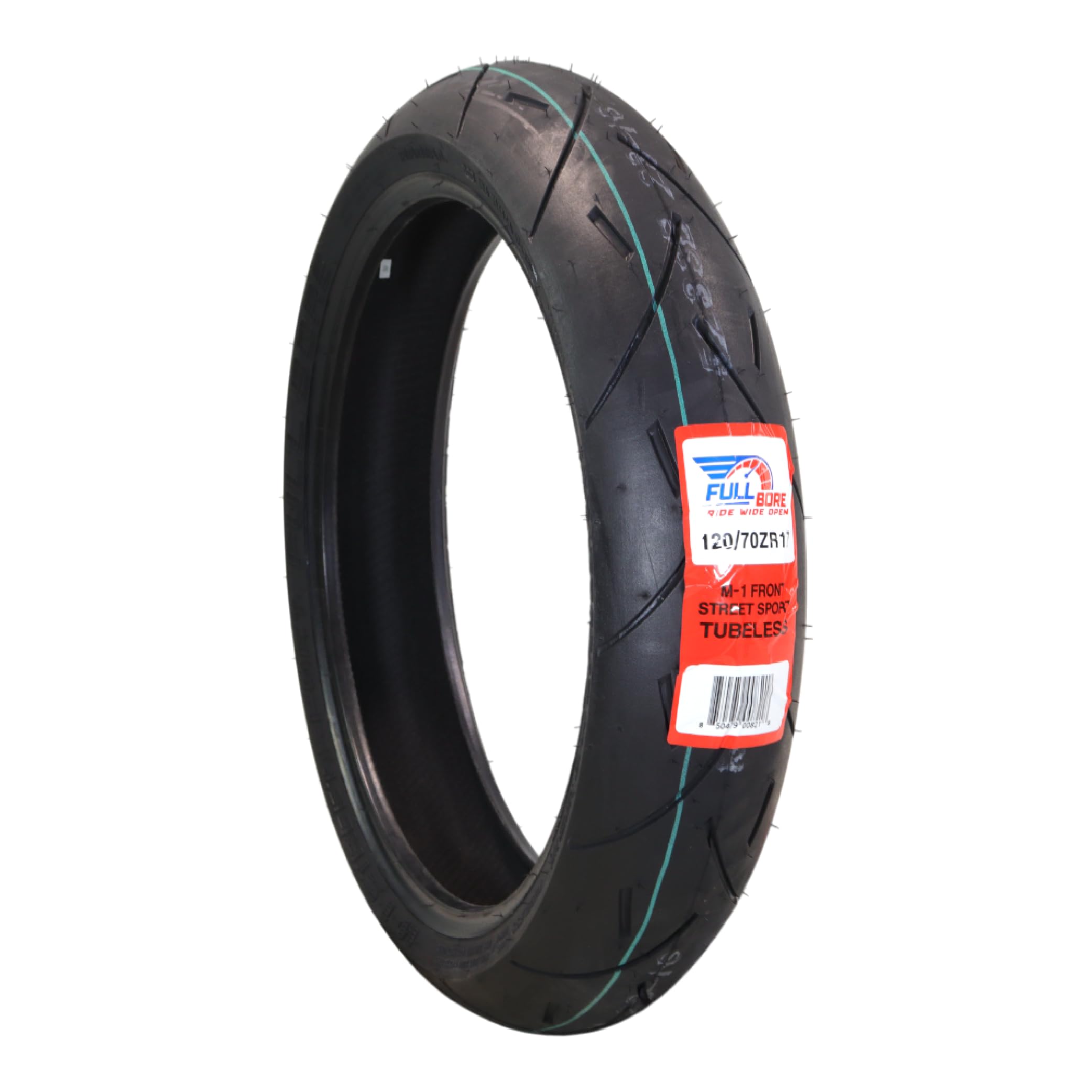
A wallet-friendly radial that gets you rolling while staying affordable.
The Full Bore M1 uses a 2-ply radial construction rated W — good for speeds up to 168 mph — and carries a 42 PSI maximum pressure. At a lower price point than the MICHELIN Road 6, it serves as an entry point for riders who need a 120/70ZR17 front tire without the premium investment. Several buyers gave it five stars, noting it fit well, looked good, and had decent traction on a Concours 14.
But the reviews also reveal a sharp split in experience. One buyer called them junk, reporting massive vibration and tank-slapping death wobble, warning others to spend a bit more on a name brand. Another self-described hard rider said the tires grip great and ride nicely but warned you might get only 2,000 miles before needing replacement. That is significantly shorter lifespan than the Kenda KM1’s potential 8,000-10,000 miles. So the M1 fits a very specific niche: short-budget, low-mileage use where the upfront saving matters more than longevity.
Compared to the Kenda KM1’s 4-ply 58 PSI build, the Full Bore M1’s 2-ply 42 PSI construction makes it lighter-feeling and easier to mount, but the structural difference likely contributes to the shorter wear and the reported stability issues at speed. It is a tire for the rider who knows they are only keeping the bike a season or two.
Budget positives
- W-rated for speeds up to 168 mph, matching many sport bikes
- Multiple buyers confirmed great fit and smooth delivery experience
- Easiest on the wallet of all five picks
Buyer warnings
- One buyer mentioned severe vibration and tank-slapper wobble
- Hard riders may get only 2,000 miles from a front tire
Reach for this if: you are on a tight budget, ride conservatively, and want a W-rated radial to get your bike on the road.
pass on it if: you ride hard, do highway speeds daily, or expect thousands of miles from a single tire — the wear and stability reports suggest it is not a long-term option.
Understanding the Specs
Ply Rating
The ply number tells you how many layers of rubber and reinforcing fabric make up the tire casing. A 2-ply tire has two layers, making it lighter and more flexible — it mounts easier and gives a softer ride, but can feel less stable under heavy loads or extreme cornering. A 4-ply tire has four layers, delivering a stiffer sidewall that resists flex at high speed and under load; it will feel more planted but is harder to install manually. For commuting and touring, 4-ply usually means longer life; for sport riding, 2-ply keeps steering light.
Maximum Pressure
Measured in PSI (pounds per square inch) or kPa (kilopascals), this is the highest air pressure the tire is designed to hold safely. Higher pressure reduces rolling resistance and can extend tread life on long straight rides, but it also makes the contact patch smaller, reducing grip. Lower pressure increases the rubber touching the road for better grip and cornering, but speeds up center wear. A tire rated to 58 PSI, like the Kenda KM1, is built for touring stability; a tire rated to 36 PSI, like the Pirelli Diablo Rosso II, favors a compliant ride for sport handling. Always stay within the range marked on the sidewall.
FAQ
Will a 120/70ZR17 tire fit my bike if the stock size is 120/70-17?
How many miles should a 120/70ZR17 front tire last?
What does the W speed rating mean on a 120/70ZR17 tire?
Can I mix different brands on front and rear tires?
Is a 2-ply tire less durable than a 4-ply tire?
What does load index 58 mean on these tires?
How do I tell if a front tire has enough grip for wet roads?
What is the difference between radial and bias-ply construction in this tire size?
Can I install a 120/70ZR17 front tire with tire spoons at home?
Is it safe to run the maximum pressure listed on the sidewall?
Final Thoughts: The Verdict
For most buyers, the 120/70 zr17 motorcycle tire winner is the MICHELIN Road 6 Front Tire because it delivers a wear life that owners mention reaches 9,000 to 11,000 miles with wet and dry grip that scores five stars from riders across multiple bikes. If you want cornering agility and responsive steering for weekend sport riding, grab the Pirelli Diablo Rosso II. And for a high-mileage commuting tire that customers note may reach 8,000 to 10,000 miles on the rear, the Kenda KM1 delivers at a lower upfront cost than the Michelin.
How We Picked
We do not accept paid placement. Every pick is matched to a real buyer and a real use-case; we do not hands-on test units.
Sources & Methodology
Specifications: manufacturer listings and product documentation. Review insights: verified customer reviews, as of July 2026. Pricing: not shown on this page (it changes often); check the current price via the retailer link.
As an Amazon Associate, Gadgets Feed earns from qualifying purchases. This does not affect which products we feature.
Related Guides
Product prices and availability are accurate as of the date/time indicated and are subject to change. Any price and availability information displayed on Amazon at the time of purchase will apply to the purchase of this product. As an Amazon Associate I earn from qualifying purchases.
CERTAIN CONTENT THAT APPEARS ON THIS SITE COMES FROM AMAZON. THIS CONTENT IS PROVIDED "AS IS" AND IS SUBJECT TO CHANGE OR REMOVAL AT ANY TIME.
Amazon and the Amazon logo are trademarks of Amazon.com, Inc. or its affiliates.