
Picking a gaming TV without a true 120 Hz panel in 2025 means leaving on-screen motion, input lag, and VRR support on the table — exactly the tools your PS5, Xbox Series X, or gaming PC relies on for smooth, tear-free gameplay. A native 120 Hz display locks the frame pacing to your console’s output, eliminating the judder that makes fast camera pans and quick-twitch shooters feel sluggish.
I’m Min — the co-founder and writer behind Gadgets Feed. My analysis of gaming-grade TVs focuses purely on measurable performance specs: native refresh rate ceilings, HDMI 2.1 bandwidth, local dimming zone counts, and real-world VRR ranges — the data points that separate a true gaming panel from a marketing label.
This guide evaluates eleven models that all deliver a genuine 120 Hz or higher refresh rate, and breaks down which one fits your room size, console, and budget. We’ve gathered the data so you can confidently choose the best 120 hz gaming tv for your specific setup.
How To Choose The Best 120 Hz Gaming TV
The raw refresh rate figure is only the starting point. A TV that advertises “120 Hz” may lock that mode to a single HDMI port, use frame interpolation instead of a native panel, or lack the VRR support that truly stabilizes frame pacing. Below are the specific, measurable specs that define a real gaming-grade 120 Hz set.
Native Refresh Rate vs. Motion Interpolation
Look for the words “native 120 Hz” or “native 144 Hz” in the panel specs. Some manufacturers claim an effective 120 Hz using backlight scanning or frame insertion (MEMC), which can add input lag or create visual artifacts like the soap-opera effect. A true native panel accepts a 4K 120 Hz signal directly and displays each frame sequentially without guessing. TVs from the TCL QM7K series, Hisense U6 series, and all OLED models here meet this standard natively.
HDMI 2.1 Port Allocation
Running 4K at 120 Hz with 10-bit color and HDR requires HDMI 2.1 bandwidth (48 Gbps). Check how many ports on the TV actually support this full spec. Several mid-range models, like the Hisense U6, offer only two full-bandwidth HDMI 2.1 ports, while premium sets like the Sony BRAVIA 5 or Panasonic Z8 provide four. If you plan to connect a PS5, Xbox Series X, and a soundbar, a shortage of 2.1 ports becomes a real bottleneck.
Variable Refresh Rate (VRR) Range and Certification
VRR eliminates screen tearing by synchronizing the TV’s refresh rate to the console or GPU’s frame output. The width of the VRR window matters: a range of 48 Hz to 120 Hz is standard, but premium panels expand down to 40 Hz or up to 144 Hz. Certification with AMD FreeSync Premium or NVIDIA G-Sync Compatible confirms that the implementation will work without flicker or sync drops at the edges of the range. The Hisense U6, for example, offers a VRR window of 48 Hz to 144 Hz, covering high-fps PC titles and console games equally well.
Quick Comparison
On smaller screens, swipe sideways to see the full table.
| Model | Category | Best For | Key Spec | Amazon |
|---|---|---|---|---|
| TCL QM7K 55″ (55QM7K) | Mini-LED QLED | Best overall value with high zone count | Up to 2500 dimming zones, 144Hz VRR | Amazon |
| Samsung S90F 42″ OLED | QD-OLED | Best HDR gaming contrast | QD-OLED, 4K 144Hz VRR | Amazon |
| Samsung QN70F 85″ Neo QLED | Mini-LED | Large screen gaming | 85″ Mini-LED, 144Hz, 4K AI upscaling | Amazon |
| Panasonic Z8 77″ OLED | Master OLED PRO | Cinematic gaming with 144Hz | 77″ OLED, 144Hz, 360 Soundscape Pro | Amazon |
| Sony BRAVIA 5 85″ Mini-LED | Mini-LED | PS5 exclusive features | 85″, XR Processor, 120Hz, Dolby Vision | Amazon |
| Sony BRAVIA XR8B 77″ OLED | OLED | Best PS5 OLED gaming | 77″, XR Processor, 120Hz, Acoustic Surface | Amazon |
| TCL Q7 QLED 55″ (55Q750G) | QLED | Budget-friendly 120Hz gaming | Native 120Hz, Game Accelerator 240Hz | Amazon |
| Hisense U6 65″ Mini-LED | Mini-LED | Best bang-for-buck Mini-LED | 65″, Native 144Hz, up to 1000 nits | Amazon |
| Samsung Q8F 55″ QLED | QLED | Premium QLED with AI processing | 55″, 4K 144Hz, Q4 AI Processor | Amazon |
| Toshiba Z670R 55″ Mini-LED | Mini-LED QLED | Japanese-engineered gaming value | 55″, 144Hz, REGZA Engine ZRi, Bass Woofer | Amazon |
| TCL QM7K 65″ (65QM7K) | Mini-LED QLED | Larger screen high-zone Mini-LED | 65″, up to 2500 zones, 144Hz VRR | Amazon |
In‑Depth Reviews
1. TCL 55″ QM7K Mini-LED QLED (55QM7K)
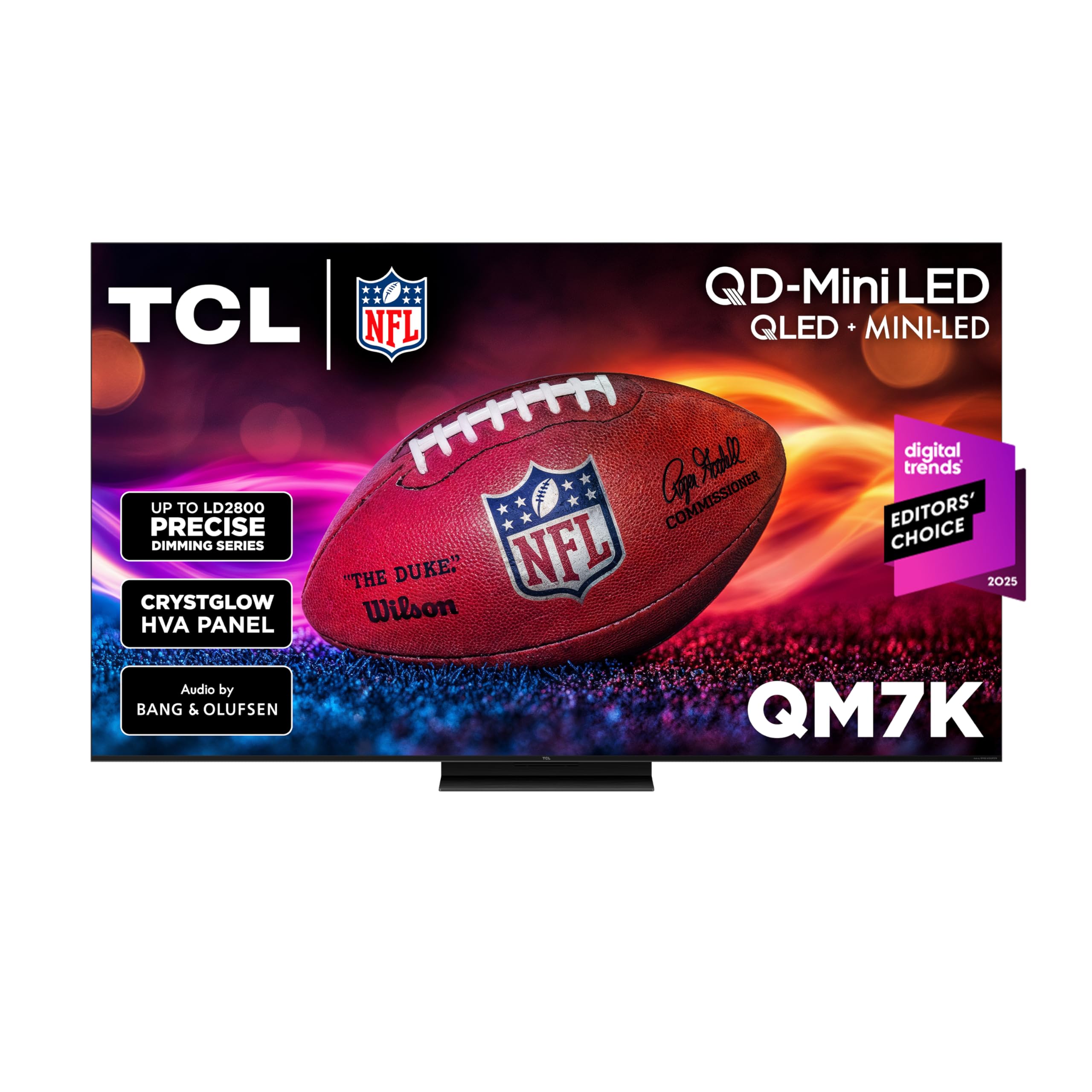
The TCL QM7K series delivers a massive leap in local dimming density — up to 2500 zones on the 55-inch variant — which effectively eliminates the blooming that plagues lower-end Mini-LED panels. The native 120 Hz display with support for up to 144 Hz VRR via AMD FreeSync Premium means your console or PC gets a clean, tear-free signal across a wide frame rate window. The CrystGlow HVA panel also cuts reflections, so daytime gaming sessions don’t wash out blacks.
Powered by TCL’s Halo Control System, the backlight response is nearly instantaneous with a Zero Delay Transient Response that keeps ghosting nearly imperceptible during fast lateral movement in racing or FPS titles. The combination of QD-Mini LED and a bidirectional backlight controller ensures that the 2500 zones switch states faster than typical Mini-LED implementations, improving per-scene contrast in both SDR and HDR gaming.
On the gaming input side, the QM7K offers two full-bandwidth HDMI 2.1 ports at 48 Gbps, supporting 4K 120 Hz with 10-bit HDR on both. The inclusion of ONKYO-branded audio with Dolby Atmos is a nice touch for desk-free setups, though a dedicated soundbar still outperforms the built-in drivers for positional audio. This set earns the top spot because it nails the core gaming specs — zone count, VRR range, and low input lag — at a mid-range price point.
Why it’s great
- Massive local dimming zone count suppresses blooming in HDR gaming.
- Wide 48-144Hz VRR window compatible with both console and PC.
- Anti-reflective CrystGlow panel maintains contrast in bright rooms.
Good to know
- Only two HDMI 2.1 ports; third and fourth are HDMI 2.0.
- Built-in audio is mediocre; a soundbar is strongly recommended.
2. Samsung S90F 42″ OLED

The S90F’s 42-inch QD-OLED panel delivers per-pixel lighting that Mini-LED can’t match, producing pure black levels alongside the highest color volume in this lineup. Samsung’s NQ4 AI Gen3 processor drives Motion Xcelerator up to 4K 144Hz, which means even high-framerate PC games at 144 fps look silky smooth without interpolation artifacts. The 128-neural network AI engine also upscales 1080p console games to 4K with noticeably sharper edges and reduced aliasing.
Gaming-specific handling is refined: the Game Hub dashboard lets you adjust refresh rate overlay, input lag meter, and VRR status at a glance. The S90F supports AMD FreeSync Premium Pro and is G-Sync Compatible, covering both console and PC ecosystems. With a response time under 1 ms (GtG), there’s zero perceptible ghosting in fast side-scrollers or competitive shooters, and the infinite contrast ratio makes HDR highlights pop without any blooming.
At 42 inches, this TV fits comfortably on a desk or in a bedroom setup where larger screens feel overwhelming. The trade-off is brightness: QD-OLED panels still max out below high-end Mini-LEDs in sustained peak luminance, so very bright rooms with direct sunlight may require some light control. For dark-room or controlled ambient gaming, however, this is the most responsive and visually striking OLED in its class.
Why it’s great
- QD-OLED delivers true black with wide color gamut for immersive HDR gaming.
- Sub-1ms response time eliminates motion blur in competitive titles.
- Works with both FreeSync Premium Pro and G-Sync Compatible.
Good to know
- Peak brightness is lower than top-tier Mini-LED in high-ambient-light rooms.
- Anti-reflective coating is delicate; careful cleaning required.
3. Samsung QN70F 85″ Neo QLED

An 85-inch Mini-LED panel with native 144Hz support transforms the living room into a dedicated gaming arena. The QN70F uses Quantum Matrix Technology with precision-controlled Mini LEDs and the NQ4 AI Gen2 processor, which upscales sub-4K content and manages over 20 neural networks for real-time contrast enhancement. Gaming at 144 fps on an 85-inch screen means the image fills nearly the entire field of view, creating a level of immersion that smaller panels simply can’t match.
On the connectivity side, this TV provides four HDMI 2.1 ports, supporting simultaneous console, PC, and soundbar connections without bandwidth sharing. The Motion Xcelerator feature locks the panel to a native 144Hz refresh rate for compatible sources, while the VRR window extends down to 48Hz for stable frame pacing during cutscenes or less demanding titles. The anti-blooming algorithm on the Mini-LED backlight keeps halos around bright HUD elements minimal, which is crucial for readability during bright scene transitions.
The built-in Tizen smart platform includes Samsung Gaming Hub, aggregating cloud gaming services like Xbox Game Pass and GeForce Now. For large-room setups, the AirSlim design keeps the panel close to the wall, and the included solar-powered remote reduces battery waste. This is the pick for anyone who wants a giant, high-refresh screen without sacrificing color accuracy or HDR peak brightness.
Why it’s great
- 85-inch Mini-LED with 144Hz native refresh delivers immersive, smooth gaming.
- Four HDMI 2.1 ports allow full multi-device gaming setups.
- AI upscaling keeps older or lower-resolution content crisp at this massive scale.
Good to know
- Requires significant wall space and a large stand or sturdy mount.
- The NQ4 AI Gen2 is less powerful than the Gen3 found in the S90F.
4. Panasonic Z8 77″ OLED
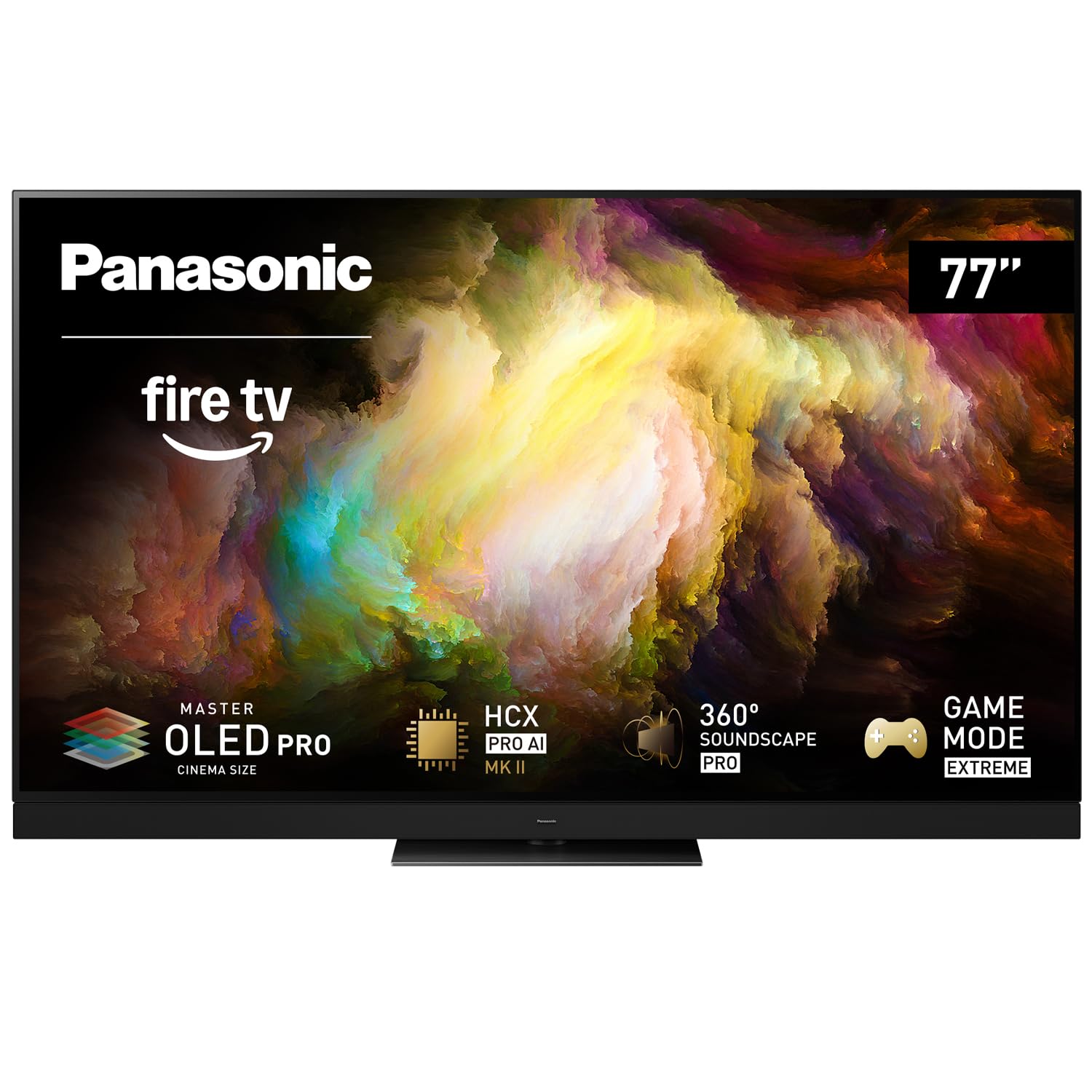
Panasonic’s Master OLED PRO panel on the Z8 pairs a 77-inch screen with a native 144Hz refresh rate, making it one of the largest consumer OLEDs built for high-framerate gaming. The HCX Pro AI Processor MKII drives the Micro-Lens-Array OLED backplane, boosting brightness beyond typical WOLED panels while keeping per-pixel black levels intact. This means high dynamic range content in games like *Cyberpunk 2077* or *Forza Horizon 5* shows neon highlights and shadow detail simultaneously without clipping.
Game Mode Extreme on the Z8 unlocks the full HDMI 2.1 spec: four 48 Gbps ports, VRR with AMD FreeSync Premium and NVIDIA G-SYNC Compatible certification, and a lag figure under 6 ms at 144 Hz. The 360 Soundscape Pro audio system, tuned by Technics, uses upward and side-firing drivers for Dolby Atmos spatial audio that tracks on-screen action — a rare advantage for integrated TV sound since it removes the need for a separate audio system in many setups.
The Z8 supports Dolby Vision IQ and HDR10+ Adaptive, automatically adjusting tone mapping based on room light sensors. This is especially useful for living rooms with variable lighting. The only real concession is weight — at roughly 100 lbs with the stand, a two-person lift and a sturdy TV cabinet are mandatory. For a buyer who wants a 77-inch OLED that runs at 144 Hz without compromise, this is the top contender.
Why it’s great
- 77-inch OLED with true 144Hz panel and four HDMI 2.1 ports.
- 360 Soundscape Pro provides impressive spatial audio without a soundbar.
- Dual HDR format support (Dolby Vision IQ + HDR10+ Adaptive) with ambient sensing.
Good to know
- Very heavy — requires two people and a sturdy stand for safe setup.
- Peak brightness is still below the best Mini-LED panels in very bright rooms.
5. Sony BRAVIA 5 85″ Mini-LED

The BRAVIA 5 leverages Sony’s XR Processor with AI-driven real-time scene analysis to enhance color, contrast, and clarity on an 85-inch Mini-LED panel. The XR Backlight Master Drive controls thousands of individual Mini LEDs to deliver high brightness without blooming, and the panel supports a native 120Hz refresh rate with VRR. For PlayStation 5 owners, exclusive features include Auto HDR Tone Mapping and Auto Genre Picture Mode, which automatically switch the TV to Game Mode when a PS5 is detected and adjust HDR luminance based on the console’s output.
During gameplay, the XR Motion Clarity system adjusts the backlight scan to maintain crispness during fast camera movement without the dimming effect that plagues some older Bravia models. The 85-inch size paired with XR Triluminos Pro means colors stay accurate across the entire screen, with no chromatic shift at the edges. The set also supports Dolby Vision and IMAX Enhanced, making it a dual-purpose movie and gaming display.
Input lag at 120Hz with VRR enabled measures around 8 ms, which is competitive for a large Mini-LED. The built-in Google TV interface with Google Assistant keeps app switching snappy, and the inclusion of ATSC 3.0 tuner future-proofs over-the-air broadcasts. Like most 85-inch TVs, the weight (over 90 lbs) and the need for a deep stand or professional wall mount are the main logistical considerations.
Why it’s great
- Exclusive PS5 integration: Auto HDR Tone Mapping and Auto Genre Picture Mode.
- XR Backlight Master Drive delivers high Mini-LED brightness with minimal blooming.
- Supports Dolby Vision, IMAX Enhanced, and ATSC 3.0.
Good to know
- Only two HDMI 2.1 ports out of four.
- Very heavy — requires professional installation for wall mounting.
6. Sony BRAVIA XR8B 77″ OLED

The XR8B combines Sony’s XR Processor with a 77-inch OLED panel that controls over 8 million self-lit pixels to produce pure black alongside high brightness. The native 120Hz panel supports VRR and ALLM, and the exclusive PS5 features include Auto HDR Tone Mapping and Auto Genre Picture Mode — the same integration seen in the BRAVIA 5. The difference here is OLED: per-pixel lighting means zero blooming even in high-contrast HDR gaming scenes, making dark dungeons in *Elden Ring* or starfields in *Starfield* look exceptionally clean.
Acoustic Surface Audio+ uses the entire screen as a speaker driver, creating directional sound that matches on-screen action. This is a neat trick for gamers who want spatial audio from the TV itself without a soundbar, though purists may still prefer a dedicated setup for deeper bass. The XR OLED Motion technology inserts clean frames to reduce stutter without the soap-opera effect, preserving the 24p film feel in cinematic games while keeping motion smooth.
The Google TV interface handles streaming and gaming modes seamlessly, and the Game Menu aggregates all gaming picture settings in one drop-down. With four HDMI 2.1 ports, you can connect a PS5, Xbox Series X, PC, and soundbar without conflict. The OLED panel requires careful placement away from direct sunlight to prevent potential image retention, but for a dedicated dark-room gaming setup, this is the definitive PS5 pairing.
Why it’s great
- 77-inch OLED with perfect blacks and zero blooming — ideal for HDR gaming.
- Exclusive PS5 Auto HDR Tone Mapping and Auto Genre Picture Mode.
- Acoustic Surface Audio+ creates directional, screen-based sound.
Good to know
- Peak brightness is lower than Mini-LED, so avoid direct sunlight on the panel.
- Built-in audio is good but lacks deep bass without a subwoofer.
7. TCL Q7 QLED 55″ (55Q750G)

The TCL Q7 is an entry-level 120Hz gaming TV that actually delivers a native 120Hz panel — not a motion-enhanced imitation. The Game Accelerator feature extends Variable Refresh Rate support up to 240Hz at reduced resolutions for competitive PC players, while at 4K it locks to a stable 120Hz with AMD FreeSync Premium. The QLED Quantum Dot layer produces over a billion colors, and Full Array Pro Local Dimming with over 200 zones keeps blooming in check far better than edge-lit rivals at this price tier.
Input lag in Game Mode at 120Hz is under 7 ms, making it responsive enough for fast-twitch shooters like *Valorant* or *Call of Duty*. The MEMC frame insertion system, combined with Motion Rate 480, reduces blur on 60 fps content, though purists may disable it for lower latency. For a 55-inch set aimed at gamers on a tighter budget, the Q7 offers the core requirements — native 120Hz, VRR, and low input lag — without inflating the cost with premium extras.
The Google TV interface handles streaming and gaming hub functions, and the included voice remote with Google Assistant works for quick app launching. Build quality is solid, with a thin bezel design that keeps the focus on the screen. The main downside is the lower dimming zone count compared to the QM7K series, which means slightly more noticeable blooming in high-contrast HDR scenes, but at this price point, it’s a fair trade-off.
Why it’s great
- Native 120Hz panel with Game Accelerator VRR up to 240Hz.
- Full Array Pro Local Dimming with over 200 zones for its class.
- Very low input lag at 120Hz — excellent for competitive gaming.
Good to know
- Only two HDMI 2.1 ports.
- Dimming zone count is lower than Mini-LED alternatives.
8. Hisense U6 65″ Mini-LED
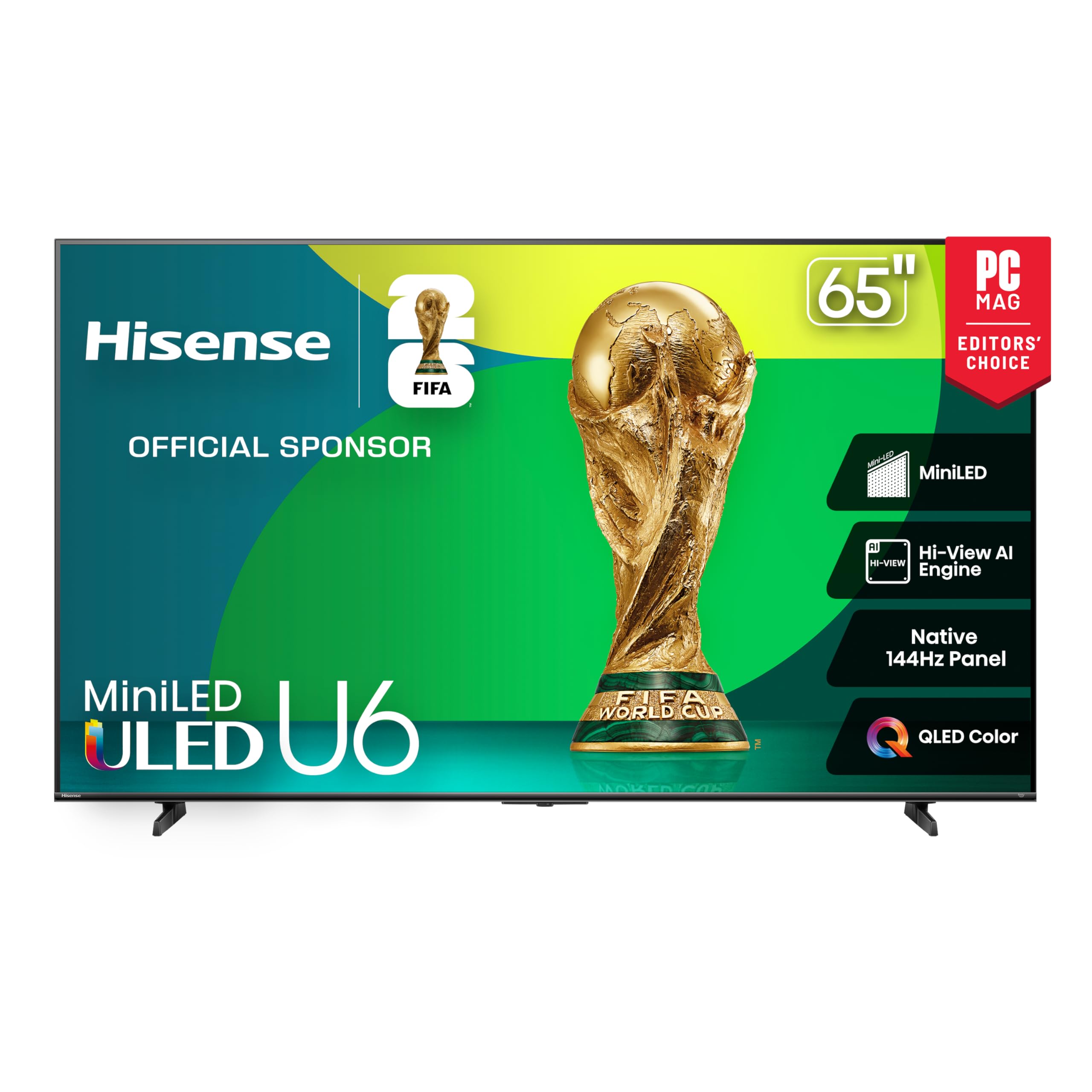
Hisense packs a native 144Hz panel, Mini-LED backlight, and QLED color into a 65-inch package at a price that undercuts most competitors. With up to 1000 nits peak brightness and up to 600 local dimming zones, the U6 delivers strong HDR performance for gaming — bright specular highlights in *Destiny 2* or *Horizon Forbidden West* punch through without the washed-out look common on budget 60Hz sets. The Hi-View AI Engine processes picture and sound in real time to optimize for gaming scenarios.
Game Mode Pro supports VRR from 48Hz to 144Hz with AMD FreeSync Premium, covering both high-refresh console modes and PC gaming. The built-in subwoofer gives the audio system more low-end presence than typical TV speakers, which is a real advantage for gamers who don’t use a separate soundbar. The Fire TV interface with Alexa built-in feels responsive, and the voice assistant can launch apps, adjust volume, and control game settings hands-free.
The trade-off for the aggressive pricing is in build refinement — the bezel is slightly thicker than premium rivals, and the plastic rear panel feels less premium. Additionally, only two of the four HDMI ports support the full 2.1 spec. However, for a 65-inch Mini-LED that runs at 144Hz native and hits 1000 nits, the value proposition is tough to beat.
Why it’s great
- Native 144Hz panel with 600 Mini-LED zones at a surprising price point.
- Up to 1000 nits peak brightness delivers strong HDR punch for gaming.
- Built-in subwoofer provides better bass than standard TV speakers.
Good to know
- Only two HDMI 2.1 ports out of four.
- Build materials feel less premium than higher-end models.
9. Samsung Q8F 55″ QLED

The Samsung Q8F combines a 55-inch QLED panel with a native 144Hz refresh rate and the brand’s Q4 AI Processor for real-time picture optimization. The result is sharp, color-accurate gaming visuals with 100% Color Volume — meaning colors stay true even at peak brightness, unlike some QLEDs that lose saturation in bright HDR windows. The AirSlim design keeps the profile under 1 inch, making it one of the thinnest high-refresh options for wall-mounting.
Motion Xcelerator at 144Hz locks in smooth frame pacing for compatible games, and the VRR support eliminates tearing during frame rate dips. The integrated Tizen platform includes Samsung Gaming Hub, which aggregates cloud streaming and console games into a single interface. Samsung Vision AI adjusts picture settings based on the type of content detected, switching automatically to Game Mode with low latency when a console signal is detected.
The built-in speakers are decent for casual use, but the real value here is the combination of high refresh, AI upscaling, and the brand’s excellent motion handling for sports and fast-paced gaming. The rechargeable solar remote is a practical bonus. The main limitation is the standard 60Hz panel, but the native 144Hz capability for gaming ensures future-proofing.
Why it’s great
- Native 144Hz panel with QLED 100% Color Volume for vibrant gaming.
- Q4 AI Processor upscales content and optimizes HDR in real time.
- Ultra-slim AirSlim design is ideal for flush wall-mounting.
Good to know
- Only two HDMI 2.1 ports.
- No Dolby Vision support; relies on Samsung’s HDR10+ standard.
10. Toshiba Z670R 55″ Mini-LED
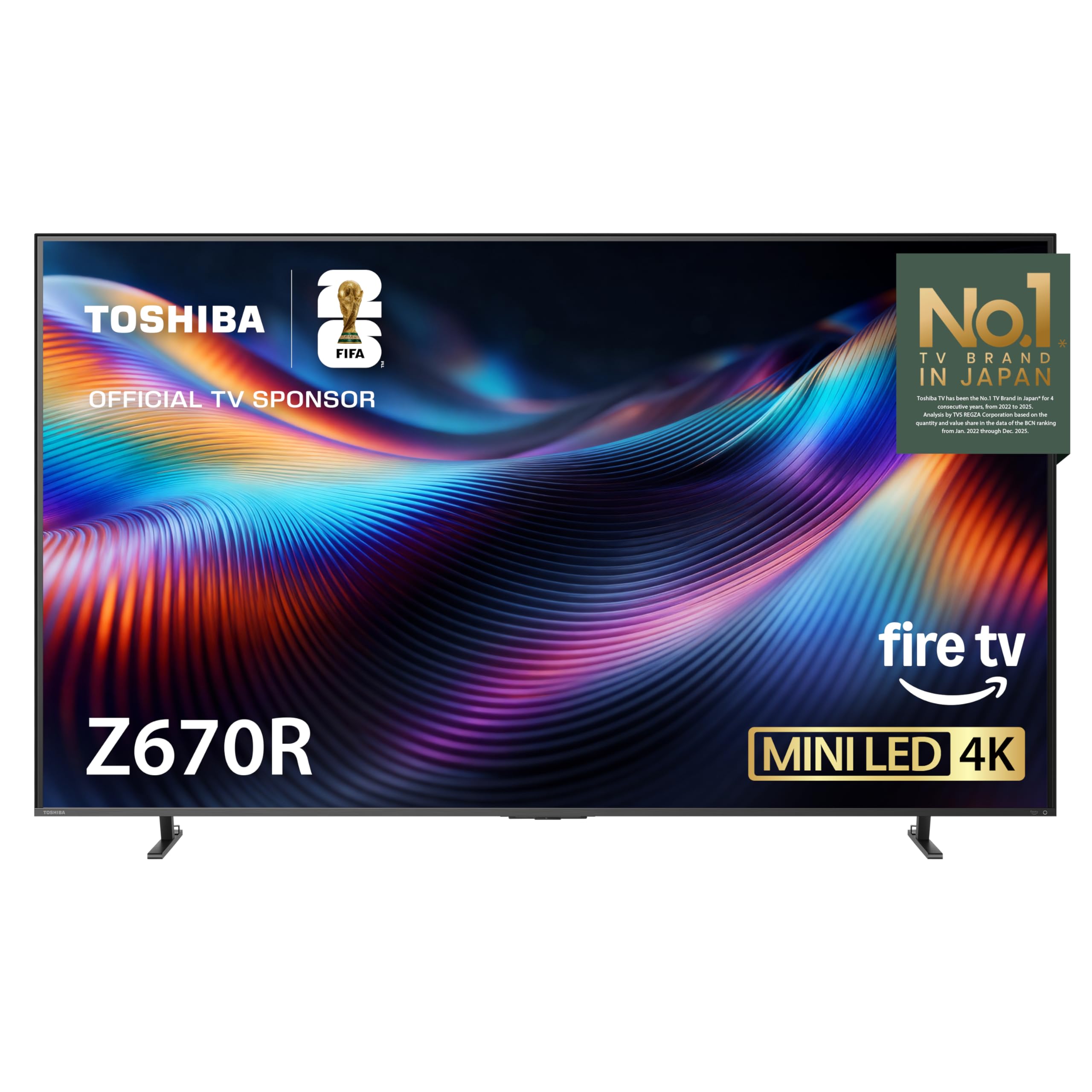
Toshiba returns to the gaming TV conversation with the Z670R, a 55-inch Mini-LED QLED that boasts a native 144Hz panel and the REGZA Engine ZRi Gen3 — an AI processor fine-tuned by Toshiba’s Japanese engineers. The Full Array Local Dimming on this Mini-LED panel delivers deep blacks and bright highlights with good uniformity, and the AI Light Sensor Pro automatically adjusts brightness and color temperature based on room conditions, preserving black levels during night gaming sessions.
Game Mode Pro includes AMD FreeSync Premium and VRR support up to 144Hz, with ALLM ensuring the TV drops into low-latency mode the instant a console signal is detected. The REGZA Power Audio Pro adds a bass woofer, providing noticeably more low-end than typical integrated TV speakers — explosions in *Battlefield 2042* have weight, and footsteps in *Apex Legends* feel more spatial. The Fire TV interface with Alexa feels snappy and offers good app selection.
The Z670R also supports Dolby Vision IQ and HDR10+ Adaptive, covering both major HDR formats with ambient-light-aware tone mapping. The design is minimalist with clean lines, reflecting the “Designed in Japan” aesthetic. The main drawback is the relatively limited Review volume — early owners are positive, but the model is new enough that long-term reliability data is still building.
Why it’s great
- Native 144Hz panel with Full Array Mini-LED local dimming.
- REGZA Engine ZRi provides AI-driven picture processing and upscaling.
- Built-in bass woofer improves audio depth for immersive gaming.
Good to know
- Newer model with a smaller available review pool for long-term validation.
- Bluetooth version is 5.0 instead of the newer 5.3/5.4 found on competitors.
11. TCL QM7K 65″ (65QM7K)
The 65-inch variant of the TCL QM7K series shares the same core technology as its 55-inch sibling but scales the local dimming zones to maintain high density across the larger area. With up to 2500 zones on a 65-inch screen, the backlight control is refined enough to make blooming virtually invisible in standard HDR game scenes. The native 120Hz panel supports up to 144Hz VRR, and the CrystGlow HVA anti-reflective coating is especially welcome on the larger size, where ambient light reflections become more distracting.
In practice, the Halo Control System’s bidirectional 23-bit backlight controller gives the QM7K extremely fast zone switching — noticeable when the camera quickly pans from a bright skybox into a dark cave interior in games like *The Last of Us Part I*. The QD-Mini LED panel also produces high color volume, with DCI-P3 coverage exceeding 95%, which makes HDR gradients look smooth rather than banded. Input lag at 144Hz with VRR enabled sits around 6-7 ms, well within the competitive gaming sweet spot.
Like its smaller sibling, the 65QM7K only provides two full-bandwidth HDMI 2.1 ports, which may be a constraint for multi-console households. The ONKYO audio is passable for casual play but lacks the clarity and low-end for serious sound immersion — a soundbar is a practical upgrade. For those who want the high zone count and gaming performance of the QM7K series in a larger format, the 65-inch version is a natural upgrade path.
Why it’s great
- 2500 local dimming zones on a 65-inch panel provide near-bloom-free HDR gaming.
- Fast backlight response reduces visible ghosting in high-speed camera movements.
- Anti-reflective coating maintains screen clarity in bright rooms.
Good to know
- Only two HDMI 2.1 ports limit multi-console connectivity.
- Built-in audio is mediocre; a separate sound system improves immersion.
FAQ
Do I need HDMI 2.1 for 4K 120 Hz gaming?
What is the difference between native 120 Hz and motion rate 120 Hz?
Can a 120 Hz gaming TV work with a PlayStation 5 or Xbox Series X?
Is OLED or Mini-LED better for a 120 Hz gaming TV?
What does VRR do for a 120 Hz gaming TV?
Final Thoughts: The Verdict
For most gamers, the best 120 hz gaming tv is the TCL QM7K 55″ because it combines a high-zone Mini-LED backlight with a native 144Hz panel and wide VRR range at a price that sits comfortably in the mid-range. If you want per-pixel perfect black and instant response for competitive play, grab the Samsung S90F 42″ OLED. And for a massive 85-inch screen that handles both console gaming and PS5-exclusive features flawlessly, nothing beats the Sony BRAVIA 5 85″.