
Our readers keep the lights on and my morning glass full of iced black tea. As an Amazon Associate, I earn from qualifying purchases.
Specs are compiled from manufacturer listings and verified buyer reviews and can change over time — please confirm the key details on the product page before buying.
You want a 1200W power supply that absorbs a graphics card’s power spikes instead of shutting down mid-game. In the ATX 3.1 era (the current PSU standard for modern builds), that mostly depends on one connector decision: does the box ship with a native 12V-2×6 cable (the updated 16-pin plug that feeds modern graphics cards)? And does the unit actually survive the short power spikes those cards throw at it? The picks below all meet the ATX 3.1 standard and all sit at 1200W or higher, so the real sorting depends on noise, cable quality, and how much headroom you want for a future card.
I’m Min — the founder and writer behind Gadgets Feed. This guide is built by comparing the manufacturers’ published specifications and the patterns across verified customer reviews, so you get each pick’s real strengths and trade-offs instead of marketing spin.
One honest note before the list: this roundup uses flexible matching for 1200W-and-up ATX 3.1 units, so a pick or two runs slightly above the exact wattage you typed in — same job, a little more headroom. Every option here is a true desktop PSU, not an adapter or a power station. If you want the short version, the 1200w psu with 3.1 that earns top spot pairs a Platinum efficiency rating with a native 16-pin cable and near-silent fan-off mode.
Our Picks at a Glance

How To Choose The Best 1200W PSU With 3.1
Your graphics card is the loudest demand in the case, and it asks for power in sudden gulps rather than a steady draw. That is the whole reason ATX 3.1 exists as a separate badge. A unit that meets it is built to soak up those gulps without tripping, which is why the standard matters more than a bigger wattage number slapped on the box.
Start with the connector, not the wattage
ATX 3.1 units ship a 12V-2×6 cable — the revised 16-pin plug for current-generation NVIDIA cards — and most list it as “native,” meaning it comes straight from the power supply rather than through an adapter. A native cable means one less connection point in a high-current path, so there is less to go wrong. Check the listing for that cable before you check anything else, because a card that needs it cannot run properly without it.
Read the efficiency badge as a heat and noise spec
An 80 Plus Gold rating and an 80 Plus Platinum rating both mean the unit wastes little electricity as heat. Less wasted heat means the fan spins slower, which is the difference between a quiet build and a distracting one. Platinum units generally run cooler than Gold at the same load, so if your PC sits on the desk beside you, that gap is worth weighing.
Modular cabling keeps airflow intact
A fully modular supply lets you attach only the cables your parts need. The unused bundle stays in the box instead of coiled inside the case, which frees airflow and makes the build easier to tidy. On a 1200W unit the cable set is large, so modularity is not a luxury here — it is basic housekeeping.
Give yourself a little headroom
Modern cards can pull well beyond their rated draw for a fraction of a second, and a PSU with spike tolerance absorbs that without a shutdown. Leaving some wattage in reserve keeps the fan in its quiet zone and gives you room for a future upgrade. You do not need to max out the number, but you do not want to sit right at the edge either.
Quick Comparison
| Model | Best For | Wattage | Efficiency | Fan Size | Amazon |
|---|---|---|---|---|---|
| Corsair HX1500i (2025)★ Best Overall | Big builds and dual-GPU headroom | 1500 W | Cybenetics Platinum | 14 cm | Amazon |
| be quiet! Pure Power 12 M 1200WBest Value | Quiet builds on a budget | 1200 W | 80 Plus Gold | 12 cm | Amazon |
| Lian Li SX1200PCompact Pick | Tight cases that need compact size | 1200 W | 80 Plus Platinum | 12 cm | Amazon |
| Super Flower Leadex VII XP 1200W | White builds and flexible cabling | 1200 W | 80 Plus Platinum | — | Amazon |
| Lian Li Edge Gold 1200W | Easy cable routing in big cases | 1200 W | 80 Plus Gold | 12 cm | Amazon |
| ASUS TUF Gaming 1200W Gold | Dusty rooms and long-term wear | 1200 W | 80 Plus Gold | — | Amazon |
| Corsair HX1200i (2025) | Software monitoring and fan curves | 1200 W | Cybenetics Platinum | 14 cm | Amazon |
| Seasonic VERTEX PX-1200 | Long warranty coverage | 1200 W | 80 Plus Platinum | 14 cm | Amazon |
| be quiet! Dark Power Pro 13 1300W | Titanium-tier efficiency seekers | 1300 W | 80 Plus Titanium | — | Amazon |
In‑Depth Reviews
1. Corsair HX1500i (2025) ATX 3.1 PCIe 5.1 Ready 1500W Power Supply – Black
Our pick — 4.5+★ from 200+ verified ratings; the strongest balance of quality and price.
The one that makes a graphics card’s worst power spikes look like a light breeze.
If you are running the biggest card you can afford and you do not want to think about power again, this is the pick. It is rated at 1500 W, which is more than most systems will ever pull, and buyers report it can deliver up to 430 watts per card. You get a native 12V-2×6 cable in the box, so the 16-pin run goes straight from the unit to your GPU with no adapter in between. At 4.5+ stars across 200+ ratings, it is also the crowd favorite of this group.
Your games stay smooth because the power delivery is steady and stays put under a heavy gaming load. You also get silence: a 140mm fluid dynamic bearing fan (a fan that rides on a thin film of fluid instead of a sleeve, so it stays quiet and wears slowly) shuts off completely at low and medium loads. That means a silent PC at idle and a fan that stays in its low-speed zone under a gaming load. The fully modular cabling (every cable detaches, so you plug in only what you need) keeps the spare bundle out of your case. And iCUE software (Corsair’s own control app) lets you shape the fan curve or switch between single-rail and multi-rail overcurrent protection (two ways of cutting power when a surge hits).
The trade-off is size and weight: this is a 5.3-pound unit at 7.87 x 5.91 x 3.39 inches, so check its fit in a small case before you commit. The cable set is generous, but the one recurring note is that a power cord is not always in the box — keep a spare, or check the listing carefully.
What Earns It Top Spot
- 1500 W of output with a native 12V-2×6 cable — room for a second or future card without an adapter
- 140mm fluid dynamic bearing fan with zero RPM mode, so it goes fully silent at low and medium loads
- Fully modular cabling and iCUE software for custom fan curves and on-the-fly rail switching
- Owners mention steady, clean power that holds up under heavy gaming loads
Where It Asks More Of You
- At 5.3 pounds and 7.87 x 5.91 x 3.39 inches, it needs clearance in compact cases
- Cables get mixed feedback — plenty of them, but no power cord in every box
- You are paying for headroom most single-card builds will not fully use
Reach for this if: you want the most power on the list, a native 16-pin cable, and a fan that disappears at idle.
Look elsewhere if: your case is tight on length or you would rather spend on efficiency than extra watts.
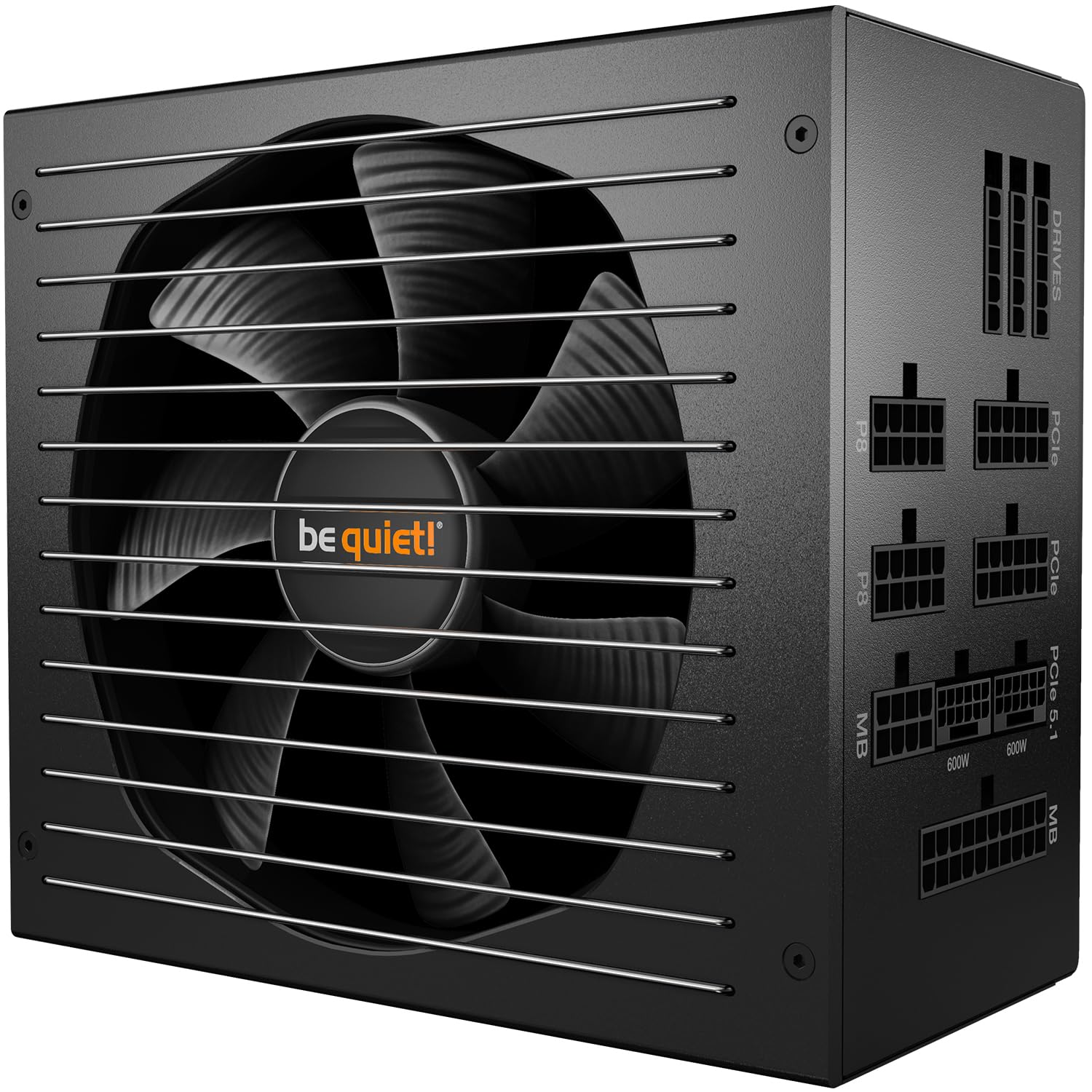
2. be quiet! Pure Power 12 M 1200W, ATX 3.1, Fully Modular PSU, 80+ Gold
Proof that a 1200W build does not have to sound like a server room to stay stable.
Quiet is the pitch, and it holds up. That 120mm be quiet! fan is temperature-controlled, so it speeds up only when the load calls for it, and the sound stays low even in a demanding game. A single 12V-2×6 600W connector plus four PCIe 6+2 connectors (the older eight-pin graphics plugs) means current and next-generation cards both have a home. What the review pages keep coming back to is the overall build quality, and the dual 12V rails add a layer of stability that shows up on long sessions.
The numbers back the value story: up to 93.0% efficiency, which means little electricity turns into heat and your fan has less reason to spin. It also handles transient spikes up to 2000W, so a sudden gulp from your GPU does not trip the unit. Compare that with the compact Lian Li SX1200P below, which trades some of this quiet headroom for a shorter 140mm body. Here you get a full 7 pounds of heatsink and a 10-year warranty, which tells you be quiet! expects it to outlast a couple of builds.
The one honest catch is cable length — the necessary cables are all present, but the power cord runs short for some cases, so plan the routing. A handful of buyers also mention durability as something they are watching, though nothing beyond a normal build-quality conversation. For a Gold-rated 1200W unit at this position, it is a strong middle-ground choice.
The quiet-first build: temperature-controlled 120mm fan and up to 93.0% efficiency keep heat and noise down, while 1200 W continuous and 2000W spike tolerance cover a high-end card.
Check before you buy: the short power cord is the recurring gripe, so measure the run from your PSU bay to the wall before you commit.
Best for: a noise-sensitive build that still wants 1200 W and a native 16-pin cable without paying premium-tier money.
Think twice if: your case puts the wall outlet a long way from the PSU bay.
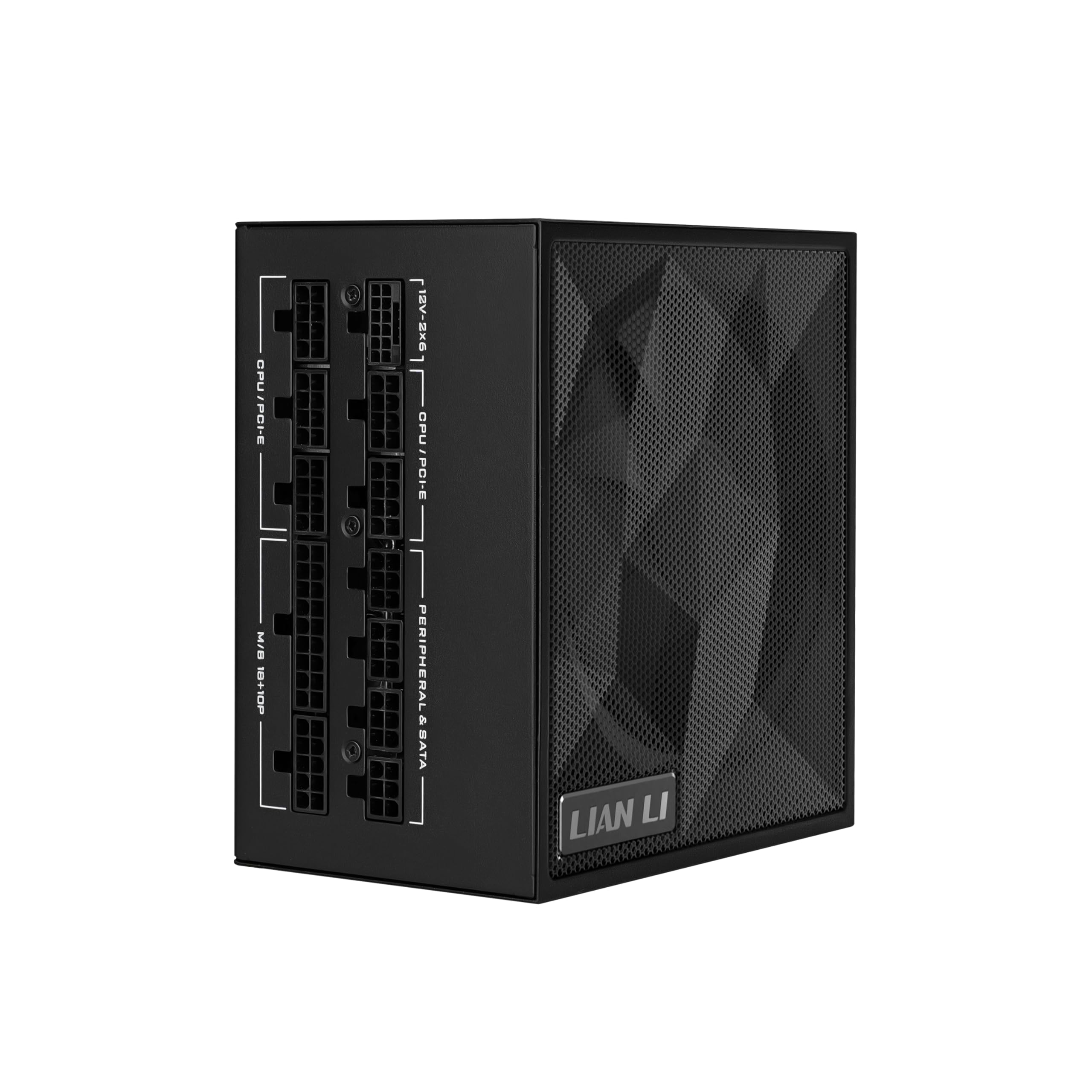
3. Lian Li SX1200P Platinum Compact ATX PSU 1200W-ATX 3.1-Black-SX1200P.B
A 140mm-deep body that slots into small cases other 1200W units refuse to enter.
Small case, big card, tight clearance — that is the buyer this one is for. Lian Li builds it into a compact ATX body of 150 x 86 x 140 mm, which is shorter front to back than most units in this class. That extra room matters when your case is already fighting a long GPU for space. It meets ATX 3.1 and PCIe 5.1, and ships with a 12V-2×6 cable for current cards.
Efficiency is where it earns its keep: 80 Plus Platinum certification, with up to 92% efficiency at 50% load, so roughly half the electricity drawn becomes useful power rather than heat. The 120mm fluid dynamic bearing fan stays off entirely at or below 40% load, so a light gaming session or an idle desktop is silent. Inside, the unit uses 100% Japanese 105°C-rated capacitors (parts rated to survive high internal temperatures), which is the kind of detail that tends to show up in long-term reliability.
The flexible braided cables are genuinely useful in a cramped build — they bend where stiff ribbons would fight you. The caveat is that this is a newer, leaner listing, so there is less buyer history to lean on than the Corsair above. If you need the shortest 1200W body you can find and a Platinum badge to match, it delivers both.
Why It Fits Small Builds
- Compact ATX body of 150 x 86 x 140 mm leaves room for long graphics cards
- 80 Plus Platinum efficiency up to 92% at 50% load means less heat inside a sealed case
- Fanless mode at or below 40% load keeps light sessions silent
- Flexible braided cables and Japanese 105°C-rated capacitors
The Honest Watch-Outs
- Fewer ratings than the more established picks, so long-term ownership feedback is thinner
- Platinum efficiency costs more than a Gold unit for similar wattage
Pick this one when: your case is small and every millimeter counts, but you still want Platinum efficiency and a native 16-pin cable.
skip it if: you would rather lean on a longer track record than a compact form factor.
4. Super Flower Leadex VII XP 1200W Power Supply, ATX 3.1 PCIe 5.1, White

A white 1200W unit that keeps its voltage lines tighter than most of the field.
A white case with a black power supply looks like a mistake, and this is the fix. The Leadex VII XP ships in white with all-ribbon modular cables, so the inside of a white build stays clean. The efficiency numbers are strong for the class: 80 Plus Platinum, rated at 90% / 92% / 89% at 20% / 50% / 100% load, which keeps heat low and the fan quiet. What wins people over is build quality — solid hardware with pre-sleeved cables that arrive ready to route.
Where it stands out from the pack is voltage regulation: ±0.5% on the 12 V, 5 V and 3.3 V rails. Tight regulation means your graphics card sees a steady supply even when the load swings, which is exactly what stops instability under a heavy game. The 12V-2×6 cable is native and rated for RTX 40 and 50 series cards, and the fully modular design keeps the unused cables in the box.
Weight is a real factor here: 4.6 pounds, which is 3.6 pounds lighter than the Lian Li Edge Gold in this list. That is easier on a case’s mounting bracket and easier to handle during the build. The caveat is the smaller install base — this is a newer listing, so there is less owner history than the Corsair or be quiet! picks. If a clean white interior and ±0.5% voltage regulation matter to you, it is a sound choice.
Voltage under control: ±0.5% regulation across the three main rails keeps a high-end card fed steadily, and the 80 Plus Platinum rating holds heat down at 90% / 92% / 89% efficiency.
The catch: a newer listing means fewer owners to learn from, and at 4.6 pounds it is light — good for handling, less mass for passive cooling.
Suits you if: you are building in white, want ribbon cables that look the part, and care about tight voltage regulation.
Look elsewhere if: you want the longest possible owner track record before you spend.
5. LIAN LI Edge Gold 1200W ATX 3.1 PSU, 80 Plus Gold, Black (EG1200G.BH)

An L-shaped body that turns cable routing from a chore into a five-minute job.
This is the highest-scoring pick in the entire group at 4.5+ stars, and the reason is practical rather than flashy. The Edge Gold uses an L-shaped body with side-mounted connectors, so cables exit toward the back of the case instead of straight up into your GPU or drive cage. In a large build with a thick graphics card, that can mean the difference between a clean run and a fight. It is ATX 3.1 compliant and ships with a native 12V-2×6 cable.
What wins people over is performance under real load — this unit runs a 9950X3D and a 5090 without complaint, which is about as demanding a combo as a 1200W class gets. The dual 8-pin to 12VHPWR adapters add compatibility with both RTX 40 and 50 series cards, so you are covered whichever generation you own. The 120mm fluid dynamic bearing fan keeps it quiet, and the magnetic dust filter on the front pops off for cleaning without tools.
That is a lot to hang on a mounting bracket, so a case with a solid PSU shroud is welcome. Efficiency is 80 Plus Gold and Cybenetics Gold, so it runs a touch hotter than the Platinum picks in this list. For a large build where cable access matters, the L-shape earns its keep.
Why The Builder Crowd Likes It
- L-shaped body with side-mounted connectors makes routing easier in large cases
- Dual 8-pin to 12VHPWR adapters cover RTX 40 and 50 series cards
- Runs a 9950X3D and a 5090 without issues, according to owners
- Magnetic dust filter pops off for tool-free cleaning
What To Weigh First
- 8.2 pounds is heavy and can stress a light mounting bracket
- 80 Plus Gold only — the Platinum units here run cooler under load
The right call for: a large build where you want clean cable runs and a proven high-end GPU pairing.
Not for: a case with a flimsy bracket that cannot take 8.2 pounds of power supply.
6. ASUS TUF Gaming 1200W Gold Power Supply, ATX 3.1 Compatible Fully Modular, 80+ Gold

A power supply that treats dust, moisture and heat as things to survive, not ignore.
If your PC lives in a workshop, a humid room or a dusty apartment, the TUF’s protective PCB coating is the feature that matters. It shields the circuit board against moisture, dust and extreme temperatures — the three things that quietly shorten a power supply’s life. The fan uses dual ball bearings, which ASUS rates at up to twice the lifespan of sleeve-bearing designs, so it should keep spinning long after cheaper fans slow down.
Under the hood, Japanese capacitors and other premium parts carry the 80 Plus Gold rating, and the ATX 3.1 compliance means the bundled 16-pin PCIe cable can pipe up to 600W to a Gen 5.0 graphics card. Performance is what owners bring up most — plenty of power with no fuss, and the cables are easy to manage. It is fully modular and comes with a 10-year warranty, which is a long runway for a unit you plan to keep.
Value is the one mixed note: some buyers see it as a good deal and others find it a touch expensive for a Gold-rated unit. At 5.9 pounds it is mid-weight, so it hangs comfortably in most cases. For a build in a harsher environment, the extra protection is worth the premium.
Built for rough rooms: a PCB coating blocks moisture, dust and temperature swings, while dual ball bearings are rated at up to twice the lifespan of sleeve designs.
Worth knowing: it is 80 Plus Gold, not Platinum, and value splits buyers — some see a bargain, others see a premium for the Gold tier.
Fits best: a PC in a dusty, humid or workshop setting where long-term survival beats a showier efficiency badge.
Not ideal if: you are chasing maximum efficiency and expect Platinum for your money.
7. Corsair HX1200i (2025) ATX 3.1 PCIe 5.1 Ready 1200W Power Supply – Black

The 1200W Corsair that lets you watch your power draw and tune the fan yourself.
If you like seeing what your system is doing, this is the one. CORSAIR’s iCUE software lets you create custom fan curves, monitor power settings, and toggle between single-rail and multi-rail overcurrent protection on the fly. That is a level of control the be quiet! and Lian Li picks above do not offer. It is 1200 W, fully modular, and ships with a native 12V-2×6 cable for current cards.
What wins people over is power quality — steady, strong delivery that has no trouble feeding the most demanding GPUs. The 140mm fluid dynamic bearing fan stays off entirely at low and medium loads, so idle is near-silent, and the Cybenetics Platinum rating keeps heat down when you do load it up. It shares the same 14cm fan size as the 1500W HX1500i above, but at 1200 W it covers a single-card build with room to spare.
The cable set is generous — a full range of interconnect cables, enough to support even the most powerful GPUs. Value splits buyers: the hardware is strong, but the premium price is not for everyone. At 5.3 pounds it sits in the middle of this group for weight. For a build you want to tune through iCUE fan curves, it is a fine fit.
Software control that pays off: iCUE fan curves and live rail switching let you tune noise and protection, and the zero RPM mode keeps idle silent.
What it costs you: the price is on the high side, and value splits buyers — you are paying for the software control most builds will not use.
Go for it if: you want to see and shape your power draw, and near-silent idle matters to you.
Pass if: you will never open the tuning software and prefer a simpler, lower-cost unit.
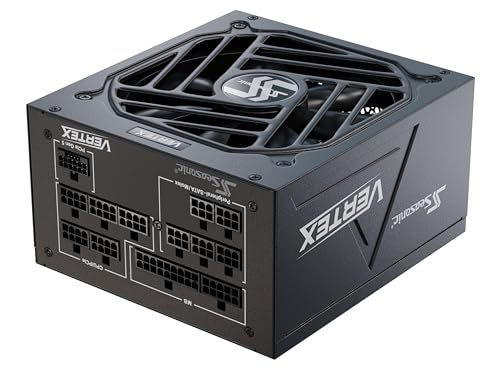
8. Seasonic VERTEX PX-1200 1200W Power Supply ATX 3.1 & PCIe 5.1 Ready
A Platinum unit backed by the longest warranty on this list — twelve years.
Long-term ownership is the pitch here, and the 12-year warranty is the proof. Seasonic also certifies the VERTEX PX-1200 at 80 Plus Platinum and Cybenetics Platinum A, so it runs cool and quiet under load. The 135mm fluid dynamic bearing fan spins slowly when it can, and Seasonic’s Hybrid Silent Fan Control keeps it in a quiet mode at lower loads. It is fully modular and ships with a native 12V-2×6 cable for RTX 5090 and AMD RX 9000 cards.
The cable set earns praise — buyers like that it includes cable combs for tidier runs, and the fully modular design keeps the spare bundle out of your case. Japanese capacitors back up the Platinum rating, and the ATX 3.1 compliance means the 16-pin cable is ready for current cards. At 2.7 kg it is heavy, which is what you expect from a fully built Platinum unit.
Reliability is the honest watch-out: some units work exactly as advertised, while a few customers note failures after 50 days of use. That is a mixed picture, not a verdict — the warranty is there precisely for the rare bad unit. If a long warranty and Platinum efficiency matter more to you than a bigger install base, this is a fair pick.
The long-game play: a 12-year warranty, 80 Plus and Cybenetics Platinum ratings, and a 135mm FDB fan with Hybrid Silent Fan Control.
The honest note: reliability splits buyers — most units run as advertised, but a few report failures after 50 days, which is exactly what the warranty covers.
Worth choosing for: buyers who plan to keep the same PSU across two or three builds and want the longest warranty coverage.
Hesitate if: a mixed reliability picture makes you want a larger owner base to lean on.
9. be quiet! Dark Power Pro 13 1300W Power Supply, 80+ and Cybenetics Titanium

The efficiency champion here, with a rail-switch key built for overclockers.
Titanium is the top efficiency tier, and this unit earns it with an 80 Plus Titanium rating and up to 94.4% efficiency. That means very little electricity turns into waste heat, which is why owners describe it as very quiet under load. It is rated at 1300 W, so it sits a step above the 1200W picks here, and the overclocking key switches between six 12V rails and one massive 12V rail. That rail control is for builders who push a card beyond its normal limits.
The digital full bridge and LLC technology give it world-class signal stability, and it handles power excursions up to double its rated power without complaint. That is exactly the sort of spike tolerance you want from a big card. Native 12VHPWR integration plus PCIe 6+2-pin connectors cover next-gen and current-gen GPUs, and the ATX 3.0 platform keeps it compatible with modern boards.
The honest catch: build quality and durability get a mixed picture from owners, with some reporting issues with the cables and a few saying units lasted only about six months. That is a real concern for a top-tier price, and it is the reason this unit sits at the bottom of this list rather than the top. If Titanium efficiency and overclocking control are what you are after, it is a serious piece of hardware — just buy it with the warranty in mind.
Where The Titanium Badge Shows
- 80 Plus Titanium with up to 94.4% efficiency — the highest tier on this list
- Overclocking key switches between six 12V rails and one 12V rail
- Handles power excursions up to double its rated power
- Native 12VHPWR plus PCIe 6+2-pin connectors for both GPU generations
What Gives Pause
- Mixed build-quality and durability feedback, with a few units failing early
- Titanium-tier pricing for a 1300 W unit you may not fully use
The fit for: overclockers who want the top efficiency tier and rail control, and who will lean on the warranty.
Not the fit for: a first build where predictable long-term reliability matters more than a Titanium badge.
Understanding the Specs
ATX 3.1 and the 12V-2×6 Connector
ATX 3.1 is the current power-supply standard, and its headline feature is the 12V-2×6 cable — a revised 16-pin plug for modern graphics cards. A “native” cable runs straight from the power supply to the GPU, with no adapter in between, so there is one less high-current connection to worry about. When you check a listing, look for that native cable before anything else, because a card that needs it will not run properly without it.
80 Plus and Cybenetics Efficiency
An efficiency rating tells you how much electricity becomes useful power instead of heat. Gold sits below Platinum, which sits below Titanium, and each step means less waste heat and a quieter fan. Cybenetics is a separate testing body that rates efficiency and noise, so a unit with both badges is giving you two independent views of the same thing. Less heat is the real win here, because it keeps the fan slow and the case cool.
Transient Spikes and Rail Switching
Modern graphics cards pull short bursts of power far above their rated draw. A PSU built for ATX 3.1 is designed to absorb those bursts without shutting down. Some units also let you switch between single-rail and multi-rail setups — a single huge rail is simpler for most builds, while multiple smaller rails give overclockers finer control. For everyday use, a single rail is the easier choice.
Fan Size, Bearing Type and Zero RPM
A bigger fan moves the same air at a lower speed, so a 140mm fan is generally quieter than a 120mm one. Fluid dynamic bearings and dual ball bearings both wear more slowly than basic sleeve bearings, which is why they show up on long-warranty units. Zero RPM mode shuts the fan off entirely at low and medium loads, so an idle desktop makes no noise at all. Together these three details decide how loud your build actually is.
FAQ
Will a 1200W ATX 3.1 power supply work with an RTX 5090 or 4090?
What is the difference between 12V-2×6 and 12VHPWR cables?
Is 1200W enough, or should I buy a 1500W unit?
Do I need a Platinum or Titanium unit, or is Gold fine?
How long should a 1200W power supply last?
Will a 1200W PSU fit in my case?
Is a fully modular PSU worth it for a 1200W build?
What does zero RPM fan mode actually do?
Can I use a 1300W unit in place of a 1200W one?
Which 1200W PSU is quietest under a heavy gaming load?
Final Thoughts: The Verdict
For most builders, the 1200w psu with 3.1 winner is the Corsair HX1500i. It gives you 1500 W, a native 12V-2×6 cable, and a 140mm fan that shuts off entirely at low and medium loads. If quiet and value matter more than raw wattage, the be quiet! Pure Power 12 M runs up to 93.0% efficiency (how much wall power becomes usable power) with a temperature-controlled 120mm fan, and it handles spikes up to 2000W. And for a small case that refuses to fit a full-size unit, the Lian Li SX1200P is the one to reach for, thanks to its compact 150 x 86 x 140 mm body and Platinum efficiency (a high efficiency rating that wastes less power as heat).
Before you click buy, one honest nudge: the Corsair HX1500i holds the highest score in this group at 4.5+ stars across 200+ ratings, and its native 16-pin cable is the detail that keeps a modern card fed without an adapter. Everything on this list meets ATX 3.1 and sits at 1200W or higher, so the choice really depends on noise, cable access, and how much headroom you want. Pick the one whose trade-off you can live with.
How We Picked
We do not accept paid placement. Every pick is matched to a real buyer and a real use-case; we do not hands-on test units.
Sources & Methodology
Specifications: manufacturer listings and product documentation. Review insights: verified customer reviews, as of November 2026. Pricing: not shown on this page (it changes often); check the current price via the retailer link.
As an Amazon Associate, Gadgets Feed earns from qualifying purchases. This does not affect which products we feature.