
Whether you’re chasing every frame in a fast-paced shooter, watching a football game without motion blur, or simply scrolling through menus that feel snappy, the jump from a standard 60Hz panel to a 120Hz TV completely changes how you experience content. The difference isn’t subtle—it’s the difference between a display that feels sluggish and one that delivers every millisecond of data without smearing or stuttering.
I’m Min — the co-founder and writer behind Gadgets Feed. I’ve spent countless hours digging into the technical specifications of over fifty current 120Hz TVs, comparing local dimming zones, peak brightness figures, refresh rate variability, and the real-world impact of HDMI 2.1 bandwidth on gaming and live sports performance.
This guide breaks down the most important specs, real performance differences, and value tiers so you can confidently choose the best 120hz tv that matches your viewing habits and budget without wasting money on features you don’t need.
How To Choose The Best 120Hz TV
Finding the right 120Hz TV isn’t just about picking the cheapest model with a high refresh rate sticker. You need to weigh panel technology, backlight control, HDR support, and gaming features against your specific use case—whether that’s a bright living room, a dark home theater, or a competitive gaming setup.
Native Refresh Rate vs. Motion Interpolation
A true native 120Hz panel accepts a 120Hz signal and displays each frame in real time. Many budget TVs advertise “120Hz effective” but rely on frame interpolation—inserting artificially generated frames to simulate smooth motion. For gaming, this adds noticeable input lag. Always look for native 120Hz or 144Hz panels with HDMI 2.1 ports that can actually handle that bandwidth.
Backlight Technology: Mini-LED vs. Standard LED vs. OLED
Mini-LED backlighting with hundreds or thousands of local dimming zones dramatically improves contrast and HDR pop compared to standard edge-lit LED TVs. OLED panels offer perfect blacks and infinite contrast but typically cap at lower peak brightness. If your room is bright, a Mini-LED set will hold up better against sunlight and overhead glare. If you’re watching in a dark room, OLED delivers the most cinematic image with true black levels and zero blooming.
HDMI 2.1 and Gaming Features
To take full advantage of a 120Hz panel, you need HDMI 2.1 ports that support 4K at 120Hz with full bandwidth. Variable Refresh Rate (VRR), Auto Low Latency Mode (ALLM), and FreeSync or G-SYNC compatibility ensure tear-free, low-lag gameplay. Most premium and mid-range models now include at least two HDMI 2.1 ports, but some lower-cost sets may only have one or none, forcing you to choose between 4K 60Hz and 1080p 120Hz.
Quick Comparison
On smaller screens, swipe sideways to see the full table.
| Model | Category | Best For | Key Spec | Amazon |
|---|---|---|---|---|
| TCL QM7K | Mini-LED QLED | Best Overall Value | 144Hz, up to 2500 dimming zones | Amazon |
| Samsung M80H | Mini-LED QLED | AI Picture Processing | Motion Xcelerator 144Hz, NQ4 AI Gen2 | Amazon |
| Toshiba Z670R | Mini-LED QLED | Gaming & Sound | Native 144Hz, REGZA Engine Zri | Amazon |
| Roku Pro Series | Mini-LED QLED | Ease of Use | 120Hz, Roku Smart Picture Max | Amazon |
| Hisense U7 | Mini-LED ULED | Bright Room & High Refresh | Native 165Hz, up to 3000 dimming zones | Amazon |
| Amazon Ember 55 | Mini-LED QLED | Fire TV Integration | 144Hz, 512 dimming zones, 1400 nits | Amazon |
| LG QNED92A | Mini-LED QNED | Premium Home Cinema | 120Hz, Precision Dimming Pro | Amazon |
| Panasonic Z8 Series | OLED | Cinematic Blacks | 144Hz, Master OLED PRO | Amazon |
| Sony BRAVIA 5 | Mini-LED | Processing & PS5 Gaming | 120Hz, XR Processor with AI | Amazon |
| TCL QM8L | SQD-Mini-LED | Flagship Brightness | 144Hz, up to 6000 peak nits | Amazon |
| Samsung QN90D | Neo QLED Mini-LED | Monumental Screen Size | 144Hz, Motion Xcelerator 144Hz | Amazon |
In‑Depth Reviews
1. TCL 55 Inch Class QM7K Series
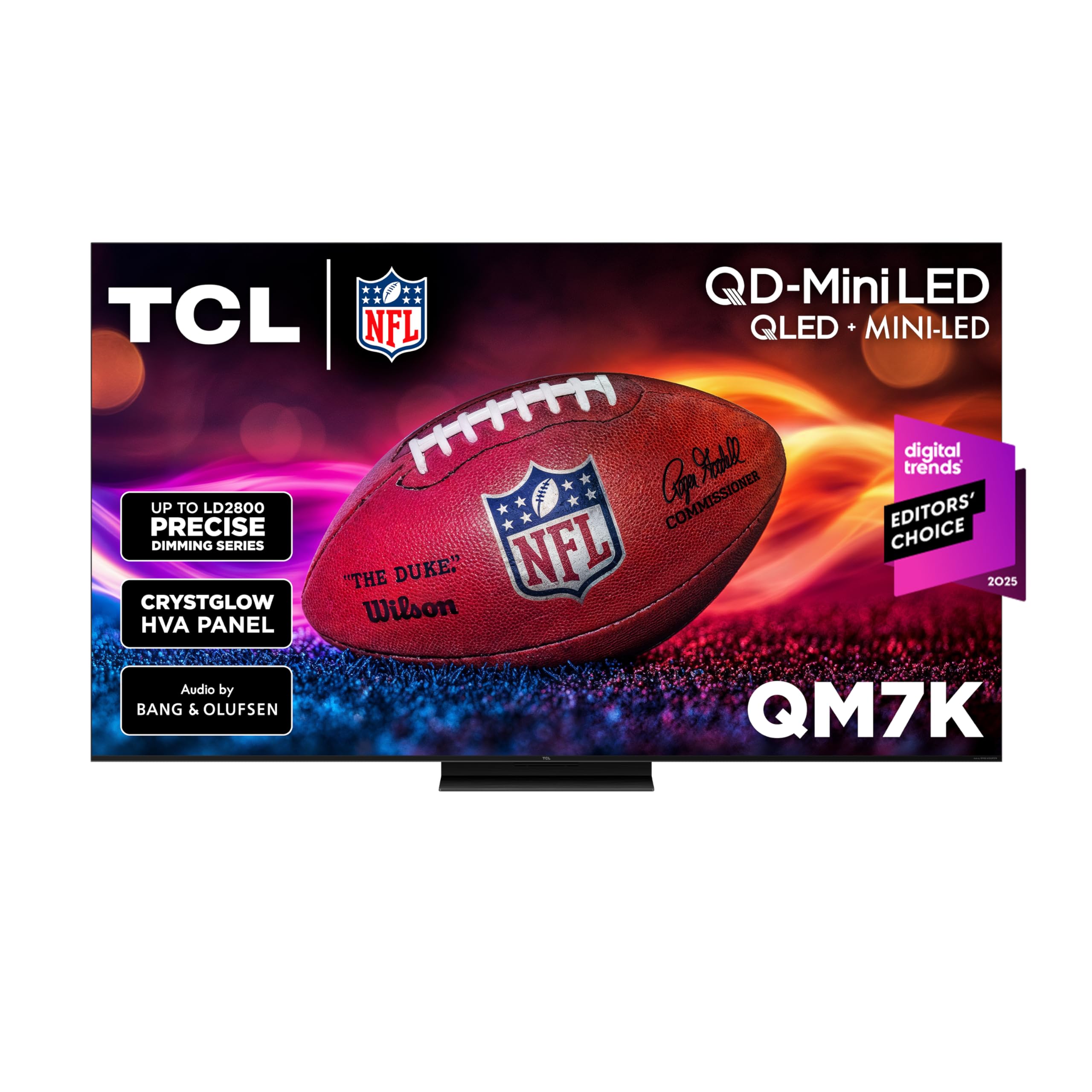
The TCL QM7K strikes a remarkable balance between price and performance, combining a QD-Mini LED panel with a native 144Hz refresh rate that runs circles around older 60Hz sets. Its CrystGlow HVA panel effectively blocks reflections, making it a strong choice for brightly lit rooms where lesser TVs wash out. The up-to-2500 local dimming zones deliver deep blacks and punchy highlights that approach OLED territory without the burn-in risk.
Gamers will appreciate the 240Hz variable gaming refresh rate support and the Google TV interface running smoothly. The built-in Bang & Olufsen audio produces a surprisingly wide soundstage, though purists will still want a dedicated soundbar for truly immersive bass. Setup is straightforward, with the included stand snapping in within minutes.
Where the QM7K stumbles slightly is the remote—it feels lightweight and cheap compared to the premium panel it controls. Google TV bloatware can clutter the home screen, but the responsiveness of the OS offsets that minor annoyance. For most buyers, this is the sweet spot where high-end features meet a sensible price.
Why it’s great
- Excellent contrast with up to 2500 dimming zones
- Native 144Hz with low input lag for competitive gaming
- Anti-reflective screen works well in bright rooms
Good to know
- Remote feels cheap and plasticky
- Built-in audio lacks deep bass without soundbar
2. Samsung 55-Inch Class Mini LED M80H Series
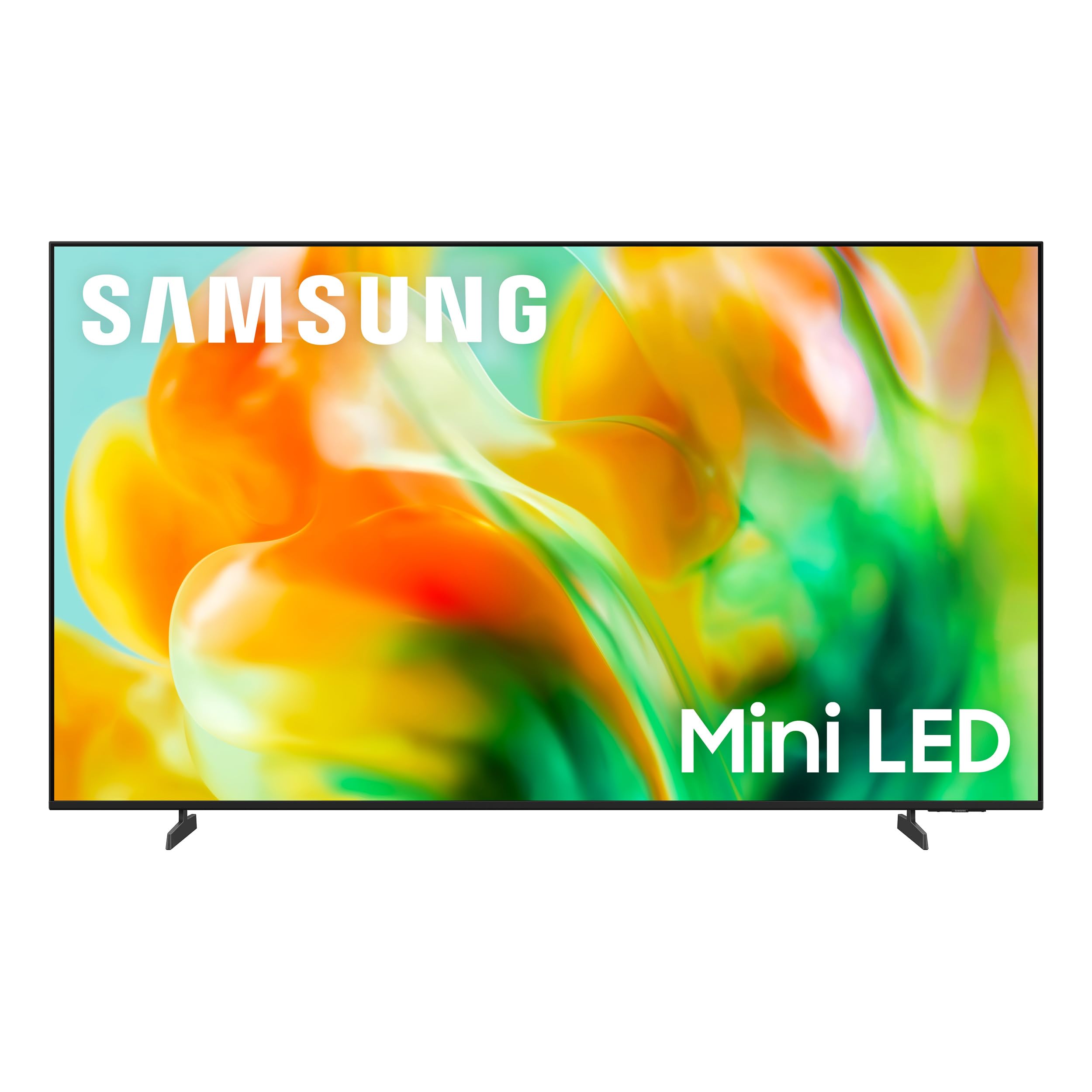
Samsung’s M80H brings Mini LED backlighting combined with the NQ4 AI Gen2 processor, which intelligently upscales lower-resolution content to near-4K quality with impressive clarity. The Motion Xcelerator 144Hz ensures ultra-smooth motion in sports and fast-paced games, while Variable Refresh Rate eliminates tearing without stutter. The Pure Spectrum Color technology delivers a billion true-to-life colors that make HDR content genuinely pop.
Setup is straightforward, and the built-in Alexa support means you can control smart home devices directly from your couch. The 55-inch size is ideal for small to midsized rooms with an 8-foot viewing distance. Users consistently praise the bright, clear picture with minimal motion blur during live sports.
On the downside, the AI picture and sound settings sometimes overshoot the mark, and manual calibration can be necessary to get the image looking natural. The remote lacks backlighting, which is a small but noticeable omission for late-night viewing. Still, for buyers who prioritize processing power and color accuracy, this Samsung punches well above its weight.
Why it’s great
- Excellent 4K AI upscaling from HD sources
- 144Hz Motion Xcelerator with VRR support
- Bright Mini-LED panel handles well-lit rooms
Good to know
- AI modes may require calibration for natural look
- Remote is not backlit
3. Toshiba 55″ Z670R Series

Toshiba’s Z670R is a Mini-LED QLED set with a native 144Hz panel that supports AMD FreeSync Premium, VRR, and ALLM, making it a formidable contender for console and PC gamers on a budget. The REGZA Engine ZRi Gen3 processes content scene by scene, optimizing clarity and contrast for a natural, lifelike image. Dolby Vision IQ and HDR10+ Adaptive automatically adjust the picture based on room lighting, so you always see the intended colors and shadow detail.
The built-in REGZA Power Audio Pro with a dedicated bass woofer delivers room-shaking sound that eliminates the immediate need for an external soundbar. Fire TV integration keeps the interface snappy, and Alexa built-in adds hands-free voice control. Setup is quick, with the included stand requiring minimal effort.
Where the Z670R falls short is the Bluetooth version 5.0—slightly older than the 5.4 found on some rivals—and the remote, while functional, doesn’t feel premium. The Fire TV platform can occasionally feel cluttered with promoted content, but the overall speed and reliability are solid. For gamers wanting 144Hz without breaking the bank, this is a top pick.
Why it’s great
- Native 144Hz with FreeSync Premium and VRR
- Built-in bass woofer provides excellent sound
- Dolby Vision IQ adapts to room lighting
Good to know
- Bluetooth 5.0 rather than newer versions
- Fire TV interface can feel cluttered with ads
4. Roku Smart TV – 55-Inch Pro Series
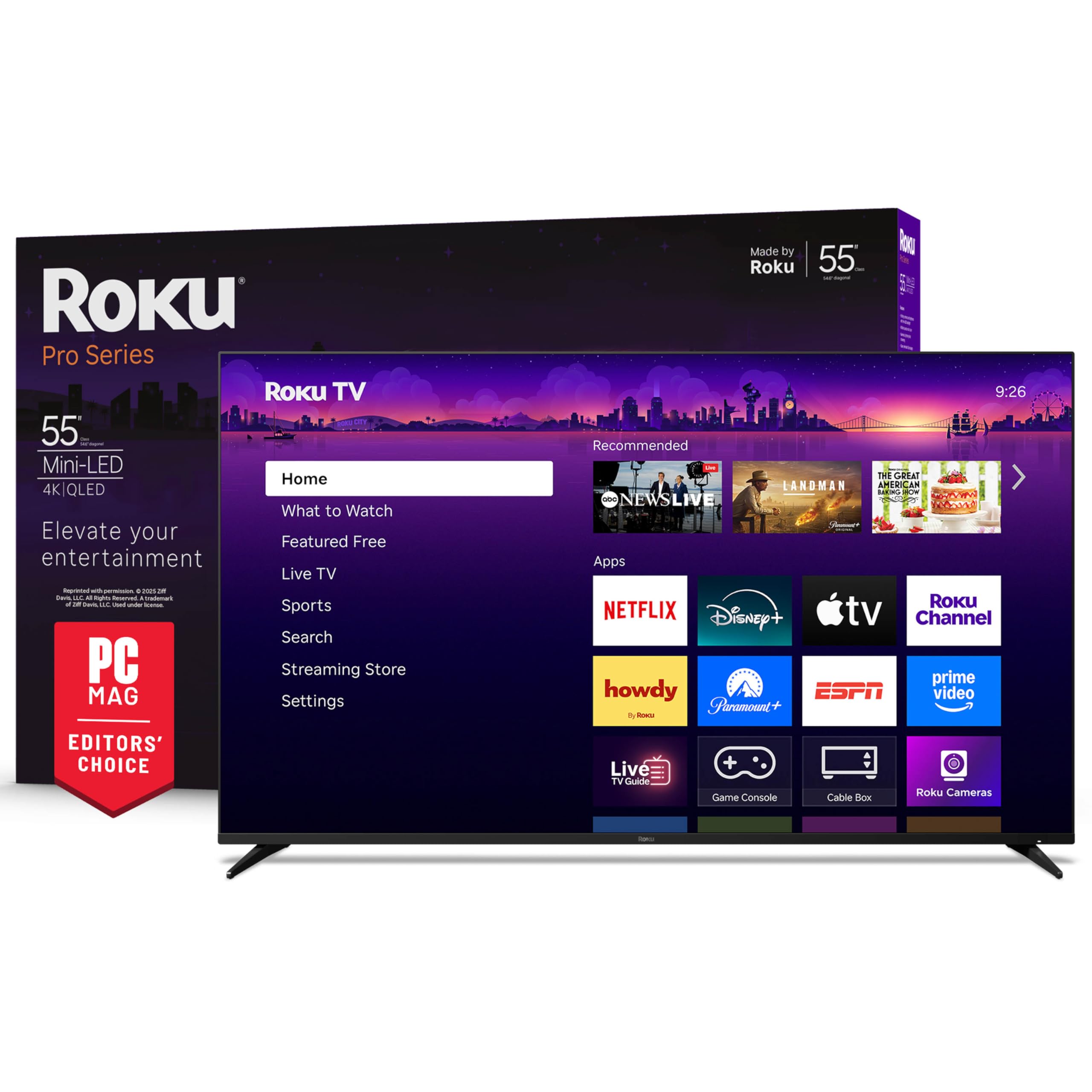
Roku’s Pro Series TV is built around the brand’s famously intuitive interface, and this Mini-LED QLED panel delivers a 120Hz refresh rate with Dolby Vision IQ and HDR10+ support. The Roku Smart Picture Max AI engine cleans up incoming signals and optimizes color and sharpness automatically, so you get a great picture with zero fuss. The side-firing speakers with Dolby Atmos produce room-filling audio that easily outperforms most built-in TV sound systems.
The included backlit Voice Remote Pro is rechargeable and features a remote finder button on the TV chassis—a genuinely useful detail when the remote inevitably disappears between couch cushions. Setup is the fastest in this category, with the Roku platform guiding you through network and account pairing in under five minutes.
The trade-off is that the 120Hz panel is fixed-rate, not 144Hz like some competitors, and the automatic game mode, while functional, doesn’t offer as many granular gaming adjustments as dedicated gaming TVs. If your priority is a dead-simple, family-friendly smart TV experience with impressive picture quality, this Roku is hard to beat.
Why it’s great
- Best-in-class smart TV interface simplicity
- Rechargeable backlit remote with finder feature
- Dolby Vision IQ and side-firing Atmos speakers
Good to know
- 120Hz fixed refresh rate, not 144Hz
- Limited advanced gaming features compared to rivals
5. Hisense 55″ U7 Mini-LED ULED
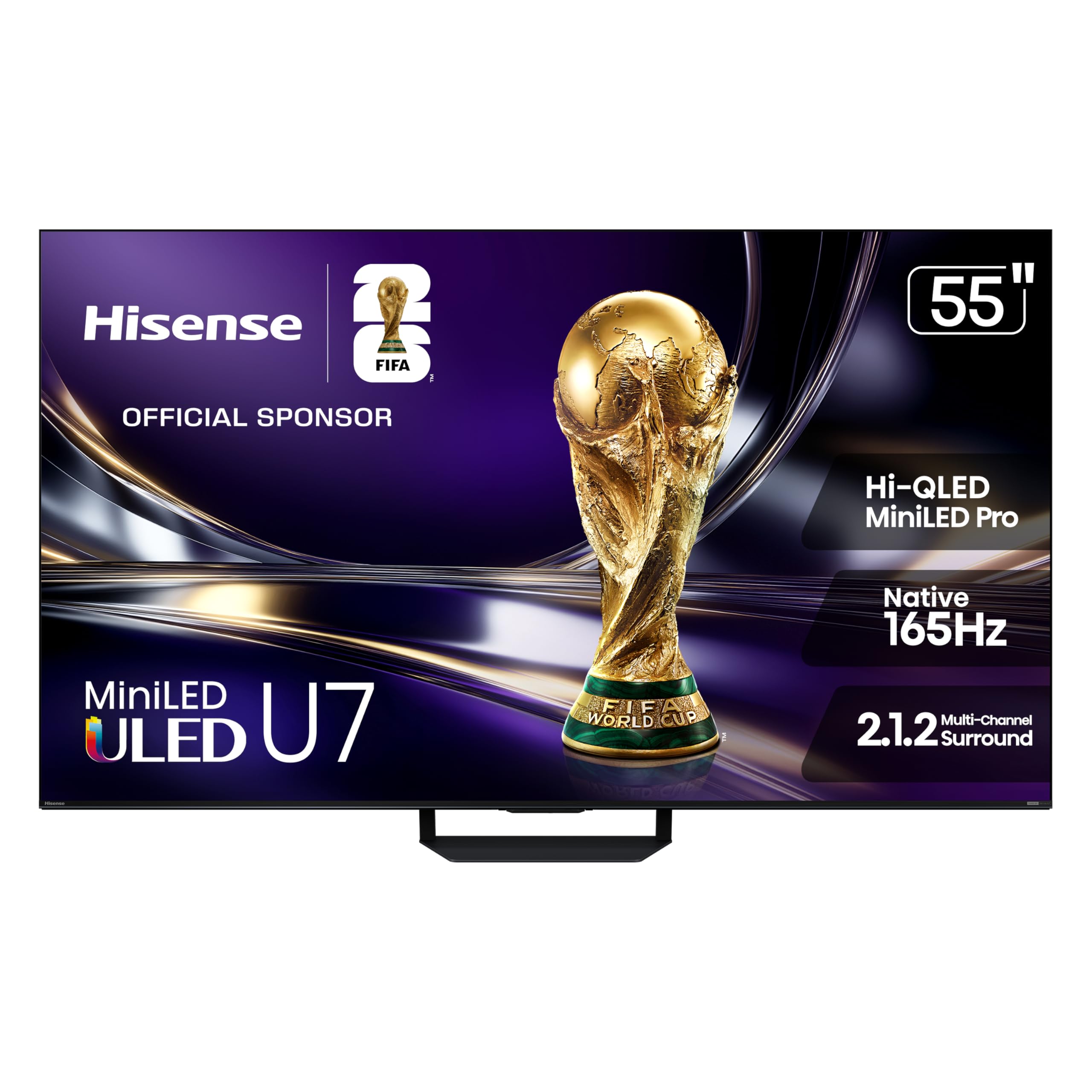
The Hisense U7 is an absolute beast in bright rooms, thanks to its anti-reflection and glare-free screen treatment that maintains crisp contrast even with direct sunlight. The native 165Hz refresh rate is the highest native spec in this roundup, and combined with VRR up to 330Hz, it delivers buttery-smooth motion in games and sports. The Hi-QLED MiniLED Pro backlight can hit up to 3000 nits peak brightness and 3000 local dimming zones, producing astonishing HDR highlights.
The Hi-View AI Engine Pro constantly analyzes each scene to adjust color, contrast, and detail in real time. For gamers, the low input lag and high refresh rate make this a genuine competitor to dedicated gaming monitors. Google TV integration is responsive and offers a wide app ecosystem.
On the downside, the interface can occasionally feel cluttered and slightly laggy after extended use, and the built-in sound, while decent, benefits greatly from a dedicated soundbar for fuller audio. The sheer brightness means it may be overkill in a dim room, but for anyone fighting ambient light, this is the clear winner.
Why it’s great
- Native 165Hz with VRR up to 330Hz
- Excellent anti-glare for bright rooms
- 3000 nits peak brightness with deep blacks
Good to know
- Interface can feel sluggish over time
- Built-in audio is good but benefits from soundbar
6. Amazon Ember 55″ Mini-LED Series
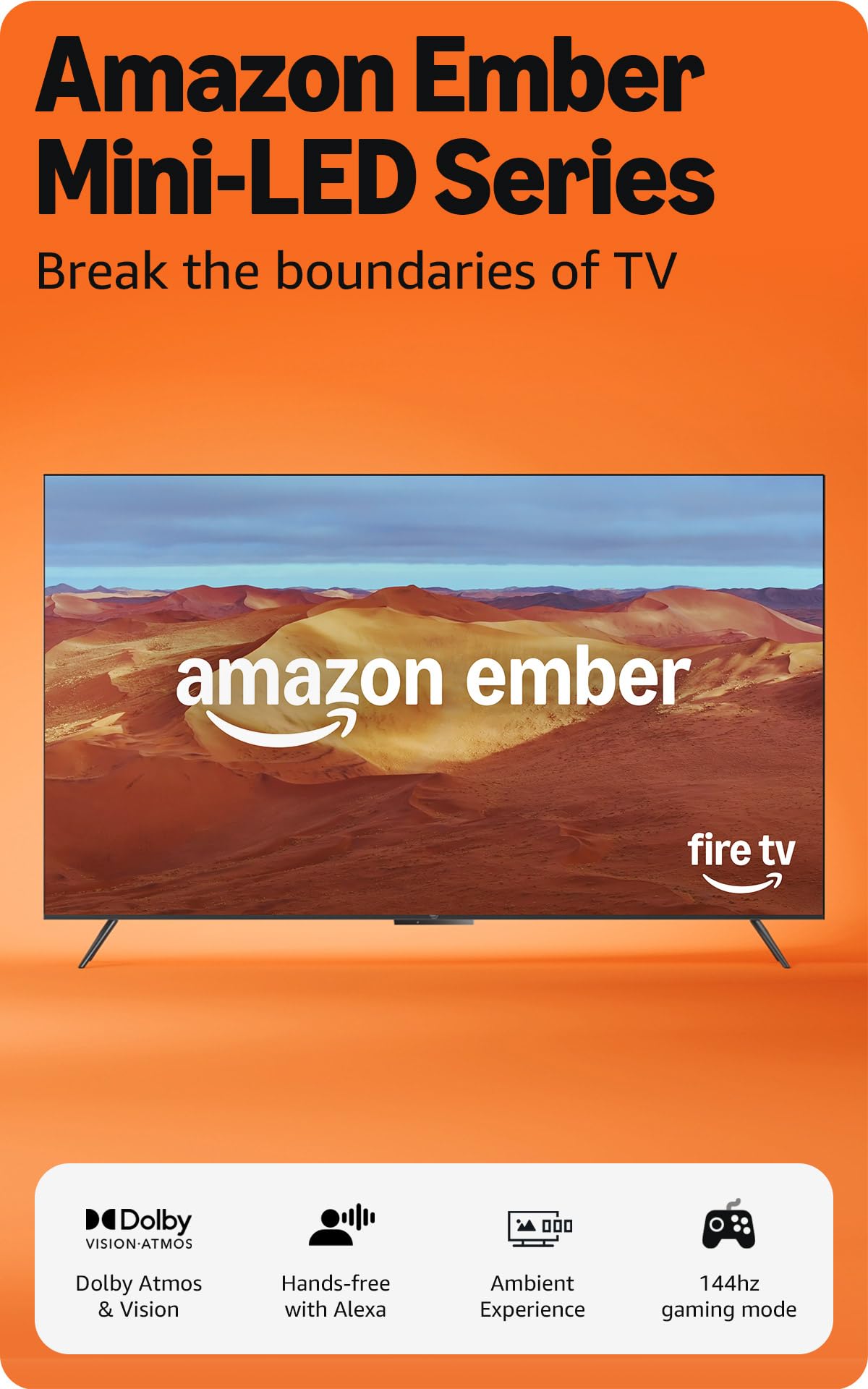
The Amazon Ember 55 is built around the newest Fire TV experience, offering a streamlined interface that prioritizes speed and personalization. The Mini-LED QLED display with 512 dimming zones delivers 1400 nits of peak brightness and HDR10+ Adaptive, producing vivid colors and deep blacks that rival more expensive sets. The 144Hz native refresh rate with AMD FreeSync Premium Pro ensures tear-free gaming with fluid motion.
The built-in Omnisense technology uses sensors to wake the display when you enter the room, showing artwork or letting you resume watching instantly. The hands-free Alexa integration works even with the screen off, allowing you to control smart home devices, set timers, or check the weather. The 2.1 Dolby Atmos audio system provides clear dialogue and punchy bass without needing external speakers.
However, some users report that the interface can become sluggish over time, especially after software updates, with occasional random reboots. The home screen is also heavily promotional, with ads and recommendations that can feel intrusive. If you’re deeply embedded in the Amazon ecosystem, the convenience is unmatched, but a clean-OS purist may find the clutter frustrating.
Why it’s great
- 144Hz with FreeSync Premium Pro for gaming
- Built-in Omnisense sensors for instant-on
- Excellent HDR brightness and contrast
Good to know
- Interface can become sluggish with updates
- Home screen has many ads and promotions
7. LG 65-Inch Class QNED evo AI QNED92A Series
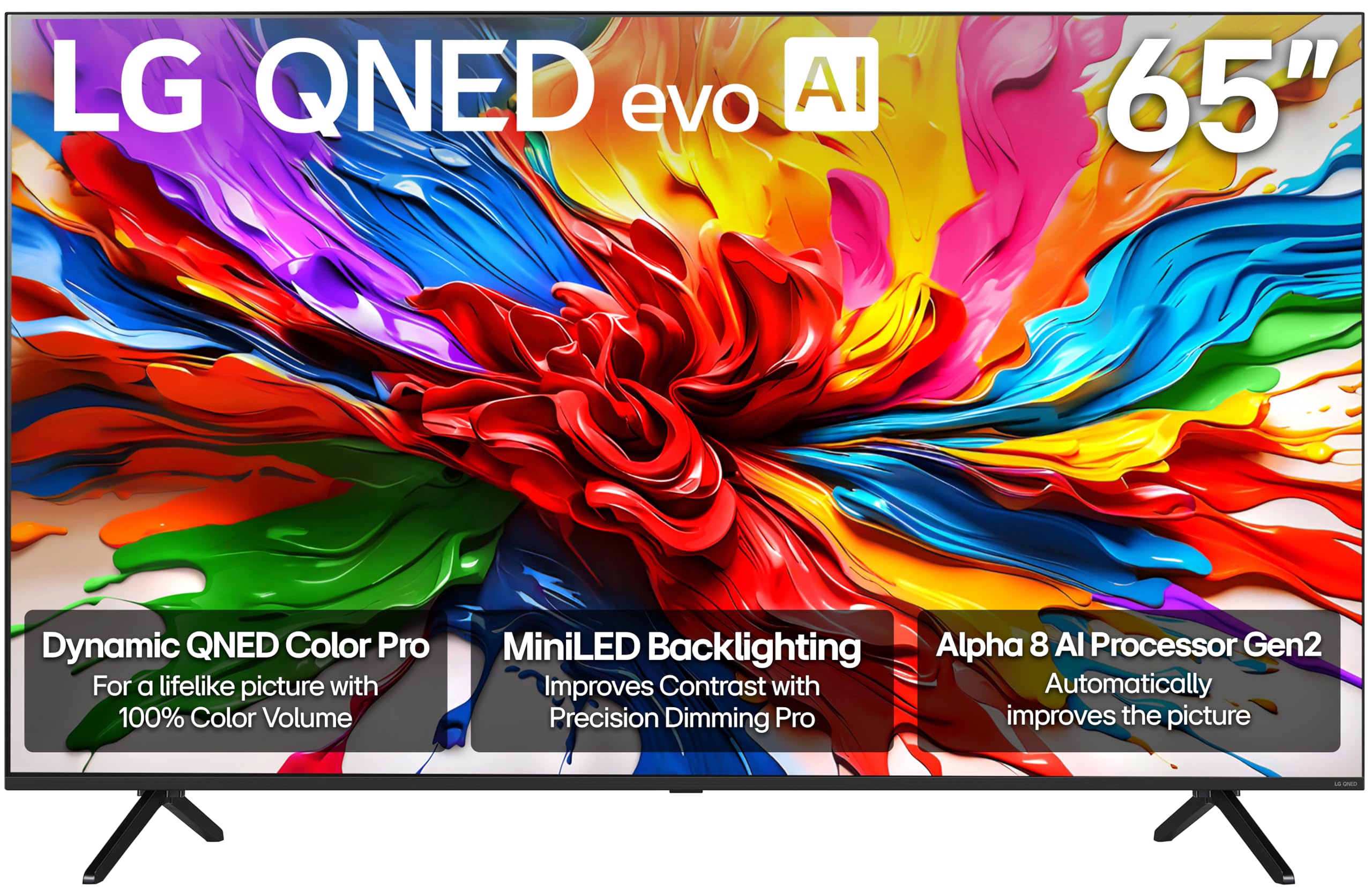
LG’s QNED92A brings Precision Dimming Pro with hundreds of individually controlled Mini-LED zones, delivering excellent black levels and bright, saturated colors through Dynamic QNED Color Pro. The Alpha 8 AI Processor Gen2 analyzes content in real time to optimize picture and sound, and the 120Hz native refresh rate keeps motion smooth across games, sports, and movies. The four HDMI 2.1 ports make it a breeze to connect multiple next-gen consoles and a soundbar without swapping cables.
The WebOS platform is fast and intuitive, and the Wow Orchestra feature lets you pair the TV with a compatible LG soundbar for a cohesive audio experience. Dolby Vision and Dolby Atmos are fully supported, and Filmmaker Mode preserves director intent for a truly cinematic look. The AI-powered Personalized Picture & Sound Wizard tailors settings to your preferences.
Some users find the Magic Remote takes getting used to—its cursor-based navigation can be imprecise and requires two hands. The panel also shows noticeable glare in bright rooms, and the AI settings sometimes need manual tweaking to look natural. For a dedicated home theater setup in a controlled lighting environment, this LG delivers premium performance.
Why it’s great
- Four HDMI 2.1 ports for multi-device setups
- Precision Dimming Pro with excellent contrast
- Wow Orchestra integration with LG soundbars
Good to know
- Magic Remote cursor can be imprecise
- Reflections can be noticeable in bright rooms
8. Sony BRAVIA 5 65 Inch TV (K-65XR50)

Sony’s BRAVIA 5 is a Mini-LED TV driven by the XR Processor with AI technology, which delivers what is arguably the best upscaling in the industry—lower-resolution content looks remarkably crisp and detailed on the 4K panel. The XR Backlight Master Drive precisely controls thousands of Mini LEDs for captivating brightness and authentic contrast with minimal blooming. The 120Hz panel with XR Motion Clarity ensures blur-free motion in sports and action movies without the soap-opera effect.
Exclusive PlayStation 5 features like Auto HDR Tone Mapping and Auto Genre Picture Mode optimize the picture automatically when you connect a PS5. The Google TV interface is smooth and responsive, eliminating the need for external streaming devices. Studio-calibrated picture modes for Netflix, Prime Video, and Sony Pictures Core deliver creator-intended color accuracy.
The trade-off is that only two of the four HDMI ports support HDMI 2.1, which could be limiting for multi-console households. The built-in sound is decent but not competitive with dedicated soundbars. The remote also lacks backlighting, a surprising omission at this price point. For movie lovers and PS5 owners who prioritize picture processing above all else, this Sony is a standout.
Why it’s great
- Best-in-class 4K upscaling with XR Processor
- Exclusive PS5 integration features
- Studio-calibrated picture modes
Good to know
- Only 2 of 4 HDMI ports are HDMI 2.1
- Remote is not backlit
9. Panasonic Z8 Series 77-inch OLED
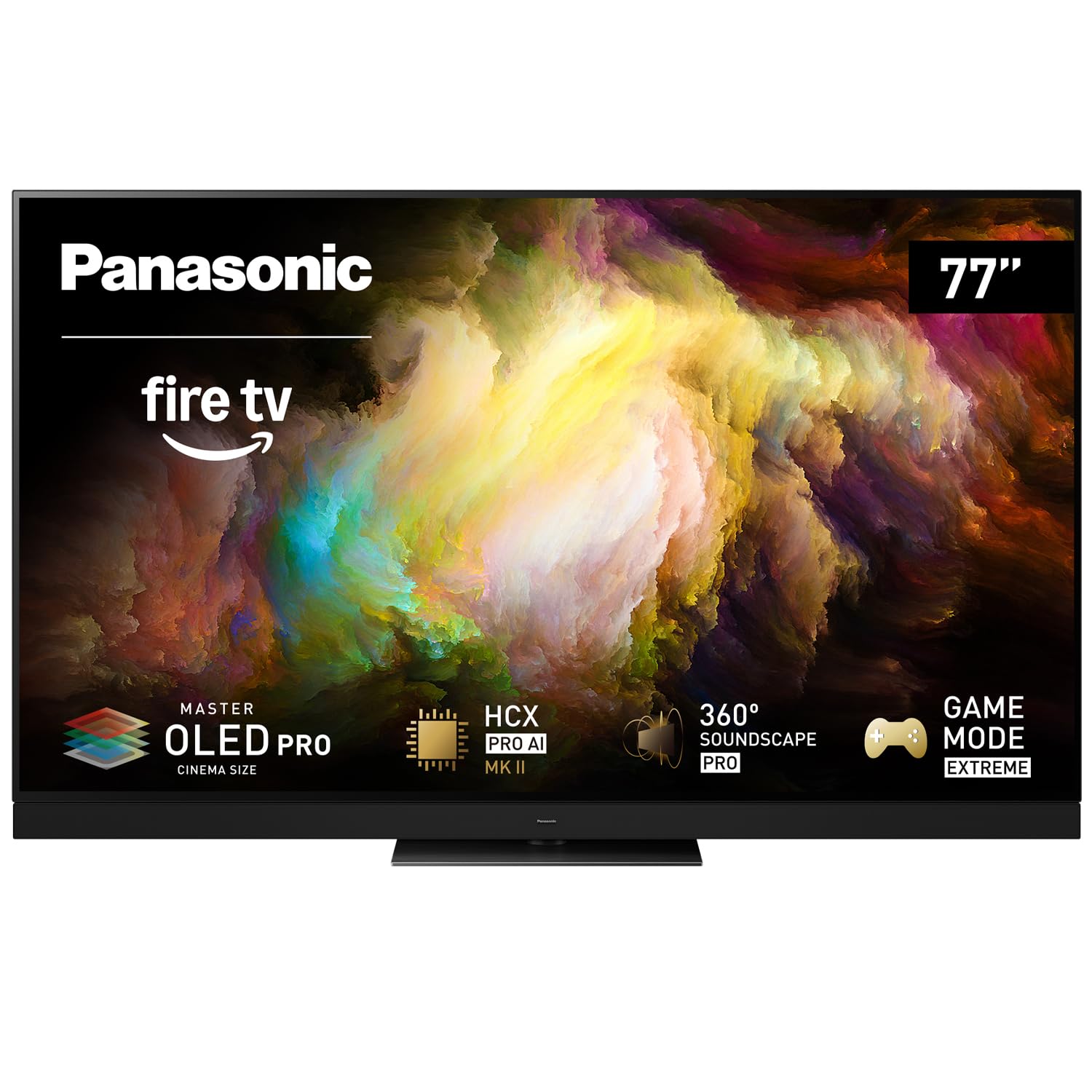
The Panasonic Z8 Series brings Master OLED PRO technology with a micro-lens-array panel that delivers enhanced brightness while maintaining the perfect blacks OLED is known for. The HCX Pro AI Processor MKII optimizes color, contrast, and clarity in real time, and the 144Hz refresh rate ensures ultra-smooth motion for gaming and fast-paced content. Multi HDR format support including Dolby Vision IQ and HDR10+ Adaptive adjusts the picture based on room lighting for consistently excellent image quality.
The 360 Soundscape Pro audio system, tuned by Technics, uses front-array, upward, and side-firing speakers to create an immersive Dolby Atmos soundstage that rivals many soundbars. The Fire TV built-in interface is responsive and easy to navigate. Game Mode Extreme supports HDMI 2.1 features including VRR, AMD FreeSync Premium, and NVIDIA G-SYNC for a top-tier gaming experience.
The major caveat is brightness—this OLED is not ideal for bright rooms with direct sunlight, as the panel can appear dim compared to Mini-LED competitors. The TV is also extremely heavy at roughly 100 pounds, requiring a sturdy stand or a professional wall mount installation. For serious cinephiles with a dedicated home theater room, the Panasonic Z8 delivers reference-level black levels and color accuracy that few can match.
Why it’s great
- Perfect black levels with excellent contrast
- 144Hz refresh rate with full HDMI 2.1 gaming features
- Superb built-in 360 Soundscape Pro audio
Good to know
- Not bright enough for sunlit rooms
- Very heavy, requires professional installation
10. TCL 85 Inch Class QM8L Series
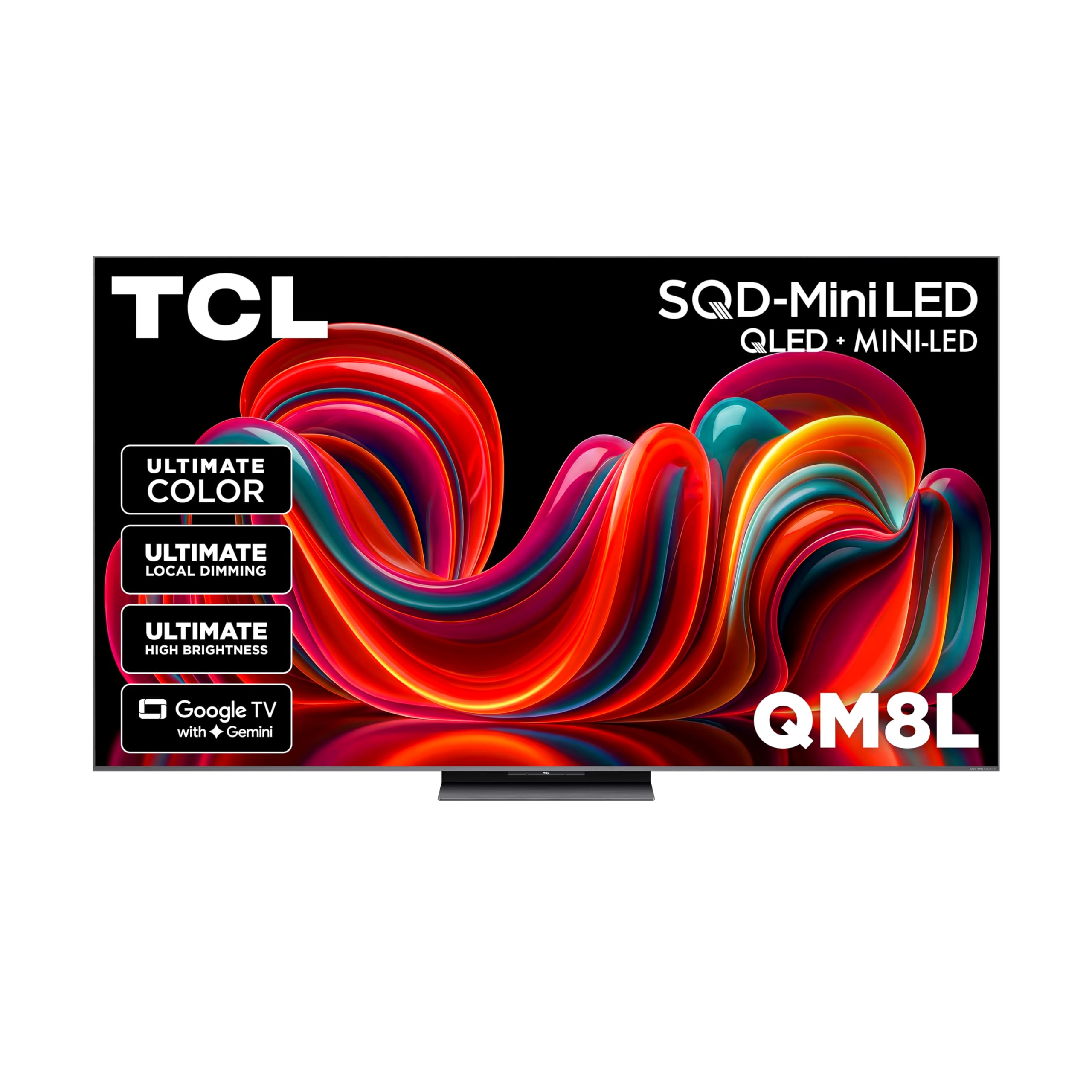
The TCL QM8L is a flagship SQD-Mini-LED TV that pushes brightness to an extraordinary 6000 peak nits, making it one of the most capable HDR displays available. With over 4000 discrete dimming zones, the halo effect is virtually nonexistent, delivering images with incredible depth and precision. The TCL Ultra Color Filter with 5-nanometer particles ensures pixel-perfect color accuracy that rivals professional monitors.
Google Gemini Interactive AI powers the smart features, offering personalized recommendations and voice control that feels genuinely intelligent. The TCL Game Pack includes Game Accelerator 288 VRR, Game Bar, and AMD FreeSync Premium Pro, making this a serious gaming powerhouse at an 85-inch canvas. The Audio by Bang & Olufsen system provides clear, room-filling sound without needing an immediate soundbar upgrade.
The sheer size and weight require careful planning—a sturdy stand or professional wall mount is non-negotiable. Some users report minor OS glitches that require a restart, and the Google TV interface occasionally feels bloated with preloaded apps. For anyone seeking a truly cinematic, blindingly bright home theater experience without stepping up to microLED pricing, this is the one.
Why it’s great
- 6000 nits peak brightness with over 4000 dimming zones
- 288Hz VRR with FreeSync Premium Pro
- Excellent upscaling and AI processing
Good to know
- Extremely large and heavy installation required
- Occasional OS glitches need restart
11. Samsung 98-Inch Class Neo QLED 4K QN90D Series

The Samsung QN90D delivers a massive 98-inch Neo QLED Mini-LED display with Quantum Matrix technology for precise lighting control and stunning brightness. The Neo Quantum HDR+ produces sensational contrast and vivid color that makes content look remarkably three-dimensional. Motion Xcelerator 144Hz ensures smooth motion across the massive screen with virtually no lag or blur, making sports and games incredibly immersive.
Object Tracking Sound+ with Dolby Atmos creates a 3D audio experience that follows the action on screen, effectively replacing the need for a separate soundbar in most rooms. The NQ4 AI Gen2 Processor powers 4K upscaling and the intuitive Tizen OS, which provides quick access to all major streaming services. Real Depth Enhancer Pro adds a sense of dimensionality that makes scenes feel like they extend beyond the screen.
The sheer physical size means you need to measure your space carefully—this TV requires a dedicated wall or stand and may not fit in standard elevators or doorways. The price point also places it firmly in the luxury tier. For buyers with the space and budget for a true cinematic experience at home, the QN90D delivers an unmatched blend of size, brightness, and processing power.
Why it’s great
- 98-inch screen with excellent brightness and contrast
- Object Tracking Sound+ with immersive Dolby Atmos
- 144Hz Motion Xcelerator for seamless motion
Good to know
- Extremely large, requires careful space planning
- Premium price point for a luxury-tier product
FAQ
Do I need a 120Hz TV if I don’t play video games?
What is the difference between native 120Hz and 120Hz motion rate?
How many HDMI 2.1 ports do I need for a 120Hz TV?
Is Mini-LED better than OLED for a 120Hz TV?
Final Thoughts: The Verdict
For most users, the best 120hz tv winner is the TCL QM7K because it delivers a native 144Hz panel, excellent Mini-LED contrast, and impressive brightness at a price that undercuts the competition. If you want AI-powered processing and the best upscaling for mixed-resolution content, grab the Sony BRAVIA 5. And for a bright room where glare is a constant battle, nothing beats the Hisense U7 with its native 165Hz panel and aggressive anti-reflection technology.