
Our readers keep the lights on and my morning glass full of iced black tea. As an Amazon Associate, I earn from qualifying purchases.
Specs are compiled from manufacturer listings and verified buyer reviews and can change over time — please confirm the key details on the product page before buying.
Cutting a perfect 120mm hole in wood, drywall, or metal sounds simple, but one wrong pick means burned edges, a shattered blade, or a hole that is just barely too small. The real difference between a frustrating afternoon and a clean, fast cut depends on the teeth material, the arbor design, and how the saw handles heat. This guide breaks down four very different 120mm hole saws so you know exactly which one fits your drill and your material.
I’m Min — the founder and writer behind Gadgets Feed. This guide is built by comparing the manufacturers’ published specifications and the patterns across verified customer reviews, so you get each pick’s real strengths and trade-offs instead of marketing spin.
If you need to cut holes for recessed lights, plumbing pipes, or cabinet locks, these are the best 120mm hole saw options available right now, ranked by what they do best and which materials they handle without slowing down.
Quick Picks
- DKIBBITH TCT Hole Saw Set, 4-3/4″ (120mm) — Metal Master
- kATUR 120mm Speed Bi-Metal Hole Saw — Speed Demon
- LAIWEI Heavy Duty 120mm Hole Saw (4-3/4″) — Best Value
- Fivelake 4-3/4″ (120mm) Bi-Metal M42 High Speed Steel Hole Saw — Budget Champ
How To Choose The Best 120mm Hole Saw
Every 120mm hole saw looks like a metal ring with teeth, but the material those teeth are made from determines whether it chews through steel or just spins uselessly on drywall. Three things matter most: tooth composition, arbor quality, and whether the saw has a spring to pop out the cut slug.
Tooth material: bi-metal vs. carbide-tipped
Bi-metal saws (high-speed steel welded to a flexible steel body) handle wood, plastic, drywall, and thin metal sheets well. Carbide-tipped saws use hardened tungsten-carbide teeth that stay sharp much longer on abrasive or hard materials like stainless steel, iron, and thick aluminum. If you mostly cut wood and drywall, bi-metal saves money. If you cut metal regularly, carbide is a longer-term investment.
Arbor and pilot drill
The arbor is the center shaft that connects the hole saw to your drill. A locking pin design stops the saw from slipping or over-tightening as you cut. The pilot drill bit at the center guides the whole assembly — a sharp, well-centered pilot bit prevents the saw from wandering before it bites into the material.
Quick Comparison
On smaller screens, swipe sideways to see the full table.
| Model | Best For | Material | Weight | Teeth Count | Amazon |
|---|---|---|---|---|---|
| DKIBBITH TCT | Hard metals, steel doors | Tungsten Carbide | — | — | $28.69$31.99Limited time dealAmazon |
| kATUR Speed | Multi-material fast cutting | Cemented Carbide Steel | 0.65 kg | — | $18.99Amazon |
| LAIWEI Heavy Duty | Wood, drywall, PVC, aluminum | Bi-metal / M42 HSS | 0.87 kg | 4 | $12.99Amazon |
| Fivelake Bi-Metal | Budget-friendly general use | M42 Bi-metal HSS | — | 4 | $14.89Amazon |
In‑Depth Reviews
1. DKIBBITH TCT Hole Saw Set, 4-3/4″ (120mm)
The only pick that laughs at stainless steel and deadbolts.
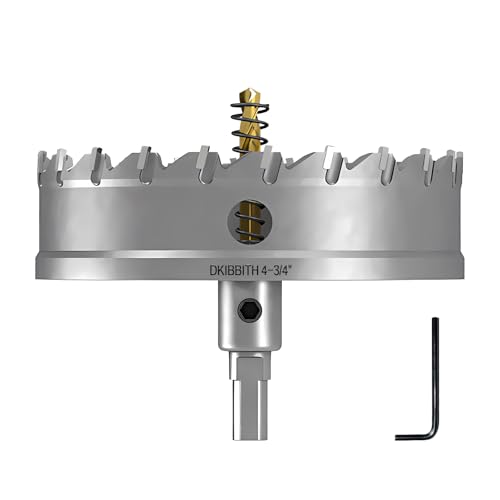
This is the hole saw you reach for when bi-metal blades just smoke and spark. The DKIBBITH uses tungsten carbide teeth (high-grade cemented carbide, per the maker) bonded to the steel body, so it cuts stainless steel, iron, copper, brass, and aluminum sheet up to 25mm (one inch) thick without dulling after a few passes. Unlike the LAIWEI or Fivelake bi-metal saws in this list, which struggle on hard metal, this one is specifically built for metalwork like cutting deadbolt holes in steel doors — one reviewer noted “nothing else is as good as this one to do that job” for chopping through a metal door in seconds.
The split-point pilot drill bit helps prevent wandering on a smooth metal surface, and the ejection spring pops the slug out automatically so you are not prying it loose with pliers. A few buyers noted the pilot bit can snag if you rush, and the carbide teeth are brittle — dropping the saw or hitting a sudden impact can chip them. Go slow, use cutting oil, and this saw delivers clean burr-free holes that need almost no deburring.
Real-world strength
- Cuts stainless steel and iron up to 25mm thick with carbide teeth
- Split-point pilot drill prevents walking on smooth metal
- Ejection spring removes cut slug automatically
Watch out for
- Carbide teeth are brittle — dropping the saw can snap them
- Pilot bit can snag and break if you push too fast
- Not the sharpest from the start; one reviewer called it “not very sharp”
Reach for it: If you cut holes in steel doors, stainless sheet, or thick metal on a regular basis — this is the saw that keeps cutting.
Look elsewhere: If you only cut drywall and wood, a cheaper bi-metal saw will save you money and cut just as clean.
2. kATUR 120mm Speed Bi-Metal Hole Saw

Lighter than the LAIWEI, faster through mixed materials.
At 0.65 kilograms, the kATUR is 34 percent lighter than the 0.87-kilogram LAIWEI, which makes a real difference when you are drilling overhead or holding the drill for multiple cuts. The positive rake teeth (angled to slice rather than scrape) cut through drywall, plastic pipe, wood, fiberboard, and soft metals noticeably faster than standard bi-metal teeth — the maker claims cemented steel cuts four to seven times faster than high-speed steel. Buyers report it cut through drywall, a wall, and the side of a house “without any issues,” confirming it handles mixed-material runs cleanly.
The 10mm shank fits standard drill chucks, and the two-year warranty (against manufacturer defects) adds confidence that the cheap picks do not offer. It does not come with a dedicated carrying case, and the compact style means it has less body mass for very deep cuts compared to the heavier DKIBBITH. For someone running conduit or cornhole boards through a variety of materials in one session, this is the versatile middle ground that does not weigh you down.
Why it stands out
- 34% lighter than the LAIWEI (0.65 kg vs 0.87 kg) for easier overhead work
- Positive rake teeth cut faster on drywall, plastic, wood, and soft metals
- Two-year manufacturer warranty covers defects
Things to note
- No carrying case included
- Compact body is less suited for very deep or thick material cuts
Best for: The DIYer who needs one hole saw for drywall, wood, siding, and thin metal — the kATUR cuts fast and feels light in the hand.
Not for: Cutting thick stainless or iron; for hard metals the DKIBBITH carbide saw is the better call.
3. LAIWEI Heavy Duty 120mm Hole Saw (4-3/4″)

Heavy-duty arbor and sharp teeth built for recessed light installs.
The LAIWEI hole saw is the choice for budget-conscious buyers who still want a proper locking arbor and M42 cobalt high-speed steel teeth — the same tooth material used in many industrial bi-metal saws. The A2 heavy duty arbor fits most bi-metal hole saws from 60mm to 360mm, and the locking pin design stops the saw from over-tightening or slipping on the shaft. Owners mention it is “perfect for 2″ recessed lights” and delivers “precise cut size, clean smooth holes” through multiple cuts in drywall and wood.
It weighs 0.87 kilograms, which is noticeably heavier than the kATUR (0.65 kg) — you feel the extra mass on long cuts, but it also means the saw stays planted without chattering. The spring-loaded pilot drill pushes chips out as you cut, reducing clogging in deeper holes. Some buyers found the spring was missing from their package, and a few noted the teeth began struggling after several holes in drywall and plaster. For wood, PVC, aluminum profile, and drywall, this is a sharp, well-priced hitter; for repeated metal cutting, step up to carbide.
Solid performer
- A2 heavy duty arbor with locking pin prevents slipping and over-tightening
- M42 cobalt high-speed steel teeth stay sharp for multiple cuts in wood/drywall
- Spring-loaded pilot drill ejects chips and reduces clogging
Common complaints
- Heavier than the kATUR (0.87 kg vs 0.65 kg) — more fatigue on long sessions
- Spring missing from some packages per buyers
- Teeth dull faster on drywall/plaster than on clean wood
Pick this if: You are cutting recessed lighting holes, PVC pipes, or wood cabinets and want a reliable arbor that won’t slip — the LAIWEI gives you the most value for the money.
skip it if: You regularly cut metal; the bi-metal teeth wear down fast on steel, and the DKIBBITH carbide saw is a better long-term buy.
4. Fivelake 4-3/4″ (120mm) Bi-Metal M42 High Speed Steel Hole Saw
Entry-level price, M42 teeth, and a spring ejector you usually pay more for.
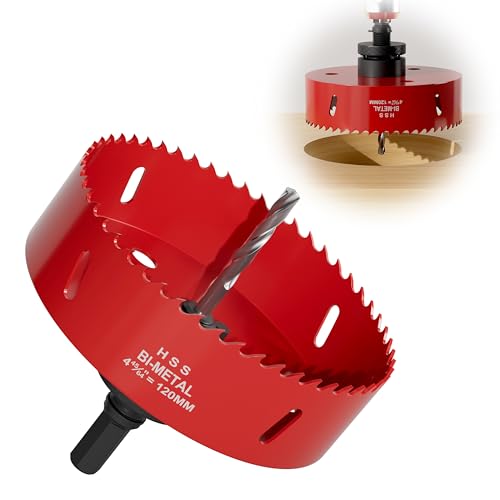
The Fivelake hole saw brings M42 bi-metal high-speed steel teeth (rated at ≥65 HRC hardness) and a spring-loaded pilot drill to the budget tier — features normally reserved for pricier models like the LAIWEI. The multi-hole design on the side of the saw helps clear chips as you drill, and the shank fits most electric and cordless drill chucks without slipping. Customers note it works “very well on a Ryobi drill” and call it “a lot for your money.”
The honest trade-off shows up in longevity: one buyer mentioned it “started getting dull after only a few holes through plywood,” which is the typical sacrifice at this price point. The industrial-style body feels hefty in hand, but the steel is not as impact-resistant as the cemented carbide in the kATUR or the DKIBBITH. For a single project — cutting six-inch holes in plywood, drywall, or plastic — this saw gets the job done without breaking your budget. If you have a long list of cuts or plan to hit metal, the extra dollars for the kATUR or LAIWEI will save you a trip to the store mid-project.
Why it works
- M42 high-speed steel teeth (≥65 HRC) for reliable cuts in wood, plastic, drywall
- Spring-loaded pilot drill automatically ejects the cut plug
- Multi-hole design improves chip removal in deeper holes
Know before you buy
- Teeth dull faster than pricier bi-metal saws — one owner reported dulling after a few plywood holes
- Not for metal cutting despite thin-metal compatibility claim
Good for: One-off DIY projects like cutting speaker holes in plywood or plumbing access holes in drywall — cheap enough that you won’t feel bad about it.
Pass on it: If your project involves metal, thick hardwood, or more than ten holes; the teeth won’t hold up.
Understanding the Specs
Bi-metal vs. Carbide-tipped teeth
Bi-metal blades weld a strip of high-speed steel (M42 or M2) onto a flexible spring-steel body. They cut wood, plastic, drywall, and thin aluminum well and cost less. Carbide-tipped blades have individual tungsten-carbide teeth brazed onto a steel rim. They stay sharp much longer on abrasive materials like stainless steel, iron, and thick aluminum, but they are more expensive and brittle — dropping one can chip a tooth.
Arbor locking mechanism
The arbor connects the hole saw to your drill. A locking pin design uses a small pin that fits into a hole on the saw body, preventing the saw from spinning loose or over-tightening as you drill. Cheaper arbors rely on a hex-key set screw that can strip. For any 120mm hole saw, a locking-pin arbor (like the A2 arbor on the LAIWEI) gives you the most secure hold during heavy cuts.
FAQ
Will a 120mm hole saw fit my drill?
What speed should I run a 120mm hole saw?
Can a 120mm hole saw cut through stainless steel?
How deep can a 120mm hole saw cut?
What is the difference between bi-metal and carbide-tipped hole saws?
Why does my hole saw keep slipping on the arbor?
Do I need a pilot drill bit with a 120mm hole saw?
How do I remove the cut plug from a hole saw?
Final Thoughts: The Verdict
For most buyers, the best 120mm hole saw winner is the kATUR Speed Bi-Metal because it combines a light 0.65 kg body with fast-cutting positive rake teeth and a two-year warranty — ideal for the mix of wood, drywall, and thin metal that home DIYers actually face. If you cut hard metal like stainless or steel doors regularly, grab the DKIBBITH TCT for its carbide teeth that do not dull after a few passes. And for a budget-friendly one-project saw, the LAIWEI gives you a locking arbor and sharp M42 teeth at a price that leaves room in your tool fund.
How We Picked
We do not accept paid placement, and we did not hands-on test every unit. Instead, we match each pick to a real buyer and use-case by comparing the manufacturers’ published specifications against the patterns in verified customer reviews — so you get each pick’s real strengths and trade-offs instead of marketing copy.
Sources & Methodology
Specifications: manufacturer listings and product documentation. Review insights: verified customer reviews, as of July 2026. Pricing: not shown on this page (it changes often); check the current price via the retailer link.
As an Amazon Associate, Gadgets Feed earns from qualifying purchases. This does not affect which products we feature.
Product prices and availability are accurate as of the date/time indicated and are subject to change. Any price and availability information displayed on Amazon at the time of purchase will apply to the purchase of this product. As an Amazon Associate I earn from qualifying purchases.
CERTAIN CONTENT THAT APPEARS ON THIS SITE COMES FROM AMAZON. THIS CONTENT IS PROVIDED "AS IS" AND IS SUBJECT TO CHANGE OR REMOVAL AT ANY TIME.
Amazon and the Amazon logo are trademarks of Amazon.com, Inc. or its affiliates.