
For over four decades, the HP 12C has defined what a financial calculator should be — a dedicated, keystroke-efficient machine that purees time-value-of-money problems, IRR iterations, and bond amortizations into instant, auditable answers. The physical feedback of its tactile keyboard and the logic of Reverse Polish Notation create a workflow that spreadsheets simply cannot match for speed or muscle memory. Yet navigating the current lineup of variants, successors, and bundled accessories can feel like deciphering a prospectus yourself.
I’m Min — the co-founder and writer behind Gadgets Feed. My focus here is dissecting the technical specifications, keystroke counts, program memory, and build materials that separate professional-grade financial calculators from student-tier approximations.
After cross-referencing raw specs, real-world customer experiences, and decades of market presence, I’ve ranked the options to help you find the best 12c calculator for your desk, briefcase, or exam hall.
How To Choose The Best 12C Calculator
Every financial calculator on this list shares a core DNA of TVM, NPV, and IRR functions, but the differences in entry logic, program memory, and physical build separate a daily driver from a frustrating compromise. Focus on three decisive factors before you click buy.
RPN vs. Algebraic Entry Logic
Reverse Polish Notation eliminates parentheses and equal signs by placing the operator after the operands. Once you internalize the stack — typically four registers deep — chained calculations like 5000 PV, 12 n, 0.75 i, PMT execute in half the keystrokes of any algebraic system. Most HP 12C models default to RPN, while the HP 12CP adds an algebraic mode for traditionalists. If you plan to work fast under pressure, RPN is the lever.
Program Memory and Storage
The classic 12C holds roughly 99 lines of keystroke program memory — sufficient for a single custom amortization schedule or a recurring bond pricing routine. The Platinum variant quadruples that to about 400 lines, plus adds separate memory for cash-flow lists. For real estate agents who model multiple scenarios daily, the extra program space eliminates the chore of re-entering sequence steps.
Build and Button Feel
Professional calculators live in briefcases, get tapped thousands of times per session, and occasionally survive a drop. The original 12C uses a hard plastic chassis with domed, clicky keys. The 12CP switches to a softer, quieter membrane-style keypad. Neither is objectively better, but the tactile feedback difference is immediate — domed keys offer a crisp snap, membranes provide a smoother press. Try both if possible before committing.
Quick Comparison
On smaller screens, swipe sideways to see the full table.
| Model | Category | Best For | Key Spec | Amazon |
|---|---|---|---|---|
| HP 12C Financial Calculator | Premium Classic | Industry-standard RPN workflow | 120+ functions, RPN-only input | Amazon |
| HP 12CP Financial Calculator | Premium Platinum | Algebraic + RPN hybrid needs | 400-step program memory, dual entry | Amazon |
| HP 17bII+ Financial Calculator | Mid-Range | Custom equation solver workflows | 250+ operations, 28KB memory, 2-line display | Amazon |
| HP Prime G2 Graphing Calculator | Premium Hybrid | Advanced graphing + finance hybrid | 3.5″ multi-touch color, 256MB, CAS | Amazon |
| HP 17B II Plus + WYNGS Case | Mid-Range Bundled | Value bundle with protective case | RPN + algebraic, list-based statistics | Amazon |
| HP 10bII+ Financial Calculator | Entry-Level | Students and exam prep | 100+ functions, SAT/AP approved, algebraic | Amazon |
| HP 10B II Plus + WYNGS Case | Entry-Level Bundled | Budget business math bundle | Algebraic entry, protective case included | Amazon |
In‑Depth Reviews
1. HP 12C Financial Calculator
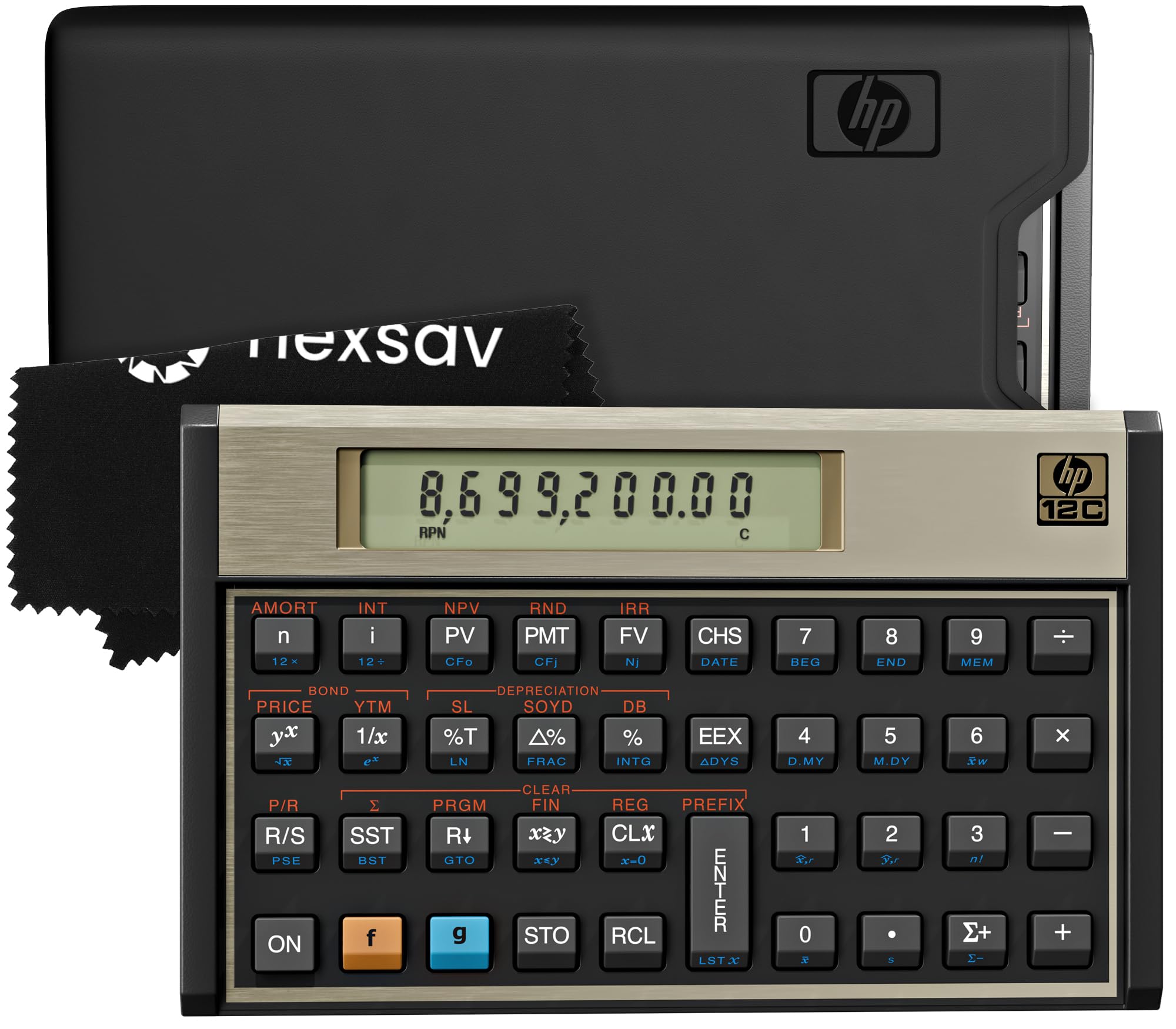
The HP 12C is the gold standard — literally unchanged in industrial design since 1981, and for good reason. Its RPN-only entry system processes TVM, NPV, IRR, amortization, bond calculations, and depreciation with a keystroke efficiency that remains unmatched for finance professionals. The LCD display is crisp and non-backlit, deliberately simple to conserve battery life that often stretches years.
What seals its position as the industry standard is the sheer ubiquity in real estate, banking, and accounting environments. Pull out an HP 12C in a closing meeting and the room recognizes the tool. It supports up to 20 uneven cash flows for IRR/NPV analysis and stores around 99 program steps — enough for a custom amortization sequence or a recurring bond pricing routine.
The plastic chassis and domed key buttons deliver a satisfying, tactile click that many users report preferring over the softer membrane of the Platinum variant. It includes a protective carrying case, cleaning cloth, and pre-installed batteries, so you can start calculating immediately out of the box.
Why it’s great
- True industry standard with over 40 years of professional trust
- RPN logic halves keystrokes for chained financial calculations
- Durable build with crisp, tactile button feedback
Good to know
- RPN-only entry requires a learning period for new users
- Program memory limited to roughly 99 keystroke steps
2. HP 12CP Financial Calculator
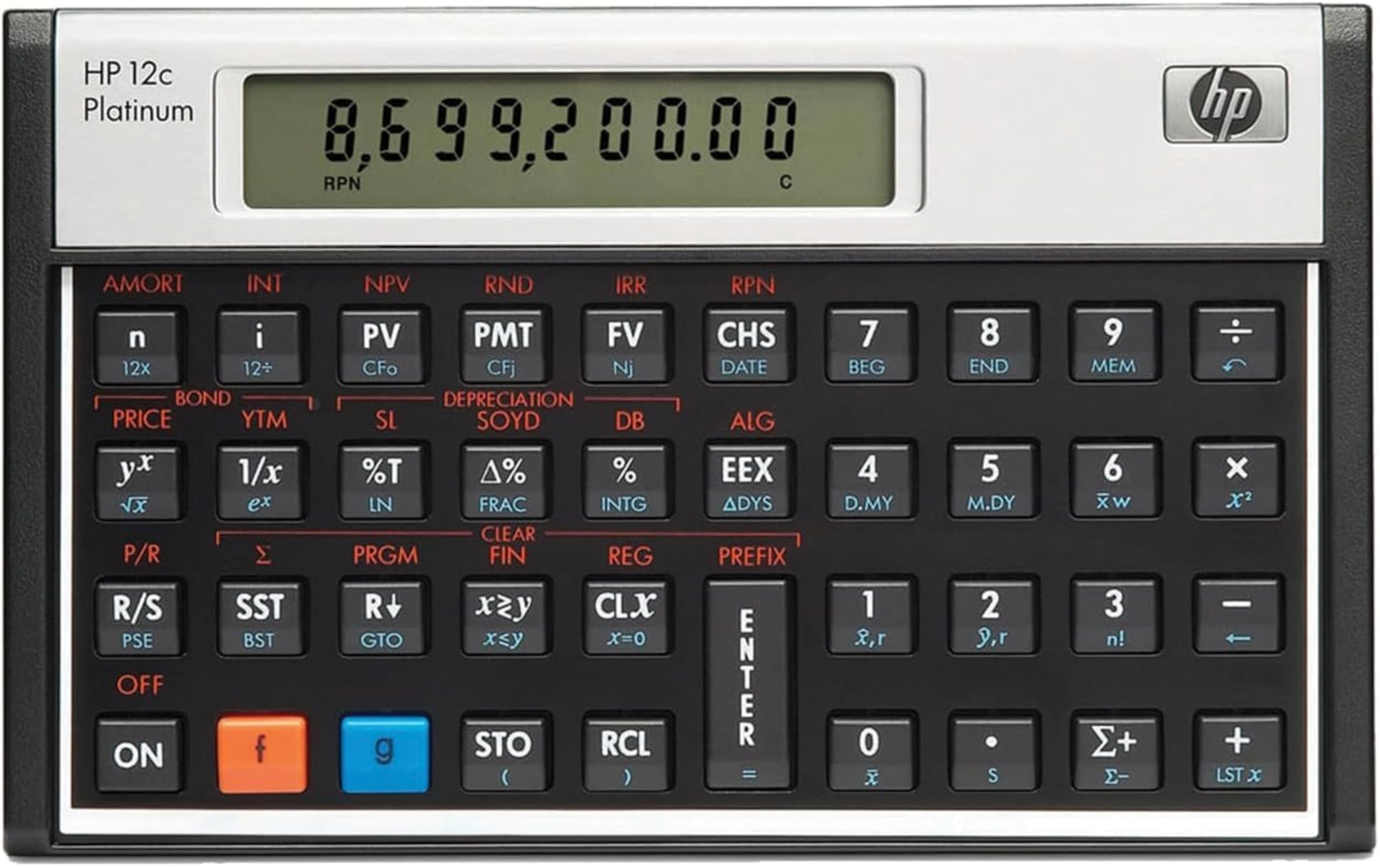
The HP 12CP (Platinum) is the answer to the classic 12C’s primary limitation: it adds algebraic entry mode while retaining full RPN support, giving users a choice that the original never offered. But the real upgrade lives in program memory — the Platinum quadruples the classic to about 400 lines of keystroke storage, plus maintains separate cash-flow list memory for larger investment analyses.
Long-time users report that the key feel shifts from the classic’s domed, clicky switches to a softer, membrane-style pad. Some prefer the quieter operation; others miss the tactile snap. What remains identical is the core function set: TVM, amortization, bond pricing, NPV, IRR, and statistical functions all present and accurate. The unit runs on two coin-cell batteries and lasts for years in typical use.
For professionals who need to store multiple custom routines — for example, a recurring mortgage qualification template and a separate depreciation schedule — the extra program memory eliminates the frustration of re-entering sequences. It also includes a slide-on hard case and is slightly smaller than the classic, making it a true pocketable companion.
Why it’s great
- Quadruple program memory compared to the classic 12C
- Dual entry logic (RPN and algebraic) for team environments
- Compact, pocket-friendly form factor with hard case
Good to know
- Softer membrane keypad lacks the classic’s domed tactile feedback
- Screen is smaller and less contrasty than some competitors
3. HP 17bII+ Financial Calculator
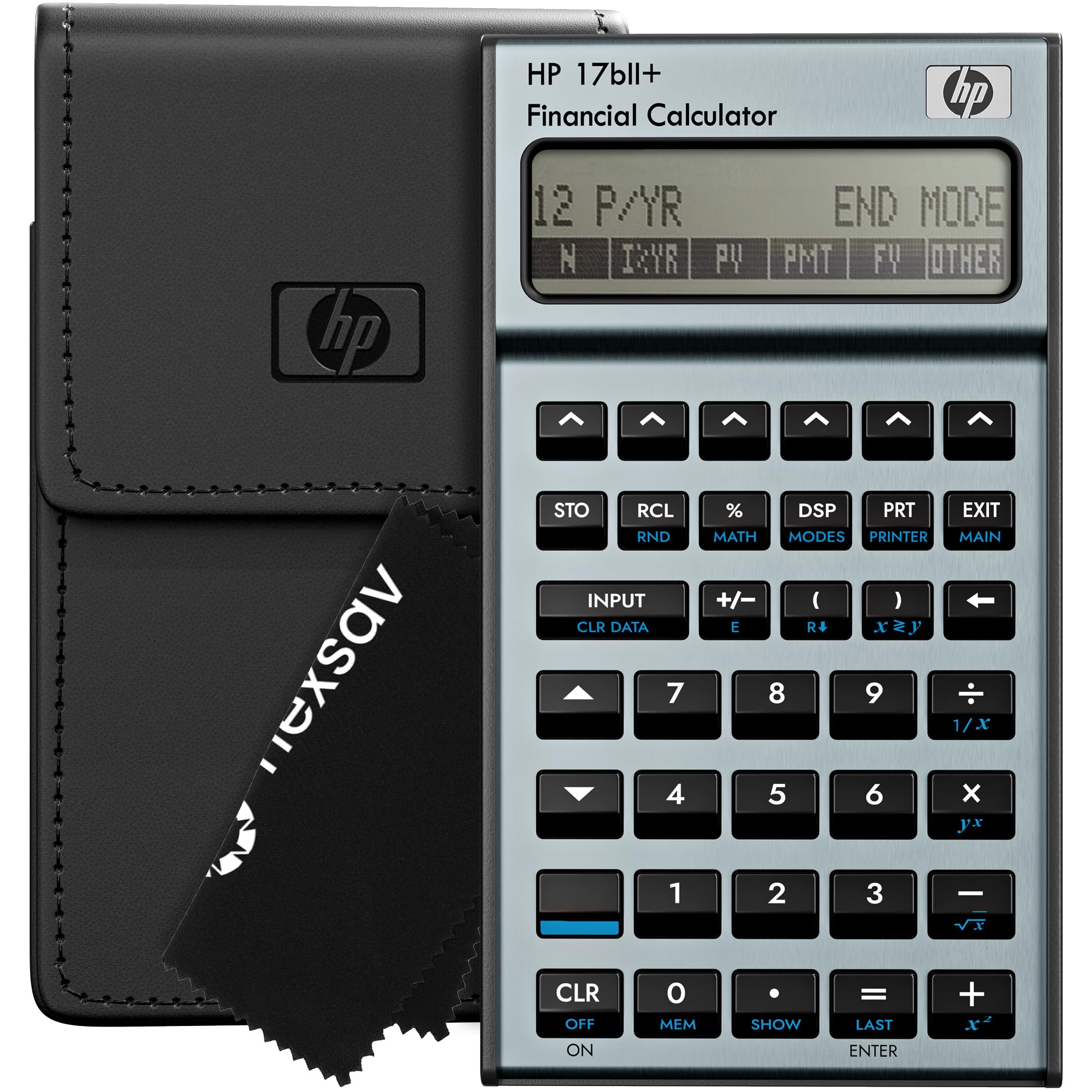
The HP 17bII+ steps beyond the 12C’s scope by offering over 250 operations including forecasting, currency conversions, and the HP Solve app — a custom equation editor that lets you define and store reusable formulas directly on the device. The two-line, 22-character LCD display shows both prompts and results simultaneously, which reduces menu-diving during complex workflows.
Unlike the 12C’s dedicated key layout, the 17bII+ uses on-screen menus that guide you through TVM, amortization, bond pricing, balloon payments, and list-based statistics. This makes it more approachable for users who switch between different financial tasks regularly. It ships with two CR2032 batteries pre-installed, plus a protective case and cleaning cloth.
The 28KB of memory stores variables, lists, and custom equations across multiple sessions, and the unit supports both RPN and algebraic entry — choose your logic at power-on. Long-term users note that after years of use, some keys may require a firmer press, but the overall build remains reliable. The solver function alone justifies the investment for analysts who repeatedly tweak assumptions.
Why it’s great
- HP Solve app allows custom reusable equations — no programming required
- 28KB memory stores lists, variables, and multi-session data
- Menu-driven navigation simplifies complex multi-step tasks
Good to know
- Keys may develop resistance after extended use
- Two-line display is informative but not as spacious as a full screen
4. HP Prime G2 Graphing Calculator
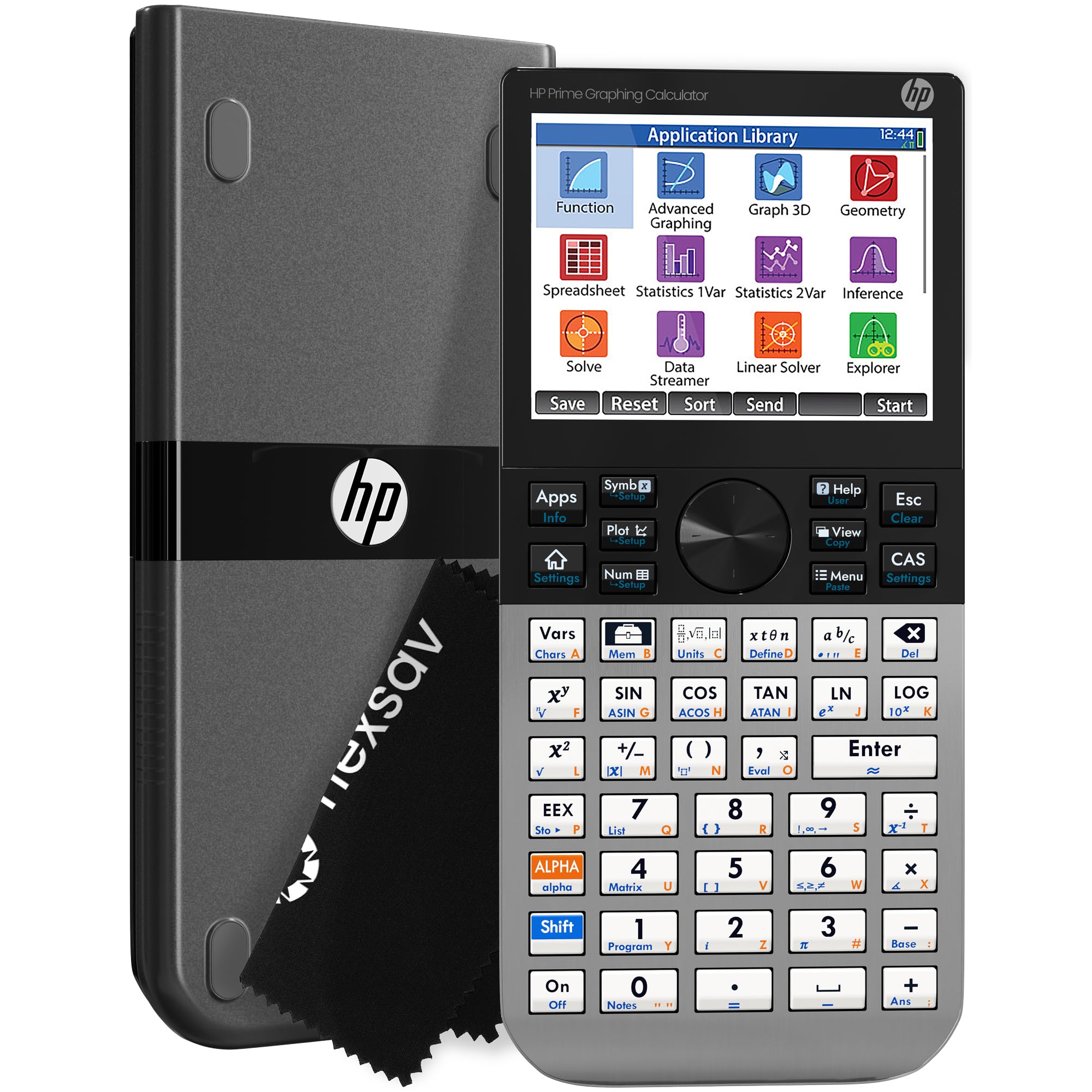
The HP Prime G2 is a fundamentally different device from the 12C lineage — it is a full-color, multi-touch graphing calculator with a Computer Algebra System (CAS) that also includes RPN and financial functions. The 3.5-inch touchscreen supports pinch-to-zoom and interactive graph manipulation, making it a viable option for students and analysts who need both graphing and TVM capabilities.
Under the hood, the Prime G2 packs 256MB of flash memory, a brushed metal chassis, and a rechargeable lithium-ion battery. It is approved for SAT, PSAT, AP, and IB exams, which places it alongside the 10bII+ in exam-readiness but with the advantage of a full CAS mode for symbolic algebra. The unit pairs with the HP Prime Mobile App for iOS, Android, and Windows, mirroring calculations to a phone or tablet.
For financial users, the Prime G2 can handle NPV, IRR, and amortization through its Finance app, but its power lies in blending numerical finance with graphical analysis — plotting cash-flow diagrams or fitting regression lines to payment data. The learning curve from a TI-84 is real, but the community support and programming capabilities (including Python via apps) make it the most future-proof option.
Why it’s great
- Multi-touch color display with interactive graphing and pinch-to-zoom
- 256MB storage with CAS and RPN support in one device
- Rechargeable battery and mobile app mirroring for seamless workflow
Good to know
- Overkill if you only need basic TVM/IRR — the 12C is faster for pure finance
- Learning curve is steeper than dedicated financial calculators
5. HP 17B II Plus + WYNGS Protective Case
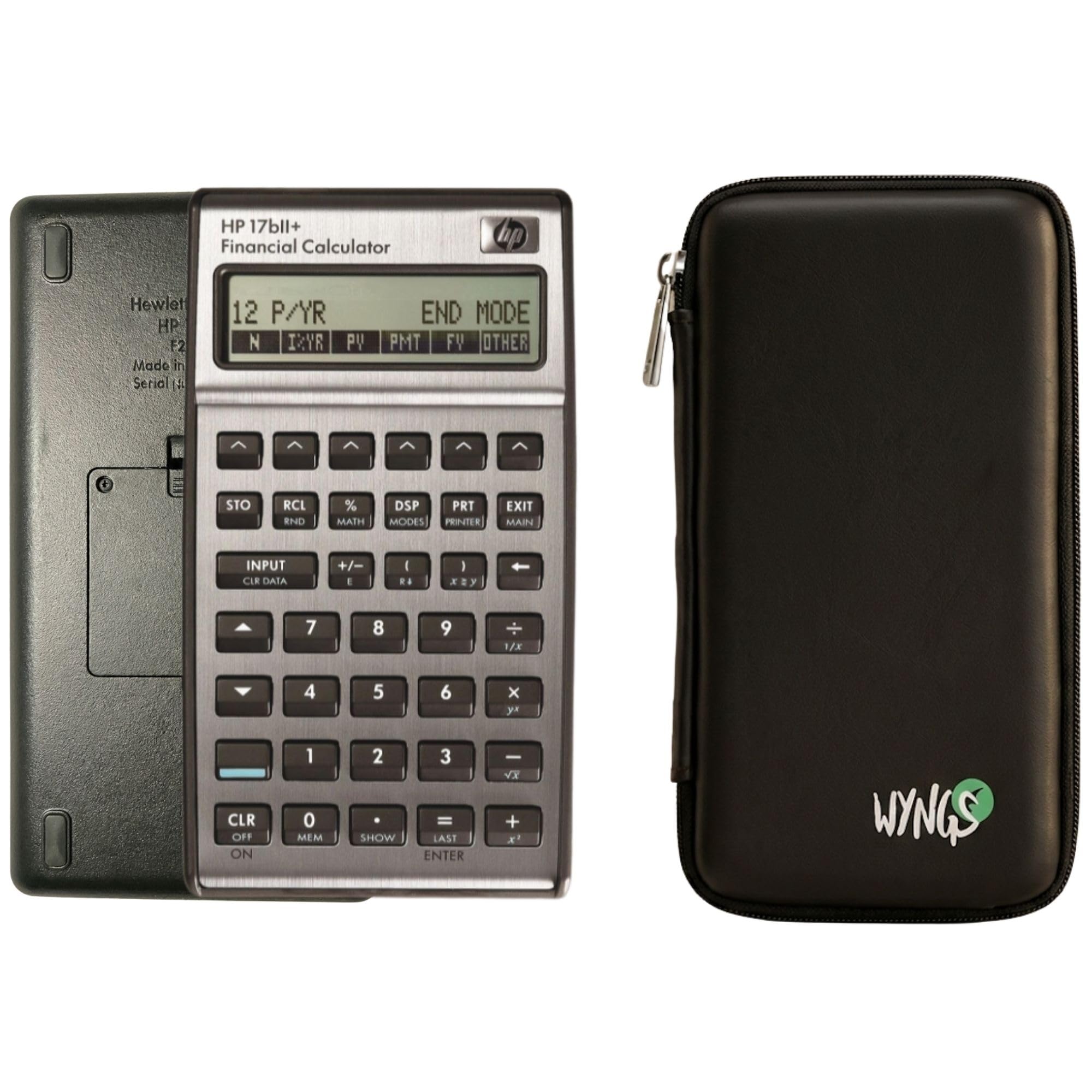
This is the same HP 17BII+ calculator bundled with a WYNGS protective case, making it a smart grab for users who want the advanced solver and 250+ operations without hunting for a separate cover. The unit itself delivers profitability calculations, cash-flow functions for NPV/IRR, and time-value-of-money keys for loans and mortgages, plus list-based one- and two-variable statistics with four regression models.
Like the unbundled 17bII+, this version supports both RPN and algebraic entry, letting you switch depending on the task at hand. The included case adds a layer of protection for daily carry in a backpack or briefcase, and the calculator ships with batteries ready to go. Customer feedback consistently highlights the reliability and depth of functions for business finance coursework.
The primary difference from the unbundled model is simply the packaging — you get the exact same calculator with the exact same 28KB memory, solver app, and two-line display, but with a case included at a combined price that usually beats buying them separately. It is a practical choice for students who need every accessory in one shipment.
Why it’s great
- All the solver and regression power of the 17bII+ with a protective case included
- RPN and algebraic entry modes for flexible workflows
- Batteries included and ready out of the box
Good to know
- Same long-term key resistance concerns as the unbundled model
- Case is functional but basic — no belt clip or extra storage
6. HP 10bII+ Financial Calculator
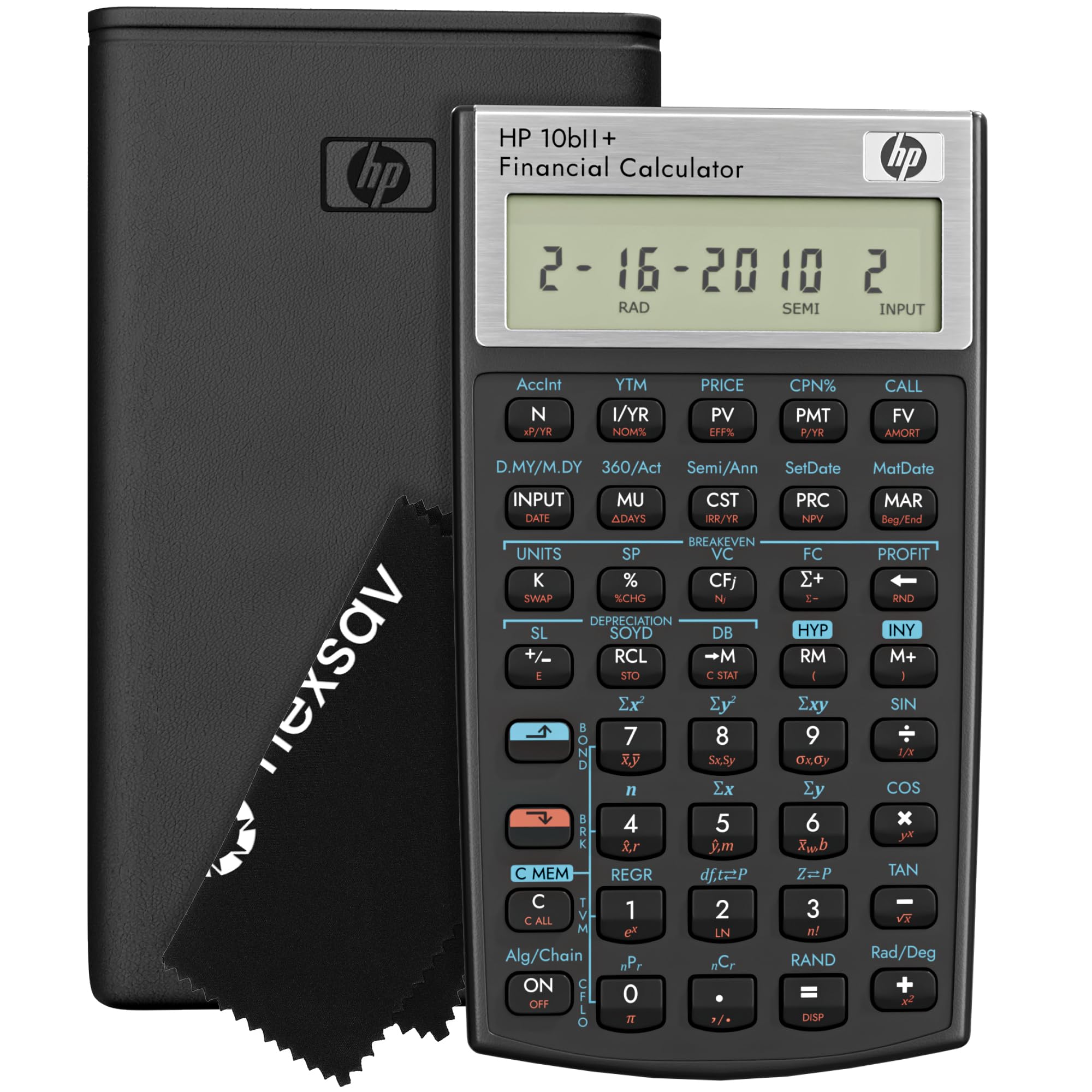
The HP 10bII+ is the entry-level gate to HP’s financial ecosystem, using algebraic and chain logic instead of RPN — meaning it feels familiar to anyone who grew up with standard scientific calculators. It packs over 100 functions including TVM, interest conversion, NPV, IRR, amortization, and probability distributions for statistics courses, all on a clean, dedicated-key layout.
This model is officially approved for SAT, PSAT/NMSQT, and AP exams, making it a top choice for high school and college students required to use a financial calculator in coursework without the overhead of RPN training. The non-backlit LCD screen offers good contrast in exam lighting, and the bundle includes a protective travel case, cleaning cloth, and pre-installed batteries.
Customer feedback from finance students is overwhelmingly positive — they cite the easy learning curve and reliable battery life over a full semester of daily use. The plastic build is lighter than the 12C, but for the price, it delivers all the core financial math needed for introductory to intermediate business courses.
Why it’s great
- No RPN learning curve — uses standard algebraic entry
- Approved for SAT, PSAT, and AP exams
- Includes case, cloth, and batteries for immediate use
Good to know
- Lacks programmability and advanced memory of the 12C/17bII+
- Build quality is lighter than premium HP models
7. HP 10B II Plus + WYNGS Protective Case
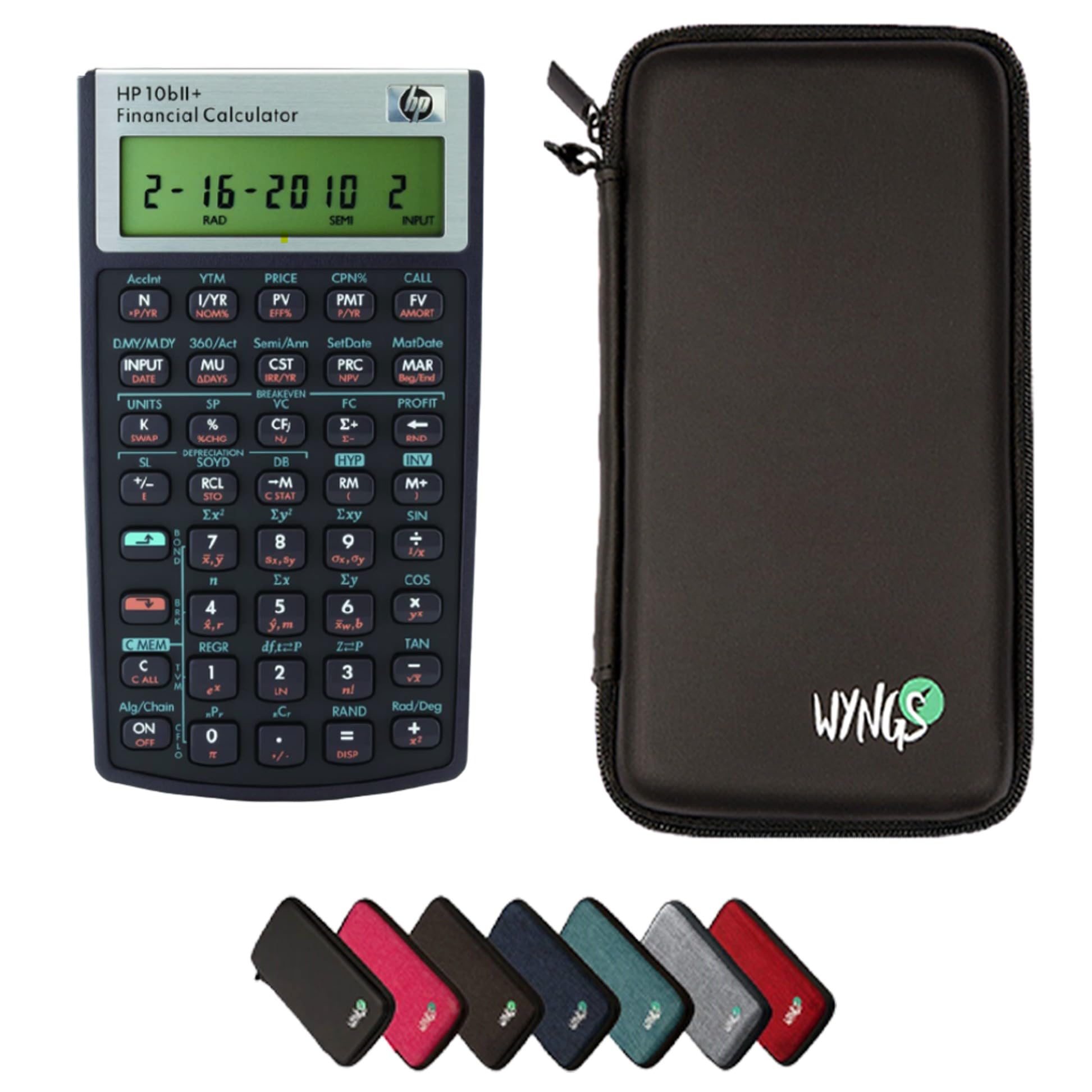
This is the HP 10bII+ packaged with a WYNGS-branded protective case — a straightforward bundle for students who want the calculator and a cover in one purchase. The underlying device is identical to the standalone 10bII+: same 100+ functions, same algebraic logic, same exam approvals for SAT, PSAT, and AP.
The addition of the WYNGS case adds a slim, clip-less sleeve that protects the calculator from scratches and minor drops in a backpack. Customer reviews for the bundled version echo the standalone’s enthusiasm — students in business finance and corporate finance classes consistently report that it handles mortgage calculations, car loan payments, and bond valuations with minimal frustration.
Battery life is a standout; multiple users report daily use over four months without a single battery change. For anyone taking an introductory or intermediate finance course that requires a dedicated financial calculator, this bundle eliminates the need to buy accessories separately, reducing friction before the first assignment.
Why it’s great
- Full 100+ function financial calculator with bundled protective case
- Algebraic entry — no RPN learning curve
- Excellent battery life reported over months of daily use
Good to know
- No programmability or advanced solver features
- Case adds bulk compared to a sleeve alone
FAQ
Do I need RPN to use an HP 12C calculator effectively?
Can the HP 12C handle complex bond pricing and amortization schedules?
Final Thoughts: The Verdict
For most users, the best 12c calculator winner is the HP 12C Financial Calculator because its RPN workflow, industry-standard function set, and tactile keyboard offer unbeatable speed for professional finance. If you want the flexibility of algebraic input plus quadruple program memory, grab the HP 12CP Financial Calculator. And for advanced analysts who need custom equation solvers and list-based statistics, nothing beats the HP 17bII+.