
A 12-foot fishing kayak occupies a sweet spot that smaller boats can’t touch: it paddles efficiently enough to cover substantial water, yet remains manageable for a solo angler to transport. The extra foot compared to a 10-footer translates directly into better glide, straighter tracking in a crosswind, and more deck space for rods, tackle crates, and a cooler. The real challenge isn’t finding a kayak that floats—it’s finding one whose hull design, seat comfort, and accessory compatibility match the specific way you fish, whether that’s standing to sight-cast in the flats or trolling a livewell for hours.
I’m Min — the co-founder and writer behind Gadgets Feed. I’ve spent hundreds of hours cross-referencing hull dimensions, weight capacities, seating ergonomics, and customer durability reports across the full spectrum of sit-on-top fishing kayaks to isolate the models that genuinely outperform their price tier.
After sorting through the data, these are the models I would trust with my own gear. This guide to the best 12ft fishing kayak breaks down every critical spec so you can make a purchase that lasts.
How To Choose The Best 12Ft Fishing Kayak
A 12-foot kayak is a deliberate choice—long enough to track, short enough to handle. But within that length, hull shape, beam width, and seating height radically change the on-water experience. The right choice depends on how you launch, where you fish, and whether you stand or sit all day.
Hull Design: Stability vs. Speed
Most 12-foot fishing kayaks use a modified V-hull or a tunnel hull. A wider beam (32–35 inches) creates a stable platform for standing, but it catches wind and paddles slower. A narrower hull (29–31 inches) tracks better and glides farther per stroke but demands better balance if you stand. The Perception Outlaw 11.5 uses a 35-inch beam specifically for standing stability, while the Wilderness Systems Pungo 120 (29 inches) prioritizes efficient recreational paddling.
Weight Capacity and Deck Load
A 12-foot kayak typically carries 325 to 425 pounds. That number must include your body weight, a cooler, tackle boxes, a battery for a fish finder, rods, and a possible trolling motor. The Perception Outlaw 11.5 handles 425 pounds, while the Wilderness Systems Tarpon 120 maxes at 350. If you plan to run a heavy battery and motor, aim for 400+ pounds of capacity to keep the scupper holes above the waterline.
Seat Comfort and Height
Lawn-chair-style seats (Perception Pescador Pro 12, Pelican Catch Mode 110) sit higher off the deck, improving your view and reducing leg fatigue, but raising your center of gravity. Low-profile seats (Wilderness Systems Tarpon 120, Pungo 120) keep you closer to the water for better paddle leverage and primary stability, but they can cause back soreness on long days. The best seat for you depends entirely on whether you mainly paddle or mainly fish from a stationary position.
Pedal Drive vs. Pure Paddle
Pedal-drive systems (Albott Modular, Pelican Catch HDII) free your hands for casting but add weight, cost, and a maintenance point. Pure paddle hulls (Perception Outlaw 11.5, Lifetime Yukon Angler 116) are lighter, cheaper, and simpler. If you fish current-heavy rivers or wind-prone lakes, a pedal drive or motor (Old Town Sportsman 106) lets you fish actively without fighting drift. If you mostly paddle to a spot and anchor, a clean paddle hull saves money and weight.
Quick Comparison
On smaller screens, swipe sideways to see the full table.
| Model | Category | Best For | Key Spec | Amazon |
|---|---|---|---|---|
| Perception Outlaw 11.5 | Premium Paddle | Stand-up stability | 425 lb capacity, 35″ beam | Amazon |
| Perception Pescador Pro 12 | Mid-Range Paddle | Pro-grade features at 64 lbs | 64 lb weight, adjustable seat | Amazon |
| Wilderness Systems Tarpon 120 | Premium Paddle | Efficient, straight tracking | 63 lb weight, Phase 3 Air Pro seat | Amazon |
| Pelican Catch Mode 110 | Mid-Range Paddle | Lightweight stability | 67 lb weight, 375 lb capacity | Amazon |
| Lifetime Yukon Angler 116 | Mid-Range Paddle | Value with stand-up capability | 78 lb weight, skeg wheel | Amazon |
| Wilderness Systems Pungo 120 | Premium Paddle | All-day recreational comfort | 49 lb weight, Phase 3 AirPro seat | Amazon |
| Albott Modular Kayak | Premium Pedal | Modular transport & fin drive | 102 lb weight, 420 lb capacity | Amazon |
| Pelican Catch HDII | Premium Pedal | Pedal drive with comfort seat | 67 lb weight, HyDryve II pedal | Amazon |
| BKC 14.0 Pro Tandem | Premium Pedal | Tandem/solo versatility | 100 lb weight, 750 lb capacity, 14′ | Amazon |
| Old Town Sportsman 106 | Premium Motorized | Hands-free motorized fishing | 121 lb weight, 525 lb capacity | Amazon |
| Minn Kota Terrova (Motor) | Premium Motor | GPS trolling for any kayak | 55 lb thrust, Spot-Lock, 36″ shaft | Amazon |
In‑Depth Reviews
1. Perception Outlaw 11.5

The 35-inch beam on the Outlaw 11.5 is its defining feature. At 425 pounds of total capacity, it easily supports a 300-pound angler plus a cooler, tackle crate, and battery without sitting low in the water. The fold-away lawn-chair seat sits high enough to see over reeds, and the open deck layout gives you room to reposition your feet when fighting a fish.
Four integrated rod holders keep multiple rods within reach, and the integrated tackle trays in the hull are a rare convenience—no separate crate needed for small soft plastics and hooks. The hull is made of rotomolded polyethylene, so it can handle rocky launches without structural damage. At 77 pounds, it’s heavy but manageable with a cart or two-person lift.
Tracking is decent for a boat this wide—a skeg or rudder helps significantly on windy days. If you need a dedicated stand-up platform that doesn’t compromise storage or seat comfort, this hull delivers in a way few 12-footers can match.
Why it’s great
- Exceptional stand-up stability with a 35-inch beam
- Fold-away seat wraps around you for all-day support
- Integrated tackle trays keep gear organized in the hull
Good to know
- 77 lb hull is a solo roof-load challenge
- Front storage is hard to access for larger paddlers
2. Perception Pescador Pro 12
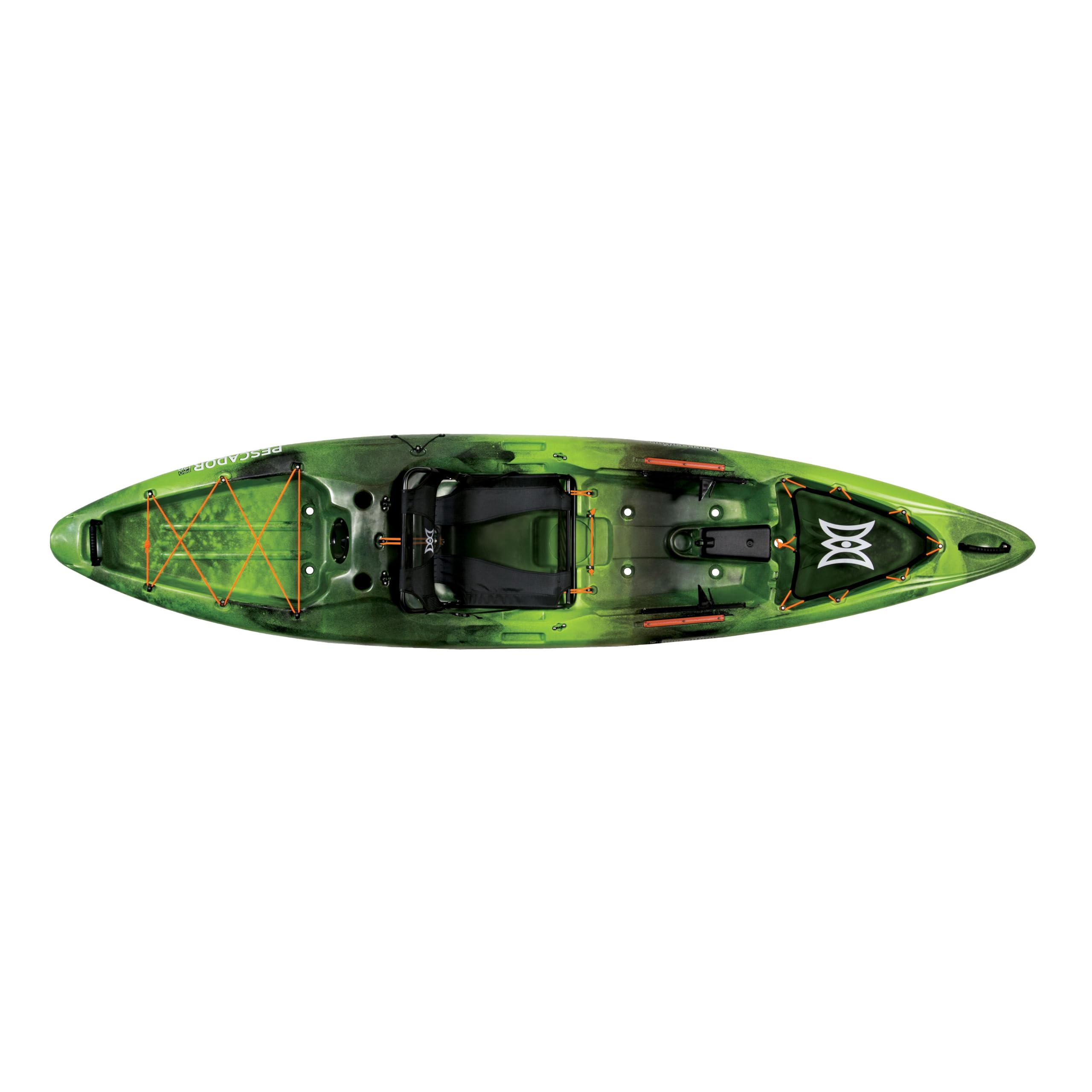
The Pescador Pro 12 is the benchmark for a mid-range sit-on-top. At 64 pounds, it’s light enough for one person to hoist onto a roof rack or truck bed, but the rotomolded hull is dense enough to take abuse from gravel ramps. The adjustable lawn-chair seat uses a full-frame backrest and padded seat pan—support that rivals premium brands at a lower price point.
Two flush-mount rod holders sit behind the seat, and the rear tankwell has bungee lacing for a milk crate. The hull’s 32.5-inch beam provides moderate stability—you can stand if you’re under 200 pounds and have decent balance, but it’s not a dedicated stand-up platform like the Outlaw. Tracking is surprisingly good for a 12-footer, partly thanks to the sharp entry line that cuts through chop.
Storage includes a covered bow hatch (not fully dry) and an open stern area. The accessory tracks on the gunwales let you mount a fish finder arm or rod holder without drilling. If you want a proven, transportable hull that doesn’t break the bank, the Pescador Pro 12 is the safe bet.
Why it’s great
- 64 lb hull is easy for one person to load
- Lawn-chair seat rivals much pricier boats
- Accessory tracks and bungee storage for easy customization
Good to know
- Stand-up stability is limited for heavier anglers
- Rod holders are positioned behind the seat, not ideal for active fishing
3. Wilderness Systems Tarpon 120
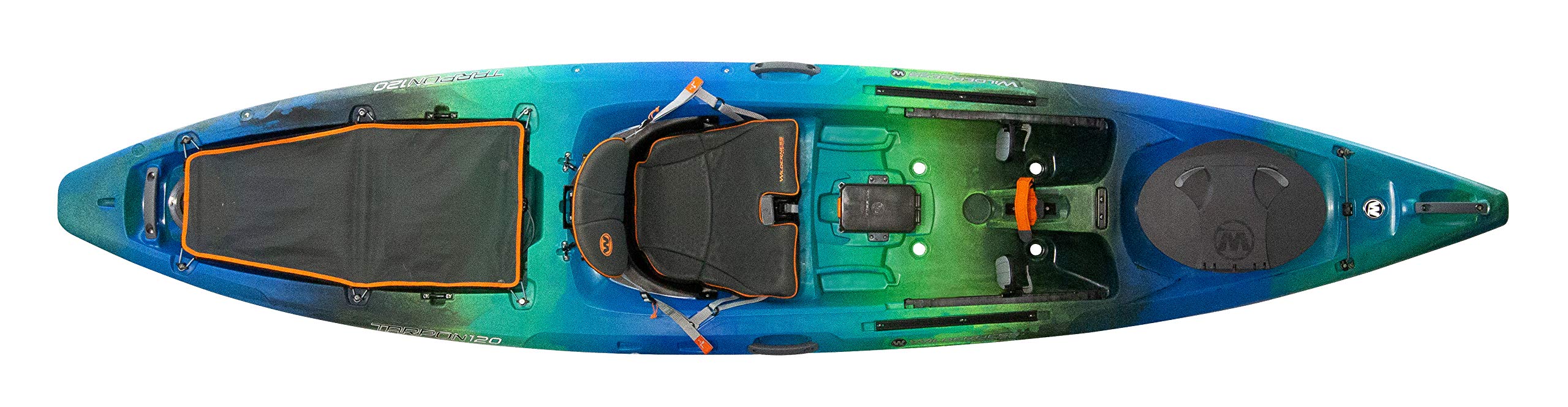
The Tarpon name has been around for decades because the hull design works. The 120 version uses a 31-inch beam that balances glide speed with moderate stability—you won’t stand upright in wind, but you’ll cover miles of shoreline with fewer strokes than any 35-inch hull. The Phase 3 Air Pro seat is ventilated mesh with a tension-adjustable backband, not a padded lawn chair, so it keeps you cool on hot days but requires a specific recline preference.
The stern has a molded-in tankwell with bungee lacing and a dry hatch underneath. The bow storage includes a removable Dry Tec box for phone, wallet, and keys—actually waterproof, not just splash-resistant. SideTrack accessory rails run along both gunwales, giving you flexible mounting for rod holders, a fish finder, or a GoPro arm.
At 63 pounds, it’s lighter than most true fishing kayaks in this category, which matters if you load your own roof rack. The hull tracks straight enough that many owners skip the rudder on lakes. If your priority is paddle efficiency and premium seat ergonomics over standing stability, the Tarpon 120 is a strong contender.
Why it’s great
- Efficient hull for long-distance paddling
- Phase 3 Air Pro seat is breathable and adjustable
- Dry Tec box provides genuine waterproof storage
Good to know
- 350 lb capacity is lower than many competitors
- Stand-up stability is limited; more of a seated fishing kayak
4. Pelican Catch Mode 110

The Catch Mode 110 uses a tunnel hull design that creates a wide, flat deck platform—you can stand and cast with confidence, and the 34.5-inch beam makes re-entry from the water easier than V-hull boats. The ERGOBOOST seat sits high off the deck, giving you a commanding view of the water while putting your hips in a more natural paddling position than a low slung seat.
Storage is well thought out: three flush-mount rod holders, front and rear tankwells, two bottle holders, and two 4-inch rigging tracks on the console. The hull comes with a skeg for improved tracking, and the deck is covered in an anti-slip carpet that quiets gear movement. At 67 pounds, it’s one of the lightest stable platforms in this class.
The main tradeoff is length—at 10 feet 8 inches, it’s shorter than a true 12-footer, which means slightly less glide and more susceptibility to wind. But if you value stand-up stability and easy loading over raw paddling speed, the Catch Mode 110 delivers a lot of boat for the weight.
Why it’s great
- Tunnel hull provides outstanding stand-up stability
- ERGOBOOST seat is adjustable and well-padded
- Lightweight for its width—67 lb hull is manageable
Good to know
- 10.5 ft length glides less than true 12-footers
- Skeg can pop off on impact; carriers are replaceable
5. Lifetime Yukon Angler 116

The Yukon Angler 116 packs a lot of features at a surprisingly accessible price point. The adjustable frame seating system lets you sit high for paddling or recline for relaxing, and the stability strap is a clever add-on that assists stand-up casting—a feature usually seen on boats costing significantly more. The 32-inch beam provides enough stability for a 200-pound angler to stand with practice.
Storage includes two flush-mount rod holders, two horizontal rod storage cradles, a tankwell with bungee lacing, and a molded-in 28-inch ruler. The skeg wheel helps with tracking and doubles as a transport aid. The hull is also transducer-ready with scupper holes designed for a fish finder.
The biggest drawback is weight: at 78 pounds, it’s heavy for its class, and the plastic hull is prone to cosmetic damage during shipping. The skeg wheel assembly can be fragile. For the angler launching from a concrete ramp or dock who wants stand-up capability without spending premium money, the Yukon Angler 116 is a genuine budget contender.
Why it’s great
- Stand-up stability strap assists casting
- Transducer-ready scupper and accessory tracks
- Adjustable frame seating with multiple positions
Good to know
- 78 lb hull is heavy for solo transport
- Skeg wheel assembly can break during shipping or use
6. Wilderness Systems Pungo 120
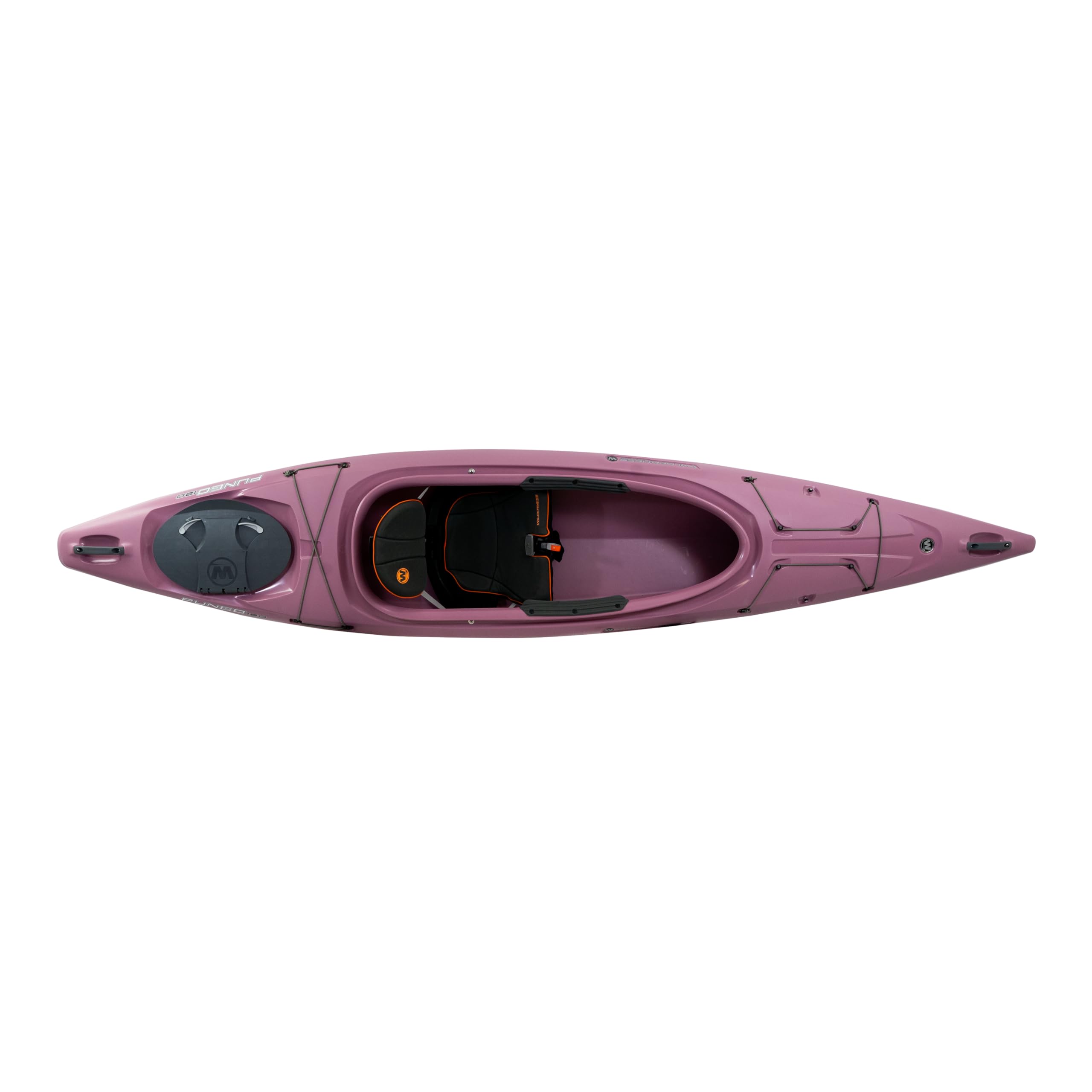
The Pungo 120 is a sit-inside kayak that redefines what comfort means in a 12-foot hull. The Phase 3 AirPro seat uses honeycomb-vented foam and mesh fabric to keep your back dry and cool, with independent lumbar and thigh adjustments. The Slidelock foot brace system lets you dial in leg position without reaching down into the hull. This is a seat engineered for eight-hour days on the water.
The Orbix stern hatch provides dry storage, and the removable dashboard includes a drybox, two cupholders, and a recess for a battery. At 29 inches wide, the Pungo is narrower than most fishing kayaks, which means better paddling efficiency—it glides and tracks well enough to keep up with recreational paddlers. The 49-pound weight is the lightest in this lineup by a wide margin.
The tradeoff is reduced stability compared to wider fishing-specific hulls—you won’t stand in this boat, and the open cockpit can take water over the side in chop. The dashboard can also be cramped for longer legs. For the angler who prioritizes paddle comfort and dry storage over stand-up capability, the Pungo 120 is unmatched.
Why it’s great
- 49 lb hull is the lightest in this category
- AirPro seat offers lumbar and thigh adjustability
- Orbix hatch provides generous dry storage
Good to know
- 29-inch beam limits stability; not for standing
- Dashboard may feel cramped for tall paddlers
7. Albott Modular Fishing Kayak
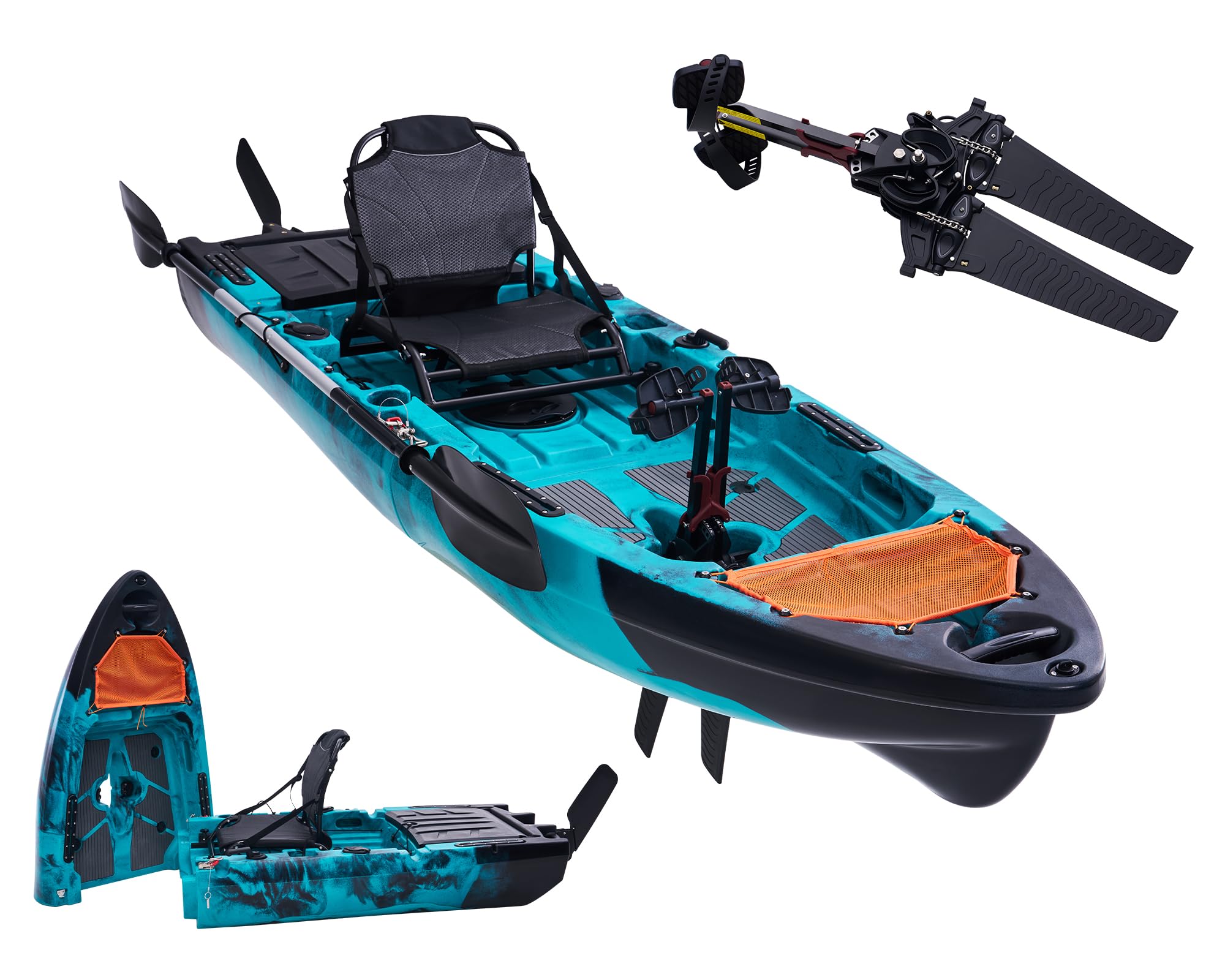
The Albott is a modular two-piece kayak that separates for transport—each section has an internal handle, so you can load it into an SUV trunk instead of a roof rack. The fin-drive pedal system delivers hands-free propulsion in shallow water, and the included spare fins add peace of mind. At 102 pounds total, the assembled unit is heavy, but the split design solves the biggest pain point of long kayaks.
The HDPE hull is stiffer than standard polyethylene, which helps the kayak track better under pedal power. The adjustable seat slides forward and aft to dial in balance, and the open deck has plenty of space for gear. The rudder is controlled by a cable system that raises and lowers smoothly, and the 304 stainless steel hardware resists corrosion in brackish environments.
Some early units have reported fin shaft failures and hardware looseness, so pre-tightening all fasteners before the first launch is mandatory. The 6-month warranty is shorter than industry average. For anglers who absolutely need a pedal drive in a portable, car-trunk-friendly package, the Albott is a unique option.
Why it’s great
- Two-piece modular design fits in a car trunk
- Fin-drive system allows hands-free fishing
- Stiff HDPE hull tracks well under pedal power
Good to know
- Fin drive system has reported durability issues
- Heavy at 102 lbs; requires two people to move assembled
8. Pelican Catch HDII

The Catch HDII marries Pelican’s stable tunnel hull with the HyDryve II pedal system, creating a sit-on-top that you can stand on and pedal hands-free. The Ergocast G2 seat is one of the most comfortable kayak chairs on the market—it wraps around your hips and lower back with a padded EVA seat pad and a breathable mesh backrest. The pedals drive a propeller, not fins, which means better performance in weedy conditions.
Four accessory rails give you extensive mounting options, and the three flush-mount rod holders keep your rods within easy reach. The rudder is controlled by a hand-operated system that can be deployed as a skeg for better tracking. At 67 pounds, this is a lightweight pedal-drive kayak that doesn’t require a trailer or a dedicated roof rack system.
The main concerns are durability around the pedal drive—some users have reported the fin bolt snapping within the first few hours of use—and the rear “waterproof” compartment not being truly dry. The rudder cables can also loosen over time. For the angler who wants a lightweight pedal-driven platform for lakes and slow rivers, the Catch HDII is a compelling package.
Why it’s great
- HyDryve II pedal system with rudder control
- Ergocast G2 seat is exceptionally comfortable
- Lightweight for a pedal-drive kayak (67 lbs)
Good to know
- Pedal drive durability issues reported
- Rear compartment is not waterproof
9. Brooklyn Kayak Company 14.0 Pro Tandem
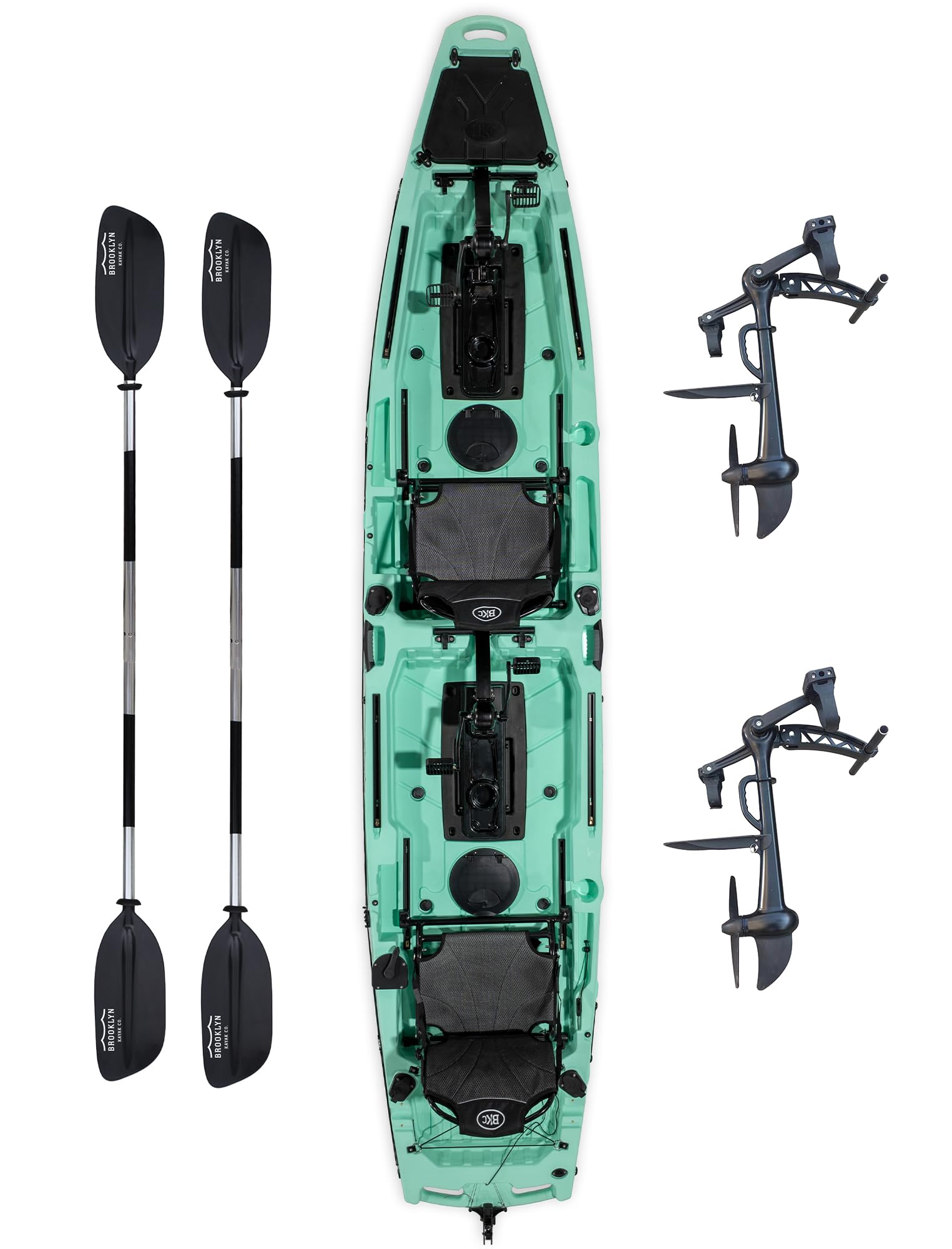
The BKC 14.0 Pro is a true tandem pedal kayak with twin bicycle-style pedals driving separate propellers. Solo paddlers can remove the front pedal system and adjust the seat to center the balance, while two anglers can cover distance with synchronized effort. The 35-inch wide hull provides the stability to stand and cast even in tandem configuration.
The hand-operated rudder gives precise control, and the scupper holes drain the cockpit quickly. Storage includes a large watertight bow hatch and a spacious rear cargo area with tie-downs. The seats are independently adjustable, so two paddlers of different heights can find a comfortable position.
The primary issues are weight (nearly 100 pounds) and some early quality-control reports, including propeller blades breaking and the rear pedal drive becoming waterlogged. The rod holder placement has been criticized as better for transport than active fishing. For couples or fishing partners who want to share a single boat without sacrificing stability, this is a unique option, but it demands careful inspection upon delivery.
Why it’s great
- True tandem pedal system for two anglers
- 35-inch beam provides excellent stability
- Can be configured for solo use
Good to know
- Nearly 100 lbs; requires two people to manage
- QC issues with propeller and water intrusion reported
10. Old Town Sportsman 106 Powered by Minn Kota
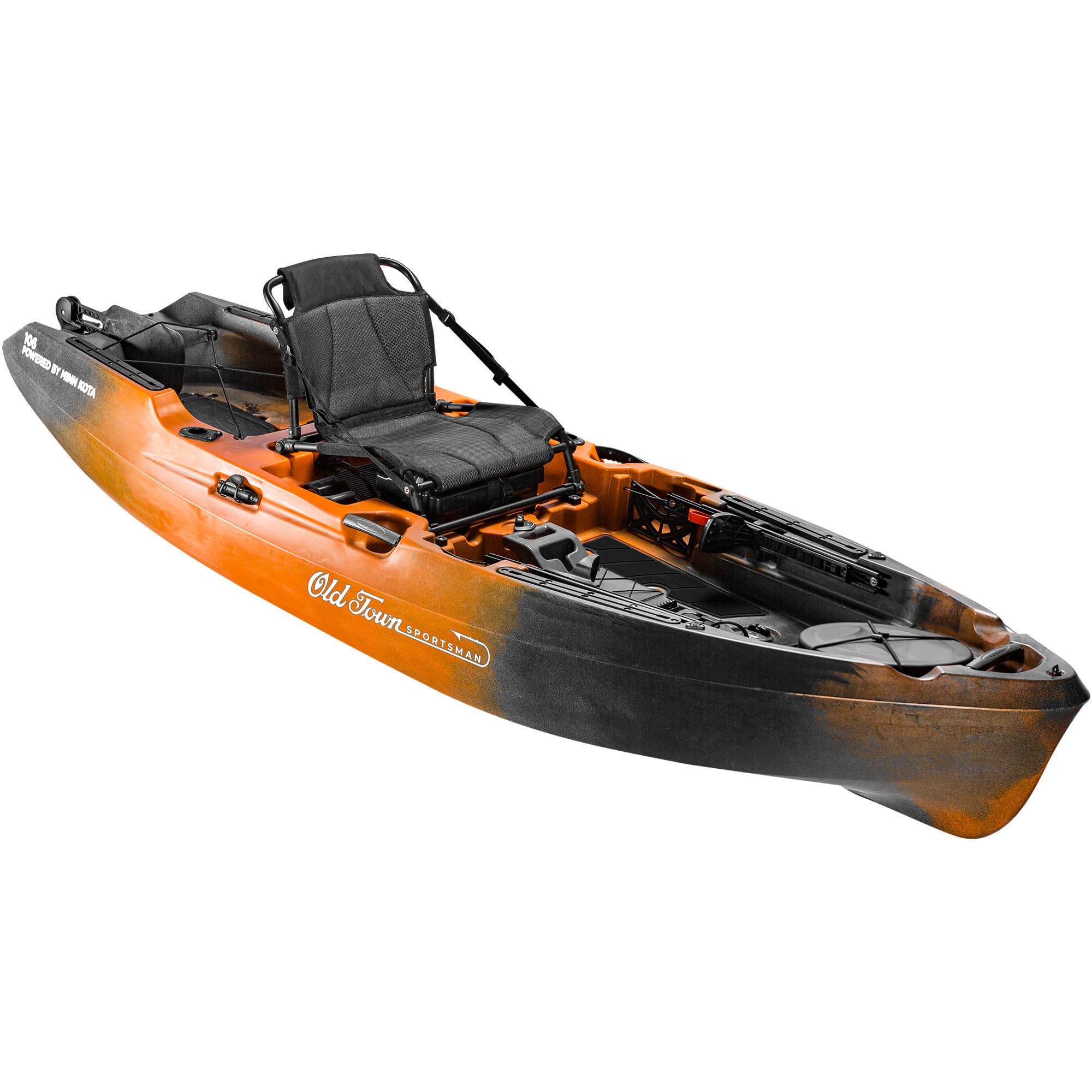
The Sportsman 106 is a factory-integrated motorized kayak that removes the guesswork from adding a trolling motor. The low-profile 45-pound-thrust Minn Kota motor is saltwater-ready and mounts flush to the bow, keeping the deck clear for moving around. The dual-layer Textilene mesh seat keeps you cool while the adjustable foot braces let you fine-tune leg position.
Three through-hull wiring kits and a universal transducer mount take the drilling out of fish-finder installation. The 525-pound maximum capacity is generous enough for a 200-pound angler plus a 12-volt deep-cycle battery (not included), a full tackle bag, and a large cooler. The extra-large rudder provides good control in both forward and reverse, even in a crosswind.
The main drawback is weight—121 pounds for the kayak and another 17 for the removable motor console. This boat is not for roof-top loading; it belongs on a trailer or in the bed of a truck. At 10 feet 6 inches, it’s shorter than the 12-foot category norm, but the motor makes up for the lost paddling glide. For the angler who wants a purpose-built motorized platform, the Sportsman 106 is the gold standard.
Why it’s great
- Factory-integrated Minn Kota motor with low-profile design
- 525 lb capacity for heavy loads
- Through-hull wiring and transducer mount for easy fish-finder setup
Good to know
- 121 lb hull requires a trailer or truck
- Motor battery not included
11. Minn Kota Kayak Terrova Bow-Mount Trolling Motor
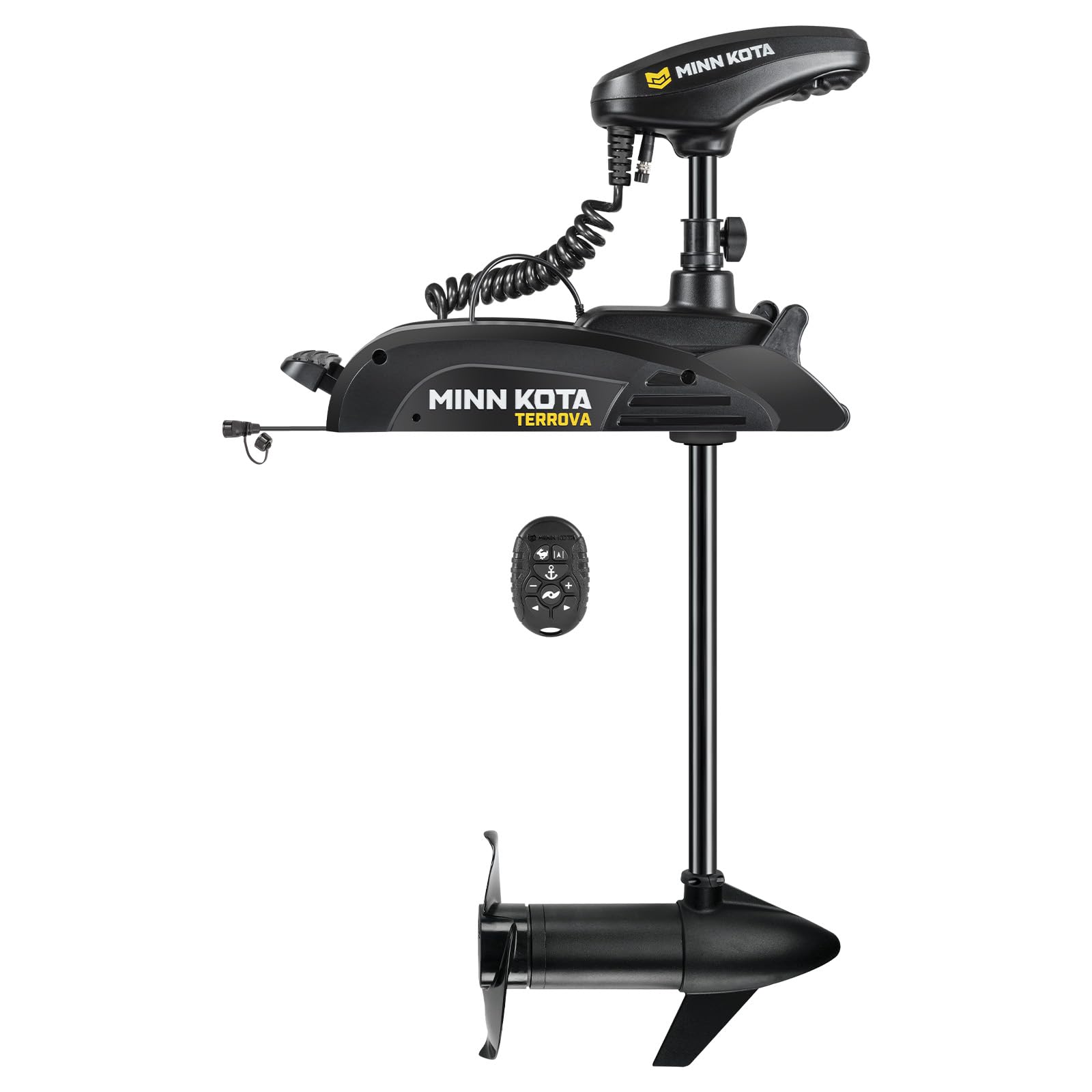
The Terrova is not a kayak—it’s the upgrade that transforms any compatible kayak into a GPS-guided fishing platform. The 55-pound thrust electric motor uses Spot-Lock technology to hold your position within a few feet in wind and current, freeing you to fish hands-free. The Digital Maximizer extends battery life up to five times longer than standard motors by regulating power consumption.
The 36-inch composite shaft is long enough for bow-mount installations on most sit-on-top fishing kayaks, and the Weedless Wedge 2 prop cuts through grass without tangling. The micro remote with lanyard controls speed, steering, and anchor lock from anywhere in the boat, and the One-Boat Network app lets you interface with Humminbird fish finders for integrated navigation.
Installation requires a mounting plate and a 12V battery—rigging is straightforward but does require some DIY effort. The motor must be powered on by hand, which can be awkward if you’re already on the water and the remote is your only control. For the serious angler who wants professional-grade GPS trolling on their existing kayak, the Terrova is the benchmark.
Why it’s great
- Spot-Lock GPS holds position automatically
- Digital Maximizer extends battery life 5x
- Micro remote provides full control from anywhere in the kayak
Good to know
- Requires mounting plate and battery (not included)
- Motor must be powered on manually; remote cannot power on
FAQ
Can I stand up in a 12-foot fishing kayak?
Is a 12-foot kayak better than a 10-foot for fishing?
What is the ideal weight capacity for a 12-foot fishing kayak?
Do I need a pedal drive or a trolling motor for a 12-foot fishing kayak?
How heavy is a typical 12-foot fishing kayak, and can one person load it?
Final Thoughts: The Verdict
For most users, the best 12ft fishing kayak winner is the Perception Outlaw 11.5 because its 35-inch beam and 425-pound capacity deliver stand-up stability that no other 12-foot paddle hull matches. If you want a lightweight hull that loads easily and tracks beautifully, grab the Perception Pescador Pro 12. And for hands-free pedal-drive fishing in a portable package, nothing beats the Pelican Catch HDII.