
Finding a reliable 12-volt lithium-ion battery isn’t just about voltage—it’s about cycle life, consistent power delivery, and a battery management system that actually protects your investment. Whether you’re replacing a dying AGM in your RV, powering a trolling motor, or building a solar bank, the difference between a battery that lasts a year and one that lasts a decade lives in the cells and the BMS.
I’m Min — the co-founder and writer behind Gadgets Feed. I’ve analyzed hundreds of datasheets, cross-referenced customer endurance tests, and compared real-world capacity results to separate the batteries built with Grade A cells from those that simply claim them.
I’ve compiled the most rigorous analysis of the best 12v ion battery options on the market, focusing on the real specs that determine whether your battery survives its first winter off-grid.
How To Choose The Best 12V Ion Battery
Not all 12-volt lithium batteries share the same DNA. You’ll encounter three distinct types: standard LiFePO4 deep-cycle batteries, high-output packs for power tools like the Milwaukee M12, and large-format batteries with Bluetooth monitoring. Narrowing down which one fits your application starts with understanding capacity, BMS limits, and physical dimensions.
Capacity Beyond the Label: Amp-Hours vs. Usable Energy
A 100Ah rating tells you the theoretical storage, but usable energy depends on the battery’s low-voltage cutoff. Most LiFePO4 batteries stop discharging around 10V, while the lead-acid model you’re replacing might have gone to 11.5V. This means you often get more *usable* watt-hours from a lithium pack than the same Ah rating in AGM, even before factoring in that LiFePO4 delivers consistent voltage until it’s nearly flat.
The BMS is Your Battery’s Brain
The Battery Management System’s continuous discharge rating (usually 100A for 100Ah packs, or 200A for higher-capacity units) dictates what loads you can run. A 100A BMS can handle about 1280W continuous at 12.8V—enough for a small inverter or a 50-70 lb thrust trolling motor. If you plan to run a microwave or a larger inverter, you need a battery rated for higher BMS throughput, or you must wire multiple batteries in parallel.
Group Size and Terminal Type Matter for Drop-In Replacements
Dimensions are non-negotiable if you’re replacing an existing battery tray. Group 24 batteries (roughly 10×6.6×8.2 inches) fit many RV compartments, while Group 31 (13×6.8×8.4 inches) is the standard for trolling motor and marine applications. Terminal types vary from M6 to M8 bolts, and some batteries use F2 connectors—check your cables before buying.
Quick Comparison
On smaller screens, swipe sideways to see the full table.
| Model | Category | Best For | Key Spec | Amazon |
|---|---|---|---|---|
| Power Queen 12.8V 100Ah | Premium Marine | Trolling motors & marine systems | ABYC E-13 compliant, 15000+ cycles | Amazon |
| Redodo 12V 100Ah LiFePO4 | Premium All-Rounder | RV, solar & home storage | 4000-15000 cycles, 100A BMS | Amazon |
| Litime 12V 100Ah TM | Premium Marine | Bass boats & heavy trolling | TVS surge protector, Group 31 | Amazon |
| Wattcycle 12V 100Ah | Mid-Range Group 24 | Compact RV & solar setups | 15000 cycles, BCI Group 24 | Amazon |
| HRBEENERGY 12.8V 100Ah | Mid-Range Value | Off-grid camping & solar | IP67 waterproof, 3-year service | Amazon |
| DUMFUME 12V 150Ah | Mid-Range Large Cap | High energy storage needs | 1920Wh capacity, 4000+ cycles | Amazon |
| Milwaukee 48-11-2450 5Ah | Power Tool Pack | M12 cordless tools | 5Ah capacity, 125+ tool compatibility | Amazon |
| GOLDENMATE 12V 20Ah 2-Pack | Budget Small Format | Ride-on toys, fish finders, UPS | 5000+ cycles, 5.3 lbs each | Amazon |
| ECO-WORTHY 12V 280Ah | Premium Large Bank | Off-grid solar & heavy RV | 200A BMS, Bluetooth, metal case | Amazon |
In‑Depth Reviews
1. Power Queen 12.8V 100Ah LiFePO4
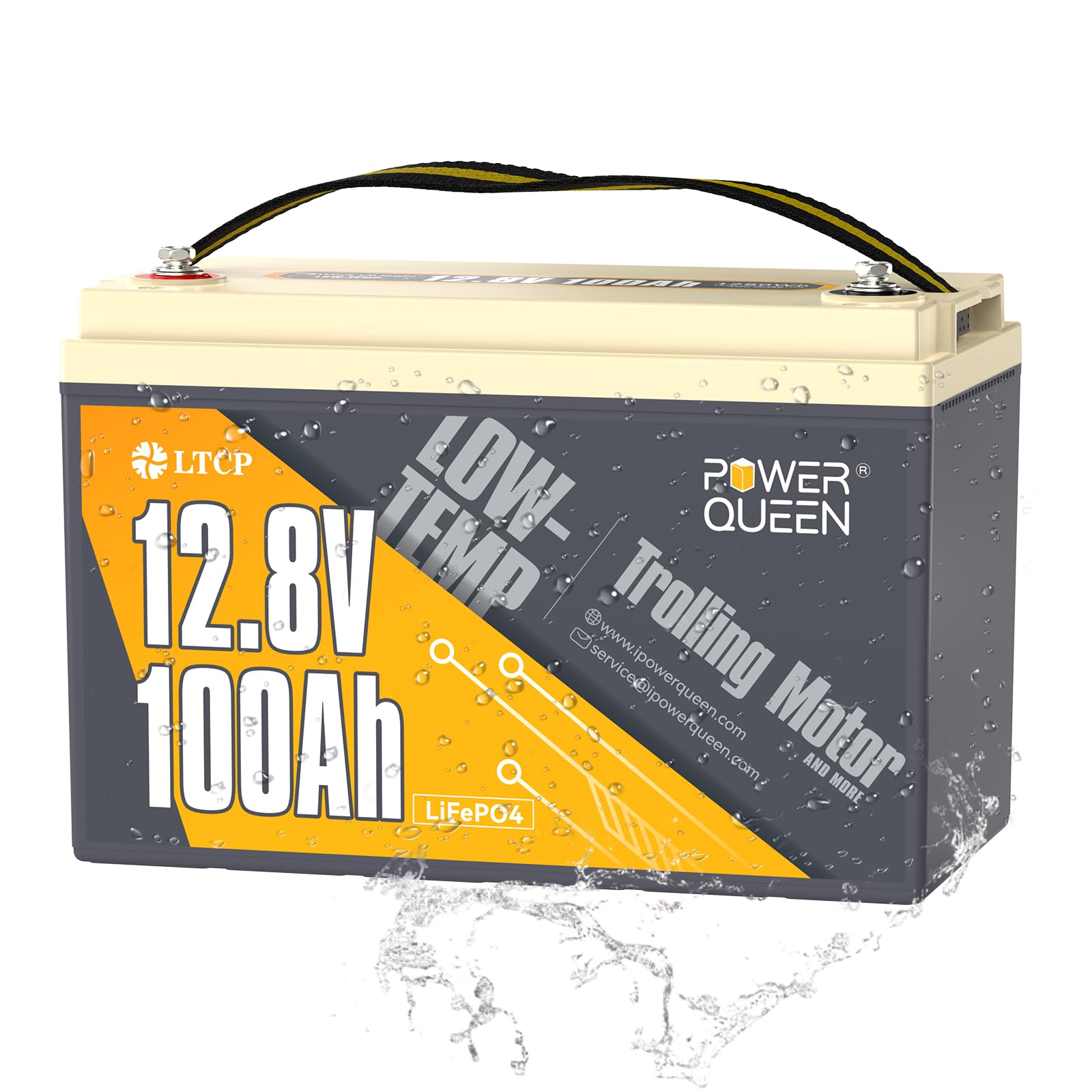
The Power Queen 100Ah stands out because of its marine-focused engineering. It meets the ABYC E-13 standard, meaning the BMS is triple-protected against dust, water, and salt spray—a genuine safety layer for anyone running a trolling motor in a saltwater environment. The built-in TVS surge protector shields 12V-36V motors from voltage spikes that can fry electronics in rough water.
At 22.16 pounds, it’s a full 64% lighter than a comparable lead-acid battery, which translates directly to better hole-shot and fuel economy on a bass boat. It supports up to 4P4S expansion for building a 400Ah, 51.2V bank, and the low-temperature protection stops charging below 32°F, preventing the cell damage that kills batteries left in cold RVs.
Real-world users report running a 50lb-thrust Minn Kota on a 10-foot boat for over 10 trips without dropping the battery meter below full. The packaging includes M8 terminal bolts with flat and lock washers, and the removable carrying strap makes transport safe. The only catch is the Group 31 footprint—measure your tray before buying.
Why it’s great
- ABYC E-13 marine safety certification
- TVS surge protection for sensitive electronics
- Low-temp charge cutoff protects cells
Good to know
- Group 31 size may not fit compact compartments
- No Bluetooth monitoring included
2. Redodo 12V 100Ah LiFePO4
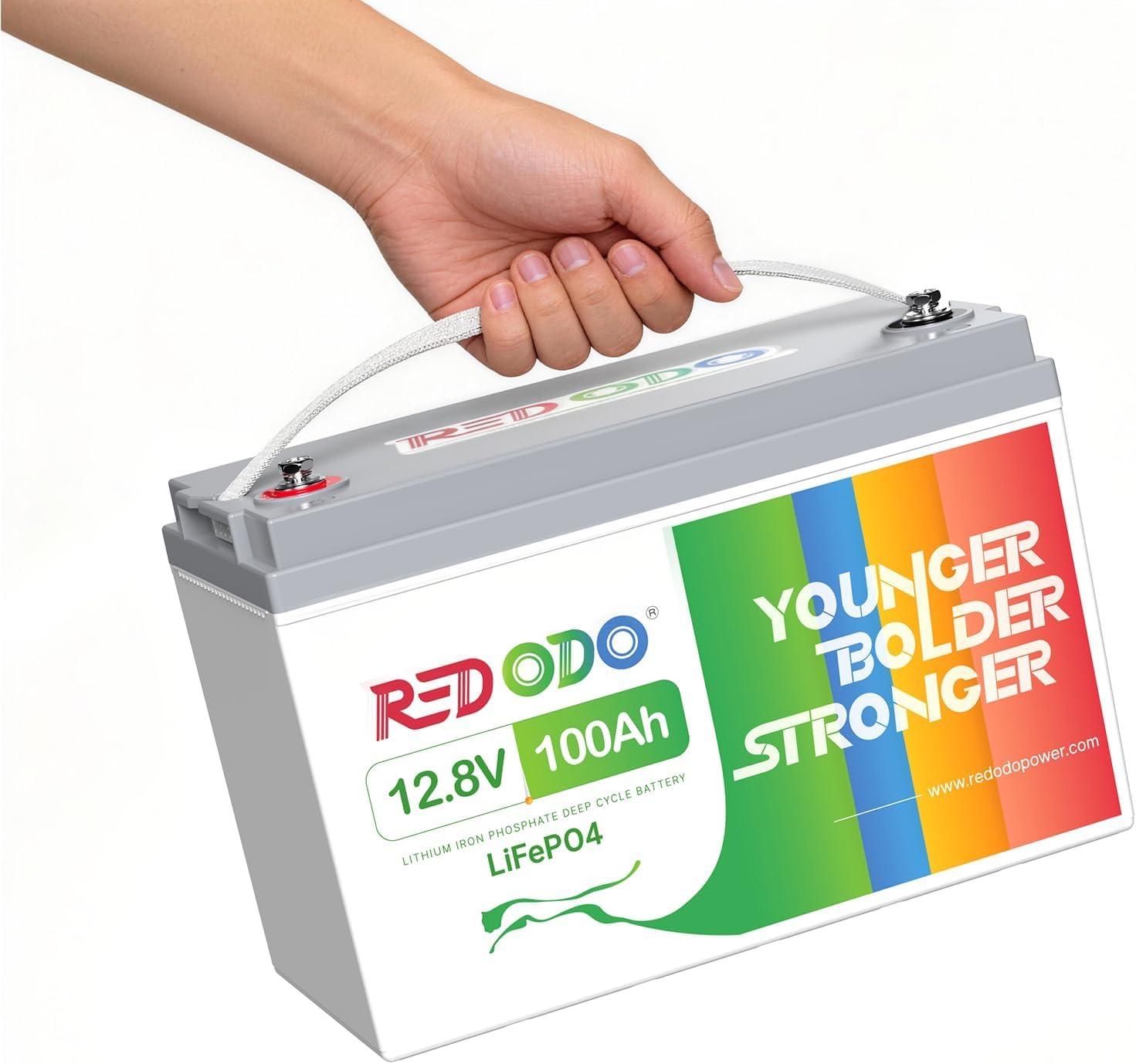
The Redodo 100Ah uses automotive-grade LiFePO4 cells with a self-discharge rate of just 3% per month—far better than the 15-30% you get from lead-acid. It delivers 4000 cycles at 100% depth of discharge, and that number climbs to 15,000 cycles when you cycle at 60% DoD. The built-in 100A BMS manages overcharge, over-discharge, short circuits, and high-temperature conditions.
At only 22.04 pounds, it replaces a typical Group 31 lead-acid that weighs over 60 pounds. This battery is equally at home in an RV, a solar home setup, or as a drop-in replacement for an electric lawn mower—one user reported their Ryobi RM480e went from a 20-minute runtime to mowing the entire lawn with 90% charge remaining. The consistent voltage eliminates the bogging that happens with draining lead-acid packs.
The Redodo supports 4S or 4P configuration for up to 400Ah capacity or 48V voltage. Note that this battery is designed for deep-cycle use, not engine starting, and is best paired with a 30-70 lb thrust trolling motor. Customer support from Redodo is known for responsive guidance, especially when configuring solar charge controllers.
Why it’s great
- Automotive-grade cells with proven longevity
- 60% lighter than equivalent lead-acid
- Excellent customer support for setup issues
Good to know
- Not suitable for starting engines
- No Bluetooth or low-temp protection
3. Litime 12V 100Ah Trolling Motor LiFePO4

The Litime 100Ah TM is built specifically for trolling motors and meets the ABYC E-13 standard like the Power Queen. Its BMS adds triple protection against dust, water, and salt spray, and the TVS surge protector handles voltage spikes from 12V-36V motors. The low-temperature protection is smart: it stops charging below 32°F and stops discharging below -4°F, keeping the cells safe through winter storage.
Weighing 22.16 pounds, this Group 31 battery has proven itself in demanding conditions. One user ran a 36v Minnkota Ultrex on a bass boat for 5 hours and used only 10% of the capacity. The weight reduction alone improved their boat’s hole shot and top speed by 4 mph. Another user reported 4 hours of continuous push against an 8 mph headwind with three heavy passengers and barely drained the battery.
The battery supports expansion up to 4P4S for a 400Ah bank at 51.2V. The one common complaint is that batteries can arrive in sleep mode—a quick wake-up with a Noco charger’s force mode solves it. Litime’s customer service proactively reaches out, and the 5-year warranty provides real peace of mind for marine applications.
Why it’s great
- ABYC E-13 certified with TVS protection
- Impressive real-world capacity under heavy load
- Smart low-temp charging cutoff
Good to know
- Batteries may arrive in sleep mode
- Group 31 footprint is large for tight compartments
4. Wattcycle 12V 100Ah LiFePO4
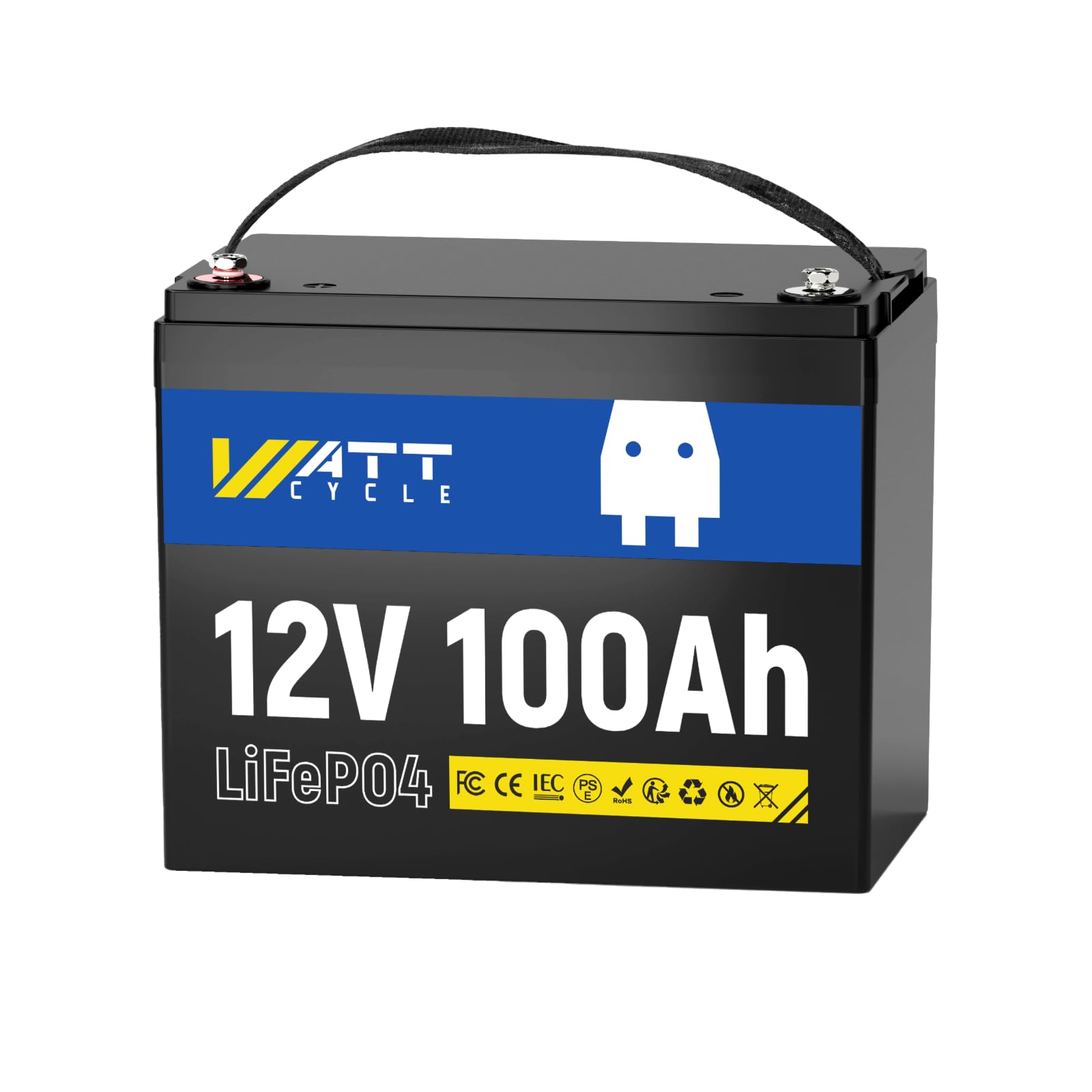
The Wattcycle 100Ah is a BCI Group 24 battery, measuring only 10.24 x 8.23 x 6.61 inches. That smaller footprint is critical for RVs and boats where every inch matters. It packs A+ grade cells that claim up to 15,000 cycles, and the built-in 100A BMS handles overcurrent protection up to 300±50A before disconnecting.
At 23.2 pounds, it’s still light enough for easy installation. The low-temperature protection works down to -4°F and up to 158°F, covering extreme climates. Users have tested the capacity on solar generators—one user paired two for a 24V house bank running VHF, lights, bilge pump, and a 300W inverter with solid results. The battery also works well as a drop-in for trolling motors in series.
The main caveat is the terminal bolts: they’re extremely short at about 1/2 inch. If you’re stacking ring terminals for parallel wiring, you’ll need to buy M8 x 16mm bolts, washers, and lock washers separately. That’s a minor parts run for a battery that otherwise offers strong value in a compact Group 24 package.
Why it’s great
- Compact BCI Group 24 size
- 15000 cycle rating with A+ grade cells
- Wide temperature operating range
Good to know
- Terminal bolts are too short for some parallel setups
- No Bluetooth monitoring
5. HRBEENERGY 12.8V 100Ah LiFePO4

The HRBEENERGY 100Ah battery brings an IP67 waterproof case, which means it’s fully sealed against dust and can handle submersion in up to one meter of water for 30 minutes. For marine, boat, and outdoor installations exposed to rain, spray, or bilge water, this is a significant safety upgrade over a standard plastic case. It fits BCI Group 24 dimensions for a direct 1:1 physical replacement.
It delivers 1280Wh of energy with a rated 8000+ deep cycles, and the built-in 100A smart BMS covers overcharge, over-discharge, overcurrent, short circuit, and low/high-temperature cut-offs. The Grade A cells are stable and safe—no fire or explosion risk. Users report that in a series configuration for a 36V golf cart, it runs for a full 10 hours, and in parallel for an RV, it handles 3-4 days of off-grid use.
At 19.4 pounds, it’s 40% lighter than a lead-acid of the same capacity. The battery can be expanded up to 16 units in parallel for 20.48kWh total. The only concern in user feedback is that the low-voltage cutoff shuts off at about 9.5V—slightly lower than the 10V cutoff some prefer—but it re-enables after a few minutes, which is a safety quirk rather than a defect.
Why it’s great
- IP67 waterproof rating for wet environments
- Very light at 19.4 pounds
- High 8000+ cycle life rating
Good to know
- Low voltage cutoff is around 9.5V
- No Bluetooth or low-temp charge protection
6. DUMFUME 12V 150Ah LiFePO4
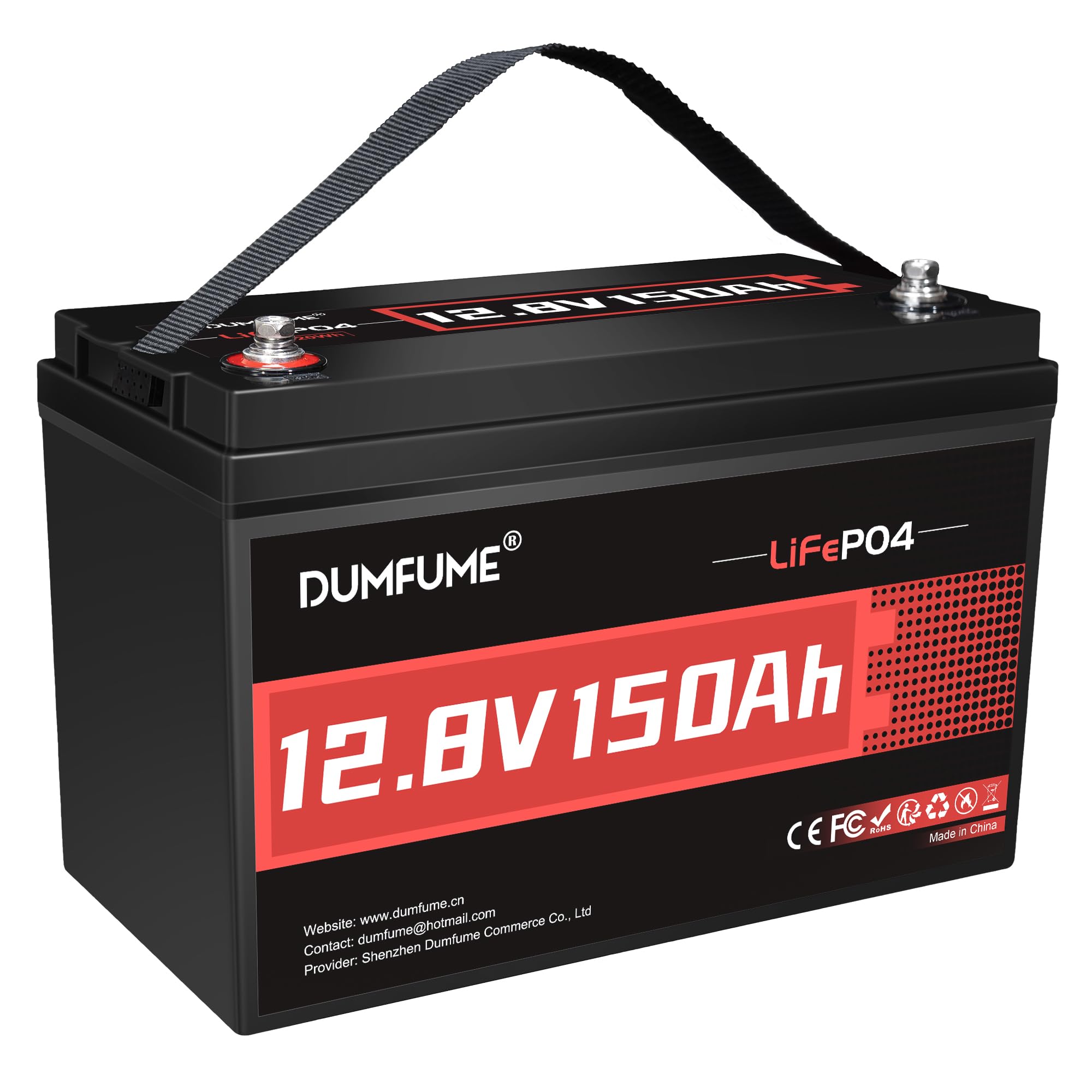
The DUMFUME 150Ah delivers 1920Wh of energy in a Group 31-sized case, making it a strong choice for anyone who needs more runtime without jumping to a specialized large-format battery. The built-in 100A BMS provides full protection, and the battery supports both series and parallel expansion up to 4S4P for larger solar or RV setups.
Weighing 22.05 pounds, it’s remarkably light for 150Ah—still less than half the weight of a comparable lead-acid. Real-world testing has shown that some units exceed the rated capacity by about 7Ah, and one user reported that after a year of twice-weekly charging, the battery still exceeds its original capacity. The battery is designed for deep-cycle storage, not engine starting, and requires a full maintenance charge every six months during extended storage.
The main drawback is the need for temperatures above 5°C for safe charging, and return shipping for low-temperature charging issues isn’t covered. One user reported a failure after one year in a campervan with a 3.5A fridge draw, though the 5-year warranty is only valid for direct purchases—not Amazon orders. Verify the warranty path before buying if long-term support is critical.
Why it’s great
- 1920Wh capacity at a light weight
- Some units exceed rated capacity
- Supports 4S4P expansion
Good to know
- Needs 5°C+ for safe charging
- Warranty only direct, not through Amazon
7. Milwaukee 48-11-2450 12V 5Ah High Output 2-Pack
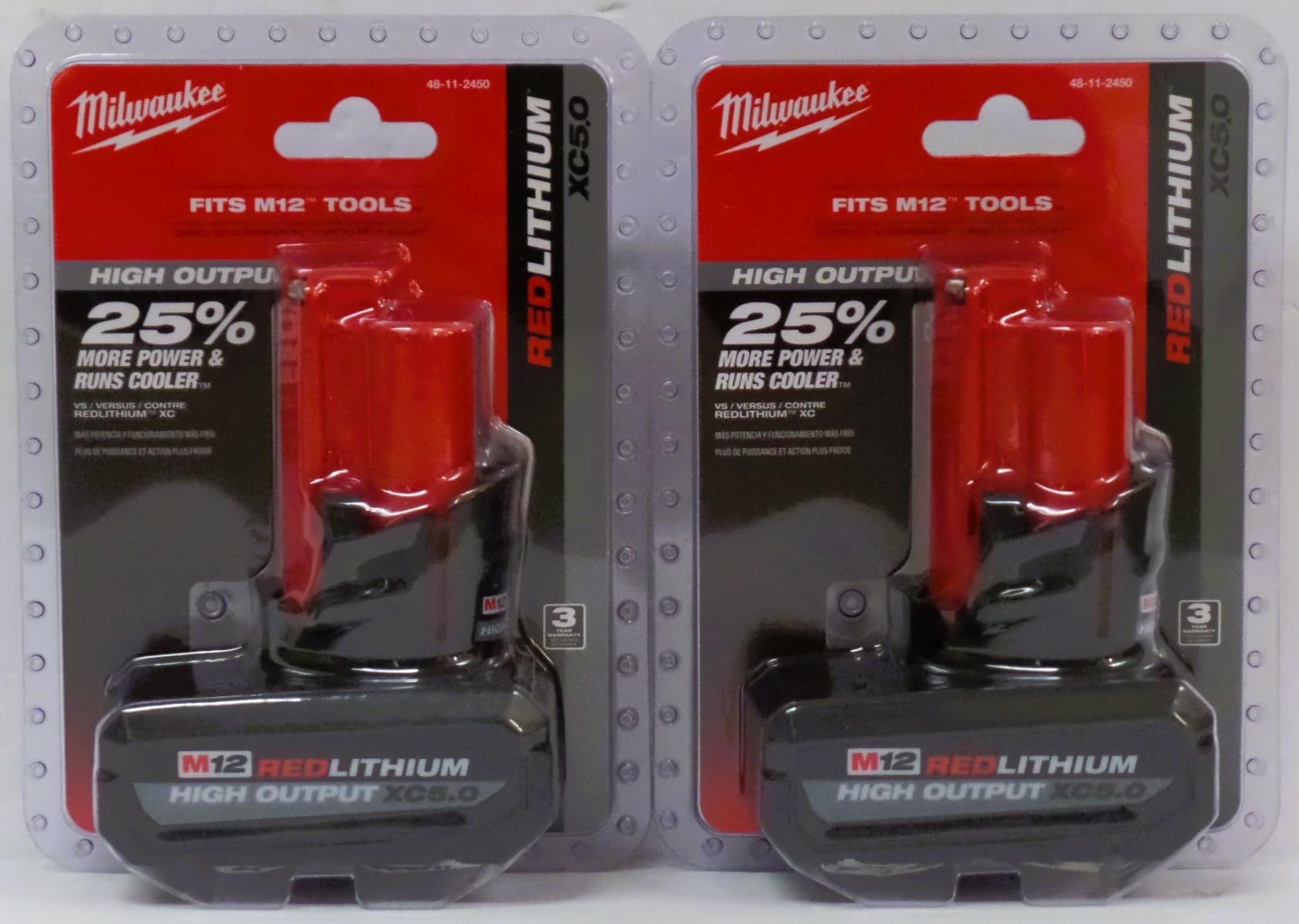
The Milwaukee 48-11-2450 is fundamentally different from the LiFePO4 deep-cycle batteries on this list—it’s a high-output 12V lithium-ion pack designed for the M12 cordless power tool system. Each battery delivers 5Ah of capacity and works with over 125 M12 tools, from impact drivers to heated jackets. The High Output design uses a more efficient cell configuration that keeps the battery running cooler under sustained load.
The housing is resistant to oils, greases, and solvents, making it suitable for workshop and job site environments. Users consistently report that these batteries provide noticeably more runtime and sustained power than standard M12 batteries, especially with high-demand tools like the 1/4-inch impact driver, where a single charge can last 1-2 weeks of daily use. The pack runs cool even when driving large fasteners continuously.
The trade-off for the extra capacity is size and weight—the High Output packs are physically larger and heavier than the compact 2Ah and 3Ah M12 batteries. At 35.2 ounces for the pair, they’re manageable but will add noticeable weight to a pocket or tool belt. This is a premium accessory for users already invested in the Milwaukee M12 ecosystem, not a general-purpose 12V battery.
Why it’s great
- Excellent runtime for M12 power tools
- Runs cool under sustained high load
- Resistant to common job site chemicals
Good to know
- Only works with Milwaukee M12 tools
- Larger and heavier than compact M12 packs
8. GOLDENMATE 12V 20Ah LiFePO4 2-Pack

The GOLDENMATE 20Ah 2-pack is the entry-level choice for small-scale 12V applications. Each battery weighs only 5.3 pounds and packs 20Ah of LiFePO4 chemistry with a built-in BMS and 5000+ cycle life. These batteries are ideal for things like fish finders, ride-on toy cars, power wheels, kids’ scooters, security cameras, small UPS systems, and ham radio setups.
The built-in BMS prevents overcharging, over-discharge, overcurrent, overheating, and short circuits. The batteries can be connected in parallel or series up to 4 units, and they support a 10A charge rate with a 20A continuous discharge. Users have reported impressive results: one dropped one into a 4WD kid’s Jeep and blew a 30A fuse due to the high current output—meaning the battery delivers more punch than the toy’s original SLA. Another replaced a 12.9V 9Ah SLA in a Cyberpower UPS and got a runtime increase from 396 to 420 minutes with faster recharge.
The certifications (CE, UN38.3, FCC, UL1642 cells, IEC62133 cells) back up the safety claims. The 2-pack format covers two separate devices, or you can parallel them for 40Ah total. The only consistent negative in reviews is slow shipping—the batteries themselves perform well once they arrive. For small-budget applications that don’t need 100Ah, this pack delivers excellent value per cycle.
Why it’s great
- Very light at 5.3 lbs per battery
- Perfect for small UPS, toys, and electronics
- Strong safety certifications
Good to know
- Shipping is often slow
- 20Ah capacity limits high-drain applications
9. ECO-WORTHY 12V 280Ah Metal Case LiFePO4 with Bluetooth
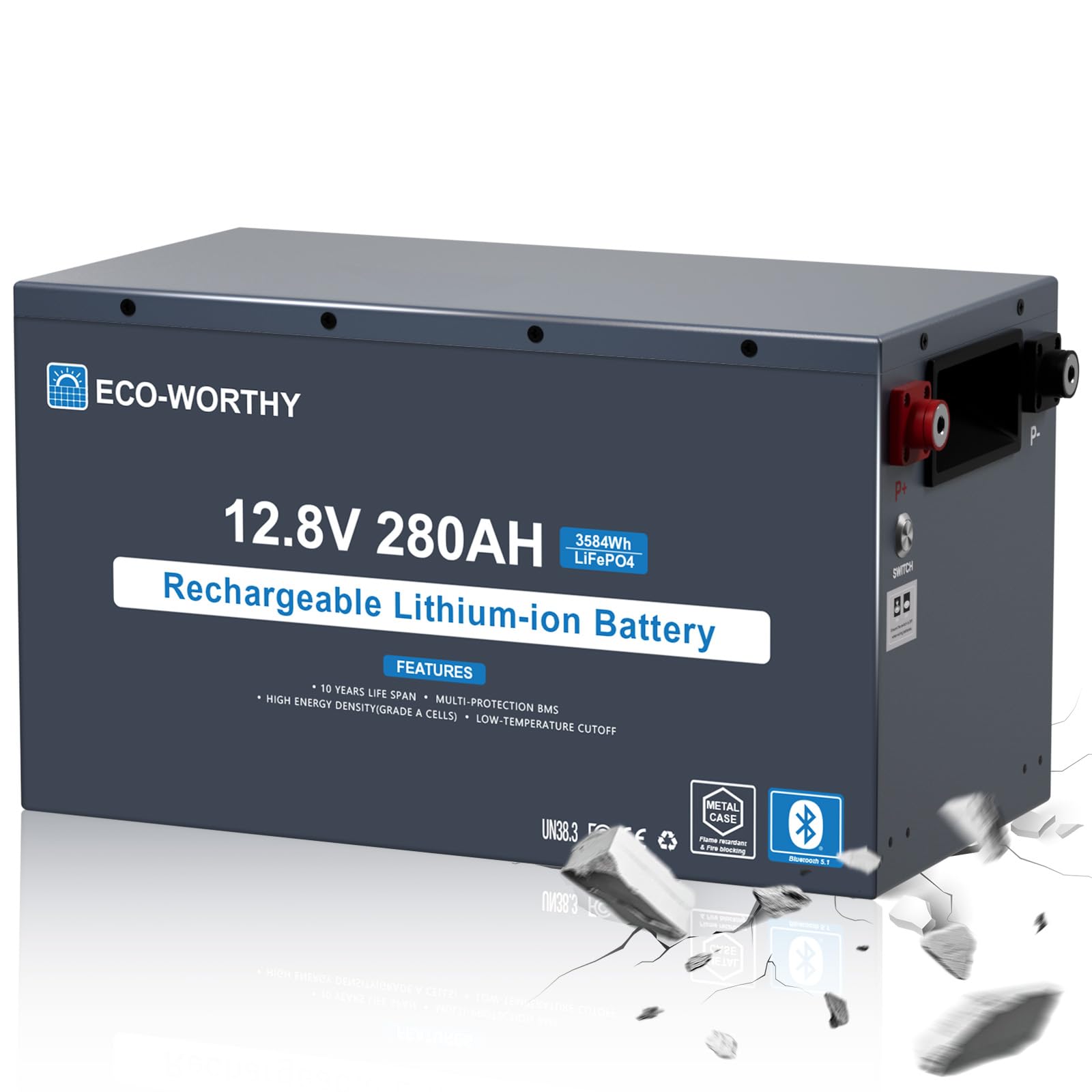
The ECO-WORTHY 280Ah is the heavyweight champion of this list, offering 3584Wh of energy in a rugged metal enclosure. The heavy-duty metal case provides superior heat resistance and fire protection compared to standard plastic casings, and it includes a low-voltage power switch for one-touch cut-off during installation. The four mounting feet allow direct installation inside an RV or camper without needing a separate battery box.
The internal 200A BMS handles overcharge, over-discharge, overcurrent, short circuit, and temperature protection. The BMS is isolated from the cells—a design detail that improves safety and longevity. Bluetooth monitoring via a dedicated app gives you real-time voltage, capacity, and charge/discharge status, and the battery is compatible with the Overkill Solar app for even more detailed cell-level data.
At 68.5 pounds, this is a heavy unit, but it replaces a lead-acid bank of equal usable capacity that would weigh more than double and deliver only 50% usable depth of discharge. Users report successful installation in RVs with a 560Ah total bank (two in parallel), powering microwaves, induction stoves, and instant pots through a 2000W inverter. The Grade A cells are well-matched, and the compression cage inside the metal case keeps them stable. The only real downside is the price—it’s the most expensive battery here, but for a full off-grid house bank, it’s cheaper per watt-hour than buying multiple smaller batteries.
Why it’s great
- Metal case with mounting feet for direct installation
- 200A BMS handles heavy inverter loads
- Bluetooth monitoring with detailed cell data
Good to know
- Heavy at 68.5 pounds
- Significant upfront investment
FAQ
Can I use a 12V LiFePO4 battery to replace my existing lead-acid battery directly?
How many amp-hours do I need for a trolling motor or RV?
What does the IP67 waterproof rating mean for a battery?
Final Thoughts: The Verdict
For most users, the best 12v ion battery winner is the Power Queen 12.8V 100Ah because it combines marine-grade certification, smart low-temperature protection, and proven real-world endurance at a competitive price point. If you want the compact Group 24 size with excellent cycle life, grab the Wattcycle 100Ah. And for a full off-grid house bank where capacity and safety matter most, nothing beats the ECO-WORTHY 280Ah with Metal Case and Bluetooth.