
Our readers keep the lights on and my morning glass full of iced black tea. As an Amazon Associate, I earn from qualifying purchases.
Specs are compiled from manufacturer listings and verified buyer reviews and can change over time — please confirm the key details on the product page before buying.
If you are replacing a tired battery in a UPS, a fish finder, a kids’ ride-on toy, or an alarm panel, the single biggest fork in the road is whether you stay with lead-acid or jump to lithium. The lithium option weighs a fraction as much and can be recharged far more times, but it costs more up front and needs a compatible charger. This guide breaks down the 9 best options, the exact capacity you need, and which one is worth the money for your specific use.
I’m Min — the founder and writer behind Gadgets Feed. This guide is built by comparing the manufacturers’ published specifications and the patterns across verified customer reviews, so you get each pick’s real strengths and trade-offs instead of marketing spin.
You need a 12V rechargeable battery that fits your device and lasts, whether it’s a small security panel or a large RV. This roundup gives you honest, plain-English picks so you can choose the right one without decoding specs.
Our Picks at a Glance

How To Choose The Best 12V Rechargeable Battery
Most 12V batteries look similar from the outside, but the chemistry inside decides how heavy it is, how many times you can recharge it, and whether it can sit unused for months. You also need to match the terminal type and physical size so it actually connects to your device.
Lead-Acid vs. LiFePO4 (Lithium Iron Phosphate)
Traditional sealed lead-acid (SLA) batteries are cheap, reliable, and need nothing in the way of a special charger. Their downside is weight and cycle life — a typical SLA lasts only a few hundred deep discharges. Lithium iron phosphate (LiFePO4) cells cost more at checkout, but they are dramatically lighter and can handle thousands of recharge cycles before wearing out, which makes them cheaper per year of use. The catch is that lithium needs a dedicated lithium charger; hooking one to an old lead-acid charger can prevent it from ever filling up.
Matching Capacity and Physical Fit
Capacity is measured in amp-hours (Ah), which is simply how much electrical charge the battery holds. A 9Ah pack delivers 1 amp for 9 hours, or 9 amps for 1 hour, in theory. Your device’s original battery tells you the Ah it was designed for, so your safest move is to match or slightly exceed that number. You also have to check the terminal style — F1 (0.187-inch wide tabs) vs F2 (0.250-inch) — and the external dimensions, since many alarm panels and UPS boxes have very little spare room.
Quick Comparison
| Model | Best For | Chemistry | Capacity | Weight | Amazon |
|---|---|---|---|---|---|
| DEWALT DCB122★ Best Overall | 12V power tools | Li-ion | 2 Ah | 8 oz | Amazon |
| HWE Energy 9AhBest Value | Fish finders & alarms | LiFePO4 | 9 Ah | 2.1 lbs | Amazon |
| Yuasa NP7-12Trusty Classic | Alarm systems | Lead Acid | 7 Ah | 5.2 lbs | Amazon |
| Miady 12V 7Ah (2-Pack) | Emergency lighting | SLA/AGM | 7 Ah | 8.8 lbs (pair) | Amazon |
| Mighty Max ML12-12 (2-Pack) | UPS & scooters | SLA/AGM | 12 Ah | 18 lbs (pair) | Amazon |
| ECO-WORTHY 20Ah | Camping & ham radio | LiFePO4 | 20 Ah | 4.85 lbs | Amazon |
| DUNFUME 100Ah | Off-grid storage | LiFePO4 | 100 Ah | 21.6 lbs | Amazon |
| HumsiENK 100Ah | RVs & marine | LiFePO4 | 100 Ah | 19.73 lbs | Amazon |
| Litime 100Ah Group 27 | RVs & trolling motors | LiFePO4 | 100 Ah | 22.9 lbs | Amazon |
In‑Depth Reviews
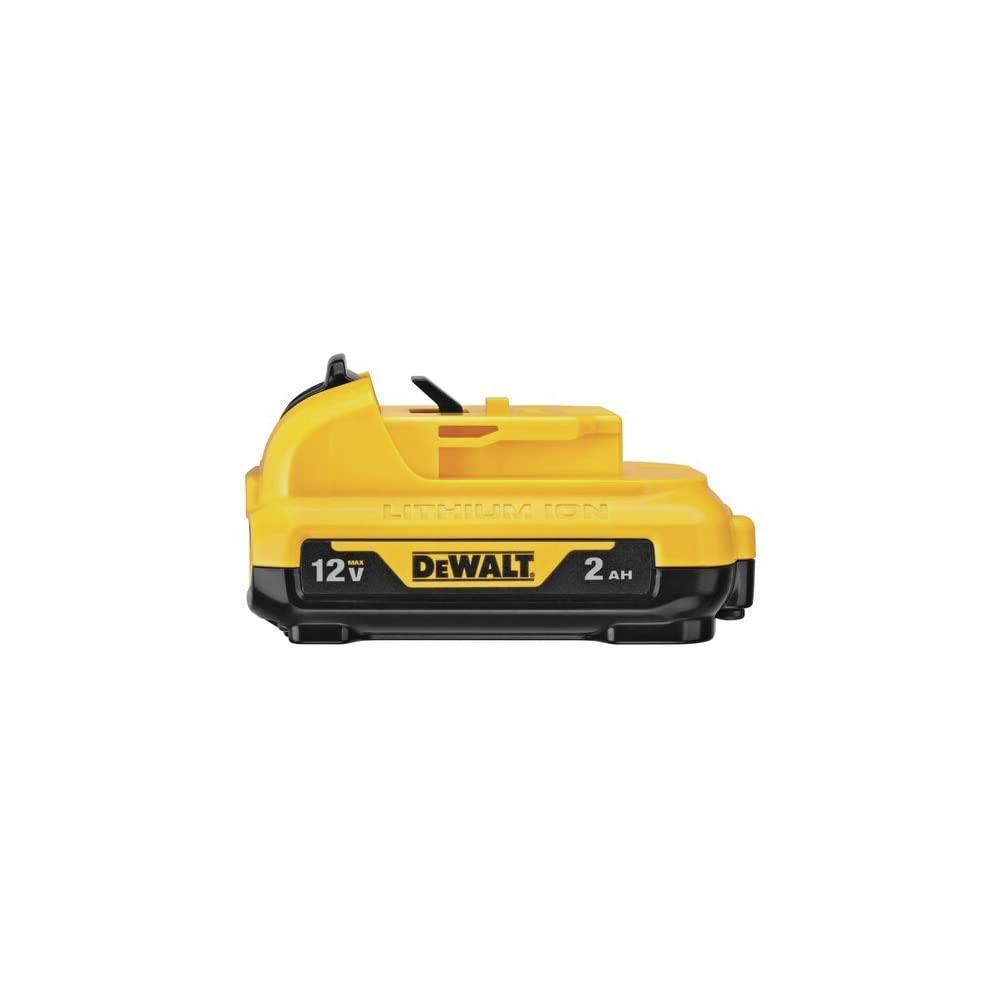
1. DEWALT DCB122 12V MAX* 2AH LITHIUM ION BATTERY
Our pick — over 4.5★ from 850+ verified ratings; the strongest balance of quality and price.
A featherweight 8-ounce pack that turns any 12V DeWalt tool into a grab-and-go machine.
If you already own tools in the 12V line, this 2 amp-hour li-ion pack is the natural first pick. At only 8 ounces it disappears into tight spaces, and owners describe it as fast-charging, cool-running, and consistent until it’s nearly empty. They also confirm it can be charged with a DeWalt 20V charger, which is handy if you already have that platform.
It’s compact enough to be the dependable backup everyone keeps in the drawer — the review pages celebrate its reliability and steady function above all else. The one honest caveat is that battery life draws mixed opinions: some find it always on point, others report it doesn’t hold a charge as long as they hoped. Since it’s a 2Ah pack, think of it as the lightweight workhorse for general and DIY tasks rather than all-day heavy-duty use.
Buyers report a clean experience with genuine product and good value, and this crowd favorite holds a strong 4.7-star score across 800+ owners. For staying on brand with DeWalt tools, it’s a tight, well-built fit.
compact power
- Featherlight 8 oz — ideal for tight drill spots
- Rechargeable via a DeWalt 20V charger
- Holds charge and runs cool
limited capacity
- 2Ah is on the lower side for long runs
- Best for general DIY, not all-day heavy use
fits drills: Reach for this if you’re embedded in the 12V tool ecosystem and want a light, trustworthy spare.
not for big: Look elsewhere if you need one pack to power gear for a full workday.
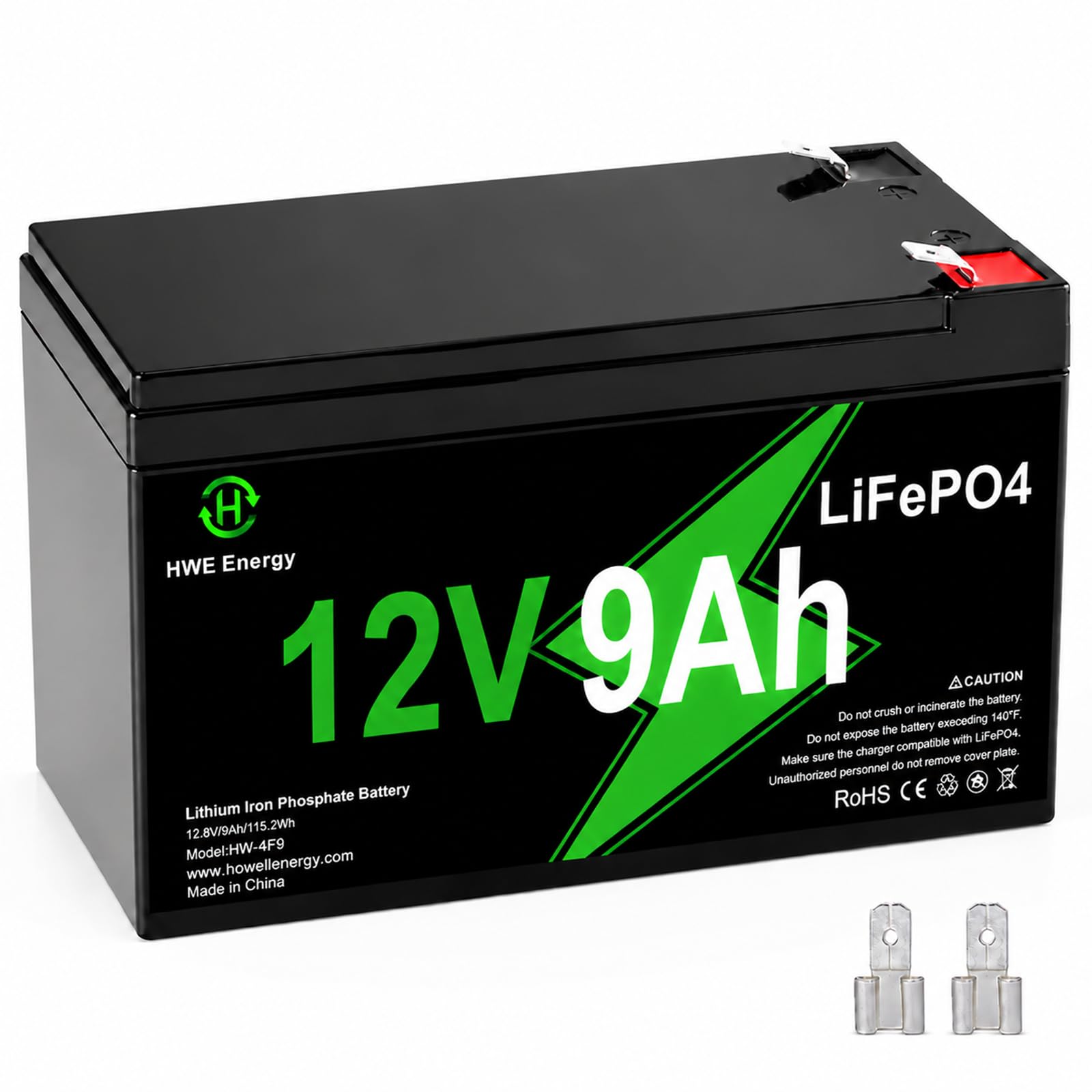
2. HWE Energy 12V 9Ah LiFePO4 Lithium Battery
A 9Ah lithium pack that weighs 2.1 lbs and outlasts lead-acid by years of cycles.
This is the drop-in upgrade for 7Ah and 9Ah lead-acid slots. The selling point is simple: HWE claims a 10-year lifetime and 4,000+ deep cycles, versus 3 years and 300-500 cycles for lead-acid, at just 2.1 lbs. Owners mention it has run flawlessly on three 8-hour fishing trips with plenty of power left over, and it fits neatly into pump equipment boxes.
It packs a smart BMS (a small circuit board that guards against overcharge, deep discharge, overheating, and short circuits) rated for a 15A discharge, plus a low 2% per month self-discharge so it can rest over a season. The twist is that max 15A output — one owner found it trips protection on a 1500VA UPS at high load, so it’s best for lighter jobs like routers, PCs, and alarm panels. A built-in button shows voltage and charge level, which owners genuinely appreciate.
Battery life draws mixed notes — some see it hold charge well, others report around an hour in heavier draws — so match it to your real load. It comes with an F2-to-F1 terminal adapter for compatibility and a 12-month warranty.
lightweight lithium: It’s a superb light-duty replacement, but respect the 15A ceiling.
fits solar: Grab this when you want lithium’s lifespzen and weight without a big spend.
not for cars: Heavy draws above 15A need a bigger lithium pack — this one will protect itself and shut off.
3. Yuasa NP7-12 12V 7Ah Sealed Lead Acid Battery
The 5.2-lb alarm-panel standard that swaps in under 30 seconds and keeps watch for years.
Yuasa built its name as the OEM-grade choice for home security panels, and this 7Ah, F1-terminal battery is the exact-match replacement most buyers need. It’s a sealed lead-acid unit measuring 5.94″ L x 2.56″ W x 3.7″ H, so it drops right into the same space as the original. Owners mention installation taking less than 30 seconds and note it stopped a low-battery indicator immediately.
Durability is the main draw — some customers note 5-7 years of service, and one review page sums it up: “It has long durability and longevity.” But not everyone gets that run; a minority report a unit failing in as little as 12 months. This is a lead-acid battery (a traditional, heavy type that stores energy in acid and lead plates), so there’s no BMS (a battery management system that protects lithium cells) to worry about, and you don’t need a special charger — an old one works fine.
At 5.2 lbs it’s noticeably heavier than lithium options, but that’s the trade-off for a familiar, proven chemistry at a friendly price.
fits alarms: Pick this if you want a no-surprises, exact-fit replacement for an alarm or small UPS.
not for deep: Choose lithium instead if weight or cycle life matters more than first-cost.
4. Miady 12V 7Ah Rechargeable Sealed Lead Acid Battery (2 Pack)
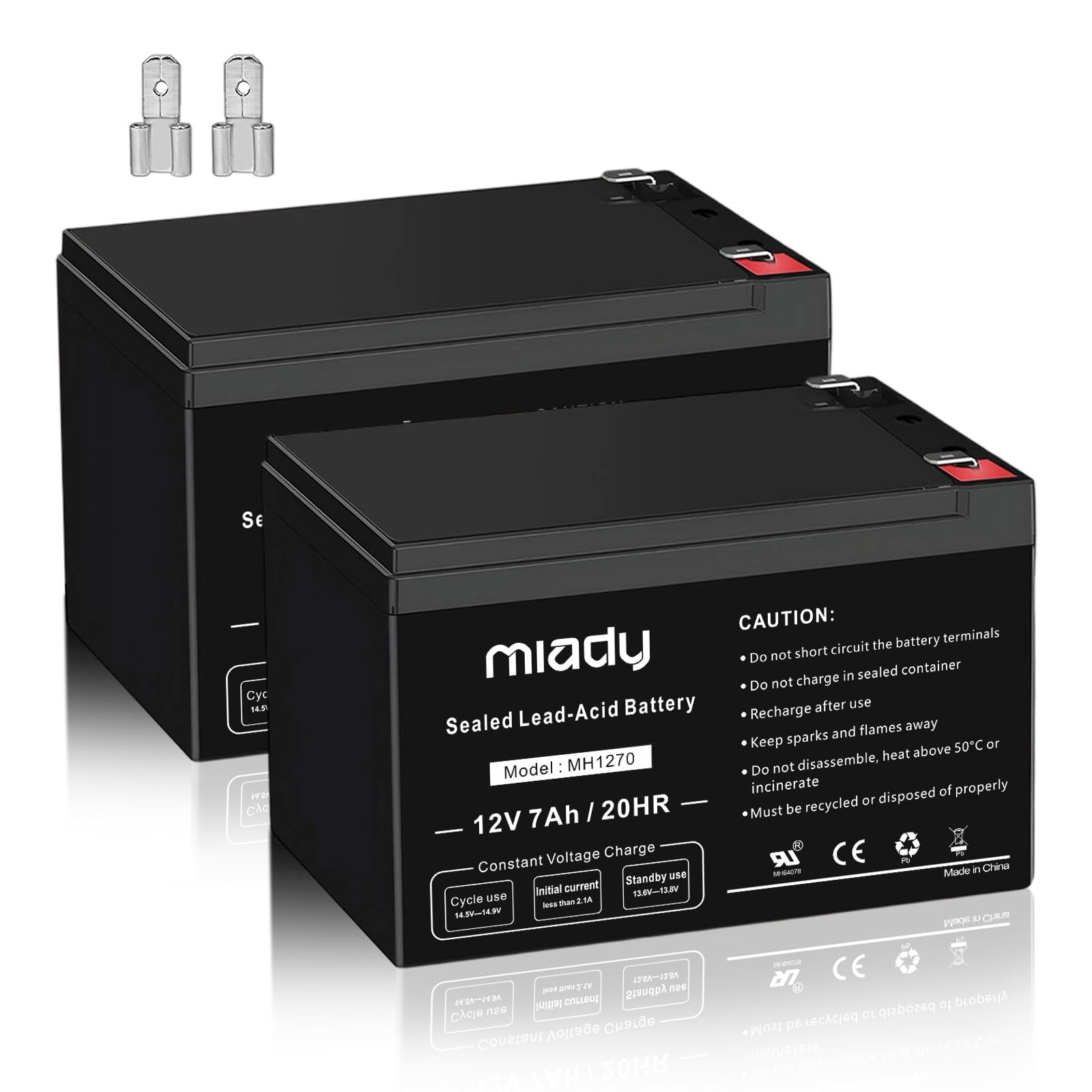
Two 7Ah sealed lead-acid packs that fit ION speakers and trail cameras without fuss.
This 2-pack is the budget-friendly way to refresh multiple devices at once. Each battery is a 12V 7Ah AGM (absorbed glass mat) unit with F2 terminals, measuring 5.94 x 2.55 x 3.74 inches, and the kit includes four F2-to-F1 adapters so it can bridge to either terminal style. Buyers have slotted these into ION speakers, trail cameras, and UPS units with a perfect fit and zero issues.
The AGM construction is spill-proof and maintenance-free, which means no topping up fluid and no leak worries regardless of orientation. Owners describe them as working great right from the start and charging fine — though long-term durability is still unknown at this price point. Battery life does split opinions; some say they hold a charge well, others found theirs lasting only about a month, so test any new unit early.
For two batteries plus adapters, this is a solid value play for anyone who wants spares on hand.
fits toys: A smart grab if you need to revive two 7Ah slots at once and value the included adapters.
not for long: If you depend on one battery for critical gear, pay up for a longer-proven brand.
5. Mighty Max Battery ML12-12 12V 12AH SLA (2 Pack)

A UL-certified 12Ah pair that gave new life to scooters and kept sump-pump UPSs ready for outages.
When your device needs more run time than a 7Ah pack offers, this 12Ah twin set steps up. Each AGM battery measures 5.94 x 3.86 x 3.98 inches with F2 terminals, and being sealed and spill-proof, it can be mounted in any position and shrugs off shocks and vibration. Owners have used these to revive mobile scooters and as the backbone of a sump-pump UPS; one noted their previous set lasted five years without issues.
Buyers praise performance and value most, and the pack arrives ready to work right from the start. The honest caveat: battery life is split, with a few reporting only about 15 minutes of run time under load, and one owner had a pair that wouldn’t hold a charge — though the seller shipped replacements at no cost, which is the kind of warranty support that matters. There’s a full one-year warranty behind these.
At 18 lbs for the pair they’re heavy, but that’s the price of SLA capacity. If you need 12Ah of reliable, simple lead-acid power, this is a strong pick.
fits trolling: Choose this for high-draw uses like scooters and UPS backups that need real capacity.
not for tight: Go lithium if lifting 18 lbs of batteries is a deal-breaker for you.
6. ECO-WORTHY 12V 20Ah LiFePO4 Lithium Battery
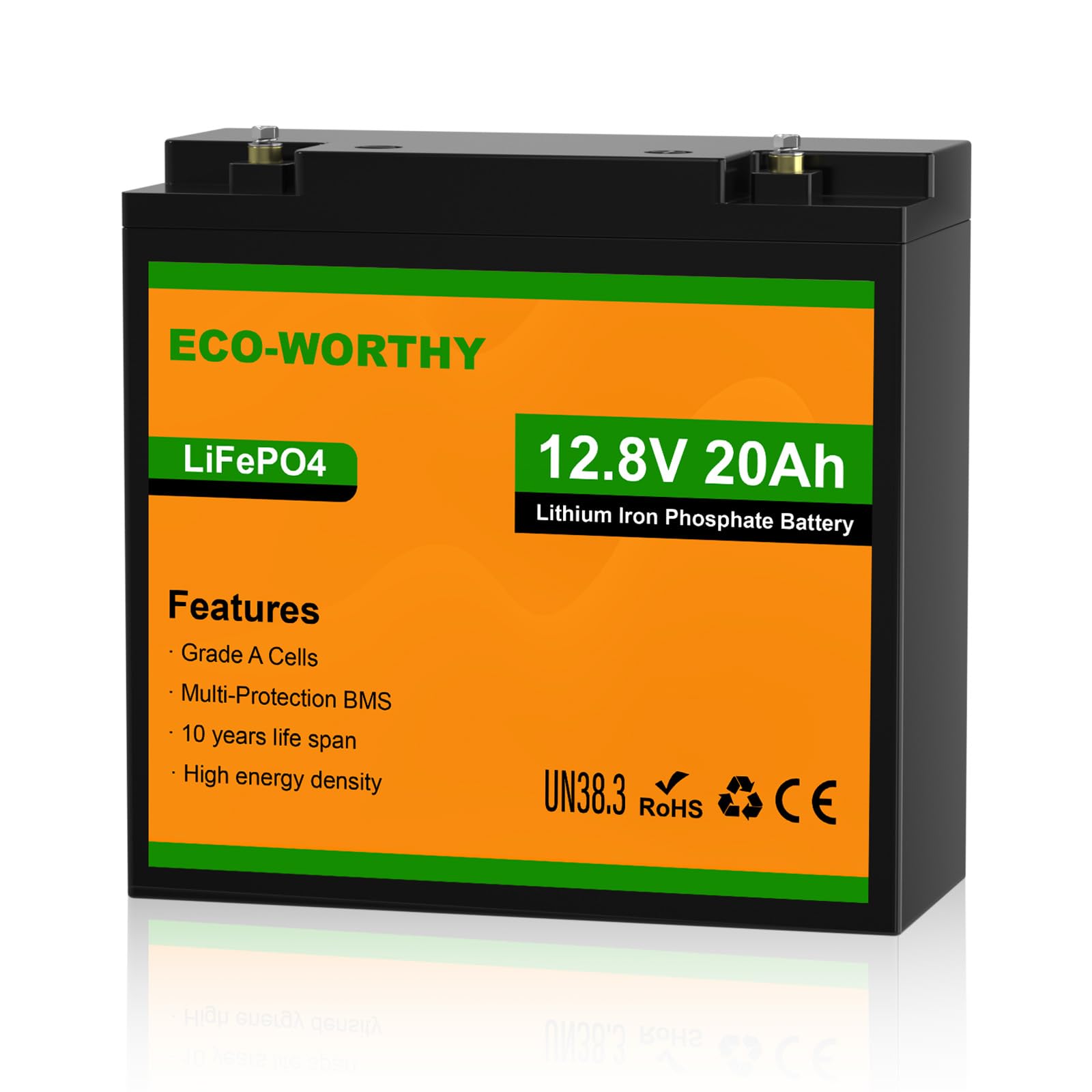
A 4.85-lb 20Ah lithium pack that powers kayak fish finders and ham radio all day.
This mid-capacity lithium battery is where portability meets real runtime. At just 4.85 lbs, it’s drastically lighter than any equivalent lead-acid pack, and it’s rated for more than 3,000 deep recharges — over 8 times the cycle count of a typical lead-acid. The built-in BMS protects against overcharge, over-discharge, and short circuits, and it can be connected in parallel or series with up to 4 identical units (configurations like 4P2S or 2P4S).
Buyers use it to run a Garmin 10″ chartplotter on a boat, power a 50W ham radio with no voltage drop, and feed solar attic fans. Weight is the thing everyone raves about — it’s the top-mentioned positive by far, with owners calling it small, light, and easy to place anywhere. One tester even measured 21.7Ah delivered before the 10.8V cutoff, beating the 20Ah rating.
The catch is that battery life is mixed in the data — some owners with high-draw radios found it short of the full 20Ah, so size it for your real load. It comes certified to UN38.3 and CE standards, giving you a safety-checked pack for camping and backup use.
fits RVs: Buy this for kayak trips and field radio where every ounce counts.
not for huge: Expect a bit less than rated capacity under sustained heavy draw.
7. DUNFUME 12V 100Ah LiFePO4 Group 31 Battery
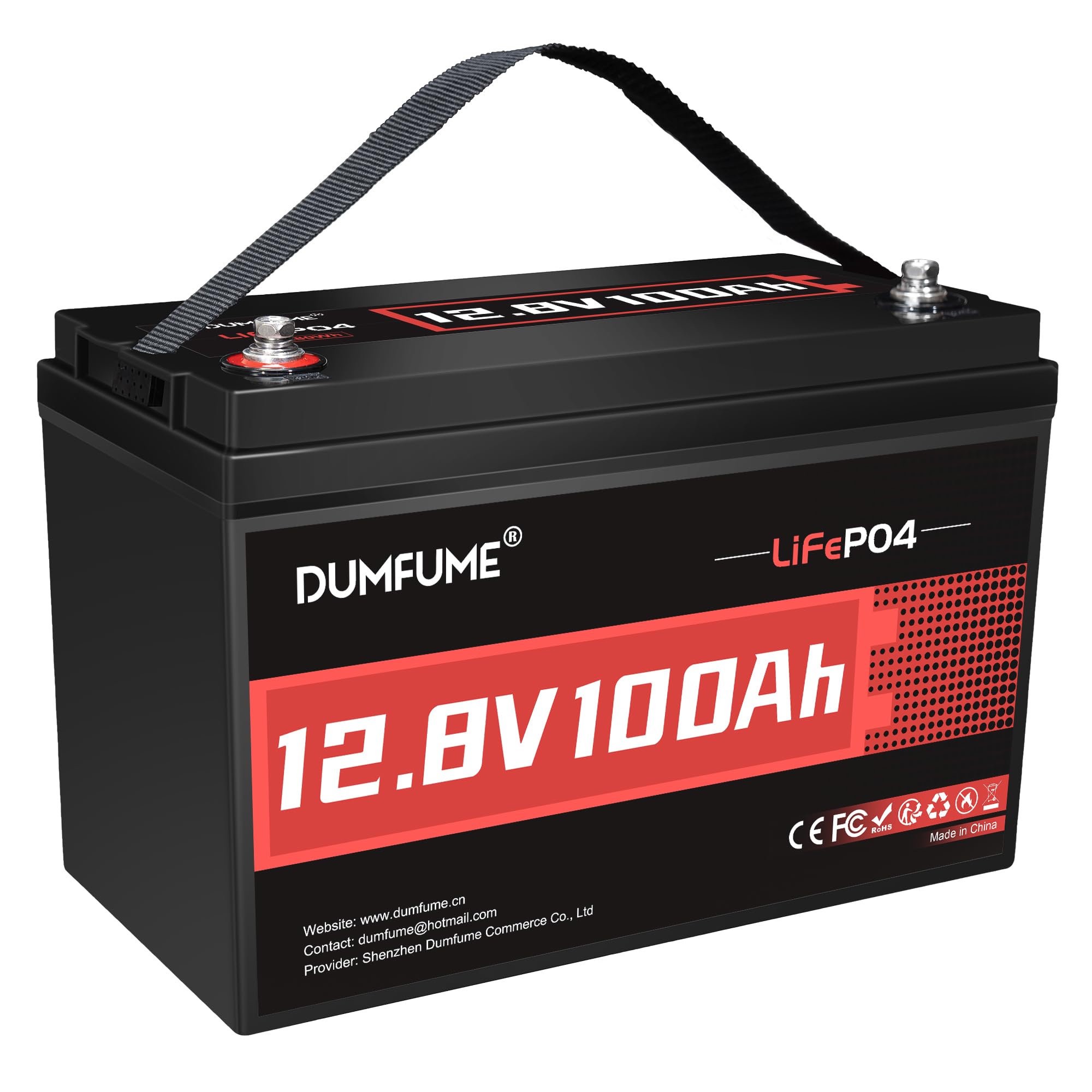
A 21.6-lb 100Ah pack that holds 1.28kWh for off-grid storage without the lead-acid weight.
This is the serious capacity option for caravans, campers, and home energy storage. The DUNFUME 100Ah LiFePO4 battery delivers 1.28kWh of energy (that’s a measure of total stored power) while weighing just 21.6 lbs — about two-thirds lighter than a traditional 100Ah AGM battery, which typically weighs around 63.9 lbs. It uses a built-in 100A BMS with Grade A cells and an ABS casing that resists dust and weather.
Buyers have wired two of these into RVs with 800W of solar and run them through a Victron system with excellent results, calling the build quality the standout feature. It supports series and parallel connections up to 4S4P, so you can scale multiple units into a 51.2V 400Ah system. It’s rated for 4,000 cycles at 100% depth of discharge.
The honest catch: charging capacity gets mixed feedback. Some reviewers point out units that won’t fully charge when shipped, occasionally needing a parallel jump-start, and a rare few saw a cell fail within a year — though the 5-year warranty covers direct purchases. It’s also not for starting engines or golf carts, so keep it to storage duty.
fits off-grid: Reach for this when you need real kWh for an RV or cabin and want to skip the lead-acid weight.
not for small: If you demand plug-and-play perfection every time, vet your specific batch early.
8. HumsiENK 12V 100Ah LiFePO4 Battery with Bluetooth
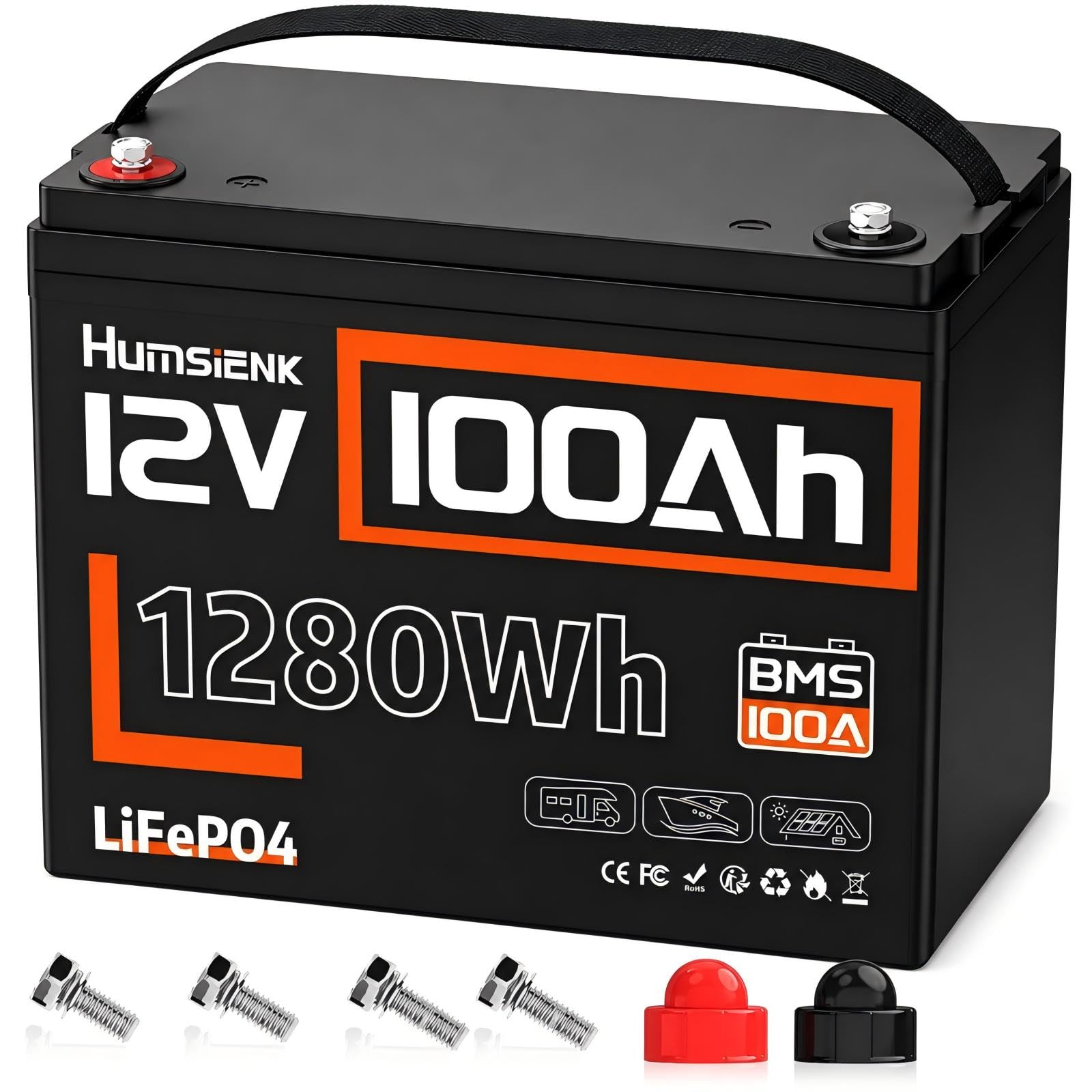
A 19.73-lb 100Ah pack that talks to your phone and refills in roughly two hours.
This is the smart choice for RV and marine users who want data, not just power. The HumsiENK battery packs 1280Wh of energy, uses a BCI Group 24 box size (8.4 x 6.6 x 10.2 inches), and weighs 19.73 lbs — more than 30% lighter than an equivalent lead-acid. Its defining feature is a Bluetooth app that shows voltage, state of charge, current, and temperature, which owners say updates in real time and works flawlessly.
The built-in 100A BMS adds low-temperature protection (it shuts down below -4°F/-20°C) and auto-disconnects if discharge exceeds 300±50A. It supports fast charging via solar, generator, or grid, with a full charge claimed in 2 hours, versus 14 hours for lead-acid. The casing is rated IP67 waterproof, so it’s comfortable on a boat deck. Shoppers say it runs an 8000 BTU air conditioner for 11 hours to 50% drain via a 2000W inverter.
The data shows battery life is mixed — some report it refuses a full charge — and the Bluetooth is also a mixed feature, occasionally connecting inconsistently. The nylon carry handle is a nice touch for hauling it around.
fits tech: Choose this if live battery telemetry on your phone is worth the premium.
not for basic: If you’ve had spotty luck with Bluetooth gear, test the app early in your return window.
9. Litime 12V 100Ah LiFePO4 Group 27 Battery
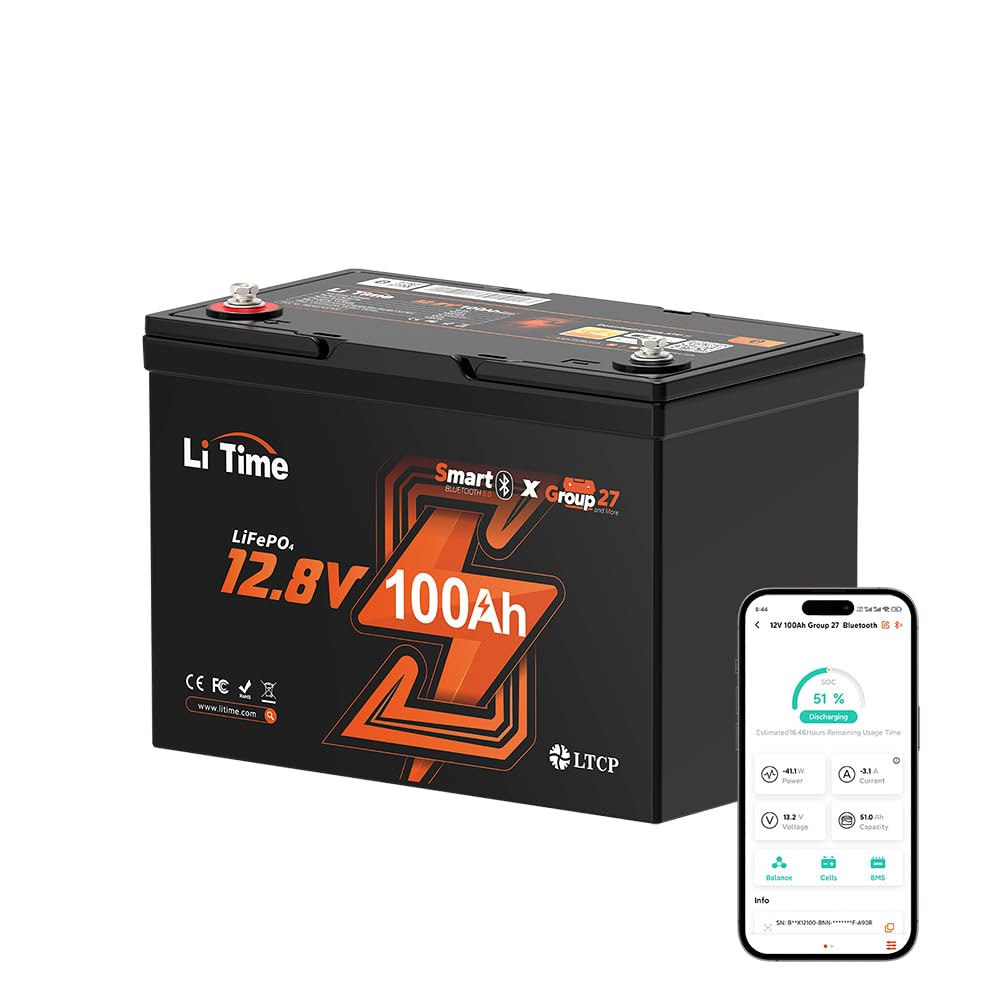
A 22.9-lb Group 27 pack with Bluetooth 5.0 that trimmed a boat’s weight by 81 lbs.
This is the premium, RV-tailored option with the smoothest app experience of the bunch. The Litime 100Ah battery is sized to fit Group 27 compartments in specific campers like the Brinkley Z 2900 and Forest River Forester, and it weighs 22.9 lbs — a huge drop from the lead-acid it replaces. Owners on a 14-ft fishing boat report losing 81 lbs of total weight by switching, and one running a 48 lb trolling motor through a full tournament still had power for another day.
Smart Bluetooth 5.0 pairs with the LiTime app for real-time status, and buyers found it fully charged in about 2 hours on shore power. The 20+ BMS protections include low-temp cutoff, over-charge/discharge protection, and a 30-second overload recovery. It’s rated for 4,000+ cycles at 100% depth of discharge — about 10 times a lead-acid battery’s life.
Battery life is the most-discussed point and it’s mixed: most owners see excellent runtime, but a few report charging quirks, particularly with converters that need the battery discharged first to recognize it. It also supports connecting up to 16 units for a 20.48kWh system if you’re planning to grow.
fits marine: Pick this if you want a proven, app-connected pack for an RV or trolling motor and don’t mind the premium.
not for max: If you run an older converter, be ready for a possible first-charge recognition hiccup.
Understanding the Specs
Amp-Hours (Ah)
Amp-hours tell you how long the battery can feed your device. A 9Ah pack delivers 1 amp for 9 hours in theory, or 9 amps for 1 hour. Match or slightly exceed your original battery’s Ah rating, and remember that real runtime depends on how hard your gear pulls power.
Chemistry: SLA vs. LiFePO4
Sealed lead-acid (SLA) is the cheap, reliable classic that works with any charger but is heavy and lasts only a few hundred deep cycles. Lithium iron phosphate (LiFePO4) costs more, weighs a fraction as much, and handles thousands of cycles — but it needs a dedicated lithium charger to fill fully.
The BMS
A Battery Management System (BMS) is a tiny circuit board inside lithium packs that guards the cells against overcharging, deep discharge, overheating, and short circuits. It’s the reason a lithium battery can safely sit in odd positions and handle rough use. Lead-acid batteries don’t need one.
Terminals and Fit
Terminals come in two common widths: F1 (0.187 inches) and F2 (0.250 inches). Your device’s wire connectors must match, or you’ll need an adapter. Also confirm the external dimensions — alarm panels and UPS boxes often have very little spare room for a different-sized battery.
FAQ
Can I replace a lead-acid 12V battery with a lithium one in my UPS?
What’s the difference between F1 and F2 terminals?
How long will a 12V battery last before needing a recharge?
Do lithium 12V batteries need a special charger?
Can I use a 12V lithium battery to start my car or boat engine?
Is it safe to connect multiple 12V lithium batteries together?
How many times can I recharge a LiFePO4 battery?
Why is my new battery showing low voltage when it arrives?
Is a 12V battery with a higher Ah rating always better?
Can a 12V battery be stored for months without use?
Final Thoughts: The Verdict
For most buyers, the 12v rechargeable battery winner is the DEWALT DCB122 because it’s a featherlight, reliable 2Ah li-ion pack that fits the 12V tool ecosystem perfectly. If you want the best capacity-to-weight value for fish finders and alarms, grab the HWE Energy 9Ah LiFePO4. And for serious off-grid or RV power, the Litime 100Ah Group 27 is the one to reach for.
How We Picked
We do not accept paid placement. Every pick is matched to a real buyer and a real use-case; we do not hands-on test units.
Sources & Methodology
Specifications: manufacturer listings and product documentation. Review insights: verified customer reviews, as of August 2026. Pricing: not shown on this page (it changes often); check the current price via the retailer link.
As an Amazon Associate, Gadgets Feed earns from qualifying purchases. This does not affect which products we feature.