
Our readers keep the lights on and my morning glass full of iced black tea. As an Amazon Associate, I earn from qualifying purchases.
Specs are compiled from manufacturer listings and verified buyer reviews and can change over time — please confirm the key details on the product page before buying.
Buying a 13.3 inch laptop sounds simple until you realize the shelf is packed with two very different machines: featherweight convertibles that fold into tablets and serious business ultrabooks built for spreadsheets and code. Here is the honest shortcut — if you mostly browse, stream, and take notes, a touchscreen Chromebook does the job for very little money. If you run heavy apps, dual-boot Linux, or juggle dozens of browser tabs, you want the RAM and SSD headroom of a business-class machine. One quick heads-up before you scroll: this list uses flexible, human-like size matching, so every pick sits at roughly 13.3 inches and a few land at the nearest sold size, like 13.4 or 13.8 inches. That way you never miss a great machine just because its screen measured a hair differently than the number you typed into the search bar.
I’m Min — the founder and writer behind Gadgets Feed. This guide is built by comparing the manufacturers’ published specifications and the patterns across verified customer reviews, so you get each pick’s real strengths and trade-offs instead of marketing spin.
Battery hours, RAM, and storage decide far more than screen size does, and the picks below break down exactly where each machine wins. This breakdown of the 13.3 inch laptop market separates the convertibles worth buying from the ones that quietly frustrate you.
Our Picks at a Glance


How To Choose The Best 13.3 Inch Laptop
A 13.3 inch laptop is the size that actually fits on an airplane tray and still opens two windows side by side. The catch is that within that one screen size, laptops split into completely different species — thin convertibles running Chrome OS, and thicker business ultrabooks running Windows 11. Knowing which species you are shopping for removes about half the confusion before you compare a single spec.
Decide between Chrome OS and Windows first
Chrome OS starts in seconds and stays secure with automatic updates, which is why students and casual users love it. Windows 11 Pro runs the full desktop software that engineers, accountants, and content creators depend on. Pick the operating system first, because it decides which half of this list you should even be reading.
Match RAM to your worst day, not your best
RAM is short-term workspace — the desk your open tabs and apps sit on. 4GB handles a chat window, a few tabs, and music. 8GB is comfortable for most students. 16GB is what you want when 20-plus tabs, video calls, and a spreadsheet are open at once and you cannot tolerate a stutter.
Storage size tells you how much you carry offline
Storage is the closet, not the desk. A 64GB machine lives almost entirely in the cloud and leans on Wi-Fi. A 512GB or 1TB drive means your school files, media, and project archives sit inside the laptop with room to spare, no connection required.
Quick Comparison
| Model | Best For | Battery Life | RAM | Storage | Amazon |
|---|---|---|---|---|---|
| Lenovo Chromebook Flex 5 13″★ Best Overall | Students and casual everyday use | 10 hours | 4GB | 64GB | Amazon |
| 2020 Apple MacBook Air 13.3-inch (Renewed)Best Value | iPhone owners on a budget | 11 hours | 8GB | 256GB | Amazon |
| HP EliteBook 830 G7Best for Power Users | Developers and business power users | — | 16GB | 512GB | Amazon |
| Dell Latitude 7390 Ultrabook | Travel backups and light Windows work | — | 16GB | 1TB | Amazon |
| Lenovo IdeaPad 710S | Portable typing on a mid-range budget | 5-7 hours | 8GB | 256GB | Amazon |
| Lenovo IdeaPad Yoga 13 | Tablet-style browsing at home | 8 hours | 4GB | 128GB | Amazon |
| Apple MacBook Air M1 13.3-inch (Renewed) | All-day battery plus Apple apps | 18 hours | 8GB | 128GB | Amazon |
| Samsung Galaxy Chromebook 2 | Color and portability on campus | 13 hours | 8GB | — | Amazon |
| Microsoft Surface Laptop (2024) | AI features and long runtime | 20 hours | 16GB | 512GB | Amazon |
| Dell XPS 13 9345 | Power users who travel constantly | 18 hours | 16GB | 1TB | Amazon |
| Dell XPS 13 9350 | Premium productivity with a smooth screen | 26 hours | 16GB | 1TB | Amazon |
In‑Depth Reviews
1. Lenovo Chromebook Flex 5 13″ Laptop, FHD Touch Display, Intel Core i3-10110U, 4GB RAM, 64GB Storage, Chrome OS
Our pick — over 4★ from 4,500+ verified ratings; the strongest balance of quality and price.
The convertible that folds flat, starts in a blink, and asks very little in return.
If your day is class notes, email, streaming, and a dozen browser tabs, this is the 13.3 inch machine that does all of it without complaint. The screen rotates a full 360 degrees, so it flips into a tablet, a tent for watching video on a tray table, or a stand for sketching. Inside sits a 10th-generation Intel Core i3-10110U processor that reaches 4.1GHz, and Chrome OS starts fast enough that you are working before a Windows machine has finished its updates. A 4-cell 51Whr internal battery keeps the Flex 5 running for up to 10 hours, and the included 45W adapter tops it back up quickly.
You can plug in almost anything without a dongle here: two USB Type-C ports (the small oval connector that carries data and power), one USB Type-A port (the classic rectangular USB plug), and an audio jack. The power jack sits on both sides, so you can charge from whichever side is closer to the outlet. Wi-Fi 6 (the newer, faster Wi-Fi standard) and Bluetooth 5.0 (the wireless standard for headphones and mice) keep your connection stable. Compare it to the HP EliteBook 830 G7 above and the gap is real: that rival carries 16GB of RAM and a 512GB SSD against this machine’s 4GB and 64GB — an eight-fold and four-fold difference in two specs you feel every single day. Read the two side by side only if you genuinely need to run desktop software.
This is the crowd favorite of the whole list at 4.4 stars across thousands of ratings, and buyers report the performance is the best part — it stays responsive for everyday tasks without the stutter people expect at this tier. Owners mention the same warm reception for the touchscreen sensitivity and the day-to-day value. The honest catch: the speakers are small and thin-sounding, and durability comes up again and again, so a sleeve or a case is worth owning from day one. Chrome OS (Google’s laptop operating system) still cannot run the full Windows desktop catalog, which is exactly the wall some buyers hit.
Where it earns its keep
- A 360-degree hinge that turns the 13.3 inch screen into a tablet in one motion
- Up to 10 hours of battery for a full school or work day
- Starts fast and stays zippy thanks to the Core i3-10110U at 4.1GHz
- Two USB-C ports, a USB-A port, and a headphone jack — the basics are all here
What to keep in mind
- The built-in speakers are thin; headphones are the better pick for music
- Durability draws recurring comments — treat the shell kindly
- Chrome OS rules out full Windows desktop programs
Made for students and home users: if you live in the browser and want a folding touchscreen at an entry-level tier, this is the one.
Not your machine if: you need to run Windows-only software or keep dozens of apps open at once — that is where the extra RAM on the EliteBook above earns its place.
2. 2020 Apple MacBook Air 13.3-inch Core i5 1.1GHz 8GB RAM 256GB SSD Space Gray (Renewed)
An iPhone owner’s shortcut into macOS — if you accept the renewed-unit gamble.
Here is the one for the buyer who already lives inside the Apple ecosystem and wants a 13.3 inch Mac without paying new prices. The 2020 Air pairs a 1.1GHz quad-core 10th-generation Intel Core i5 that Turbo Boosts up to 3.5GHz with 8GB of RAM and a 256GB SSD. Its 1920×1080 LCD keeps text crisp for email, documents, and video, and the backlit Magic Keyboard plus Touch ID sensor cover the basics well. Battery runs up to 11 hours, which edges past the Lenovo Chromebook Flex 5’s 10 hours for slightly more runtime on long days.
You get a working setup from the start: an original or generic power adapter arrives with the MacBook, and the two Thunderbolt 3 ports (a fast USB-C style connector that carries data, video, and power) handle drives, monitors, and charging. Because it runs on Intel silicon, some owners point out that a handful of newer App Store apps favor Apple’s own chips, but others happily note the Intel platform is stable and familiar. What the refurb gamble actually looks like varies by unit, and the honest recurring gripe from the review pages is that quality and durability swing from ‘looks brand new’ to ‘noticeable dents and cracks’ depending on which machine shows up.
Value is what buyers keep returning to — this laptop delivers the Apple experience well below what a new one costs, and effectiveness ratings from owners back that up. Its audience is clear: iPhone and iPad users who want iMessage, Photos, and Safari to sync without friction. Some owners even report theirs arrived still carrying AppleCare coverage.
Where it shines: a quad-core i5, 8GB RAM, and a 256GB SSD in the MacBook Air package, with Touch ID and a Magic Keyboard — Apple’s ecosystem at a friendlier entry.
Consider the alternative: if new-in-box condition matters more than the badge, the Lenovo Chromebook Flex 5 at the top of this list trades ecosystem loyalty for a tablet hinge and a much cleaner condition story.
Right for you if: your phone is an iPhone and you want the smoothest way to keep everything synced on a 13.3 inch screen.
Think twice if: you need to run the newest Apple-silicon-only apps, since this Intel-based Air may hit a compatibility wall.
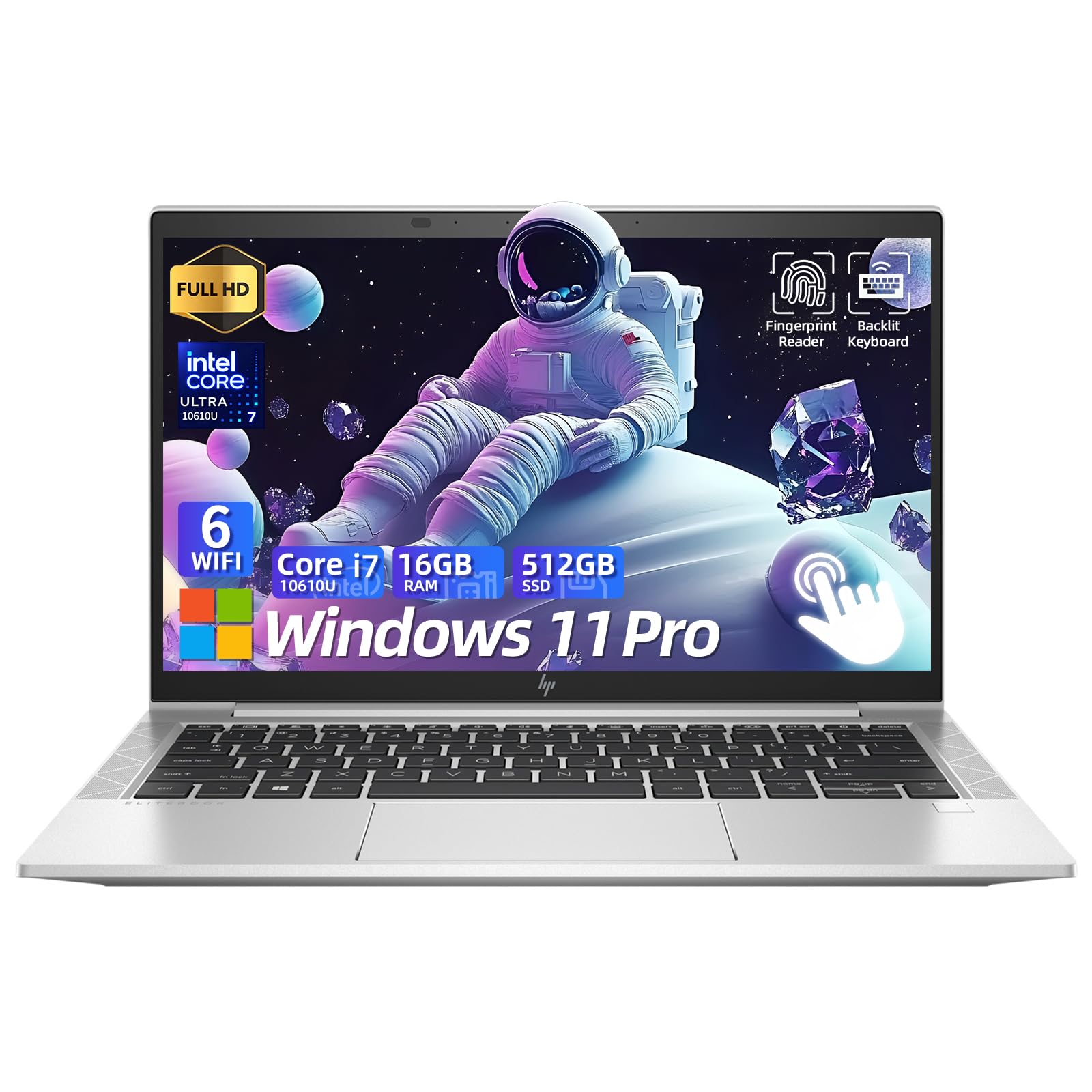
3. HP EliteBook 830 G7 Laptop, Touchscreen Windows 11 Pro, Intel Core i7-10610U, 16 GB RAM, 512 GB SSD, FHD (1920 x 1080) 13.3 inch, Backlit Keyboard (Renewed)
A business-class workhorse packed with the RAM and storage that crush heavy daily loads.
If your work means dozens of browser tabs, virtualization, or data tools, the raw headroom here is the reason to pick it. The Intel Core i7-10610U runs four cores and eight threads with a maximum speed of 4.9GHz, backed by 16GB of DDR4 RAM and a 512GB SSD. That CPU speed tops the 2020 Apple MacBook Air’s 3.5GHz Turbo Boost ceiling — this machine simply has more ceiling for long compile jobs or heavy spreadsheets. The 13.3 inch Full HD anti-glare screen stays legible during long sessions, and you get dual USB-C, dual USB-A, HDMI, and a 3.5mm jack for docking into a real desk setup.
Windows 11 Pro brings the professional tools — BitLocker encryption, TPM 2.0, and HP’s security suite — which is why this one appeals to business buyers and anyone who travels with client data. The backlit keyboard and crisp touchscreen earn praise from happy owners. That said, this is the pick with the widest range of experiences. Several customers note heat and keyboard quirks, so buying from a seller with a clear return policy makes the decision much safer. A handful of 830 G7 owners describe the machine as ‘like new’ with fast performance for study and work; others report hardware trouble from the start.
For a software engineer, analyst, or student who genuinely needs 16GB and a half-terabyte drive in a 13.3 inch chassis, the payoff is real. If your daily routine is a browser and email, the Lenovo Chromebook Flex 5 gives you the same folding portability for a fraction of the commitment.
Headline spec: an i7-10610U up to 4.9GHz, 16GB RAM, and 512GB of storage — the most compute-per-carry of the entry-and-mid group.
The real question: is the renewed-unit lottery worth it for you? If yes, buy from a seller who takes returns.
Made for: developers, engineers, and business users who need serious specs in a compact 13.3 inch frame.
Look elsewhere if: you want a low-friction purchase and cannot handle the risk of a dud unit — the Chromebook and Samsung picks offer smoother reliability stories.
4. Dell Latitude 7390 Ultrabook | Intel Core i7 8th Gen Quad Core CPU | 16 GB RAM – 1 TB SSD | 13.3″ Touchscreen FHD Display with Webcam | Microsoft Office | Windows 11 (Renewed)

The travel companion that fits a terabyte of files in a 13.3 inch frame.
This is the pick for the buyer whose backlog of documents, project archives, and offline media needs somewhere to live. Its 1TB SSD is the largest storage capacity on this entire list, and it pairs with 16GB of RAM and an 8th-generation Intel Core i7 quad-core processor. The 13.3 inch Full HD touchscreen handles daily work comfortably, and Windows 11 arrives preinstalled alongside Microsoft Office 365. Buyers who use it as a backup travel machine describe it as light and portable, and one owner raves that the touchscreen makes it feel almost tablet-sized in hand.
Two real caveats matter here. First, battery runtime is the recurring soft spot from the review pages — several reviewers point out a short window that makes it a poor fit for all-day work away from an outlet. Second, performance feedback splits sharply between ‘fast and easy’ and ‘required a replacement unit,’ so buying from a seller with a return policy is the smart move. The upside is that those who do get a solid unit happily recommend it for value.
Where does this fit in the wider list? If your priority is storage capacity above all else and your workload is mostly spreadsheets, email, and video calls, the Latitude 7390 delivers something none of the Chromebooks can. If battery stamina sits higher on your wishlist, the Samsung Galaxy Chromebook 2 or the MacBook Air M1 below are better companions.
Why buyers keep it
- A 1TB SSD — the biggest single drive in this lineup
- 16GB RAM and a quad-core i7 handle travel workloads without lag
- Microsoft Office 365 and Windows 11 included from the start
- Owners describe the screen and chassis as surprisingly portable for the spec sheet
The trade-offs to weigh
- Battery endurance is the most common complaint — plan around outlets
- Some renewed units arrive unreliable; lean on returns
- No backlit keyboard mention — evening typing takes a little adjustment
The right buy for: data hoarders and traveling workers who want a huge drive in a small laptop.
Look past it if: unplugged work is the majority of your day — the longer-runtime picks in this list serve that need better.
5. Lenovo IdeaPad 710S 13.3″ Ultrabook: Core i7-6560U, 256GB SSD, 8GB RAM, Full HD 1080p Display

A slender, well-built 13.3 incher for people who type more than they tap.
This is the pick for the buyer who spends more hours typing than scrolling — and who cares that the chassis feels solid in hand. The 6th-generation Intel Core i7-6560U with 8GB RAM and a 256GB SSD handles IDEs, browsers, and office apps comfortably, and the 13.3 inch Full HD 1080p LCD delivers the resolution most buyers of this category are looking for. The 6-8 hour battery is the trade-off for a chassis this slim and light. Shoppers say the machine is thin and light enough to slip into a backpack on hikes.
Where this model quietly wins is the physical design. The slim profile, responsive keyboard, and matte non-reflective screen are what owners mention most positively, with the display earning special praise for staying bright and readable at wide angles. The 1080p screen means full HD clarity for documents and video without the glare that plagues glossy panels. If your setup prioritizes a comfortable typing surface over port selection, this one earns a close look.
Two honest limits deserve mention. First, there is no USB-C on this model, so newer peripherals or monitor setups may need an adapter. Second, the right shift key is awkwardly small — a real issue if you type quickly. Fan noise is also a recurring note among some owners. Otherwise, this is a solid, quiet ultrabook for writers, students, and anyone who prizes a light carry.
Who this is for: typists and light-travel users who want a 1080p screen and a solid keyboard without paying for premium-tier extras.
Where it falls short: no USB-C, an awkward right shift key, and a 6-8 hour battery mean it is really a desk-and-coffee-shop machine rather than a true all-day road companion.
Reach for this if: typing comfort and a slim footprint matter more to you than the latest port standard.
Pass if: you need USB-C, all-day runtime, or a full-size shift key to work comfortably.
6. Lenovo IdeaPad Yoga 13 13.3-Inch Convertible 2 in 1 Touchscreen Ultrabook (Gray) 2013 Model

The original bend-back laptop — a 13.3 incher that turns into a slab of tablet.
Few machines on this list are as open to going completely flat as this one. The 360-degree hinge rotates the 13.3 inch touchscreen into tent, stand, and full tablet position, and with 8 hours of battery it is genuinely comfortable away from a charger. Under the lid sits an Intel Core i5-3337U processor that clocks at 1.8GHz and can Turbo Boost up to 2.70GHz, paired with 4GB DDR3 RAM and a 128GB SSD. Two USB and HDMI ports handle peripherals, though a VGA adapter is needed for older projectors.
This is the ancestor of every convertible you see today, and people still get real joy from the form factor. Versatility, light weight, and smooth performance for everyday browsing and media are what owners keep returning to, and students running AutoCAD, MathCAD, and Photoshop on it report it keeps up. The RAM and SSD are both upgradeable, which is a rare and genuinely useful trait at this tier — plenty of owners have doubled the RAM and swapped in a larger drive.
The catch shows up over time. The screen has been known to fail on some units — one owner reported vertical color bars appearing a couple of months in — and the fan is loud under load on a number of machines. Windows 8 is the operating system on board, and some refreshed units have arrived without the original Lenovo software suite, so a quick check on the seller’s refurbishment notes saves headaches. If you plan to use it mostly in laptop mode and keep your demands modest, it works.
The form factor payoff: a 360-degree hinge (it folds all the way around into tablet mode) with a responsive touchscreen and 8 hours of battery make this among the most versatile 13.3 inchers in the roundup.
The honest caveat: an older processor, Windows 8, and reported screen and fan quirks mean this pick is for patient buyers who will check the refurb seller carefully.
Best for: tinkerers and home users who want tablet flexibility and are happy to upgrade RAM and storage themselves.
Not ideal if: you need Windows 11 from the start or a fan that stays quiet under load.
7. Apple Late 2020 MacBook Air with Apple M1 Chip, 13.3-inch, 8GB RAM, 128GB SSD, Silver (Renewed)
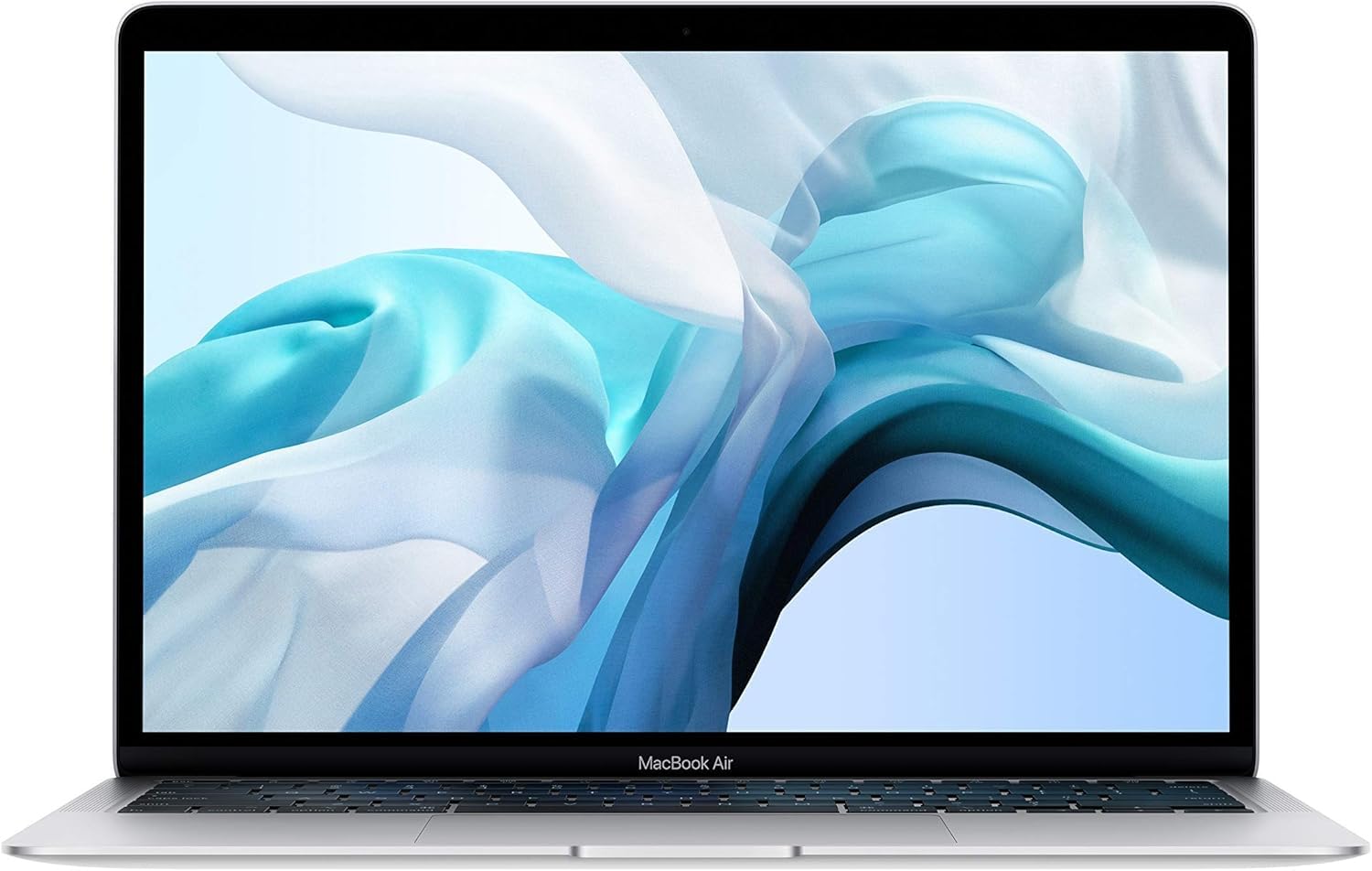
The M1 Air with its 2560×1600 Retina display and 18-hour battery is the marathon runner of this list.
If you want long battery life and a sharp screen in one machine for everyday work, start here. The 13.3 inch LED-backlit IPS display (a screen type with wide viewing angles and accurate color) runs at 2560×1600 native resolution — noticeably sharper than the 1920×1080 panels elsewhere on this list, so text and photos look crisp. The Apple M1 chip packs 8 cores (4 performance and 4 efficiency), a 7-core GPU (the graphics processor), and a 16-core Neural Engine (Apple’s chip for AI tasks). Battery is rated at 18 hours, nearly double the Lenovo Chromebook Flex 5’s 10, so you can leave the charger at home for a full workday. 8GB of RAM keeps the interface snappy. The 720p FaceTime HD camera, Touch ID (fingerprint login), and backlit Magic Keyboard round out the daily kit.
Wi-Fi 6 and Bluetooth 5.0 keep the connection fast, and the 128GB SSD stays lean, which fits a cloud-first workflow well. All-day battery is exactly what the review pages celebrate — one owner notes they end their day with roughly a third of the charge left after a full slate of meetings and messaging. For students or remote workers who dislike hunting for outlets, the runtime here is the standout reason to pull the trigger on this model.
The remaining spec to weigh carefully is the SSD: at 128GB, this Air carries less offline storage than the Dell Latitude 7390 above with its 1TB drive. If you keep large archives on the laptop itself, that is the spec you feel. Buyers trading up from older Apple laptops usually adjust well to cloud-first storage, especially with iCloud in the loop. Reviews do flag that renewed units can arrive with light cosmetic wear, so a protective case is a cheap preventive.
The champion spec: 18-hour battery runtime paired with the 2560×1600 Retina display makes this the most efficient daily driver for long days.
The size caveat: 128GB of SSD storage means you will lean on cloud or external drives for larger media libraries.
Your match if: you want the full M1 experience, a Retina screen, and industry-leading unplugged runtime in a 13.3 inch package.
Look past it if: you routinely store hundreds of gigabytes offline — the Latitude 7390 or Dell XPS picks hold far more on the drive itself.
8. Samsung Galaxy Chromebook 2 XE530QDA-KA1US 13.3″ Touchscreen 2 in 1 Chromebook – Full HD 1920 x 1080 – Intel Core i3-10110U 2.10 GHz – 8 GB RAM – Fiesta Red

The Fiesta Red 2-in-1 that walks into a lecture hall and turns heads.
If you want a laptop that looks like something other than another gray slab, this Samsung is the standout of the lineup. The 13.3 inch Full HD 1920×1080 touchscreen folds fully back into tablet mode, and the vivid color and metal chassis grab attention the second it leaves a bag. Inside sits the same Intel Core i3-10110U processor that drives the Lenovo Chromebook Flex 5, but Samsung pairs it with 8GB of RAM — double the Lenovo’s 4GB, giving you real breathing room when 20+ tabs are open. A 13-hour battery rating also tops the Flex 5’s 10 hours.
Wi-Fi 6 GIG+ keeps connections stable, and the Fiesta Red finish earns steady praise among owners. Users who carry it to class report the machine runs all day on a single charge. The 2-in-1 hinge and sturdy metal casing hold up to daily commutes in a backpack. Buyers describe the 10th-generation processor as snappy for browsing, presentations, and media without the fan noise of heavier rivals.
The honest trade-off: port selection is limited to two USB-C ports, an SD card slot, and a headphone jack, so external monitors and older peripherals usually need a dongle. Reviews also flag occasional touchscreen sensitivity that feels slightly too eager. The keyboard is shallow but backlit, pairing well with the low-light study sessions most students know well. For the money, this is a stylish Chrome OS machine with above-average specs for its class.
What buyers ask for and get
- 8GB of RAM — double the Flex 5’s 4GB — for smoother multitasking
- 13-hour battery rating matches a full college day
- Fiesta Red finish and metal chassis hold up in a backpack
- 2-in-1 hinge converts the 1920×1080 screen into a full tablet
The wrinkles to plan for
- Only two USB-C ports and an SD slot — dongles for older gear
- A handful of buyers report a screen separation issue; buy from a seller with clear returns
- The keyboard is shallow; heavy typists may want a compact external board
For the student who wants style: the Fiesta Red 2-in-1 with 8GB RAM and 13-hour battery is the eye-catching pick for campus.
Step away if: you need HDMI, USB-A, or a deeper keyboard — the Dell and HP options in this list cover those better.
9. Microsoft Surface Laptop (2024), Windows 11 Copilot+ PC, 13.8″ Touchscreen Display, Snapdragon X Elite (12 core), 16GB RAM, 512GB SSD Storage, Black

A 13.8-inch Copilot+ workhorse with an on-device NPU and a 20-hour battery.
This is the premium-tier pick for buyers who want AI features baked in and runtime that outlasts almost everything else here. The Snapdragon X Elite chip runs 12 cores and pairs with 16GB of RAM and a 512GB SSD, giving the Surface Laptop the headroom to juggle dozens of applications at once. The 13.8 inch touchscreen delivers bright HDR visuals, and the 20-hour battery rating is the longest in this group outside of the Dell XPS picks. Windows 11 Copilot+ features — including on-device AI — come tuned to the hardware, Microsoft claims the Surface Laptop outperforms the MacBook Air M3 in some workloads.
The connectivity list is modern: Wi-Fi 7, Bluetooth, and USB Type-C keep the setup clean, and the 39W power supply stays compact for travel. Owners mention the display being an all-day joy — crisp, bright, and easy on the eyes — and the battery reliability keeps coming up as a standout, with users rarely reaching for a charger. The keyboard and trackpad are repeatedly called the best in their class.
The honest conversation here is compatibility. Because it runs on ARM, some older Windows programs and drivers may not install cleanly, and the review pages flag that as the recurring grumble. Most modern apps run fine, and the list of ARM-compatible software keeps growing, but check your must-have tools before ordering if you rely on specialized desktop software. The Copilot key also replaces the right Ctrl key, which is a real annoyance for heavy terminal users.
What you are paying for: a 12-core Snapdragon X Elite, 16GB RAM, 512GB SSD, a 13.8 inch HDR touchscreen, and a 20-hour battery rating that covers unplugged workdays easily.
Where it bites: ARM compatibility remains a work-in-progress for older Windows software, and the Copilot key placement frustrates programmers used to a right Ctrl.
Built for: professionals who want Copilot+ AI features, a vivid touch display, and unplugged runtime that lasts into the evening.
Think again if: you depend on legacy Windows software or a full right-side Ctrl key for terminal or coding workflow.
10. Dell XPS 13 9345, 13.4″ FHD+ 120Hz, Snapdragon X Elite, 16GB DDR5, 1TB SSD
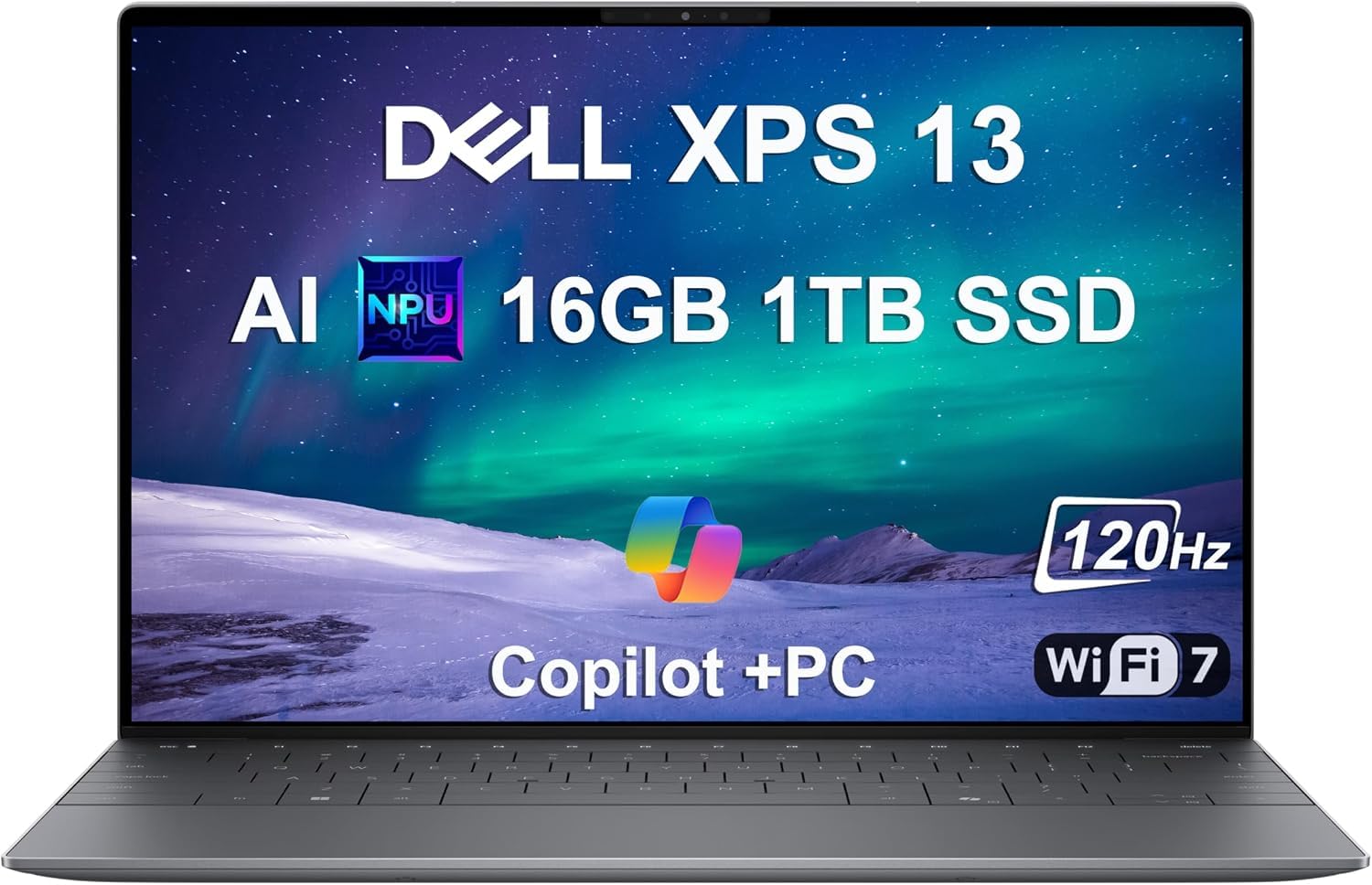
Dell’s thinnest XPS with a 120Hz screen and serious unplugged stamina.
If you want the most fluid-feeling 13.4 inch screen on this list, the 120Hz refresh rate here is the reason — your scrolls and cursor movement look visibly smoother than 60Hz panels. The FHD+ 1920×1200 display is anti-reflective and rated at 500 nits, so bright rooms and windows do not wash out your work. Under the lid sits the Snapdragon X Elite with 12 cores and speed up to 4GHz, backed by 16GB of fast LPDDR5X memory and a 1TB SSD. That storage matches the Latitude 7390 above for internal capacity, which is a lot of room for portable work. Dell rates battery life at 27 hours, and the CPU pairs with a 45 TOPS NPU for on-device AI tasks like Recall, Cocreator, and Live Captions.
Connectivity is modern too, with Wi-Fi 7, Bluetooth 5.4, and two USB4 40Gbps Type-C ports that support 4K at 60Hz output to two external monitors. The FHD RGB webcam handles video calls cleanly. Owners describe the machine as fast to wake, easily capable for multitasking, and light with a premium finish. Windows 11 Pro brings BitLocker and enterprise-ready features, and the SSD upgrade is backed by a three-year warranty from the seller while the rest of the components carry a one-year Dell warranty.
The honest caveats this list keeps flagging: an ARM processor means some older programs and drivers may not install, and there is no USB-A port for legacy accessories. Both of those are true here. When they do not stand in your way, this is a laptop for the buyer who values premium build and portable power in one package.
Spec that wins the pick: a 120Hz 500-nit display paired with a Snapdragon X Elite, 16GB LPDDR5X, and a 1TB SSD — the smoothest screen and largest drive combination in the premium tier.
The honest gripe: ARM compatibility caveats and no USB-A port mean legacy accessories may need adapters or replacement.
Perfect for: mobile professionals who want the smoothest display and serious internal storage to go with it.
Look past if: you depend on legacy Windows software or USB-A accessories daily.
11. Dell XPS 13 9350 Laptop, 13.4″ FHD+, Intel Ultra 7 256V, 16GB DDR5, 1TB SSD
The highest-tier XPS on this list, with the longest battery rating and a silky glass touchpad.
For the buyer who wants the top-of-the-stack 13.4 incher with the longest unplugged runtime, this XPS 9350 is the clear pick. The Intel Ultra 7 256V runs 8 cores up to 4.8GHz with Intel Arc graphics, backed by 16GB of DDR5 RAM and a 1TB PCIe SSD. The 13.4 inch WUXGA 1920×1200 display is rated at 500 nits with a 120Hz refresh rate, matching the smoother frame feel of the 9345 above, and the 26-hour battery life is the longest on the list. A precision haptic glass touchpad gives you a responsive surface with no buttons, and the touch function row swaps between media and function keys by touch.
Two things stand out in the daily experience. First, the near-borderless screen and refined chassis make the machine feel smaller than its spec sheet in the hand. Second, connectivity is future-proofed with two Thunderbolt 4 ports, Wi-Fi 7, and Bluetooth 5.4 — enough to drive a pair of external displays at 4K. The FHD RGB camera and dual-array microphones keep video calls clean, and Windows 11 Pro includes the business features — BitLocker, Remote Desktop, Hyper-V — that IT departments tend to require.
The keyboard is the honest sticking point. Reviews flag the flat keys, tiny function keys, and a touchpad with no visible border as a real learning curve for anyone who touch-types. Owners who rely on muscle memory report frustration until stickers or careful practice help. The rest of the machine earns warm feedback — light, premium, fast, and reliable. Buyers used to Lenovo X1 machines do note this XPS feels a touch heavier, so if pure throw-in-a-bag lightness matters, the Lenovo is the lighter option.
The reasons this tops the tier
- 26-hour battery rating — the longest on this list
- 1TB PCIe SSD alongside 16GB DDR5 RAM handles professional workloads
- 120Hz 500-nit screen keeps scrolling and cursor motion visibly smooth
- Two Thunderbolt 4 ports drive dual 4K monitors without a dock
What to weigh
- Flat keys and an invisible touchpad make touch-typing less forgiving
- Heavier than the Lenovo X1 line for buyers who prioritize pure lightness
- Premium-tier price tier — worth it only if you use the specs
Choose this if: you want the most premium build, longest battery, and most storage in a 13.4 inch Dell XPS.
Skip this if: touch-typing comfort on a traditional keyboard matters more to you than every other spec on the sheet — the Lenovo IdeaPad 710S has the typing surface, if not the specs.
Understanding the Specs
Battery life in hours
Battery life is the hours you can work away from an outlet. A 10-hour rating covers a full day of light use; an 18-hour or 26-hour rating means you might go two days between charges on light tasks. Real numbers in this list span 5-7 hours at the low end to 26 hours at the top. Remember that heavy apps, high screen brightness, and video playback all pull the number down from the rated figure.
RAM in gigabytes
RAM is your working memory — it holds everything you have open right now. 4GB keeps two or three tabs and a chat app happy. 8GB handles student multitasking smoothly. 16GB is where a 13.3 inch laptop stops feeling constrained by open tabs, background apps, and a video call at the same time. For a browser-heavy workload, RAM usually matters more than processor clock speed.
Storage in GB and TB
Storage is your closet — the files you keep inside the laptop. A 64GB drive means almost everything lives in the cloud or on an external drive. A 256GB or 512GB drive covers typical documents, media, and small project archives. A 1TB SSD is what you want if you store large source files, video, or game libraries locally. Cloud-first workflows cope fine with smaller drives; local-first workflows want the room.
Processor speed in GHz
Processor clock speed (in GHz) measures how many cycles the chip completes per second, and Turbo Boost is the temporary peak the chip hits under short bursts of heavy work. You will see figures like 3.5GHz on the Apple MacBook Air, 4.8GHz on the XPS 9350’s Intel Ultra 7, and 4.9GHz on the HP EliteBook’s i7. Higher numbers generally mean snappier short bursts, but RAM and storage size shape your daily experience just as much.
FAQ
Is a 13.3 inch laptop big enough for real work?
Can I write on the touchscreen with a stylus on these laptops?
How many years will a renewed 13.3 inch laptop actually last?
What is the difference between Chrome OS and Windows 11 on a 13.3 inch laptop?
Will a 13.3 inch laptop work with an external monitor?
How much RAM do I need in a 13.3 inch laptop for students?
Is ARM better than Intel or AMD on a 13.3 inch laptop?
Do 13.3 inch laptops run hot on your lap?
Should I buy a renewed 13.3 inch laptop or pay more for a new one?
Final Thoughts: The Verdict
The best 13.3 inch laptop for most buyers is still the Lenovo Chromebook Flex 5: a 360-degree hinge, 10-hour battery, and Core i3-10110U for very little money. If you want all-day runtime and Apple’s Retina display in one package, grab the MacBook Air M1. And for the buyer who needs a 1TB SSD in a 13.3 inch frame for work archives, the Dell Latitude 7390 is the one to reach for. If AI features, a 13.8 inch screen, and a 20-hour battery match your workday better, the Microsoft Surface Laptop earns its premium-tier position. For premium build and the longest battery of all, the Dell XPS 13 9350 closes the list. Whichever you choose, buy from a seller with clear returns — that one habit turns the renewed-market gamble into a small, manageable risk.
How We Picked
We do not accept paid placement. Every pick is matched to a real buyer and a real use-case; we do not hands-on test units.
Sources & Methodology
Specifications: manufacturer listings and product documentation. Review insights: verified customer reviews, as of September 2026. Pricing: not shown on this page (it changes often); check the current price via the retailer link.
As an Amazon Associate, Gadgets Feed earns from qualifying purchases. This does not affect which products we feature.