
The jump from 1080p to 1440p is one of the most visually satisfying upgrades a PC gamer or creative professional can make — sharper text, dramatically more screen real estate, and a pixel density that makes 27-inch panels look crisp without the GPU-taxing overhead of 4K. But the 1440p monitor market has splintered: you now have to choose between blistering-fast 300Hz IPS panels, deep-ink QD-OLED displays that rival home theater blacks, and ultrawide productivity behemoths that replace dual-monitor setups. Each path demands a different trade-off in refresh rate, color accuracy, and response time.
I’m Min — the co-founder and writer behind Gadgets Feed. I’ve spent hundreds of hours cross-referencing technical datasheets, analyzing panel technologies across IPS, OLED, and QD-OLED variants, and studying user reports on input lag, burn-in mitigation, and real-world color gamut coverage to build this guide around the most balanced and future-proof 1440p choices.
Whether you prioritize competitive frame rates or professional-grade color fidelity, this guide breaks down the key specs and real-world performance of the top models to help you find the best 1440p monitor for your specific setup and budget.
How To Choose The Best 1440P Monitor
Choosing a 1440P monitor involves balancing three primary factors — panel technology, refresh rate, and connectivity — against your primary use case. A competitive FPS gamer, a photo editor, and a multitasking professional will prioritize different specs, so understanding where these trade-offs live is essential before you click buy.
Panel Type: IPS vs. OLED vs. QD-OLED
IPS remains the most versatile and affordable option for 1440P, offering wide viewing angles, consistent brightness, and excellent color accuracy without the burn-in risk of OLED. However, OLED panels — especially QD-OLED variants — deliver truly infinite contrast ratios and per-pixel black levels that make HDR content and dark-mode gaming look dramatically more vivid. The downside: OLED monitors are pricier, can exhibit text fringing due to non-standard subpixel layouts, and require active burn-in prevention software. For a mixed-use monitor that handles both gaming and office work, a high-quality Fast IPS panel is the safest bet; for immersive single-player titles and HDR media consumption, QD-OLED is a clear step up.
Refresh Rate and Response Time
At 1440P, 144Hz is the baseline for smooth gameplay, but 240Hz is where competitive gaming truly benefits — the motion clarity improvement from 144Hz to 240Hz is smaller than the jump from 60Hz to 144Hz, yet it meaningfully reduces ghosting and improves target tracking in fast-paced shooters like Valorant or Overwatch. Some monitors now push 300Hz or even 540Hz using dual-mode technology, but these extreme rates are noticeable only to elite-tier players with high-end GPUs. Response time, measured in milliseconds from gray-to-gray (GtG), should be 1ms or lower for gaming; OLED panels hit an astonishing 0.03ms, which completely eliminates motion blur at any refresh rate.
Color Accuracy and HDR Performance
If you edit photos or video on your 1440P monitor, look for a panel that covers at least 95% of the DCI-P3 color space and ships with a factory calibration report showing Delta E under 2. HDR performance is often overstated: VESA DisplayHDR 400 is the minimum for basic highlights, while DisplayHDR 500 True Black on OLED panels provides a genuinely transformative HDR experience with deep blacks and bright specular details. Avoid monitors that claim HDR10 support without a VESA certification, as they typically lack the luminance and local dimming needed for real HDR impact.
Quick Comparison
On smaller screens, swipe sideways to see the full table.
| Model | Category | Best For | Key Spec | Amazon |
|---|---|---|---|---|
| LG 27GR83Q-B | Mid-Range | High-refresh IPS gaming | 240Hz / IPS 1ms | Amazon |
| ASUS VG27AQM5A | Mid-Range | Esports 300Hz | 300Hz / 0.3ms Fast IPS | Amazon |
| Acer Predator X27U | Mid-Range | Entry-level QD-OLED | 240Hz / 0.03ms QD-OLED | Amazon |
| MSI MAG 272QP | Mid-Range | QD-OLED with burn-in care | 240Hz / 0.03ms QD-OLED | Amazon |
| Samsung Odyssey G6 G61SH | Premium | Glare-free QD-OLED | 240Hz / 0.03ms QD-OLED | Amazon |
| Dell UltraSharp U2725QE | Premium | Professional color work | 4K 120Hz / IPS Black | Amazon |
| ViewSonic VP3456A | Premium | Ultrawide design/proofing | 34″ 1440p 21:9 / 100% sRGB | Amazon |
| INNOCN 49C1G | Premium | Super-ultrawide multitasking | 49″ 32:9 / 144Hz VA | Amazon |
| ASUS ROG Swift PG27AQWP-W | Premium | 540Hz competitive gaming | 540Hz / 0.02ms WOLED | Amazon |
| Samsung 49″ LS49C954UANXZA | Premium | Dual QHD productivity | 49″ 5120×1440 / 120Hz VA | Amazon |
| LG 40WP95C-W | Premium | 5K2K creative ultrawide | 40″ 5120×2160 / Nano IPS | Amazon |
In‑Depth Reviews
1. LG 27GR83Q-B 27-inch Ultragear QHD IPS Gaming Monitor
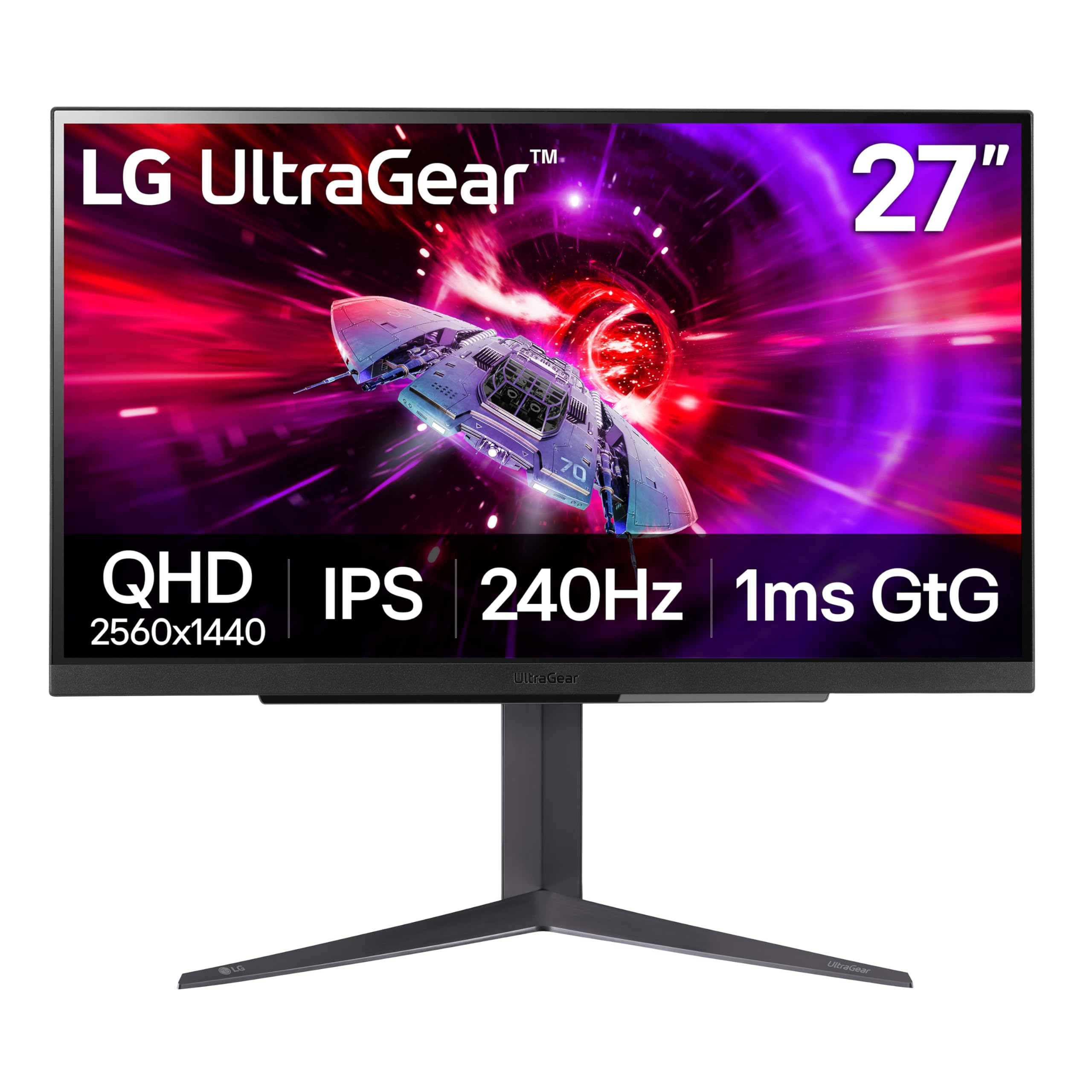
The LG 27GR83Q-B hits a near-perfect balance for gamers who want a high-refresh 1440P experience without jumping to an OLED budget. Its 240Hz IPS panel delivers sharp motion clarity through HDMI 2.1 and DisplayPort 1.4, and the 1ms GtG response time keeps ghosting negligible even in fast-twitch shooters. The DCI-P3 95% coverage and VESA DisplayHDR 400 provide noticeably vibrant colors that outclass many mid-range IPS monitors.
The ergonomic stand includes full height, tilt, swivel, and pivot adjustments — a rare find at this tier — and the 4-pole headphone jack with DTS Headphone:X spatial audio makes competitive sound positioning possible without an external DAC. The OnScreen Control software gives quick access to Black Stabilizer and Dynamic Action Sync, letting you tune visibility in dark corners of PUBG or Call of Duty on the fly.
Some units have arrived with stuck or dead pixels, which points to inconsistent quality control. If you get a clean panel, however, the combination of 240Hz, G-Sync Compatible certification, and 95% DCI-P3 makes this the most well-rounded 1440P gaming monitor under typical mid-range pricing.
Why it’s great
- 240Hz via HDMI 2.1 and DP 1.4 with full bandwidth
- 95% DCI-P3 and HDR400 produce vivid, punchy colors
- Fully adjustable stand with pivot and height
Good to know
- Quality control issues with stuck pixels reported by several buyers
- IPS contrast ratio of 1000:1 limits black depth in dark rooms
2. ASUS TUF Gaming VG27AQM5A 27” 1440P 300Hz Fast IPS
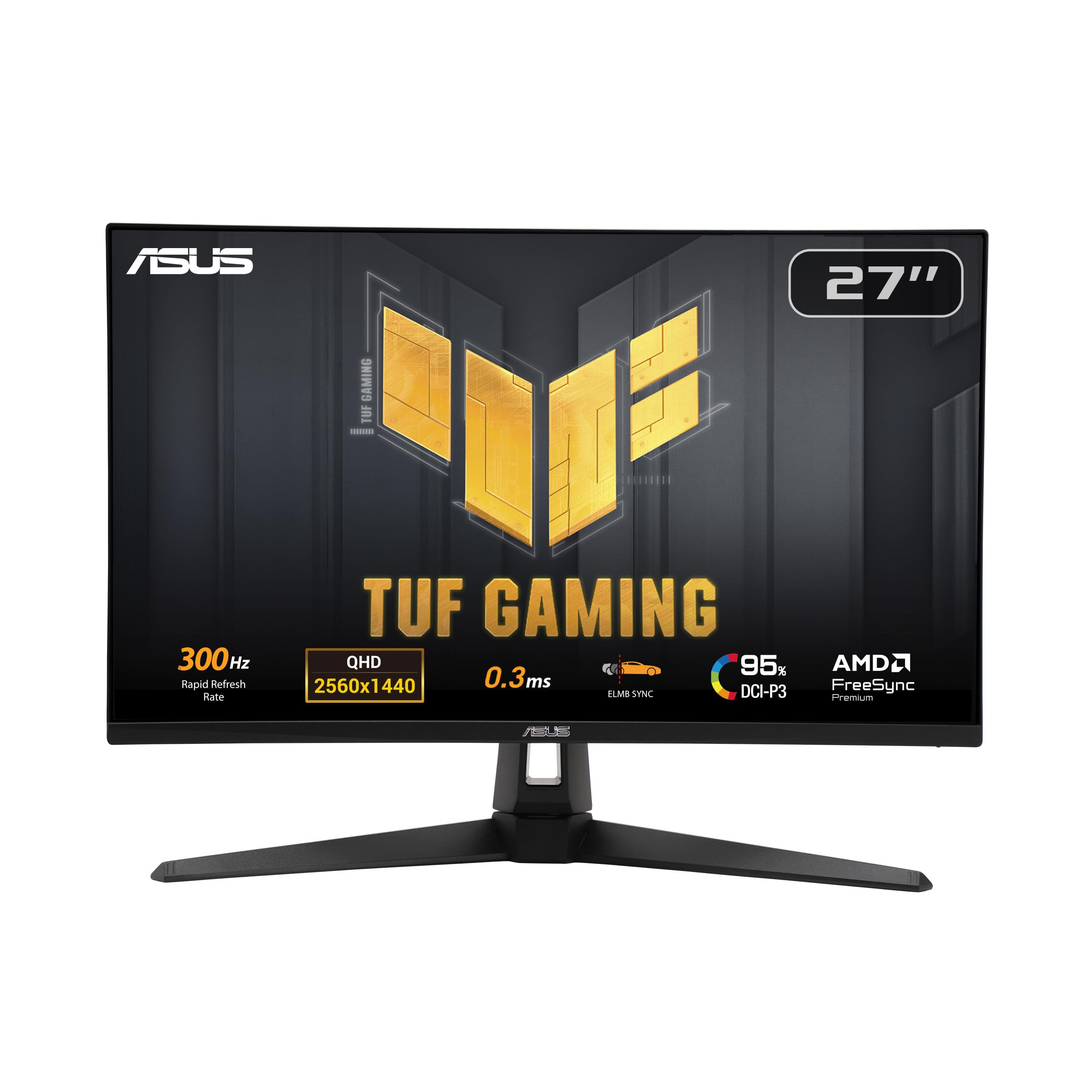
The ASUS TUF VG27AQM5A pushes 1440P refresh rates to 300Hz, making it one of the fastest IPS panels available for competitive esports. The Fast IPS technology achieves a 0.3ms GtG response time, which dramatically reduces motion blur during rapid flick shots in CS2 or Valorant. The ELMB Sync feature lets you combine variable refresh rate with backlight strobing, eliminating both tearing and ghosting simultaneously — a rare combination that elite players will immediately notice.
Color performance is equally strong with 95% DCI-P3 coverage, and the built-in DisplayWidget Center allows mouse-based OSD adjustments so you never have to reach for physical buttons. Shadow Boost brightens dark areas without washing out highlights, which gives you a clear competitive edge in games with oppressive shadow detail like Escape from Tarkov.
A few users have reported single dead pixels out of the box, and the built-in speakers are thin — fine for system sounds but not primary audio. The stand includes tilt, swivel, and height adjustments but lacks pivot. For pure frame-rate chasers, the 300Hz ceiling and ELMB Sync make this the definitive 1440P choice if you can accept occasional QC variance.
Why it’s great
- 300Hz refresh rate with 0.3ms response for elite motion clarity
- ELMB Sync eliminates ghosting and tearing simultaneously
- DisplayWidget Center software for easy OSD control
Good to know
- Some units arrive with dead pixels
- Built-in speakers are weak and lack bass
3. Acer Predator X27U 26.5” WQHD QD-OLED Gaming Monitor
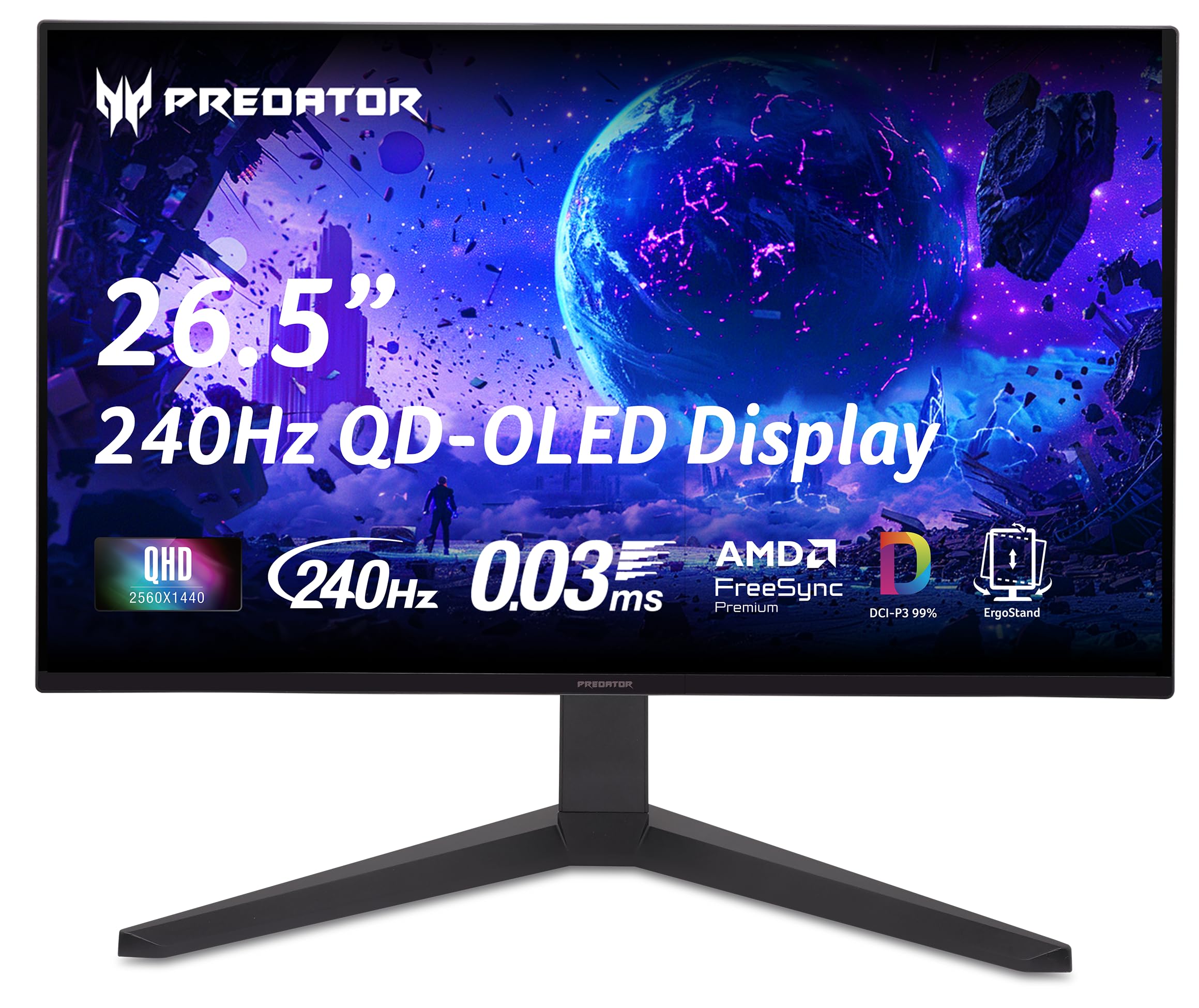
The Acer Predator X27U brings QD-OLED technology to a price point that was unthinkable just two years ago. Its 26.5-inch WQHD panel delivers 99% DCI-P3 coverage with a true 10-bit color depth and Delta E under 2, producing colors that look markedly more saturated and accurate than any IPS panel at this size. The 1,500,000:1 native contrast ratio means blacks are truly black — a transformative upgrade for HDR gaming and cinematic content.
With a 240Hz refresh rate and 0.03ms response time, motion clarity is flawless — no ghosting, no smearing, just instantaneous pixel transitions that make 1440P gaming feel hyper-responsive. AMD FreeSync Premium syncs the panel with your GPU for tear-free gameplay, and the ZeroFrame design with minimal bezels makes the screen appear larger than its 26.5-inch diagonal suggests.
The primary compromise is brightness: the X27U peaks around 400 nits, which is dimmer than premium OLED options and can feel subdued in very bright rooms. The stand is perfectly functional but wobbles slightly if your desk is unstable, and the OSD menu is notoriously convoluted. Still, for the QD-OLED experience at a near-mid-range price, this is the best entry point currently available.
Why it’s great
- 99% DCI-P3 with true 10-bit color and infinite contrast
- 240Hz at 0.03ms provides perfect motion clarity
- Unbeatable value for QD-OLED technology
Good to know
- Peak brightness is modest compared to premium OLEDs
- Stand and OSD joystick feel budget-tier
4. MSI MAG 272QP QD-OLED X24 27-Inch WQHD Gaming Monitor
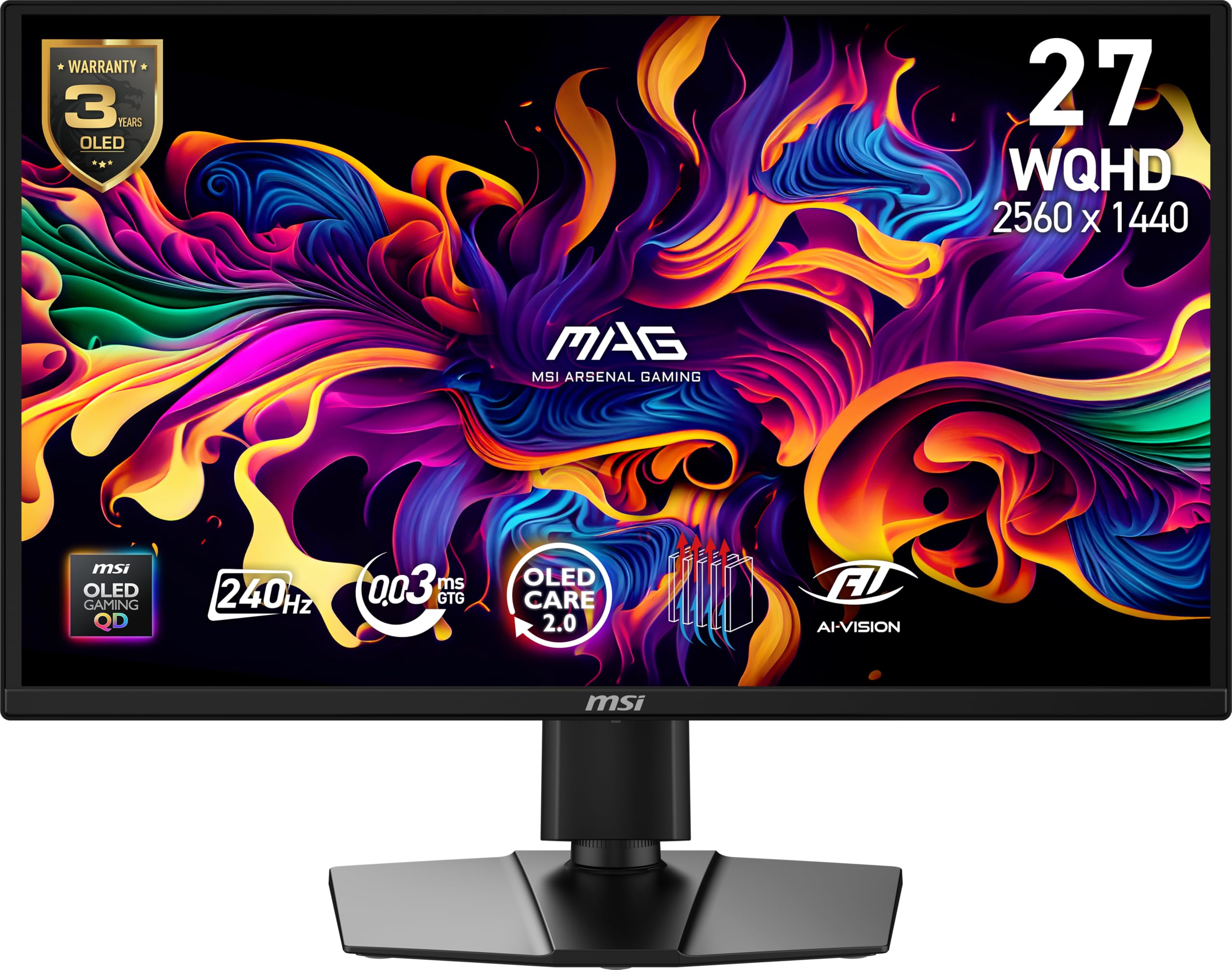
The MSI MAG 272QP refines the QD-OLED formula with a graphene heatsink that actively manages thermal load for longer panel life and fanless operation — a notable engineering advantage over some competing OLED monitors that rely on active fans. The 26.5-inch WQHD panel achieves a 1,500,000:1 contrast ratio with 99% DCI-P3 coverage and Delta E under 2, delivering images with punchy highlights and absolute black levels that IPS simply cannot approach.
MSI’s OLED Care 2.0 software suite lets you schedule pixel refresh and panel protection routines directly from the OSD, reducing burn-in risk during mixed-use workflows that include static UI elements. The 240Hz refresh rate and 0.03ms GtG response time deliver ClearMR 13000 certification, meaning motion blur is essentially nonexistent even at high object speeds.
The default out-of-box picture settings are overly dark and require switching to Racing or FPS mode for balanced brightness. Some users have reported that the OLED Care pixel refresh process can trigger mid-session, causing brief interruptions. Text fringing is minimal on this model but still present compared to IPS. For a feature-rich QD-OLED with robust burn-in mitigation, the 272QP is a top contender.
Why it’s great
- Graphene heatsink for fanless, durable OLED operation
- OLED Care 2.0 with flexible burn-in prevention scheduling
- 240Hz/0.03ms with ClearMR 13000 for elite motion clarity
Good to know
- Default picture settings are too dark out of the box
- Pixel refresh can interrupt active gaming sessions
5. Samsung 27″ Odyssey OLED G6 G61SH QD-OLED Gaming Monitor
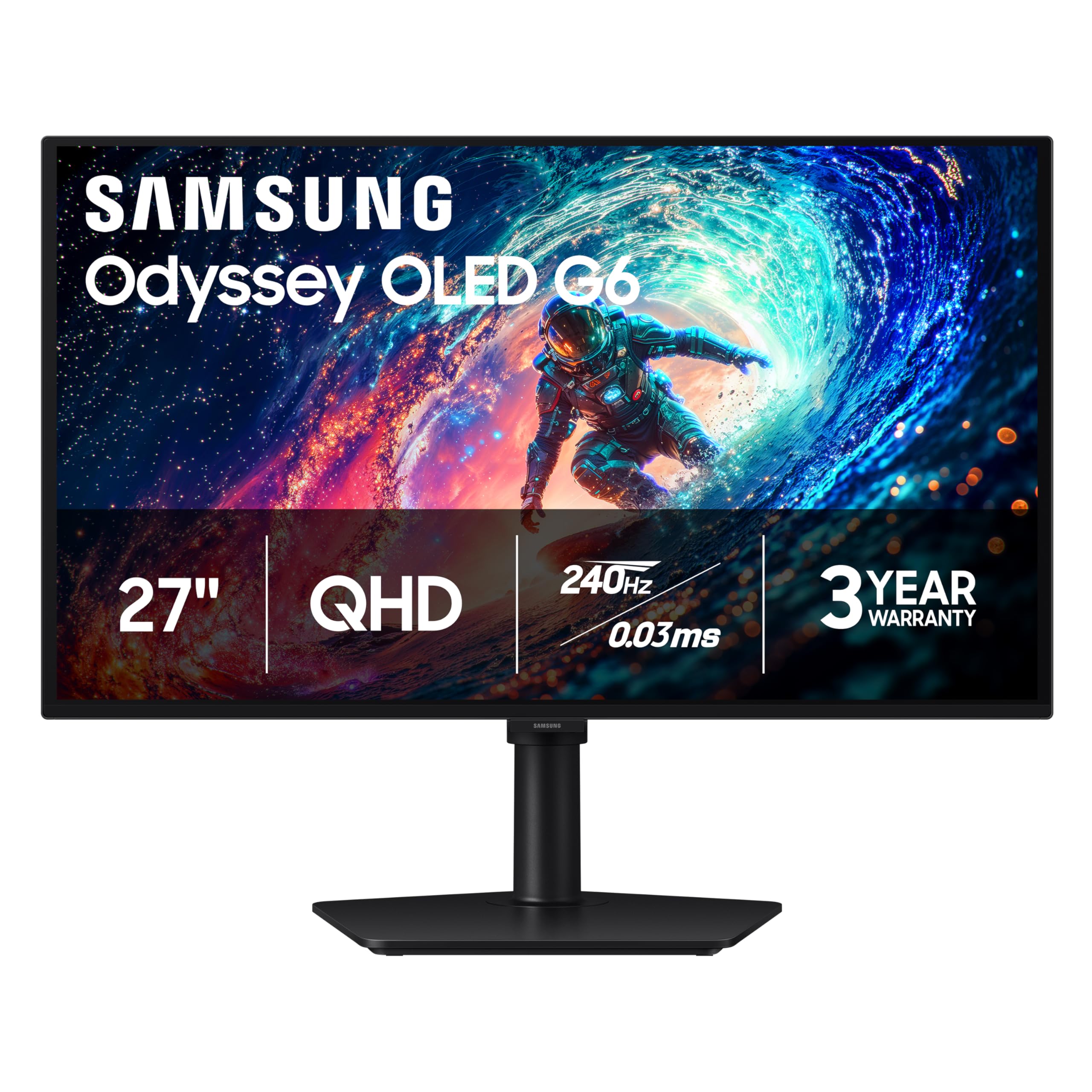
Samsung’s Odyssey OLED G6 (G61SH) stands out with its Glare-Free technology, which uses a specialized matte coating to diffuse ambient light reflections without sacrificing the deep blacks QD-OLED is known for — a meaningful advantage in rooms with windows or overhead lighting. The Pantone Validated certification confirms accurate reproduction of over 2,100 colors and 110 skin tone shades, making this display viable for color-sensitive photo editing alongside gaming.
The 240Hz refresh rate and 0.03ms response time deliver the same fluid, smear-free motion as other QD-OLED competitors, and OLED Safeguard actively monitors thermal conditions to prevent burn-in. The ergonomic stand offers full height, tilt, swivel, and pivot adjustments, and the HDR10 support with a 1,000,000:1 contrast ratio makes HDR content look genuinely dimensional rather than simply brighter.
Text clarity is slightly softer than a high-end IPS panel due to the QD-OLED subpixel arrangement, and the power management system requires the monitor to remain on an always-live power strip to complete its pixel refresh cycles — unplugging can disrupt the protection routine. For a premium OLED with excellent reflection handling and pro-level color validation, the G6 is a polished choice.
Why it’s great
- Glare-Free coating eliminates reflections without crushing blacks
- Pantone Validated for accurate color reproduction
- OLED Safeguard for active burn-in prevention
Good to know
- Text clarity is slightly softer than premium IPS panels
- Pixel refresh requires the monitor to stay powered at all times
6. Dell UltraSharp U2725QE 27 Inch 4K UHD IPS Black Monitor
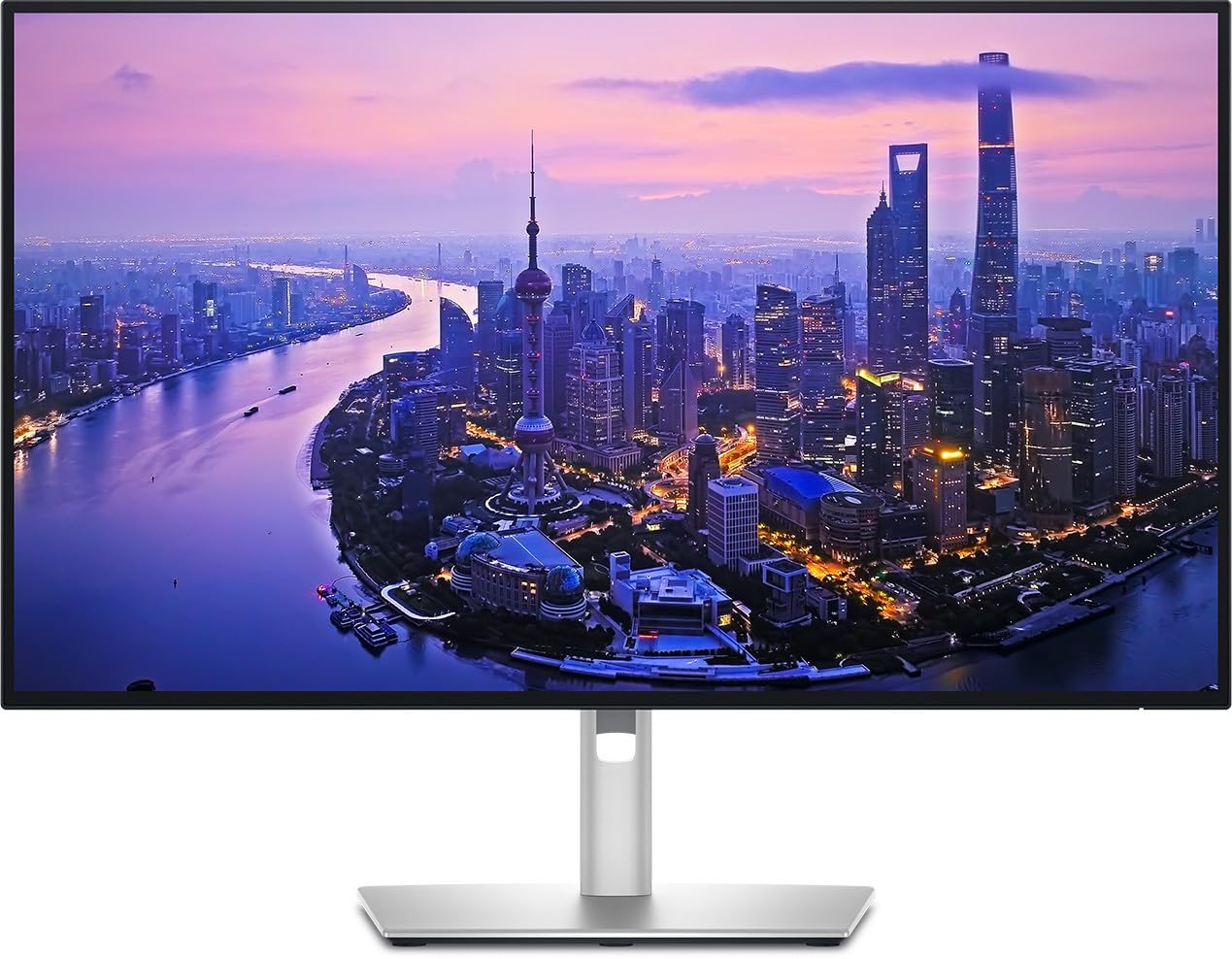
The Dell UltraSharp U2725QE is built for professionals who demand factory-calibrated color accuracy above all else. The 4K resolution at 27 inches delivers 109 PPI, providing razor-sharp text and image detail that surpasses standard 1440P. The IPS Black technology doubles the typical IPS contrast ratio to 2000:1, giving deeper blacks and richer shadows without the viewing-angle compromises of VA panels. Factory calibration targets Delta E under 1.5 with 99% DCI-P3 coverage, meeting the needs of video editors and photographers.
Thunderbolt 4 connectivity is the centerpiece of this monitor’s productivity appeal: a single cable transmits video, data, and up to 140W of power delivery while supporting daisy chaining for up to two additional 4K displays. The integrated ambient light sensor automatically adjusts brightness to match room conditions, reducing eye strain during long editing sessions. ComfortView Plus hardware filters low-blue light without shifting the color temperature.
The 120Hz refresh rate is smooth enough for casual gaming but not intended for competitive play. Mac users have reported compatibility errors with the Thunderbolt handshake, requiring a firmware update or a switch to the HDMI port. The anti-glare coating is exceptionally clean with no visible grain — a rare quality for matte displays. For color-critical workflows with high PPI, this is the best 27-inch option available.
Why it’s great
- IPS Black contrast of 2000:1 with Delta E under 1.5
- Thunderbolt 4 with 140W PD and multi-monitor daisy chaining
- Clean anti-glare coating with no visible grain
Good to know
- Mac Thunderbolt compatibility may require firmware updates
- 120Hz is adequate but not suited for high-level competitive gaming
7. ViewSonic VP3456A 34 Inch 1440p Ultrawide ColorPro Monitor

The ViewSonic VP3456A targets graphic designers and video editors who need ultrawide real estate without sacrificing color fidelity. Its 34-inch UWQHD+ (3440×1440) IPS panel with an 1800R curvature wraps around your field of view, reducing head movement when working across multiple timelines or design panels. The Pantone Validation and Delta E under 2 with a 14-bit LUT guarantee that the Pantone Matching System colors you see on screen match printed output — a critical requirement for packaging and brand work.
The USB-C hub delivers 100W power delivery alongside data and Ethernet connectivity over a single cable, turning the monitor into a clean workstation dock for a MacBook or Windows laptop. The 99% sRGB coverage ensures accurate web and print color reproduction, while the 4000:1 contrast ratio from the VA-like LCD provides stronger black depth than typical IPS ultrawides.
The maximum refresh rate is 60Hz, which means this monitor is purely for productivity — gaming is not a strength. Some users reported that direct sunlight causes the screen to wash out, and the built-in speakers are weak. The advanced ergonomics (tilt, swivel, height) and thin bezels make it an excellent fit for multi-monitor creative setups where color accuracy is non-negotiable.
Why it’s great
- Pantone Validated with Delta E under 2 and 14-bit LUT
- 100W USB-C with Ethernet for single-cable dock functionality
- 1800R curve and thin bezels for immersive productivity
Good to know
- 60Hz refresh rate is not suitable for gaming
- Screen washes out in direct sunlight
8. INNOCN 49C1G 49” Curved Gaming Monitor 144Hz Ultrawide

The INNOCN 49C1G is a 49-inch super-ultrawide that replaces three separate monitors with a single 32:9 panel, offering a 3840×1080 resolution that effectively mimics dual 1920×1080 displays side by side. The 1800R curvature keeps both edges comfortably within your peripheral vision, and the VA panel delivers a 3000:1 contrast ratio that provides decent black depth for media consumption. At 144Hz with Adaptive-Sync, motion feels fluid enough for racing sims and casual FPS titles.
Connectivity is a highlight: the monitor includes USB-C with 65W power delivery, HDMI 2.1, DP 1.4, and even an RJ45 Ethernet port — letting it act as a full docking station for a work laptop. The built-in speakers are surprisingly usable for system audio during conference calls or background video, and the PIP/PBP split-screen feature lets you view content from two separate input sources simultaneously on one screen.
The 3840×1080 resolution means the vertical space is equivalent to a standard 1080p monitor, not a 1440p panel, so you lose vertical real estate compared to a 2560×1440 display. The monitor is also not suitable for PS5 or Xbox gaming, as consoles output a forced stretched image rather than proper 32:9. For PC-based productivity and simulation gaming, however, it offers tremendous screen real estate at a reasonable cost.
Why it’s great
- 32:9 aspect ratio replaces three monitors with seamless display
- USB-C 65W PD with Ethernet hub for laptop docking
- 144Hz refresh rate with Adaptive-Sync for smooth motion
Good to know
- 3840×1080 limits vertical space compared to true 1440P
- Console gaming output is stretched and unusable
9. ASUS ROG Swift PG27AQWP-W 27″ OLED Gaming Monitor
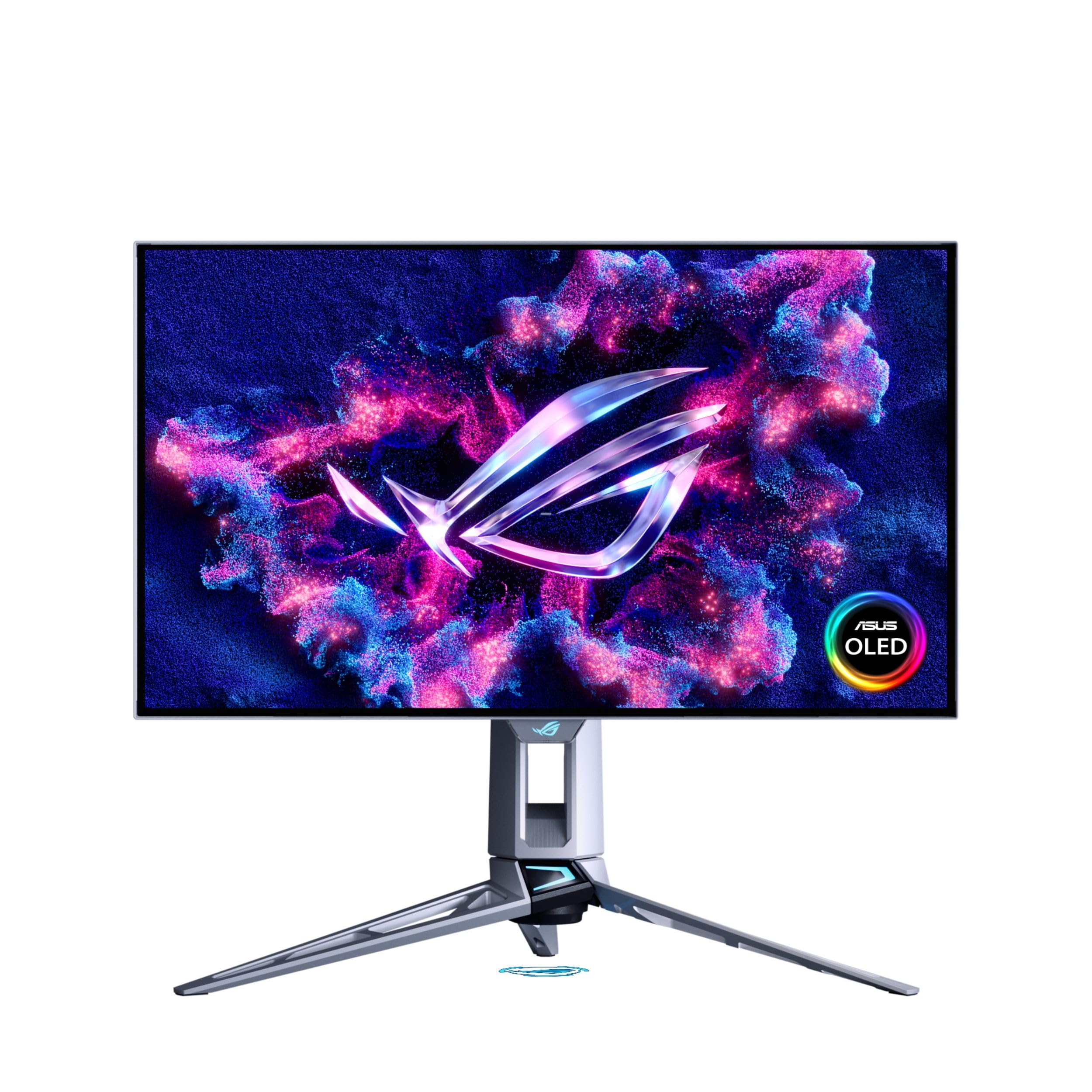
The ASUS ROG Swift PG27AQWP-W is a dual-mode OLED monitor that can switch between QHD at 540Hz and HD at 720Hz, giving competitive gamers a refresh rate ceiling that rivals dedicated esports TN panels while maintaining OLED color quality. The Tandem OLED technology increases peak brightness by 15% and color volume by 25% compared to earlier WOLED generations, and the 0.02ms response time eliminates all perceptible motion blur. The TrueBlack Glossy panel delivers zero-haze reflections and exceptionally sharp imagery — a rare combination on an OLED gaming monitor.
Connectivity is future-proofed with DisplayPort 2.1 UHBR20 offering a full 80Gbps bandwidth, alongside dual HDMI 2.1 ports. The Neo Proximity Sensor is a standout feature: it detects when you leave your desk and automatically switches to a black screen to reduce burn-in risk, resuming instantly when you return. The VESA DisplayHDR 500 True Black compliance ensures HDR performance that rivals mid-range TVs for cinematic gaming experiences.
The white color scheme and premium build quality are excellent, but the monitor speakers are noticeably quiet — an odd compromise at this price. Grey banding in dark gradients has been reported by some users, and the aggressive 540Hz mode requires a high-end GPU (RTX 4090-class) to push meaningful frame rates at 1440P. For the serious esports competitor who also values HDR visual quality, the PG27AQWP-W is currently unmatched.
Why it’s great
- Dual-mode QHD 540Hz / HD 720Hz for esports flexibility
- DP 2.1 UHBR20 with 80Gbps bandwidth for future GPUs
- Neo Proximity Sensor for automatic burn-in prevention
Good to know
- Speakers are very quiet; external audio is necessary
- 540Hz mode demands top-tier GPU to realize its potential
10. Samsung 49” Business Curved Ultrawide Dual QHD Monitor LS49C954UANXZA

The Samsung 49-inch Business Ultrawide is a productivity-first monitor with a true Dual QHD resolution of 5120×1440, giving you the equivalent of two 27-inch 1440P monitors side by side without a bezel gap. The 1000R curvature is the most aggressive on the market, closely matching the human field of view for reduced eye strain during long work sessions. The 120Hz refresh rate provides smooth scrolling and mouse movement that makes desktop navigation feel significantly more responsive than standard 60Hz office monitors.
Built-in USB-C with 90W power delivery lets the monitor function as a docking station, connecting peripherals, Ethernet, and charging through a single cable. The VESA DisplayHDR 400 certification delivers respectable dynamic range for video proofing, and the 3000:1 VA contrast ratio handles shadow detail better than typical IPS panels. The integrated speakers are serviceable for conference calls and system audio, freeing up desk space.
Connecting to older PCs via a dock can cause initial setup headaches — some users report hours of troubleshooting to achieve the full 5120×1440 resolution. The panel is VA, which means color accuracy and viewing angles are not at the level of premium IPS or OLED alternatives. For professionals who need maximum horizontal workspace for financial modeling, data analysis, or software development, this monitor delivers unmatched multitasking efficiency.
Why it’s great
- 5120×1440 Dual QHD matches two 27-inch 1440P monitors
- 1000R curvature for comfortable, immersive viewing
- USB-C 90W PD acts as a full docking hub
Good to know
- Connection issues with older docks can require extensive troubleshooting
- VA panel color accuracy lags behind IPS and OLED
11. LG 40WP95C-W 40” UltraWide Curved WUHD 5K2K Nano IPS Monitor

The LG 40WP95C-W delivers a rare 5K2K resolution (5120×2160) on a 40-inch Nano IPS panel, providing over 11 million pixels with the same PPI as a standard 27-inch 4K monitor. This means text is crystal sharp, video timelines show full detail without zooming, and photo editing benefits from true pixel-level precision. The 98% DCI-P3 coverage with HDR10 support produces vibrant, accurate colors that satisfy professional video editors working in Final Cut Pro or DaVinci Resolve.
Thunderbolt 4 connectivity with 96W power delivery simplifies cabling to a single wire for MacBook Pro users, and the 21:9 aspect ratio is wide enough to show a full video timeline alongside tool palettes and preview windows. The built-in speakers are surprisingly capable with rich bass for desktop audio, and the 3-side virtually borderless design makes the monitor feel expansive without excessive footprint.
The refresh rate maxes out at 72Hz, which is fine for desktop work but disappointing for gaming, and the 300 cd/m² brightness is modest — HDR visuals lack the punch of higher-luminance displays. Some units have experienced image retention and flickering after extended use, and LG’s warranty coverage beyond one year is limited to paid repairs. For creative professionals who prioritize pixel density and ultrawide workspace over refresh rate, the 40WP95C-W remains a top-tier option.
Why it’s great
- 5K2K resolution delivers exceptional PPI for video and photo editing
- Thunderbolt 4 with 96W PD for single-cable MacBook connectivity
- 98% DCI-P3 coverage with good out-of-box color accuracy
Good to know
- 72Hz refresh rate limits gaming performance
- Long-term durability concerns with image retention reported
FAQ
Is 240Hz noticeable over 144Hz on a 1440P monitor?
Will a 1440P monitor work with my PS5 or Xbox Series X?
Final Thoughts: The Verdict
For most users, the best 1440p monitor winner is the LG 27GR83Q-B because it delivers 240Hz, full HDMI 2.1 bandwidth, and a fully adjustable stand at a price that leaves room for a GPU upgrade. If you want flagship OLED contrast and color, grab the MSI MAG 272QP. And for creative professionals who need an ultrawide with Pantone-accurate color, nothing beats the ViewSonic VP3456A.