
Our readers keep the lights on and my morning glass full of iced black tea. As an Amazon Associate, I earn from qualifying purchases.
Specs are compiled from manufacturer listings and verified buyer reviews and can change over time — please confirm the key details on the product page before buying.
A tennis bracelet usually marks something big — an anniversary, a birthday, a graduation. So the real question is not which listing has the biggest carat number. It is which bracelet keeps its clasp shut and holds its diamonds in a straight line. That depends on three things: solid gold purity, honest diamond grading, and a latch that stays closed.
I’m Min — the founder and writer behind Gadgets Feed. This guide is built by comparing the manufacturers’ published specifications and the patterns across verified customer reviews, so you get each pick’s real strengths and trade-offs instead of marketing spin.
Below are six real 14K options so you can match one to your wrist and your budget. The best 14k tennis bracelet wins on three things: solid gold purity, honest diamond grading, and a latch that holds.
Our Picks at a Glance

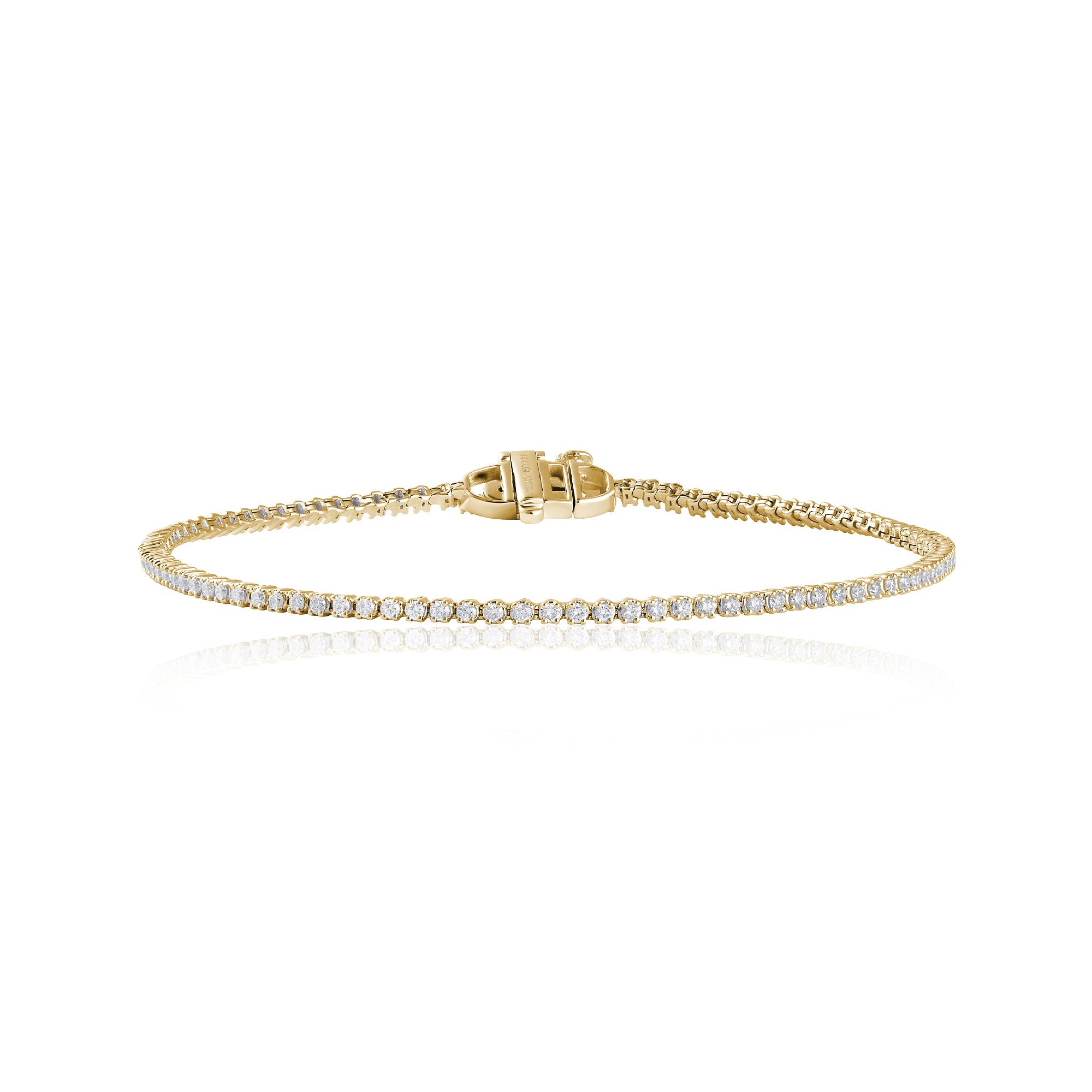
How To Choose The Best 14K Tennis Bracelet
Most people buy a tennis bracelet once, and they buy it for a milestone — an anniversary, a birthday, a graduation. So the decision is not about chasing the flashiest stone. It is about buying something that still looks right on your wrist years later.
Start With The Metal, Not The Carats
The “14K” in the name is the most important part of your purchase. It means 14 parts of the metal out of 24 are real gold. That is why a 14K bracelet keeps its color and does not flake or turn your skin green.
A gold-plated bracelet is a thin gold coating over a base metal, and that coating wears through with daily contact. A gold-filled piece is a thicker bonded layer, but it is still not solid gold. If the listing does not clearly say 14K, treat it as a different category of jewelry entirely.
Solid gold also carries real structural weight. That weight is what keeps your line of diamonds from sagging between the setting points.
The Clasp Is The Weak Point You Cannot See Online
Every tennis bracelet is a chain, and every chain has a failure point. Here it is almost always the last link between the chain and the clasp, or the clasp’s own tongue.
A box clasp with a safety catch gives you two separate mechanisms. Both have to release before the bracelet comes off. A fold-over clasp with a secondary latch does the same job. A plain single-tongue clasp on a heavy bracelet is the one that gives people trouble.
When your bracelet arrives, close the clasp and give it a gentle tug before you wear it out of the house. That ten-second check tells you more than any spec sheet.
Lab-Grown Versus Mined Diamonds
Lab-grown diamonds have the same physical, chemical, and optical profile as mined stones. You cannot tell them apart by eye.
What differs is the price and the paperwork. A lab-grown tennis bracelet lets you buy a larger total carat weight for the same budget. A mined-diamond bracelet holds a resale story some buyers care about.
Either way, insist on an appraisal. Several bracelets on this list ship with one, and that document is your proof of what you actually own.
Get Your Wrist Measured Before You Buy
A standard bracelet length is 7 inches, and it sits loosely on a 7.25-inch wrist. That is normal, and it is what lets the diamonds drape rather than dig in.
If you are buying as a gift and do not know the wrist measurement, a 7-inch band is the safe default. Most sellers can size up or down later, but it is easier to get it right the first time.
Quick Comparison
| Model | Best For | Gold Purity | Diamond Type | Carat Range | Amazon |
|---|---|---|---|---|---|
| Houston Diamond District 3 to 22 CT Mined Natural Diamond Tennis Bracelet★ Best Overall | Buying mined diamonds on a real budget | 14K White Gold | Mined Natural | 3 to 22 CT | Amazon |
| Amazon Essentials IGI Certified Lab Grown Diamond Tennis Bracelet for Women in 14k GoldBest Value | Entry-level lab-grown sparkle in a size 7 | 14K Gold | Lab Grown, IGI Certified | — | Amazon |
| 2 to 21 Carat 14K White Gold Lab Grown Diamond Tennis Bracelet (H-I Color) | Anniversary and milestone gifting | 14K White Gold | Lab Grown, H-I Color | 2 to 21 CT | Amazon |
| 14K Gold and Silver 1 Ct to 20 Ct Lab Grown Diamond Tennis Bracelet | Everyday wear and layering | 14K Gold | Lab Grown | 1 to 20 CT | Amazon |
| 3 to 50 Carat Classic LAB GROWN 14K Gold Diamond Tennis Bracelet 4 Prong | Maximum sparkle per dollar | 14K Yellow Gold | Lab Grown, E-F Color, VS2-SI1 | 3 to 50 CT | Amazon |
| Houston Diamond District 2 to 28 CT Lab Grown Diamond Tennis Bracelet | Upgrading to a heavier white gold piece | 14K White Gold | Lab Grown, E-F Color, VS2-SI1 | 2 to 28 CT | Amazon |
In‑Depth Reviews
1. Houston Diamond District 3 to 22 CT Mined Natural Diamond Tennis Bracelet
Our pick — over 4★ from 300+ verified ratings; the strongest balance of quality and price.
The one bracelet here with earth-mined diamonds, and the appraiser’s paperwork to prove it.
This earns the top spot on a 4.3-star average across 300+ owners — the strongest review record on this list. You get real mined diamonds in 14K white gold (14 of 24 parts pure gold) without stepping into a jewelry store. The stones are graded, the metal is stamped 14K, and buyers report feeling they got a fair deal on genuine earth-mined stones rather than lab-grown ones.
What sells people is the build quality, the single thing buyers bring up most, followed by the value at any of the ranges from 3 CT up to 22 CT. Each diamond sits in a four-prong setting, held by four small metal claws that let light pass through the stone. Reviewers compare it to pieces from big-name jewelers at higher retail, with one calling it “cheaper than Costco, just as beautiful.”
The catch is the clasp, and you should know it before you buy. Some owners call the clasp sturdy and secure. Others report it failing, including one whose clasp stopped working two months after gifting it — and that owner noted the bracelet was never abused. Reviews also flag the link tension on some sizes: a few buyers describe movement loose enough to roll on the wrist. Plan on a jeweler’s once-over or a snug tug-test the day it arrives.
Why owners keep it
- Genuine mined natural diamonds in stamped 14K white gold, with an appraisal included on most orders
- Four-prong setting that holds each stone and lets light through rather than blocking it
- Available from 3 CT all the way up to 22 CT, so you can size the sparkle to the occasion
- Buyers repeatedly compare the look to jewelry-store pieces at much higher retail
Where it asks for care
- The clasp is the recurring gripe — some arrive sturdy, some do not
- Link tension on certain carat weights feels loose enough to roll on the wrist
- A few buyers found the diamond setting lighter than expected at lower carat weights
Best for: shoppers who want mined, earth-grown diamonds in solid 14K gold and are willing to have the clasp checked once on arrival.
Think twice if: you want a bracelet you can put on and completely forget about — the clasp is the part most likely to need a jeweler’s attention.
2. Amazon Essentials IGI Certified Lab Grown Diamond Tennis Bracelet for Women in 14k Gold – Size 7 Inches
Certification on paper and real sparkle on the wrist — but the construction record is the weakest here.
This is the cheapest way onto this list: IGI certified lab-grown diamonds in 14K gold at a size 7 length. Buyers do describe real sparkle on the wrist. But the durability feedback is the worst on this page, and the reviews make that plain.
The recurring theme is breakage. Owners point to the join between the clasp and the bracelet, with multiple reports of it breaking after the second wearing or within a couple of months of normal use. One owner paid for repairs within two months of purchase. Another measured the gold content below the listed weight and returned it. That is the most-mentioned concern in the feedback.
When it holds together, buyers do like the look — petite but sparkly, with a safety clasp one reviewer called sturdy while noting durability was untested. If you want lab-grown diamonds in 14K gold and you will treat this as a lighter-wear piece, the sparkle is real. For daily wear, the construction record points you to pick three or pick five instead.
What the reviews reveal: the sparkle and the safety clasp earn genuine praise, while the clasp join and the light gold content are where the questions land. Owners mention the bracelet breaking after normal wear, with one noting it broke twice in two months.
My read: IGI certification in 14K gold at a size 7 is a solid spec sheet. The construction risk is real enough that this works best as an occasional piece — not the bracelet you shower in, sleep in, and forget about.
The honest call: pick this if you want certified lab-grown diamonds in 14K gold and you will treat the bracelet gently and store it carefully between wears.
Elsewhere if: you need a daily-wear piece that survives gym bags and garden gloves — the join between chain and clasp is the part customers note failing.
3. 2 to 21 Carat 14K White Gold Lab Grown Diamond Tennis Bracelet (H-I Color)

The anniversary gift that lands overnight with appraisal paperwork in the box.
For a milestone gift, the biggest risk is embarrassment — polite silence instead of real delight. This bracelet targets that fear directly with H-I color lab-grown diamonds (near-colorless, with no visible yellow tint in normal light) in 14K white gold, across a 2 to 21 CT range.
Appearance is the lead story in the feedback. Buyers describe the diamonds as genuinely bright and the piece as better than the photos. Several mention the appraisal being included, a real advantage if the gift doubles as an heirloom purchase. One buyer gushed that it arrived overnight, was signed for, and “I love that it included an appraisal.”
The honest caveat is grading consistency. A few buyers at lower carat weights describe individual stones coming in with a higher color grade or a fair cut, which can happen at this price band. One owner found the bracelet underwhelming and returned it for a Costco piece instead.
The gift angle: overnight shipping, a signed-for delivery, and a full appraisal in the box turn this into a low-risk milestone gift.
The trade-off: grading is not uniform stone-to-stone — a handful of owners describe individual diamonds coming in above the stated color grade, so judge the piece on how it looks on the wrist rather than spec-sheet precision.
Reach for this if: you are buying for an anniversary or a big birthday and want the box, the sparkle, and the appraisal to all land correctly on the day.
Look elsewhere if: you are a grading purist who wants every stone matched precisely — at this tier the grades can scatter, and the value here is presentation over perfection.
4. 14K Gold and Silver 1 Ct to 20 Ct Lab Grown Diamond Tennis Bracelet
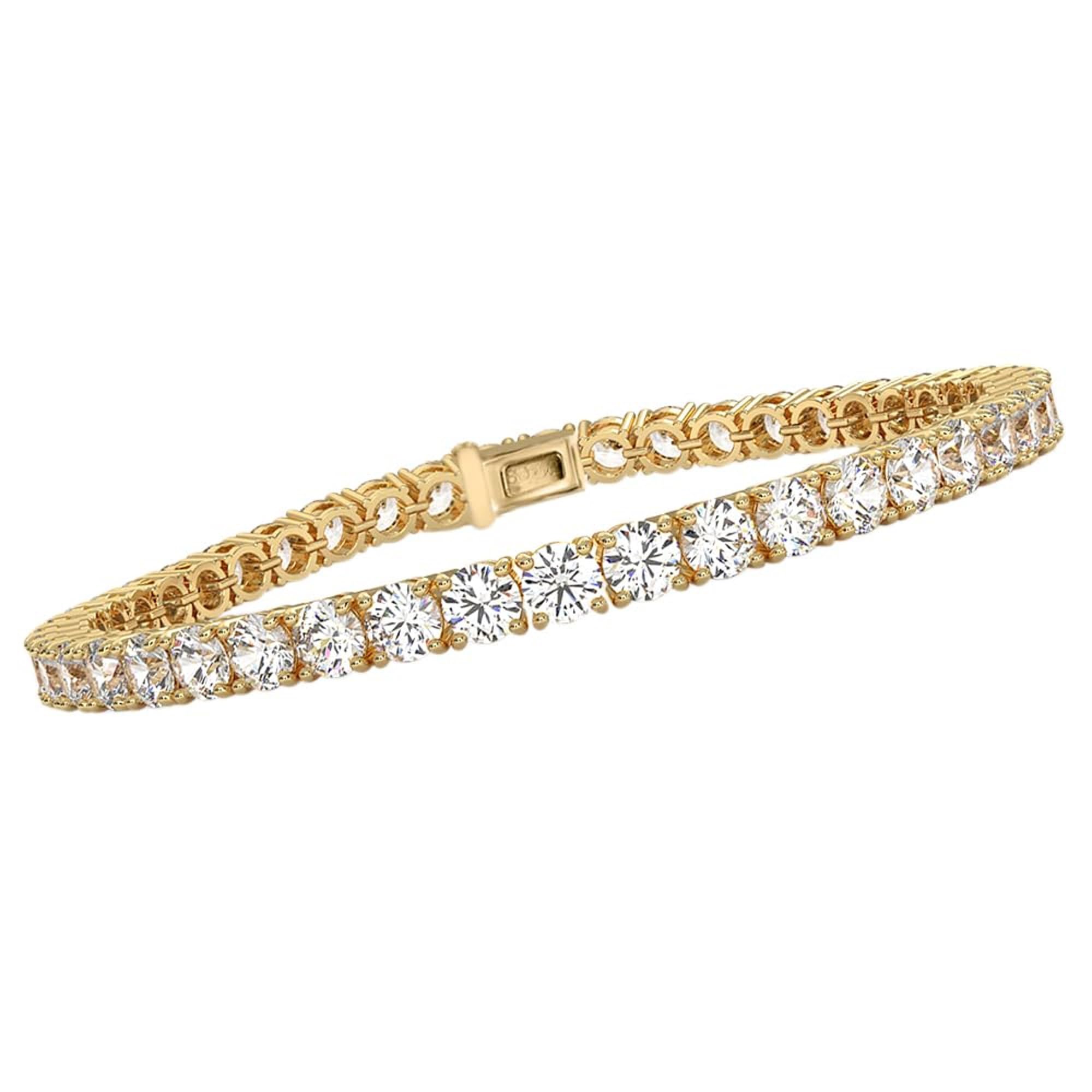
A flexible, layer-friendly line that one owner called “stunning elegant and just the right size.”
You get two sizes on one listing, and that span is the whole pitch: from a subtle 1 CT stack piece all the way to a full-statement 20 CT. Each lab-grown diamond sits in a four-prong setting, held by four delicate claws that let more light reach the stone. That is the construction behind the sparkle these bracelets are bought for.
Owners describe the line as flexible — one notes it is not a solid, rigid band but moves with the wrist, which is what lets it sit next to a watch. Lab-grown diamonds are chemically, physically, and optically identical to mined stones, so under gallery lighting the difference is invisible. Several buyers took their piece to a gemologist, and those checks confirmed the 14K gold and the stated carat weight.
The recurring issue is the clasp, the same weak point that haunts this whole category. Buyers describe clasps that are hard to close, clasps that differ from the listing photo, and a handful who had the bracelet fall off during wear. One owner had a jeweler tighten the clasps and still lost the bracelet at work. Have a professional look at the latch the day it arrives.
The layering case: a 1-to-20 CT range in a flexible, non-rigid line lets you size the stack and confirm the specs with a gemologist after arrival.
The honest caveat: the clasp gets mixed reviews — buyers describe it as hard to close, and a few had it slip off during wear, so a jeweler’s check on day one is worth doing.
Pick this for: building a layered wrist — the flexible line and 1-to-20 CT span make it easy to match your stack.
Skip the upsell if: you need an out-of-the-box, no-fuss clasp; reviewers point out the latch here needs a professional tune-up before it is truly secure.
5. 3 to 50 Carat Classic LAB GROWN 14K Gold Diamond Tennis Bracelet 4 Prong
A 50 CT ceiling and the best diamond grading on this list — a tier above the H-I Color bracelet at number three.
If visible sparkle per dollar is your goal, start here. The stones grade E-F color (the near-colorless end of the scale, with no visible yellow in normal light) and VS2-SI1 clarity (inclusions minor to slight, generally invisible to the naked eye). That combination usually shows up on pieces priced well above this tier, and the 3 to 50 CT range is the widest on this page.
The craftsmanship earns real credit. Buyers describe the prongs as finished well enough to glide over a sweater rather than snag it, and the fire in sunlight draws comments. Several compare the look head-to-head against high street retail and report no visible difference. One buyer put it plainly: it was “better price than 6 jewelers.”
Where this bracelet loses ground is the clasp, and the failures here are more serious than a stuck latch. A handful of buyers describe the bracelet falling off near the clasp within weeks or within a couple of wears, with the last link between the chain and the clasp named as the weak point. Reviews split hard: plenty of owners call the clasp secure with a safety lock, and plenty describe it breaking or arriving already broken. Have a jeweler inspect and, if needed, upgrade it right from the start.
The sparkle math
- E-F color diamonds sit at the near-colorless end of the grade scale — no visible yellow in normal light
- VS2-SI1 clarity means inclusions stay minor and generally invisible without magnification
- Available 3 CT through 50 CT — the widest ceiling on this list
- Prong work is finished cleanly enough not to snag fine knits, per buyer feedback
Where it slips
- The link between chain and clasp is named as the failure point in multiple reports
- Some units arrive with the clasp already broken or loosening within the first few wears
- Half the reviews describe a rock-solid safety clasp; the other half do not — no middle ground
The headline: the best diamond grading on this list paired with the largest carat ceiling — pick it if visible sparkle is the whole point of the purchase.
The caveat: budget for a jeweler’s check on the latch before your first wear, because the clasp is where this bracelet gives ground.
6. Houston Diamond District 2 to 28 CT Lab Grown Diamond Tennis Bracelet

The heavy one: 14K white gold and E-F lab-grown diamonds with the wrist presence of a serious piece.
This exists for the buyer who wants substance, not a dainty sparkle. The stones grade E-F color and VS2-SI1 clarity — the same top-end combination as the 50 CT Classic at number five — and the metal is 14K white gold with enough weight to read as substantial on the arm. It comes with a velvet box and documentation, so the unboxing feels like the occasion it probably is.
Quality drives the praise. The build, the weight, and the finish all get called out, and buyers describe the diamonds as clean and brilliantly lit under gallery lighting. One owner noted the slender prong setting and the secure clasp with a safety catch, and framed it as well-made and good value. Service earned mention too: one buyer had a 7-inch band resized up half an inch via an emailed shipping label.
The thing to know is that “size” cuts both ways in the reviews. Several buyers describe the bracelet running smaller than expected, and one had to return it because it fit more like a teenage size than an adult one. The clasp also gets mixed notes — some report it will not stay closed, and one painful report describes a lost bracelet. If your wrist runs large, size up or plan the resize conversation upfront.
The substance story: E-F color, VS2-SI1 clarity, and a heavier 14K white gold build that buyers describe as substantial and well-finished.
The catch: several owners found it fit smaller than expected on the wrist, and the clasp received split feedback — worth planning a resize conversation and a jeweler’s clasp check if your wrist runs large.
Best for: someone who wants a heavier, statement-level 14K white gold bracelet with top-end diamond grading and the velvet box to match.
Not for you if: your wrist runs wide — several owners found the fit tighter than expected, so a sizing conversation with the seller is worth having before you commit.
Understanding the Specs
Gold Purity: What 14K Actually Means
The “14K” stamp on a tennis bracelet means 14 of the 24 parts are real gold — so roughly 58 percent of the metal is gold, and the rest is alloy that gives it the hardness a chain needs. That matters because your bracelet takes constant flexing and load at the clasps, and a softer metal would bend and lose shape. A 10K bracelet has a lower gold content and a different look entirely. A gold-plated or gold-filled piece is a coating over a base metal, and that coating thins with wear.
Diamond Grading: Color and Clarity in Plain Terms
Color runs on a letter scale — D is the most colorless, and the scale drops through E, F, G, H, I as more yellow tint appears. E-F is the top end and reads fully colorless to the eye. H-I reads near-colorless — no visible tint in normal light, but a step down on the grading sheet. Clarity runs from flawless down through VS (very slightly included) and SI (slightly included) to I (included). VS2-SI1 means any blemishes are minor to slight and generally don’t show without magnification.
Clasp Types and How to Spot a Weak One
A box clasp slides a metal tab into a rectangular housing, and a safety catch is a second folding arm you must release separately before the bracelet comes off. A fold-over clasp has a flap that snaps down, often with a figure-eight safety latch on top. On a heavy bracelet, the failing point is almost always the last link between the chain and the clasp, or the metal tab inside a box clasp. A quick tug-test after you close it is the cheapest insurance you can buy.
Lab-Grown Versus Mined: Which to Buy
Lab-grown diamonds share the same chemical, physical, and optical properties as mined diamonds — the difference is origin, not appearance. Lab-grown lets you buy a larger total carat weight for the same budget, which is why the bigger carat ceilings on this list sit with lab-grown pieces. Mined diamonds trade on rarity and historic resale value. Either way, insist on an appraisal or certification — IGI is the certifier on one of the picks here, and the appraisal paperwork is your proof of what was sold to you.
FAQ
Will a 7-inch tennis bracelet fit my wrist?
Which clasp should I look for on a 14K tennis bracelet?
Is 14K gold better than gold plated for a tennis bracelet?
Are lab grown diamonds real diamonds?
How much does a 14K tennis bracelet cost?
How do I keep my tennis bracelet clasp from breaking?
Is a four prong setting better than a channel setting?
Can I resize a 14K tennis bracelet?
Do tennis bracelets come with an appraisal?
Should I wear my tennis bracelet every day?
Final Thoughts: The Verdict
For most people shopping this category, the best 14k tennis bracelet depends on two picks: the Houston Diamond District 3 to 22 CT Mined Natural Diamond Tennis Bracelet if you want genuine earth-mined diamonds in 14K white gold with a graded appraisal, and the 3 to 50 Carat Classic LAB GROWN 14K Gold Diamond Tennis Bracelet if you want the best diamond grading — E-F color, VS2-SI1 clarity — and the largest carat ceiling in 14K gold. And for a milestone gift that needs to land perfectly on the day, the 2 to 21 Carat 14K White Gold Lab Grown Diamond Tennis Bracelet arrives with overnight shipping and the appraisal paperwork in the box. Whichever you pick, budget a ten-minute jeweler’s check on the clasp before your first wear — that single step is the difference between a bracelet you love for years and a bracelet you lose on a Tuesday.
How We Picked
We do not accept paid placement. Every pick is matched to a real buyer and a real use-case; we do not hands-on test units.
Sources & Methodology
Specifications: manufacturer listings and product documentation. Review insights: verified customer reviews, as of September 2026. Pricing: not shown on this page (it changes often); check the current price via the retailer link.
As an Amazon Associate, Gadgets Feed earns from qualifying purchases. This does not affect which products we feature.