
Our readers keep the lights on and my morning glass full of iced black tea. As an Amazon Associate, I earn from qualifying purchases.
Specs are compiled from manufacturer listings and verified buyer reviews and can change over time — please confirm the key details on the product page before buying.
Yellow gold is back in a serious way, and the best 14K yellow gold engagement rings pair a solid 14K band with a setting that holds the stone tight through daily wear. The practical rule most smart buyers miss: what matters most is not who mined the stone or how big the headline carat weight sounds — it is whether the band is stamped 14K solid gold (the standard 58.5% gold purity, solid through the metal, not a thin gold-plated or gold-filled finish that rubs off), whether the setting actually holds the stone tight through daily wear, and whether the ring is stamped so it is verifiable. This guide compares nine real options, from lab-grown diamond solitaires to cubic zirconia stand-ins, so you can match the stone type and setting to your actual budget and how hard the ring will be worn.
I’m Min — the founder and writer behind Gadgets Feed. This guide is built by comparing the manufacturers’ published specifications and the patterns across verified customer reviews, so you get each pick’s real strengths and trade-offs instead of marketing spin.
Yellow gold engagement rings for sale today run the range from budget-friendly cubic zirconia stand-ins to premium certified lab-grown diamond solitaires, and the best 14K yellow gold engagement rings are the ones where the solid-gold band and a secure setting match how hard you actually wear the ring.
Our Picks at a Glance
How To Choose The Best 14K Yellow Gold Engagement Rings
The first decision is not the stone. It is the metal. A 14K stamp (which means the band is 58.5% pure gold mixed with alloy metals for hardness) is the marker that tells you the band is solid gold rather than a thin gold-plated or gold-filled coating that wears away over months of hand-washing and dish duty. Second, look at the stone type: lab-grown diamonds carry the same physical hardness as mined diamonds and hold a polish better through years of wear, while cubic zirconia (a lab-created stone often called CZ) delivers visible sparkle at a much lower cost but softens and scratches faster over time. Third, the setting — prong count, height, and how protected the center stone sits — decides whether the ring snags towels and hair all day or stays low and smooth.
Metal purity and the 14K stamp
14K gold is 58.5% pure gold by weight. That matters because pure 24K gold is too soft for a ring that lives on your hand — 14K adds enough alloy to hold its shape through years of knocks. Insist on a visible “14K” or “14kp” stamp inside the band. A ring without it leaves you guessing whether you actually got solid gold or a plated finish.
Stone type: lab-grown diamond, cubic zirconia, and simulated diamond
Lab-grown diamonds share the same crystal structure and hardness as mined diamonds, which is why they hold a bright polish far longer than softer stand-in stones. Cubic zirconia and simulated diamond rings cost far less and can look remarkably convincing in photos, but the softer material picks up micro-scratches over years, so they suit backup rings, travel, or budget-first buyers. Match the stone to how hard the ring will be worn: lab-grown diamond for daily wear, CZ for backup or travel.
Prong count, setting height, and daily wear
More prongs mean more metal holding the center stone — a six-prong setting grips the stone from six points, while a four-prong setting shows more of the stone but leaves fewer failure points protected. Low-profile settings (where the stone sits closer to the band) survive hand-washing, gym sessions, and desk work with less snagging. Higher settings show off a bigger-looking stone but catch on everything.
Quick Comparison
| Model | Best For | Stone Type | Stone Weight | Metal | Amazon |
|---|---|---|---|---|---|
| Bridal Set Rings Lab Grown Diamond Halo★ Best Overall | Complete bridal look in one order | Lab Grown Diamond | 1.00 ctw | 14K Gold options | Amazon |
| MAX + STONE 2 Carat Solitaire CZCrowd Favorite | Big-stone look on a value tier | Cubic Zirconia (AAA) | 2 carat | 14K solid gold | Amazon |
| ZUBAHUSS Oval Cut Simulated DiamondMost Elegant | Minimalist oval-cut elegance | Simulated Diamond (CZ) | 2 carat (center) | 14K gold finish | Amazon |
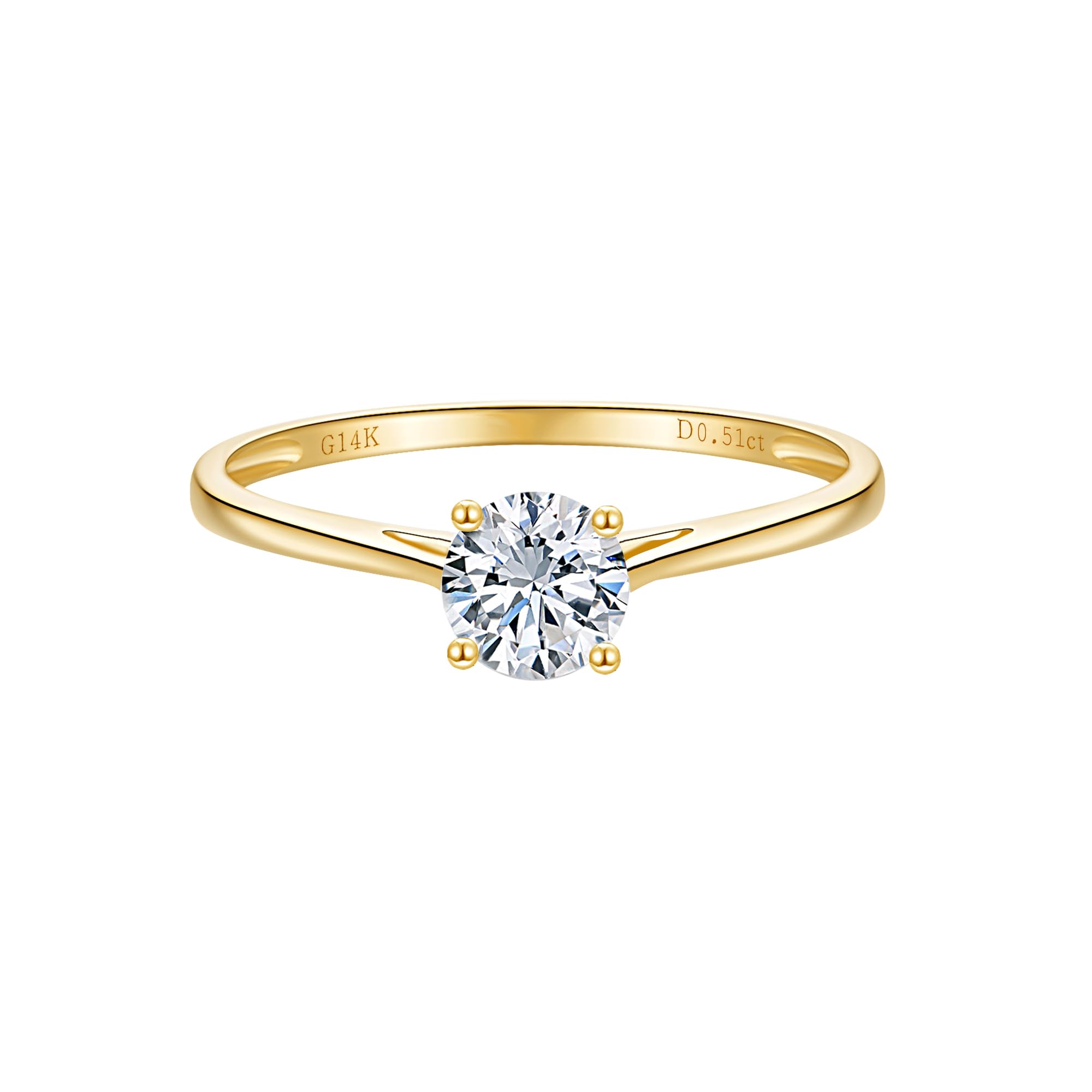
| Ioka Round CZ Solitaire | Classic four-prong everyday solitaire | Cubic Zirconia (CZ) | 0.50 ct (center) | 14K solid yellow gold | Amazon |
| LynChoe IGI Certified Lab Grown Solitaire | Certified stone with modern minimalist look | Lab Grown Diamond (IGI certified) | 0.5 to 3 carat options | 14K yellow gold | Amazon |
| MauliJewels 0.50 Ct 3 Stone Lab Grown | Three-stone styling with resizable band | Lab Grown Diamond | 0.50 ct (0.25 + 0.25) | 14K gold (multiple options) | Amazon |
| ARAIYA 1-3 Ct Three-Stone Lab Grown | Bigger certified-stone three-stone look | Lab Grown Diamond (D-E, VS) | 1.00 to 3.00 carat | 14K yellow or white gold | Amazon |
| Houston Diamond District 0.5 Ct Solitaire | Real mined diamond on a value tier | Mined Diamond (K, I2) | 0.5 carat | 14K yellow gold | Amazon |
| Houston Diamond District 1-5 Ct IGI Solitaire | Certified lab-grown solitaire, larger carats | Lab Grown Diamond (IGI certified) | 1 to 5 carat | 14K | Amazon |
In‑Depth Reviews
1. Bridal Set Rings for Women Lab Grown Diamond Halo Wedding Engagement Ring
Our pick — over 4.5★ from 50+ verified ratings; the strongest balance of quality and price.
A two-piece bridal set with a halo, so you get the whole wedding-finger look in one order.
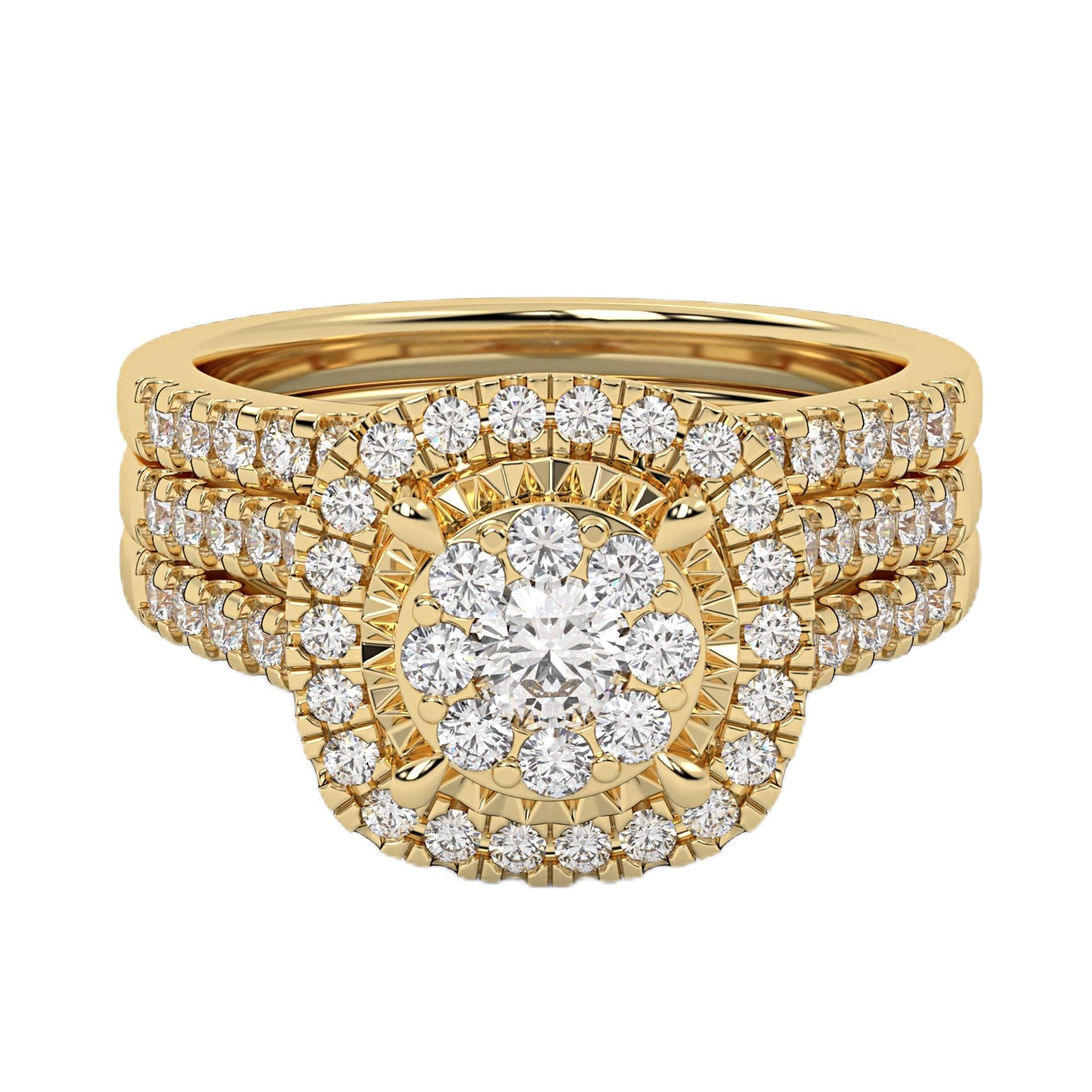
If you want the entire bridal look ready for the ceremony rather than hunting for a matching band later, this AFFY set is the one that solves that in a single purchase. The 1.00 carat lab grown diamond halo configuration (a center stone ringed by smaller diamonds that makes the center read bigger) means the whole bridal finger reads full and coordinated. You can choose between 14K gold over sterling silver, 10K, or 14K solid gold — for a 14K yellow gold engagement ring specifically, the solid gold option is the one that behaves like a proper heirloom piece rather than a plated finish that thins over years. And the model number is R6972, listed with an August 13, 2024 first-available date from manufacturer AFFY.
What wins people over here is the appearance — the halo configuration is the single biggest driver of the visual impact, and owners describe it exactly that way. A customer who lost her original wedding set after losing weight bought this as a replacement and reported she likes it better than what it replaced, describing it as a real eye catcher that draws continuous compliments and reads very sparkly. Another buyer who wore it specifically as an everyday alternative to protect a real ring said everyone who sees it assumes it is the real thing. Those are the two buyer patterns that show up over and over: it looks far more expensive than it costs, and it photographs beautifully.
The honest trade-off is the same one that follows any halo set — the tiny pave stones around the center are the most exposed part of the piece and want a gentle hand with sweaters, gym equipment, and harsh cleaning. Size stay on the true-to-usual-size side, so most buyers do not need to size up. The set comes with an August 2024 model year and a family-gift framing that some buyers love and others find unnecessary, but neither changes the ring itself.
What the set gets right
- The 1.00 ctw halo configuration gives the whole finger a coordinated bridal look in a single order
- Solid-gold 14K option means the band wears like a proper heirloom, not a plated finish that thins over time
- Buyers consistently describe the sparkle and the “looks real” factor as the standout win
- True-to-usual sizing reported across reviews — no need to size up as a rule
What to keep an eye on
- The tiny pave stones around the halo are the most exposed detail — pull sweaters and gym gear off gently
- Halo settings sit slightly higher than a flat solitaire, so tall shelving and car-door handles deserve a little more care
Reach for this if: you want the entire bridal set — matching band and halo engagement ring — solved in one purchase, with appearance as the priority.
Think twice if: you prefer a single-stone solitaire with no surrounding stones to worry about while wearing.
2. 14K White or Yellow Gold 2 Carat Round Cubic Zirconia Engagement Ring
A 2-carat look in solid 14K gold, so the band outlasts every stand-in you have owned before.
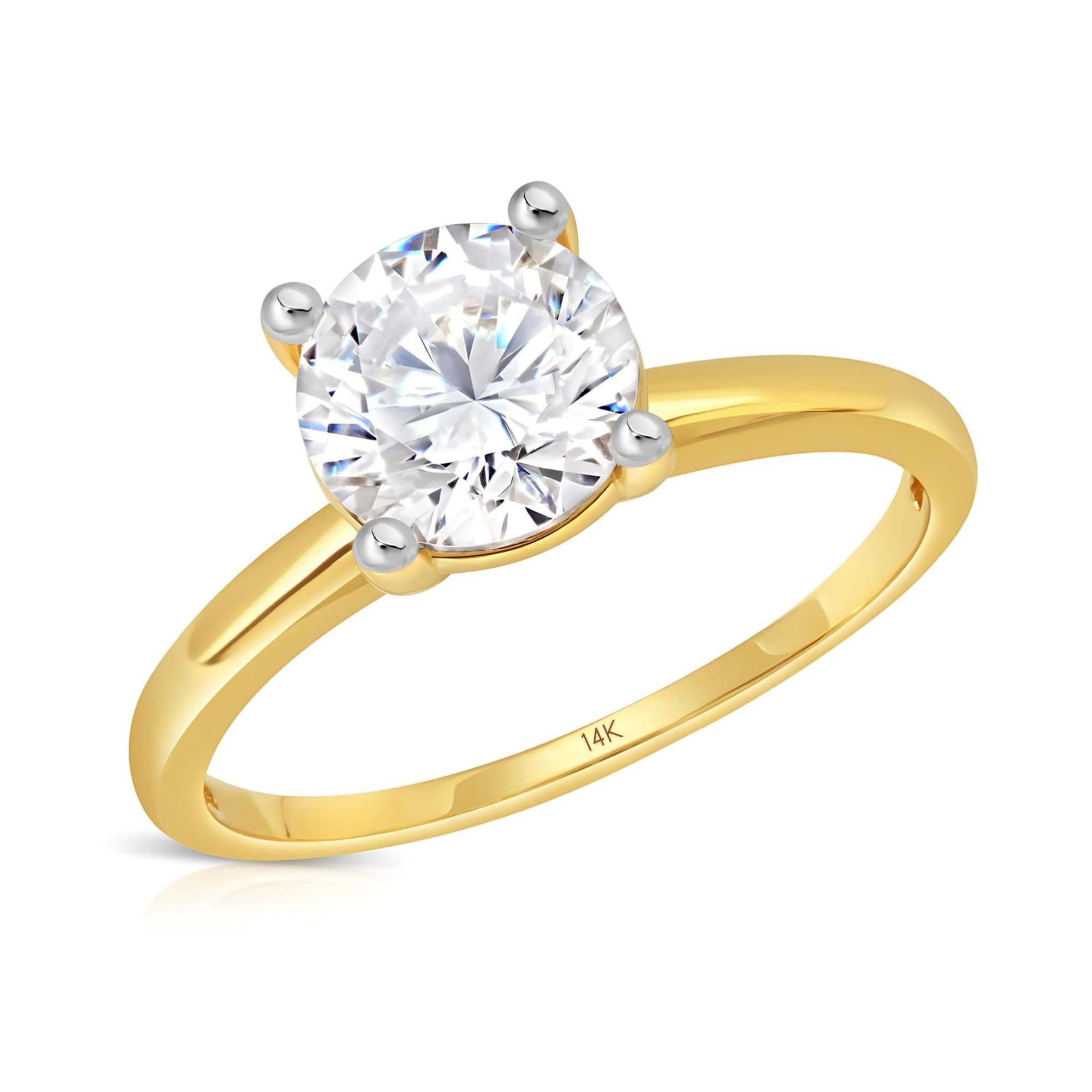
If the ring is going to be worn every single day — dishes, dishes again, hands washed dozens of times, gym in between — the detail that matters most here is that the band is solid 14K gold. That means it is anti-tarnishing and water-safe by construction, so the metal itself will not turn your finger green the way a plated ring eventually does. The center stone is a 2-carat round AAA-grade cubic zirconia, and AAA is the top grade in the CZ world for clarity and cut — it throws a crisp, bright sparkle that reads convincingly at arm’s length. The model ships from MAX + STONE with the branded gift box, a polishing cloth, a certification card, and a velvet travel pouch, so presentation is handled straight out of the packaging.
Appearance and quality are the two things buyers consistently land on. One picky owner reported the ring exceeded even her “extremely picky expectations,” noting she wears it in all water types, the stone stays clear, and it cleans up with a silver cleaner, dish soap, and a toothbrush — the kind of low-maintenance routine that is hard to keep up with on a softer stone. Sizing comes back true, the real gold does not tarnish, and owners wear it as a daily driver without turning the finger green. Set against the 1.00 ctw halo pick above, this one trades surrounding stones for a single larger center that sits clean and simple — the total look is more modern-solitaire, less bridal-set-complete.
The catch worth knowing: cubic zirconia is a softer stone than a lab-grown diamond, so a shiny new polish eventually fades with heavy daily wear. A small number of buyers also see the stone shift darker under certain artificial lights — the AAA grade is bright, not endlessly colorless the way a top-tier diamond is. And one reviewer noted a return that did not go smoothly, a rare note against an otherwise steady stream of satisfied owners. CZ softens with daily wear, so expect occasional repolishing; in exchange you get a 2-carat look in solid 14K gold for a fraction of diamond pricing.
Why the value holds up: solid 14K gold is the expensive part of any ring, and this one puts it under a 2-carat AAA cubic zirconia — the metal will outlast the stone, and the stone can be swapped later if you ever want to upgrade.
Honest limit to know: CZ softens with daily wear faster than a diamond or lab-grown stone, so plan on occasional repolishing if it lives on your hand 24/7.
Best for: the buyer who wants maximum visible carat weight inside a real solid-gold band without paying diamond pricing.
Look elsewhere if: a stone that stays colorless under every light and holds a perfect polish for decades is non-negotiable.
3. 14K Gold Simulated Diamond Engagement Ring Oval Cut Promise Rings
The elongated oval cut that makes fingers look longer, with a colorless D-grade stone at its center.
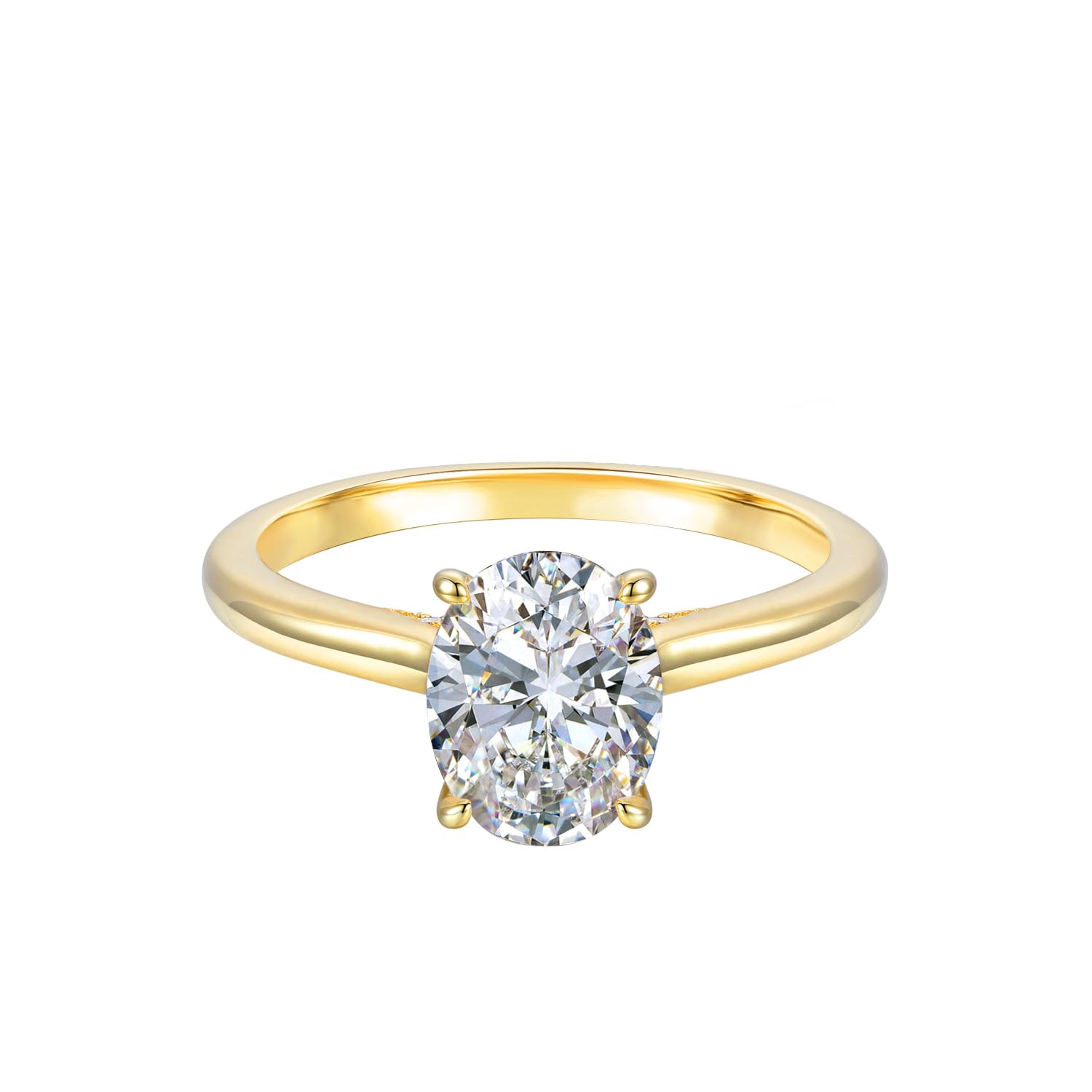
The shape of the stone does more for how a ring reads on the hand than almost any other detail, and an oval cut (an elongated, softened ellipse rather than a round stone) physically lengthens the finger. That is the visual trick this ZUBAHUSS ring is built on — a 2-carat oval-cut cubic zirconia in D color (the top of the colorless scale) set on a thin 14K gold band. The tiny CZ chips wrapping the main stone and arching underneath add detail that most budget ovals skip, and the whole setting sits clean and low for daily wear. Owners describe it as one of the standout pieces they own, with photos coming in less impressive than the ring itself — a rare direction for that gap to run.
What the buyers keep coming back to: the oval stone reads larger and more faceted than a round of the same carat weight, because the elongated shape catches light across more surface. Reviewers report the D-color stone stays crisp with no glassy look, the 14K gold band holds its shine without turning a finger green, and the sizing rings true — one buyer who wears a size 6 confirmed a perfect fit. The prongs get a specific nod too: buyers report they are secure enough to keep the stone from snagging hair or clothing, which is where cheap settings usually fail first. On value, buyers call the pricing fair for a real 14K-gold band, even though the stone itself is cubic zirconia — meaning you pay for the metal, the cut, and the craftsmanship rather than mined-diamond provenance.
The real limitation to weigh: the stone is simulated, not a lab-grown or mined diamond, so the material itself will not hold a mirror polish forever the way a diamond does — softness is the trade-off. A dainty thin band also means less metal than a chunky solitaire, so it is not the ring to wear while lifting heavy, moving furniture, or working with your hands hard. For a promise ring, travel ring, or budget-first engagement ring, the 14K gold band, D-color stone, and oval cut are hard to argue with.
The three things buyers name first
- The 2-carat oval cut catches light across a long, faceted surface — one buyer notes it reads like a far pricier piece
- Genuine 14K gold band, so it holds shine and does not turn a finger green with daily wear
- Prongs are secure enough to resist snagging hair and clothing, which is rare on ovals
What’s worth weighing before you commit
- Simulated stone, not lab-grown or mined — the material softens under years of daily wear
- Thin dainty band looks elegant but uses less metal than a full solitaire band
If you want the most elegant look per gram of gold: this is the oval-cut minimalist’s ring.
Not the right fit if: you need a chunky, work-every-day band with a stone hard enough to stay mirror-bright indefinitely.
4. Ioka 14K Solid Yellow Gold Round CZ Solitaire Engagement-Style Ring
The classic four-prong round solitaire that has been quietly doing this job since 2017.
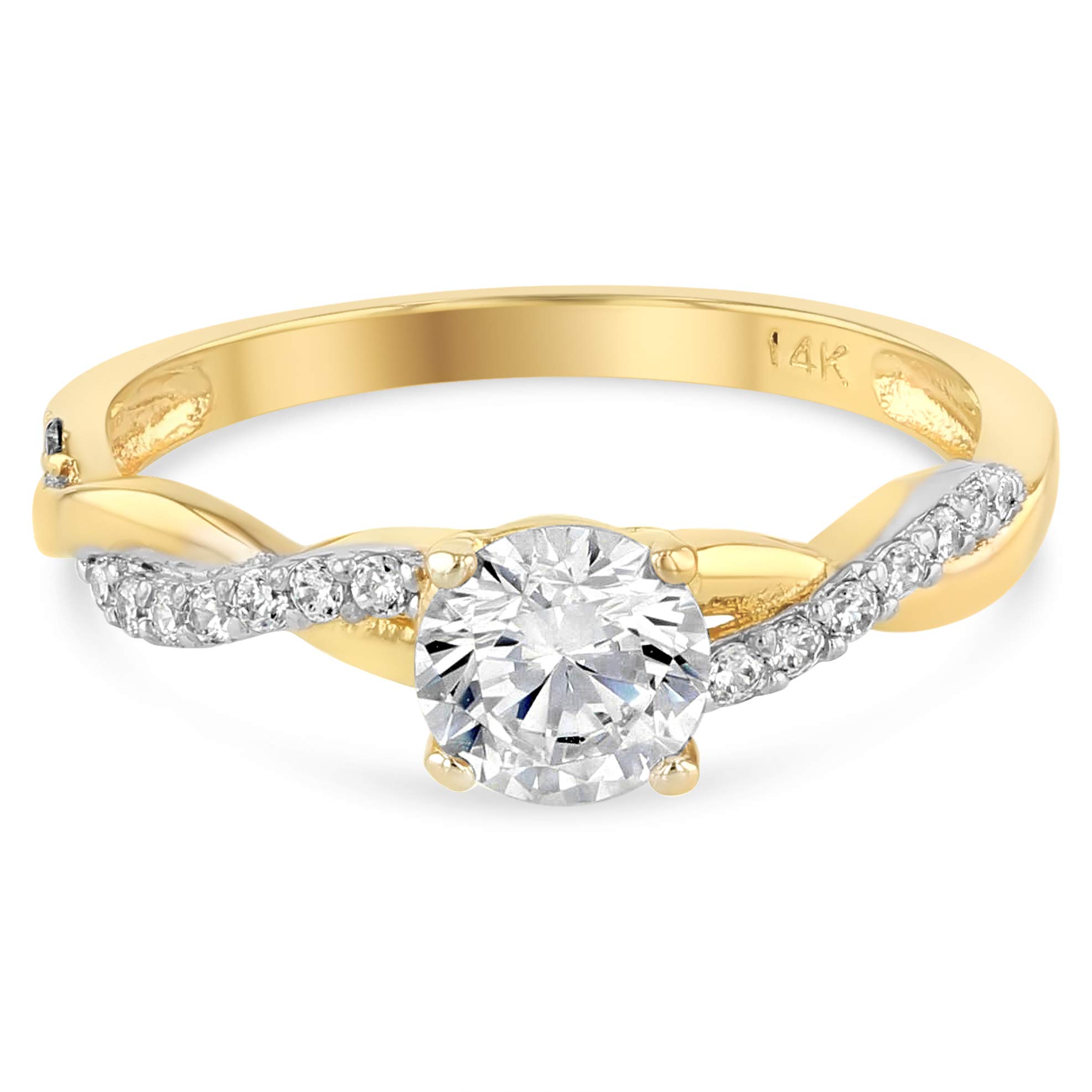
If you want the simplest possible ring on paper — one round stone, four prongs holding it, nothing else going on — this Ioka is the one to consider first. The 5.5mm round brilliant cut center stone carries 0.50 ct and sits in a four-prong setting, with 1mm side stones bringing the total to seventeen stones across the reverse-tapered band, and the ring runs in half sizes from 4 up to 9 so most buyers land on a true fit. It is solid 14K yellow gold, not plated, and the maker explicitly notes it is built to keep its shine, resists everyday wear, and can be easily repolished or restored — an important detail, because a solid-gold band that can be re-polished and even resized later will outlast any plated ring you would replace every couple of years.
Quality is what wins buyers here — the “is this real gold?” question is answered fast, and owners mention the yellow gold still looking fresh even after the ring has gone through dishes, handwashing, and cleaning sprays for weeks. One long-term owner has worn hers for around five years as a promise ring and reports the gold has held up beautifully and she still wears it, even acknowledging some crystal loss over that span — solid, honest reporting on what five-plus years of daily wear actually looks like. The center stone itself is a manageable 0.50 ct, closer to believable-by-design than headline-grabbing, and set against the bigger two-carat solitaires on this list, it trades visual size for classic low-poplarity proportion.
The trade-off is honest and comes up: the stones sit low in this setting, so some buyers find the center reads a touch smaller than expected from the photos. A small number of owners have also reported a stone loss while wearing — likely from a snag or a hard knock, so treat the pave side stones as the delicate part. Check the sizing chart carefully, because one buyer who measured a 7 ended up needing a 6 and had to exchange. The upside: the four-prong design is the most repairable setting on this list, and even a rare lost stone has consistently been looked after by the maker per owner reports.
Standout spec: 5.5mm round brilliant at 0.50 ct with seventeen total stones across the band — a proper solitaire silhouette in a size that stays wearable daily.
Real-world note: the setting deliberately seats the stone low for a cleaner, no-snag profile, which some buyers read as “smaller” — that is the design, not a defect.
Pick this one if: you want the classic 14K solid-gold round solitaire look, in a size that reads believable on any hand and stays easy to repolish.
Skip if: your priority is a large center stone that pops from across the room.
5. IGI Certified LAB Grown Diamond Engagement Rings in 14K Yellow Gold
A certified solitaire with an independently graded stone — the paperwork that answers “is it real?”
The difference between a lab-grown solitaire you can trust and one you have to take on faith is the certification, and that is the whole pitch here. This LynChoe ring carries IGI (International Gemological Institute) certification — a third-party grading that verifies exactly what you paid for, so you are not guessing about stone quality. The stone itself gets D-E-F colorless grades and VVS1-VS1 clarity, both near the top of the scale, meaning crisp sizing with no visible inclusions to the eye. That is a rare combination on this list. The 14K yellow gold solitaire setting exposes the diamond fully, without surrounding stones competing for attention, and the maker describes it as built for vintage and classic settings. Stone carat options run from 0.5 carat to 3 carat, so you can match the size to the look you want.
Owners describe the ring as flawless in hand, with the whisper-thin band doing the heavy lifting on how big the stone reads — most of the visual credit goes to how minimal the metal is around the center stone. A buyer who picked the 0.5 carat option confirmed it was exactly what he expected: solid 14K gold, a fiery stone, and a fair market price. Another shortlisted it as a full-on proposal win. Set against the uncertified 0.5 carat solitaire later in this guide, this pick wins on paper: both have similar center-stone weight ranges, but only this one comes with the IGI grader’s signature attached.
One thing to keep in mind: the band is intentionally slim, and a slim band gets called out by buyers — one owner noted “It is amazing but too thin. They don’t mention it.” That is not a defect as much as a design choice — a whisper band makes the diamond pop — but it means this is not the ring to wear through heavy lifting, sports, or rough work. The price is also a step up from the entry-level options here, because certified stones cost more. If IGI certification matters to you, the trade is straightforward: more money on the paperwork, less metal on your finger.
Where it earns its price
- IGI third-party certification means you are buying a stone with verified quality, not a claim
- D-E-F colorless and VVS1-VS1 clarity grades put the stone near the top of the scale for eye-visible quality
- 0.5 to 3 carat stone options let you scale the look without switching models
- Solid 14K yellow gold band, worn by owners as an everyday piece
Where it asks for care
- Whisper-thin band — the deliberate design choice that makes the stone read big, but not built for rough use
- Certified stones push the pricing above the entry-level rings on this list
The pick for: anyone who wants third-party paperwork to back up the stone before popping the question — IGI certification is the honest answer to “how do I know?”
The honest caveat: the whisper band is beautiful and slim — treat it like the elegant piece it is rather than a workout ring.
6. MauliJewels 0.50 Ct 3 Stone Lab Grown Diamond Engagement Rings for Women, 14K Rose | Yellow | White Gold Promise Ring, Round Brilliant Cut

Three real lab-grown diamonds in a resizable 14K-gold band, sized for finger range 5 through 9.
If real stones matter more than headline carat weight, this MauliJewels three-stone gives you three genuine lab-grown diamonds totaling 0.50 carat — a 0.25 carat center plus two 0.25 carat sides — set in solid 14K gold and available in rose, yellow, white, or two-tone. The specifications matter here: SI1 clarity and H-I color, meaning eye-clean with near-colorless warmth, and the four-prong setting keeps all three stones exposed for light. The band comes in sizes 5 through 9 in half-size steps and is explicitly listed as resizable, which is a real advantage over rings with inset stones that cannot be adjusted later. The NYC-based maker also states the stones are conflict-free, which is a spec some buyers weigh heavily.
Owners who love it describe it as gentle — quietly beautiful rather than attention-demanding — and the “smaller than you might expect” framing comes up more than once. One buyer openly noted it is small and still beautiful, which is honest sizing context, not a complaint. Fit reviews read strong: a repeat buyer confirmed the size ran true and fit perfectly. The valuable context here is the honesty of the design: three real diamonds at 0.5 carat total is a small-stone center, so you are not buying carat weight — you are buying real stones in real solid gold in a resizable band.
The honest reality: this ring earns mixed feelings on fragility, and it is the most fair thing to flag. One buyer described the posts holding the diamonds bending and breaking after a month of wear — real, but a single data point against a substantial set of happy reviewers. Sizing also has a snag: one buyer ordered a size 10, the resizing was confirmed by the seller, and a size 9 arrived instead. Treat this as a ring to handle carefully, keep away from gym equipment and heavy housework, and confirm the exact size you need before ordering if your finger is outside the 5-to-9 range or sits at a half-size boundary.
Why the spec sheet stands out: three real lab-grown diamonds totalling 0.50 carat in solid 14K gold, SI1 clarity and H-I color, and a resizable band in sizes 5 through 9 — that is a real-stone build at a ring weight that stays beginner-friendly.
What to watch: the setting posts are the delicate part — this ring wants gentle handling through daily wear, not the gym or garden routine.
For buyers who want honest real-stone provenance: three lab-grown diamonds in solid 14K gold, resizable for a future ring-size change.
Think twice if: you need a ring to survive a hard working day — this one prefers a gentler lifestyle.
7. ARAIYA FINE JEWELRY 1 Carat – 3 Carat Lab Grown Diamond Three-Stone Engagement Ring
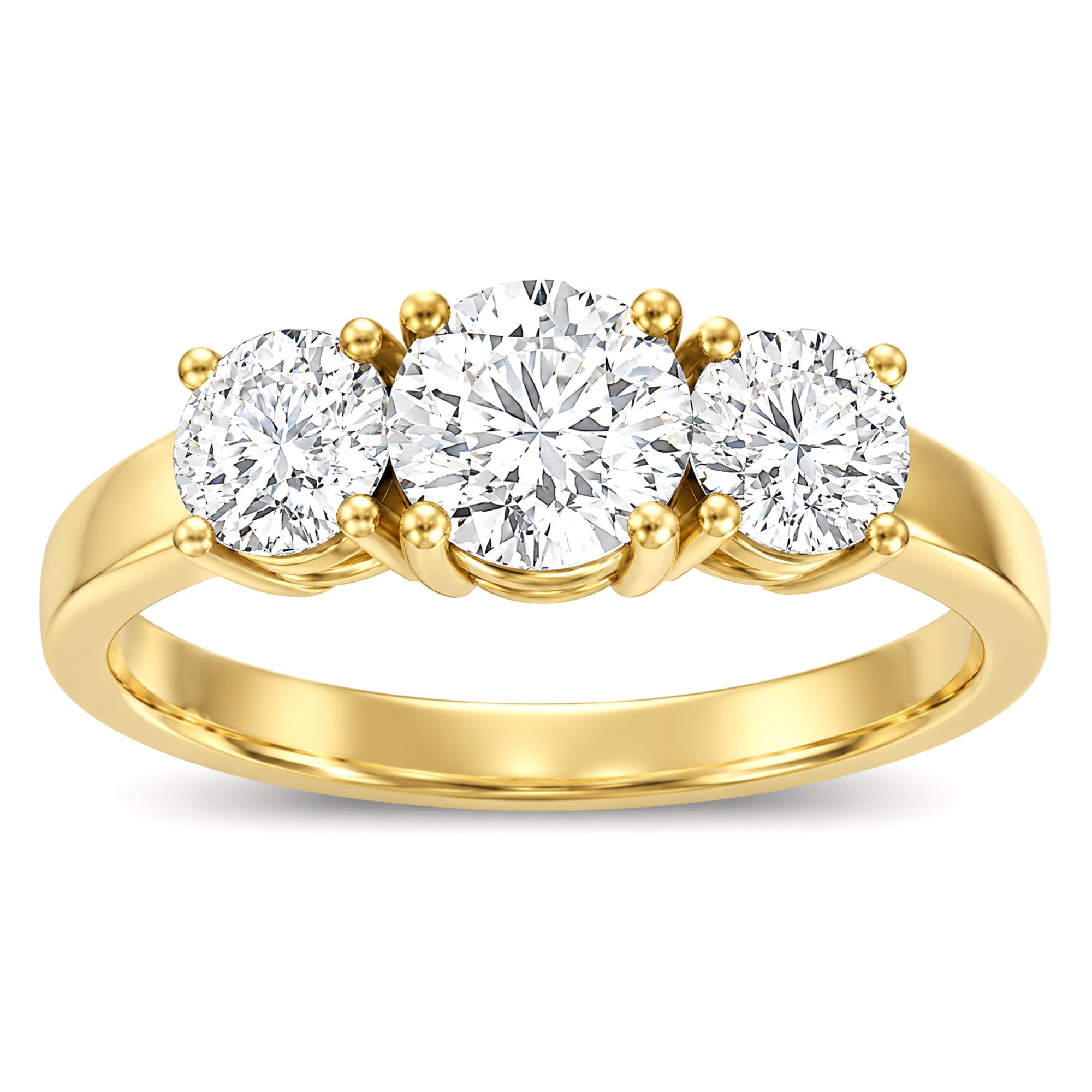
A D-E color, VS clarity lab-grown three-stone that goes up to 3 carats total weight.
If you want the “big diamond” look with the headline carat weight to back it up, this ARAIYA three-stone is the biggest-stone pick on the list — available in 1.00 up to 3.00 carat total weight. The D-E color grade and VS clarity places it in the near-colorless, eye-very-clean part of the scales, and 14K yellow or white gold housing means the metal is solid gold, not plated. Set against the 0.5 carat MauliJewels three-stone, this ring offers multiple times the carat weight in the same classic three-stone configuration — a genuinely different visual category rather than a styling tweak.
On quality and appearance, buyers are largely enthusiastic: owners describe it as breathtakingly beautiful, fitting perfectly, strong and sparkly, and one buyer specifically called out the excellent quality and the true-to-size fit. The “looks better in person than in photos” pattern runs through the reviews, which is the direction you want that gap to run. The three-stone shape reads bigger than a matching-carat solitaire because the two side stones extend the sparkle across more of the finger, so a 1.00 carat three-stone can feel larger than a 1.00 carat center-only solitaire.
Now the straight talk: this is where the reviews get mixed, because this ring draws a small cluster of quality-control concerns alongside the happy ones. One buyer mentioned the center diamond fell out and the prong broke. Another buyer could not get a diamond certificate from the company when requested and was still awaiting a response. A third noted the clarity could be a bit better and the listing should be more exact about the grading. None of these are the majority story — most buyers here are thrilled — but they are loud enough that if certification paperwork or a center stone that stays permanently secure is a hard requirement, you should weigh those reports. For a size-and-sparkle-first buyer willing to do a little follow-up, the design still delivers real D-E, VS-graded lab-grown stones in solid 14K gold.
Standouts
- 1.00 to 3.00 carat total weight options — the biggest-stone configuration on this list
- D-E color and VS clarity — near-colorless and eye-clean by the grades
- 14K yellow or white gold — solid gold, not plated
- Buyers consistently say it looks better in person than in photos
Worth knowing before you buy
- A small number of customers note prong or center-stone concerns alongside many satisfied customers
- Certification paperwork has not landed smoothly for some buyers who requested it
A strong match when: the look — bigger stone, three-stone sparkle, near-colorless grade, solid 14K gold — is the priority and you are prepared to keep the setting checked professionally.
Look to another pick if: you want the paperwork and prongs to arrive as confident and clean as the sparkle does.
8. Houston Diamond District 0.5 Carat Round Cut Diamond Solitaire 6 Prong Engagement Ring (K, I2) Very Good Cut 14K Yellow Gold

The one on this list with a mined diamond in the center, in six prongs, on 14K yellow gold.
For the buyer who specifically wants a mined diamond center stone and not a lab-grown or a stand-in, this Houston Diamond District solitaire is the pick. The center stone is a 0.5 carat round brilliant diamond graded K color and I2 clarity with a very good cut grade — K and I2 sit at the warmer-and-more-included end of the scales, which is what makes a real mined diamond reachable at this weight. The six-prong setting grips the center stone from six points rather than four, which is structurally the safer configuration for a ring that is going to be worn every day. The whole thing is mounted in 14K solid yellow gold. This is a 6-prong setting versus the 4-prong on the Ioka above — same diamond-style silhouette, more prongs holding the load-bearing part.
Owners overwhelmingly lean positive, and the “real diamond at a real value” angle comes through clean. One owner bought this as a tenth-anniversary ring, described it as beautiful and perfect, and reported that when a prong did break, the maker in Houston repaired and cleaned it quickly and returned it looking brand new within days — that level of service on a repair is a big part of what buyers are paying for. Others describe the sparkle as genuinely beautiful in person, described it as a “yes” and a “wow” moment, and a wife who received it as a Christmas surprise still called it a favorite. Six prongs also makes the everyday security of the stone notably stronger than a 4-prong design.
One sizing note is worth taking seriously: the owner who normally wears a 7 chose to size up to a 7.5 and reported it fit perfectly — a comfortable margin given how firmly a six-prong ring can sit. The cut is “very good” rather than “excellent,” which is the trade-off for landing a real mined diamond in this weight band; a very good cut means solid but not maximum sparkle performance. And K color with I2 clarity means the stone is not colorless and does carry visible inclusions under a loupe, though reviewers point out the sparkle on the hand is lovely. If you want a mined diamond, solid 14K gold, a secure six-prong setting, and a maker who actually services their rings, this is the honest value in that niche.
Spec worth noting: six prongs instead of four, K color and I2 clarity with a very good cut — the prong count is the practical safety detail most buyers overlook.
Buyer-reported upside: the repair turnaround — one buyer had a broken prong repaired and returned within days, looking new, which is rare in this price band.
The right ring when: you want a real mined diamond and are willing to trade top-of-scale color and clarity for it — and you value a maker who services what they sell.
Not the fit if: you want a colorless, high-clarity, top-cut stone — K and I2 have their limits under a loupe.
9. Houston Diamond District 1 to 5 Carat 14K IGI CERTIFIED Lab Grown Diamond Solitaire Engagement Ring
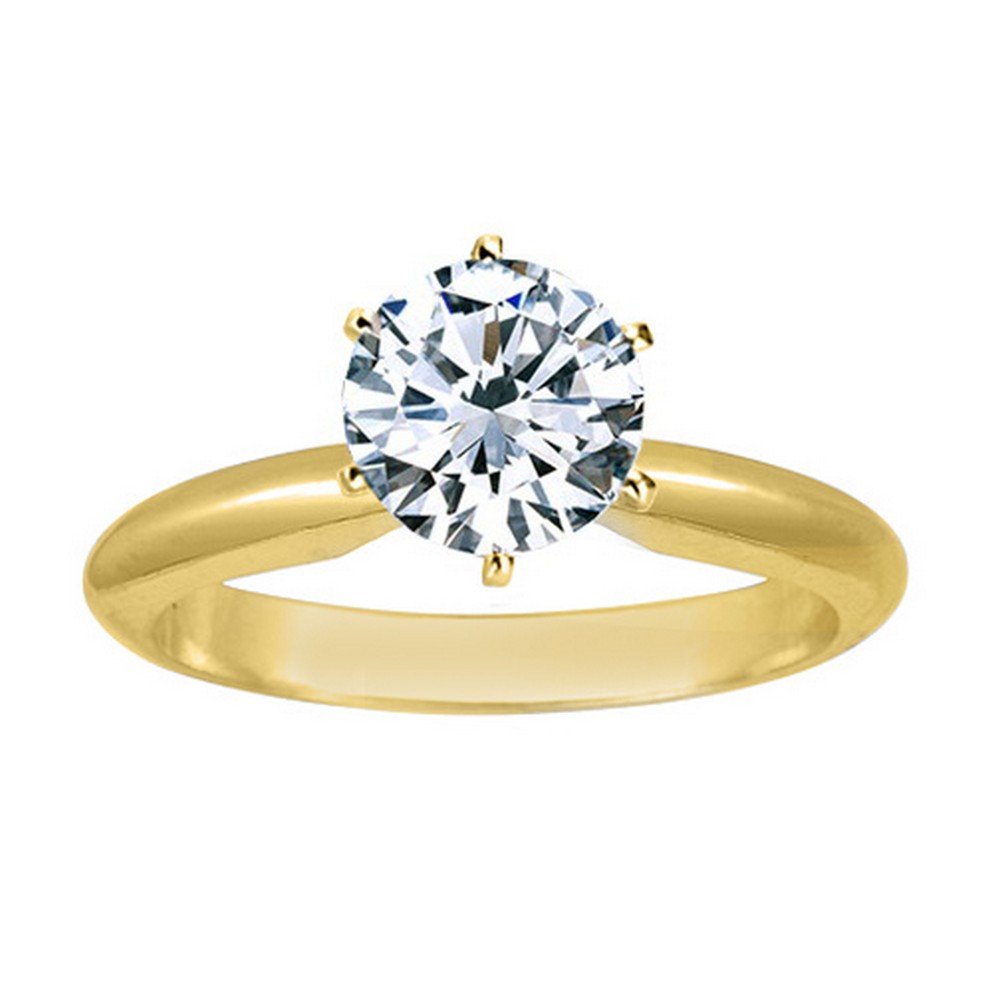
A certified solitaire you can size from 1 carat all the way up to 5, with IGI paperwork on every stone.
This is the masterclass pick on the list — a six-prong solitaire in solid 14K gold with a six-prong setting that grips the stone from six points, and the option to order anywhere from 1 carat up to 5 carat total weight. The stone grade sits at E-F color and VS2-SI1 clarity — near-colorless and eye-clean, both at the top end of what is realistically wearable. And critically, the stone is IGI certified, so you have third-party verification in writing. That matters here because, compared with the K-I2 mined diamond above, the certification and the grades tell you what you are actually getting. The result is a certified lab-grown stone with a bigger projection than an uncertified equivalent at the same carat weight, because the grade guarantees that nothing hidden drags the visual down.
On the buyer side, appearance and quality are the twin drivers — owners describe the ring as beautiful, sparkly, and quality-driven, with the honest star power of a lab-grown IGI stone drawing comments that it looks like a far more expensive piece. A repeat buyer who has purchased three rings and diamond earrings from the company said this one is no exception and wears it with a 2-carat five-stone band. The certificate arriving with the ring lands as a strong point for buyers who want verifiable spec on paper. Set against the MauliJewels 0.5 carat three-stone above, this is the exact same lab-grown technique executed at a much larger total carat — so the buyer who compares the two is choosing whether to go small-stone multi-stone, or single-stone bigger.
The honest trade-off: the band is deliberately thin, and buyers notice. One owner wrote that the band “could be a bit wider but not a deal breaker and has not bent in wear,” and another describes it as thin but not fragile. So it is a whisper band by design — perfect for showing off a 2-carat center stone, less ideal for a wearer who wants a substantial feel on the finger. The price band on this pick is the widest range on the list, because it scales from an entry carat into 5-carat territory. If IGI certification, 1-to-5-carat options, and a big-stone look matter more than band thickness, this is the top of the line here.
Why thissits at the top of the list
- IGI-certified lab-grown stone with E-F color and VS2-SI1 clarity — near-colorless and eye-clean by the grades
- Six-prong setting grips the stone from six points instead of four — more metal holding the center
- 1 to 5 carat ordering options mean one model spans a wide range of stone sizes
- Buyers who wear it with a diamond band report it holds its sparkle next to already-expensive pieces
The one thing buyers keep flagging
- Thin band by design — great for making the stone read big, but not for buyers who want a chunkier feel on the finger
Reach for this if: you want IGI certification, E-F color, VS2-SI1 clarity, and the freedom to order anywhere from 1 to 5 carats in one model.
Look elsewhere if: a whisper-thin band bothers you — the slim profile is the deliberate price of the big-stone look.
Understanding the Specs
What “14K Yellow Gold” Actually Means
14K is the gold purity stamp, meaning the band is 58.5% pure gold by weight, mixed with alloy metals so it holds shape instead of bending the way 24K would. Yellow gold is the warm, classic color finish — the tone has been the default in engagement settings for generations. Solid 14K outlasts gold-plated or gold-filled rings because there is no thin coating to wear through; you can polish and, in most cases, resize a solid 14K band over the years. Look for a “14K” or “14kp” stamp inside the band before buying; that stamp is what tells you it is solid, not plated.
Lab Grown Diamond, CZ, Simulated Diamond, or Mined Diamond
Four stone types show up on this list. Lab grown diamonds are the same crystalline material as mined diamonds, made in a lab rather than the ground — they share the hardness and long-term sparkle. Cubic zirconia (often shortened to CZ) is a lab-created stand-in that throws bright sparkle at a much lower cost, but the softer material picks up micro-scratches over years of wear. Simulated diamonds are a marketing term for high-quality CZ or similar stand-in stones — the sparkle is convincing, the durability is not diamond-tier. Mined diamonds are the natural-stone option, and their color-and-clarity grades (D through K, VS through I2) tell you exactly how near-colorless and eye-clean the specific stone is.
What IGI Certification Tells You
IGI is the International Gemological Institute — an independent lab that grades a diamond and issues a certificate with it. When a listing says “IGI Certified,” it means someone other than the seller has measured and documented the stone’s color and clarity, so you are not taking the maker’s word for what the stone is. The certificate travels with the stone. For a buyer who wants a verifiable spec sheet rather than a marketing claim, that piece of paper is often worth more than a bump in carat weight.
Prong Count and Setting Height
Prong count is the number of metal claws holding the center stone. A four-prong setting shows the most stone surface but protects fewer points. A six-prong setting (like both Houston Diamond District rings on this list) grips the stone from six points instead of four, which spreads the load and makes a lost stone less likely. Setting height is the other half of the story: a low-profile setting seats the stone close to the band, which survives hand-washing and desk work with less snagging. A higher setting makes the stone look larger but catches on sweaters, hair, and towels.
Ring Sizing and Half Sizes
US ring sizes for women’s engagement rings usually run 4 through 9, often in half-size steps. Sizing accuracy is the single most common fit issue in buyer reports here — at least three picks note a size-accuracy mismatch (measured 7 but ordered a 6.5, or requested 10 and got a 9). Get measured by a jeweler or a sizing kit rather than guessing, and check whether the specific band can be resized later. A solid 14K band resizes; a band with pave stones running all the way around is harder to resize without damage.
Carat Weight and Total Weight (ctw vs ct)
Carat is a unit of stone weight, not size or visual spread. “ctw” means carat total weight — the combined weight of every stone in the ring. So a “0.50 ctw three-stone” has three stones totaling 0.50 carat, while a “0.50 ct solitaire” puts all 0.50 carat in one center stone. A 1-carat three-stone will typically look bigger on the finger than a 1-carat solitaire, because the side stones extend the sparkle across the finger rather than concentrating it.
FAQ
Is 14K yellow gold good for an engagement ring?
What is the difference between a lab grown diamond and cubic zirconia?
What does IGI certified mean on a diamond ring?
Will a 14K yellow gold ring turn my finger green?
How do I know what ring size to order for an engagement ring?
What’s the difference between 4 prongs and 6 prongs on a solitaire?
Is a lab grown diamond a “real” diamond for an engagement ring?
Can I resize a 14K yellow gold engagement ring later?
What does “ctw” mean on an engagement ring listing?
Is a mine diamond better than a lab grown diamond for engagement?
Final Thoughts: The Verdict
For most buyers, the 14k yellow gold engagement rings winner is the Bridal Set Rings for Women Lab Grown Diamond Halo Wedding Engagement Ring, because it delivers the whole bridal look — halo engagement ring plus matching band — in one order, with the option to step up to solid 14K gold rather than gold-over-sterling-silver. If you want IGI certification on the stone, grab the LynChoe IGI Certified Lab Grown Solitaire. If you want a mined diamond in six prongs on solid 14K yellow gold, the Houston Diamond District 0.5 Carat Solitaire is the one to reach for. And if visible carat weight in a real solid-gold band is the priority, the MAX + STONE 2 Carat Solitaire gives you the biggest-stone look the list offers for a value-tier spend.
How We Picked
We do not accept paid placement. Every pick is matched to a real buyer and a real use-case; we do not hands-on test units.
Sources & Methodology
Specifications: manufacturer listings and product documentation. Review insights: verified customer reviews, as of September 2026. Pricing: not shown on this page (it changes often); check the current price via the retailer link.
As an Amazon Associate, Gadgets Feed earns from qualifying purchases. This does not affect which products we feature.