
Balanced nitrogen and potassium without the phosphorus — that’s the entire promise of a 15-0-15 fertilizer, and it’s a specific tool for lawns that don’t need extra phosphate building up in the soil. Whether you’re maintaining centipede grass, feeding St. Augustine through a hot summer, or greening up Bermuda without pushing excessive stem growth, this exact NPK ratio targets leaf color and root hardiness while leaving phosphorus out of the equation entirely.
I’m Min — the co-founder and writer behind Gadgets Feed. I’ve spent years analyzing fertilizer formulation data, breaking down NPK ratios, and tracking how specific nutrient profiles perform across different grass types and soil conditions..
Whether you’re battling yellowing centipede grass or looking for a phosphorus-free feed that won’t run off into waterways, this guide breaks down the top performers. Here is your complete resource for finding the best 15-0-15 fertilizer for a healthier, greener lawn without the unnecessary phosphate.
How To Choose The Best 15-0-15 Fertilizer
Not every lawn needs zero phosphorus, which is exactly why 15-0-15 is a specialty ratio rather than a general-purpose feed. Before you pick a bag or bottle, focus on your soil’s existing phosphate levels, the grass species you’re growing, and whether you need immediate color or season-long feeding.
Grass Type Compatibility
Centipede grass is the most common candidate for a 15-0-15 formulation — it’s naturally sensitive to high phosphorus and can develop iron chlorosis when phosphate builds up. St. Augustine, zoysia, and bermudagrass also respond well to this ratio, especially in soils already testing sufficient or high in phosphorus. Avoid using a zero-phosphorus feed on new sod or seeding projects where phosphorus is critical for root establishment.
Granular vs Liquid Delivery
Granular 15-0-15 products, like the Fertilome options, use slow-release nitrogen to feed steadily over several weeks with a single broadcast application — ideal for busy homeowners who want set-and-forget coverage. Liquid concentrates, such as the Simple Lawn Solutions line, provide faster foliar uptake and allow you to target specific spots, but require more frequent reapplication and a sprayer setup. Granular works best for large, even lawns; liquid excels for quick green-ups or post-stress recovery.
Additional Ingredients: Iron and Herbicides
Many 15-0-15 blends include chelated iron — typically 2% to 4% — to deepen green color without pushing excessive leaf growth. Some formulations, like the Fertilome Weed & Feed, combine the base NPK with post-emergent herbicides targeting broadleaf weeds such as dandelions, chickweed, and dollar weed. If weed pressure is low in your lawn, a straight 15-0-15 with iron gives you more control over application timing; if weeds are already visible, a weed-and-feed saves a separate pass.
Quick Comparison
On smaller screens, swipe sideways to see the full table.
| Model | Category | Best For | Key Spec | Amazon |
|---|---|---|---|---|
| Fertilome 15-0-15 Centipede Lawn Fertilizer | Granular | Centipede & warm-season grasses | 15% N / 0% P / 15% K, 16 lb bag | Amazon |
| Fertilome Weed & Feed 15-0-15 | Granular + Herbicide | Weed control + feeding combo | 3% iron, 200+ weed control | Amazon |
| Simple Lawn Solutions 15-0-15 Liquid (Gallon) | Liquid Concentrate | Fast green-up, any grass type | 12,800 sq ft per gallon | Amazon |
| Simple Lawn Solutions 15-0-15 Bundle (32oz + Gallon) | Liquid Concentrate Bundle | Extended supply, soil conditioning | Includes humic acid & seaweed | Amazon |
| Knox 16-16-16 Fertilizer | Granular All-Purpose | General garden & lawn feeding | Balanced NPK, 20 lb bag | Amazon |
| Pennington Full Season 32-0-5 | Granular Slow-Release | Season-long feeding, 12-month control | Contains beneficial microorganisms | Amazon |
| Scotts Turf Builder Lawn Food 38-0-4 | Granular | Quick greening, all grass types | Covers up to 5,000 sq ft | Amazon |
In‑Depth Reviews
1. Fertilome Centipede Lawn Fertilizer 15-0-15
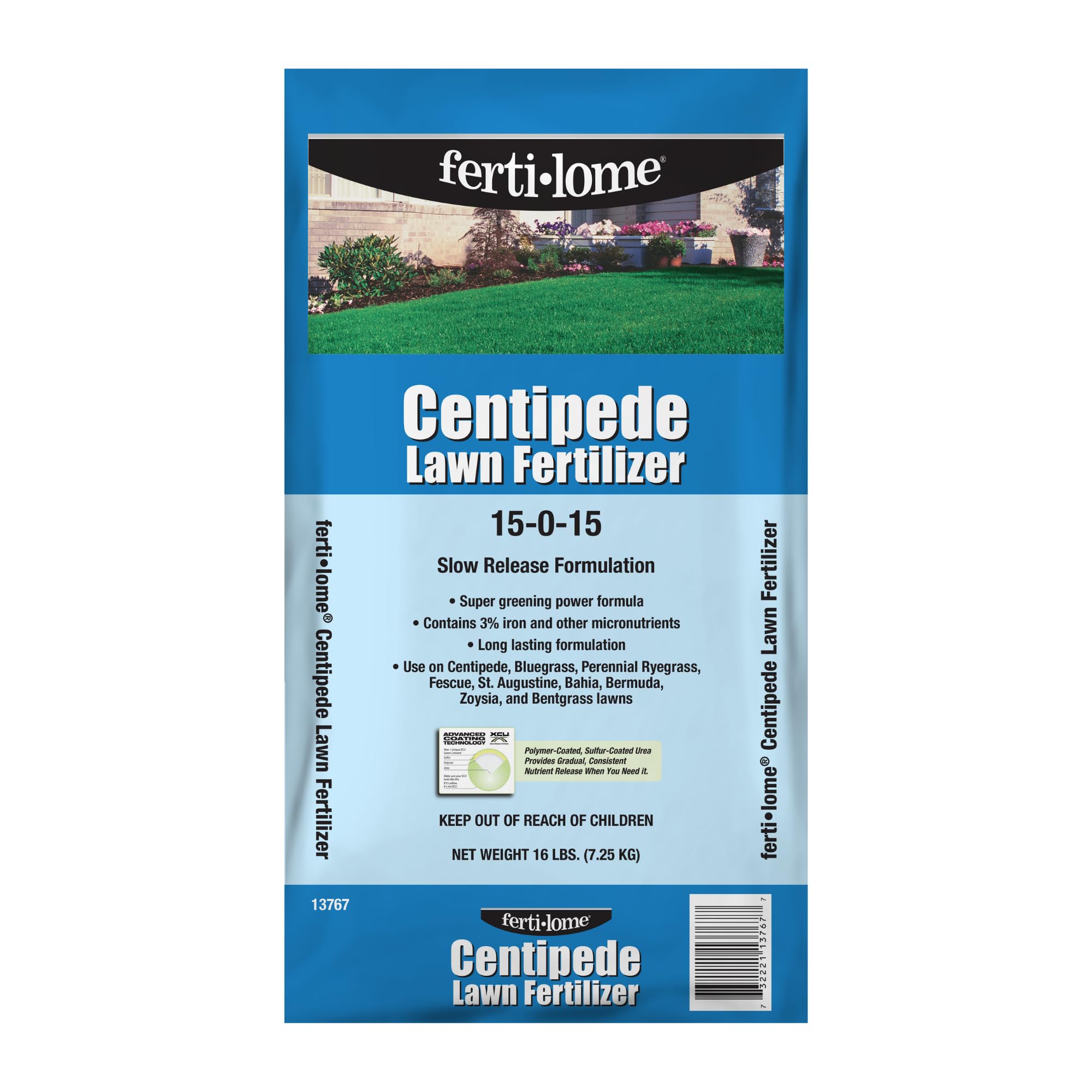
This is the reference standard for 15-0-15 granular fertilizer, formulated specifically for centipede grass but equally effective on St. Augustine, zoysia, bermuda, bahia, and fescue. The 16-pound bag covers up to 5,000 square feet at a 4-pound-per-1,000-square-foot rate, and the slow-release nitrogen source significantly reduces the risk of burn — even when applied during warmer transition periods.
Users consistently report thick, deep-green lawns within two to three weeks of early spring and early fall applications. The zero-phosphorus formula directly addresses the needs of soils already saturated with phosphate, preventing the yellowing that often appears when centipede grass is fed a balanced NPK. Iron content in the blend supports richer color without pushing excessive top growth that demands more frequent mowing cycles.
The granules spread easily through a broadcast or drop spreader, and the product is labeled for use on multiple warm-season grasses, making it a versatile choice if you maintain a mixed lawn. Pair it with a mid-season liquid iron supplement if you want an extra color boost during the hottest months.
Why it’s great
- Slow-release nitrogen prevents burn even in warm weather
- Works across centipede, St. Augustine, zoysia, and bermuda
- Noticeable greening in 2-3 weeks with one application
Good to know
- Requires two applications per year (spring and early fall) for best results
- Not a weed-and-feed; use a separate herbicide if needed
2. Fertilome Weed & Feed 15-0-15
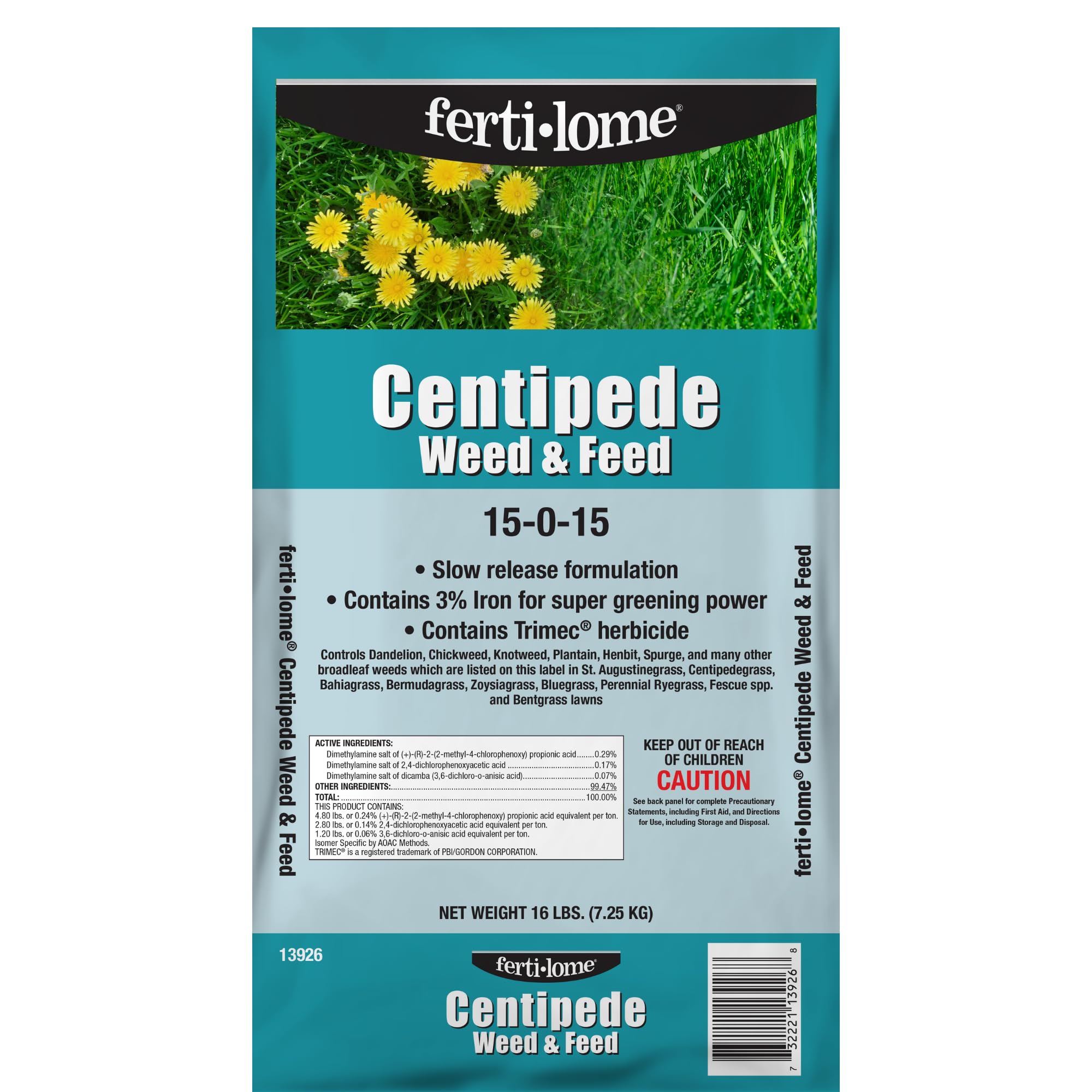
This version of the Fertilome 15-0-15 platform adds a post-emergent herbicide targeting over 200 broadleaf weed species, including dollar weed, dandelions, wild onion, chickweed, henbit, and spurge. The 16-pound bag covers the same 5,000-square-foot area as the standard formula, but the added Trimec-based herbicide means you get weed control and nutrient delivery in a single granular pass.
Users report visible weed suppression within 10 to 14 days, with full lawn greening developing over the following 2.5 weeks. The 3% iron content helps mask the stress that some grass types show after herbicide application, maintaining an even dark-green appearance rather than a patchy yellow response. It applies best to pre-moistened grass or early morning dew, and the label advises against watering for 24 hours after spreading to allow the herbicide to stick to weed foliage.
Some users noted that tougher perennial weeds required a follow-up spot treatment, so do not expect 100% elimination from a single application. For centipede grass owners who struggle with simultaneous weed pressure and nutrient deficiency, this two-in-one product eliminates an extra trip across the lawn.
Why it’s great
- Combines 15-0-15 feeding with broad-spectrum weed control
- 3% iron deepens green color and masks herbicide stress
- Only two applications per year needed
Good to know
- Some tough weeds may need a second spot treatment
- Avoid overseeding immediately; herbicide can affect new grass seedlings
3. Simple Lawn Solutions 15-0-15 Liquid Lawn Fertilizer (Gallon)

If you prefer liquid feeding for faster nutrient uptake and the ability to spot-treat, this 1-gallon concentrate delivers an effective 15-0-15 ratio blended with humic acid, fish protein, and seaweed extract. The coverage claim of 12,800 square feet per gallon makes it remarkably economical for a liquid product — roughly equivalent to eight granular bags if you factor in the dilution rate through a hose-end sprayer.
Users consistently report rapid greening — often within 3 to 5 days — on bermuda, zoysia, and St. Augustine lawns, especially when applied after aeration or during recovery from heat stress. The humic acid component provides mild soil conditioning, improving nutrient transfer to root systems, while the kelp and fish add trace micronutrients that granular formulations typically lack. It works safely on all grass types, including centipede, fine fescue, and Kentucky bluegrass.
The primary drawback is the need for more frequent reapplication — every 3 to 4 weeks during the growing season — compared to a granular slow-release product that lasts 6 to 8 weeks. Some users experienced minor leaking at the hose-end sprayer connection, so inspect the bottle cap seal before mixing. For a recovery feed or a mid-season color boost, this liquid formulation outperforms granules in speed of visible results.
Why it’s great
- Visible greening in 3-5 days — faster than any granular
- Humic acid and seaweed provide soil conditioning beyond NPK
- Excellent coverage at 12,800 sq ft per gallon
Good to know
- Needs reapplication every 3-4 weeks during active growth
- Can stain vinyl siding if sprayed too close; rinse immediately
4. Simple Lawn Solutions 15-0-15 Bundle (32 oz + Gallon)
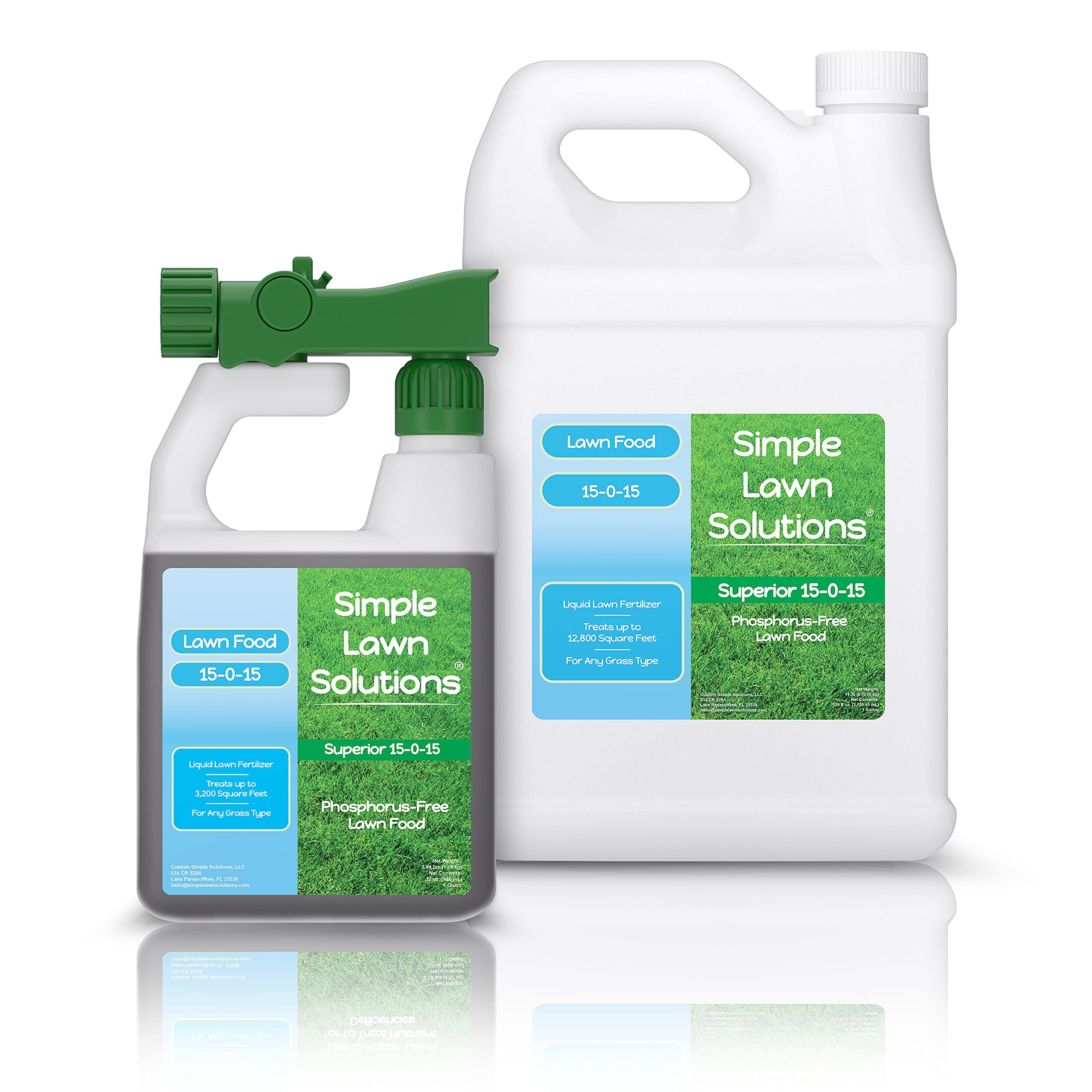
This bundle combines a 32-ounce bottle and a 1-gallon jug of the same 15-0-15 liquid formulation, giving you roughly 160 ounces of concentrate for extended-season feeding. The 32-ounce bottle is convenient for smaller lawns or spot-treating thin areas, while the gallon jug handles the main coverage — together they can treat up to 16,000 square feet when used at the label rate with a hose-end sprayer.
The formulation includes the same humic acid, fish, and seaweed base as the single-gallon version, providing rapid foliar absorption plus soil conditioning. Users have reported successful recovery on drought-stressed St. Augustine in Texas heat, with lawns greening up and filling in bare patches within two weeks of the first application. The product works across all major grass types including zoysia, bermuda, centipede, palmetto, and buffalo grass.
It is worth noting that some users saw no change at all — results depend heavily on starting soil conditions, application timing, and watering schedule. The bundle does not include a sprayer, so you need a hose-end or backpack sprayer ready. For homeowners who already know they prefer liquid feeding and want a multi-month supply without reordering, this bundle saves a few dollars compared to buying the bottles separately.
Why it’s great
- Two bottles provide a multi-month supply for larger lawns
- Fast green-up and recovery, especially on heat-stressed grass
- All-grass-type compatibility with soil-conditioning humates
Good to know
- Results vary significantly depending on existing soil fertility
- Must supply your own sprayer; not included in the bundle
5. Pennington Full Season Lawn Fertilizer 32-0-5
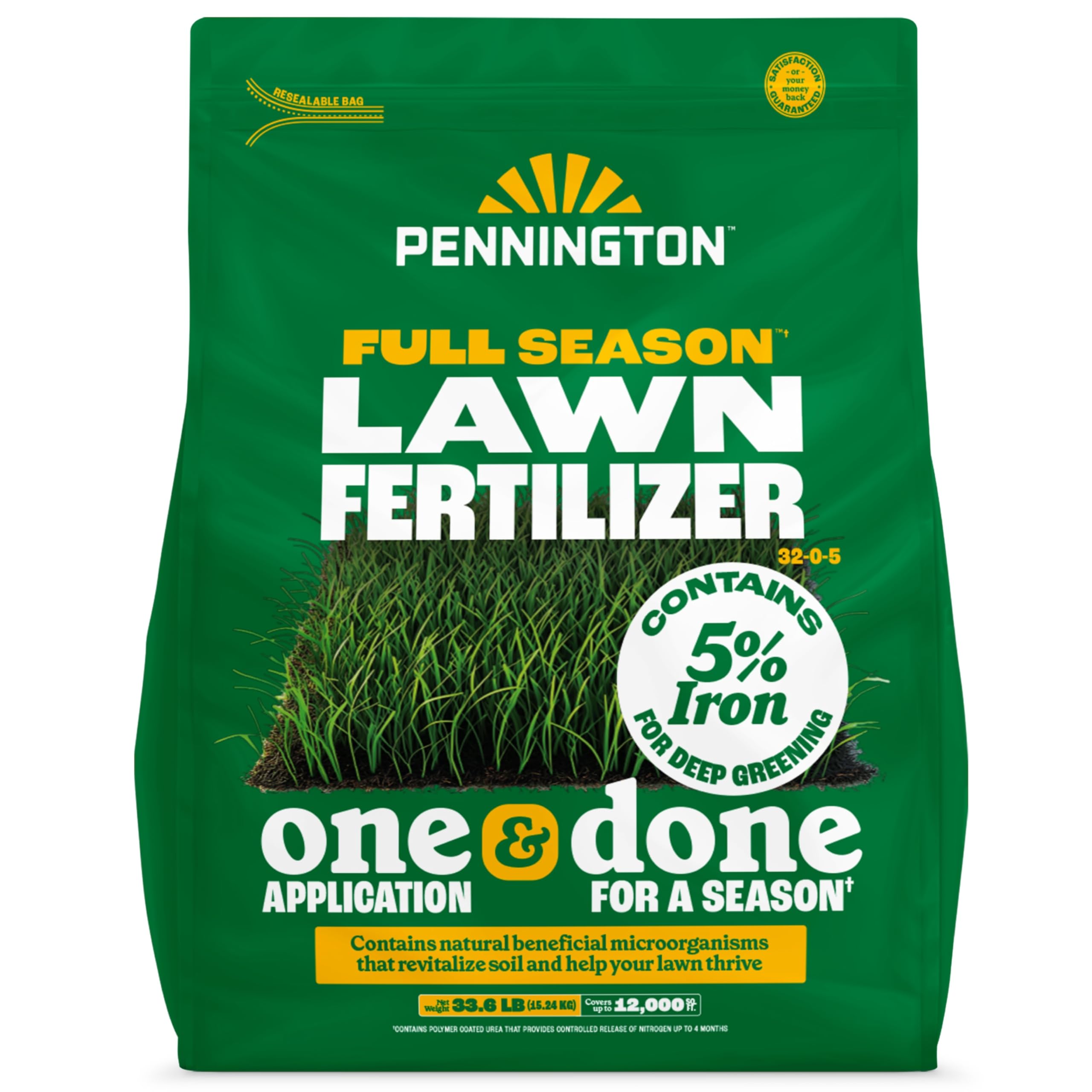
While not a strict 15-0-15 formulation, this Pennington product mirrors the zero-phosphorus philosophy with a different NPK ratio — 32-0-5 — delivering three times the nitrogen and lower potassium. The primary differentiator is the polymer-coated urea technology that releases nitrogen for up to four months from a single application, making it the longest-lasting option in this comparison for homeowners who want one-and-done seasonal feeding.
The formula also contains 5% iron for deep greening and beneficial microorganisms that help revitalize depleted soil biology. Users report strikingly dark-green bermuda and fescue lawns within a week of application, with color lasting well into late summer.
This is not ideal for centipede grass because the high nitrogen ratio can push growth faster than the grass naturally wants to grow, potentially leading to thatch accumulation. It also lacks any weed control, so you need a separate herbicide program. For homeowners with bermuda or fescue who prioritize convenience and season-long color over tight NPK ratios, this heavy-duty slow-release formula is a strong alternative.
Why it’s great
- One application feeds for up to four months
- High iron content delivers dramatic deep-green color
- Includes beneficial soil microorganisms for long-term soil health
Good to know
- Too high in nitrogen for centipede grass; best on bermuda or fescue
- Coverage may be slightly less than the 5,000 sq ft claim
6. Knox Fertilizer 16-16-16

This entry-level balanced fertilizer is included here because many homeowners reach for a 15-0-15 product when they actually need an all-purpose feed for multiple planting areas. The 16-16-16 ratio supplies equal parts nitrogen, phosphorus, and potassium, making it suitable for vegetable gardens, citrus trees, flower beds, and lawns that do not have a phosphorus restriction.
Users report good results on citrus trees and general lawn greening, with one reviewer noting that it helped eliminate dandelions and stimulated fresh grass growth simultaneously. The 20-pound bag covers roughly 5,000 square feet at a standard feeding rate, and the granule size works well in both broadcast and hand-held spreaders. It is a fast-acting granular formulation, so you will see results within a week, but the lack of slow-release coating means you need to reapply every 4 to 6 weeks during the growing season.
Do not buy this if your soil test specifically calls for zero phosphorus — the 16% phosphate content defeats the purpose of a 15-0-15 feeding plan. It also contains no iron or humates, so the green color response will be less dramatic than specialty centipede fertilizers. For general garden feeding at a low cost, it performs reliably, but it is not a true 15-0-15 substitute.
Why it’s great
- Versatile NPK works on lawns, trees, gardens, and citrus
- Low cost per pound for general-purpose feeding
- Fast visible results — typically within 5-7 days
Good to know
- Contains phosphorus — not suitable for phosphate-sensitive lawns
- No slow-release coating; requires more frequent reapplication
7. Scotts Turf Builder Lawn Food 38-0-4
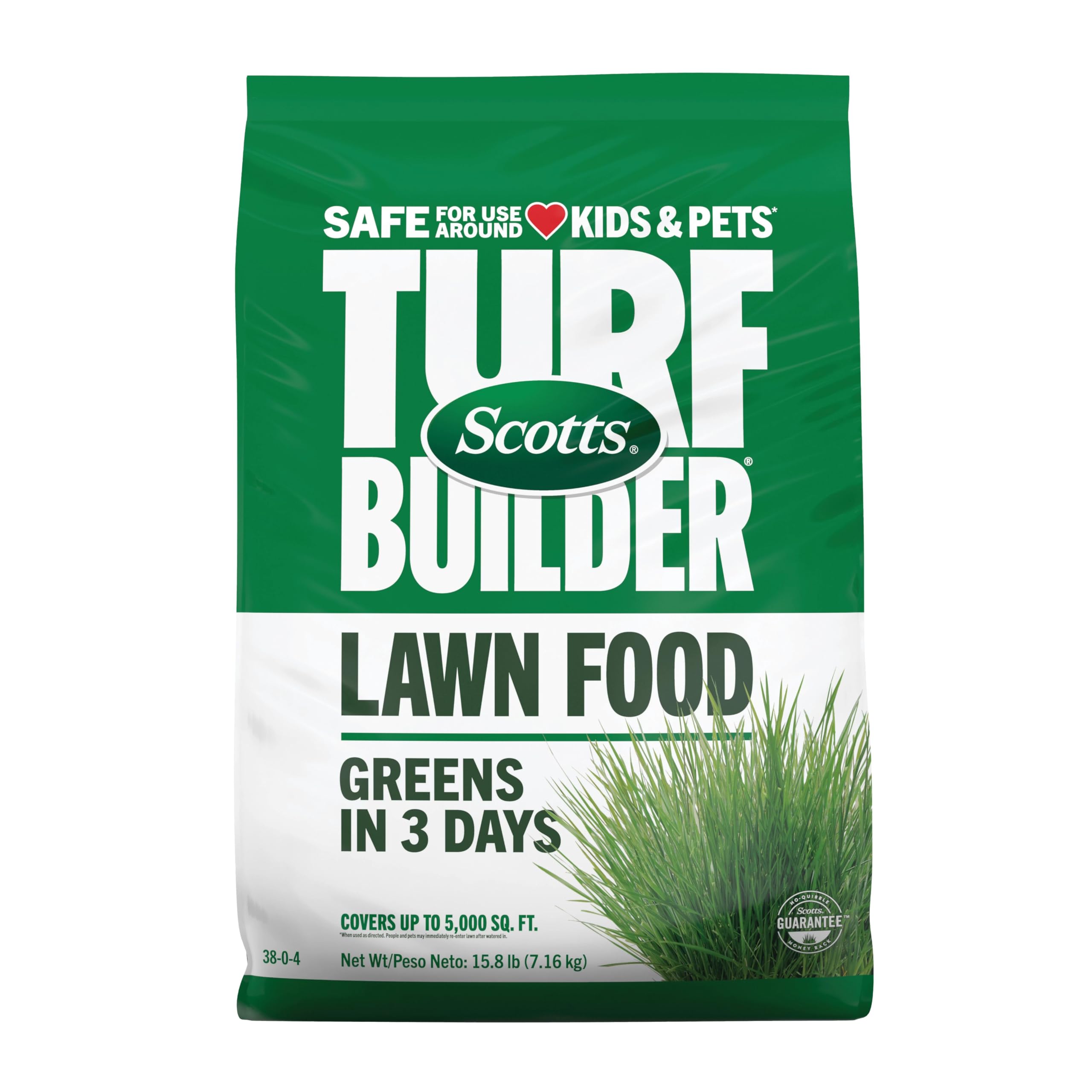
Scotts Turf Builder Lawn Food is another zero-phosphorus granular option, but with a much higher ratio — 38-0-4 — than the standard 15-0-15 profile. The 15.8-pound bag covers up to 5,000 square feet, and the formula is engineered to produce visible greening in as little as three days when applied according to the label directions and watered in within 24 hours.
The product offers two spreader settings: a standard Turf Builder rate for general lawn thickness, and a Max Greening rate for deeper color intensity on established turf. It is safe for use around kids and pets once the granules are watered in, and it works on all grass types at the standard rate. Users who applied it to new sod were less impressed — the fast-acting nitrogen may not be ideal for sod root establishment — but on mature lawns, the greening response is consistently praised.
This is not a slow-release formulation; you will likely need to reapply every 6 to 8 weeks to maintain color through the growing season. The lack of potassium (only 4% K) means it does not provide the root-hardiness benefits that a true 15-0-15 delivers. For a quick pre-summer green-up before switching to a maintenance potassium-heavy feed, it works well, but it is not a long-term substitute for a balanced 15-0-15 program.
Why it’s great
- Greening visible in 3 days — fastest granular option
- Two spreader settings let you control color intensity
- Safe for kids and pets after watering in
Good to know
- Only 4% potassium — weak drought and root support
- Not suitable for centipede grass; nitrogen level too high
FAQ
Is 15-0-15 safe for centipede grass all year round?
Can I use 15-0-15 on a new lawn from seed or sod?
How often should I apply a granular 15-0-15 fertilizer?
Will 15-0-15 help my lawn turn darker green?
What happens if I use 15-0-15 on a phosphorus-deficient lawn?
Final Thoughts: The Verdict
For most users, the best 15-0-15 fertilizer overall is the Fertilome Centipede Lawn Fertilizer 15-0-15 because it delivers reliable slow-release nitrogen, covers 5,000 square feet per bag, and works across centipede, St. Augustine, bermuda, and zoysia without risk of phosphorus buildup. If you want weed control in the same granular pass, grab the Fertilome Weed & Feed 15-0-15 and get the iron-boosted color plus broadleaf suppression. And for fast liquid feeding with soil-conditioning humates, nothing beats the Simple Lawn Solutions 15-0-15 Liquid Concentrate for speed and coverage per dollar.