
Our readers keep the lights on and my morning glass full of iced black tea. As an Amazon Associate, I earn from qualifying purchases.
Specs are compiled from manufacturer listings and verified buyer reviews and can change over time — please confirm the key details on the product page before buying.
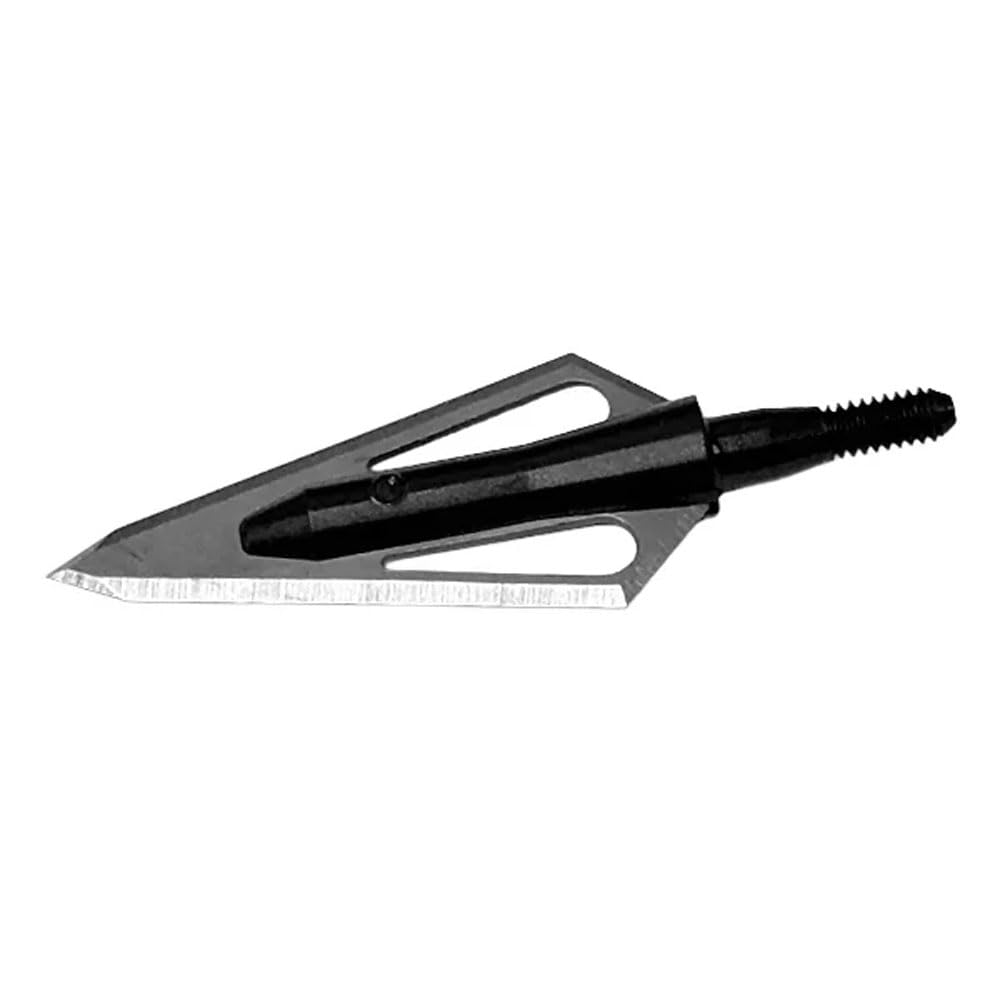
When you’re after a 150-grain fixed-blade broadhead, your real question is whether it can punch through bone and keep cutting for a clean, ethical pass-through on big game. Heavier heads like this fly slower but hit harder, so you’re trading speed for penetration. The trick is finding one that flies like a field point, stays razor sharp, and survives impact without bending or breaking.
I’m Min — the founder and writer behind Gadgets Feed. This guide is built by comparing the manufacturers’ published specifications and the patterns across verified customer reviews, so you get each pick’s real strengths and trade-offs instead of marketing spin.
We break down the top 150 grain broadheads by flight accuracy, blade durability, and cutting diameter, so you can match a head to your bow and hunting style. 150 grain broadheads deliver the deep penetration and bone-splitting power serious bowhunters need.
Our Picks at a Glance


How To Choose The Best 150 Grain Broadheads
A 150-grain head is a commitment to penetration over speed. You give up some arrow velocity to gain front-of-center weight that drives the blade deep through hide, rib, and muscle. Before you buy, weigh three things: your bow type, the blade design, and how much cutting surface you want.
Match the head to your bow platform
Crossbows and high-speed compound bows put different stress on a broadhead. Fast crossbows need heads that spin-true at high fps and hold their blades under hard impact, while recurve and longbow shooters often prefer a cut-on-contact chisel tip that starts cutting the instant it touches hide. Some heads are explicitly engineered for crossbow bolts.
Count your blades and cutting diameter
Two-blade heads cut a narrow, deep channel and penetrate deepest. Four-blade heads open a wider wound channel for bigger blood trails but trade a little penetration. The cutting diameter tells you how wide the wound channel will be — wider means easier tracking, but it also means more resistance on the way through.
Think about blade maintenance and warranties
Fixed blades eventually dull. Sharpenable and replaceable blades let you restore a head to factory-new cutting performance, and a lifetime replacement guarantee protects your investment when you hit something harder than flesh — like dirt or gravel. A head you can resharpen or replace for free is cheaper in the long run.
Quick Comparison
| Model | Best For | Blade Design | Cutting Diameter | Blade Thickness | Amazon |
|---|---|---|---|---|---|
| Wasp SharpShooter★ Best Overall | Traditional recurve & longbow hunters | 2-blade cut-on-contact | 1″ | .040″ main | Amazon |
| Magnus 4-BladeBest Penetration | Fixed-blade hunters wanting pass-through | 4-blade fixed | — | — | Amazon |
| Magnus Stinger 2-BladeExact-Weight Pick | Exact-weight, high-accuracy shooters | 2-blade fixed | — | — | Amazon |
| Stinger 4-Blade | Crossbow shooters wanting blade weight | 4-blade fixed | — | — | Amazon |
| Magnus Hornet Ser-Razor | Blood-trail hunters at long range | 4-blade serrated | — | .059″ main | Amazon |
| Excalibur Boltcutter | Excalibur crossbow shooters | 2-blade B.A.T. alignable | 1 1/16″ | High-strength steel | Amazon |
| Slick Trick XbowTrick | Bone-splitting, multi-bow shooters | 4-blade mechanical | 1 1/8″ + 1 1/8″ | .035″ stainless | Amazon |
| Stinger Buzzcut 4-Blade | Traditional archers wanting serrated cuts | 4-blade chisel serrated | — | Alloy steel | Amazon |
In-Depth Reviews
1. Wasp Archery SharpShooter Traditional 150 Grain
Our pick — over 4.5★ from 200+ verified ratings; the strongest balance of quality and price.
The 100-percent-steel cut-on-contact specialist built for traditional recurve and longbow shooters.
This head starts cutting the instant it touches hide, which is exactly what a traditional archer wants from a heavier 150-grain setup. The.040-inch thick main bleeder does the heavy lifting, backed by a replaceable.027-inch bleeder blade that keeps the head useful season after season. At a 1-inch cutting diameter it opens a serious hole without sacrificing the penetration a recurve needs.
Field-point accuracy is the headline here — the head is engineered to fly like a practice tip, and buyers report that holds true even on fast platforms. It is 100 percent steel and made in the USA, which shows in the build quality that owners consistently praise. On a compound or crossbow it stays accurate too, though it was designed with the traditional shooter in mind.
The honest trade-off is edge retention on hard targets. Blades arrive genuinely sharp, but after a few shots into a target they dull, and one pass through a target into dirt nicked a blade beyond repair. For a recurve or longbow user this is a superb pick; for anyone planning to hammer it into gravel, treat it as a hunting head, not a practice blunt.
Precision tip design
- Cut-on-contact chisel starts cutting the instant it touches hide
- Field-point accurate flight, even at speed
- Built from 100% steel in the USA with a 1″ cutting diameter
Needs sharpening often
- Blades dull after repeated target hits
- One dirt impact can nick the edge beyond repair
Accuracy hunters: you shoot a recurve or longbow and want a genuine cut-on-contact head that flies true and made a 150-grain difference on your biggest buck.
Budget buyers: you only practice into dense targets — the edge demands care to stay hunting-sharp.
2. Magnus 4 Blade Arrow Broadhead
A 4-blade stainless steel head that punches through ribs and buries itself in the tree behind.
This Magnus 4-blade is the answer for hunters who want maximum pass-through on deer-sized game. Owners mention one shot through a doe at 20 yards cut ribs on both sides and kept going into a tree — penetration that ends tracking quickly. The blades resist curling on hard impact, which is the durability weak point of thinner steel heads.
Flight performance is where this head quietly wins. Owners say it flies just like a field point from a recurve bow, and one 150-grain shooter built a 500-grain total setup to keep it true at 405 fps. The head is spin tested, available in 85, 100, 125, and 150 grain, and carries a lifetime replacement guarantee so a broken blade gets replaced without another purchase.
It groups well with a four-fletch arrow setup, which is the practical way to squeeze the most accuracy out of a fixed 4-blade. The stainless steel construction holds an edge with a light touch on a fine stone. For a hunter who values a wide cut and bone-crushing drive, this is the strongest all-rounder in the line.
Razor-sharp steel
- Insane penetration — pass-through on bone and muscle
- Blades resist curling on hard impact
- Flies like field points from a recurve bow
Heavy for some bows
- Needs a four-fletch arrow to group at its best
- Single heads sold individually rather than a multi-pack
Power crossbows: anything that folds a blade on the first rib — this head keeps cutting after impact.
Light setups: you need a budget multi-pack for practice; this is a performance head for the hunt itself.
3. Magnus Stinger 2 Blade Broadheads, 3 Pack
A 2-blade head where all three in the pack weighed exactly 150.0 grains on a digital scale.
Weight consistency is the quiet obsession of serious bowhunters, and this Stinger delivers it. Buyers weighed each broadhead and all three came in at exactly 150.0 grains — no flyer, no tuning headache between heads. That consistency translates to identical flight shot after shot, which is the hardest thing to get from a fixed-blade head.
The 2-blade design is built for maximum penetration on today’s fastest compound bows. Customers note a complete pass-through on an Illinois buck after stepping up to the 150-grain version, exactly the deep-cutting performance a heavier head promises. It spins with no wobble, sharpens easily with a whetstone, and is backed by the Magnus Lifetime Guarantee — break one and it gets replaced.
The patented Stinger design (U.S. Patent No. 7,160,217) covers the blade locking system, and the three-pack means you have spares for practice or multiple hunts. The 2-blade channel is narrower than a 4-blade, so blood trails rely on a solid vitals hit. This is the pick for shooters who want precision, not just raw cutting width.
Durable two-blade: the razor-sharp out-of-package edge and the exact 150.0-grain weight across all three heads — a consistency most fixed blades lack.
Limited cutting width: you trade a wider wound channel for deeper penetration, so shot placement matters more than with a 4-blade.
Penetration shots: compound shooters who demand identical flight and lethal pass-through, with a lifetime warranty as the safety net.
Wide wounds: hunters who want maximum cutting diameter for tracking ease — this is a penetration-first 2-blade.
4. Stinger 4 Blade Arrow Broadhead, 150-Grain
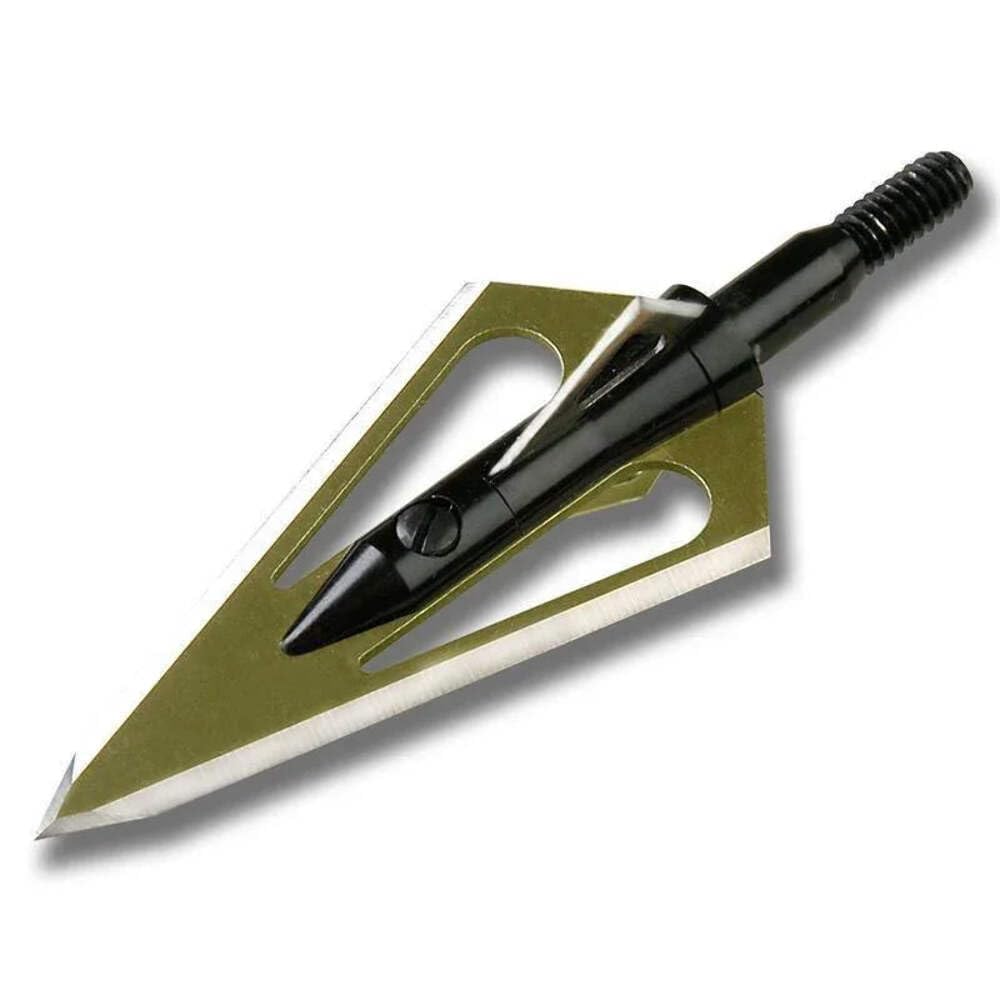
The heavy 4-blade that adds bolt weight to keep a crossbow shooting hot for longer.
Crossbow shooters have a hidden benefit in a 150-grain 4-blade: the extra weight. Owners note these heads give bolts the added mass to maintain energy downrange, a real advantage for high-speed crossbows that lose velocity fast. The heads fly like field points, with buyers confirming accuracy at 20 and 40 yards out of the package.
You get a razor edge that stays sharp through impact, and the head spins true with no wobble, so your arrow flies straight. It comes in 85, 100, 125, and 150 grain, letting you tune total arrow weight without switching brands. The lifetime replacement guarantee covers a bent ferrule (the threaded base that connects to your arrow) after hitting gravel, and reviewers point out claims get approved quickly.
The recurve and compound crowd can use it too, but the 4-blade design shines brightest on crossbow bolts where the added tip weight steadies flight. One owner even filed a damage claim in five minutes with next-day approval. For a crossbow hunter who wants a wide cut and reliable replacement support, this is a no-drama pick.
Four-blade stability: the lifetime replacement promise that actually works — a bent ferrule claim was approved by the next day after a five-minute online filing.
Smaller entry hole: the extra bolt weight is only an advantage on crossbows; recurve shooters may prefer a lighter 2-blade.
Quick kills: you shoot a crossbow and want the added 150-grain tip mass for flatter, more consistent bolt flight.
Deep penetration: you hunt with a recurve where the heavier 4-blade drags arrow speed.
5. Magnus 4 Blade Hornet Ser-Razor Broadhead

A serrated 4-blade engineered to slice soft tissue and lay a blood trail you can follow at a jog.
This is the head for the hunter who wants a wound channel that bleeds hard and tracks fast. The.059-inch main blade and.040-inch bleeder blades combine with precision-ground serrated edges to slice through tissue, creating wider wound channels that speed up tracking and recovery. It is a cutting machine first, a penetrator second.
Flight accuracy holds up at distance. Shoppers say it flies like field points out to 60 yards, and one shooter confirmed it matches field-tip performance at 302 fps out to 50 yards. Consistent weight across packs means you are not re-tuning between heads, and the tanto chisel tip is intentional — it drives through bone instead of deflecting.
The serrated edges are slightly noisier in flight than a straight blade, a minor trade-off for the cutting advantage. Blades are user-sharpenable and replaceable, and the Magnus Lifetime Guarantee covers breakage. For a compound hunter who wants the fastest possible track and trusts a wide cut, this is the top pick for blood-trail hunters.
Serrated edge grip
- Serrated edges create larger blood trails for faster recovery
- Flies like field points out to 60 yards
- Consistent weight across multiple packs
Hard to resharpen
- Slightly noisier in flight than straight-blade heads
- Blades arrive sharp but need a touch-up to get vicious
Bone impacts: hunters who prioritize a massive blood trail and trust a wide 4-blade cut on a high-speed compound setup.
Practice use: you hunt with a traditional bow where the serrated drag costs penetration on lighter arrows.
6. Excalibur Boltcutter B.A.T. 150 Grain

Excalibur’s most accurate high-speed crossbow head, with blades you align so every bolt flies identically.
This is a purpose-built crossbow head with a trick up its sleeve: Blade Alignment Technology. You align the blades the same way on each head when loading your crossbow, so every bolt flies to the same point of impact. Owners confirm that after tuning, these are almost spot-on to field points — the benchmark for crossbow accuracy.
The 150-grain weight and 1-1/16-inch cutting diameter make it a penetrator. Buyers report bolts that flew true and hit hard, taking two deer that ran under 20 yards, and one shot punched through a new target into a 3/4-inch board without damaging the head. It is built entirely from high-strength stainless steel to survive hard impact.
The one honest friction is tuning. Getting the blades aligned to your arrow takes a little care, and one owner found it “a little tricky to tune to arrow.” It is designed for Excalibur crossbow arrows specifically. For an Excalibur shooter who wants extreme-range accuracy and devastating terminal performance, this is the top choice for Excalibur shooters.
BAT locking system: the blade alignment system gives crossbow shooters identical flight from every head, a level of control fixed blades rarely offer.
Bulky ferrule: tuning takes patience, and it is built for Excalibur arrows — not a universal fit for every crossbow bolt.
Mechanical users: you own an Excalibur crossbow and want pinpoint accuracy at long range with a 150-grain payload.
Traditionalists: you shoot a different crossbow brand or want a drop-in head with zero tuning effort.
7. Slick Trick XbowTrick 4pk

A 4-blade crossbow head with a 4-edge bone-splitting tip and a 2-1/4-inch total cut.
This head is all about the cut. The.035-inch stainless blades and Super Steel ferrule deliver a total cut of 2-1/4 inches — 1-1/8 inch from each blade pair — which opens a wound channel that leaves a trail a beginner could follow. The 4-edge, bone-splitting tip drives through shoulder bone instead of deflecting.
Flight matches field points, and owners confirm it on fast crossbows. One shooter used it on an Excalibur Matrix 360 with Proflight shafts and got total pass-through on bone and muscle, with no missing or broken blade after the shot. A 50-grain heavier head at 150 grains holds its line at crossbow speeds, and the four-pack gives you spares for practice.
The trade-off is that some owners find the cutting surface too narrow relative to the price, and durability feedback is mixed — most call it super durable, a few report issues. It works across crossbows, compounds, and recurves, making it the most versatile head here. For a hunter who wants a guaranteed wide cut and a tip that splits bone, this four-pack delivers.
Trick-style blades
- 2-1/4″ total cut for massive blood trails
- 4-edge bone-splitting tip drives through shoulder
- Works on crossbows, compounds, and recurves
Expensive per pack
- Some find the per-head cutting surface narrow for the price
- Durability feedback is mixed — most love it, a few hit issues
Group hunting: hunters who shoot multiple bow types and want one head with bone-splitting authority and a wide cut.
Single shots: budget-minded shooters who want maximum cutting width per dollar spent.
8. Stinger Buzzcut 4-Blade Broadhead
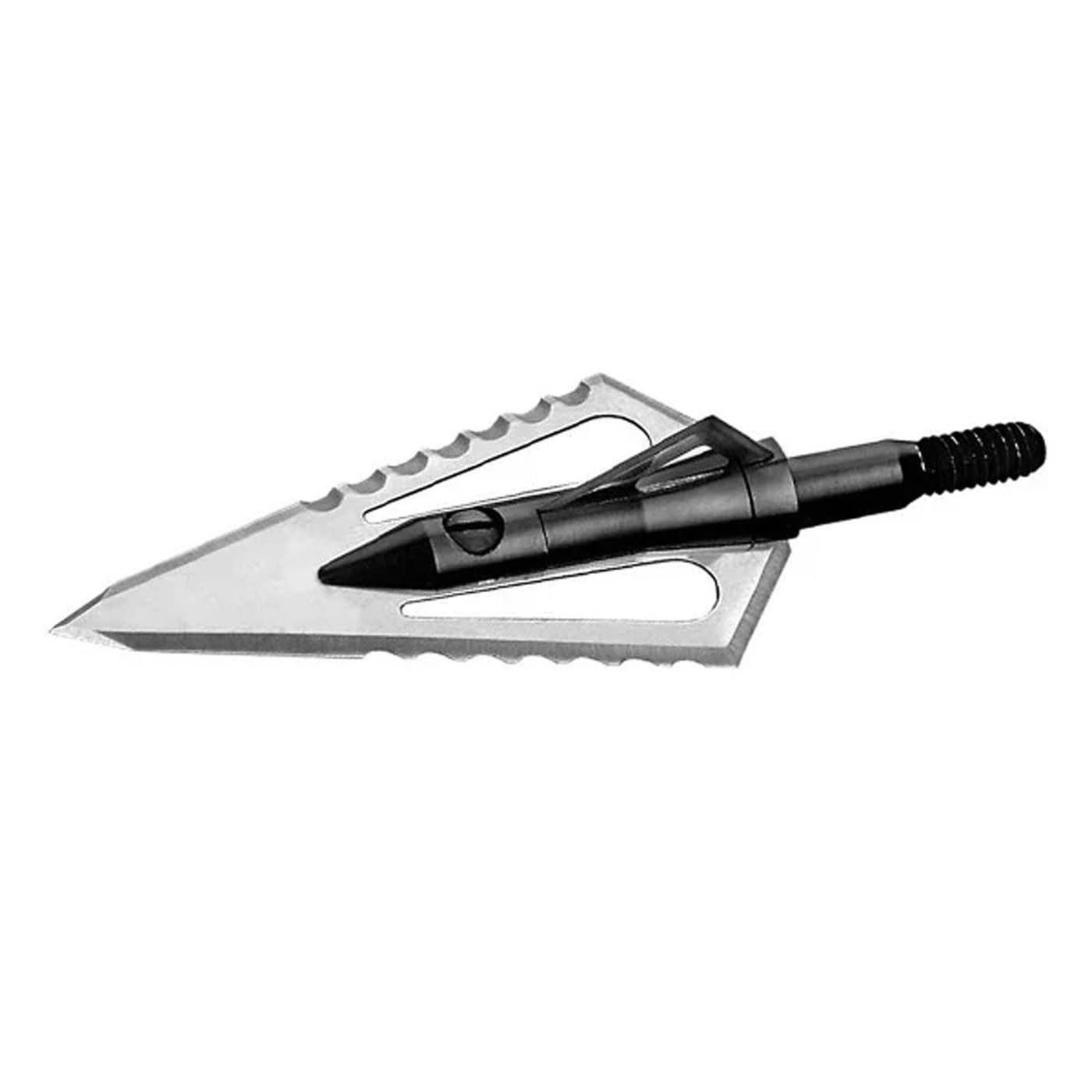
A chisel-cut serrated 4-blade that traditional archers call devastating and deadly.
This Buzzcut is a love letter to traditional archery. The exclusive chisel-cut serrated main blade stands apart from conventional serrated heads, and the aggressive serrations create extensive soft tissue trauma and larger wound channels for rapid, ethical harvests. Traditional archers are the loudest fans, calling it “devastating and durable.”
Durability is the standout proof. Owners mention killing two deer this fall with the same arrow and broadhead — after a double-lung pass-through, there was no damage at all, and a quick resharpen brought it back to normal. The patented Stinger design (U.S. Patent No. 7,160,217) covers the blade-lock system, and the lifetime warranty covers anything that does break.
The alloy steel and aluminum construction keeps it tough yet sharpenable, and it comes razor sharp out of the package. The serrated edge is the draw for hunters who want tissue damage over clean slice cuts. For a traditional archer moving away from mechanical heads back to fixed-blade reliability, this is the head to bet the season on.
Buzzcut design: the chisel serrations boost tissue trauma while the head survives repeated use — two deer on one broadhead is the proof.
No replacement blades: serrated edges are harder to resharpen than straight blades, though this one takes it well.
Fixed blades: you hunt with a traditional bow and want a serrated head that keeps cutting through multiple kills.
Replacement needs: you prefer clean slice cuts over serrated tissue trauma on your game.
Understanding the Specs
Cutting Diameter
This is the width of the wound channel the head opens as it passes through. A wider diameter means a bigger blood trail and easier tracking, but it also creates more resistance on the way through — so you trade a little penetration for a lot of blood. The Slick Trick offers a 2-1/4-inch total cut, while the Wasp SharpShooter cuts a more modest 1 inch for deeper drive.
Blade Thickness & Material
Thicker blades survive hard impacts without curling, but they also create more drag. The Wasp uses a.040-inch main blade, while the Magnus Hornet ups it to a.059-inch main for extreme durability. Stainless steel resists corrosion and holds an edge longer than standard steel, which is why nearly every serious head here is built from it.
Cut-On-Contact vs. Chisel Tip
A cut-on-contact head starts slicing the instant it touches hide, which traditional archers love for maximum penetration. A chisel tip is designed to split bone on impact instead of deflecting off it, making it the better choice for shoulder shots. The Wasp SharpShooter is a pure cut-on-contact design, while the Slick Trick’s 4-edge tip is built for bone splitting.
Blade Alignment Technology
Some crossbow heads let you rotate and lock the blades so every head flies identically when loaded the same way. The Excalibur Boltcutter’s B.A.T. system is the standout example — owners say that after tuning, shots land almost spot-on to field points. This matters most for crossbow shooters chasing extreme-range accuracy.
FAQ
Why choose a 150-grain broadhead over a lighter 100-grain head?
Will a 150-grain head fit my recurve or longbow setup?
How do serrated blades differ from straight blades for hunting?
Can I resharpen fixed-blade broadheads at home?
What does a lifetime replacement guarantee cover?
Is a 2-blade or 4-blade broadhead better for penetration?
What is Blade Alignment Technology on a crossbow broadhead?
How do I know if a broadhead flies like a field point?
Final Thoughts: The Verdict
For most hunters, the 150 grain broadheads winner is the Wasp SharpShooter because it delivers genuine cut-on-contact performance with field-point accuracy at a 1-inch cutting diameter, purpose-built for traditional bows. If you want maximum penetration with a proven pass-through reputation, grab the Magnus 4-Blade. And for a crossbow shooter chasing pinpoint long-range accuracy, the Excalibur Boltcutter is the one to reach for.
How We Picked
We do not accept paid placement. Every pick is matched to a real buyer and a real use-case; we do not hands-on test units.
Sources & Methodology
Specifications: manufacturer listings and product documentation. Review insights: verified customer reviews, as of August 2026. Pricing: not shown on this page (it changes often); check the current price via the retailer link.
As an Amazon Associate, Gadgets Feed earns from qualifying purchases. This does not affect which products we feature.