
A projector capable of filling a 150-inch canvas doesn’t just need raw lumens; it demands panel precision, contrast sophistication, and a light engine that can maintain brightness uniformity edge-to-edge. The difference between a washed-out image and a cinematic deep-black experience at this scale hinges on specific technical decisions in the laser or lamp architecture.
I’m Min — the co-founder and writer behind Gadgets Feed. I’ve spent countless hours analyzing light source technologies and pixel-shifting mechanics to separate the projectors that genuinely master large-scale projection from those that merely claim the spec.
Whether you’re building a dedicated theater room or converting a living space, the journey starts with finding the best 150 inch projector that matches your throw distance and ambient light tolerance.
How To Choose The Best 150 Inch Projector
Projecting at 150 inches multiplies every flaw in your signal path and optics. A projector that looks fine on a 100-inch screen will reveal chromatic aberration, poor corner focus, and insufficient contrast at this larger scale. Start by matching the projector’s native resolution and light source to your room’s controlled-light capability.
Light Engine and Brightness Realism
Triple laser engines (RGB) deliver the widest color gamut and longest lifespan, often rated at 25,000 to 30,000 hours. LED-based projectors like the BenQ W4100i offer 10-year lamp life but lower peak brightness than laser. For a 150-inch screen, aim for at least 2,500 ISO lumens if you have any ambient light. Pure triple laser projectors with 3,000 ISO lumens provide the headroom for HDR content without crushing shadow detail.
Throw Ratio and Physical Placement
Standard throw projectors need 10-15 feet of distance to fill a 150-inch diagonal. Ultra-short-throw (UST) models like the WEMAX Nova Pro require only 19 inches from the wall, making them ideal for small rooms. The throw ratio directly dictates your placement flexibility — a 0.21:1 UST sits inches from the wall, while a 1.5:1 standard projector occupies the middle of the room.
Contrast and HDR Performance
A 150-inch screen magnifies the difference between an 8-bit panel and true 10-bit HDR processing. Dynamic iris systems and laser dimming technologies, such as the Scene Adapt Engine in the NexiGo Aurora Pro MKII, improve contrast ratio to over 30,000:1. For HDR10+ and Dolby Vision support, the projector must process metadata frame-by-frame to avoid blown-out highlights or crushed blacks.
Quick Comparison
On smaller screens, swipe sideways to see the full table.
| Model | Category | Best For | Key Spec | Amazon |
|---|---|---|---|---|
| Valerion VisionMaster Pro2 | Standard Throw | Cinematic Black Levels | 15,000:1 Contrast | Amazon |
| NexiGo Aurora Pro MKII | Ultra Short Throw | High Contrast UST | 30,000:1 Contrast | Amazon |
| Epson LS11000 | Standard Throw | Gaming & Motion | 4K 120 Hz | Amazon |
| Hisense PX3-PRO | Ultra Short Throw | Color Accuracy | ΔE≈0.9 Color | Amazon |
| AWOL VISION LTV-3000 Pro | Ultra Short Throw | Built-In Center Channel | 147% DCI-P3 Coverage | Amazon |
| Epson 5050UB | Standard Throw | 3LCD Color Accuracy | 1,000,000:1 Dynamic Contrast | Amazon |
| BenQ W4100i | Standard Throw | Factory-Calibrated Color | 100% DCI-P3 Coverage | Amazon |
| JMGO N1S Ultimate | Standard Throw | Daylight Viewing | 3300 ISO Lumens | Amazon |
| NEBULA Cosmos 4K SE | Standard Throw | Portable Laser Projector | 1800 ANSI Lumens | Amazon |
| WEMAX Nova Pro | Ultra Short Throw | Small Room UST | 0.23:1 Throw Ratio | Amazon |
| Elite Screens 150 | Fixed Frame Screen | Screen + Setup | 1.3 Gain Matte Surface | Amazon |
In‑Depth Reviews
1. Valerion VisionMaster Pro2
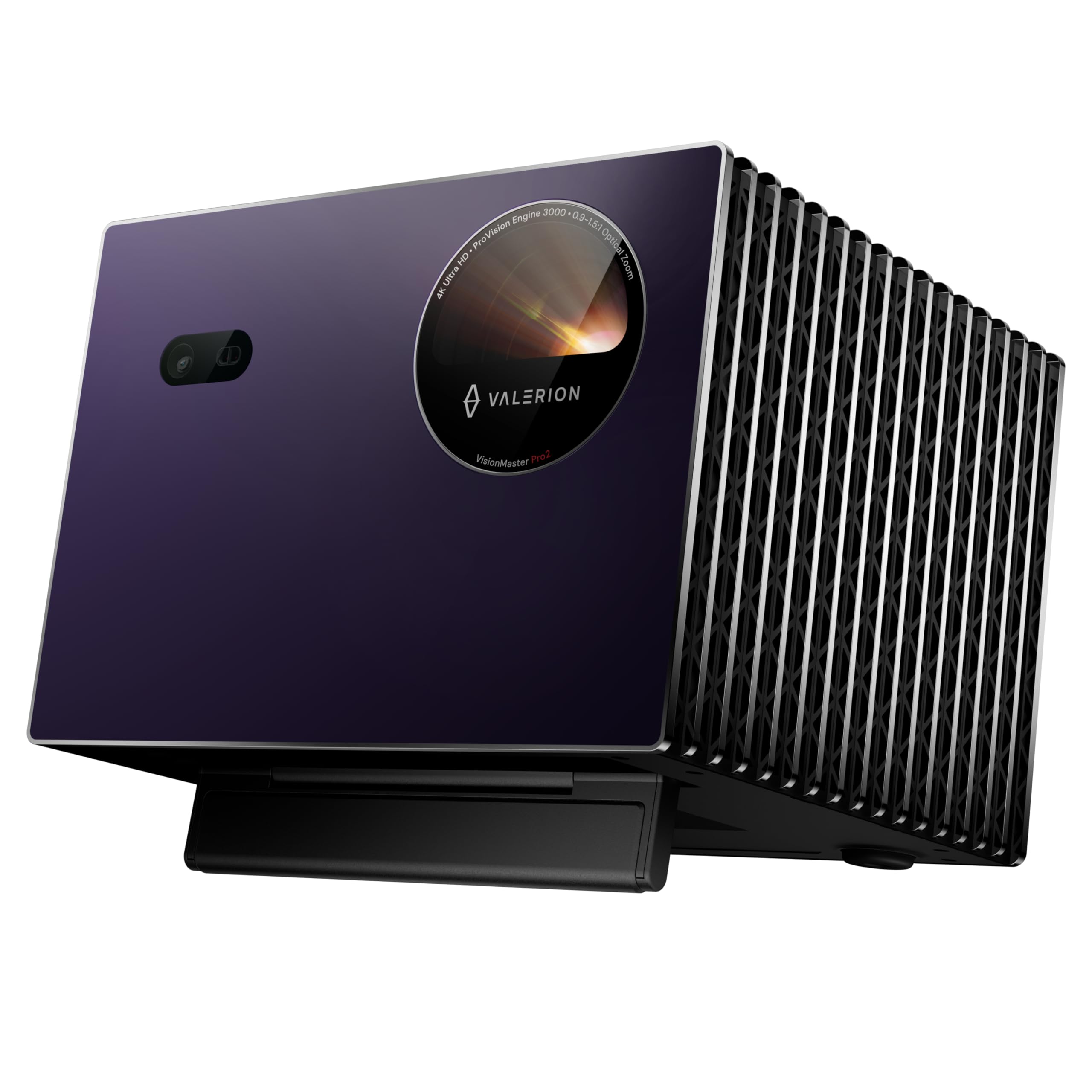
The Valerion VisionMaster Pro2 delivers a 15,000:1 native contrast ratio with Enhanced Black Level (EBL) technology that produces deep inky blacks at 150 inches. Its triple laser engine pushes 3,000 ISO lumens while covering 110% Rec.2020, making HDR content pop without the rainbow artifacts common in single-chip DLP designs. The OpticFlex Lens System provides a 0.9-1.5x optical zoom range, giving placement flexibility across different room depths.
Gamers benefit from a 4ms input lag at 240Hz refresh rate with dedicated modes for FPS, RPG, and RCG. The MediaTek MT9618 chipset with 4GB RAM and 128GB storage handles multitasking and 4K streaming without stutter. At 150 inches, the AI Super Resolution engine visibly sharpens 1080p content to near-4K clarity, which matters when lower-resolution source material gets magnified.
The 3 HDMI 2.1 ports support eARC for soundbar integration and VRR for gaming. Early users note that firmware updates improve HDR10+ dynamic tone mapping, and the ISF-certified calibration ensures out-of-box color accuracy. The gimbal attachment allows precise angle adjustments, eliminating the need for complex ceiling mounts in most living rooms.
Why it’s great
- 15,000:1 contrast ratio delivers cinema-level blacks
- 4ms input lag with 240Hz for competitive gaming
- Optical zoom avoids digital cropping loss
Good to know
- Requires careful physical alignment for best geometry
- EBL subtitle glow issue in firmware reported
2. NexiGo Aurora Pro MKII

As an ultra-short-throw powerhouse, the NexiGo Aurora Pro MKII uses the ALPD 5.0 laser engine to produce 2,400 lumens with a 30,000:1 dynamic contrast ratio. The Scene Adapt Engine adjusts the laser output and iris in real-time based on scene content, which prevents the typical gray-wash that plagues many UST projectors when displaying dark scenes at 150 inches. Its 0.21:1 throw ratio means the projector sits just inches from the wall.
The Dolby Vision and HDR10+ support, combined with a 107% BT.2020 color gamut, delivers rich color saturation that rivals direct-view TVs. Gaming latency sits between 4.2ms and 8ms with 4K at 120Hz, making it viable for fast-paced console titles. The built-in 60W speakers with Dolby Atmos provide enough clarity for casual viewing, though a dedicated sound system is recommended for critical listening.
Buil quality is solid, with a chassis designed to dissipate heat from the triple-laser array without excessive fan noise. Some users report that the remote requires precise aim, and the automatic focus occasionally needs a manual nudge after initial setup. The 30,000-hour laser lifespan translates to 18+ years of average daily use, making it a long-term investment for a dedicated home cinema.
Why it’s great
- 30,000:1 dynamic contrast with laser dimming
- Ultra-short throw fits in tight spaces
- Dolby Vision and HDR10+ certified
Good to know
- Remote needs direct line-of-sight
- Focus can drift after startups
3. Epson Home Cinema LS11000

The Epson LS11000 leverages a 3-chip 3LCD architecture that eliminates the rainbow effect entirely while delivering 2,500 lumens of color brightness — a rare spec where color brightness matches white brightness. This is critical at 150 inches because single-chip DLP projectors often drop color saturation when scaling to large screen sizes. The motorized 2.1x zoom lens with vertical and horizontal lens shift provides generous installation flexibility.
The Precision Shift Glass Plate technology creates an 8.29-million-pixel image that rivals native 4K in sharpness, while the dynamic contrast exceeds 1,200,000:1 thanks to the laser array light source. HDR10+ and HLG support with 16-step real-time HDR curve adjustment lets you fine-tune highlights. At 120Hz, the Frame Interpolation smooths 24fps film content without the soap-opera effect.
The HDMI 2.1 ports support eARC and 4K 120Hz for gaming, though the input lag is higher than the Valerion at around 20ms. Build quality includes a cinema-grade lens with zero light leakage. Some users report occasional startup snow requiring a reboot, and the extended warranty is strongly advised given the premium investment.
Why it’s great
- 3LCD eliminates color wheel artifacts
- 1,200,000:1 dynamic contrast with laser
- Generous lens shift and 2.1x zoom range
Good to know
- Occasional startup artifacts reported
- Higher input lag than laser competitors
4. Hisense PX3-PRO

The Hisense PX3-PRO uses LPU Trichroma triple-laser technology to achieve ΔE≈0.9 color accuracy and 110% BT.2020 coverage, making it one of the most color-accurate UST projectors available. The 3,000 lumens of brightness and IMAX Enhanced certification ensure that 150-inch projections maintain their vibrancy even with some ambient light. The 0.21:1 throw ratio places it inches from the wall.
The AI Upscaler processes lower-resolution content to 4K detail, which is crucial when streaming content that wasn’t mastered for large screens. Dolby Vision and Atmos support, combined with a 240Hz refresh rate, create an immersive gaming and movie experience. The built-in auto keystone and wall color adaptation help in non-ideal rooms, though the manual calibration process via smartphone photo upload feels clunky.
Some users note a slight rainbow effect in high-contrast edges, a limitation of the DLP chip even with triple-laser light sources. The Harmon Kardon speakers provide adequate sound for casual viewing, but the projector’s strength is clearly in its image quality. The laser lifespan of 30,000 hours makes it a durable choice for daily use.
Why it’s great
- ΔE≈0.9 factory color accuracy
- 110% BT.2020 wide color gamut
- 3,000 lumens for mixed lighting
Good to know
- Slight rainbow effect in edge cases
- Keystone calibration via phone is clunky
5. AWOL VISION LTV-3000 Pro

The AWOL VISION LTV-3000 Pro differentiates itself with a built-in center channel speaker that maps dialogue directly to the screen plane, eliminating the need for a separate center speaker in a 5.2.2 setup. Its triple-laser engine covers 107% BT.2020 and 147% DCI-P3, producing vibrant colors that hold up at 150 inches. The 2,000 lumens of brightness require a controlled-light room for best results, but the color volume is outstanding.
The 0.25:1 throw ratio means it needs about 12.8 inches from the wall for a 150-inch diagonal. Active 3D support works with shutter glasses, and the Control4 integration makes it suitable for smart home setups. Dolby Vision and HDR10+ support dynamic metadata, and the geometric correction allows for angled installations. The 3D performance requires manual mode switching, which can be inconvenient.
Some users report fan noise increasing after 1.5 hours of 4K HDR playback, and the internal speakers are best avoided for critical audio. The 60Hz refresh rate causes motion blur in fast-action content, so competitive gamers may look elsewhere. However, for movie enthusiasts who prioritize color accuracy and dialogue clarity, this projector offers exceptional value.
Why it’s great
- Built-in center channel for clear dialogue
- 147% DCI-P3 color coverage
- Active 3D support
Good to know
- Fan noise increases during extended HDR
- 60Hz refresh limits motion clarity
6. Epson Home Cinema 5050UB

The Epson 5050UB is a benchmark in the standard throw category, using a 3-chip LCD engine that produces 100% of the RGB color signal per frame. The 2,600 lumens of brightness and full 10-bit HDR processing create a rich, natural image at 150 inches without the color breakup issues. The motorized lens with 2.1x zoom, vertical/horizontal shift, and lens memory for 16:9/2.35:1 aspect ratios provides professional-grade installation flexibility.
The dynamic contrast ratio of 1,000,000:1 is achieved through an auto-iris system that adjusts in real-time. While the 1080p native resolution with pixel shifting isn’t true 4K, the visual clarity at 150 inches is excellent, with minimal visible pixel structure. The input lag is low at around 20ms, making it viable for casual gaming. The HDR processor handles tone mapping well, preserving shadow detail in dark scenes.
The lamp life is rated at 4,000 hours in normal mode, requiring periodic replacement. Some users report a slow HDMI handshake (11 seconds) when switching inputs. The 25-pound weight requires a sturdy ceiling mount. For those who prefer the 3LCD color advantage over laser engines at this price point, the 5050UB remains a compelling choice.
Why it’s great
- 100% RGB color signal per frame
- 1,000,000:1 dynamic contrast with auto-iris
- Motorized lens memory for aspect ratios
Good to know
- Lamp replacement needed every 4,000 hours
- 11-second HDMI handshake delay
7. BenQ W4100i
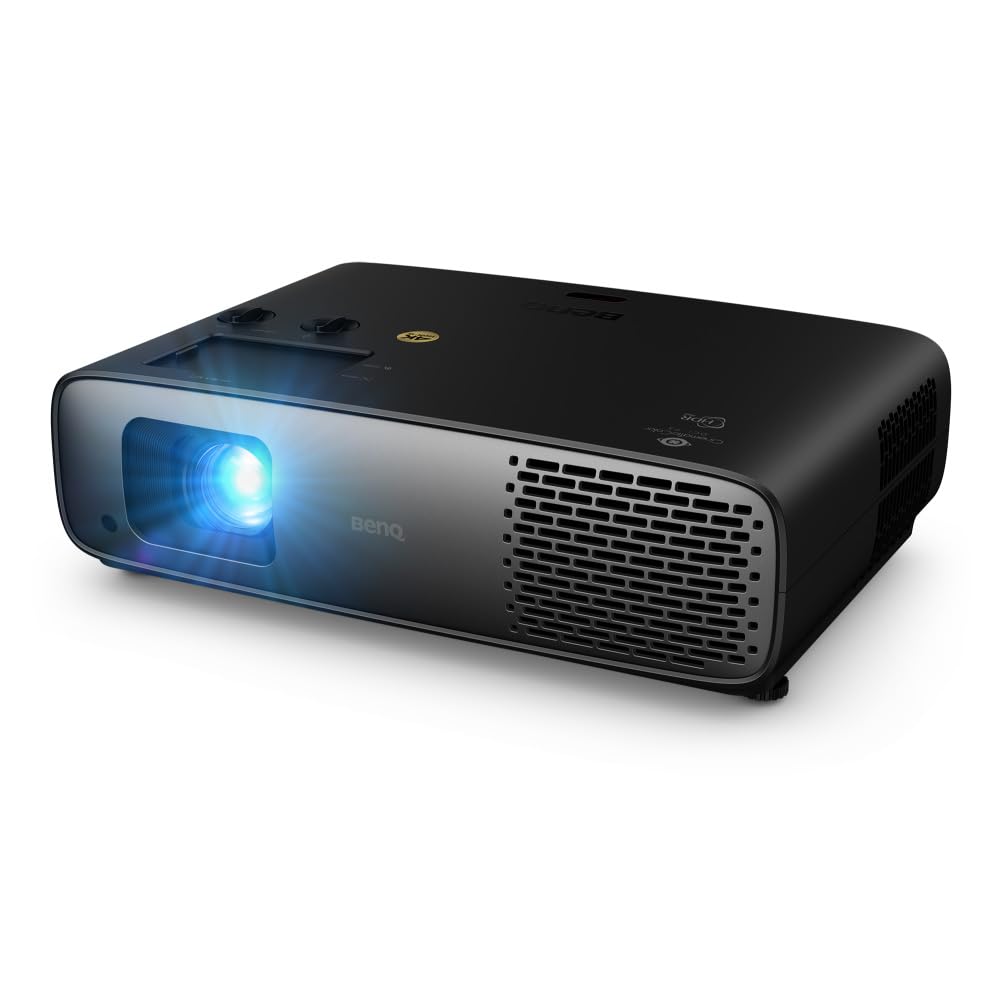
The BenQ W4100i is factory-calibrated to 100% DCI-P3 color coverage, meaning out-of-box accuracy that rivals professional cinema monitors. The LED light source delivers 3,200 lumens of brightness with a 10-year lifespan, avoiding the mercury content of lamp-based projectors. The HDR-PRO technology with local contrast enhancement and tone mapping handles dark and bright scenes at 150 inches without clipping details.
The 1.3x zoom and 2D lens shift provide decent installation flexibility, though less generous than the Epson LS11000. The Android TV interface with Netflix pre-loaded eliminates the need for an external streamer. The contrast ratio is high but not specified numerically, with users reporting solid black levels when paired with a gray screen. The lack of laser speckle is a benefit for LED projectors.
Some users have encountered units from non-authorized sellers, so verify the seller’s BenQ authorization before purchase. The 3-year limited warranty from BenQ provides peace of mind. For those who prioritize color accuracy above all else at 150 inches, the W4100i’s factory calibration is a significant advantage.
Why it’s great
- 100% DCI-P3 factory calibration
- 10-year LED light source lifespan
- 3-year warranty with US-based support
Good to know
- 1.3x zoom limits placement options
- Verify authorized seller to avoid counterfeits
8. JMGO N1S Ultimate

The JMGO N1S Ultimate pushes an extraordinary 3,300 ISO lumens from a triple-laser engine, making it one of the brightest projectors suitable for 150-inch projection in rooms with significant ambient light. The 1600:1 contrast ratio and ΔE<1 color accuracy deliver natural skin tones, and the 110% Rec.2020 gamut ensures HDR content appears rich. The 360° horizontal and 135° vertical rotation gimbal allows ceiling, wall, or angled projection without a mount.
The FlexiSmart 2.0 adaptive system uses a 3D-TOF sensor and CMOS camera for real-time auto keystone and focus, which is critical when moving the projector between rooms. The built-in 20W subwoofer with 45Hz ultra-bass and Dolby Digital+ provides decent audio for a portable unit. Google TV 3.0 with official Netflix support eliminates dongles.
Portability comes with trade-offs: the power brick is large and hinders the gimbal’s full range when plugged in. The user interface can feel sluggish compared to higher-end chipsets. At its price point, the brightness-to-portability ratio is unmatched, but the lack of optical zoom means you must rely on digital zoom for adjustment.
Why it’s great
- 3,300 ISO lumens for daylight viewing
- 360° gimbal for flexible placement
- Real-time auto keystone with ToF sensor
Good to know
- Power brick restricts gimbal motion
- No optical zoom, digital only
9. NEBULA Cosmos 4K SE

The NEBULA Cosmos 4K SE uses HybridBeam technology combining LED and laser light sources to reach 1,800 ANSI lumens. While this brightness is lower than the JMGO, it still produces a usable 150-inch image in dark rooms. The Dolby Vision support and NebulaMaster Image Engine enhance contrast and grayscale, delivering better-than-expected image quality for its class. The Google TV interface with 4K Netflix support is seamless.
The IEA 4.0 Intelligent setup includes autofocus, automatic obstacle avoidance, and wall color adaptation, making first-time setup simple. The built-in speakers from Anker are capable, with good clarity for a projector. The compact form factor (4kg) and included case make it genuinely portable. The laser engine is rated for 50,000 hours.
Some users report Bluetooth headphone pairing issues and limited HDMI ports (only one). The auto keystone can overshoot, requiring manual fine-tuning. While not suitable for bright rooms at 150 inches, it offers excellent value for those seeking a portable laser projector for dedicated dark-room viewing.
Why it’s great
- Hybrid LED+laser engine reduces rainbow effect
- Dolby Vision certified for HDR
- Auto obstacle avoidance and wall color adaptation
Good to know
- 1800 lumens require dark room for 150 inches
- Only one HDMI port
10. WEMAX Nova Pro
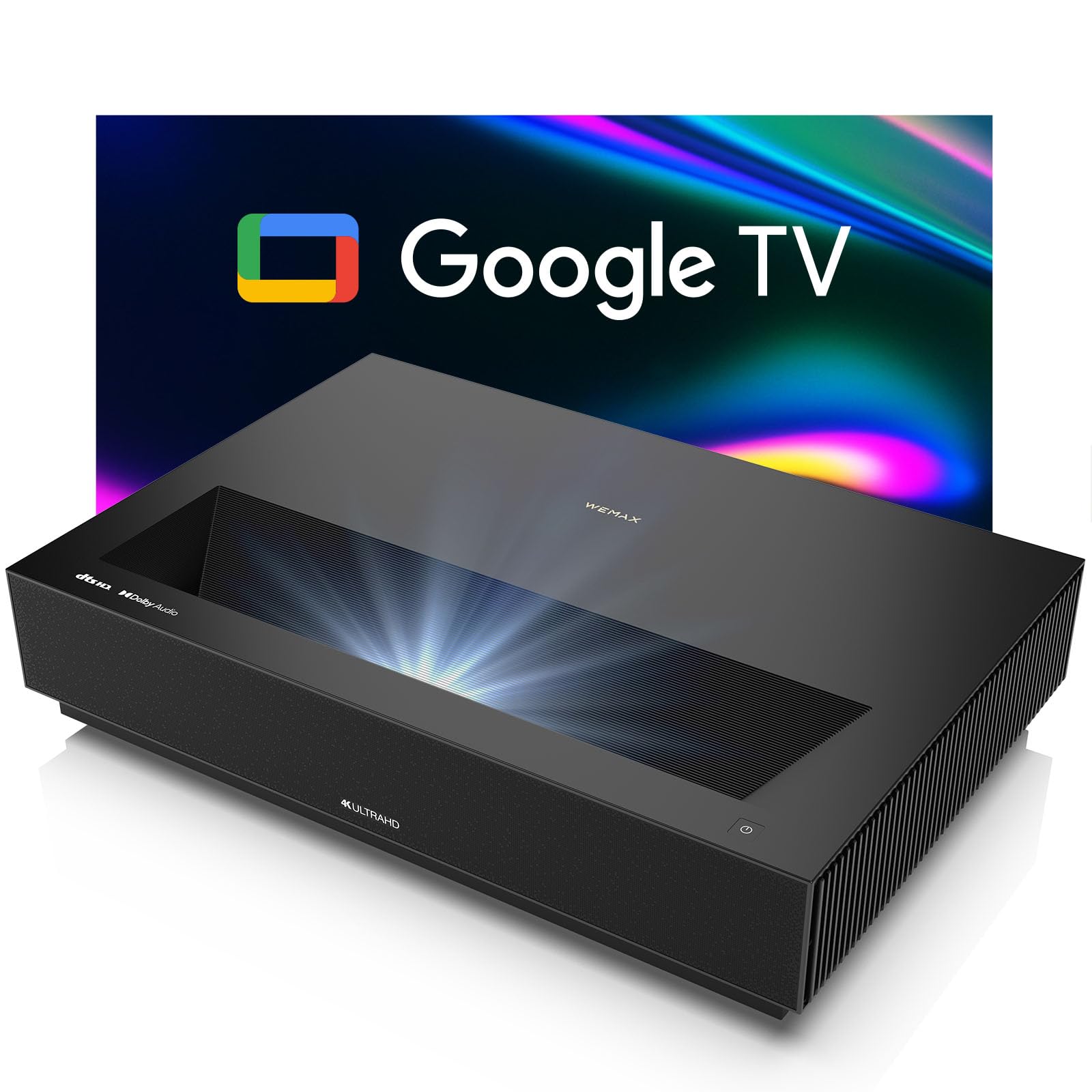
The WEMAX Nova Pro is an ultra-short-throw laser projector with a 0.23:1 throw ratio, meaning a 150-inch image from just 19 inches away. Its ALPD laser engine delivers 2,100 ISO lumens and 110% Rec.709 coverage, producing speckle-free images with 1.07 billion colors. The MEMC motion compensation eliminates judder, and Active 3D support brings depth to compatible content.
The 30W speakers with Dolby Audio and DTS-HD provide solid built-in sound. Google TV with official Netflix support integrates seamlessly. The HDMI 2.1 port supports eARC for external sound systems. The laser lifespan is rated at 25,000 hours. The low blue light certification reduces eye strain during extended viewing sessions.
Some users report HDMI input detection issues that require restarts, and the keystone correction struggles to fill non-standard screen sizes. The smart features are limited to optical audio output. Software bugs can interrupt the user experience. At its price point, it offers an accessible entry into UST laser projection for 150-inch setups.
Why it’s great
- 0.23:1 throw ratio for tight spaces
- MEMC motion smoothing for sports
- Low blue light technology
Good to know
- HDMI detection issues requiring restarts
- Software bugs in smart interface
11. Elite Screens 150 Inch Fixed Frame
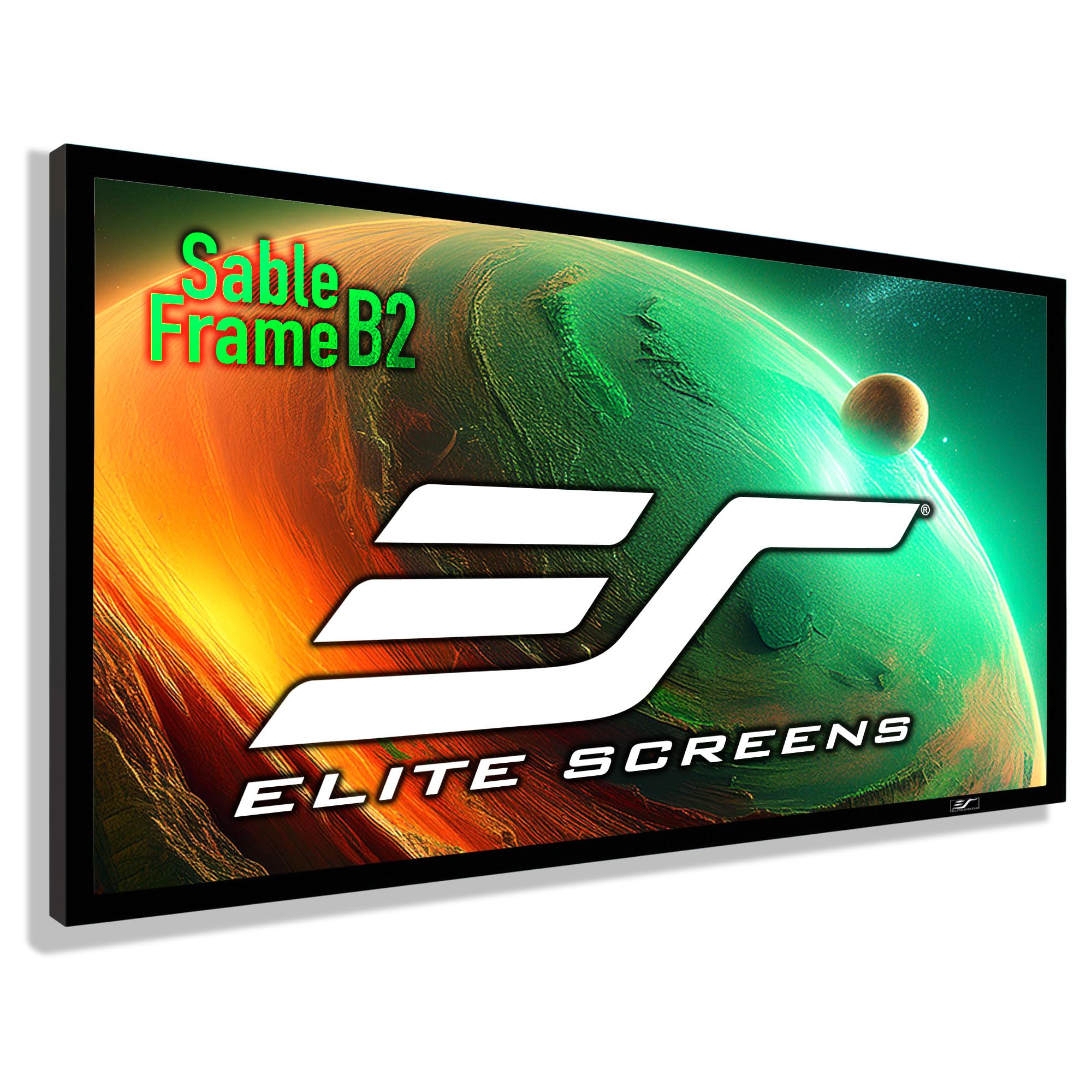
While not a projector itself, the Elite Screens SB150WH2 fixed frame screen is the essential companion for achieving the best image at 150 inches. The CineWhite UHD-B material provides a 1.3 gain surface that increases peak brightness by 30% over standard screens, which is critical for HDR night scenes. The matte finish reduces hot-spotting and ensures uniform brightness from edge to edge.
The 2.75-inch aluminum frame wrapped in black velvet absorbs overshoot light, boosting perceived contrast by preventing light reflection back onto the screen. The spring-tensioned system ensures a wrinkle-free surface, which is vital at 150 inches where even small wrinkles become visible. ISF certification guarantees accurate color reproduction from any projector.
Assembly requires patience: 135 plastic buttons and springs must be attached to the frame. The multi-piece frame design reduces shipping size but adds complexity. A second person is recommended for hanging due to the 34.6-pound weight. The included installation kit makes wall mounting straightforward once assembled. For those building a dedicated theater, this screen provides the optimal surface.
Why it’s great
- 1.3 gain increases projector brightness
- Velvet frame absorbs overshoot light
- Wrinkle-free spring-tensioned surface
Good to know
- Assembly requires patience and tools
- Second person needed for mounting
FAQ
How much space do I need between the projector and the screen for a 150 inch diagonal?
Is 4K resolution necessary at 150 inches or will 1080p suffice?
Should I buy a projector screen or use a white wall for 150 inches?
How does ambient light affect image quality at 150 inches?
Final Thoughts: The Verdict
For most users, the best 150 inch projector winner is the Valerion VisionMaster Pro2 because it delivers a 15,000:1 native contrast ratio with triple-laser brightness and 4ms gaming input lag, making it the most versatile choice for both movies and gaming at this scale. If you want a zero-footprint ultra-short-throw setup with Dolby Vision, grab the NexiGo Aurora Pro MKII. And for pure color accuracy and a 3LCD engine that eliminates rainbow artifacts, nothing beats the BenQ W4100i.