
Our readers keep the lights on and my morning glass full of iced black tea. As an Amazon Associate, I earn from qualifying purchases.
Specs are compiled from manufacturer listings and verified buyer reviews and can change over time — please confirm the key details on the product page before buying.
Hunting for a 150-watt tungsten bulb usually means you own something specific — a microscope, a piece of medical gear, a fiber-optic tree, or a reptile tank. These aren’t household bulbs you grab on a whim; they’re precision components where the wrong base or voltage means the lamp simply won’t light up. This guide cuts through the confusion by focusing on the three specs that actually decide if a bulb fits: the base type, the voltage, and how long the filament survives.
I’m Min — the founder and writer behind Gadgets Feed. This guide is built by comparing the manufacturers’ published specifications and the patterns across verified customer reviews, so you get each pick’s real strengths and trade-offs instead of marketing spin.
If you need a direct replacement that matches gear that is decades old, the best 150 watt tungsten bulb is the one whose base and voltage match your socket exactly.
Our Picks at a Glance
How To Choose The Best 150 Watt Tungsten Bulb
A tungsten bulb is a very specific tool for a very specific socket. The most common mistake is buying on wattage alone, which is the least useful number here. Before you click “add to cart”, you need to confirm three things about the fixture you are refilling.
Match the Base Before Anything Else
The base is the physical connector that twists or pushes into your socket. A GY9.5 base is a two-pin prefocus design for medical and scientific instruments. A GX5.3 base is another two-pin style used in projectors and fiber optics. An E26 base is the standard household screw-in found in most terrarium lamps. If the base is wrong, no adapter in the world will make it seat properly.
Confirm the Voltage Your Fixture Expects
These bulbs run at very specific voltages. A 24V bulb is designed for low-voltage medical or fiber-optic gear, while a 21V bulb powers certain stage and studio lamps. A 120V bulb works in a standard wall socket. Feeding a bulb the wrong voltage means it either burns out instantly or never reaches full brightness, so check the label on your old bulb before ordering.
Consider How Long You Need It to Last
Filament life is measured in operating hours, and the spread is enormous. A bulb rated for 100 hours is built for occasional use in a lab, while a dual-filament heater rated for 4000 hours is meant to run near-continuously for warmth. If you are heating an animal enclosure that runs all day, a longer-rated bulb saves you from constant replacements.
Quick Comparison
| Model | Best For | Bulb Base | Voltage | Lifetime | Amazon |
|---|---|---|---|---|---|
| OSRAM 54277 FDS/DZE 64643★ Best Overall | Medical & Scientific Instruments | GY9.5 (Prong) | 24V | 100 hours | Amazon |
| OSRAM EJA 150W 21V MR16 | Stage, Studio & Fiber Optics | GX5.3 | 21V | — | Amazon |
| 2Pack Reptile Heat Lamp (REPTI MATE) | Reptile & Pet Warmth | E26 (Screw) | 120V | 4000 hours | Amazon |
In‑Depth Reviews
1. OSRAM 54277 FDS/DZE 64643 150W 24V Tungsten Halogen Lamp
Our pick — over 4.5★ from 70+ verified ratings; the strongest balance of quality and price.
The lab-accurate workhorse for microscopes and surgical lights where exact alignment is non-negotiable.
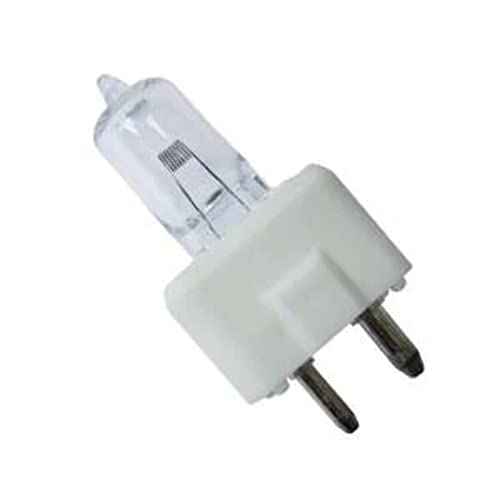
This OSRAM bulb is a precision component, not a general-purpose light. It is built for medical and scientific instruments, including microscopy, fiber illumination, and surgical overhead lighting. Its patented quartz-pinch technology locks the filament in place for precise beam alignment in diagnostic and surgical settings.
The electrical specs are strict: 150W at 24V with a GY9.5 two-pin prefocus base. That 24V rating means it is for low-voltage equipment, not a household socket. The lifetime is a lean 100 hours, so it is designed for occasional lab work, not continuous burning. Buyers report delivery arrived earlier than announced with the gear in good condition, exactly as expected.
Cross-reference the numbers and the gap becomes clear: where the reptile heater above is rated for 4000 hours, this precision bulb stops at 100 hours — a 40x difference that makes sense only because the two jobs are completely different. This one is about accuracy and consistent output for diagnostics, not endurance.
Built for Precision
- Patented quartz-pinch tech locks the filament in place for accurate positioning
- Clear light output ideal for clinical and diagnostic viewing
- Trusted OSRAM brand consistency
Know the Limits
- 100-hour lifetime means frequent replacement in heavy use
- 24V voltage limits it strictly to low-voltage lab gear
Reach for this if: you are refilling a medical, scientific, or fiber-optic instrument that specifies a GY9.5 base at 24V.
Look elsewhere if: you need a bulb for continuous, all-day operation — the short 100-hour life is not built for that.
2. 2Pack Reptile Heat Lamp, 150W Infrared Basking Spot (REPTI MATE)
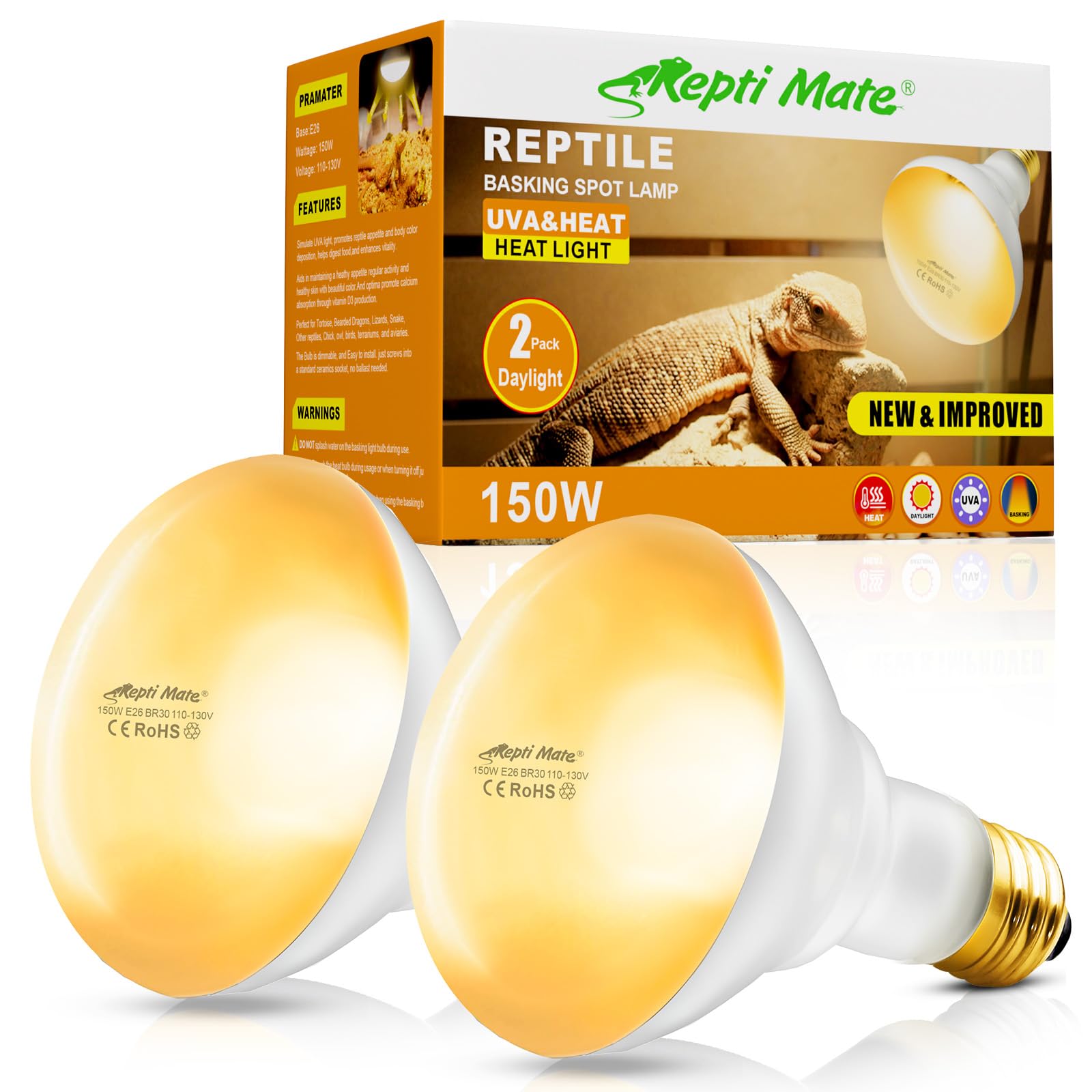
A two-pack of 150W infrared heaters that turns a standard lamp socket into a warm basking zone.
This REPTI MATE set is the one that actually screws into a normal home socket, thanks to its standard E26 base at 120V. Inside the frosted glass sits a dual tungsten filament that resists frequent on-off cycling, giving a rated lifespan of 4000 hours. That is far longer than typical pet bulbs, and the warm light spreads evenly to cut harsh glare for light-sensitive animals.
Its defining feature is pure heat output, which owners consistently praise. The bulbs emit UVA rays to encourage natural basking, and the silver, copper-plated base efficiently radiates warmth outward. The package includes two bulbs, so you get a spare ready to go, and the maker advises keeping the lamp at least 12 inches away from animals and surfaces.
The honest trade-off is durability over time. Heat output earns the most praise by far, but the lifespan draws mixed reactions — some owners mention bulbs burning out within a month, while others happily use both lamps to keep outdoor kittens and a mother cat warm through a season. Fragility is the gamble you take at this price.
Warmth First: the infrared heat and UVA output are the reason to buy — owners consistently praise how much warmth these generate for the money.
The Durability Catch: treat the bulbs gently and keep a spare handy; a few units fail early despite the long 4000-hour rating.
Grab the two-pack if: you need reliable 150W warmth for reptiles, chicks, or outdoor cats from a standard E26 screw-in socket.
Think twice if: you cannot tolerate the risk of an early burnout — the quality control is not uniform.
3. OSRAM EJA 150W 21V MR16 Tungsten Halogen Lamp

The niche rescuer for aging fiber-optic trees and stage fixtures that modern LEDs cannot replace.
This MR16 halogen bulb is the quiet hero of the group, solving problems that LEDs simply cannot. It runs at 21V with a GX5.3 base and puts out a crisp 3400 Kelvin color temperature (a bright, white light). The HLX design uses Xenon gas for up to 10% greater output over the lamp’s life versus krypton-filled versions.
Real-world proof comes from owners keeping decades-old gear alive. As customers note: “The bulb in my 25 year old fiberoptic Christmas tree finally died. This fit perfectly, works great, and two day shipping.” Others use it as a hard-to-find replacement for stage and studio work, noting in this LED world these older halogen bulbs are genuinely scarce.
Note the voltage difference between the two OSRAM picks: this one needs 21V while the 54277 above requires 24V. That 14% voltage gap means they are not interchangeable — matching the voltage your specific fixture expects is the entire game here.
Genuine Lifesaver: when a 25-year-old fiber-optic tree or a studio lamp needs its exact bulb, this is one of the few 21V GX5.3 options left.
Confirm Before Ordering: verify your fixture actually runs on 21V, because its sibling OSRAM bulb needs 24V instead.
This is for you if: you own an older fiber-optic decoration or stage light that specifies a 21V, GX5.3 bulb and you have struggled to find one.
skip it if: your equipment runs on any other voltage or base — the fit has to be exact.
Understanding the Specs
Base Types: GY9.5, GX5.3, and E26
The base is the connector that locks into your socket, and getting it wrong means the bulb physically cannot seat. A GY9.5 base is a two-pin prefocus design common in medical microscopes and surgical lights. A GX5.3 base is another two-pin style used in projectors, stage fixtures, and fiber-optic illuminators. An E26 base is the standard household screw-in found in most terrarium and brooder lamps. If the base is wrong, no adapter will make it work safely.
Voltage: Why 24V, 21V, and 120V Are Not Swappable
These bulbs demand a precise voltage from the fixture. A 24V bulb powers low-voltage medical gear, a 21V bulb runs certain stage and studio lamps, and a 120V bulb works straight from a wall socket. Feed a bulb the wrong voltage and it either burns out instantly or never reaches full brightness. Always check the label printed on your old bulb before ordering a replacement.
FAQ
Is a 150-watt tungsten bulb the same as a 150-watt LED bulb?
How do I know if my fixture needs a GY9.5 or a GX5.3 base?
What happens if I use a 24V bulb in a 120V socket?
Can I use a 150W reptile heat lamp in a regular desk lamp?
How long does a tungsten filament bulb actually last?
What is the difference between a 21V and a 24V tungsten bulb?
Why is it so hard to find tungsten bulbs for old fiber-optic Christmas trees?
Is a 150W tungsten bulb safe to leave on all day?
Final Thoughts: The Verdict
If you want one dependable pick, the winner of this 150 watt tungsten bulb shortlist is the OSRAM 54277 because its precision filament alignment makes it the dependable choice for medical and scientific instruments that demand accuracy. If you are heating an animal enclosure from a standard wall socket, grab the REPTI MATE two-pack with its long 4000-hour rating. And for reviving an aging fiber-optic tree or stage light, the OSRAM EJA 21V is the rare exact fit you have been hunting for.
How We Picked
We do not accept paid placement. Every pick is matched to a real buyer and a real use-case; we do not hands-on test units.
Sources & Methodology
Specifications: manufacturer listings and product documentation. Review insights: verified customer reviews, as of September 2026. Pricing: not shown on this page (it changes often); check the current price via the retailer link.
As an Amazon Associate, Gadgets Feed earns from qualifying purchases. This does not affect which products we feature.