
Our readers keep the lights on and my morning glass full of iced black tea. As an Amazon Associate, I earn from qualifying purchases.
Specs are compiled from manufacturer listings and verified buyer reviews and can change over time — please confirm the key details on the product page before buying.
When summer sun turns your RV into an oven, a 15,000 BTU rooftop air conditioner (a unit that delivers 15,000 British Thermal Units of cooling per hour) is the upgrade that makes your camper livable again. The hard part is picking the right one from a pile of specs that all claim to cool faster and run quieter. This guide compares the published specs and real buyer experiences — so you know which unit fits your roof hole, your power setup, and your need for peace and quiet.
I’m Min — the founder and writer behind Gadgets Feed. This guide is built by comparing the manufacturers’ published specifications and the patterns across verified customer reviews, so you get each pick’s real strengths and trade-offs instead of marketing spin.
You will find the 15000 btu rv air conditioner that fits your roof cutout, budget, and tolerance for installation work — starting with a versatile pick that cools and heats while staying whisper-quiet.
Quick Picks
- TURBRO RV Air Conditioner, 15,000 BTU Cooling with 1,500W Electric Heating — Best Overall
- RV Air Conditioner 15K 110-120V, KINGRVER Non-Ducted Rooftop AC Unit — Best Value
- RecPro RV Air Conditioner 15K Ducted or Non-Ducted | Quiet AC | Heat Pump — Compact Pick
- Dometic FreshJet 3 Series, 15K BTU RV Rooftop Air Conditioner — Premium Pick
- Coleman-Mach 48204-666 Signature Series MACH 15 Medium-Profile Air Conditioner — Top Performer
- FOGATTI RV Air Conditioner Non-Ducted 15000BTU with Heat Strip — Efficiency Leader
- VEVOR RV Air Conditioner, 15000 BTU Non-Ducted Rooftop Unit, 65 dB — Budget Champion
How To Choose The Best 15000 BTU RV Air Conditioner
Every 15K BTU unit will cool a medium-to-large RV, but the differences live in the details — roof opening size, power draw, noise, and whether it can heat as well. Match the unit to your RV’s existing hole and your power source before you compare color or brand.
Roof Opening and Fit
The single most important measurement is your camper’s roof cutout. Many older RVs have a 14″ x 14″ opening, while newer units — like the TURBRO — call for a slightly larger 14.25″ x 14.25″ hole. Buying a model that needs a bigger opening means cutting your roof with a saw, and you cannot undo that cut. Measure your existing opening before you click buy.
Power Source and Energy Draw
Annual energy consumption ranges from just 578 Kilowatt Hours on the FOGATTI to 4905.6 Kilowatt Hours on the TURBRO — an 8.5x gap. If you run your RV off a generator or solar, a more efficient unit (higher EER rating) keeps the batteries happy and the fuel tank fuller. Some units also need a 12V DC line for the control board, not just 120V AC for the compressor, so check the wiring requirements.
Cooling Only or Heat, Too
A 15K BTU unit can come three ways: cooling only, cooling with a resistive heat strip (like a hair dryer that runs on 1,500W), or a true heat pump that reverses the cycle to deliver warmth. A heat pump provides usable heat down to about 40°F outside, while a heat strip is better for taking the chill off a damp morning than for warming the coach in winter.
Quick Comparison
| Model | Best For | Noise (dB) | Roof Opening | Heating Type | Amazon |
|---|---|---|---|---|---|
| TURBRO S15 | Low-Noise All-Weather Comfort | 52 dB | 14.25″ x 14.25″ | 1,500W Electric Heating | Amazon |
| KINGRVER | Budget Drop-In Replacement | 52 to 68 dB | 14-1/8″ x 14-1/8″ | None (Cooling Only) | Amazon |
| VEVOR | Rapid First-Time Cool Down | 65 dB | 14.25″ x 14.25″ | None (Cooling Only) | Amazon |
| FOGATTI | Low Energy Consumption | — | 14″ x 14″ | 1,500W Built-In Heating Strip | Amazon |
| Dometic FreshJet 3 | Premium Lightweight Upgrade | — | Backwards Compatible | None (Cooling Only) | Amazon |
| Coleman-Mach 15 | Maximum Cooling Output | — | — | None (Cooling Only) | Amazon |
| RecPro 15K | Four-Season Heat Pump Versatility | 55.4 dB | — | Built-In Heat Pump | Amazon |
In‑Depth Reviews
1. TURBRO RV Air Conditioner, 15,000 BTU Cooling with 1,500W Electric Heating

The quietest unit on this list (52 dB) — quiet enough to hold a conversation under it while you sleep.
This TURBRO S15 combines 15,000 BTU cooling and 1,500W electric heating in one roof opening, and it does it at 52 dB — roughly 25% quieter than the VEVOR’s 65 dB rating, which is a real benefit when the unit is directly above your bed. The 52 dB noise level (decibels, the unit that measures sound intensity) is roughly as loud as a normal conversation, not a whisper-quiet library. It also offers fan mode and dry mode (a low-power mode that removes humidity without full cooling).
The ceiling assembly includes an atmosphere lamp with three colors (blue, yellow, white), and you control everything through a remote or the TURBRO app. One reviewer noted that installation required enlarging a 14″ x 14″ roof opening to 14.25″ x 14.25″ and adding a 12V DC line — a real caveat. You also need to supply a 12V DC cable yourself, and TURBRO suggests buying their S15 Plus soft starter if you power the unit with a generator like a Honda 2200W.
Buyers give it strong marks for keeping a 38-foot camper cold in Florida and Texas heat. The downsides: there are no controls on the air box itself (remote or app only), the display is very bright and non-adjustable, and the WiFi setup can be confusing. This is the pick if you want the quietest all-in-one solution you can turn on from the grocery store — the true best overall compared to the louder VEVOR for sleeping comfort.
Quiet Comfort
- 52 dB noise level rivals a normal conversation — top-tier for this list
- Combines 15,000 BTU cooling plus 1,500W electric heating in one rooftop unit
- WiFi app control lets you pre-cool the camper before you return
- Atmosphere lamp adds ambient light in three colors
Installation Hurdles
- Requires a 14.25″ x 14.25″ roof opening — may need to enlarge a standard 14″ x 14″ hole
- Needs both 120V AC and 12V DC power; 12V cable not included
- No controls on the air box — all adjustments must use app or remote
- Bright, non-adjustable display can be annoying at night
Reach for this if: you want the quietest unit you can get with heat and smart controls, and you are comfortable with a slightly larger roof cutout.
Look elsewhere if: your RV has a 14″x14″ opening and you do not want to cut metal, or if you prefer physical buttons on the ceiling unit.
2. RV Air Conditioner 15K 110-120V, KINGRVER Non-Ducted Rooftop AC Unit
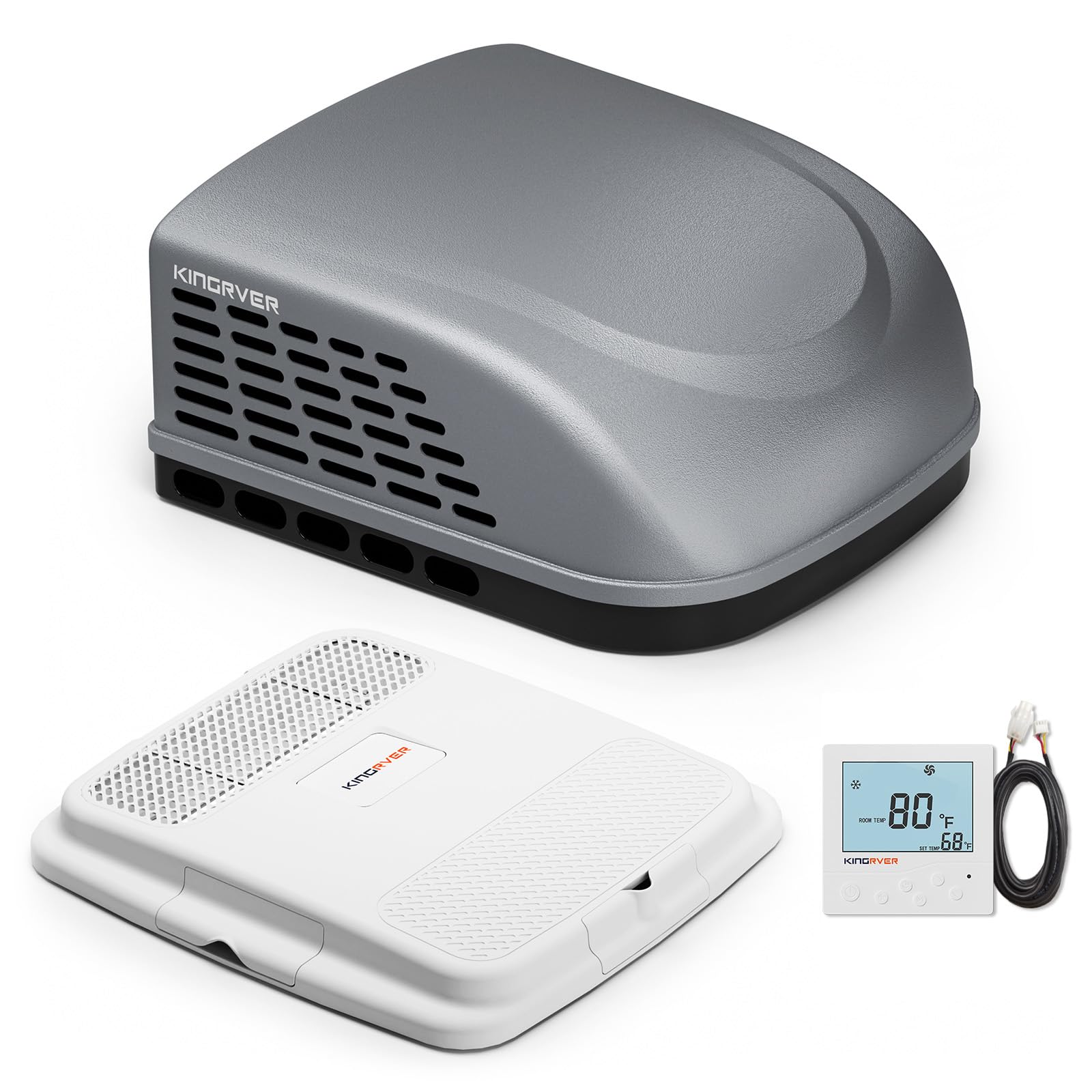
A no-frills cooling machine that drops into standard roof openings without drama.
If you do not need heating, WiFi, or mood lighting, the KINGRVER gives you 15,000 BTU of plain cooling at a mid-range price that often beats the premium picks in real-world performance. The dual-axis motor keeps noise between 52 dB on low and 68 dB at full power. The intuitive thermostat lets you set a target between 61°F and 88°F with simple push buttons, no app required. The intuitive thermostat lets you set a target between 61°F and 88°F with simple push buttons, no app required.
One buyer with a 30-foot fifth wheel says it works perfectly in the heat of Mexico, and another calls it “the best upgrade I’ve done to my camper” for its cooling speed. The catch: a buyer noted the unit comes with only a 6-foot cable from the roof unit to the thermostat, which is “insufficient for proper placement in 8′ wide camper” — they needed a 12-foot cable. The dimensions (29.5″ x 27″ x 14.2″) and a 14-1/8″ x 14-1/8″ opening mean it fits most standard cutouts, and the high-strength ABS shell resists UV damage and rain.
Straight Cooling at a Fair Price: For buyers who just want cold air without extra features, the KINGRVER delivers reliable, quiet performance. The short thermostat cable is an annoyance you can fix for a few dollars, and the lack of heating is the only real omission. One reviewer suggests checking the coverage specs: they note that 15,000 BTU usually covers up to 620 sq ft, so confirm the rating matches your RV’s floor plan.
Choose this if: you need pure cooling with easy push-button operation and your roof is pre-cut to a standard size.
skip it if: you need a heat function, or if your camper is wider than 8 feet and you do not want to extend the thermostat cable.
3. RecPro RV Air Conditioner 15K Ducted or Non-Ducted | Quiet AC | Heat Pump

A true heat pump gives four seasons of comfort in a package quieter than a standard Dometic, buyers report.
The RecPro stands out because it does not just add a resistive heat strip — it has a built-in heat pump that reverses the refrigeration cycle to deliver real warmth, making it a genuine all-season unit. It runs at 55.4 dB (described by the manufacturer as “as soft as gentle rain”), which buyers confirm as noticeably quieter than a standard Dometic. The 15K BTU cooling pairs with low amp draw, so you can run other RV appliances or rely on solar and generator power without tripping breakers.
Buyers praise the customer service — one reviewer had a minor issue that RecPro resolved quickly, and another calls it “Australian-made” with sturdy build quality. The LED touch controls and wireless remote eliminate the need for thermostat wiring, and the unit works in both ducted and non-ducted configurations, which gives you flexibility if you change RVs later. The trade-off: noise can range from 55 dB to 65 dB depending on fan speed, and the fan runs continuously when the heat pump is active. One owner mentions a timer issue where you must remove the remote battery to reset it, though overall satisfaction remains very high.
Four-Season Flex: The heat pump is the real deal for extending your camping shoulder season. You pay a premium over the TURBRO or KINGRVER, but if you camp in spring and fall, that extra warmth is worth every cent. Just be ready to manage the continuous fan noise from the heat pump cycle.
Best for year-round campers: pick this RecPro if you need genuine heat, not just a strip warmer, and you want a unit that works with or without existing ductwork.
pass on it if: you rarely use your RV below 50°F and do not need the heat pump’s complexity and cost.
4. Dometic FreshJet 3 Series, 15K BTU RV Rooftop Air Conditioner

A lightweight, plug-and-play upgrade that swaps with most existing roof units — owners mention it takes 30-45 minutes.
Dometic is the name you see on half the RVs at any campground, and the FreshJet 3 is their latest bid to stay on your roof. The standout feature is the e-coated evaporator coils — Dometic says they are the only company in the RV industry using this flexible epoxy polymer coating, which gives excellent corrosion resistance and durability for the coils that sit on your roof year-round.
Buyers who replaced a Brisk Air 2 report a 30-45 minute install with existing trim and thermostats, and they call it “much quieter” than what they pulled off. The unit runs on R410 refrigerant and offers a 13.0 efficiency rating. The biggest complaint is packaging — several units arrived with damaged plastic shrouds, though Amazon or Dometic customer service often provided partial refunds or replacement shrouds. One reviewer had a wire to the compressor burn up after two months, which is a concerning outlier for a brand of this reputation. It is cooling-only, so pair it with a separate heater if you need winter warmth.
Trusted Brand, Lighter Lift: If your camper already has a Dometic opening and control box, this is the simplest swap on the list — much lighter than the Coleman-Mach for rooftop lifting. The corrosion-resistant coils are a genuine perk for coastal or rainy-season campers. Just inspect the packaging before you accept delivery.
Grab this if: you want the lightest, easiest plug-and-play replacement from the most recognized brand in RV ACs.
Pass if: you need heating in the same unit or you are worried about packaging damage during shipping.
5. Coleman-Mach 48204-666 Signature Series MACH 15 Medium-Profile Air Conditioner
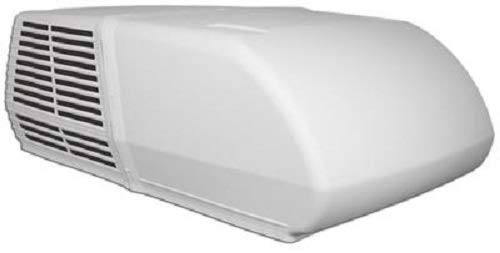
The brute-force choice when only the maximum 15,000 BTU/h cooling output will do — while sitting lower on your roof than taller units.
Coleman-Mach has a long reputation in the RV AC world, and the MACH 15 delivers the highest available 15,000 BTU/h cooling output from a medium-profile shroud. That means it sits lower on your roof than a bulky top-unit but still pushes serious cold air. The rotary scroll compressor is known for durability and smooth operation, and the textured white shroud resists weather better than glossy plastic. One buyer with a 31-foot Airstream says it works great and that installation is straightforward — the hardest part is getting the unit onto the roof, which typically takes three people.
Notable warnings from buyers: the shroud feels a bit flimsy, and one owner found two of three compressor mounts unattached due to defective hardware. They had to drill and zip-tie the compressor in place, which is unacceptable in a four-figure product. The unit runs on a pre-filter and has an estimated efficiency of 12.5 BTU/watt. It is cooling-only with remote control, and it sits about 4 feet from a sleeper’s head in a non-ducted setup, so the noise is audible — something to consider if you are a light sleeper compared to the quieter TURBRO.
Raw Cooling Power
- 15000 BTU/h rated — highest output in its class
- Medium-profile design stays lower on the roof than taller units
- Rotary scroll compressor for steady, reliable operation
- Familiar Coleman-Mach ecosystem for parts and service
Quality Concerns
- Multiple buyers reported cosmetic or mounting defects from packaging
- Shroud feels cheap relative to the premium price point
- Cooling-only — no heat function of any kind
- Noise is audible from a nearby sleeping area in non-ducted setups
Best for pure cooling: if your RV bakes in direct sun and you want the absolute coldest output, the Coleman-Mach delivers. Just inspect the unit immediately for damage — and plan on using a separate heater.
6. FOGATTI RV Air Conditioner Non-Ducted 15000BTU with Heat Strip
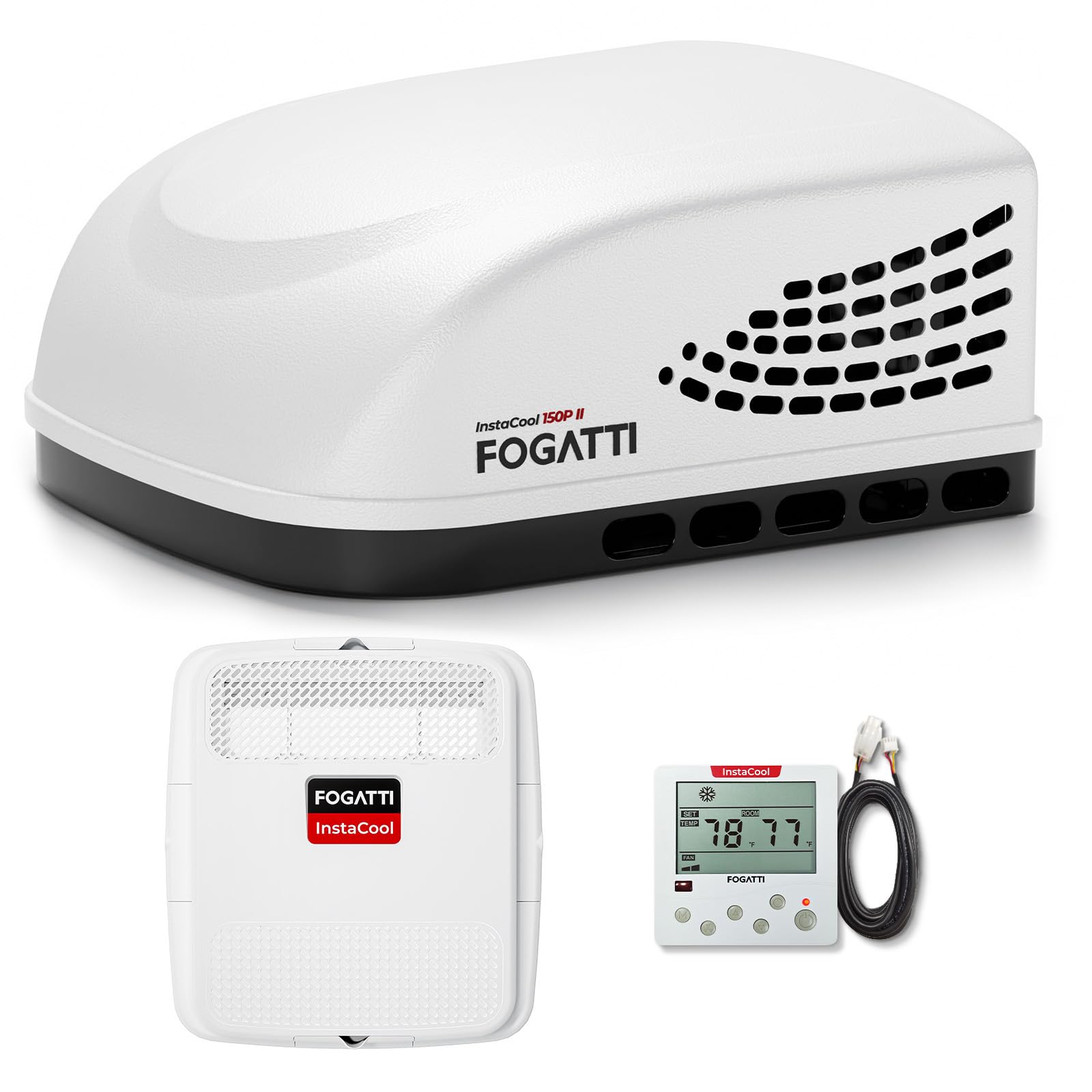
Tiny energy appetite — it uses 578 Kilowatt Hours per year, 8.5 times fewer than the TURBRO’s 4905.6 Kilowatt Hours.
The FOGATTI’s most eye-catching spec is its Annual Energy Consumption of 578 Kilowatt Hours, versus the TURBRO’s 4905.6 Kilowatt Hours. That difference matters if you power your RV on solar or a small generator. It packs 15,000 BTU of cooling and a 1500W built-in heating strip into a unit that fits a standard 14″ x 14″ roof opening — no cutting required for older RVs. The InstaCool Technology pushes cold air fast, and the UV-resistant ABS shell resists sun damage and cracking.
Buyers who swapped out a Dometic say it is “supper quiet” and the install is easy, though getting the unit onto the roof is always the hard part. One Texas owner with a 28-foot RV says it cools well and runs quietly. But there is a serious reliability black mark: one verified buyer wrote, “Had this unit installed by a certified technician. The blower motor is inoperable.” A second buyer had the same blower motor failure. That is a worrying pattern for a unit in this price range. The unit also needs both 115V AC and 12V DC power, which is something to plan for if your RV is not pre-wired for 12V at the roof.
class-leading Efficiency, Questionable Durability: If your top priority is running on a small generator or solar system, the FOGATTI is the clear choice. But the blower motor complaints suggest you should buy from a source with a solid return policy, and install it before your return window closes so you can test it thoroughly.
Pick this if: your generator is tiny or you rely on solar — the 578 kWh/year consumption is the standout feature of this whole list.
7. VEVOR RV Air Conditioner, 15000 BTU Non-Ducted Rooftop Unit, 65 dB
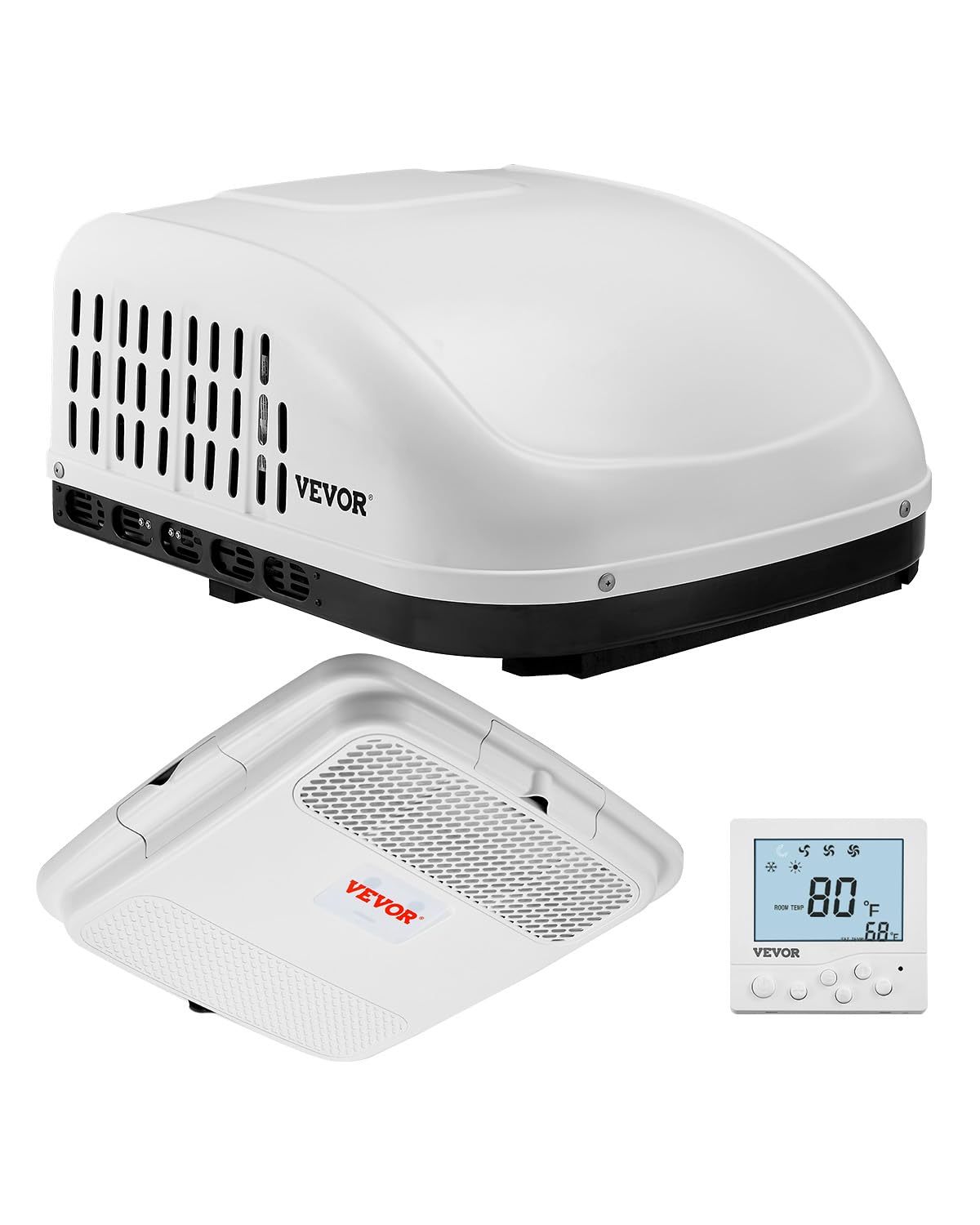
An entry-level price for a full 15,000 BTU rooftop system — with some risk baked in, customers note.
The VEVOR offers an entry-level price in this lineup for a fully self-contained 15K BTU rooftop unit, and it comes with a complete installation kit including the air distribution box and mounting hardware. It claims to cool spaces up to 129.1 sq ft, and buyers confirm it cools “extremely well” once properly installed. The three operating modes (Auto, Cooling, 3-Speed Fan) are straightforward, and the ductless design with a 14.25″ x 14.25″ opening makes for a relatively straightforward roof mount. The EPP material shell provides good insulation to maintain the temperature inside the RV.
The 65 dB noise level is the highest on this list — noticeably louder than the TURBRO’s 52 dB or the RecPro’s 55.4 dB. More concerning, a verified buyer reported that after seasonal storage, the unit “runs 30 seconds cold then blows hot air only; compressor never restarts.” The same review notes the return period had expired and no support was available. Another buyer had a default Celsius display that required a hidden button press to fix. These failure stories are a cautionary tale: the up-front savings can evaporate fast if the compressor gives out.
Budget-Friendly but Risky: For the price, the VEVOR is tempting if you need a quick cool-down for a smaller RV. But the 65 dB noise and a handful of failure reports (compressor lockout after storage) mean this is best treated as a temporary solution or a secondary unit. Test it thoroughly before the return window closes.
Consider this if: budget is the absolute top priority and you are comfortable rolling the dice on reliability. The performance when it works is genuine.
Avoid if: quiet operation matters to you or you plan to store the RV between seasons — the compressor restart issue appears real.
Understanding the Specs
Noise Level (dB)
The decibel rating tells you how loud the air conditioner will be right above your head. A 52 dB unit (TURBRO) sounds like a normal conversation and is fine for sleeping. A 65 dB unit (VEVOR) is closer to a TV at medium volume and may be annoying if the AC is over the bed. The difference between 52 dB and 65 dB is not small — every 10 dB doubles the perceived loudness.
Annual Energy Consumption (kWh)
This number estimates how many kilowatt-hours the unit uses over a year of normal operation. The FOGATTI is listed at 578 Kilowatt Hours, while the TURBRO is listed at 4905.6 Kilowatt Hours. On a generator or solar system, a lower kWh figure means you can run the AC longer on the same fuel or battery capacity. The trade-off is that more efficient units often cost more upfront.
FAQ
Will a 15000 BTU RV air conditioner fit my existing roof opening?
Can a 15000 BTU unit run on a 20-amp or 30-amp RV electrical system?
What is the difference between a heat strip and a heat pump in an RV AC?
Why do some RV AC units need a 12V DC wire and not just 120V AC?
How much noise is normal for a rooftop RV air conditioner?
Can I install a 15000 BTU RV air conditioner myself?
Is a ducted or non-ducted RV air conditioner better?
How long does a rooftop RV air conditioner typically last?
Final Thoughts: The Verdict
For most buyers, the 15000 btu rv air conditioner winner is the TURBRO because it delivers the quietest operation (52 dB) and combines cooling, heating, and smart controls in one package. If you want a true heat pump for year-round comfort, grab the RecPro. And for the lowest energy draw on a small generator or solar setup, the standout is the FOGATTI with its 578 kWh annual consumption.
How We Picked
We do not accept paid placement. Every pick is matched to a real buyer and a real use-case; we do not hands-on test units.
Sources & Methodology
Specifications: manufacturer listings and product documentation. Review insights: verified customer reviews, as of July 2026. Pricing: not shown on this page (it changes often); check the current price via the retailer link.
As an Amazon Associate, Gadgets Feed earns from qualifying purchases. This does not affect which products we feature.
Product prices and availability are accurate as of the date/time indicated and are subject to change. Any price and availability information displayed on Amazon at the time of purchase will apply to the purchase of this product. As an Amazon Associate I earn from qualifying purchases.
CERTAIN CONTENT THAT APPEARS ON THIS SITE COMES FROM AMAZON. THIS CONTENT IS PROVIDED "AS IS" AND IS SUBJECT TO CHANGE OR REMOVAL AT ANY TIME.
Amazon and the Amazon logo are trademarks of Amazon.com, Inc. or its affiliates.