
The 16:9 aspect ratio is the universal canvas of modern computing — it powers your spreadsheets, fuels your gaming sessions, and streams your favorite content without the letterboxing that plagues ultrawide panels. But not every 16:9 monitor delivers the same experience; the gap between a bargain-bin office display and a calibrated creative powerhouse is measured in refresh rate, color gamut, and ergonomic flexibility.
I’m Min — the co-founder and writer behind Gadgets Feed. I’ve spent the last several weeks analyzing panel technologies, contrast ratios, and connectivity suites across dozens of 16:9 monitors to separate genuine performance from marketing noise.
The real challenge is finding the right panel for your specific workflow — whether you’re editing video in 4K, chasing high-fps targets in competitive shooters, or simply upgrading your home office. This guide cuts through the spec sheets to deliver the definitive verdict on best 16:9 monitor picks for every serious use case.
How To Choose The Best 16:9 Monitor
A 16:9 monitor is the standard for a reason — it balances horizontal screen real estate with vertical readability. But within that familiar shape, panel technology, resolution, and refresh rate define whether a monitor elevates your work or merely displays it. The right choice depends on what you’re actually doing with your screen time.
Resolution: Pixel Density Dictates Clarity
1080p at 27 inches yields roughly 82 pixels per inch — acceptable for gaming on a budget, but text appears soft when reading documents or code. 1440p (QHD) at 27 inches lands at 109 PPI, the sweet spot for sharp text without the GPU demands of 4K. True 4K UHD at 27 inches delivers 163 PPI, giving you razor-sharp fonts and immense desktop real estate, though you’ll need scaling at typical viewing distances.
Panel Technology: IPS vs OLED vs QD-OLED
IPS remains the workhorse of the 16:9 world — wide viewing angles, good color accuracy, and affordable pricing. OLED displaces it with infinite contrast ratios and per-pixel black levels, at the cost of lower peak brightness and potential burn-in risk. QD-OLED layers quantum dots over the OLED emissive layer, boosting peak brightness to 1000 nits and expanding color volume to over 100% DCI-P3, making it the current king of HDR performance in a 16:9 form factor.
Refresh Rate and Adaptive Sync
60Hz is the minimum for general office work; 100Hz-120Hz brings perceptible smoothness to scrolling and casual gaming. 180Hz-240Hz is the competitive gaming sweet spot, where the difference between frames narrows to less than 5.5ms. Ensure your chosen monitor supports Adaptive Sync via AMD FreeSync or Nvidia G-Sync to eliminate screen tearing without the input lag penalty of V-Sync.
Quick Comparison
On smaller screens, swipe sideways to see the full table.
| Model | Category | Best For | Key Spec | Amazon |
|---|---|---|---|---|
| Dell 27 Plus 4K (S2725QS) | Premium | 4K Productivity | 120Hz / 1500:1 Contrast | Amazon |
| ASUS ROG Swift OLED (PG32UCDM) | High-End | Enthusiast Gaming | 4K 240Hz QD-OLED | Amazon |
| ASUS ROG Strix (XG32UCG) | Performance | Dual-Mode Gaming | 4K 160Hz / FHD 320Hz | Amazon |
| AOC Q27GAZDV | Mid-Range | OLED on a Budget | 240Hz QD-OLED | Amazon |
| Alienware AW2725DM | Premium | Competitive Gaming | 180Hz / 1ms GtG | Amazon |
| INNOCN 27C1U-D | Mid-Range | USB-C All-in-One | 4K / 65W USB-C | Amazon |
| LG 27US500-W | Mid-Range | Creative Pros | 4K IPS / DCI-P3 90% | Amazon |
| Acer Nitro KG271U | Value | Budget 1440p Gaming | 180Hz / 0.5ms MPRT | Amazon |
| Dell SE2725HM | Budget | Home Office Basics | 1080p / 100Hz | Amazon |
In‑Depth Reviews
1. Dell 27 Plus 4K Monitor (S2725QS)

The Dell S2725QS hits a rare triple-point: 4K resolution, a 120Hz refresh rate, and a premium ergonomic stand with height, pivot, swivel, and tilt adjustments. The IPS panel delivers 350 nits of brightness and a 1500:1 contrast ratio — noticeably deeper blacks than the standard 1000:1 IPS panels found at lower price tiers.
Dell’s ComfortView Plus reduces blue light emissions to under 35% without washing out color accuracy, making this monitor suitable for eight-hour editing sessions and late-night browsing alike. The built-in speakers are a genuine upgrade over previous Dell generations, offering better frequency response and higher volume output than the tinny drivers typically baked into office displays.
The included HDMI 2.1 cable supports full 4K 120Hz over a single connection, and AMD FreeSync Premium handles tear-free variable refresh rate operation. The 0.03ms response time is a marketing figure — real-world motion handling is clean for productivity and casual gaming, though competitive shooters will want a faster IPS or OLED panel.
Why it’s great
- 4K at 120Hz with 1500:1 native contrast
- Full ergonomic stand included
- ComfortView Plus without color shift
Good to know
- Minor ghosting visible in fast-paced games
- Matte coating shows slight grain on white backgrounds
- 300 nits limits HDR impact
2. ASUS ROG Swift OLED PG32UCDM

The PG32UCDM is the current ceiling of 16:9 monitor performance. Its 32-inch QD-OLED panel produces absolute blacks, 1000-nit peak brightness in HDR highlights, and 99% DCI-P3 color coverage straight out of the box. The 240Hz refresh rate combined with a 0.03ms GtG response time makes motion clarity effectively instantaneous — no ghosting, no overshoot, no perceivable persistence.
ASUS has implemented a custom heatsink, graphene film, and advanced airflow design to manage the thermal load that accelerates OLED burn-in. The monitor prompts a pixel refresh cycle every eight hours of cumulative use, and the three-year warranty explicitly covers burn-in — a critical confidence signal for buyers worried about OLED longevity in a desktop environment.
The glossy panel finish is a deliberate choice: it eliminates the hazy grain common to matte OLEDs and preserves the full contrast and color volume that makes QD-OLED special. Reflections are manageable in typical indoor lighting. The USB-C port delivers 90W of power delivery, making it a true single-cable solution for modern laptops.
Why it’s great
- Reference-grade HDR with 1000-nit peaks
- 240Hz OLED motion clarity
- Burn-in warranty included
Good to know
- Glossy finish reflects bright windows behind you
- 240Hz demands a high-end GPU to utilize
- Text fringing visible on white backgrounds at close distance
3. ASUS ROG Strix XG32UCG
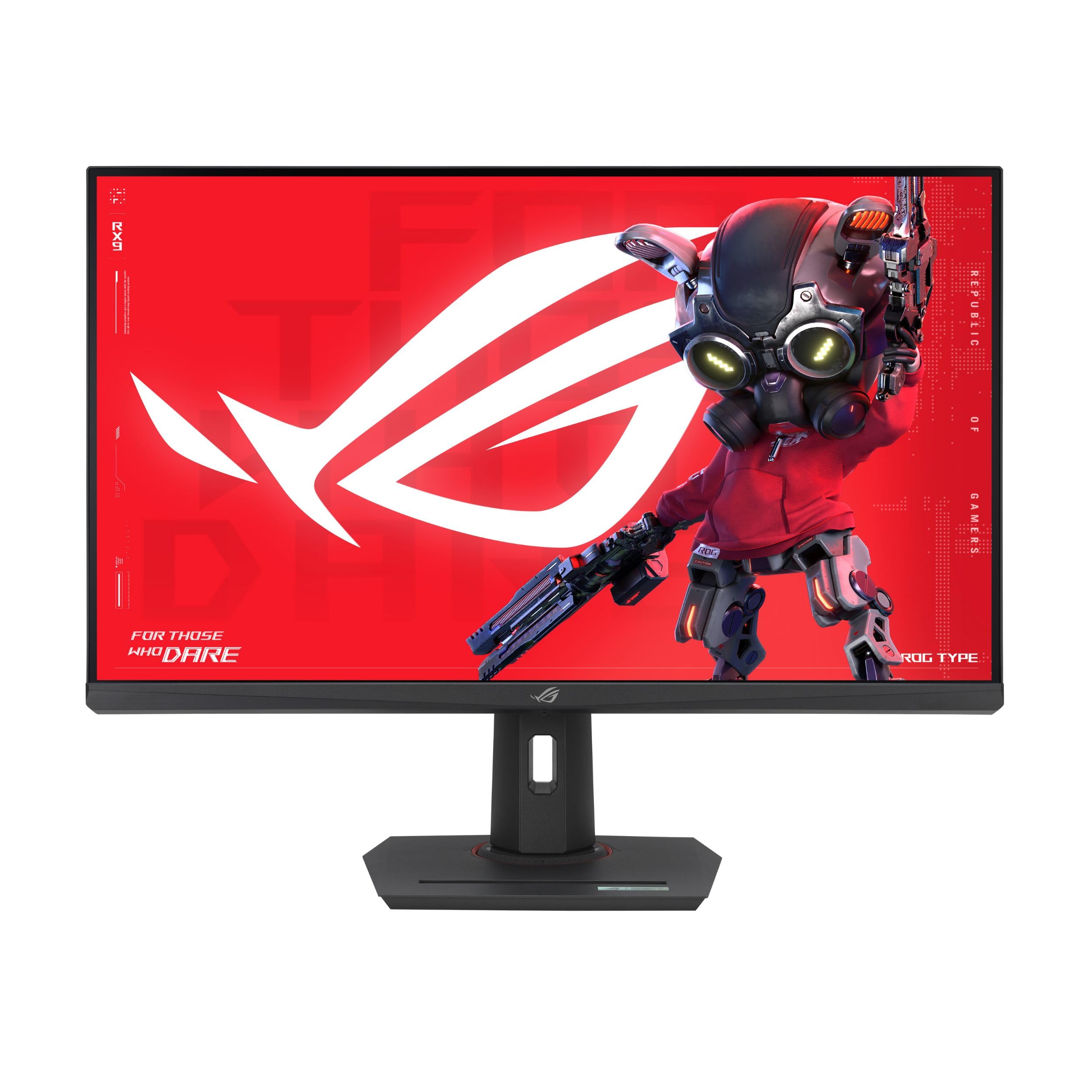
The XG32UCG solves a unique problem: how to get high pixel density for desktop work and maximum frame rates for competitive gaming without buying two monitors. At the press of a button, it switches from 4K 160Hz to 1080p 320Hz. The 32-inch Fast IPS panel with a 0.3ms response time delivers 95% DCI-P3 coverage and VESA DisplayHDR 600 certification.
ASUS Extreme Low Motion Blur Sync (ELMB SYNC) operates simultaneously with variable refresh rate, a rarity among IPS gaming monitors. The semi-gloss coating strikes a balance between anti-glare and image clarity that sits above most matte panels. The tripod socket on top of the stand is a thoughtful addition for streamers who mount a webcam or microphone directly to the display.
The USB-C port supports DisplayPort Alt Mode, making it compatible with modern laptops, though it lacks power delivery beyond basic charging. The three-year warranty includes the backlight, and the DisplayWidget Center software allows mouse-based OSD adjustment without reaching for the joystick.
Why it’s great
- Dual mode eliminates compromise between productivity and esports
- ELMB SYNC works with adaptive sync
- Full ergonomic stand with great stability
Good to know
- USB-C lacks power delivery
- 32-inch 1080p mode looks soft
- No built-in speakers
4. AOC 27 Inch QD-OLED Gaming Monitor (Q27GAZDV)
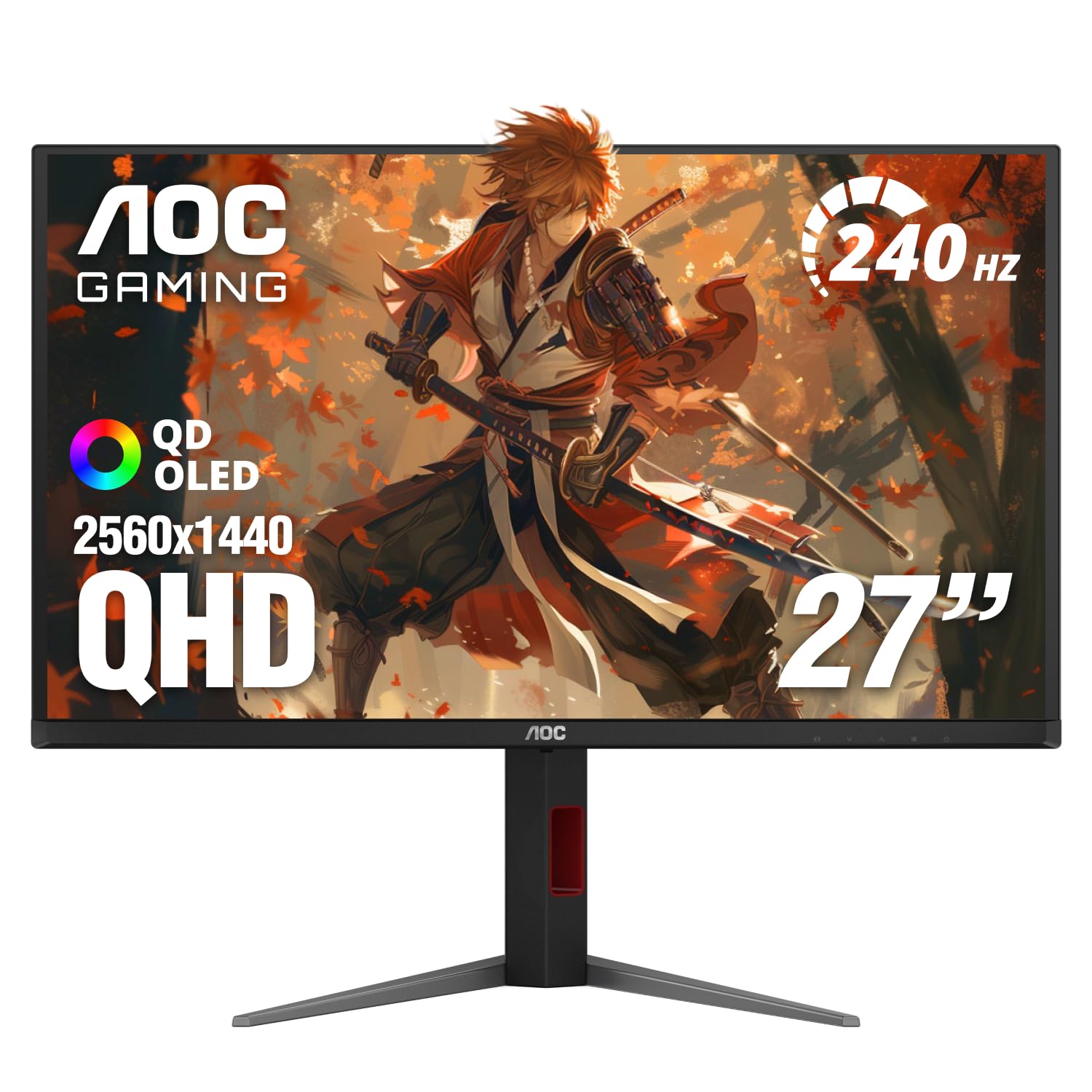
The Q27GAZDV brings QD-OLED technology to a 27-inch 1440p format at a price that undercuts comparable offerings from Samsung and ASUS by a significant margin. The 240Hz refresh rate and 0.03ms response time are identical to panels costing hundreds more, and the 1,500,000:1 contrast ratio delivers the same infinite blacks and per-pixel luminance control that defines the OLED category.
AOC includes both a certified Ultra High Speed HDMI cable (48Gbps, capable of 8K60 or 4K120) and a DisplayPort cable in the box. The stand provides height, tilt, swivel, and pivot adjustments, plus a USB 3.2 hub with three downstream ports. The pixel refresh utility is disabled by default — you must manually run it from the OSD for optimal burn-in protection.
Out-of-box color requires adjustment; a brownish hue tints the default profile, and the Gamer 2 mode still carries a slight green shift. Calibration resolves this, but buyers expecting plug-and-play accuracy should budget time for tuning. Large bezels on the top and sides give it a noticeably chunkier profile than premium-brand alternatives.
Why it’s great
- True QD-OLED image quality at a breakthrough price
- Full ergonomic stand included
- Includes high-bandwidth HDMI 2.1 cable
Good to know
- Color calibration required out of box
- Thick bezels compared to competitors
- No built-in speakers
5. Alienware 27 Gaming Monitor (AW2725DM)

The AW2725DM pairs a 27-inch QHD panel with a 180Hz refresh rate and native G-Sync compatibility, making it a straightforward recommendation for PC gamers who want adaptive sync without the variable results of FreeSync-through-G-Sync compatibility. The IPS panel delivers 95% DCI-P3 color coverage and VESA DisplayHDR 400 certification.
Build quality is a standout — the stand is sturdy, the adjustment range is generous, and the anti-glare coating avoids the aggressive grain that makes some matte panels look dirty. The 1ms GtG response time handles fast motion cleanly, with no visible overshoot in the overdrive settings. HDMI 2.0 caps the refresh rate at 144Hz over that interface; the full 180Hz requires DisplayPort 1.4.
No speakers and no headphone jack are notable omissions at this price point. The lack of USB-C means laptop users need an HDMI or DisplayPort dongle. But for a pure gaming-focused 16:9 monitor that prioritizes smooth motion and color accuracy, the AW2725DM delivers a cohesive package.
Why it’s great
- Native G-Sync for tear-free gaming
- Excellent build quality and stable stand
- Accurate colors with wide gamut coverage
Good to know
- No built-in speakers or headphone jack
- No USB-C connectivity
- 180Hz requires DisplayPort, not HDMI
6. INNOCN 27C1U-D

The INNOCN 27C1U-D is built for the MacBook and USB-C laptop crowd, offering a single-cable connection that delivers 4K video and 65W of power delivery simultaneously. The IPS panel covers 1.07 billion colors through 8-bit+FRC dithering, with Delta E under 2 for factory-calibrated accuracy suitable for photo editing and design work.
The stand supports height, swivel, pivot, and tilt adjustments — a rare find at this price bracket. VESA 75×75 compatibility means you can swap to an arm if desk space is tight. The HDR400 certification pushes peak brightness to 400 candela per square meter, enough to add punch to HDR content without the luminance range of a premium HDR display.
The built-in speakers are barely adequate for system alerts and should not be relied on for media consumption. The monitor exhibits a slightly slow wake-from-sleep behavior when connected to MacBooks, sometimes requiring a disconnect and reconnect of the USB-C cable. These are manageable compromises for the price-to-spec ratio the 27C1U-D achieves.
Why it’s great
- Single USB-C cable for video and 65W charging
- Factory color calibration under Delta E 2
- Full ergonomic stand included
Good to know
- Slow wake from sleep with MacBooks
- Weak built-in speakers
- Menu joystick is unintuitive
7. LG 27US500-W Ultrafine Monitor
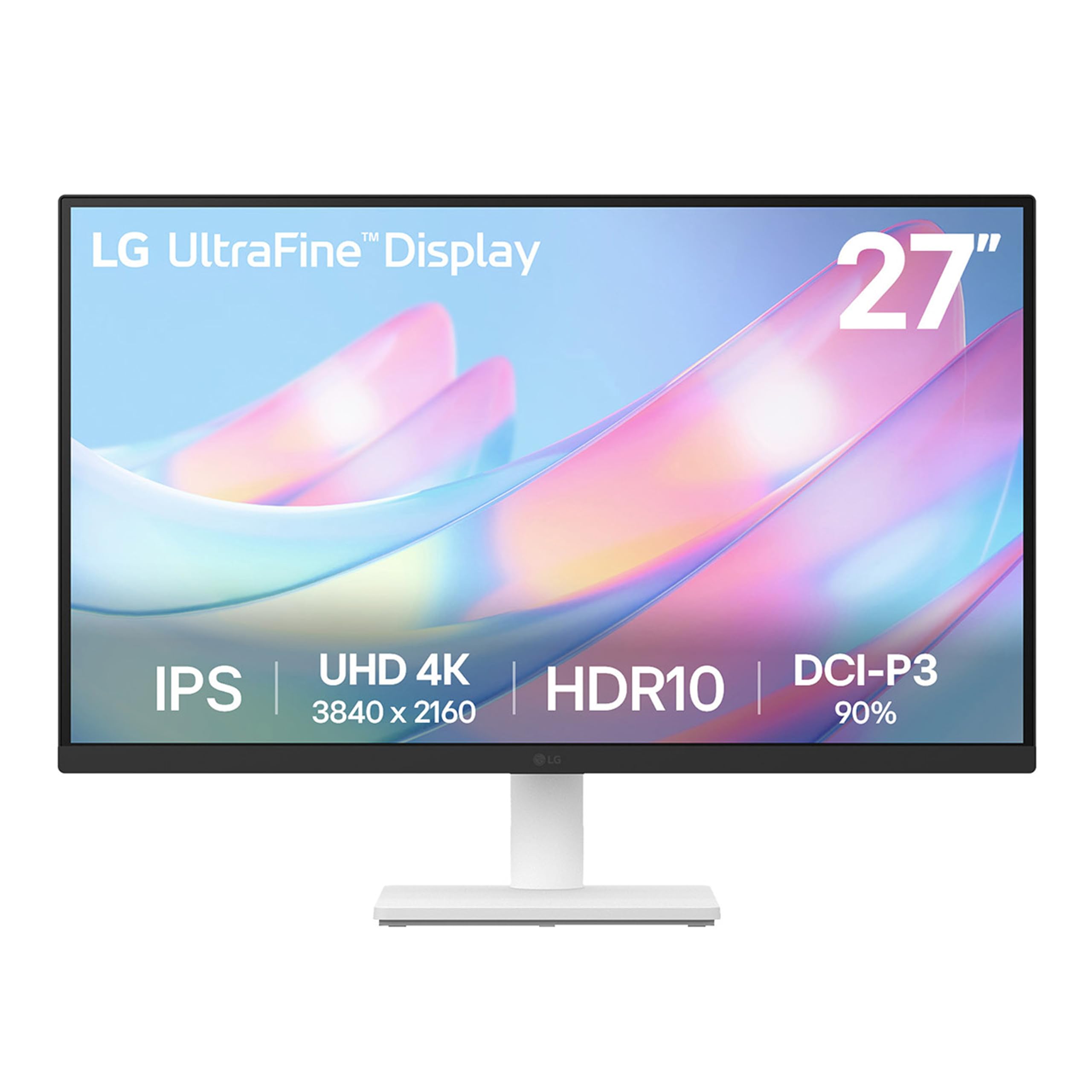
The LG 27US500-W brings a 27-inch 4K IPS panel to the table with a focus on color-critical work. Its 90% DCI-P3 coverage ensures wide gamut accuracy for video and photo editing, and the 1000:1 contrast ratio is typical for IPS but consistent across the panel surface. The borderless design maximizes screen space in a compact footprint.
OnScreen Control software lets you split the screen into multiple zones and adjust monitor settings via mouse clicks rather than fumbling with OSD buttons. Reader Mode reduces blue light for extended reading sessions, and Flicker-Safe technology eliminates PWM flicker at all brightness levels, reducing eye fatigue during long work hours.
The stand offers tilt adjustment only — no height or swivel — which may force an aftermarket VESA arm purchase for ergonomic setup. The white chassis and cable assembly are polarizing; the monitor body uses a black bezel despite the white stand, creating a visual mismatch that bothers some users. USB connectivity is absent beyond the upstream cable, limiting peripheral attachment.
Why it’s great
- Excellent 4K clarity for text and graphics
- Wide DCI-P3 color gamut coverage
- Flicker-Safe and Reader Mode reduce eye strain
Good to know
- Tilt-only stand limits ergonomics
- White stand and cable clash with black bezel
- No USB hub or USB-C power delivery
8. Acer Nitro KG271U
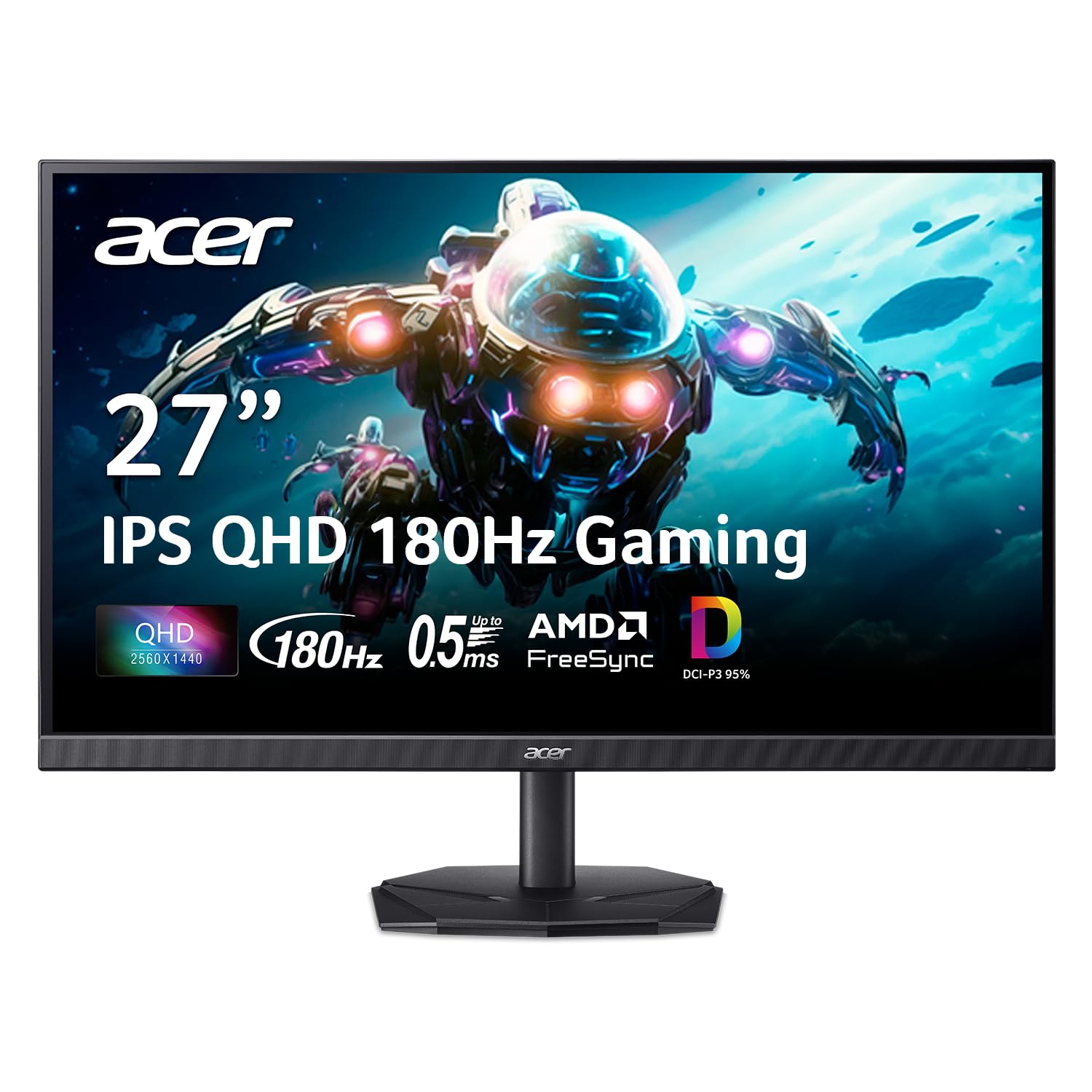
The KG271U delivers 27-inch QHD resolution and a 180Hz refresh rate at a price point that undercuts almost every competitor. The IPS panel covers 95% DCI-P3, making colors more vibrant than typical budget gaming monitors, and the 0.5ms MPRT response time keeps motion blur under control for fast-paced titles like Apex Legends and Overwatch 2.
AMD FreeSync Premium handles variable refresh rate duties, and the inclusion of built-in speakers — even if they sound thin and lack bass — adds convenience for console or casual use. The zero-frame design minimizes bezel distraction in multi-monitor setups, and the ports include two HDMI 2.0 and one DisplayPort 1.2, enough for a PC and two consoles.
The stand is the clear weak point. It provides tilt-only adjustment, and the construction is lightweight to the point of instability — the monitor wobbles noticeably when typing on a standard desk. VESA 100×100 mounting is the recommended path for serious setups. Color uniformity across the panel shows minor edge variance, typical for the price tier.
Why it’s great
- Exceptional 1440p 180Hz value
- Wide DCI-P3 95% color gamut
- Includes passable built-in speakers
Good to know
- Flimsy stand causes wobble
- Tilt-only adjustment
- Panel uniformity shows edge variance
9. Dell 27 Monitor SE2725HM
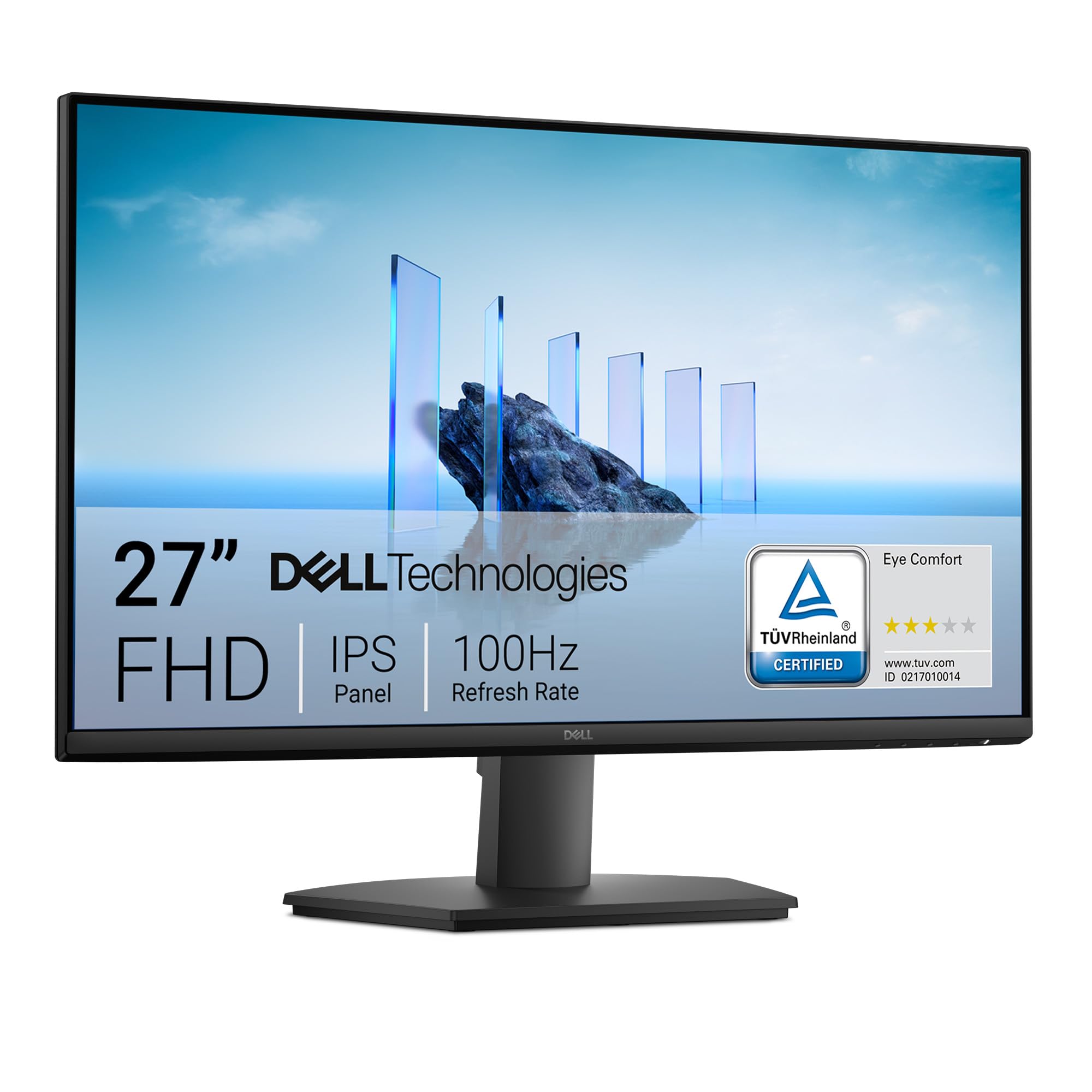
The SE2725HM proves that a budget monitor doesn’t have to feel cheap. The 27-inch 1080p IPS panel runs at 100Hz, which is enough to make Windows desktop navigation and web scrolling feel visibly smoother than a standard 60Hz office monitor. The 16.7 million color count with 72% NTSC gamut keeps images from looking washed out.
Dell’s ComfortView Plus technology reduces harmful blue light emissions to TÜV Rheinland 3-star certification levels without applying a yellow filter, preserving color accuracy for all-day use. The small-footprint design with a built-in power supply and integrated cable holder keeps the desk clean. The dead-center 100x100mm VESA mount ensures balanced weight distribution on monitor arms, unlike some budget displays with offset mounting points.
The 250-nit brightness is adequate for office lighting but struggles near windows. The tilt-only stand and lack of USB ports are expected at this tier. HDMI and VGA inputs limit modern connectivity; there is no DisplayPort. For users seeking a reliable, consistent 16:9 monitor for spreadsheets, document editing, and light media consumption, the SE2725HM delivers enterprise-level uniformity at a consumer price.
Why it’s great
- 100Hz refresh rate for smoother daily use
- ComfortView Plus reduces blue light without color shift
- Centered VESA mount for balanced arm attachment
Good to know
- HDMI and VGA only — no DisplayPort
- 250 nits is dim for bright rooms
- No built-in speakers or USB hub
FAQ
Is 4K worth it on a 27-inch 16:9 monitor?
Should I worry about OLED burn-in on a monitor used for productivity?
What is the difference between G-Sync and FreeSync on a 16:9 monitor?
Final Thoughts: The Verdict
For most users, the best 16:9 monitor winner is the Dell 27 Plus 4K S2725QS because it delivers 4K sharpness, a 120Hz refresh rate, and a fully adjustable stand at a price that undercuts most 4K 60Hz professional monitors while adding smooth motion for casual gaming. If you want uncompromising HDR and competitive-grade motion clarity, grab the ASUS ROG Swift OLED PG32UCDM. And for single-cable USB-C convenience with your MacBook, nothing beats the INNOCN 27C1U-D.