
Smartphone makers have spent a decade pushing megapixel counts into the stratosphere, yet the 16-megapixel sensor refuses to fade away because it strikes a brutal, honest balance: enough resolution for crisp, large prints and deep crops without the noise penalty that plagues cramming more photosites onto the same tiny chip. The real contest in this specific category isn’t pixel count—it’s everything else the camera wraps around that 16MP sensor, from optical zoom reach and stabilization quality to real-world low-light performance that no spec sheet can fake.
I’m Min — the co-founder and writer behind Gadgets Feed. I’ve spent countless hours cross-referencing lab-style sensor tests with verified buyer experiences to surface which 16MP bodies actually deliver sharp, usable images when the shooting conditions stop being polite.
What follows is a compact, no-nonsense breakdown of the only nine cameras worth your attention in this space, each judged on the specific metrics that separate a keeper from a regret. Whether you need underwater toughness, 83x telephoto reach, or pocket-sized travel versatility, this guide dissects the absolute best 16 megapixel camera options available right now.
How To Choose The Best 16 Megapixel Camera
Not all 16MP cameras are equal—the sensor is just the foundation. What makes one model capture stunning detail while another creates muddy, grainy files comes down to the lens optics, image processor, stabilization system, and how the camera handles real-world lighting. Here are the three specs that translate directly to better photos.
Optical Zoom vs. Digital Zoom: The Non-Negotiable Divide
Digital zoom is marketing fluff—it merely crops and enlarges pixels, destroying detail. Optical zoom uses the lens’s physical glass to magnify the image before it reaches the sensor, preserving every bit of that 16MP resolution. The range here is enormous: a 4x zoom (27-108mm equivalent) covers casual everyday shots, while 25x to 83x zooms (600mm to 2000mm equivalent) pull in distant wildlife or moon craters. If you plan to shoot anything beyond arm’s reach, prioritize the optical zoom number above all else.
Image Stabilization: What Keeps Long Zooms Usable
At 600mm or higher, even a heartbeat becomes visible camera shake. Optical Image Stabilization (OIS) physically shifts lens elements to counteract hand movement, while sensor-shift stabilization moves the sensor itself. Both are far superior to electronic stabilization, which introduces software artifacts. Check the stabilization type on the spec sheet—OIS or sensor-shift is mandatory for any camera with 20x zoom or more, or you will get blurry photos outside of bright noon sunlight.
Real-World Low-Light Performance and Aperture
The aperture range (written as f/3.3-f/6.5, for example) determines how much light reaches the sensor. A wider maximum aperture like f/2.8 gathers more light, allowing faster shutter speeds and lower ISO in dim conditions. Most superzoom bridge cameras have variable apertures that narrow as you zoom in, which means low-light telephoto shots demand a tripod or exceptional stabilization. For indoor, dusk, or concert photography, prioritize a camera with a brighter starting aperture and a sensor that handles ISO 800-1600 without excessive grain.
Quick Comparison
On smaller screens, swipe sideways to see the full table.
| Model | Category | Best For | Key Spec | Amazon |
|---|---|---|---|---|
| KODAK PIXPRO Astro Zoom AZ252 | Mid-Range | Everyday zoom versatility | 25x Optical Zoom (24-600mm) | Amazon |
| Kodak PIXPRO AZ255-BK | Mid-Range | Vlogging and video capture | 1080p Full HD, 25x Zoom | Amazon |
| Kodak PixPro Friendly Zoom FZ55 | Mid-Range | Compact everyday carry | 5x Optical Zoom, 28mm Wide | Amazon |
| Kodak PIXPRO AZ255 | Mid-Range | Detailed landscape and wildlife | 16MP CMOS, 25x Zoom, OIS | Amazon |
| Kodak PIXPRO WPZ2 | Mid-Range | Waterproof/adventure shooting | Waterproof 15m, Shockproof 2m | Amazon |
| Canon PowerShot SX530 HS | Premium | Long-range wildlife and sports | 50x Optical Zoom (24-1200mm) | Amazon |
| Nikon COOLPIX B500 | Premium | Versatile zoom with connectivity | 40x Zoom, Wi-Fi/NFC/Bluetooth | Amazon |
| Panasonic LUMIX TZ/ZS99 | Premium | Pocket travel and concert | 30x Leica Zoom, 4K Video | Amazon |
| Nikon COOLPIX P950 | Premium | Extreme superzoom and moon shots | 83x Optical Zoom (24-2000mm) | Amazon |
In‑Depth Reviews
1. KODAK PIXPRO Astro Zoom AZ252-BK 16MP Point & Shoot Digital Camera

The KODAK PIXPRO AZ252 earns the top spot because it delivers the most balanced package of reach and usability at a mid-range price point. Its 25x optical zoom (24-600mm equivalent) covers everything from wide landscapes to distant wildlife, while the Optical Image Stabilization keeps handheld shots sharp even when fully zoomed in—a feature that separates this model from cheaper alternatives that drop stabilization at longer focal lengths. The 16MP sensor produces files that handle cropping and moderate enlargement without the grain that plagues smaller sensors in this price tier.
The 3-inch LCD provides a clear composition view, and the 720p HD video recording is adequate for casual memories, though serious videographers will want the 1080p found on newer siblings. The AA battery system is a double-edged sword: it means you can swap batteries anywhere in the world without hunting for a charger, but alkaline AAs drain quickly, so investing in rechargeable NiMH cells is essential for full-day shooting. The 3-point autofocus system is basic but reliable in good light, and the f/3.7-f/6.2 aperture range performs best outdoors.
Buyers consistently praise the zoom clarity and ease of operation for recitals, parks, and family events. The primary frustration is the lack of USB connectivity for direct desktop transfers—you’ll need an SD card reader to offload files. For anyone wanting a versatile, no-fuss 16MP camera that doesn’t require a second mortgage, the AZ252 remains the smartest entry point into this category.
Why it’s great
- Optical Image Stabilization keeps 25x telephoto shots sharp
- AA batteries are globally replaceable; no proprietary charger needed
- 24mm wide end captures expansive scenes easily
Good to know
- 720p video only; no 1080p or 4K
- No USB data transfer without separate SD card reader
- Basic 3-point autofocus can struggle in low light
2. Canon PowerShot SX530 HS 16MP Digital Camera

The Canon PowerShot SX530 HS packs a staggering 50x optical zoom (24-1200mm equivalent) into a body that still fits in a jacket pocket, making it the ultimate tool for wildlife, sports, and concert photography where you cannot physically get closer. The 16MP High-Sensitivity CMOS sensor paired with the DIGIC 4+ image processor delivers clean images up to ISO 800, with usable output at ISO 1600 in a pinch. The 461,000-dot 3-inch LCD is sharp enough for critical focus checking, though it lacks a touchscreen or tilt mechanism.
Built-in Wi-Fi and NFC are genuine time-savers—you can transfer full-resolution images to your phone within seconds and post directly to social media without involving a computer. The 1.6 fps continuous shooting is slow by modern standards, so this is not an action sports camera, but the dedicated movie button makes 1080p Full HD recording effortless. The 9-point autofocus system is snappy in good light, though it hunts noticeably in dim conditions, especially when zoomed past 600mm.
Users consistently rave about the telephoto reach at this price, with many reporting sharp moon detail and wildlife shots at extreme distances when using a tripod and the 2-second delay timer. The absence of an SD card and manual in the box is a minor inconvenience well worth the trade-off for the optical reach. For photographers who need to see things invisible to the naked eye, the SX530 HS delivers value that few other 16MP cameras can match.
Why it’s great
- 50x optical zoom, equivalent to 24-1200mm
- Wi-Fi and NFC for instant phone transfers
- DIGIC 4+ processor handles ISO 800-1600 well
Good to know
- 1.6 fps burst rate is too slow for fast action
- Autofocus hunts in low light at long zoom
- No SD card or manual included in the box
3. Kodak PixPro Friendly Zoom FZ55 16MP Digital Camera
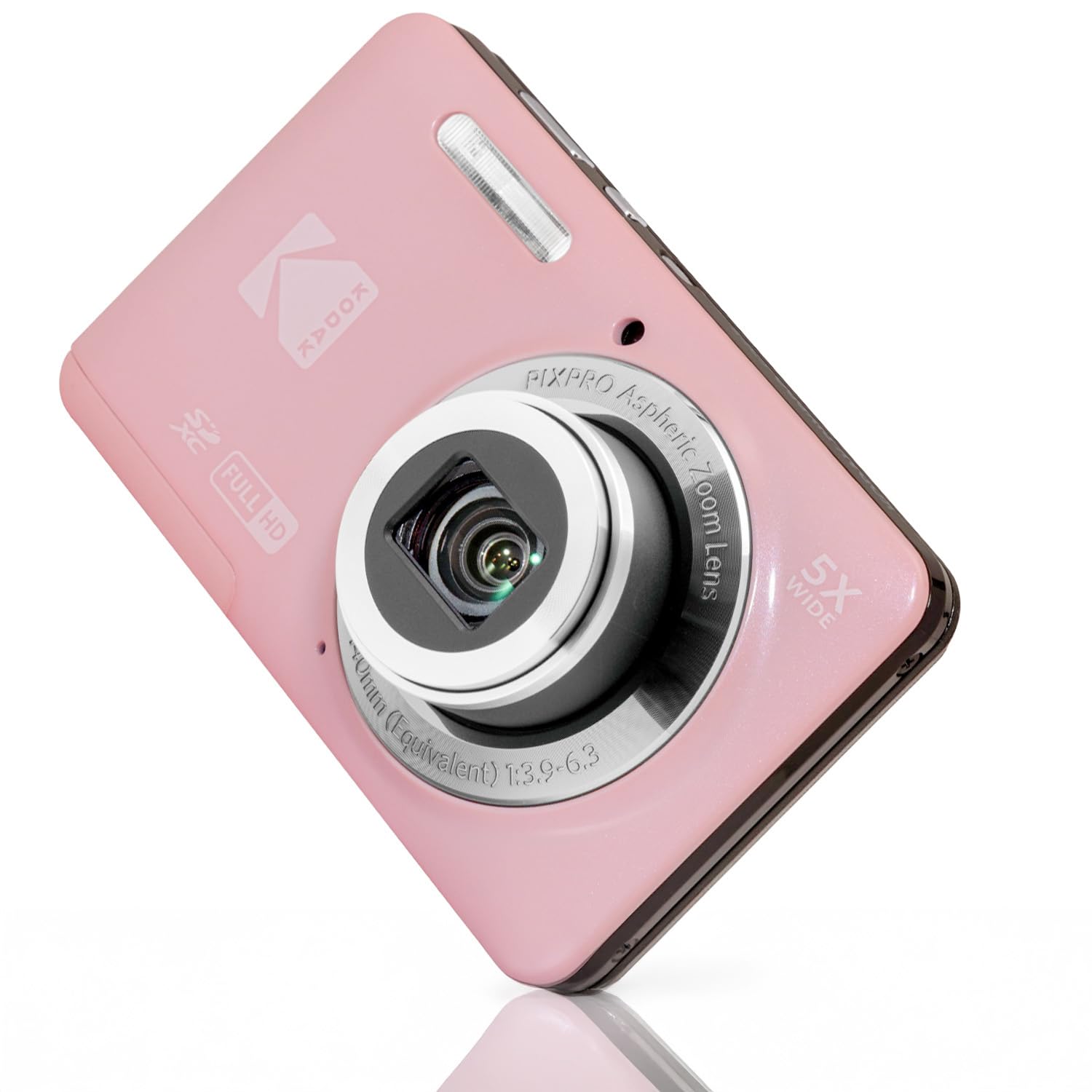
The Kodak PixPro FZ55 is the category’s champion of portability and simplicity, designed for users who want the distinct look and feel of a dedicated camera without the complexity of a superzoom bridge. Its 5x optical zoom (28-140mm equivalent) and 28mm wide-angle lens cover standard day-to-day subjects—group photos, landscapes, snapshots of kids—without the bulk that makes larger cameras get left at home. The 16MP CMOS sensor with 12-bit depth captures vibrant, print-ready images that buyers describe as having a desirable vintage aesthetic, especially with flash.
Smart features like face, smile, and blink detection automate the hardest part of people photography: timing the shutter to catch the perfect expression. The 1080p Full HD video recording produces smooth clips for social media, and the built-in rechargeable lithium-ion battery eliminates the hunt for AA alkalines. The macro mode focuses as close as 5cm, opening up creative food, flower, and product detail shots that larger lenses cannot achieve without separate accessories.
Beginner and teen users consistently praise the pocket size and the instant retro look of the photos, with many noting the FZ55 produces images comparable to higher-end cameras once settings are adjusted to the scene. The single-point autofocus and digital image stabilization mean this is not a low-light or fast-action tool, but for bright-weather casual shooting and social media content creation, the FZ55 is the most fun you can have with a 16MP sensor in your palm.
Why it’s great
- Ultra-compact and lightweight; slips into any bag pocket
- Face, smile, and blink detection simplify people photography
- Rechargeable lithium-ion battery eliminates AA swaps
Good to know
- Digital stabilization only; OIS would improve telephoto sharpness
- 5x zoom range is limited compared to bridge cameras
- Single-point autofocus struggles in low contrast scenes
4. Kodak PIXPRO AZ255 Digital Camera, 25x Optical Zoom, White

The Kodak PIXPRO AZ255 is essentially the AZ252’s more refined sibling, upgrading the video spec to 1080p Full HD while retaining the same 25x optical zoom (24-600mm equivalent) and 16MP CMOS sensor that made the original a bestseller. The optical image stabilization (OIS) remains the key differentiator at this price—it legitimately compensates for hand shake at full telephoto extension, turning shots that would be blurry with digital-only stabilization into usable images. The 9-point autofocus system is a meaningful improvement over the 3-point system of the AZ252, providing more accurate subject tracking even when your target is off-center.
The body runs on AA batteries, which is either a convenience or a frustration depending on your perspective: you can buy alkalines at any gas station globally, but expect to swap them frequently during heavy shooting. Rechargeable NiMH AAs are the recommended workaround, extending shooting time to a full day. The camera supports SD, SDHC, and SDXC cards up to 512GB, which is generous headroom for high-volume shooters. The 3-inch LCD is crisp and responsive, though it is fixed and not touch-sensitive.
Verified buyers consistently recommend the AZ255 for beginners wanting to learn manual exposure, aperture priority, and shutter priority without a massive financial commitment. The main criticism mirrors its predecessor: some units shipped with memory card compatibility quirks, specifically with KODAK-branded cards failing to format. Stick with SanDisk or Samsung cards and you avoid the issue entirely. For the price, this is the most complete zoom-centric 16MP package on the market.
Why it’s great
- 25x optical zoom with OIS for sharp handheld telephoto shots
- 1080p Full HD video upgrade over older models
- Supports SDXC cards up to 512GB for all-day shooting
Good to know
- AA batteries drain quickly; rechargeable NiMH cells are essential
- Some units refuse to format KODAK-branded memory cards
- Fixed LCD screen; no touch or tilt functionality
5. Kodak PIXPRO WPZ2 Rugged Waterproof Digital Camera

The Kodak PIXPRO WPZ2 is the only 16MP camera in this lineup that you can take snorkeling, kayaking, or to a dusty campsite without a second thought. Its waterproof rating reaches 15 meters (49 feet) and its shockproof rating survives drops up to 2 meters (6.56 feet), with full dustproofing that keeps sand and grit out of the lens mechanism. The 4x optical zoom (27-108mm equivalent) is modest compared to the bridge cameras in this guide, but it covers the wide-to-moderate telephoto range needed for underwater and adventure photography where getting close to your subject is usually an option.
The 16MP sensor with 12-bit depth captures detailed images in good light, and the digital image stabilization reduces shake in calm conditions—though you will need steady hands or a bright sunny day for sharp results underwater. The bundle includes a floating strap, which is a thoughtful addition for water use: drop the camera in a lake and it stays visible at the surface rather than sinking to the bottom. The 2.7-inch LCD is smaller than most competitors but remains readable in bright conditions, and the contrast-detection autofocus locks on reliably.
Snorkelers and youth group leaders consistently praise the WPZ2 for producing surprisingly vibrant underwater images and surviving repeated wet/dry cycles. The lack of included batteries is the only real inconvenience—you will need to supply your own AAs before your first outing. If your photography happens where phones fear to go, the WPZ2 is the only sensible choice in the 16MP category.
Why it’s great
- Waterproof to 15m and shockproof to 2m without a housing
- Floating strap prevents loss in water
- Dustproof construction handles sand and grit easily
Good to know
- 4x optical zoom is modest compared to bridge cameras
- Batteries are not included in the box
- Digital stabilization only; OIS would improve underwater shots
6. Kodak PIXPRO AZ255-BK 16MP Digital Camera, 25x Zoom

The Kodak PIXPRO AZ255-BK is the black variant of the AZ255 platform, offering identical optics and sensor performance with the same 25x optical zoom (24-600mm equivalent) and 16MP CMOS sensor. The 25-point autofocus system is significantly more capable than the 3-point or 9-point systems found on cheaper Kodak models—it tracks moving subjects across the frame more reliably, making this a better choice for photographing active kids, pets, or amateur sports from the sidelines. The 3-inch LCD provides a clear view, and the 1080p Full HD video recording at 30fps is smooth enough for vlogging and family memories.
The optical image stabilization (OIS) is the same effective system found on the AZ255, compensating for hand shake at full 600mm telephoto extension. The AA battery power system is consistent across the Kodak zoom lineup—rechargeable NiMH cells are the practical choice for extended shooting. The camera supports SD, SDHC, and SDXC memory cards, and the USB connection allows direct transfer to computers for archiving and editing. The body is reasonably compact for a 25x zoom bridge, though not pocketable.
Beginners and vloggers consistently report satisfaction with the ease of use and image quality in good lighting conditions. The macro mode is a standout feature, producing detailed close-ups that rival more expensive lenses. The primary complaints are the same as the AZ255: avoid KODAK-branded memory cards as they may not format, and AA battery life is short with standard alkalines. For a mid-range 16MP camera that balances zoom reach, stabilization, and video performance, the AZ255-BK is a solid all-rounder.
Why it’s great
- 25-point autofocus tracks moving subjects effectively
- 1080p Full HD video with one-touch recording
- OIS ensures sharp handheld shots at full zoom
Good to know
- AA batteries drain quickly with alkalines; NiMH recommended
- KODAK memory cards may fail to format
- No touchscreen or tilting LCD
7. Nikon COOLPIX B500 16MP Digital Camera

The Nikon COOLPIX B500 brings 40x optical zoom (22.5-900mm equivalent) to the 16MP category with steady lens-shift Vibration Reduction (VR) and a tilting 3-inch 921,000-dot LCD that makes low-angle and overhead compositions genuinely practical. The NIKKor ED glass lens reduces chromatic aberration at telephoto focal lengths, producing sharper images at the long end than many competitors with similar zoom specs. The 16MP sensor handles color reproduction with particular accuracy in reds and greens—a common weak point for budget superzooms that owners of previous Nikon Coolpix models have praised.
Built-in Wi-Fi, NFC, and Bluetooth Low Energy create a persistent connection to your smartphone, allowing remote shooting and instant image transfer without pairing each time. The 1080p Full HD video at 30fps is adequate for casual use, and the dedicated video button makes switching between photo and video seamless. The 7-point autofocus system is decent in bright conditions but can struggle with autofocus hunting in macro mode or low-brightness subjects, as noted by experienced users who recommend manual focus for close-up work.
Buyers consistently note that the B500 produces noticeably cleaner images than the Kodak AZ series in medium-light conditions, though the gap narrows in bright sunlight. The tilting LCD and connectivity features make this the most user-friendly option for sharing images on the go without involving a computer. The external flash compatibility is a bonus for enthusiasts wanting bounce flash, though the built-in flash suffices for casual use. For photographers who prioritize color accuracy and a tilting screen without breaking the premium barrier, the B500 is a compelling middle ground.
Why it’s great
- 40x optical zoom with lens-shift VR for sharp telephoto shots
- Tilting 921k-dot LCD for creative shooting angles
- Wi-Fi, NFC, and Bluetooth for seamless phone connectivity
Good to know
- Autofocus can hunt in macro and low-contrast scenes
- Batteries not included; requires 4 AA cells
- No 4K video—1080p only at 30fps
8. Panasonic LUMIX TZ/ZS99 Point and Shoot Camera

The Panasonic LUMIX TZ/ZS99 is the travel photographer’s dream 16MP camera because it packs a 30x Leica DC Vario-Elmar zoom (24-720mm equivalent) into a body that genuinely slides into a jeans pocket. The 16MP sensor produces images with exceptional color accuracy and dynamic range for its class, with buyers noting that minimal post-processing is required for natural-looking results. The 5-Axis HYBRID O.I.S. is the best stabilization system in this entire guide—it compensates for walking shake and minor hand movement at full zoom, allowing sharp handheld shots in situations where competitors would require a tripod.
The 4K video recording at 30fps is a genuine upgrade over the 1080p limit of other cameras in this roundup, and the 4K PHOTO mode captures 30fps bursts that can be extracted as 8MP stills—perfect for high-speed moments like a child scoring a goal or a bird taking flight. The tiltable 1,840k-dot touchscreen LCD is the highest-resolution display among the 16MP cameras reviewed here, with excellent visibility even in direct sunlight. Bluetooth 5.0 and the dedicated Send Image button make transferring files to your phone nearly instant.
Users consistently praise the stepped zoom feature that lets you jump between preset focal lengths (24, 28, 35, 50, 85, 105, 135, 200, 300, 400, 500, 600, 720mm) for precise framing, and the Lens Position Resume function that returns the zoom to your last-used focal length when you power back on—a thoughtful convenience for frequent shooters. The main trade-off is the f/3.3-f/6.4 aperture, which limits low-light performance compared to brighter-lens competitors, and some users report corner color aberration at wide apertures. For pocketable travel reach with premium build, the ZS99 is the undisputed king.
Why it’s great
- 30x Leica zoom in a genuinely pocketable body
- 5-Axis HYBRID O.I.S. is best-in-class for handheld stability
- 4K video and 4K PHOTO burst capture at 30fps
Good to know
- f/3.3-f/6.4 aperture limits low-light performance
- Corner color aberration visible at wide angles
- Menu system has a learning curve for new users
9. Nikon COOLPIX P950 Superzoom Digital Camera

The Nikon COOLPIX P950 is the extreme telephoto specialist of this lineup, with an 83x optical zoom that covers 24-2000mm (35mm equivalent)—a range that lets you photograph the moon’s craters in sharp detail from your bedroom window and capture individual leaves on a tree 500 meters away. The 16MP sensor is paired with Nikon’s contrast-detection autofocus system with 399 focus points, the most of any camera in this guide, providing extremely precise focus across the frame. The Dual Detect Optical Vibration Reduction is effective enough that many users report handheld moon and bird shots at full zoom that would be impossible with any other 16MP camera in this price range.
Built-in Bird and Moon modes are not marketing gimmicks—they optimize shutter speed, ISO, and exposure for these specific subjects, delivering detailed shots dialed in for their unique brightness characteristics. The 4K UHD video at 30fps captures super-telephoto footage with impressive clarity, and the rotating LCD screen makes awkward overhead or ground-level compositions practical without contorting your body. The raw file format support (NEF) gives advanced users the ability to pull maximum detail from the 16MP sensor in post-processing, correcting white balance and recovering shadow detail with much more flexibility than JPEG-only cameras.
Experienced users warn that the autofocus can fail on small, fast-moving birds at extreme zoom, but the manual focus ring on the lens barrel provides precise override. The 166x Dynamic Fine Zoom extends digital zoom beyond the optical range, but image quality degrades noticeably—stick to the 83x optical limit for best results. For anyone whose photography subject is always “too far away,” the P950 is the ultimate 16MP solution, delivering optical reach that rivals much more expensive super-telephoto SLR setups at a fraction of the cost and weight.
Why it’s great
- 83x optical zoom (24-2000mm) for extreme telephoto reach
- Dual Detect VR enables sharp handheld shots at 2000mm
- Bird and Moon modes optimize exposure for specific subjects
Good to know
- Autofocus can struggle with small, fast-moving subjects at extreme zoom
- Digital zoom beyond 83x degrades image quality significantly
- Larger and heavier than other bridge cameras in this guide
FAQ
Is 16 megapixels still enough for printing large photos?
Why do 16MP bridge cameras still use AA batteries?
Can I use a 16MP bridge camera for professional wildlife photography?
How do I choose between a 16MP point-and-shoot and my smartphone?
Do I need a tripod for a 16MP superzoom camera with image stabilization?
Final Thoughts: The Verdict
For most users, the best 16 megapixel camera is the KODAK PIXPRO Astro Zoom AZ252 because it delivers the most balanced mix of 25x optical zoom, optical image stabilization, and AA battery convenience at a mid-range price point—it is the camera that will reliably capture far-away subjects without demanding a premium budget. If you want pocket-sized travel versatility with 4K video and a Leica lens, grab the Panasonic LUMIX TZ/ZS99. And for extreme telephoto reach that lets you photograph the moon, distant wildlife, and stage performers from the back row, nothing beats the Nikon COOLPIX P950 with its 83x optical zoom and dedicated Bird/Moon modes.