
Our readers keep the lights on and my morning glass full of iced black tea. As an Amazon Associate, I earn from qualifying purchases.
Specs are compiled from manufacturer listings and verified buyer reviews and can change over time — please confirm the key details on the product page before buying.
Choosing a 165 Hz monitor is about one thing: making motion on your screen look easily smooth, whether you are lining up a headshot, editing a timeline, or just scrolling through a dense spreadsheet. The real challenge is that 165 Hz comes in flat 27-inch, curved 32-inch, ultrawide 34-inch, and massive 49-inch panels, so your choice hinges on desk space, GPU power, and how much screen you actually want.
I’m Min — the founder and writer behind Gadgets Feed. This guide is built by comparing the manufacturers’ published specifications and the patterns across verified customer reviews, so you get each pick’s real strengths and trade-offs instead of marketing spin.
Before we dive in, a quick note: this list uses flexible, human-like matching for 165 Hz refresh rate or higher (accepting 170/180 Hz; rejecting 144 Hz and below), so not every pick is the exact number searched; the nearest same-type size serves the same purpose. In short, this breakdown of the 165 hz monitor market covers eleven real contenders across every size and price tier worth your attention.
Our Picks at a Glance


How To Choose The Best 165 Hz Monitor
The refresh rate is the headline, but the right monitor depends on three things: the resolution your GPU can drive, the screen shape that fits your desk, and the panel tech your budget allows. Here is how to weigh them without getting lost.
Resolution vs. Your Graphics Card
A 1080p screen at 165 Hz is easy for most mid-range graphics cards to push, which is why it is perfect for competitive shooters where every frame counts. A 1440p or 4K screen looks sharper but demands a much stronger GPU to keep that 165 frame-per-second pace, otherwise you are paying for smoothness you will never see. Match the resolution to the GPU you own today, not the one you dream about.
Curved vs. Flat, and How Wide
Flat 16:9 screens are the safest bet for mixed use and multi-monitor setups, since they line up neatly side by side. Curved ultrawide 21:9 models wrap around your vision for a more rich feel, but they are much longer, so measure your desk before you commit to a 34-inch or 49-inch model. The curvature is measured in R values — a lower number like 1000R bends more aggressively than a gentler 1500R or 1800R.
Panel Technology and the Price to Match
VA panels deliver the best contrast for dark games and are the most budget-friendly way to get a curved screen, while OLED panels offer perfect blacks and instant response but sit at the premium end. Adaptive sync technology like FreeSync helps match the monitor’s refresh to your graphics card’s output, which stops the screen from tearing during fast motion. Your budget tier decides which trade-offs you live with.
Quick Comparison
| Model | Best For | Resolution | Screen Size | Aspect Ratio | Amazon |
|---|---|---|---|---|---|
| LG 27GQ50F-B★ Best Overall | Reliable 1080p gaming | 1920 x 1080 | 27″ | 16:9 | Amazon |
| Alienware AW3423DWFHalo 1440p Pick | Pure picture quality | 3440 x 1440 | 34″ | 21:9 | Amazon |
| Samsung Odyssey G7 (G75F)4K Showpiece | 4K console gaming | 3840 x 2160 | 37″ | 16:9 | Amazon |
| Z-Edge UG49W | Ultra-wide multitasking | 5120 x 1440 | 49″ | 32:9 | Amazon |
| DJiEX 34″ Ultrawide | Budget ultrawide immersion | 3440 x 1440 | 34″ | 21:9 | Amazon |
| CRUA 34″ (B0CBRW8M6V) | Value 21:9 work & play | 3440 x 1440 | 34″ | 21:9 | Amazon |
| CRUA 34″ (B0GL24MRRT) | Height-adjustable ultrawide | 3440 x 1440 | 34″ | 21:9 | Amazon |
| Samsung Odyssey G5 (Renewed) | Curved 1440p value | 2560 x 1440 | 32″ | 16:9 | Amazon |
| Gawfolk 34″ Ultrawide | Big 21:9 on a budget | 3440 x 1440 | 34″ | 21:9 | Amazon |
| ZZA 32″ Curved | Entry-level 1440p curved | 2560 x 1440 | 32″ | 16:9 | Amazon |
| Gawfolk 32″ Curved | Simple 1440p gaming | 2560 x 1440 | 32″ | 16:9 | Amazon |
In‑Depth Reviews
1. LG 27GQ50F-B 27 Inch Full HD (1920 x 1080) Ultragear Gaming Monitor
Our pick — over 4.5★ from 800+ verified ratings; the strongest balance of quality and price.
The crowd-favorite 1080p panel that proves reliability beats flashy specs
For competitive gamers on a budget, this LG Ultragear is the safest bet in the entire list, and the 4.6-star rating across hundreds of owners backs that up. It runs a Full HD (1920 x 1080) resolution at 165Hz with a 1ms Motion Blur Reduction mode, which is the exact balance for esports titles where every millisecond of response time matters and a mid-range graphics card can easily push high frame rates.
The VA panel’s picture quality is the most-praised feature, with buyers calling out vibrant colors and an “all-screen sleek look” thanks to the 3-side virtually borderless design. It includes AMD FreeSync Premium (the higher tier of the sync technology) for tear-free gameplay, and an anti-glare screen coating keeps reflections down in bright rooms. The 100 x 100mm VESA mount makes it easy to attach to an arm or wall mount.
The durability story here is remarkably strong for the category — customers note these monitors “still running perfect” years after purchase, with no blackouts or connectivity issues, and one buyer summed up the experience simply: “Bought 2 of these in 2022. It’s now may 2026 and still running perfect.” It is also one of the few gaming monitors where the adjustability (a tilt-only stand) and the 250 cd/m² brightness are the main trade-offs, meaning you get fewer ergonomic frills but outstanding core performance. If you do not care about 1440p or ultrawide and just want a monitor that works flawlessly for years, this is it.
Built to Last
- The 165Hz refresh rate with a 1ms response time gives smooth, blur-free motion for competitive play.
- Picture quality earns the most praise — colors are vibrant and the slim bezels give it a sleek, modern look.
- Reliability is the standout here: reviewers point out these running flawlessly for years without a single issue.
Keep in Mind
- The stand only tilts — there is no height adjustment, so you may want a VESA arm for ideal positioning.
- At 250 cd/m², the peak brightness is modest, making it less ideal for very bright or sunlit rooms.
The smart play for: esports-focused gamers and anyone who values a monitor that simply refuses to die over one with fancier specs.
Not the play for: those who want high-resolution 1440p sharpness or a curved rich screen, since this is a flat 1080p panel.
2. Alienware AW3423DWF Curved QD-OLED Gaming Monitor
The OLED ultrawide that makes every other panel look like a compromise
This is the endgame monitor for anyone who wants the absolute best image quality a 165 Hz screen can deliver. The QD-OLED (quantum dot organic light-emitting diode) panel gives you true blacks and an infinite contrast ratio — a pitch-black night scene stays truly black, not grey — and the 99.3% DCI-P3 color gamut (the wide color space used in film and games) makes colors look richer than on any standard LED panel.
At 34 inches with a 21:9 aspect ratio and a gentle 1800R curve, it offers 31% more screen area than a flat 27-inch 16:9 display, wrapping the action around your peripheral vision. The 0.1ms response time is ten times faster than the 1ms on most gaming monitors, so fast-moving objects stay razor sharp with no ghosting.
Owners are blunt: “Infinite contrast and true blacks make the picture pop better than anything else.” One thing to know is the panel runs a forced pixel-refresh maintenance cycle, which can briefly interrupt long work sessions, so this is a pick for gamers and content creators who prioritize gorgeous visuals over uninterrupted office flow. The most-cited positive is overall monitor quality, and the 3-year premium warranty covering OLED burn-in adds real confidence.
Color Purist’s Choice: If you have seen a good IPS (in-plane switching) screen and wished the blacks were deeper, this is the leap you are looking for; the contrast here is a level above anything else in this list.
Workflow Caveat: The periodic pixel-refresh shutdown makes this a better gaming and media ally than a pure productivity tool, so office-first buyers may want to look elsewhere.
Reach for this if: you want the finest picture quality available at 165 Hz and can live with the premium price and OLED maintenance routine.
Look elsewhere if: you need a monitor for eight-hour spreadsheet marathons, because the maintenance pauses and softer text will annoy you.
3. Samsung 37″ Odyssey G7 (G75F) 4K UHD Curved Gaming Monitor
A cinematic 4K panel that wraps around your whole field of vision
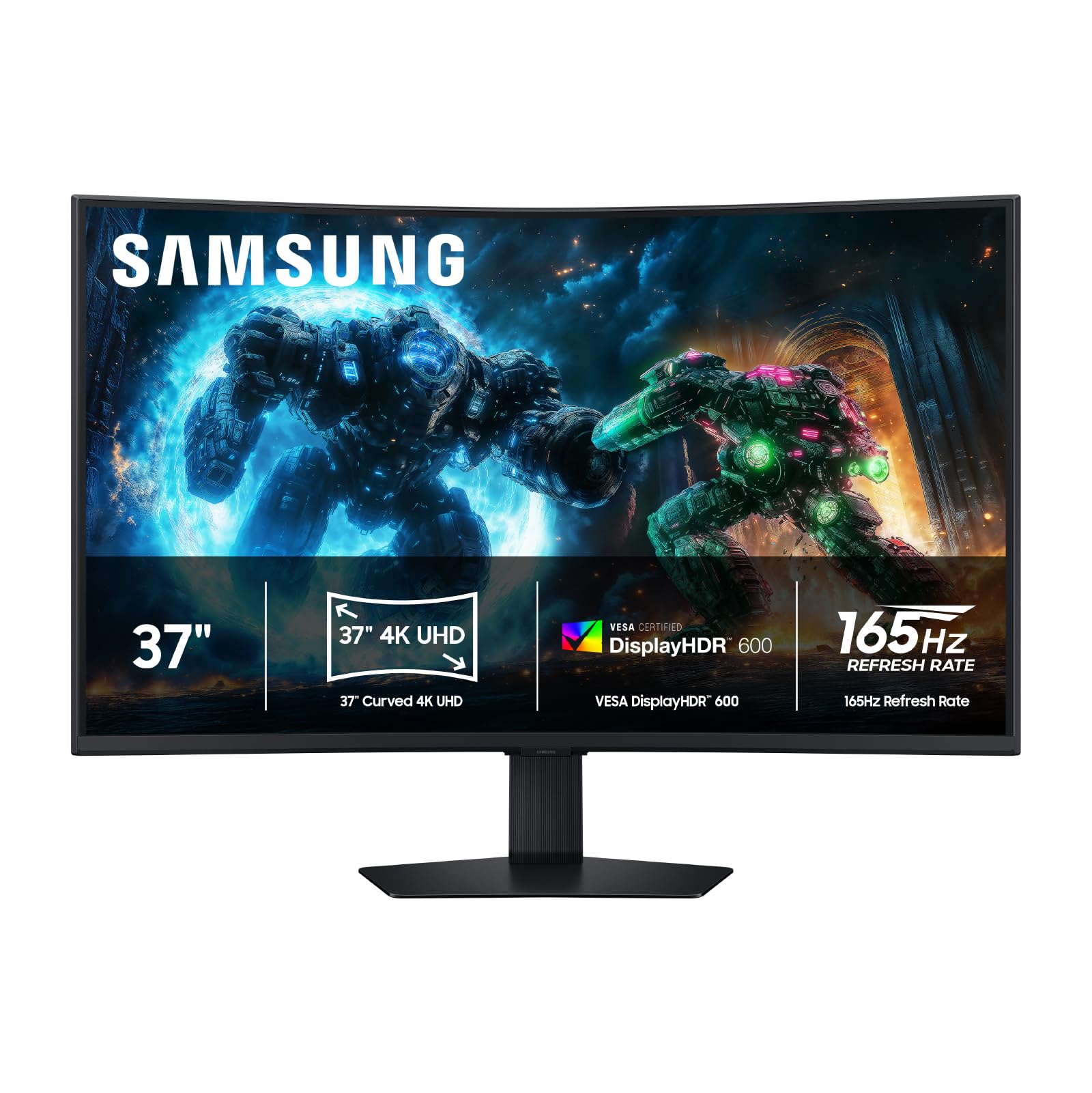
This is the monitor for console gamers and PC players who want the sharpest possible picture without giving up the smoothness of a high refresh rate. The 37-inch 4K UHD (3840 x 2160) display packs in 1.7 times the pixel density of a standard Full HD screen, so fine details in games look pin-sharp, and the aggressive 1000R curve bends the screen around you for a genuinely rich feel.
It pairs that resolution with a 165Hz refresh rate and a near-instant 1ms response time (GtG), which means both your frames and your reactions stay fast. The VESA DisplayHDR 600 certification — a standard rating for how well a screen handles bright and dark content — delivers deeper blacks and brighter whites, which owners say makes colors “deep and look amazing.”
This is a true 4K@120Hz screen for the PS5, making it a huge upgrade from a flat 1440p panel, and the picture quality earns the second-most praise of any feature. The curve is the main talking point in both directions: it is fantastic for games and media, but it can slightly distort straight lines on spreadsheets or documents near the center, and there are no built-in speakers, so plan for external audio. It is also heavy, so your desk or arm mount needs to handle it.
Console King: For a PS5 or a high-end PC, the combination of 4K resolution and 165Hz is tough to top, and the screen size makes small in-game text easy to read.
Curve Caution: The 1000R bend is the most aggressive on this list, so if you do heavy productivity work, it may not be the right fit.
Who it beats: flat 1440p panels that force you to choose between sharpness and speed; this one refuses to compromise on either.
Who it does not: anyone doing precision document work who needs perfectly straight lines, since the strong curve distorts them slightly.
4. Z-Edge 49 inch DQHD 5120×1440 Curved Monitor, UG49W
The giant 32:9 panel that replaces two monitors without a bezel between them
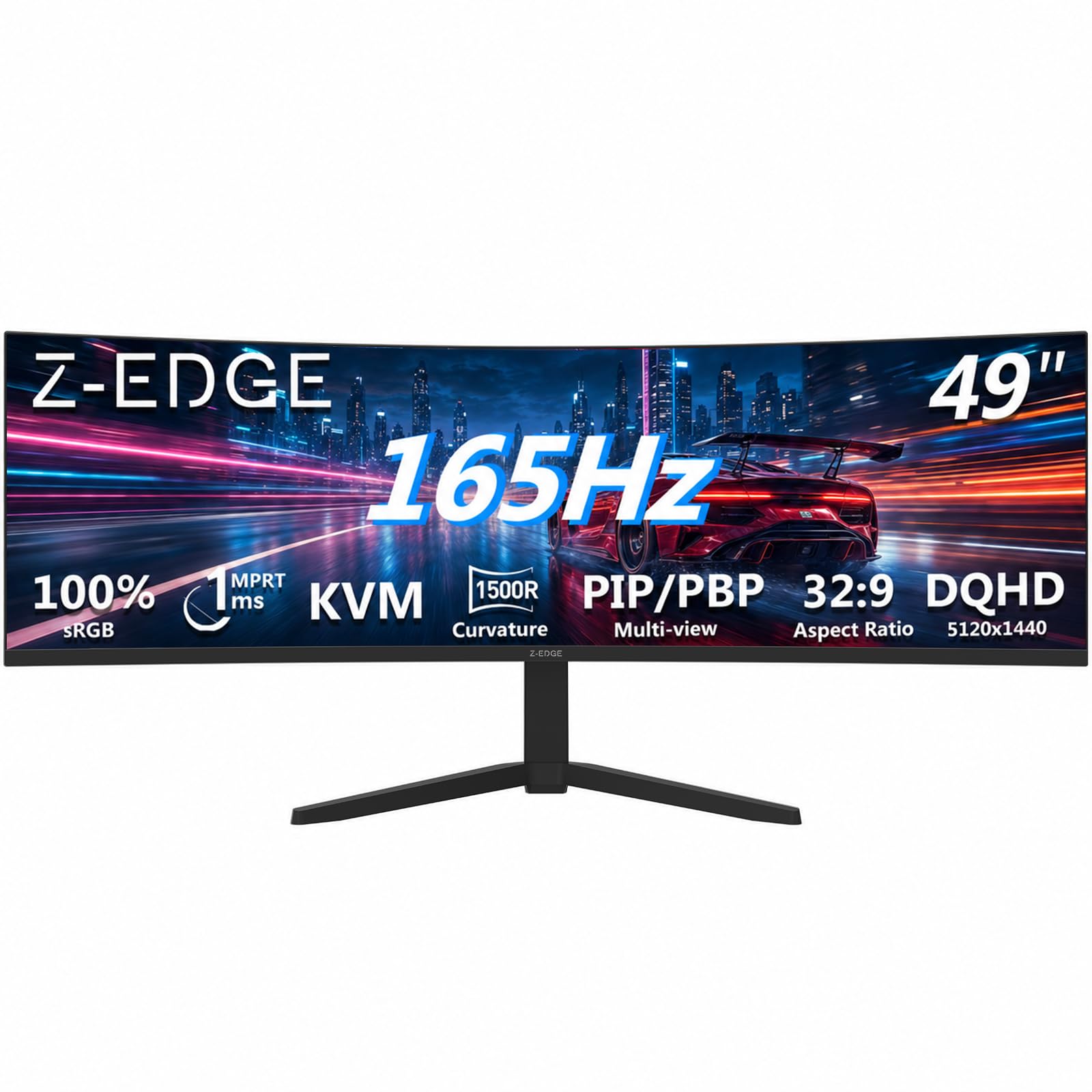
For anyone who has ever wished they could run a game and a guide, or two work apps, side by side without a bezel cutting down the middle, this 49-inch ultrawide is the answer. Its Dual QHD resolution (5120 x 1440) is exactly two QHD monitors side by side in one smooth panel, and the 32:9 aspect ratio delivers a panoramic workspace that makes multitasking feel easy.
The 1500R curvature wraps that wide view gently around you, and the 165Hz refresh rate with a 1ms MPRT response time keeps fast games smooth. It offers both Picture-in-Picture (PiP) and Picture-by-Picture (PbP) modes, so you can display two different input sources at once — say, your work PC and your gaming laptop — plus a built-in KVM switch (a feature that lets one keyboard and mouse control two devices) to switch between them without swapping cables.
Owners coming from older smaller screens describe it as a massive upgrade, with one noting the colors and contrast look far more expensive than the price suggests. Picture quality is the most-praised feature, and the integrated dual speakers provide decent audio without desktop speakers. The recurring reliability check is its one honest weakness — a minority report units failing within the first few months — so a warranty is worth considering. Built-in gaming tools like an on-screen crosshair and a timer are a nice bonus for competitive FPS players.
Why the Width Wins
- The 32:9 panel genuinely replaces a two-monitor setup, saving desk space and removing the annoying center bezel.
- The KVM switch and dual input modes make it a productivity powerhouse for people running two computers.
- Height-adjustable metal stand and built-in speakers add convenience you rarely see at this size.
Where It Gets Tricky
- At 49 inches, this is a huge physical presence — your desk and your graphics card both need to be ready for it.
- Reliability stories are mixed, with some owners experiencing failures within the first three months.
- The setup instructions are not the clearest, particularly for non-tech-savvy users.
Best suited for: the multitasker who wants a bezel-free dual-monitor experience with one smooth, curved screen.
Think twice if: you have a modest graphics card or a shallow desk, because this panel demands both power and depth.
5. DJiEX 34 Inch Ultrawide Curved Gaming Monitor, 165Hz

The cheapest genuine 21:9 ultrawide that still looks like a proper premium panel
If you have been curious about ultrawide monitors but balked at the usual price tag, this 34-inch model is the gateway drug. It uses a VA panel with a 3440 x 1440 resolution and a 21:9 aspect ratio — that is 31% more horizontal screen than a 27-inch 16:9 monitor — giving you a genuinely panoramic view for both racing games and multi-window work.
The 4000:1 contrast ratio (a measure of the difference between the darkest black and brightest white a screen can show) is a standout at this tier, producing deep blacks that make dark scenes in games and movies look rich. The 165Hz refresh rate works over the DisplayPort interface, and the 127% sRGB color coverage means colors look vibrant and accurate for the price. It also supports Picture-in-Picture (PiP) and Picture-by-Picture (PbP) modes, letting you run two inputs on screen at once.
Owners describe it as a great monitor for the price point, with colors that pop in HDR and frames that look smooth — one called out that it is a “better value than most name brands” if you are not ready to jump to OLED. One seller even confirmed it overclocks to 180Hz. The catch is quality control: a handful of buyers report units failing, including one that broke within minutes of first use, so treat reliability as a bit of a lottery even though most units work beautifully. The 1-year warranty is there if you hit trouble.
What Impresses
- The 3440 x 1440 resolution at this price is outstanding value, delivering a crisp, rich picture.
- PiP/PbP support lets you watch a console and a PC on one screen simultaneously.
- Multiple ports (2x HDMI 2.0, 2x DisplayPort 1.4, audio out) make it flexible across devices.
The Honest Catch
- Reliability reports are mixed, with a small but real number of units arriving faulty.
- You will need a DisplayPort cable to hit the full 165Hz, not just an HDMI one.
Grab it if: you want to experience 21:9 ultrawide gaming and work productivity without emptying your wallet.
skip it if: you need guaranteed long-term reliability and prefer to pay more for a proven, trusted brand.
6. CRUA 34″ WQHD 165Hz Ultrawide Curved Gaming Monitor (B0CBRW8M6V)

An ultrawide that balances gaming smoothness with serious work-from-home space
This CRUA 34-inch ultrawide earns its keep as a work-and-play hybrid, giving you a 3440 x 1440 resolution in a 21:9 format that is perfect for side-by-side documents, trading windows, or a game and a guide open at once. The 1500R curve and 178° wide viewing angle mean you see consistent color even when you are not sitting dead-center, so it works well in a shared or slightly off-angle setup.
The 165Hz refresh rate pairs with FreeSync (a technology that syncs the monitor’s refresh with your graphics card to stop screen tearing) for smooth fast-paced gaming, and the 4000:1 contrast ratio keeps dark scenes detailed. The 120% sRGB color gamut with 300 cd/m² brightness delivers a crisp, lively picture — owners call the graphics “great” for both gaming and programming. The panel supports a tilt adjustment from -15° to 15°, and the 75x75mm wall mount gives you flexibility if you prefer to clear your desk.
Owners consistently praise the crisp display and easy setup, with one noting it was “perfect for my son’s usage” across both gaming and programming. The trade-off is reflected in the mixed feedback on reliability and color quality — most units work great, but a meaningful number of owners mention panels that do not work at all or colors that are not quite up to par. Remember that HDMI only supports up to 100Hz here; you need the DisplayPort cable to open up the full 165Hz.
All-Rounder: This is among the most balanced ultrawides on the list, offering the rich width for gaming and the workspace for productivity at a fair price.
Cover Your Bases: The mixed reliability feedback means you should buy with a return-friendly plan and be ready to test it fully on arrival.
A smart pick for: the gamer who also works from home and wants one big, curved screen for both worlds.
Not the right pick for: buyers who demand absolute out-of-the-box reliability, given the mixed reports of failed units.
7. CRUA 34″ WQHD 165Hz Ultrawide Curved Gaming Monitor, Height Adjustable (B0GL24MRRT)
The ultrawide that remembers your neck needs a break, with a real height-adjustable stand
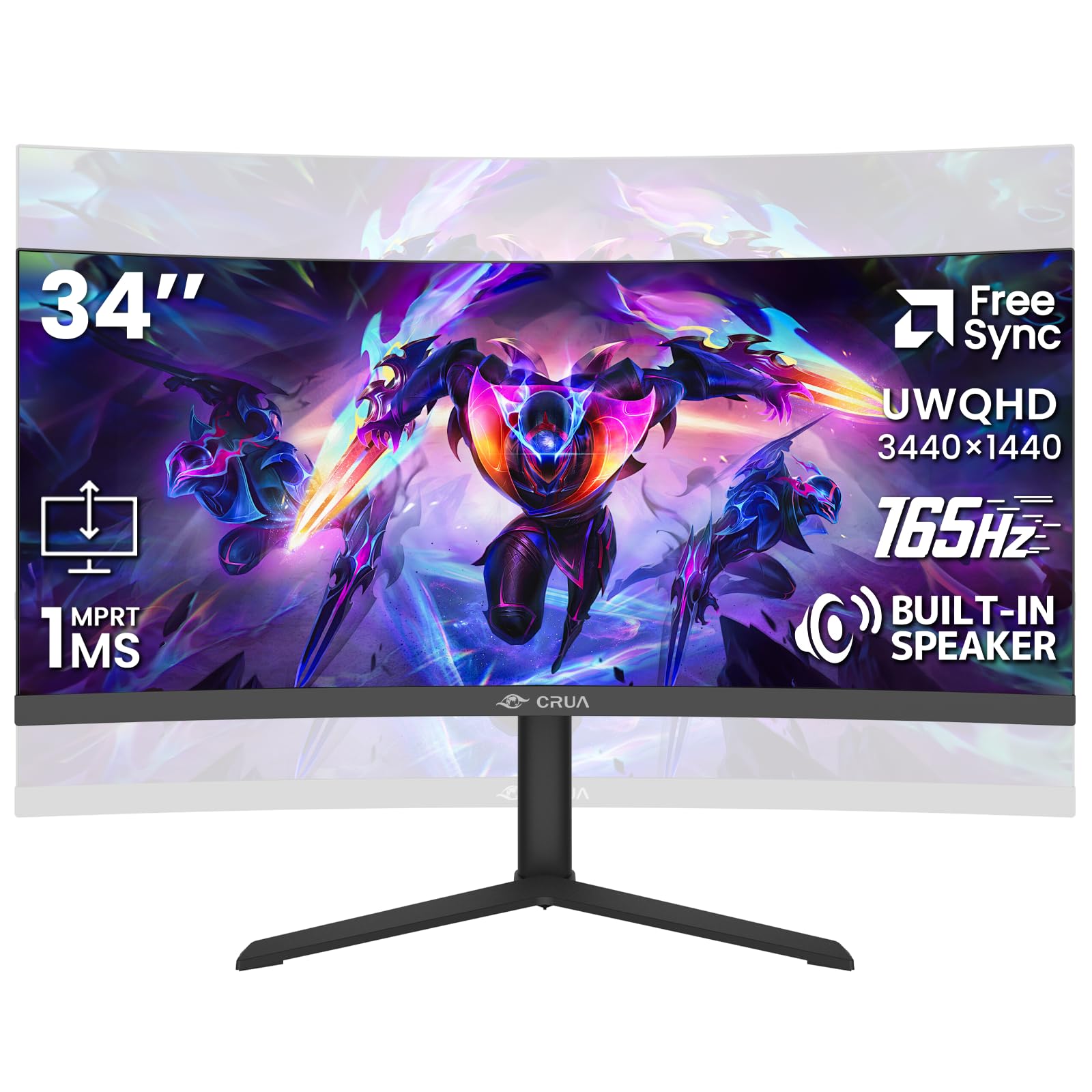
Ergonomics are the headline here. Most budget ultrawides force you to prop them up on books, but this CRUA 34-inch model comes with a stand that offers both height adjustment and tilt, so you can set the screen exactly at your eye level for long office sessions or intense gaming marathons. It is a small convenience that makes a big difference to your posture over a full workday.
Underneath that adjustable stand sits a 3440 x 1440 VA panel with a 21:9 aspect ratio and a gentle 3800R curve — less aggressive than the 1500R models, which some owners actually prefer because it feels more natural and less distorted. The 165Hz refresh rate with FreeSync keeps gameplay smooth, and the 120% sRGB coverage with 355 cd/m² brightness (a measure of how bright the screen gets, roughly enough for most indoor rooms) delivers vibrant, accurate colors for design and photo work.
It also has built-in speakers, so you get audio without desktop speakers or a headset — though the sound quality is the most common criticism, so keep expectations modest there. Owners praise the build quality and picture quality, with one noting the curve is “not too pronounced” and that it looks good from many angles. The recurring negative is reliability: some units worked well for months before stopping, while others worked fine from the start, and a few owners found the warranty process awkward when things went wrong.
Comfort-First Buy: If you spend hours at your desk, the height-adjustable stand alone justifies picking this over a fixed-position ultrawide.
Sound Reality Check: The built-in speakers are convenient, but audiophiles will still want a dedicated headset or external speakers for real sound quality.
Choose this for: all-day desk comfort where an adjustable stand and a gentle curve prevent neck strain and screen distortion.
Hesitate if: you need a monitor that must never fail, because the reliability record here is genuinely mixed over the long term.
8. Samsung 32″ Odyssey G5 QHD (2560 x 1440) Curved Gaming Monitor (Renewed)

A deeply curved 1440p screen that wraps the action right around you
This is the answer for gamers who want the rich wrap-around feel of a curved screen plus the sharper detail of QHD (2560 x 1440) resolution, without paying premium prices. The 1000R curvature is the most aggressive bend you can buy — it circles the screen around your face to fill your peripheral vision, drawing you into the game world. The QHD resolution packs in 1.7 times the pixel density of Full HD, so game worlds look pin-sharp and detailed.
It runs the full 165Hz refresh rate with a 1ms response time (MPRT) — the speed at which the screen updates to reduce blur — for ultra-smooth, responsive gameplay. The 2000:1 contrast ratio is notably lower than the 4000:1 found on the DJiEX ultrawide above, meaning blacks are good but not as deep, but the HDR10 support (high dynamic range, which boosts contrast and color range in compatible content) adds real vibrancy to compatible games. AMD FreeSync (the standard version) keeps frame rates in sync to prevent tearing.
This is a renewed unit, which is the honest caveat — a refurbished model, and shoppers say it arriving looking new even though the protective film has been removed. One owner noted one of three units was missing the stand mount bracket in the box, so check contents on arrival. The picture quality, with its fine-tuned contrast and saturation, earns the most praise, and shipping was fast — as one buyer put it, it “came in literally 2 days after ordering.” The Eye Saver Mode (a blue-light filter) and flicker-free screen help keep your eyes comfortable during long sessions.
Immersion on a Budget: The 1000R curve and 1440p sharpness give you a genuinely premium-feeling display for less than a new-model price.
Renewed Reality: Because it is refurbished, inspect it fully on arrival and keep the return window in mind, especially for missing mount parts.
Reach for it if: you want a deeply rich, curved 1440p experience and are comfortable buying a certified refurbished unit.
Look elsewhere if: you prefer buying brand new with a full manufacturer warranty and no chance of a missing part.
9. Gawfolk 34″ Ultrawide Curved Gaming Monitor, 3440×1440 165Hz
A big 34-inch curved panel that delivers 21:9 immersion at a mid-range price
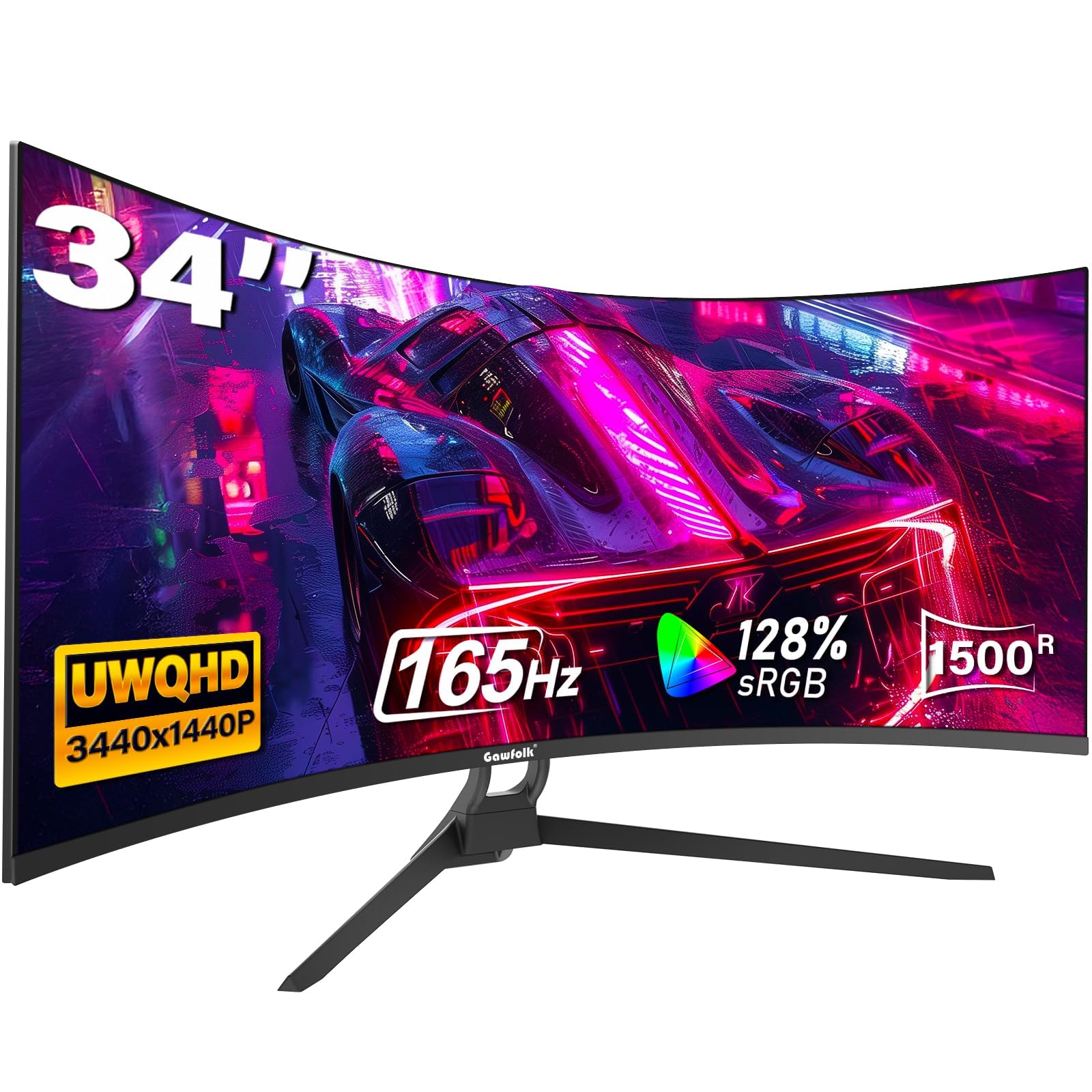
If your priority is maximum screen real estate for the money, this Gawfolk 34-inch ultrawide is one of the strongest values here. Its 3440 x 1440 resolution on a 21:9 aspect ratio gives you 34% more screen space than a conventional 16:9 monitor, which translates directly into more horizontal view in games and more room for multiple work windows side by side. The 1500R curve wraps that wide view around you without being as aggressive as the 1000R panels.
The 165Hz refresh rate hits its full speed over DisplayPort 1.4 (HDMI caps at 120Hz), and the 128% sRGB color coverage with 300 cd/m² brightness produces vivid, rich colors. It also supports Picture-in-Picture (PiP) and Picture-by-Picture (PbP) modes, so you can run a PC and a laptop or console simultaneously. The 12-month warranty covers you for a full year against defects.
Quality is the most-praised aspect by a wide margin — owners rate the build as solid and the colors as excellent, with one noting it stays durable on a mount even after six months of use. The gaming suitability also gets strong marks. The honest caveat is reliability and durability, which carry the most negative sentiment here: some units arrive with dead adjustment buttons, and a smaller number of buyers report screens that stopped working or developed cracks over time. A handful of quality-control issues, not a broken design, are the recurring theme.
Real-World Width: The 21:9 aspect ratio at this price is the draw — you get a genuinely rich ultrawide experience without a flagship price.
The QC Gamble: The quality is praised, but the screen reliability and durability reports are mixed enough that you should test yours immediately and use the 12-month warranty.
Best for: budget-conscious gamers and multitaskers who want a big curved ultrawide and are willing to accept some quality-control risk for the price.
Not for: those who need mission-critical reliability, as a minority of owners mention units blacking out or cracking over time.
10. ZZA 32 Inch Curved Monitor, 1440p VA Screen 165Hz
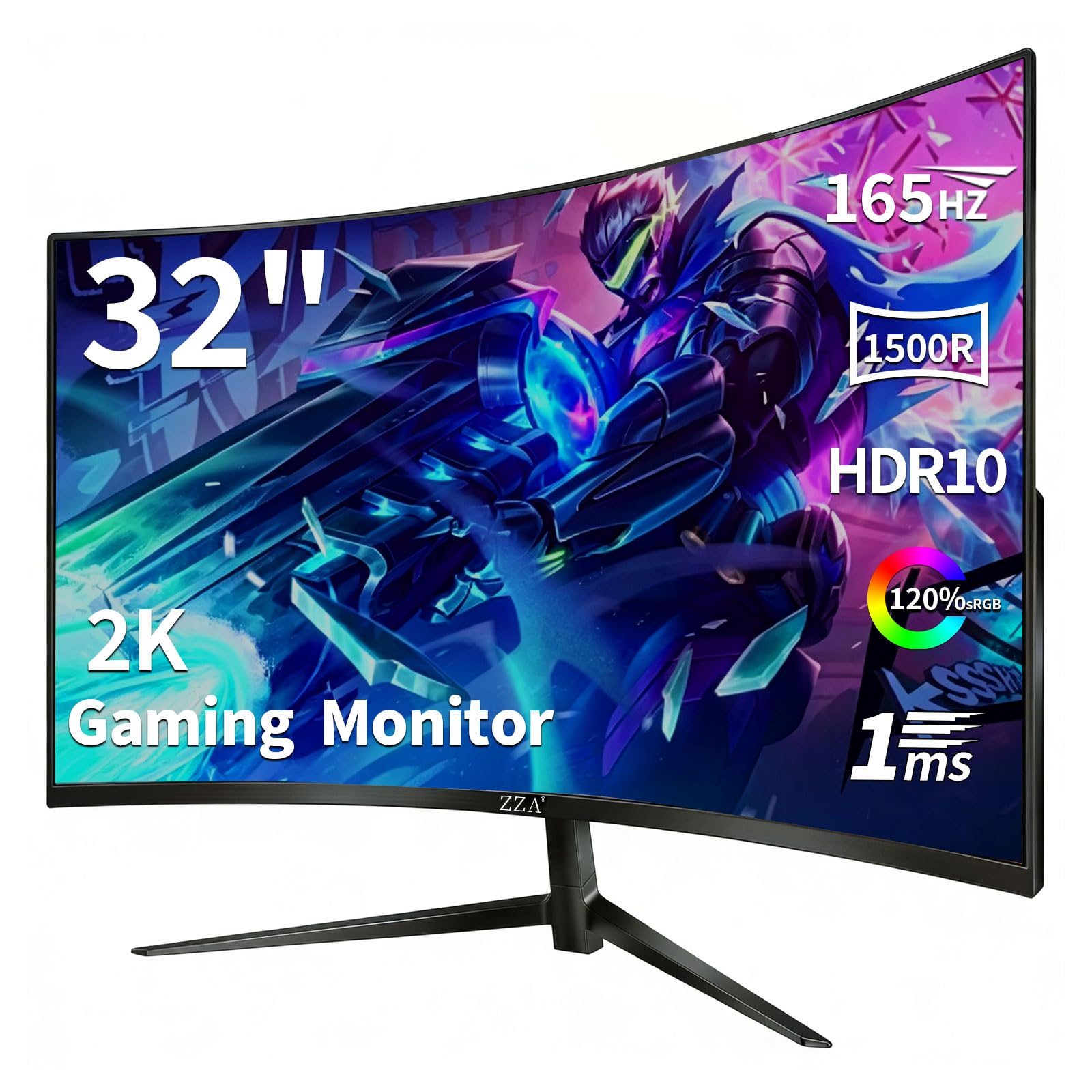
A 32-inch 1440p curve that brings big-screen immersion to the entry tier
This ZZA 32-inch is the budget route into curved 1440p (2560 x 1440) gaming, combining a Fast VA panel with a 165Hz refresh rate and a 1ms GTG response time for sharp, tear-free motion. The 1500R curve adds immersion without demanding a massive desk, and the frameless three-side design keeps it looking clean and modern.
The picture quality is the star here — owners consistently praise the sharp 1440p resolution, with the 4000:1 contrast ratio and 300 cd/m² brightness delivering a solid, detailed image for gaming, video, and work. It supports both FreeSync and G-Sync (adaptive sync technologies for AMD and NVIDIA graphics cards respectively), which is a flexibility you rarely see at this price. The 5-way OSD joystick (the on-screen menu control stick) makes navigation easy, and the tilt adjustment from -5° to 15° plus 100x100mm VESA mounting covers your basic ergonomic needs.
The biggest concern here is the screen durability, which is the most-discussed negative aspect with a notable count of owners reporting issues — screens separating from the frame, causing light bleed around the edges. Most units work well, though, with owners reporting over a year of trouble-free use and calling it great value. The lesson from the review pages is simple: buy it with an extended warranty, because while most are flawless, a real minority fail over time. The hot power supply and occasional FreeSync flicker round out the honest trade-offs.
The High Points
- The 1440p VA panel with a 4000:1 contrast ratio looks sharp and rich for the money.
- Support for both FreeSync and G-Sync works with either major graphics card brand.
- Quality and value are the most-praised features, with the 5-way OSD joystick making setup easy.
The Watch-Outs
- Screen durability is the most-flagged concern — some customers note the panel separating from the frame over time.
- A few units run hot, and FreeSync can flicker in unsupported games.
Right for: first-time 1440p buyers who want a big curved screen on a budget and will add an extended warranty for confidence.
Wrong for: anyone who cannot tolerate the risk of a panel failing over time, since durability is this model’s weakest point.
11. Gawfolk 32 inch 2K QHD (2560×1440P) 165Hz Curved Gaming Monitor
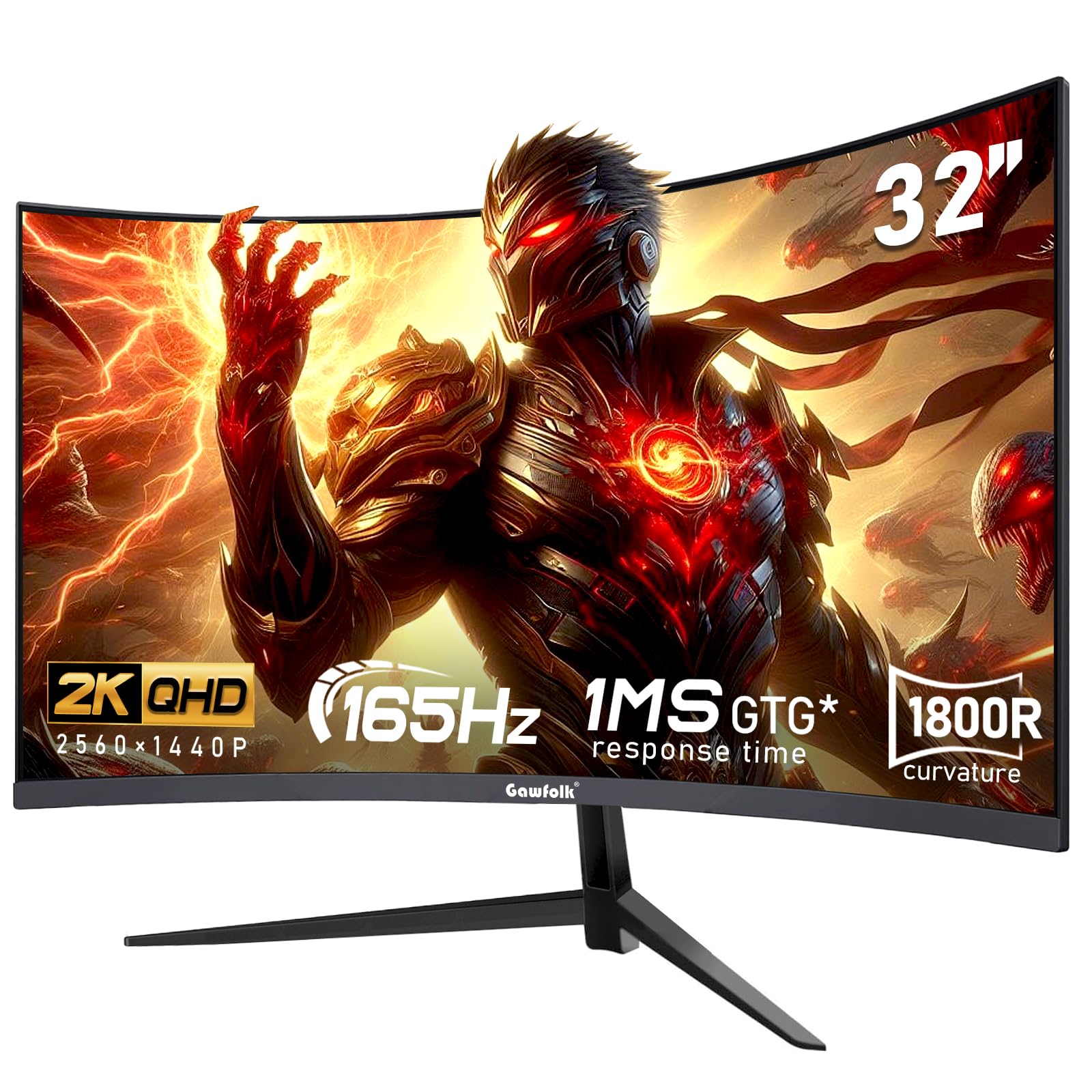
The plain-spoken 1440p curved monitor that gets the fundamentals right
This Gawfolk 32-inch keeps things simple and effective: a 2K QHD (2560 x 1440) VA panel with a gentle 1800R curve, a 165Hz refresh rate, and a 1ms response time for smooth, responsive gameplay. It is a no-drama curved monitor for gamers who want the sharpness of 1440p and the immersion of a curved screen without paying for extra features they will not use.
The picture quality is crisp, with 16.7 million colors and a 3000:1 contrast ratio delivering clear, natural-looking images. The 178° wide viewing angle means the picture holds up well from off-center positions, and the DC global dimming technology with a low blue light mode keeps long sessions comfortable on the eyes. It connects via DisplayPort and HDMI, with a 3.5mm audio out for headphone use, and the 100 x 100mm VESA mount lets you use your own arm or stand.
Owners consistently call it a great value and a great budgetmonitor, with one noting the graphics give a real FPS advantage in online play and another praising the crisp picture after weeks of daily use. The honest trade-offs are practical ones: the stand does not adjust height, the on-screen adjustment buttons are tucked away and hard to reach, and it runs a bit warm if left on for long stretches. A few owners also noted they could not find a 160Hz or 165Hz option and settled for 144Hz, so check your cable and settings on arrival. The 12-month after-sales service adds a reasonable safety net.
Straightforward Value: For a clean, simple 1440p curved experience at a budget price, this gets the job done without fuss or extra features you will never use.
Ergonomics Reality: The fixed-height stand and awkward button placement mean you may want a VESA mount to get the screen positioned where you actually want it.
Pick it for: a no-frills 1440p curved gaming screen that delivers crisp visuals and smooth motion while staying affordable.
Pass on it if: you need height adjustment or an ultra-reliable control scheme, since the stand is fixed and the buttons are hard to reach.
Understanding the Specs
Refresh Rate (Hz)
This is how many times your screen redraws the image each second. A 165Hz refresh rate means the image updates 165 times per second, which makes on-screen motion look dramatically smoother than the standard 60Hz you get on most basic monitors. For fast-paced shooters and racing games, this translates directly into seeing your opponents’ movements more clearly and reacting faster. Just remember: to actually see 165 frames per second, both your graphics card and your cable (usually DisplayPort) need to be able to deliver that rate.
Response Time
This measures how quickly a pixel can change from one color to another, usually stated in milliseconds (ms). A lower number means less motion blur and fewer “ghosting” trails behind fast-moving objects. Gaming monitors typically advertise 1ms response times, which is ideal for competitive play. OLED panels like the Alienware take this even further with 0.1ms, making motion look almost impossibly crisp. For most players, a 1ms response time is more than fast enough.
FAQ
Do I need a special cable to get 165Hz on my monitor?
Can my graphics card actually run 165 frames per second?
What is the difference between FreeSync and G-Sync?
Is a curved monitor better than a flat one for gaming?
What does the curvature number like 1500R mean?
Is a 1440p 165Hz monitor worth the extra cost over 1080p?
How much desk space do I need for an ultrawide monitor?
What is OLED burn-in and should I worry about it?
Should I buy a renewed or refurbished gaming monitor?
Do gaming monitors come with built-in speakers?
Final Thoughts: The Verdict
Across the board, the 165 hz monitor winner is the LG 27GQ50F-B because it combines the crowd-favorite 4.6-star reliability with a buttery-smooth 165Hz experience that has proven itself over years of daily use. If you want the absolute finest picture quality and have the budget, the Alienware AW3423DWF is the OLED king that makes every other panel look like a compromise. And for rich ultrawide multitasking, the Z-Edge UG49W replaces two monitors with one smooth panoramic screen.
How We Picked
We do not accept paid placement. Every pick is matched to a real buyer and a real use-case; we do not hands-on test units.
Sources & Methodology
Specifications: manufacturer listings and product documentation. Review insights: verified customer reviews, as of August 2026. Pricing: not shown on this page (it changes often); check the current price via the retailer link.
As an Amazon Associate, Gadgets Feed earns from qualifying purchases. This does not affect which products we feature.