
Choosing the right 16mm film stock is about balancing grain structure, color rendition, and sensitivity to match your specific creative vision. Whether you’re shooting a short film, a music video, or documenting a project, the film stock you pick defines the texture, contrast, and mood of every frame.
I’m Min — the co-founder and writer behind Gadgets Feed. I spend my time analyzing the chemical formulations, spectral sensitivity curves, and grain RMS values of emulsions so you can skip the guesswork and pick the perfect roll for your camera and concept.
After comparing seven of the most popular options on the market, this guide will help you decide which 16mm film stock delivers the look and latitude your next project demands.
How To Choose The Best 16mm Film Stock
Your choice of film stock dictates every downstream decision — from lens selection and metering to development chemistry and scanning cost. The variables that matter most are ISO, format, emulsion type, and grain behavior.
ISO Speed and Grain Trade-Offs
Lower ISO films (like ISO 100 stocks) produce finer grain and higher sharpness, but demand more light or longer shutter times. Higher ISO films (ISO 400) give you hand-holdable speed in mixed light but introduce visible grain that can either degrade or enhance your aesthetic depending on intent.
Emulsion Type: Color Negative vs. Slide vs. Black-and-White
Color negative film offers wide exposure latitude and forgiving highlights, making it ideal for variable lighting and scanning. Slide film produces rich, contrasty positives with narrower latitude but unmatched color saturation. Black-and-white stocks give you full control over development and tonality, with classic options like Delta 100 and HP5 Plus each offering distinct character.
Format Considerations (35mm vs. 120)
Your camera determines your film format. A standard 35mm still camera uses the same 135 cassette system, while medium-format shooters reach for 120 rolls. Film stocks identical in name can behave differently across formats due to the larger negative area on 120, which reduces apparent grain and increases fine detail capture.
Quick Comparison
On smaller screens, swipe sideways to see the full table.
| Model | Category | Best For | Key Spec | Amazon |
|---|---|---|---|---|
| Kodak Portra 400 120 (10-roll) | Premium Color Neg | Skin tones, medium format | 120 format, ISO 400, 10 rolls | Amazon |
| Kodak Ektachrome E100 (5-pack) | Premium Slide Film | Vibrant positives, slide projection | ISO 100, 36 exp, 5 rolls | Amazon |
| Ilford Delta 100 Pro (2-pack) | Fine-Grain B&W | Sharp fine-grain B&W photography | ISO 100, 36 exp, 2 rolls | Amazon |
| Fujifilm 400 Color (3-pack) | Mid-Range Color | Versatile, greenish tones | ISO 400, 36 exp, 3 rolls | Amazon |
| Ilford HP5 Plus 400 (3-pack) | Workhorse B&W | Forgiving, push-processing, mixed light | ISO 400, 36 exp, 3 rolls | Amazon |
| Kodak Ultramax 400 (3-pack case) | Budget Color | Everyday color, travel, beginners | ISO 400, 24 exp, 3 rolls | Amazon |
| Kodak Ultra Max 400 (10-pack) | Bulk Color Value | High-volume color shooting | ISO 400, 36 exp, 10 rolls | Amazon |
In‑Depth Reviews
1. Kodak Professional Portra 400 Film 120 Propack – 10 Rolls

Portra 400 is the benchmark for color negative film, especially in medium format. The 120 Propack gives you ten rolls, a serious investment for serious shooting. Its reputation for beautiful, natural skin tones and superb color reproduction is earned — portraits glow without looking oversaturated, and the exposure latitude is forgiving enough for mixed lighting scenarios.
Shooting it on a medium-format camera reveals the full potential of the large negative area. The grain is so fine for an ISO 400 emulsion that you can print big without losing detail. Reviewers consistently call it “the best” and “classic,” noting its versatility for both beginners and professionals who know exactly what they want.
If you’re new to film, this stock teaches you why color negative film became the industry standard for professional work. On the premium end, this is the film to buy when you want the most reliable, predictable, and beautiful color results in medium format. The pack is bulky, but every roll is fresh and dated well into the future.
Why it’s great
- Unmatched skin tone reproduction and wide exposure latitude
- Ten-roll propack offers best cost-per-roll for premium medium format
Good to know
- Requires a 120-format camera — not compatible with standard 35mm bodies
- Premium price point makes it a decision for planned projects rather than casual snapping
2. 5 Pack of Kodak Professional Ektachrome E100 Color Film (35mm, 36 Exposures)

Ektachrome E100 is slide film at its finest. The revival of this emulsion was a major event for film enthusiasts, and this five-pack of 35mm rolls gives you a solid run of 180 exposures. The color palette leans slightly cool with bluish tones, but the sharpness and tangibility of the image — the feeling that you’re holding the actual scene on acetate — is something no negative film can replicate.
Slide film demands accurate exposure, but reviewers report that E100 is more forgiving than expected. One user shot it with a manual Leica M3 and a smartphone meter, and the positives still looked incredible. The grain structure is extremely fine at ISO 100, making it ideal for scanning at high resolution or projecting directly.
If you’ve never shot reversal film, E100 will change how you think about exposure. Every frame forces you to commit, and the reward is a vibrant, contrasty positive that needs no interpretation. The price per roll is steep, but for the unique look and archival quality, it’s worth every penny for dedicated slide shooters.
Why it’s great
- Unmatched color saturation and contrast for direct projection or scanning
- Extremely fine grain and high sharpness at ISO 100
Good to know
- Narrow exposure latitude compared to negative film — meter carefully
- Premium price point can be a barrier for high-volume shooting
3. Ilford 1780624 Delta 100 Professional Black-and-White Film, ISO 100, 35mm 36-Exposure (2 Pack)

Delta 100 is the reference point for fine-grain black-and-white photography in 35mm. The two-pack is an accessible entry point, and the results are consistently sharp — reviewers describe it as “unbelievably good” for daylight B&W. The emulsion produces beautiful whites and clean midtones when developed in Ilfosol 3 1+14, as one user noted.
What sets Delta 100 apart from HP5 is the lower noise floor. At ISO 100, the grain is tighter, making it the better choice for tripod work, landscapes, and subjects where texture matters. It’s also available in 120 and 4×5, so if you fall in love, you can scale up without changing developer chemistry.
Some die-hard Kodak loyalists have switched after trying this film, citing “less noise” and better overall tonal separation. It requires a lab nearby or your own development setup — not ideal for instant gratification — but for deliberate, sharp black-and-white work, Delta 100 is a top-tier choice.
Why it’s great
- Exceptional sharpness and fine grain for an ISO 100 B&W emulsion
- Works beautifully with standard developers like Ilfosol 3
Good to know
- Not ideal for handheld low-light shooting without a tripod
- Two-pack format limits volume for extended projects
4. FUJIFILM 400 Color Negative Film (35mm Roll Film, 36 Exposures, 3-Rolls) + BluebirdSales Microfiber Cleaning Cloth

Fujifilm 400 is a solid color negative option that brings a distinct color signature to the table. The emulsion leans toward greenish tones, which gives outdoor and landscape images a cooler, slightly earthy feel compared to Kodak’s warmer palette. Reviewers love this look, calling the color range “amazing” and praising the film’s versatility with almost any 35mm camera.
At ISO 400, it handles both daylight and overcast conditions with ease. The three‑roll pack with 36 exposures each gives you 108 frames, plenty for a weekend trip or a portrait session. The included microfiber cloth is a nice bonus for keeping your lenses clean.
For the price point, this film delivers vibrant colors and rich contrast without breaking the bank. It’s not as fine-grained as the premium Portra or Ektachrome, but for everyday shooting, travel, and casual portraits, it’s a reliable workhorse. If you prefer a more neutral or warm palette, you’ll want to test a roll first.
Why it’s great
- Distinct cool/greenish color palette for unique outdoor shots
- High value per frame with three 36-exposure rolls
Good to know
- Grain structure is more visible than premium ISO 100 films
- Color signature may not suit everyone’s taste — test before committing
5. Ilford 1574577 HP5 Plus, Black and White Print Film, 35 mm, ISO 400, 36 Exposures (Pack of 3)

HP5 Plus is the black-and-white standard for a reason — it offers a near-perfect balance of sensitivity, definition, and contrast. The three-pack of 35mm rolls gives you 108 frames of latitude-rich film that responds exceptionally well to push processing. Reviewers describe it as “forgiving and easy to develop,” making it the go-to recommendation for anyone starting out in black-and-white photography.
The grain is visible but characterful, adding texture without becoming distracting. At ISO 400, you can shoot handheld in mixed lighting scenarios, from sunny streets to dim interiors. When pushed to 1600 or 3200, the grain increases predictably, giving you that classic indie-film look without losing shadow detail entirely.
For the price, this is the best value in black-and-white film. It works with nearly any developer and is available in 120 and sheet formats as well. Beginners should start here before moving to finer-grained stocks like Delta 100 — you’ll learn more about exposure and development with HP5’s forgiving emulsion.
Why it’s great
- Wide exposure latitude and excellent push-processing performance
- Forgiving emulsion ideal for beginners and mixed-lighting conditions
Good to know
- Grain is more pronounced than lower-ISO B&W films
- Three-pack format may not be enough for high-volume projects
6. 10 Rollos Kodak Ultra Max GC 135 – 36 – Película de 35 mm ISO 400 de impresión de color (PACK OF 10)

Kodak Ultra Max GC 400 in a ten-pack is the bulk buyer’s dream. At this price point per roll, it’s the most cost-effective way to stock your fridge with color negative film. The emulsion delivers crisp pictures with nice color rendition — reviewers note that it produced “crisp pictures, no bad shots” and that they were impressed when they used it after running out of Portra and Ektar on vacation.
With 36 exposures per roll and ten rolls total, you’re getting 360 frames. That’s enough for multiple projects, casual shooting, or even teaching someone else the basics. The film is fresh, with expiration dates two years out according to one reviewer, so you can trust the storage if you buy in bulk.
The trade-off is that Ultra Max is not as refined as Portra or Ektachrome — the grain is coarser and the color palette is less nuanced. But for high-volume color shooting, travel, and everyday documentation, it’s a reliable option that won’t break the bank. If you’re burning through rolls quickly, this is the pack to buy.
Why it’s great
- Best cost-per-roll for high-volume color shooting
- Reliable color rendition and fresh production dates
Good to know
- Grain structure is more apparent than premium color negative stocks
- Color palette lacks the depth and nuance of Portra or Ektachrome
7. Kodak Ultramax 400 35mm Film Roll (24 Exposures) 3 Rolls + Sturdy Tiger Film Storage Case
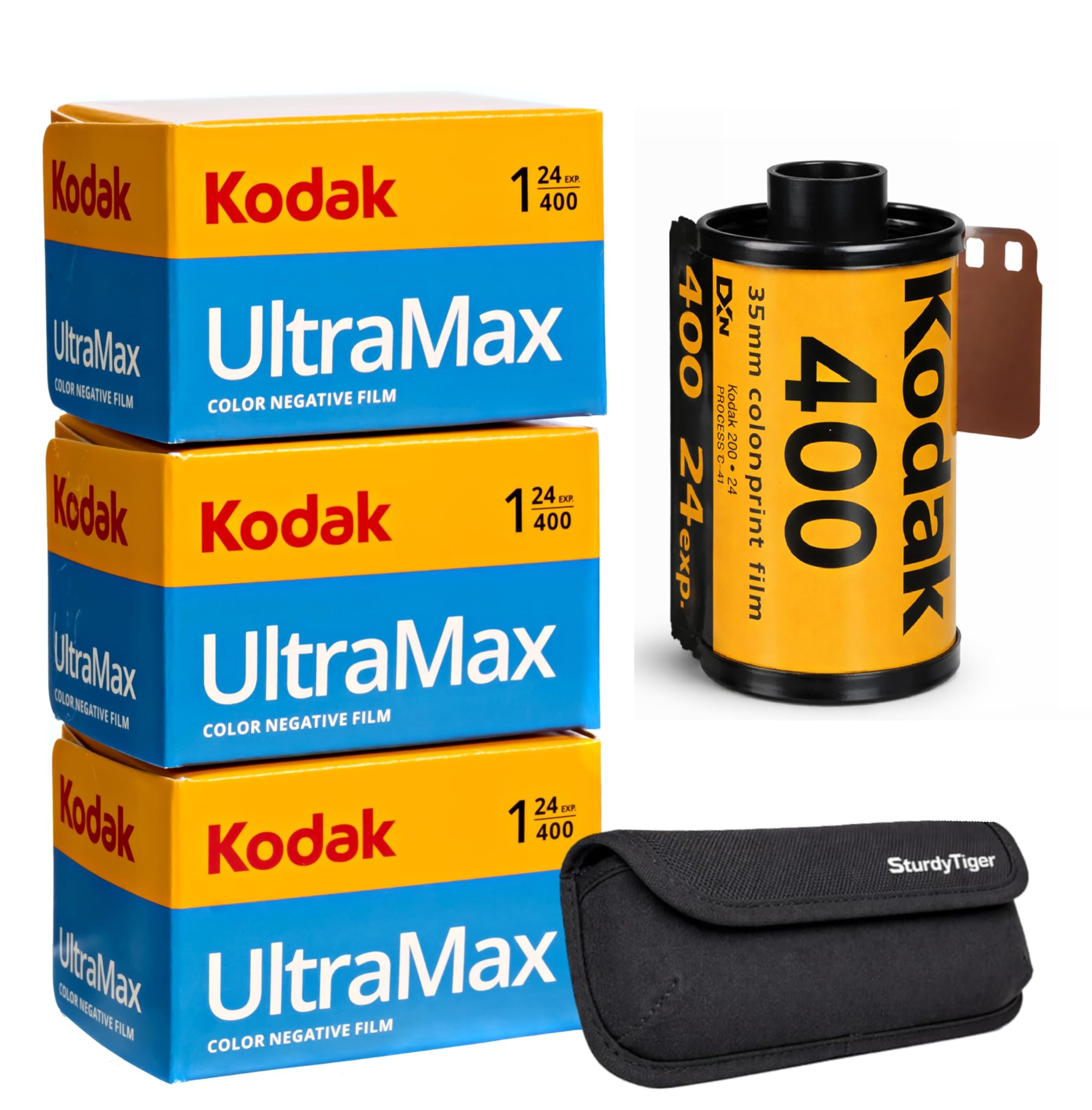
Kodak Ultramax 400 is the entry-level color negative film that’s been a staple for decades. This bundle includes three 24-exposure rolls and a sturdy storage case, making it a complete starter kit. The film delivers vibrant colors and fine grain for an ISO 400 emulsion, with reviewers praising its “nostalgic look” and “versatile for outdoor, low-light, family photos.”
The 24-exposure rolls are a good choice for beginners who want to finish a roll more quickly, or for casual shooters who don’t need 36 frames per session. The included storage case helps protect the film from heat and light during travel, which is a thoughtful addition for new film users.
Ultramax won’t match the tonal sophistication of Portra or the sharpness of Ektachrome, but it’s a perfectly capable everyday film. It works well in point-and-shoot cameras, vintage SLRs, and reusable film cameras. If you’re just getting into film and want a reliable, affordable color stock with a classic Kodak look, this bundle is a smart place to start.
Why it’s great
- Beginner-friendly with 24-exposure rolls and a protective storage case
- Classic Kodak look with vibrant colors and decent grain at ISO 400
Good to know
- Exposure count per roll is lower than 36-exposure options
- Not suitable for critical work where fine grain and subtle color are required
FAQ
What is the difference between color negative and slide film?
Can I use the same developer for different black-and-white films?
Final Thoughts: The Verdict
For most users, the 16mm film stock winner is the Kodak Professional Portra 400 120 Propack because it offers the most beautiful, natural color reproduction and the widest exposure latitude in a premium medium-format package. If you want vibrant slide film with extreme sharpness, grab the Kodak Professional Ektachrome E100. And for forgiving black-and-white work that handles mixed light and push-processing like a champ, nothing beats the Ilford HP5 Plus.