
That persistent hum, the occasional crackle when you bump a cable, or the low-end muddiness that saps the life from your vocal takes — every producer, podcaster, and live-sound engineer knows the feeling of chasing an audio gremlin that turns out to be a subpar XLR link. The right 18mm XLR plug cable isn’t just about passing signal; it’s about preserving the fidelity, transient clarity, and noise floor you paid for in your microphone.
I’m Min — the co-founder and writer behind Gadgets Feed. I’ve spent years analyzing the internal construction, conductor materials, shielding efficiency, and strain-relief geometry that separate a cable that lasts one tour from one that lasts a decade.
Whether you’re wiring a patch bay, building a portable podcast rig, or replacing a failing stage snake, finding the right best 18mm xlr plug means choosing between OFC copper purity, braid density, jacket flexibility, and connector lock-up — decisions that shape your sound for years.
How To Choose The Best 18mm XLR Plug
Selecting an XLR cable goes far beyond picking a color. The conductor gauge, shielding architecture, connector plating, and strain relief all directly impact both signal purity and how many gigs the cable survives. Here are the specs to prioritize for studio and live applications.
Conductor Gauge and Material
Thicker 21 or 22 AWG oxygen-free copper delivers lower resistance over longer runs and better low-frequency punch. Jumping to 24 AWG saves material cost but adds measurable signal loss beyond 15 feet. OFC also reduces oxidation over time, maintaining a consistent noise floor compared to standard copper conductors.
Shielding Architecture
A dual-layered approach — tightly woven copper braid plus aluminum foil wrap — stops both radio-frequency interference and electromagnetic hum from dimmer packs, power supplies, and wireless transmitters. Sparser braid densities let noise through; always check for high-coverage braid in the product images.
Connector Build and Strain Relief
Look for zinc-alloy or nickel-plated housings with a metal spring or molded strain-relief boot at the cable entry. A self-locking male plug reduces accidental disconnection, while gold-plated pins resist corrosion. For frequent patching and touring environments, the Neutrik-style chuck locking mechanism sets the durability benchmark.
Quick Comparison
On smaller screens, swipe sideways to see the full table.
| Model | Category | Best For | Key Spec | Amazon |
|---|---|---|---|---|
| Cable Matters 2-Pack XLR | Premium | Studio and live clarity | 21 AWG OFC conductor | Amazon |
| Neutrik Connector Set | Premium | Custom cable building, touring | Nickel housing, silver contacts | Amazon |
| Monster Prolink Studio Pro 2000 | Premium | High-fidelity home studio | Multi-gauge wire network | Amazon |
| Disino Multi-Color 6-Pack | Mid-Range | Color-coded patch bays | 4N OFC wire, dual shield | Amazon |
| D’Addario Custom Series | Mid-Range | Reliable studio workhorse | 24k gold-plated plugs | Amazon |
| EBXYA 1.5ft 6-Pack | Budget-Friendly | Rack wiring, short runs | 24 AWG OFC, color connectors | Amazon |
| Kxable 15ft Cable | Budget-Friendly | Long-run value for podcast | 22 AWG pure copper, self-locking | Amazon |
In‑Depth Reviews
1. Cable Matters 2-Pack Premium XLR to XLR Cables – 15ft
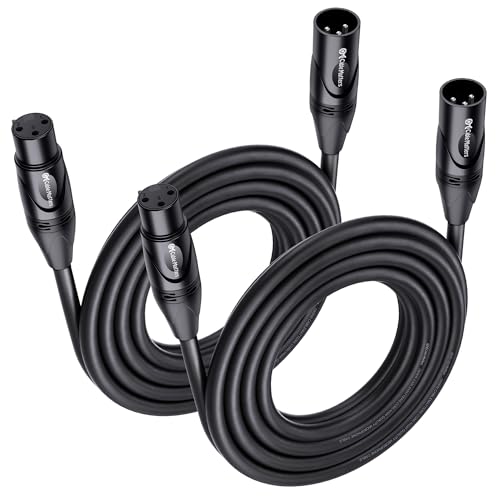
With a 21 AWG oxygen-free copper conductor — a step above the typical 24 AWG found at comparable prices — this cable delivers measurably lower resistance and more consistent transient response across long runs. The copper braided shielding wraps tightly around the twin conductors, and users report a noise floor that matches or beats star-quad designs costing twice as much.
The heavy-duty metal connectors use a molded strain relief that resists kinking and pull-out during live use. The soft PVC jacket lies flat on stage without memory curl, making cable management cleaner after each teardown. Reviews from Shure SM7B owners confirm zero hum or hiss even at high gain settings.
Sold as a two-pack, this set covers both sides of a stereo pair or provides a redundant spare for critical channels. The 15-foot length is long enough for standard mic-to-stage-box runs but short enough to avoid excess coil. For the balance of build quality, conductor gauge, and noise rejection, this is the most versatile pick across studio and stage.
Why it’s great
- Thick 21 AWG OFC conductor for low signal loss
- Dense copper braid shielding eliminates hum
- Two-pack value covers stereo or backup use
Good to know
- Jacket is slightly stiffer than silicone alternatives
- 15ft length may be too long for tight patch bays
2. Neutrik 6 NC3MXX & 6 NC3FXX 3 Pin Male & Female XLR Connector Set

Neutrik connectors are the de facto standard across professional touring, broadcast, and installation — and the NC3MXX and NC3FXX are the specific models that set that reputation. The nickel-plated zinc die-cast shell provides a solid electromagnetic shield, while the silver-plated contacts offer low contact resistance and superior corrosion resistance compared to generic nickel contacts.
The three-screw chuck locking mechanism delivers a grip that won’t loosen after repeated insertion cycles. Users report that the soldering process is straightforward, with clearly labeled pin 1, 2, and 3 solder cups and an ergonomic sleeve that screws together smoothly. A 10-minute assembly time per end is common for experienced techs.
The set includes six male and six female connectors, enough to build six full cables or repair a dozen broken ends. Neutrik connectors consistently survive thousands of plug/unplug cycles without cracking or losing retention force. For anyone building custom-length cables or replacing worn ends, this is the only choice worth considering.
Why it’s great
- Industry-standard locking mechanism lasts thousands of cycles
- Silver contacts provide lower resistance than generic pins
- Easy to solder with clearly marked cups
Good to know
- Requires soldering tools and skill to assemble
- Cable not included; must purchase separately
3. Monster Cable Prolink Studio Pro 2000 XLR Microphone Cable – 5 Foot

The Prolink Studio Pro 2000 uses Monster’s patented multi-gauge conductor network — combining heavier and lighter gauge wires within the same cable to balance low-end punch with high-frequency extension. Users report a noticeably fuller bass response and more articulate piano and synth transients when swapping from standard single-gauge cables in critical monitoring chains.
The gold XLR male-to-female connectors resist oxidation over years of use, and the cable jacket is thicker and more resistant to cable-wrap memory than typical PVC. At 5 feet, it’s purpose-designed for short interconnects between a preamp and interface or a short vocal mic drop. The heavy-gauge conductor handles sustained low-frequency information without droop.
Studio engineers comparing this to cables costing significantly more found it holds its own in terms of noise-floor consistency and transient accuracy. The unusual multi-gauge construction delivers measurable benefits in controlled listening tests. For a high-fidelity home studio or critical near-field monitoring setup, this cable justifies its premium positioning.
Why it’s great
- Multi-gauge network improves bass and transient accuracy
- Thick, durable jacket resists memory and wear
- Gold contacts prevent corrosion over time
Good to know
- Short 5ft length limits run applications
- Higher price tier than pro-standard alternatives
4. Disino 6 Pack Multi-Color XLR Patch Cables – 3.3 feet/1 Meter

The six colors — green, blue, purple, red, yellow, and orange — eliminate the need for labeling on crowded patch bays and stage racks, making troubleshooting a visual exercise rather than a trace. Inside each jacket, Disino uses 4N oxygen-free copper conductors with high-density braid plus aluminum foil for dual-layer noise rejection.
Users coming from budget-tier cables (Live Wire, Hosa) report a dramatic improvement in headroom and spectral clarity, with one former Mogami user noting these cables rival that premium brand in subjective listening. The double spring-style strain relief at each end prevents pull-out during frequent insertion cycles, and the heavy-duty metal housing with grip treads ensures a secure hold during plugging.
At 3.3 feet, these are ideal as patch cables between outboard gear, wireless mic receivers, and mixers. The color coding allows quick channel identification without reading tiny labels. Reviews confirm that even after two years of hard live use, all six cables remain fully operational with no intermittent failures.
Why it’s great
- Six bright colors enable instant channel identification
- 4N OFC with dual shielding matches higher-priced cables
- Spring strain relief survives heavy patching cycles
Good to know
- 3.3ft length is too short for standard mic runs
- Connector finish is not as refined as Neutrik
5. D’Addario Accessories Microphone Cable Custom Series – 5 Feet

The Custom Series from D’Addario — known in the audio world as Planet Waves — uses low-capacitance construction paired with 24k gold-plated XLR plugs to preserve high-frequency extension and signal purity. The gold plating also resists corrosion better than standard nickel, making this cable a solid choice for humid environments like outdoor festivals or basement studios.
The dual-layer shielding wraps the 24 AWG conductors tightly, and users confirm the cable is noiseless even when run alongside power cables. The thick stress-relief collar at the connector end prevents sharp bends from breaking internal solder joints. The locking mechanism engages with a definite click, indicating full insertion and secure retention.
The 5-foot version is best suited for short runs between a microphone stand and a floor interface or for linking outboard gear. Serious live-sound engineers note that for longer runs, the 10-foot and 25-foot versions include integrated cable clips. For a reliable, no-nonsense studio cable with corrosion-resistant gold contacts, this is a top mid-range contender.
Why it’s great
- 24k gold-plated plugs resist corrosion
- Low-capacitance design preserves high frequencies
- Thick strain relief prevents connector failure
Good to know
- 5ft version lacks built-in cable clips
- 24 AWG conductor thinner than premium alternatives
6. EBXYA XLR Cables 1.5 ft 6 Pack

EBXYA packs six 1.5-foot cables into a single box at an entry-level price, making this the most cost-effective solution for rack wiring, short patch runs, and splitting signals across a small mixer. Each cable uses 24 AWG oxygen-free copper conductors with a copper braid plus foil shield to reject interference in dense rack environments.
The self-locking male connectors with gold-plated pins provide a stable connection that won’t accidentally dislodge during patching. The color-coded connector bodies — different shades for each cable — help differentiate channels at a glance. Users running these as rack jumpers between compressors and equalizers report clean, balanced audio with no noticeable noise injection.
While the 24 AWG gauge is thinner than the 21 or 22 AWG found in premium cables, the short run length minimizes any loss impact. Build quality is higher than typical budget cables, with snug connector fit and consistent solder joints. For expanding a patch bay or running a multi-channel recording interface, this six-pack delivers exceptional per-cable value.
Why it’s great
- Six cables per box for high-density wiring projects
- Gold-plated pins and self-locking connectors
- Color-code bodies for quick channel ID
Good to know
- 24 AWG thinner than recommended for long runs
- 1.5ft length limits use to rack wiring only
7. Kxable XLR Microphone Cable 15 FT
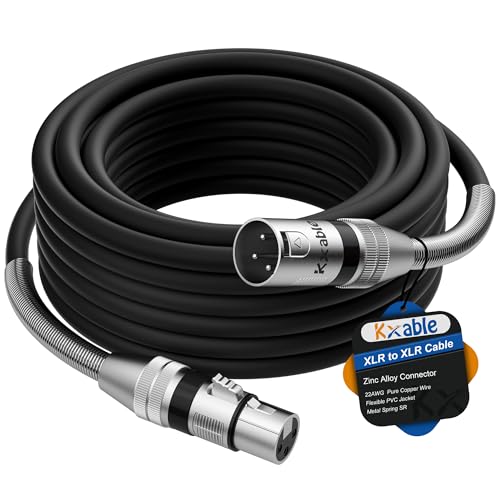
The Kxable 15-foot XLR offers a 22 AWG pure copper conductor — thicker than many budget cables — combined with a zinc-alloy shell that provides a more robust connection than the aluminum housings found at comparable price points. The male plug’s self-locking connector design secures firmly without needing excessive insertion force.
The copper braid plus aluminum foil shielding effectively rejects EMI and RFI in both studio and live contexts. The imported high-elastic PVC jacket resists cracking in cold conditions, while the metal spring strain relief at the cable entry adds flexibility without breaking. One reviewer measured a noise floor within 0.5 dB of their premium star-quad reference cable.
Kxable offers this in lengths from 1 to 200 feet and multi-pack configurations up to 50 cables, making it adaptable for everything from a single podcast mic to a full stage snake. A one-year warranty backs the purchase. For a 15-foot cable at a price that undercuts the competition while using 22 AWG wire, this is the strongest budget-friendly option for longer runs.
Why it’s great
- 22 AWG pure copper for better long-run performance
- Zinc-alloy shell stronger than aluminum alternatives
- Self-locking plug prevents accidental disconnects
Good to know
- Some users report failure after 6 months of heavy use
- Jacket flexibility not as high as premium silicone
FAQ
Does using a thicker AWG conductor actually improve sound quality?
Should I buy pre-made cables or build my own with Neutrik connectors?
What does the 18mm specification refer to in an XLR plug?
Final Thoughts: The Verdict
For most users, the best 18mm xlr plug winner is the Cable Matters 2-Pack Premium XLR because its 21 AWG OFC conductor and dense copper braid shielding deliver studio-grade noise rejection and signal clarity at a mid-range price that beats nearly everything in its class. If you need custom-length cables that survive touring abuse, grab the Neutrik connector set and build to spec. And for a color-coded patch bay solution that rivals higher-priced cables, nothing beats the Disino Multi-Color 6-Pack.