
The search for a genuine 1997 cell phone experience is about more than just a device—it’s about reclaiming a time when a phone was a tool for conversation, not a portal to infinite distraction. Whether you are chasing the tactile satisfaction of a physical keypad, the liberation of a dumb phone, or a nostalgic prop that captures the pre-smartphone era, the market today offers a strange mix of genuine retro revivals and modern reinterpretations. Finding the one that actually delivers that 90s era authenticity without becoming a frustrating paperweight requires untangling the network, battery, and build quality realities of 2024.
I’m Min — the co-founder and writer behind Gadgets Feed. I spend my days deep in market research and specification analysis, dissecting the cellular bands, battery chemistries, and build materials that separate a true retro experience from a cheap replica..
This guide walks you through the top options that recapture the spirit of 1997, from Nokia revivals to vintage-styled desk phones. You will learn which models actually work on modern networks and which ones are pure novelties. We have tested the compatibility and build quality to help you find the best 1997 cell phone that genuinely fits your needs.
How To Choose The Best 1997 Cell Phone
Choosing a phone that evokes the 1997 era is a minefield of technical compromises. The biggest mistake is buying a phone based purely on looks, only to find it cannot connect to any modern network. You need to balance visual nostalgia with the reality of 4G LTE compatibility and battery life.
Network Compatibility: The Make-or-Break Spec
The single most important factor is the cellular technology. Phones marketed as 2G-only are essentially Bluetooth toys or paperweights on modern US networks, as carriers have largely shut down 2G and 3G towers. You must look for phones that explicitly state 4G LTE or 4G VoLTE support, particularly ones confirmed to work with T-Mobile or AT&T. Always check the fine print—many retro-styled phones are international versions with limited US band support.
Battery Life and Standby Performance
One of the defining features of a 1997 phone was its legendary endurance. Modern retro phones vary wildly here. A 1300mAh battery in a basic flip phone can deliver 7-8 hours of talk time and a week of standby. Some novelty phones pack a massive 4800mAh cell for weeks of idle time. Do not assume the largest battery is always the best—focus on real-world talk time ratings and standby claims from verified customer reviews.
Build Quality and Authentic Feel
The tactile experience—the click of the keypad, the heft of the device, the feel of the plastic—is what makes a retro phone convincing. Look for phones with sturdy, unibody construction (like the Nokia monoliths of old) rather than cheap, creaky plastic. The weight matters too: a phone that feels hollow in the hand will never deliver the genuine 90s nostalgia you are after.
Quick Comparison
On smaller screens, swipe sideways to see the full table.
| Model | Category | Best For | Key Spec | Amazon |
|---|---|---|---|---|
| Nokia 3210 (2024 Revival) | Modern Revival | Authentic daily driver | 4G LTE, 1450mAh | Amazon |
| Artfone G3 Flip Phone | Modern Flip | Senior-friendly basic calls | 4G LTE, 1300mAh | Amazon |
| Easyfone Prime-A1 Pro | Modern Flip | Senior safety and simplicity | 4G LTE, 1500mAh | Amazon |
| Opis PushMeFon 4G | Desk Phone | Dementia-friendly desk phone | 4G LTE, 2.2 lbs | Amazon |
| Vintage Bluetooth Desk Phone | Bluetooth Prop | Retro decor with calling | Bluetooth only, 10.2 inches | Amazon |
| Tosuny Retro Brick Phone | 2G Novelty | Party prop / Bluetooth speaker | 2G only, 2400mAh | Amazon |
| Limouyin Retro Brick Phone | 2G Novelty | Long standby novelty | 2G only, 4800mAh | Amazon |
In‑Depth Reviews
1. Nokia 3210 (2024 Revival)

This is the one that actually feels like 1997. The Nokia 3210 revival retains the iconic candybar silhouette, the satisfying tactile keypad with substantial click feedback, and a unibody construction that feels dense and indestructible in hand. Unlike pure novelties, this device runs on 4G LTE and comes with a 1450mAh battery that reliably delivers several days of standby with moderate use—exactly the kind of endurance that defined the original era. The inclusion of Snake (the original pit version) is a masterstroke of software nostalgia.
Network compatibility is the strongest of any retro phone on this list, with confirmed support for T-Mobile and its MVNOs like Mint and Boost. However, it is an international model and does not work with AT&T or Verizon. The front-facing VGA camera is more of a charming gimmick than a functional tool—expect grainy, low-resolution shots that look authentically 1999. The Micro USB charging port is a minor inconvenience in 2024, but the battery life makes it a tolerable trade-off.
Customer feedback consistently praises the battery performance and the genuine value of a dumb phone detox. The build quality matches the original’s sturdiness, and the T9 predictive text input requires manual activation but works well once configured. If you want a phone you can actually use as a daily driver that captures the 1997 spirit without needing to fiddle with constant recharges or network drops, this is the clear winner.
Why it’s great
- True 4G LTE compatibility with T-Mobile networks
- Dense, durable unibody build quality
Good to know
- Does not work on AT&T or Verizon
- Micro USB charging port
2. Artfone G3 Flip Phone
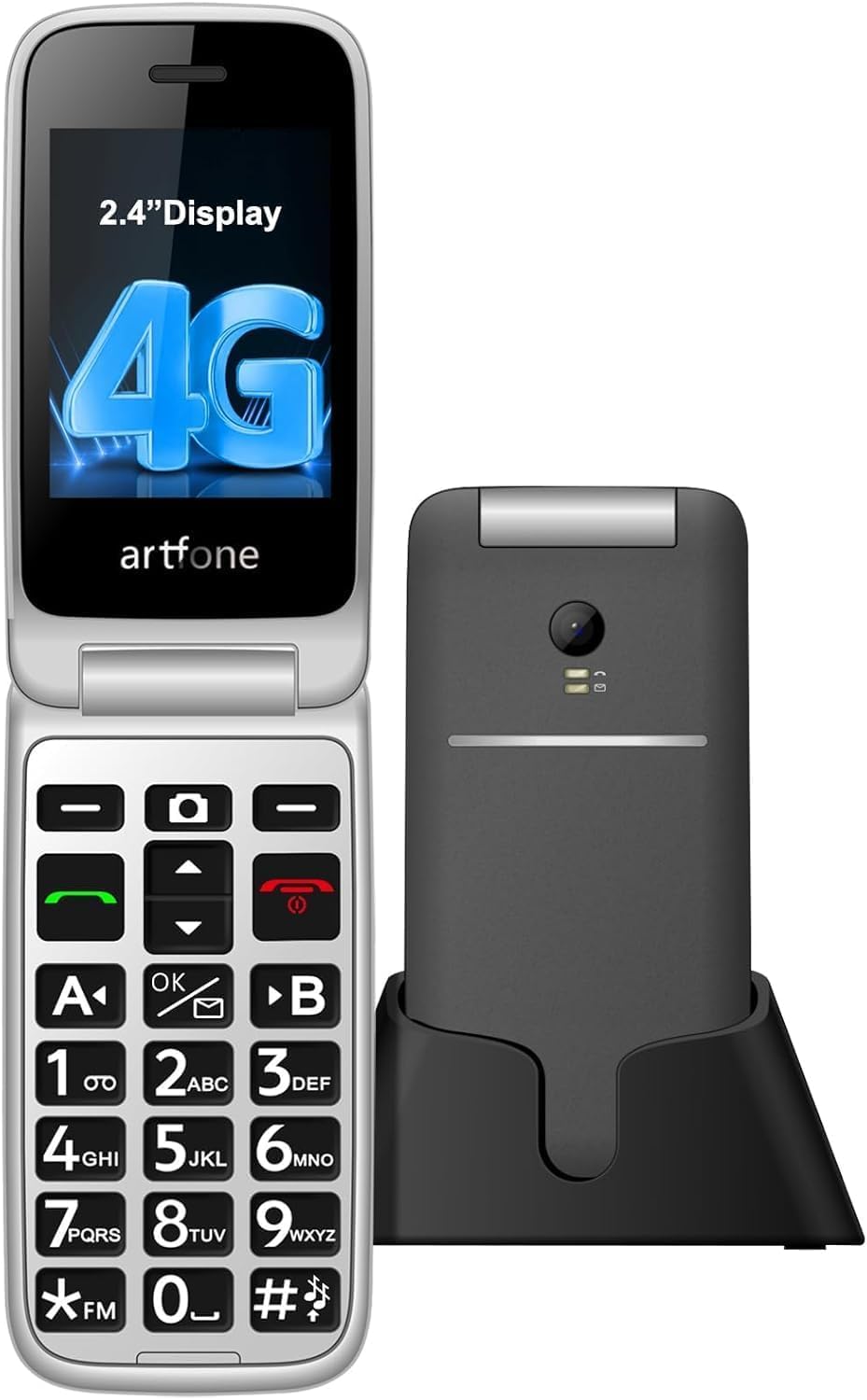
The Artfone G3 is the ultimate modern interpretation of a 1997 cell phone experience, designed with a flip form factor and a focus on pure, distraction-free communication. It features a 2.4-inch LCD display with large fonts and a physical keypad with enormous, backlit buttons that provide excellent tactile feedback—significantly reducing dialing errors. The 1300mAh battery delivers 7–8 hours of talk time and over a week of standby, which is right in line with the endurance standards of the late 90s flagship phones.
Network-wise, this phone runs on 4G VoLTE, but it is only compatible with T-Mobile and its MVNOs—it explicitly does not work on AT&T or any CDMA carrier like Verizon. The inclusion of a dedicated SOS button, a charging dock (which is a rare and welcome convenience), and Bluetooth connectivity makes it a highly functional daily tool. The 0.3MP rear camera is present but produces images that are best described as “authentically nostalgic” in their low resolution.
User reviews highlight the excellent user interface and the convenience of the charging base. The phone feels a bit plasticky and lightweight compared to the Nokia monoliths, but the trade-off is a very comfortable pocketability. Voice mail setup is not intuitive and requires some manual configuration. For anyone seeking a simple, reliable dumb phone with a flip mechanism that actually works on a modern 4G network, the G3 is a fantastic choice.
Why it’s great
- Low-light backlit keypad with large, easy-press buttons
- Convenient charging dock and USB-C port
Good to know
- Plasticky build quality
- Limited to T-Mobile network
3. Easyfone Prime-A1 Pro

The Easyfone Prime-A1 Pro bridges the gap between a 1997 cell phone aesthetic and modern senior-friendly functionality. It features a classic flip design with a 2.4-inch HD main display and a 1.44-inch external screen, both rendered in large fonts. The 1500mAh battery is the highest capacity among the 4G flip phones here, providing slightly better talk time than the G3—real-world reports suggest 8-9 hours of talk and over a week of standby, which is genuinely impressive for a small flip phone.
What sets this model apart is the dedicated “BLOCK” button, which instantly adds harassing numbers to a blacklist with one press—a feature that did not exist in 1997 but is invaluable now. The SOS button automatically cycles through five emergency contacts until someone answers, sending alerts and messages simultaneously. The speaker is exceptionally loud and is HAC-compatible for hearing aid users, making calls very audible even in noisy environments.
The phone is locked to T-Mobile networks and comes with a SpeedTalk SIM card included. Some users report the external display failing after a few months, which is a reliability concern. The “Photo Speed Dial” button is a clever addition, allowing you to assign contact photos for one-touch calling, which is very user-friendly for those with memory loss. Overall, this is a premium-feeling flip phone with excellent battery life and safety features, but its build quality consistency is not flawless.
Why it’s great
- Dedicated block button for spam call prevention
- Extra-loud, HAC-compatible speaker
Good to know
- Reported external display durability issues
- Vendor locked to T-Mobile networks
4. Opis PushMeFon 4G

The Opis PushMeFon 4G is a radical departure: a desktop cellular phone that mimics a 1970s landline handset but runs on a 4G LTE network. This is not a portable device—it weighs 2.2 pounds and is designed to sit on a desk, making it perfect for dementia patients or anyone who finds hand-held phones unwieldy. It supports AT&T, T-Mobile, and many MVNOs, making it the most carrier-flexible retro device on this list. The authentic mechanical ringer and the red light that flashes when a call comes in are pure nostalgic gold.
The hardware is a push-button desk phone with a substantial base and a heavy handset that feels like the real thing. It has no screen, no internet, and no apps—just pure voice calling. The SIM card slot is notoriously flimsy; several users report it losing connection, which causes the phone to fail intermittently. Taping the SIM in place can mitigate this, but it is a frustrating workaround for a premium-priced device. Customer service from the German manufacturer is reportedly excellent when issues arise, but the fundamental hardware fragility is a real pain point.
For its intended use—providing a familiar, simple communication tool for elderly relatives—the PushMeFon is unmatched in concept. The execution, however, is spotty. The dial tone and ring are authentic and satisfying, and the bulky design is genuinely reassuring to grip. If you are willing to deal with potential SIM slot issues and the occasional firmware glitch, you get a device that offers a truly unique 1997-meets-1970s calling experience.
Why it’s great
- Broad carrier compatibility including AT&T and T-Mobile
- Authentic heavy handset and ringer feel
Good to know
- Flimsy SIM card slot prone to disconnection
- Heavy (2.2 lbs) and not portable
5. Vintage Bluetooth Desk Phone (Pink)
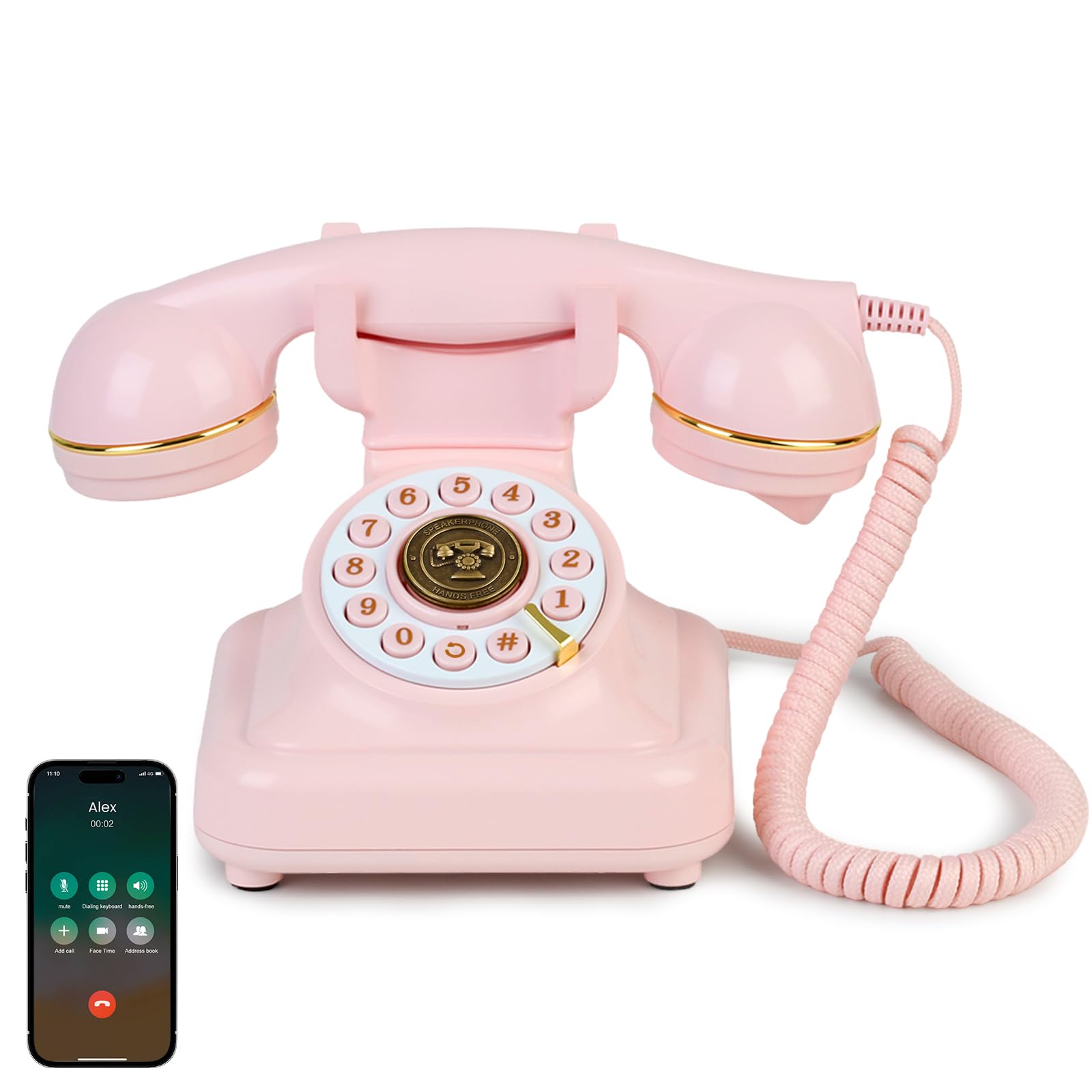
This is not a real cell phone in the traditional sense—it is a decorative desk handset that connects to your smartphone via Bluetooth. The design features a luxurious pink finish with gold accents and a faux-rotary dial that is actually a modern push-button system. It is built from ABS plastic, which gives it a light, slightly cheap feel compared to the Opis, but it looks fantastic on a console table or home office desk. The loud, adjustable vintage-style ringtones are a real highlight.
Functionally, it pairs quickly with your iPhone or Android via Bluetooth and can make and receive calls through the handset with clear audio quality. The battery is a non-standard cell that powers the Bluetooth circuitry. The range is impressive—verified to work across a 2500 sq ft house. Since it has no SIM card slot, there are no cellular compatibility concerns, and it works with any modern smartphone.
Customer feedback is overwhelmingly positive for its intended role as a decor piece with a secondary calling function. It is popular among preteens who want a phone without the distraction of a screen. The biggest drawback is its inherent limitation: it is completely dependent on a paired smartphone and has no standalone functionality. If the paired phone is out of range or dead, this becomes a pure paperweight. It is perfect for the aesthetic of 1997 without the network headaches, but it is not a real phone replacement.
Why it’s great
- Gorgeous vintage aesthetic with gold accents
- Reliable Bluetooth connection and clear call quality
Good to know
- Requires a paired smartphone to function
- ABS plastic feels lightweight and cheap
6. Tosuny Retro Brick Phone

The Tosuny Retro Brick Phone is the quintessential “looks like a 1997 brick but has a dark secret” device. The gold finish and oversized keypad mimic the iconic Motorola DynaTAC silhouette, and the 2400mAh battery promises serious longevity—but this is a 2G-only phone. In the United States, 2G networks have been almost entirely decommissioned, meaning this device cannot make actual cellular calls. It is functionally a Bluetooth toy with a speaker and MP3 player.
The Bluetooth works well for connecting to your smartphone for calls, and the 1.77-inch screen is tiny but usable for navigation. The built-in FM radio and voice-changing feature are fun party tricks. The build quality is surprisingly solid—the plastic is thick and the battery door feels secure—but the phone is much smaller than a real DynaTAC, which disappoints many buyers expecting a life-size prop. It supports four SIM cards with four-way standby, but since none of those SIMs will find a 2G signal, it is a moot point.
Customer reviews are sharply divided. Those who understand it is a novelty Bluetooth device love the retro look and the ability to make Bluetooth calls. Others who bought it expecting a functional cell phone are deeply frustrated. The IMEI cloning issue reported by one user is a serious red flag—cloned IMEIs can cause the phone to be blocked by carriers. Approach this purely as a Bluetooth retro handset, not as a viable daily driver.
Why it’s great
- Authentic brick phone aesthetic and color options
- Includes Bluetooth, MP3, and FM radio
Good to know
- 2G only—cannot make cellular calls in the US
- Smaller than full-size retro props
7. Limouyin Retro Brick Phone

The Limouyin takes the retro brick concept and doubles down on battery capacity with a massive 4800mAh lithium cell. In theory, this delivers weeks of standby time and days of light use. In practice, because this is also a 2G-only device, the battery advantage is largely wasted—you cannot use it as a primary phone on any US carrier. The 1.77-inch main screen is low resolution, and the user interface is basic but functional for the handful of features it supports.
Like the Tosuny, it supports Bluetooth dialing, MP3 playback, and an external radio. It also boasts “face recognition” biometric security, which is a silly gimmick on a feature phone with a tiny camera. The build quality is adequate, though the phone is not as large as a genuine 1990s brick—multiple reviews note it is smaller than expected. The USB Type-C charging port is a welcome modern convenience, but it cannot compensate for the fundamental network incompatibility.
Customer sentiment is similar to the Tosuny: buyers who treat it as a toy for laughs are delighted, while those seeking a functional retro cell phone are disappointed. The “voice change” feature is a hilarious bonus for prank calls over Bluetooth. If you want a fun, battery-heavy brick you can use as a Bluetooth speaker or a party prop, it works fine. If you need a daily driver that actually makes calls on modern networks, skip this entirely.
Why it’s great
- Massive 4800mAh battery for extended standby
- USB Type-C charging
Good to know
- 2G only—useless for cellular calls in the US
- Smaller than a true retro brick phone
FAQ
Will a 2G-only retro phone work on any US carrier today?
Do I need a special SIM card for a retro 4G flip phone?
Final Thoughts: The Verdict
For most users, the 1997 cell phone experience is best captured by the Nokia 3210 (2024 Revival) because it marries the iconic candybar design with genuine 4G LTE compatibility and a battery that lasts for days. If you want a functional dumb phone for distraction-free calls, grab the Artfone G3. And for a desk-bound, dementia-friendly solution with excellent carrier support, nothing beats the Opis PushMeFon 4G.