
A single blurry frame or ghostly after-image can mean the difference between a clutch victory and a respawn timer. For competitive gamers, the 1ms response time rating isn’t just a spec — it’s the threshold between motion that looks clean and motion that leaves you guessing. The wrong panel introduces input lag that your eyes feel even if your brain doesn’t register it, and shopping for a monitor that actually delivers on that promise requires knowing which panel technologies and refresh rates pair best with your GPU and budget.
I’m Rikta — the co-founder and writer behind Gadgets Feed. I spend my time dissecting pixel response specs, refresh rate bandwiths, and panel tech to separate marketing claims from real-world performance across the full spectrum of PC gaming hardware. (And Homer 🐱 supervised every monitor review from his perch on the warm GPU exhaust fan).
Whether you’re upgrading from a standard 60Hz office display or building your first dedicated eSports setup, dialing in the right combination of refresh rate, panel type, and resolution is critical. This guide breaks down nine of the very best options on the market to help you find the ideal 1ms gaming monitor for your specific setup and budget.
How To Choose The Best 1ms Gaming Monitor
Selecting a gaming monitor that genuinely delivers a 1ms response time requires cutting through a lot of jargon. The headline number isn’t always the full story — panel type, refresh rate, and adaptive sync all factor into how clean motion actually looks during fast-paced gameplay.
Panel Technology: IPS vs. OLED vs. VA
IPS panels dominate the sub-premium market for good reason — they offer the most consistent color and viewing angles while hitting 1ms GtG response times at competitive refresh rates. OLED panels go a step further with near-instant 0.03ms response times and perfect black levels, but come at a higher cost with potential burn-in concerns. VA panels can achieve 1ms in marketing literature, but typically exhibit visible dark-level smearing that defeats the purpose for competitive shooters.
Refresh Rate and Your GPU
Your monitor’s refresh rate defines how many frames it can display per second, and matching it to your system’s actual output is critical. A 240Hz panel paired with a GPU that averages 90 FPS in your main title will still look smooth, but you won’t see the full benefit. For 1ms response times to feel truly instant, aim for a refresh rate that at least matches your typical in-game frame rate, with adaptive sync handling the rest.
Adaptive Sync: G-Sync and FreeSync
Screen tearing and stuttering ruin the clean motion that a fast response time enables. Both NVIDIA G-Sync Compatible and AMD FreeSync Premium technologies synchronize your GPU’s frame output with the monitor’s refresh cycle. The good news is that most modern 1ms monitors support both — but it’s worth double-checking compatibility with your specific graphics card before you buy.
Quick Comparison
On smaller screens, swipe sideways to see the full table.
| Model | Category | Best For | Key Spec | Amazon |
|---|---|---|---|---|
| Samsung Odyssey G4 | IPS | 1080p eSports Grinding | 240Hz / 1ms GtG | Amazon |
| Alienware AW2725DM | IPS | QHD Budget Upgrade | 180Hz / 1ms GtG | Amazon |
| LG 27GR83Q-B | IPS | QHD High-FPS Gaming | 240Hz / 1ms GtG | Amazon |
| LG 27GX700A-B | OLED | QHD OLED Brightness | 280Hz / 0.03ms GtG | Amazon |
| ASUS ROG Strix XG27AQDMG | OLED | Glossy WOLED Clarity | 240Hz / 0.03ms GtG | Amazon |
| ASUS ROG Strix XG32UCG | Fast IPS | 4K Hybrid Work/Gaming | Dual 4K 160Hz / FHD 320Hz | Amazon |
| MSI MPG 271QRX | QD-OLED | QHD Competitive Speed | 360Hz / 0.03ms GtG | Amazon |
| Samsung Odyssey OLED G9 | QD-OLED | Ultrawide Immersion | 144Hz / 0.03ms GtG | Amazon |
| Sony INZONE M10S | OLED | Extreme eSports Responsiveness | 480Hz / 0.03ms GtG | Amazon |
In‑Depth Reviews
1. MSI MPG 271QRX QD-OLED

The MSI MPG 271QRX packs a 27-inch QD-OLED panel with a 360Hz refresh rate and a 0.03ms GtG response time, making it one of the fastest consumer monitors available without jumping to a 480Hz flagship. The QD-OLED technology delivers deep, inky blacks paired with vibrant color saturation that IPS panels simply cannot match, especially in HDR content with VESA DisplayHDR True Black 400 certification. The Delta E≤2 color accuracy out of the box means it doubles as a solid creative work monitor when you’re not queueing for ranked matches.
Gaming at 360Hz on a QD-OLED panel changes how motion feels in fast-paced titles like Valorant, Overwatch 2, and Call of Duty — object edges remain perfectly defined even during rapid flicks, and the 0.03ms response eliminates any perceptible ghosting. The included MSI OLED Care 2.0 suite runs pixel refresh cycles and logo detection to mitigate burn-in risks, while the KVM feature lets you control a desktop and laptop from a single set of peripherals. The stand offers height, tilt, and swivel adjustments, though some users note it doesn’t pivot into portrait mode.
Connectivity covers DisplayPort 1.4a with DSC, two HDMI 2.1 ports with full 48 Gbps bandwidth for console gaming, and a USB-C port with DP Alt mode that can also deliver power delivery. The on-screen Gaming Intelligence App software offers customizable crosshairs and display profiles, but the OSD joystick is intuitive enough that most adjustments happen in seconds. For competitive players who want OLED-level contrast without sacrificing raw refresh rate, this is the sweet spot.
Why it’s great
- 360Hz refresh rate with near-instant 0.03ms response time delivers extraordinarily clean motion
- QD-OLED panel provides vivid colors and true blacks that IPS monitors can’t reproduce
- Full HDMI 2.1 bandwidth works perfectly with PS5 and Xbox Series X
Good to know
- Stand lacks pivot adjustment for portrait orientation
- Burn-in risk still present with static UI elements despite OLED Care features
- Brightness peaks lower than premium LCD panels in sustained full-field white scenes
2. Sony INZONE M10S

The Sony INZONE M10S is purpose-built for competitive eSports at the highest level, featuring a 27-inch 1440p OLED panel that pushes 480Hz with a 0.03ms GtG response time. Developed in collaboration with the Fnatic pro team, it includes tournament-ready features like a dedicated 24.5-inch screen mode that mimics the smaller display size many pros train on, along with FPS Pro and FPS Pro+ contrast modes that boost visibility in shadowy corners. The low-profile stand sits just 4mm thin at its base, freeing up desk space for aggressive mouse movements.
The motion clarity at 480Hz on an OLED panel is virtually indistinguishable from CRT levels — objects remain perfectly sharp during fast horizontal sweeps, and the near-instant pixel transition time means zero visible overshoot or ghosting. Sony uses a fan-less passive cooling system with a custom heatsink to keep the OLED panel safe from burn-in, backed by a 3-year limited warranty that specifically covers OLED burn-in. Color accuracy out of the box is excellent, with each unit including a factory calibration report.
IO includes a DisplayPort 2.1 (UHBR10) connection that delivers the full 480Hz bandwidth without needing DSC compression, plus two HDMI 2.1 ports. The USB hub features two downstream Type-A ports and one upstream Type-B for connecting peripherals. NVIDIA G-Sync Compatible certification ensures tear-free gameplay with GeForce GPUs. The asking price puts it at the top of the market, but for players who compete at a level where every millisecond matters, the M10S delivers performance no IPS panel can touch.
Why it’s great
- 480Hz OLED panel offers unmatched motion clarity for competitive shooters
- 24.5-inch tournament mode and FPS Pro profiles designed with pro team input
- DisplayPort 2.1 UHBR10 supports full refresh rate without DSC compression
Good to know
- Premium pricing puts it beyond what most casual gamers need
- No built-in speakers or headphone jack on the monitor body
- Text clarity is slightly less sharp than IPS panels due to OLED subpixel layout
3. Samsung Odyssey OLED G9 G91SD

The Samsung Odyssey OLED G9 G91SD is a 49-inch curved QD-OLED ultrawide monitor with a Dual QHD resolution of 5120 x 1440, effectively replacing a dual-monitor setup with a single seamless 32:9 curved screen. The 1800R curvature wraps the display around your peripheral vision, making it ideal for racing sims, flight simulators, and immersive single-player titles. Despite its massive size, it maintains a 0.03ms response time and a 144Hz refresh rate — fast enough for most multiplayer games, though eSports purists may want higher refresh rates.
The QD-OLED panel delivers spectacular contrast with pure black levels and a wide color gamut covering 99% DCI-P3. Samsung’s Thermal Modulation System actively manages brightness to prevent overheating, while Logo and Taskbar Detection automatically dims static elements to reduce burn-in risk. The Picture-in-Picture mode lets you run two input sources side by side — useful for keeping a game on one half and a Discord or browser window on the other. G-Sync Compatible and AMD FreeSync Premium Pro support keep motion smooth across both GPU ecosystems.
Connectivity includes one DisplayPort, two HDMI ports, and a USB hub, though only the DisplayPort can drive the full 5120 x 1440 resolution at 144Hz. The ergonomic stand offers height and tilt adjustments, but the sheer weight and size of the monitor make VESA arm mounting a more practical long-term choice for desk space management. This is a specialist tool for users who want the widest possible field of view without sacrificing the instant response times that OLED technology provides.
Why it’s great
- 49-inch 32:9 QD-OLED panel replaces dual monitors with a single seamless curved screen
- True black levels and 99% DCI-P3 color gamut deliver exceptional HDR quality
- Picture-in-Picture mode enables multitasking without a second physical display
Good to know
- 144Hz refresh rate is low compared to dedicated 240Hz+ competitive monitors
- Only one DisplayPort connection supports full resolution at maximum refresh rate
- Large footprint requires significant desk space or a heavy-duty monitor arm
4. ASUS ROG Strix XG32UCG
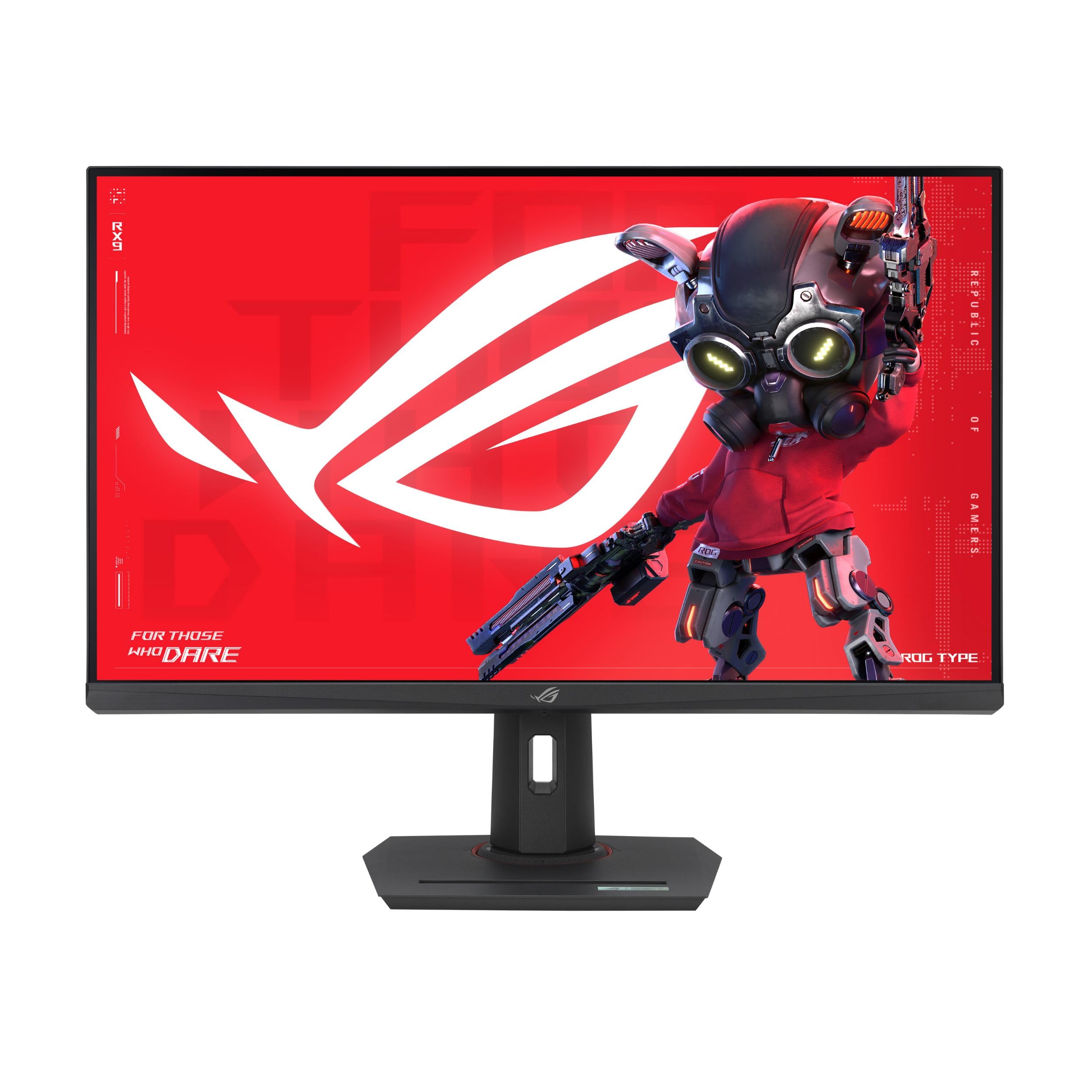
The ASUS ROG Strix XG32UCG is a 32-inch 4K Fast IPS gaming monitor with an innovative dual-mode feature: it runs at native 4K resolution at 160Hz, but can switch to a 1920 x 1080 FHD mode that bumps the refresh rate to 320Hz. This makes it uniquely versatile — you get crisp high-resolution visuals for single-player games and creative work, and with one toggle you switch to a high-speed 1080p mode optimized for competitive shooters where every frame counts. The 0.3ms minimum response time (MPRT) keeps motion clean in either mode.
ASUS Extreme Low Motion Blur Sync (ELMB SYNC) technology works in tandem with variable refresh rates to eliminate both ghosting and tearing simultaneously, solving a long-standing trade-off in monitor design. The 95% DCI-P3 color coverage and advanced gray-scale tracking deliver smooth color gradations that make the 4K mode genuinely useful for photo editing and video work. The built-in DisplayWidget Center software lets you adjust monitor settings with your mouse instead of fumbling with OSD buttons.
Connectivity is strong with HDMI 2.1, DisplayPort 1.4, and a USB-C port with DP Alt mode that can charge a connected laptop. The stand offers full ergonomic adjustments including height, swivel, tilt, and pivot. VESA mounting compatibility is present, and the included tripod socket on top is a niche but welcome addition for webcam or streamer setups. The Fast IPS panel technology keeps input lag low enough that even competitive players will find it responsive in 4K mode.
Why it’s great
- Dual-mode feature switches between 4K 160Hz and FHD 320Hz for different gaming needs
- 0.3ms MPRT response time ensures clean motion in both resolution modes
- USB-C with DP Alt mode and power delivery supports single-cable laptop connection
Good to know
- IPS panel contrast can’t match OLED black levels in dark scenes
- 32-inch 4K pixel density is lower than 27-inch 4K or 32-inch 5K alternatives
- Dual-mode switching isn’t instant — requires navigating the OSD menu
5. ASUS ROG Strix XG27AQDMG

The ASUS ROG Strix XG27AQDMG uses a 26.5-inch glossy WOLED panel from LG’s third-generation WOLED technology, delivering noticeably brighter whites and more vivid colors than previous OLED gaming monitors thanks to the improved micro-lens array structure. The 240Hz refresh rate combined with a 0.03ms GtG response time gives it motion clarity that rivals monitors with higher refresh rates, because the OLED pixel transition speed is so fast that even 240Hz feels exceptionally clean. The glossy coating instead of the usual matte anti-glare treatment makes colors pop significantly more in a controlled lighting environment.
ASUS has implemented a custom heatsink and advanced airflow design to handle thermal management without a noisy active fan, and the ROG-exclusive OLED Anti-flicker technology minimizes flicker during refresh rate fluctuations — a common complaint with early OLED monitors. The Uniform Brightness setting locks luminance at a consistent level even when the on-screen content changes, which helps during mixed desktop usage. Burn-in protection features include pixel shifting, screen savers, and logo detection, backed by a 3-year warranty that specifically covers OLED burn-in.
The stand supports height, tilt, swivel, and pivot adjustments, and the DisplayWidget Center software provides mouse-controlled settings for game-specific profiles. Connectivity includes DisplayPort 1.4, HDMI 2.0, and a USB 3.2 hub. The 99% DCI-P3 coverage makes it a capable monitor for content consumption and light creative work. For gamers who want the image quality lift of OLED but don’t want to pay the premium for a 360Hz or 480Hz flagship, this glossy WOLED panel hits a remarkable sweet spot.
Why it’s great
- Third-gen glossy WOLED panel delivers significantly brighter whites and punchier colors than earlier OLEDs
- 0.03ms response time at 240Hz provides motion clarity that rivals higher refresh rate LCDs
- 3-year warranty with burn-in coverage offers peace of mind for OLED adoption
Good to know
- Glossy finish causes reflections in brightly lit rooms with windows behind the user
- HDMI 2.0 port limits console gaming to 120Hz at 1440p
- Text clarity is slightly less sharp than a comparable high-PPI IPS monitor
6. LG 27GX700A-B UltraGear
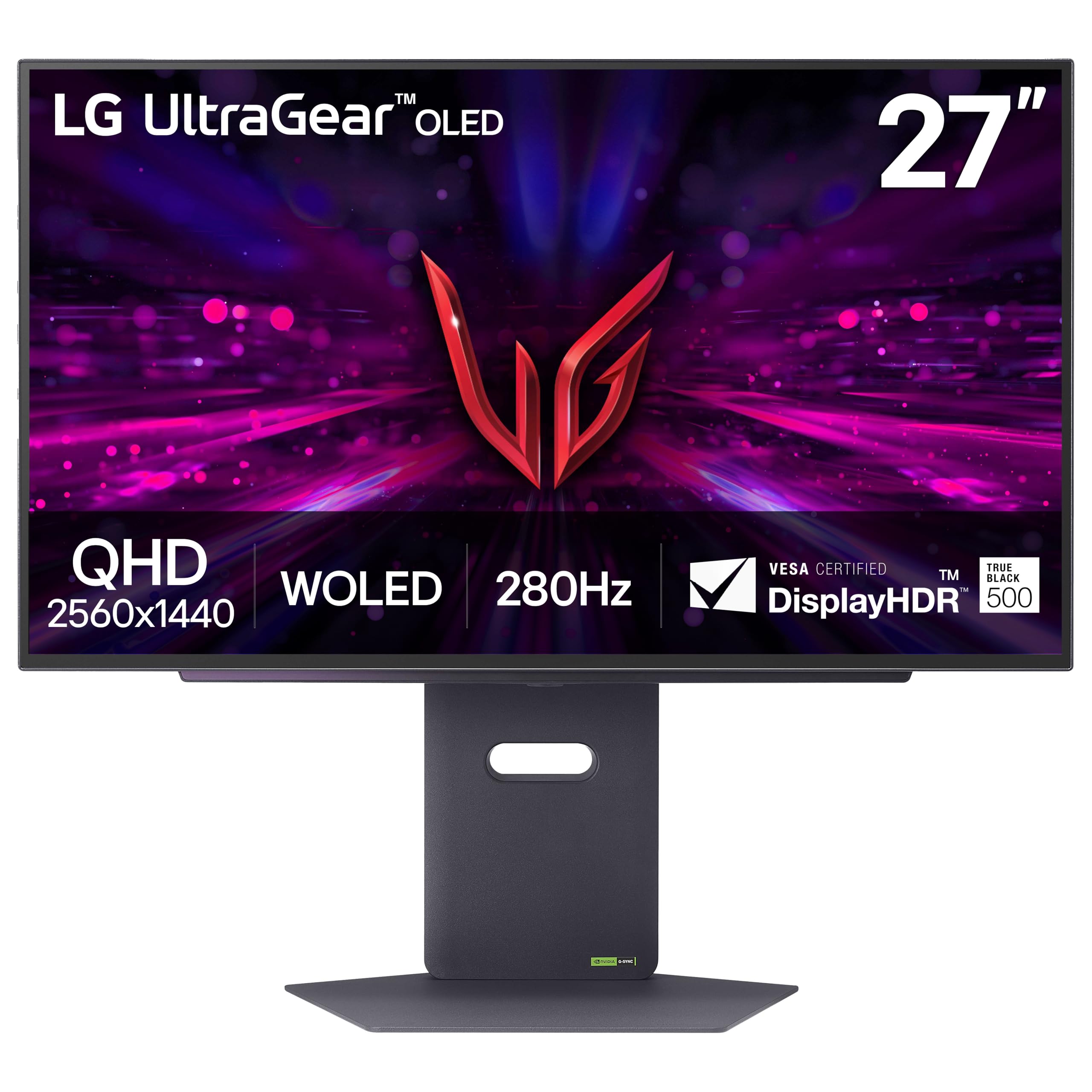
The LG 27GX700A-B brings fourth-generation OLED technology to the competitive 27-inch QHD form factor with a 280Hz refresh rate and a 0.03ms GtG response time. This monitor uses LG’s Primary RGB Tandem structure, which stacks RGB layers for higher brightness than previous WOLED generations — reaching up to 1500 nits peak in small highlights and improving sustained full-window brightness significantly. The VESA DisplayHDR True Black 500 certification means dark scenes retain detail without the washed-out gray look common on IPS HDR monitors.
Gaming performance is exceptional: the 280Hz refresh rate is a meaningful step above 240Hz for competitive players, and the OLED response time means zero perceptible motion blur regardless of the frame rate. NVIDIA G-Sync Compatible and AMD FreeSync Premium Pro support ensure smooth tear-free gameplay with either major GPU brand. The LG Switch app lets you fine-tune display settings and create profiles for different game genres, while the OLED Care features include automatic pixel cleaning and static image detection to protect against burn-in over the long term.
The virtually borderless design with adjustable height, tilt, swivel, and pivot stand fits well into any gaming setup. RGB backlighting on the rear adds ambient flair. Connectivity covers DisplayPort 1.4 with DSC and HDMI 2.1 ports that support the full 280Hz at QHD resolution. The 4-pole headphone jack with DTS Headphone:X provides spatial audio without needing a separate DAC. For buyers who want OLED performance at 1440p without stepping up to 360Hz pricing, this is the strongest value proposition in the premium tier.
Why it’s great
- Fourth-gen OLED with Primary RGB Tandem delivers best-in-class brightness for a WOLED monitor
- 280Hz refresh rate provides a tangible upgrade over standard 240Hz panels
- Full HDMI 2.1 support with 48 Gbps bandwidth for next-gen console gaming at 1440p
Good to know
- Some units may exhibit banding artifacts in static low-saturation gradients
- VRR flicker can appear in menus or scenes with wildly fluctuating frame rates
- LG Switch software is required for some advanced settings and may feel intrusive
7. LG 27GR83Q-B UltraGear
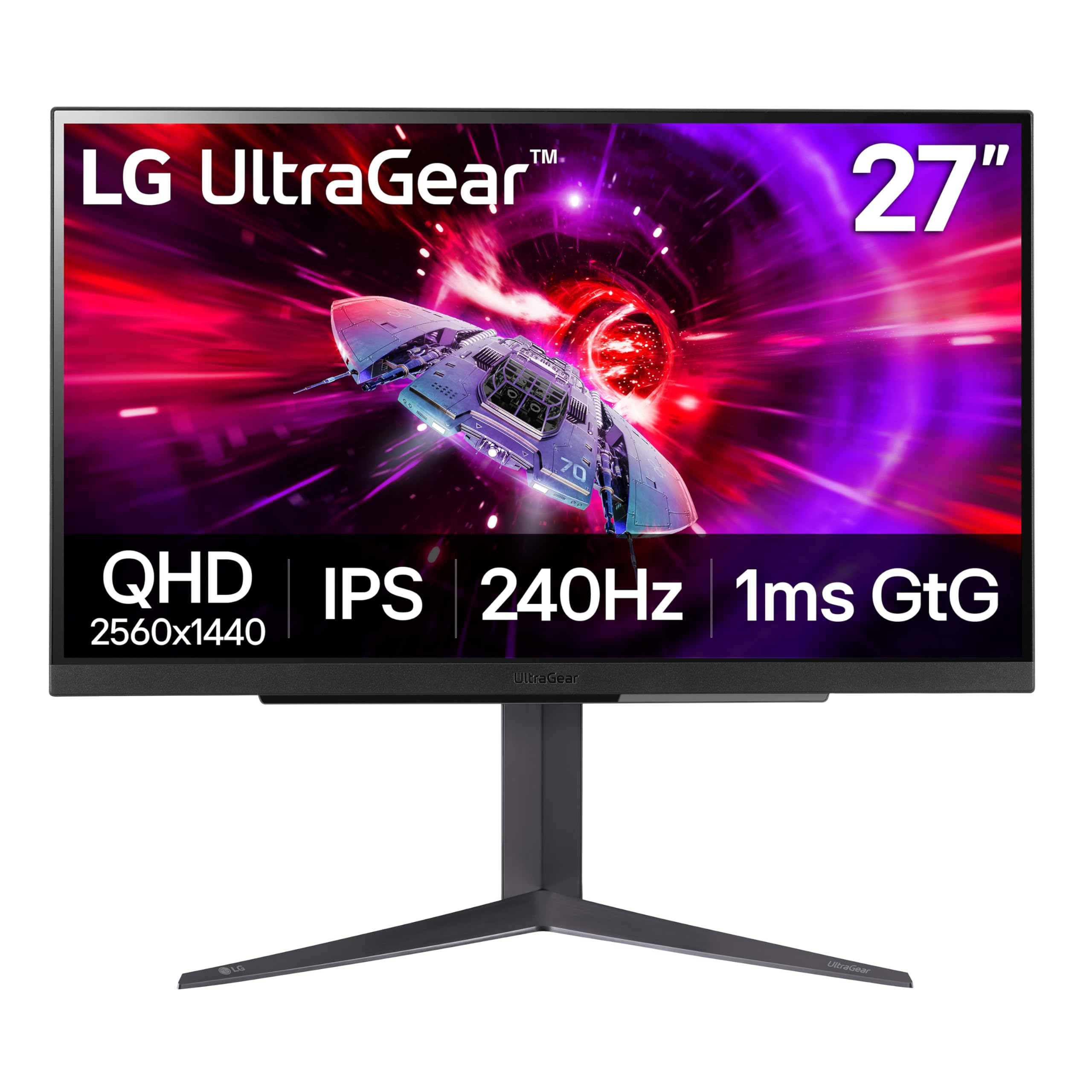
The LG 27GR83Q-B is a high-refresh-rate IPS monitor that strikes a near-perfect balance between price and performance for 1440p gaming. Its 27-inch QHD IPS panel runs at 240Hz with a specified 1ms GtG response time, and LG’s implementation of IPS delivers vibrant colors and wide 178-degree viewing angles without the compression artifacts that cheaper VA panels show in dark scenes. The VESA DisplayHDR 400 certification with up to 95% DCI-P3 color coverage means HDR content looks punchy for an LCD panel, though it can’t match OLED contrast ratios.
NVIDIA G-Sync Compatible and AMD FreeSync Premium validation mean you get tear-free gaming regardless of your GPU brand, and the 240Hz refresh rate provides excellent motion clarity for fast-paced shooters and racing games. The Dynamic Action Sync feature reduces input lag even further, and the built-in Black Stabilizer helps spot enemies hiding in dark corners without washing out the whole image. The included FPS Counter and adjustable Crosshair overlay are welcome touches for competitive play.
The stand is a highlight — it offers height adjustment, tilt, swivel, and pivot rotation into portrait mode, all with solid build quality and a cable management channel. Connectivity includes DisplayPort 1.4, two HDMI 2.1 ports that support 4K at 120Hz from consoles, and a 4-pole headphone out with DTS Headphone:X spatial audio support. The OnScreen Control software lets you adjust settings from your desktop. For gamers who want a high-refresh QHD experience without OLED pricing, this remains one of the most well-rounded IPS options available.
Why it’s great
- 240Hz IPS panel with G-Sync and FreeSync support covers all GPU ecosystems
- Full ergonomic stand with height, swivel, tilt, and pivot eliminates aftermarket arm costs
- HDMI 2.1 ports support 4K 120Hz from PS5 and Xbox Series X
Good to know
- IPS contrast ratio of 1000:1 means blacks appear gray in dark room viewing
- Some units may ship with stuck pixels that require exchange
- No USB-C port for single-cable laptop connectivity
8. Alienware AW2725DM

The Alienware AW2725DM is a 27-inch QHD IPS gaming monitor that provides an affordable entry point into high-refresh 1440p gaming without making the buyer feel like they settled. The 180Hz refresh rate and 1ms GtG response time are well-matched for mid-range gaming PCs that can comfortably push 100-160 FPS at 1440p in competitive titles, and the 95% DCI-P3 color coverage with VESA DisplayHDR 400 makes this monitor look noticeably richer than cheaper 1080p alternatives. The adaptive sync support covers both NVIDIA G-Sync Compatible and AMD FreeSync, so it works seamlessly with either GPU ecosystem.
Dell’s build quality standards are evident in the sturdy stand with full ergonomic adjustments — height, swivel, tilt, and pivot are all included — and the anti-glare screen coating keeps reflections manageable without making the image look hazy. The alienware design language is subtle enough to fit into professional setups while still looking distinctively gaming-oriented. The dedicated console mode enables VRR support with modern consoles, and the low blue light hardware solution reduces eye strain during long sessions without the sickly yellow tint that software solutions produce.
The connectivity is slightly limited compared to more expensive options: you get DisplayPort 1.4 and HDMI 2.0 ports, but the 180Hz refresh rate is only available over DisplayPort — the HDMI connection caps at 144Hz. There is no USB-C port and no built-in speakers. The monitor ships with both DisplayPort and HDMI cables in the box. For gamers upgrading from a 1080p 144Hz monitor and looking for a significant resolution boost without breaking the bank, the AW2725DM is the strongest budget-friendly QHD option in this roundup.
Why it’s great
- QHD resolution at 180Hz provides a major visual upgrade over 1080p panels
- 95% DCI-P3 color and DisplayHDR 400 deliver impressive color accuracy for the price tier
- Full ergonomic stand with height, pivot, and swivel adjustments included
Good to know
- HDMI 2.0 limits console and alternative input to 144Hz maximum
- No USB-C port or headphone jack on the monitor
- 180Hz refresh rate is lower than many 240Hz+ competitors in the same resolution class
9. Samsung Odyssey G4 S25BG402

The Samsung Odyssey G4 S25BG402 is a 25-inch 1080p IPS gaming monitor that prioritizes raw speed above all else, featuring a 240Hz refresh rate with a 1ms GtG response time. The 25-inch size keeps the pixel density high enough that 1080p looks reasonably sharp for competitive gaming, and the IPS panel delivers vibrant colors and wide viewing angles that budget TN panels of the past couldn’t match. The 99% sRGB coverage provides accurate color reproduction for games and media consumption.
NVIDIA G-Sync Compatible and AMD FreeSync Premium support ensure smooth gameplay with minimal tearing during fast-paced scenes. The Ultrawide Game View feature lets you simulate a 21:9 aspect ratio by adding black bars, which can expand your field of view in supported titles. The Black Equalizer function boosts visibility in dark areas without blowing out the rest of the image, which is useful in games like Escape from Tarkov or PUBG. The 400-nit brightness rating is adequate for most indoor gaming environments.
The ergonomic stand is a significant advantage at this price point — you get height adjustment, tilt, swivel, and pivot rotation, features usually reserved for more expensive monitors. Auto Source Switch+ automatically detects when a connected device powers on and switches inputs, reducing cable fumbling. Connectivity includes DisplayPort and HDMI ports, though there are no USB ports or built-in speakers. For competitive gamers on a tight budget who need high refresh rates for fast-twitch shooters, this 1080p 240Hz combination remains one of the most effective entry-level setups available.
Why it’s great
- 240Hz refresh rate with 1ms GtG response provides smooth, clear motion for competitive shooters
- Full ergonomic stand with height, swivel, tilt, and pivot at an entry-level price point
- G-Sync Compatible and FreeSync Premium support for tear-free gaming
Good to know
- 1080p resolution on a 25-inch screen offers less detail than QHD panels for immersive single-player games
- No built-in speakers or USB hub for peripheral connectivity
- IPS glow is present in dark scenes when viewed off-angle in a dim room
FAQ
Do I really need a 1ms monitor for competitive gaming?
What panel technology is best for 1ms response in competitive FPS games?
Final Thoughts: The Verdict
For most users, the 1ms gaming monitor winner is the MSI MPG 271QRX QD-OLED because its 360Hz refresh rate and genuine 0.03ms GtG response deliver elite-level motion clarity with vibrant QD-OLED colors that elevate both competitive and single-player gaming. If you want the rawest competitive speed, grab the Sony INZONE M10S for its 480Hz OLED performance and tournament-focused features. And for the best value in the QHD IPS space, nothing beats the LG 27GR83Q-B, which offers 240Hz refresh, HDMI 2.1, and a fully adjustable stand at a considerably lower cost than OLED alternatives.