
The shift from watching a drone fly to feeling like you are the drone flying requires just one piece of hardware: a low-latency video feed piped directly to your eyes. That first-person connection eliminates the disorienting gap between what the aircraft does and what you see, turning every bank, dive, and hover into a reflex instead of a reaction. The best 1st person drones bundle a capable airframe with a crisp, responsive viewing system so beginners stop crashing and start creating seconds after takeoff.
I’m Min — the co-founder and writer behind Gadgets Feed. I’ve spent hundreds of hours filtering through spec sheets, decoding transmission protocols like O3+ and O4, and cross-referencing gimbal performance with real-world flight logs to separate true FPV hardware from toys with a screen on the remote.
Whether you want to capture cinematic POV b-roll or just feel the thrill of a banked turn from 400 feet up, finding the right best 1st person drone comes down to matching the correct image sensor, transmission range, and goggle ecosystem to your flying ambition.
How To Choose The Best 1st Person Drone
Choosing a true first-person drone means weighing three interconnected factors: the viewing system (goggles vs. a controller screen), the transmission protocol that dictates how far and how clearly you can see, and the stabilization method that keeps the video from making you nauseous. Beginners often over-prioritize camera resolution and ignore latency — a 4K feed that arrives half a second late is useless for FPV flying.
Goggles vs. Built-In Controller Screen
Goggles create total immersion by blocking out all ambient light and delivering the camera feed directly to both eyes, which is essential for aggressive FPV maneuvers and depth perception. A built-in controller screen, like the 4.5-inch or 5-inch monitors found on entry-level models, provides a low-cost workaround for pilots who want to see the drone’s perspective without strapping a headset on. Controller screens cannot match the latency or field-of-view of proper goggles, but they eliminate the need for a smartphone and are far cheaper to implement.
Transmission Protocol and Range
The transmission link is the backbone of any 1st person setup. DJI’s O3+ and O4 protocols deliver 1080p at 60fps with sub-30ms latency at distances up to 10 or even 20 kilometers in ideal conditions, making them the gold standard for serious FPV. Wi-Fi-based links found on budget models typically cap out around 400 meters and suffer from visible lag and signal dropouts behind obstacles. If you plan to fly through gaps, around trees, or more than a few hundred feet away, prioritize a dedicated digital transceiver over a generic Wi-Fi connection.
Stabilization — Gimbal vs. EIS vs. Optical Flow
A mechanical 3-axis gimbal physically moves the camera to cancel out vibration and aircraft tilt, producing the smoothest footage but adding weight and cost. Electronic Image Stabilization (EIS) crops and shifts the frame digitally; it works well in good light but introduces a slight latency penalty that can interfere with FPV control feel. Optical-flow sensors assist with low-altitude hovering but do nothing for video smoothness during flight. For true FPV where the camera angle is locked forward, a good 2-axis gimbal or even a fixed-mount camera with high-frame-rate EIS is standard — but for hybrid drones that shoot cinematic clips between FPV runs, a 3-axis gimbal is worth the premium.
Quick Comparison
On smaller screens, swipe sideways to see the full table.
| Model | Category | Best For | Key Spec | Amazon |
|---|---|---|---|---|
| PLEGBLE PL-710 | Controller Screen | Long flights with dual batteries | 70-min total flight (2x2700mAh) | Amazon |
| DJI Neo 2 Fly More | Beginner FPV | Palm-launch and selfie tracking | 151g, omnidirectional obstacle sensing | Amazon |
| DJI Neo Motion Fly More | Motion Control | Immersive entry-level FPV with goggles | 135g, RC Motion 3 + Goggles N3 | Amazon |
| Specta Mini Drone 4K | Gimbal Value | Cinematic shots on a budget | 3-axis gimbal, 4K/30fps | Amazon |
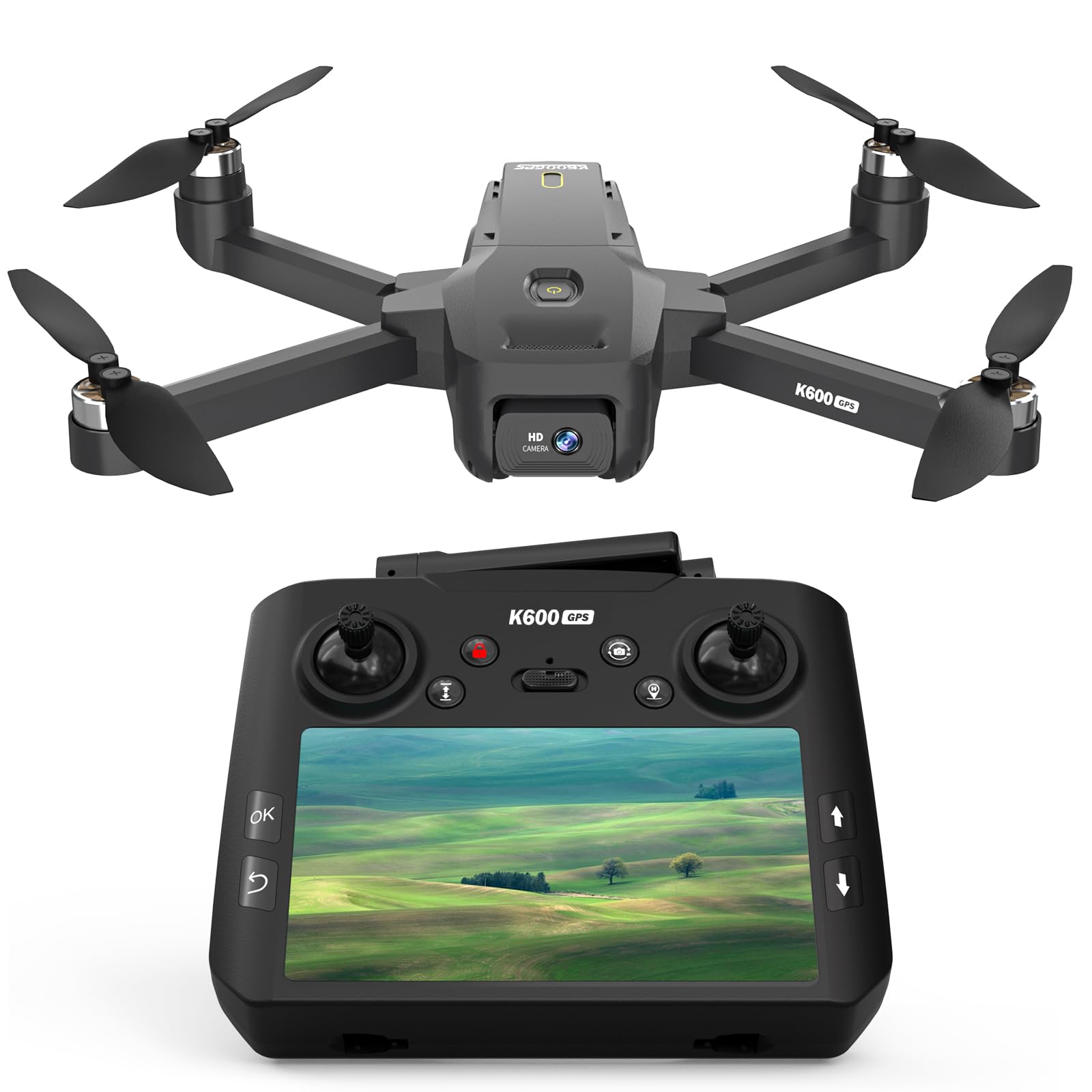
| Karuisrc K600GPS | Controller Screen | Family-friendly GPS safety features | 4.5″ screen, 12000RPM brushless | Amazon |
| Karuisrc GPS 4.5″ LCD | Value Entry | First FPV experience under | 2200mAh battery, EIS camera | Amazon |
| DJI Avata 2 Fly Smart | FPV Acrobatics | Flips, rolls and immersive power | 155° FOV, 1/1.3″ sensor | Amazon |
| DJI Avata 360 | 360° Imaging | Post-flight reframing from a single pass | 1″ sensor, 8K/60fps 360° | Amazon |
| DJI Avata Pro-View | Premium Immersion | Cinematic FPV with top-tier goggles | O3+ 10km, Goggles 2 included | Amazon |
In‑Depth Reviews
1. PLEGBLE PL-710
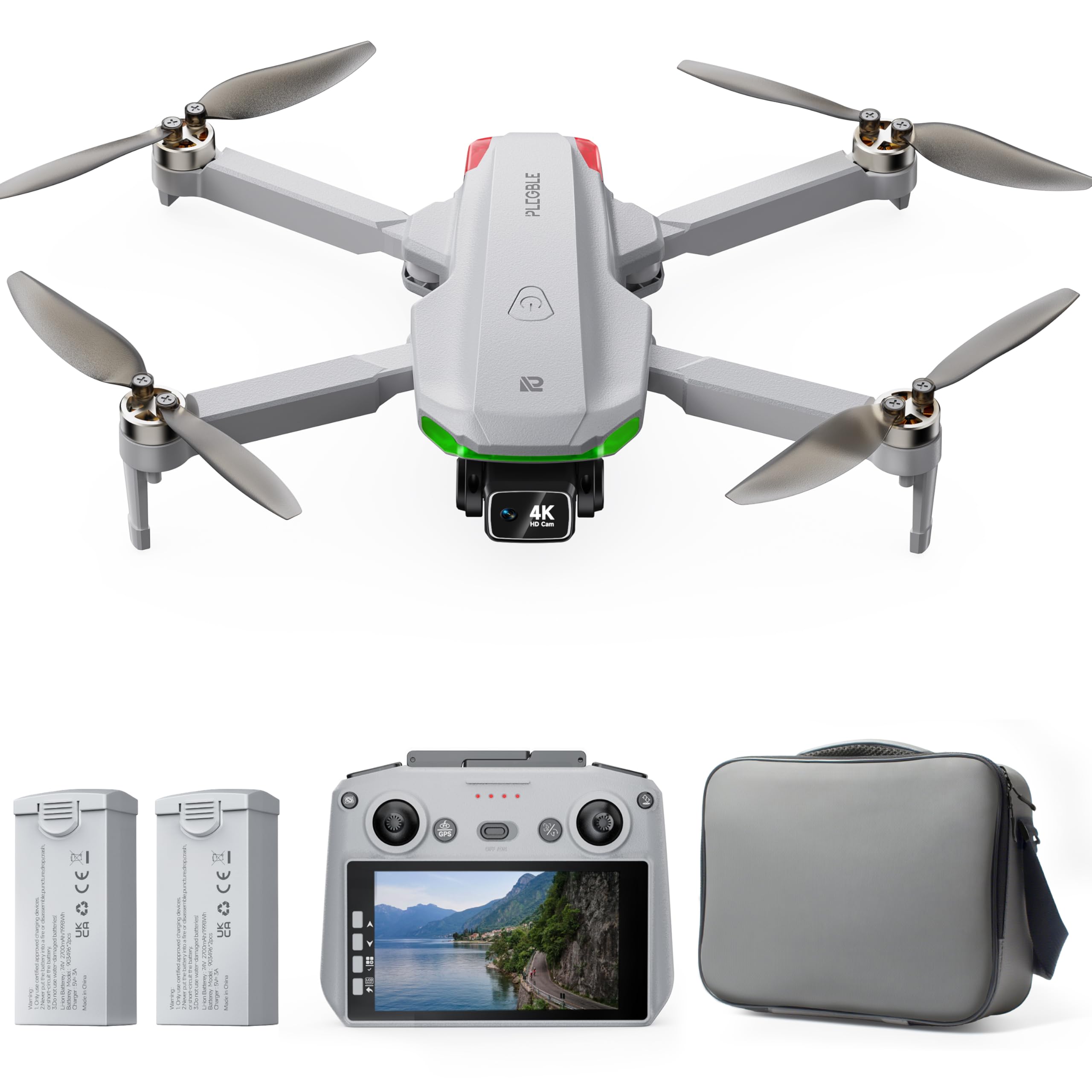
The PLEGBLE PL-710 immediately solves the biggest annoyance of budget FPV: the phone-as-screen tether. Its 5-inch HD display on the controller delivers zero-latency live view without fumbling with a smartphone mount or worrying about screen brightness outdoors. The 4K camera with EIS stabilization keeps the footage smooth enough for social clips, and the 130-degree wide-angle lens captures a satisfying FOV for a drone at this level.
Two 2700mAh batteries combine for 70 minutes of total flight time, which is nearly double what most single-battery competitors in this price tier offer. The GPS positioning locks on quickly and the auto-return function triggers reliably on low battery or signal loss. AI tracking modes like Follow Me and Circle Flight work well for vlogging or biking, though the top speed in the highest mode still feels tame for anyone craving aggressive FPV.
Weighing under 249 grams, the PL-710 avoids FAA registration while pushing genuine utility. The build quality feels denser than its price suggests, and the included carrying case makes it easy to throw in a bag. If you want true FPV goggles immersion, you’ll need to upgrade later, but as a controller-screen-first platform, the PL-710 delivers the longest fly time and sharpest built-in display in its bracket.
Why it’s great
- 5-inch controller display eliminates phone dependency
- 70-minute total flight with twin 2700mAh batteries
- EIS 4K footage stays stable in light wind
Good to know
- Fast flight mode still slower than dedicated FPV drones
- Charging both batteries takes several hours
- Lacks optical zoom or manual camera settings
2. DJI Neo 2 Fly More Combo
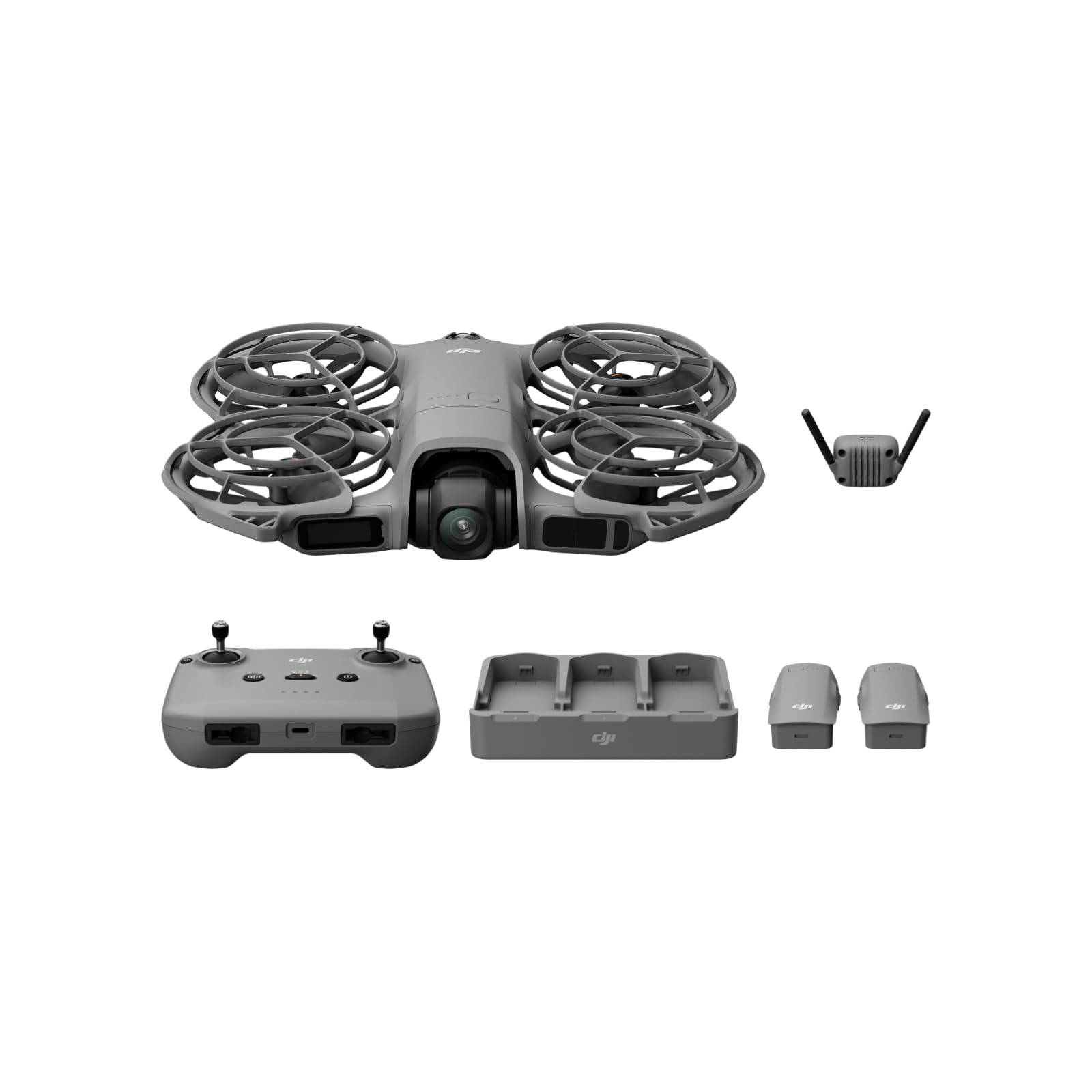
At just 151 grams with full propeller guards and omnidirectional obstacle sensing, the DJI Neo 2 redefines what a grab-and-go 1st person drone can do. Palm takeoff and gesture controls mean you can launch from the trailhead, capture a selfie, and land back in your hand without ever touching a remote. The 4K camera with 2-axis gimbal delivers surprisingly stable footage for a drone this small, and the ActiveTrack feature keeps subjects centered even through turns.
The Fly More Combo includes the RC-N3 remote with a digital transceiver for stable 1080p FPV at distances that far exceed Wi-Fi-based options. Obstacle sensing in all directions gives beginners a safety net that no other sub-200g drone matches, and the 12MP stills are crisp enough for social media posts. The real trade-off is battery life — each pack delivers roughly 10 minutes of real-world flying, making the three-battery bundle a necessity rather than a luxury.
For pilots who want DJI reliability in the lightest possible package, the Neo 2 is the most worry-free FPV entry point available. The lack of a mechanical zoom and the relatively short flight window are the only reasons experienced pilots might look toward the larger Avata series. For everyday carry, no other 1st person drone packs this much safety tech into this small a frame.
Why it’s great
- Palm takeoff and gesture control for hands-free selfies
- Omnidirectional obstacle sensing at 151g
- Stable 1080p FPV transmission with digital transceiver
Good to know
- Real flight time hovers around 10 minutes per battery
- No digital zoom or panoramic capture mode
- No USB adapter or hard case included
3. DJI Neo Motion Fly More Combo

The DJI Neo Motion Fly More Combo is the lowest-cost gateway into true goggle-based FPV. At 135 grams, the drone itself is regulation-friendly and fits in a jacket pocket, while the bundled RC Motion 3 and Goggles N3 deliver the immersive cockpit experience that separates real FPV from controller-screen flying. The single-button palm takeoff and landing let you skip the preflight ritual entirely, making it ideal for spontaneous capture at family gatherings or hiking breaks.
Subject tracking and QuickShots modes produce professional-looking orbit and dolly moves without manual input. The 4K UHD footage benefits from DJI’s rocksteady stabilization and Level 4 wind resistance, keeping shots smooth even in a fresh breeze. Full-coverage propeller guards reduce anxiety when flying near branches or indoors, and the motion controller’s squeeze-and-tilt interface feels natural within minutes of first use.
The trade-off is that the Goggles N3 are less comfortable for glasses wearers, and the battery life hovers between 7 and 12 minutes depending on wind and flight style. The Motion Fly More Combo includes three batteries and a charging hub, which is essential given that real-world flight time falls short of the advertised 18 minutes. For the purest beginner FPV experience with goggles out of the box, this is the most complete package under .
Why it’s great
- Full goggle + motion controller FPV in one box
- Ultra-light 135g design fits in a jacket pocket
- Subject tracking and QuickShots for easy cinematic captures
Good to know
- Actual flight time ranges 7-12 minutes
- Goggles N3 are uncomfortable for glasses users
- Wind affects stability more than heavier FPV drones
4. Specta Mini Drone with Camera 4K
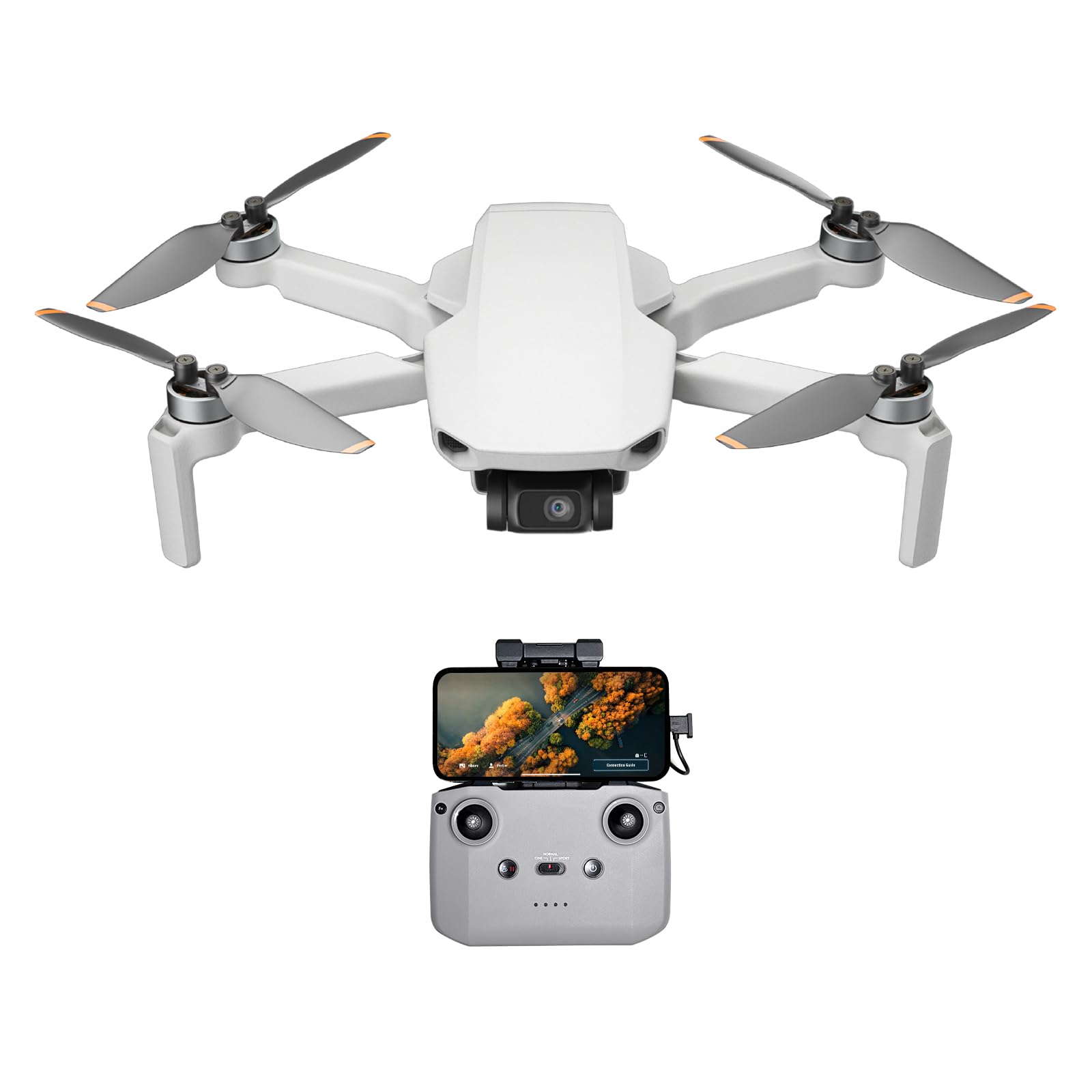
The Specta Mini Drone brings a 3-axis mechanical gimbal to the sub- price bracket, which is an outright rarity for any 1st person drone. This hardware-level stabilization eliminates the jello effect and horizon tilt that EIS-only drones suffer from, producing genuinely smooth 4K footage at 30fps. The 10-kilometer digital transmission range is exceptional at this price, allowing you to push the drone far beyond visual line of sight without dropping the FPV feed.
Level 5 wind resistance keeps the Specta stable in breezes that would ground lighter toy-grade drones, and the 31-minute advertised flight time translates to roughly 20-25 real minutes per battery in moderate conditions. GPS Return-to-Home and one-button takeoff/landing make it approachable for total beginners. The camera’s 90-degree adjustable tilt allows framing changes mid-flight, adding versatility for landscape and architecture shots.
The main drawbacks are the proprietary battery system — replacements are expensive and may become unavailable if Specta’s support lifecycle ends — and the lack of a carrying case at this price. The gimbal also makes the drone slightly heavier and louder than gimbal-less alternatives. For budget-conscious buyers who prioritize buttery-smooth footage over pure FPV speed, the Specta delivers gimbal performance that usually costs twice as much.
Why it’s great
- 3-axis mechanical gimbal at a budget-friendly price
- 10km digital transmission range
- Level 5 wind resistance for stable outdoor flying
Good to know
- Proprietary batteries are expensive and hard to replace
- No carrying case included
- Louder motors than competing sub-250g drones
5. Karuisrc K600GPS
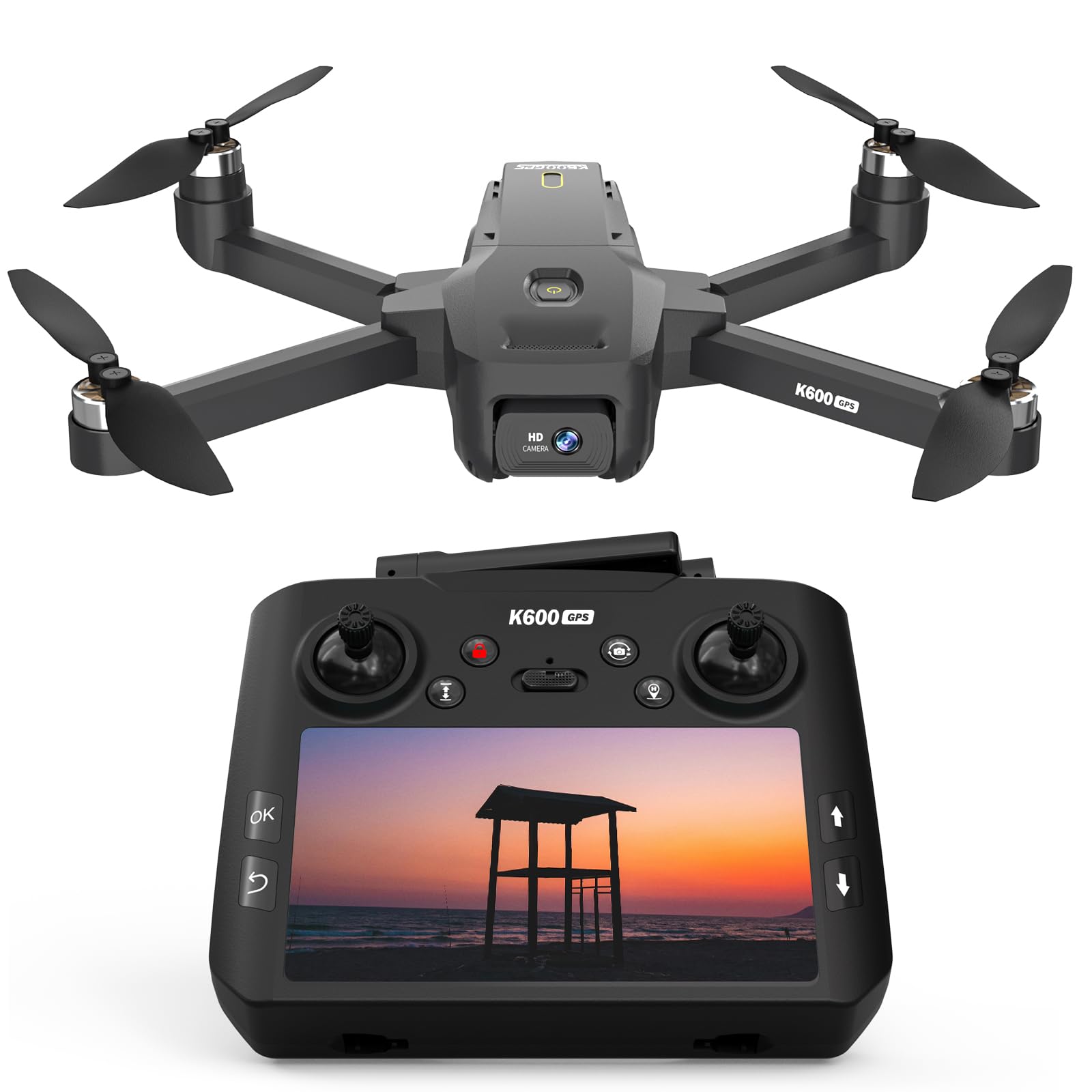
The Karuisrc K600GPS is built around a simple promise: you never need to touch your phone. The 4.5-inch HD screen on the remote streams the 1080P camera feed live, and the 90-degree adjustable lens gives you some framing control while flying. The brushless motors spin at 12,000 RPM, providing enough thrust to handle moderate wind and keep the GPS position lock steady — even when you let go of the sticks to adjust the view.
Auto-return home, Follow Me, and Waypoint navigation turn the K600GPS into a reliable assistant for group adventures. The sub-249g weight keeps it FAA-registration-free, and the foldable arms collapse into a compact shape that fits the included storage bag. The camera’s EIS smooths out vibrations reasonably well, though footage won’t rival a 3-axis gimbal drone. The modular battery charges via Type-C, which is convenient for field charging with a power bank.
Where the K600GPS falls short is the FPV experience itself — the 4.5-inch screen works fine in the shade but washes out in direct sunlight, and the Wi-Fi transmission is limited to a few hundred meters before signal breakup. The app-based control options are redundant given the built-in screen. For a beginner who wants GPS safety, a controller screen, and brushless power without climbing above the mid-range, the K600GPS is a solid, no-surprises choice.
Why it’s great
- Built-in controller screen eliminates phone dependency
- 12000RPM brushless motors for wind resistance
- Reliable GPS auto-return and Follow Me modes
Good to know
- Screen washes out in bright sunlight
- Wi-Fi range limited to a few hundred meters
- App control is largely redundant
6. Karuisrc GPS Drone with EIS Camera 4.5″ LCD
This Karuisrc model is the most affordable entry point for anyone who wants a controller screen and GPS features without making a big financial commitment. The 4.5-inch HD display on the remote shows real-time FPV from the 1080P EIS camera, and the compass calibration is straightforward even for a first-time pilot. The GPS position lock holds the drone steady in a hover, and the auto-return function engages reliably when the battery runs low or the signal drops out.
The 2200mAh battery delivers roughly 15 to 18 minutes of actual flight time, which is competitive in the entry-level tier. AI tracking modes — Follow Me, Orbit, Waypoint — all function through the app, though they require a phone connection that partially defeats the purpose of the controller screen. The brushed-like motors lack the punch of brushless systems, so this drone struggles in winds over about 10 mph and drifts noticeably during aggressive turns.
The build quality feels light but not fragile, and the included storage bag makes transport simple. The 400-meter control distance is adequate for neighborhood parks but limiting for wide-open landscapes. For the absolute lowest cost of entry into GPS-assisted FPV with a screen on the remote, this Karuisrc model is the cheapest way to see what the drone sees — just keep your expectations on video quality and wind performance in check.
Why it’s great
- Lowest-priced GPS drone with a built-in controller screen
- Reliable auto-return and position hold
- AI tracking modes for hands-free filming
Good to know
- Motors lack brushless power for windy conditions
- App connection needed for follow modes
- Limited 400-meter control range
7. DJI Avata 2 Fly Smart Combo
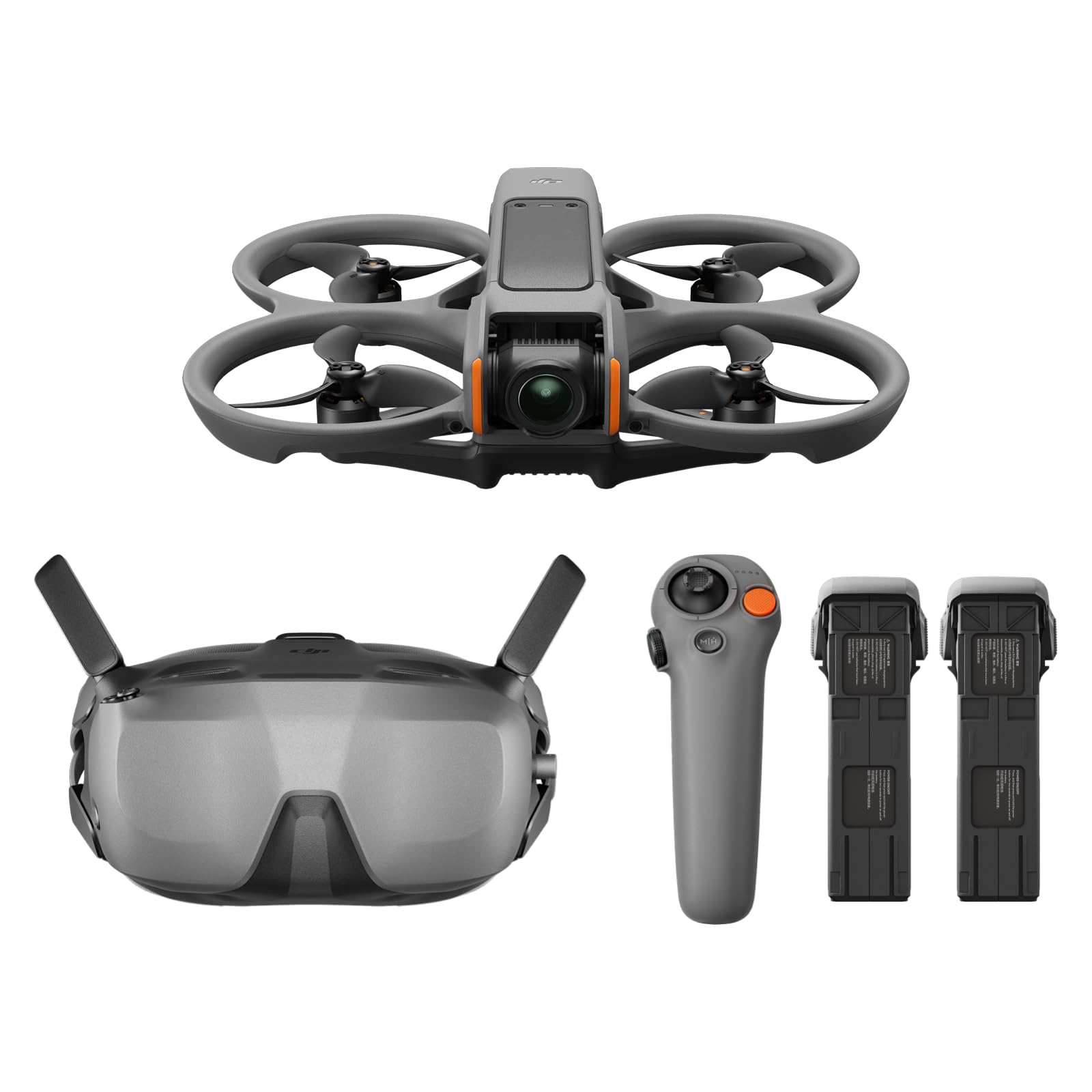
The DJI Avata 2 Fly Smart Combo is designed for pilots who want to flip, roll, and drift through tight spaces while recording cinematic 4K footage from a first-person perspective. The 155-degree field of view on the 1/1.3-inch sensor captures the periphery in a way that standard drone cameras simply cannot, and the built-in propeller guard lets you scrape through branches and doorways without immediately crashing. With the Goggles N3 and RC Motion 3 included, the FPV immersion is immediate and intuitive.
One-push acrobatics let beginners perform flips and 180-degree drifts without any manual flight training — the drone handles the gymnastics while you focus on framing the shot. The O4 video transmission delivers a crystal-clear 1080p/60fps feed with minimal latency, so your brain registers the drone’s position in real time. Flight time averages 17-20 minutes per battery, and the three-battery combo and charging hub keep you airborne for extended sessions.
The Avata 2 is louder than traditional camera drones, and manual-mode enthusiasts may find the motion controller less precise than a traditional gimbal stick. The weight exceeds 249 grams, so FAA registration is required. For the adrenaline-focused pilot who wants a complete FPV system that works out of the box and never requires soldering or Betaflight configuration, the Avata 2 Fly Smart Combo is the most thrilling package DJI currently sells.
Why it’s great
- One-push acrobatics for instant flips and drifts
- 155° FOV captures immersive peripheral view
- Built-in prop guard allows safe proximity flying
Good to know
- Louder than standard camera drones
- Requires FAA registration over 249g
- Motion controller less precise than a traditional stick controller
8. DJI Avata 360 (RC 2)
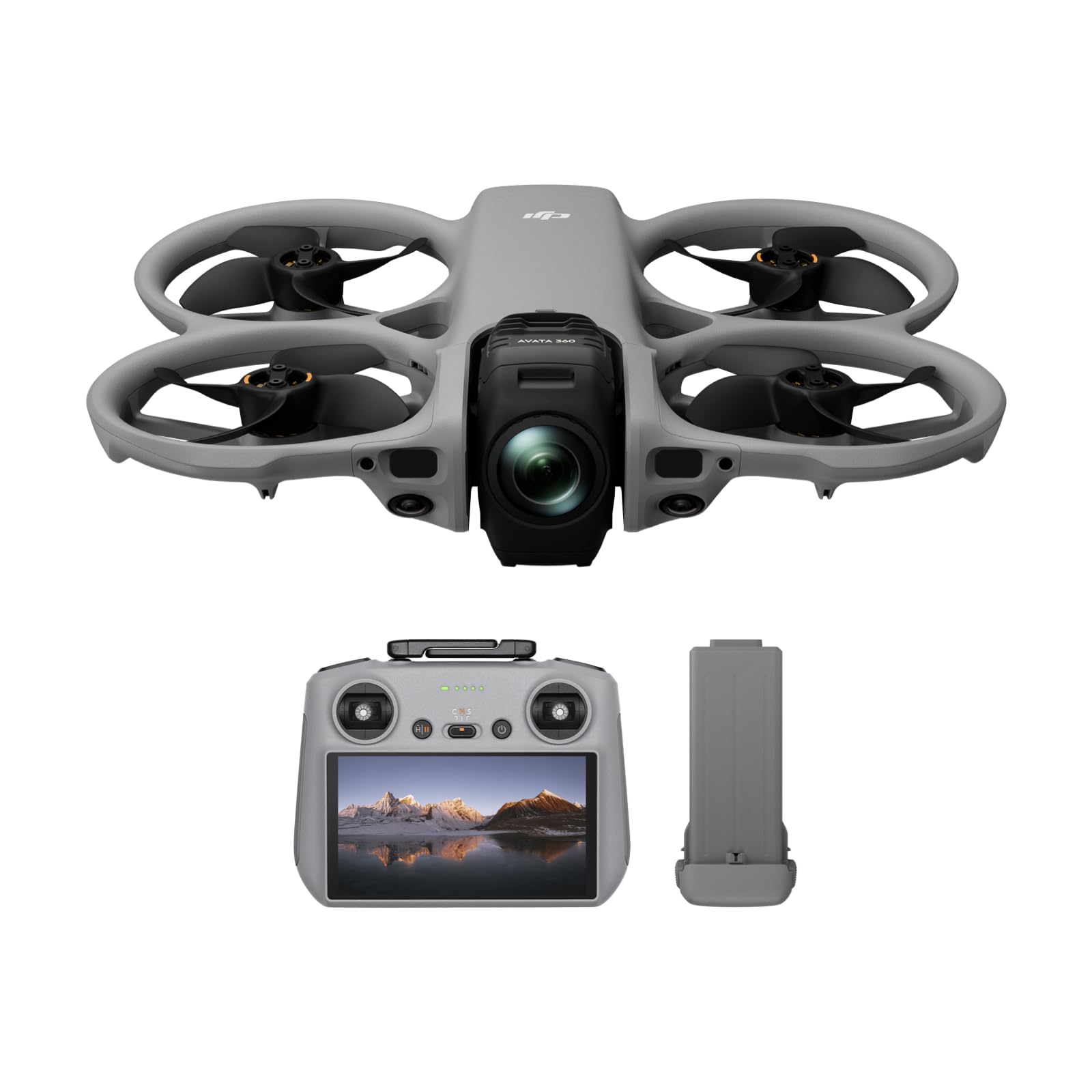
The DJI Avata 360 rewrites the rulebook for FPV composition by embedding a 1-inch-equivalent 360-degree camera into an agile, propeller-guarded airframe. Instead of aiming the drone at a subject, you simply fly the line and reframe the shot in post-production — pulling pans, tilts, and crops from a single 8K/60fps HDR source. This is a paradigm shift for pilots who hate the pressure of getting the perfect angle mid-flight.
The O4+ FHD transmission keeps the 1080p/60fps goggles feed stable up to 20 kilometers, making long-range exploratory flights genuinely viable. The integrated propeller guard and omnidirectional obstacle sensing provide the confidence to fly through complex environments. The dual-mode capability lets you switch from 360-degree capture to single-lens 4K/60fps mode for classic Avata-style low-altitude cruising.
The main compromises are the 18-minute battery life — noticeably shorter than non-360 drones — and the higher noise level compared to DJI’s Mini series. The 360 sensor also lacks ND filter support, which limits creative control in bright conditions. For content creators who want reframing flexibility without needing a second drone, the Avata 360 is the most versatile 1st person drone on the market.
Why it’s great
- 1-inch 360 camera for post-flight reframing
- 8K/60fps HDR capture with O4+ 20km transmission
- Dual 360 / single-lens mode for versatility
Good to know
- 18-minute battery life is shorter than average
- No ND filter support for the 360 lens
- Louder than comparable DJI camera drones
9. DJI Avata Pro-View Combo

The DJI Avata Pro-View Combo brings together the best viewing hardware DJI has ever made — the Goggles 2 — with the compact, durable Avata airframe that made FPV flying accessible to the masses. The Goggles 2 deliver a micro-OLED display with stunning contrast and clarity, far surpassing the LCD panels in the N3 series, while the O3+ transmission pumps a low-latency 1080p feed from up to 10 kilometers away. The Motion Controller completes the package with an intuitive pinch-and-tilt interface that makes cinematic orbits feel effortless.
The 1/1.7-inch sensor captures 4K stabilized footage with a 155-degree FOV, giving the video a true pilot’s perspective that flat top-down drones cannot replicate. The built-in propeller guard absorbs minor impacts, which is essential for low-altitude proximity flying through tree lines and under bridges. The 18-minute flight time is adequate for a session, though experienced pilots will want multiple packs.
The Pro-View Combo is expensive, and the goggles can be uncomfortable for wearers of larger eyeglasses — the foam nose bridge pushes in rather than conforming. The battery charging time is also notably slow at roughly 4-5 hours for a single flight pack. For the FPV purist who wants the most immersive image quality and the tightest integration between airframe, goggles, and controller, the Avata Pro-View is the ultimate drop-in solution.
Why it’s great
- Goggles 2 micro-OLED display with superior clarity
- O3+ 10km FHD transmission with sub-30ms latency
- 155° FOV for true pilot perspective filming
Good to know
- Battery charges very slowly (4-5 hours)
- Goggles 2 are uncomfortable for glasses wearers
- Premium price puts it out of budget range for casual users
FAQ
Can I use a controller screen instead of goggles for true FPV?
Why do some FPV drones weigh less than 249 grams?
Final Thoughts: The Verdict
For most users, the best 1st person drone winner is the PLEGBLE PL-710 because it combines a large 5-inch controller screen, dual batteries for 70 minutes of flight, and reliable 4K EIS footage — all in a sub-249g, FAA-friendly package. If you want true goggle-based immersion and motion-controlled flying from day one, grab the DJI Neo Motion Fly More Combo. And for cinematic 360-degree reframing that changes how you shoot aerial video, nothing beats the DJI Avata 360.