
Our readers keep the lights on and my morning glass full of iced black tea. As an Amazon Associate, I earn from qualifying purchases.
Specs are compiled from manufacturer listings and verified buyer reviews and can change over time — please confirm the key details on the product page before buying.
That old laptop or desktop probably feels slow because of its spinning hard drive. Swapping it for a 1TB SATA solid-state drive is the single best upgrade you can make — you get huge speed gains without buying a new computer. Booting up, launching programs, and opening files will feel instant again.
I’m Min — the founder and writer behind Gadgets Feed. This guide is built by comparing the manufacturers’ published specifications and the patterns across verified customer reviews, so you get each pick’s real strengths and trade-offs instead of marketing spin.
Here is a focused look at the top 1tb sata ssd options. Each one is chosen for a specific need, from a power-saving champion to a rock-solid everyday workhorse.
Quick Picks
- Crucial BX500 1TB — Best Overall
- PNY CS900 1TB — Best All-Rounder
- KingSpec OneBoom 1TB — Efficient Pick
- Silicon Power A55 1TB — Slim Favorite
- RAOYI 1TB — Budget Workhorse
- fanxiang S101 1TB — Budget Champion
How To Choose The Best 1TB SATA SSD
Picking the right drive depends on matching the specs to what you actually do. Here is what to watch for so you don’t overpay or undershoot.
Sequential Read and Write Speeds
This is the headline number you see in ads. Sequential read speed (how fast data is read from the drive in a line, up to a max of 550MB/s for SATA III) matters most for booting up your OS (operating system) and loading big programs or games. Sequential write speed (how fast data is written, usually a bit lower) affects how quickly you can save large files or copy data. If you do a lot of video editing or move huge folders around, prioritize a write speed over 500MB/s.
3D NAND Type and Endurance
Modern SSDs use 3D NAND flash memory stacked in layers. TLC (Triple-Level Cell) stores three bits per cell, offering a good balance of speed, cost, and durability. QLC (Quad-Level Cell) stores four bits per cell, which lets makers cram in more capacity for cheap, but QLC drives can slow down during very large writes and generally have a shorter total lifespan in terms of how much data can be written to them over time. For a main drive running an operating system, TLC is the safer bet.
Compatibility and Form Factor
Almost all SATA SSDs for consumers use the 2.5-inch form factor (the standard shape and size for laptop drives) and are 7mm thick. This fits most laptops and desktop drive bays. Some older laptops need a 9.5mm drive, so check your device’s clearance. The interface must be SATA III (6Gb/s) for these speeds, but it is backward compatible with older SATA II ports — you just get slower performance.
Quick Comparison
On smaller screens, swipe sideways to see the full table.
| Model | Best For | Read Speed | Write Speed | NAND Type | Amazon |
|---|---|---|---|---|---|
| Crucial BX500 | Battery efficiency | 540MB/s | — | 3D NAND | from $73.02Amazon |
| PNY CS900 | Balanced performance | 535MB/s | 515MB/s | 3D NAND | Amazon |
| KingSpec OneBoom | Power saving | 550MB/s | 520MB/s | 3D NAND | Amazon |
| Silicon Power A55 | Cloning & slim builds | — | — | 3D NAND | Amazon |
| RAOYI 1TB | Budget reliability | 550MB/s | 500MB/s | 3D NAND | Amazon |
| fanxiang S101 | Budget TLC value | 520MB/s | — | 3D NAND TLC | Amazon |
In‑Depth Reviews
1. Crucial BX500 1TB

Keeps your laptop running cool and sips power, so you get more work done on a single charge.
Your battery lasts noticeably longer because this drive is 45x more energy efficient than a typical hard drive. You get a sequential read speed of up to 540MB/s, so your system boots in seconds and applications launch without lag. Crucial backs it with a 3-year limited warranty, and it uses Micron 3D NAND (flash memory from a company that has advanced memory storage for 40 years). At 7mm thick (the standard slim laptop size), it fits into Ultrabooks and standard laptop bays.
Buyers report boot times under 15 seconds and silent operation after upgrading from an old HDD (hard disk drive). One reviewer noted it runs warm during large file transfers — common for most SSDs. The write speeds slow down during sustained large-file writes compared to premium drives, so this works best as a main OS drive or media storage rather than a heavy editing scratch disk.
Value pick: you want a dependable everyday drive from a trusted brand that also maximizes your battery life. Its power efficiency beats any other drive here for laptop use. Pass if you regularly move 50GB+ video files and need sustained write speeds above 500MB/s — the PNY CS900 writes faster at 515MB/s for sustained tasks.
2. PNY CS900 1TB

Near-flagship write speeds without the premium price tag, making it a strong PS4 upgrade too.
You get a sequential read speed of up to 535MB/s and a write speed of up to 515MB/s. The PNY CS900 is backward compatible with SATA II (3GB/s), so it works in older machines while you still get the full speed in a modern SATA III port. It uses 3D NAND flash (stacked memory layers) and ultra-low power consumption, so your system stays cool and responsive.
Reviewers often mention this drive runs cool and quiet. One buyer mentioned it has been reliable for two years with no issues. A PS5 owner said it was a great replacement for a PS4, with no lag in cutscenes and performance on par with Samsung and WD drives. Another reviewer called it a “dependable, affordable upgrade” for a secondary drive. The main trade-offs: a lower endurance rating (TBW, or Total Bytes Written) than high-end pro drives, and it is thinner than standard 2.5-inch drives so you may need a shim in some bays.
Solid choice: you need a strong all-purpose boot drive with a 535MB/s read speed and a 515MB/s write speed, and you want compatibility with a PS4 or older SATA II machine. Skip it if you need a drive with a 550MB/s read speed, like the KingSpec OneBoom or RAOYI.
4. KingSpec OneBoom 1TB
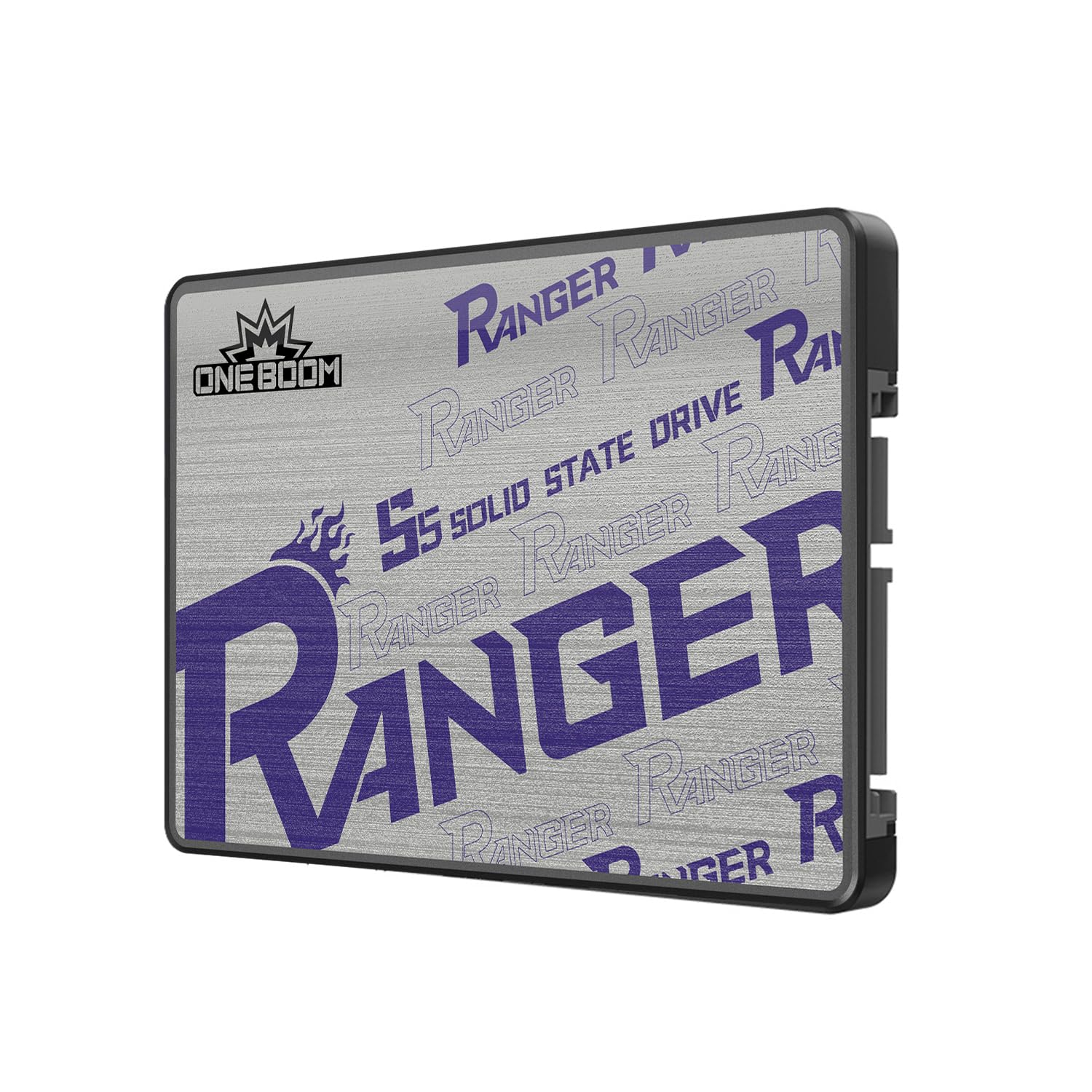
A speed demon that also cuts power use by up to 70% compared to a hard drive, so your laptop lasts longer.
You get a sequential read speed of up to 550MB/s and a write speed of up to 520MB/s. The real trick is that it consumes up to 70% less energy than a traditional HDD, directly translating to longer battery life on a laptop and less heat inside your case. It uses 3D NAND flash with a high TBW (Total Bytes Written) rating, backed by a full 3-year warranty.
Customers note “no issues in 6 months; flawless performance” and say it is faster than the original HDD, with programs loading instantly. One gamer mentioned that the installation was quick and easy, and their PS4 now runs “faster than ever.” The plastic enclosure may feel less premium than metal-cased drives, but this keeps weight down for laptop use. Its write speed is 520MB/s, while the RAOYI drive is rated at 500MB/s.
Ultra budget: laptop users who want maximum speed without draining the battery, and PS4 upgraders wanting a smoother experience. At 550MB/s reads and 520MB/s writes, it offers the top listed raw speeds here. Not ideal if you prefer a metal-cased drive for heat dissipation in a tight desktop space.
5. Silicon Power A55 1TB
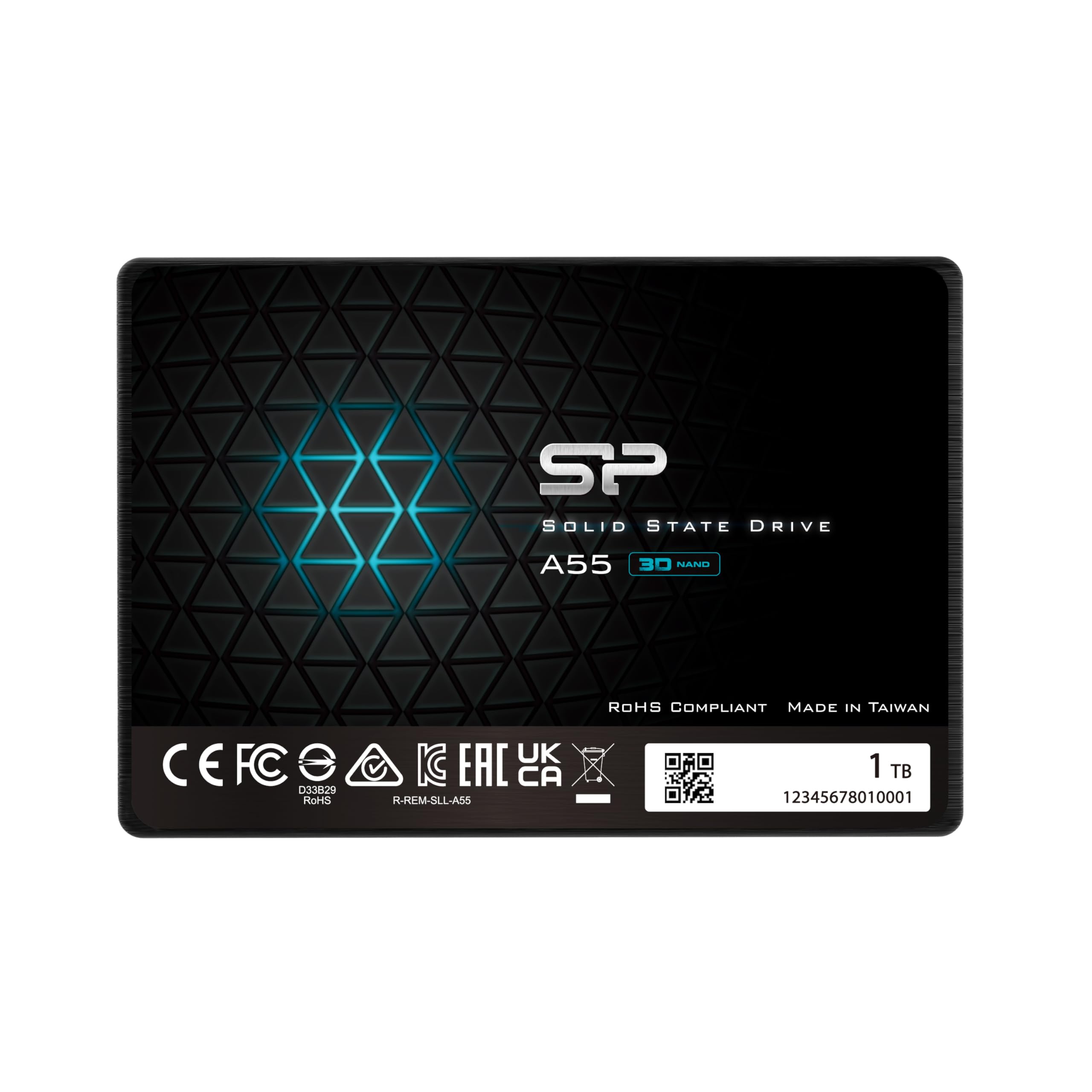
A clever SLC cache trick keeps everyday performance snappy, and its 7mm slim body fits ultra-thin laptops.
This drive uses SLC Cache Technology (a feature that sets aside part of the NAND flash in a faster single-level cell mode to boost write speeds during typical use, then evens out during idle time). At just 7mm thin, it is purpose-built for Ultrabooks and ultra-slim notebooks where space is tight. Silicon Power offers a 3-year limited warranty, and the drive is also shock-resistant.
Reviewers point out great success with cloning. One owner reported they “cloned an old Dell AIO’s 5400RPM HDD to this cheap 1TB SSD; massive speed improvement, no issues, reliable brand.” Another user has bought their fourth Silicon Power SSD since 2016, calling them all flawless and great value. The honest limit: the listed data transfer rate is 500 Megabytes Per Second, which is slower than the 550MB/s top-end drives like the KingSpec. For most booting and daily tasks you won’t notice, but heavy file movers will.
Balanced pick: you are cloning an old HDD into an ultra-thin laptop and want a drive that fits without any modding. The SLC cache makes it feel faster than its 500MB/s rating for everyday use. Look away if raw sequential speed is your top priority — this one is listed at 500MB/s, while the KingSpec is listed at 550MB/s.
6. RAOYI 1TB

Reads just as fast as the premium picks but costs less, making it a budget solid performer.
You get a sequential read speed of up to 550MB/s and a write speed of up to 500MB/s, using a standard SATA III 6Gb/s interface. It uses advanced 3D NAND and a top-quality ABS plastic casing for heat dissipation and shock resistance. The drive is widely compatible with Windows, Linux, and Mac OS, and backward compatible with SATA II and SATA I ports, so it works in very old machines you are trying to revive.
Shoppers say it works well for simple installs. One owner said “good reliable works well mounting easy.” Another installed it in a daughter’s PC for a dual-boot Linux setup with “no problems at all.” A user also purchased it for a eufy camera home base with success. It reads at 550MB/s, matching the KingSpec, and writes at 500MB/s, while the KingSpec is rated at 520MB/s. The 500MB/s write speed is a bit behind the mid-range competition, so it is not ideal for frequent video editing.
Extreme budget: you need an affordable SSD for a basic system upgrade or a secondary storage drive, and the write speed difference doesn’t matter to you. It is rated at 550MB/s for reads, matching the KingSpec. Step away if you are editing large video files frequently and need a write speed above 500MB/s — the PNY CS900 writes at 515MB/s.
7. fanxiang S101 1TB

TLC NAND chips give it a longer write lifespan than cheaper QLC drives at a bargain price.
You get a sequential read speed of 520MB/s and the drive uses 3D NAND TLC chips (Triple-Level Cell — stores three bits per cell, offering a longer write lifespan than QLC or Quad-Level Cell drives). This makes it a more reliable data storage solution for daily use. fanxiang says the S101 is faster than a traditional HDD, so you get instant productivity or gaming sessions.
Buyers report it works as a plug-and-play upgrade. One customer observed, “I’ve had zero issues with its performance on my laptop. Runs at expected speed of 6 gigabits and no issues in the six months I’ve used it.” Another found it to be a pleasant surprise, noting it worked in a video recorder after formatting. However, one buyer had a corruption issue after a couple of months, blaming an old laptop — this is a rare case, so keep backups regardless. The 520MB/s read speed is below the 550MB/s ratings listed for the KingSpec and RAOYI, and rare compatibility issues with some USB adapters have been reported.
Budget alternative: you are on a tight budget but want the durability and write lifespan of TLC (Triple-Level Cell) NAND over cheaper alternatives. For longevity-conscious buyers, the TLC chips here outlast QLC drives in the same price range. Think twice if you need the absolute top read speed — this drive is rated at 520MB/s, while the RAOYI is rated at 550MB/s.
Understanding the Specs
Sequential Read / Write
These numbers (like 550MB/s) measure how fast the drive can read or write data in one long, continuous stream. Read speed matters most for booting your computer and launching programs. Write speed matters for saving large files, installing games, or copying data to the drive. SATA III (the latest SATA standard, which has a 6Gb/s data rate) tops out at around 560MB/s, so a 545MB/s drive is near the ceiling.
3D NAND and SLC Cache
3D NAND is the technology that stacks memory cells vertically to increase capacity and durability. A TLC (Triple-Level Cell) drive stores three bits per cell, offering a good balance of speed, cost, and lifespan. SLC Cache is a feature that sets aside part of the drive to act as a fast temporary buffer, keeping write speeds high during normal use and smoothing out performance.
FAQ
Can I use a 1TB SATA SSD in my PS4 or PS5?
How do I clone my old HDD to a new 1TB SATA SSD?
Is a 1TB SATA SSD still worth buying in 2025?
What is the difference between TLC and QLC NAND in an SSD?
Will a 1TB SATA SSD fit in my ultra-thin laptop?
How long does a 1TB SATA SSD last?
Can I use a 1TB SATA SSD as an external drive?
What is the best 1TB SATA SSD for my money?
Final Thoughts: The Verdict
For most people, the 1tb sata ssd winner is the Crucial BX500 because it combines reliable performance with exceptional power efficiency at a reasonable cost. If you want the fastest boot and write speeds on a budget, grab the KingSpec OneBoom. And for a proven, balanced performer that excels as a PS4 upgrade or laptop revitalizer, the PNY CS900 offers the best read-write balance at a fair price.
How We Picked
We do not accept paid placement, and we did not hands-on test every unit. Instead, we match each pick to a real buyer and use-case by comparing the manufacturers’ published specifications against the patterns in verified customer reviews — so you get each pick’s real strengths and trade-offs instead of marketing copy.
Sources & Methodology
Specifications: manufacturer listings and product documentation. Review insights: verified customer reviews, as of July 2026. Pricing: not shown on this page (it changes often); check the current price via the retailer link.
As an Amazon Associate, Gadgets Feed earns from qualifying purchases. This does not affect which products we feature.
Product prices and availability are accurate as of the date/time indicated and are subject to change. Any price and availability information displayed on Amazon at the time of purchase will apply to the purchase of this product. As an Amazon Associate I earn from qualifying purchases.
CERTAIN CONTENT THAT APPEARS ON THIS SITE COMES FROM AMAZON. THIS CONTENT IS PROVIDED "AS IS" AND IS SUBJECT TO CHANGE OR REMOVAL AT ANY TIME.
Amazon and the Amazon logo are trademarks of Amazon.com, Inc. or its affiliates.