
Our readers keep the lights on and my morning glass full of iced black tea. As an Amazon Associate, I earn from qualifying purchases.
Specs are compiled from manufacturer listings and verified buyer reviews and can change over time — please confirm the key details on the product page before buying.
The 1×12 cabinet is the final link between your amp head and your ears, shaping every note you play. A quality 1×12 can make a modest head roar, while a flimsy one dulls even the best amp. Here are the seven best 1×12 cabinets, ranked by real-world performance for home, studio, and stage.
I’m Min — the founder and writer behind Gadgets Feed. This guide is built by comparing the manufacturers’ published specifications and the patterns across verified customer reviews, so you get each pick’s real strengths and trade-offs instead of marketing spin.
You’ll learn which speaker type fits your genre, why impedance matching matters, and how to spot a cabinet that’s built to survive the road. This is your practical roadmap to finding the 1×12 guitar cabinet that makes your amp sound its absolute best.
Our Picks at a Glance


How To Choose The Best 1×12 Guitar Cabinet
Before you pick a cabinet, you need to know what job it will do. Are you pairing it with a small practice head in your bedroom, or are you trying to cut through a loud drummer at practice? Your use case determines the right speaker, impedance, and weight for your rig.
Speaker Type: The Soul of the Cab
The speaker dictates the cabinet’s entire voice, from aggressive mids to warm cleans. The Celestion Vintage 30 is a classic for rock and metal because it delivers aggressive mids and a tight bottom end. If you play jazz or blues, a warmer, smoother speaker might suit you better. Many players buy an empty cabinet just to install their own preferred speaker.
Open-Back vs. Closed-Back
Closed-back cabinets produce a focused, punchy low end with a tight response—ideal for rock, metal, and high-gain sounds. Open-back designs let sound radiate from the rear, giving a more airy, open tone that spreads out in the room, which many players prefer for cleans and vintage-style music.
Impedance and Wattage Matching
Your amp head expects to see a specific load, measured in ohms. A mismatch—like plugging a 16-ohm cabinet into an 8-ohm output—can stress your amplifier and shorten its life. Wattage matters too: the cabinet’s power rating should meet or exceed your amp’s output so the speaker doesn’t blow.
Quick Comparison
| Model | Best For | Speaker | Impedance | Weight | Amazon |
|---|---|---|---|---|---|
| Monoprice Stage Right★ Best Overall | Best Overall Value | Celestion V30 | — | 36.5 lbs | Amazon |
| Orange PPC112Premium Pick | Premium Performer | Celestion V30 | 16 Ohms | 5 kg | Amazon |
| Sound Town GUC112 | Custom Speaker Builds | Empty (Compatible) | — | 27.5 lbs | Amazon |
| Peavey 03611000 | Bedroom Practice | Blue Marvel | 16 Ohms | 21 lbs | Amazon |
| Fender Hot Rod 112 | Fender Combo Stacking | Celestion G12P-80 | — | 43 lbs | Amazon |
| Fender Hot Rod Enclosure | Blues & Classic Tones | — | — | 40.2 lbs | Amazon |
| EVH 5150III | High-Gain Gigging | Dynamic Driver | 16-ohm | 38 lbs | Amazon |
In‑Depth Reviews
1. Monoprice Stage Right 1×12 Cab
Our pick — over 4.5★ from 300+ verified ratings; the strongest balance of quality and price.
A rugged plywood cab that turns a 20-watt head into a full-stack-sized tone.
The headline here is the genuine Celestion Vintage 30—the same speaker heard on countless recordings by Slash, Steve Stevens, and Peter Frampton. Buyers report this 60W semi-open cab is loud and versatile, with a speaker alone worth roughly two-thirds of the cabinet’s price. You are essentially getting a premium speaker with a rugged box wrapped around it.
Build quality wins people over as much as the sound. The cabinet uses plywood glued and screwed together, with metal corner caps and a black textured synthetic leather exterior that looks stage-ready. At 36.5 pounds, it’s a solid chunk of gear—noticeably heavier than lighter entry cabs, which tells you it’s built to last.
What makes it the pick is how it handles different amps. It pushes metal with punch, stays smooth for jazz, and works with multiple heads—owners mention a 20W head sounding like 40W through it. The crowd favorite sits at a strong 4.8 stars across hundreds of owners, making this the safest bet in the list.
Why It Wins
- Real Celestion V30—one buyer called the speaker alone worth 2/3 of the price
- Plywood build with metal corner caps for road durability
- Versatile tone: cuts through metal, smooth for jazz
Fair Caveats
- Heavy at 36.5 lbs—it’s a workout to haul to practice
- Durability feedback is mixed, so treat the tolex with care
Reach for it if: you want pro-level V30 tone without paying boutique prices—this is the value king for most players.
Look elsewhere if: you need a featherlight cab for frequent gigs; the weight will tire you out fast.
2. Orange PPC112 Speaker Cabinet
A closed-back workhorse that delivers Orange’s signature punch at high volumes.
If you want the signature “Orange sound”—tight, punchy, with warm mids—this is the cab that delivers it. The PPC112 pairs a Celestion V30 with a rugged 18mm plywood box, and customers note it handles loud volumes from high-gain heads like the PRS MT15 without breaking a sweat. The sound quality is the thing everyone raves about, topping the mention list.
This closed-back design gives you that focused, uncluttered punch that cuts through a mix. It feels like a full cab, with a heft that signals solid construction—though its build weight matters if you’re hauling it solo. Pair it with a Dual Terror or OR15 and you get unwavering lows with crisp highs.
The honest trade-off is value. Some owners call it worth the premium, others find it pricey for a single-speaker cab. But there’s a standout support story: one buyer had an initial buzz issue, and Orange’s customer service handled the return flawlessly—a good sign for such a big purchase.
What you get: a premium, closed-back cab with the classic V30 roar that laughs at high volume.
The price of admission: it costs more than comparable cabs, and the sound quality must justify the premium for your budget.
3. Sound Town GUC112 Empty Cabinet

An empty cab built for quick speaker swaps, perfect for custom tone builders.
This one’s for the speaker-swap crowd. It’s an empty 1×12 cabinet—no speaker included—built specifically to take a Celestion or Eminence of your choosing. One buyer’s reaction sums it up: “I wish I could give it 10 stars. Extremely well built and beautiful. Took 10 minutes to install my speaker and plug it in.” All hardware and wiring come included, so the install is genuinely quick.
You get a loud, focused tone with a tight, punchy low end and crisp highs, thanks to the closed-back design (a sealed rear panel that projects sound forward). The cabinet is built from sturdy plywood with a black tolex (vinyl) covering, and rubber-gripped handles on both sides make it easy to carry. At 27.5 pounds, it’s noticeably lighter than the Monoprice at 36.5 pounds, so it’s friendlier on your back.
What owners love is the flexibility. Reviewers point out pairing it with a 20-watt head after harvesting a Celestion 70/80 from another amp, and it performs like a cab costing two to three times more. The removable rear panel even allows rear speaker loading for extra versatility.
Perfect for tinkerers: if you have a favorite speaker or want to upgrade later, this is the smartest way to get a custom rig.
Not for beginners: if you don’t already own a speaker, the extra cost and effort might push you toward a loaded cab.
4. Peavey 03611000 Extension Cabinet

The featherweight closed-back cab that shines at bedroom volume.
This is the budget closed-back cab that understands its lane. At just 21 pounds—the lightest in this lineup, a full 15.5 pounds lighter than the Monoprice—it’s the easy grab-and-go option for practice rooms and small jams. It pairs with micro heads and small tube amps as a great starter setup.
The stock Blue Marvel speaker is the honest compromise. Shoppers say it’s a bit quiet at 96.7dB and runs 16 ohms at 40W RMS, so it’s not built to dominate a loud stage. But for bedroom use—the exact scenario most owners cite—it works great, delivering warm tone that suits jazz guitar especially well.
The real story here is the upgrade path. Several buyers report that swapping in a Celestion V30 dramatically increases volume and clarity, turning a sleepy budget cab into a serious gigging tool. That speaker-swap potential is the hidden value that keeps this cab popular with tinkerers.
Best for: bedroom players and jazz guitarists who need a light, warm cab that pairs with small heads.
Think twice if: you need to compete with a loud drummer—the stock speaker stays quiet, so budget for a swap.
5. Fender Hot Rod Deluxe 112 Extension Cabinet

The extension cab that stacks neatly under your Hot Rod combo for extra thump.
This Fender cab is designed for a specific job: it fits neatly under the Hot Rod Deluxe and Blues Deluxe combos, adding bass response, apparent volume, and stage coverage. The closed-back construction delivers a tighter, more focused sound with pronounced low-end resonance—exactly what you want when your combo alone feels thin.
It’s loaded with a versatile 12″ Celestion G12P-80 speaker, giving you that British tonal flavor with a more modern sound and a classic roar when pushed. Owners mention it sounds amazing stacked under their Hot Rod V4, with grill cloth that doesn’t exactly match but doesn’t hurt performance one bit.
At 43 pounds and measuring 12.5″D x 26″W x 22″H, this is a substantial piece of gear—the largest and heaviest in the lineup. But it’s built to anchor a moving stack, and the included speaker cable and fitted cover mean you’re ready to go from the start.
The move: if you own a Hot Rod or Blues Deluxe combo, this cab transforms your stage sound with real low-end punch.
Heads up: its size and 43-pound weight make it a committed addition, not a grab-and-go practice cab.
6. Fender Hot Rod Deluxe 112 Enclosure

The lacquered-tweed beauty that pairs perfectly with a Blues Junior.
This is the sibling of the black Hot Rod cab, finished in lacquered tweed that matches classic Fender aesthetics. Made in Mexico and arriving with a speaker cable and fitted cover included, it’s ready to pair with your favorite head. At 40.2 pounds, it’s a solid, substantial enclosure built for serious use.
Customers note excellent sound quality with tremendous clarity—one owner pairs it with a mini amp head for blues, rockabilly, country, and surf music, praising the boosted, bigger-sounding tone. Another says it “matches my Blues Junior perfectly,” delivering the low end and mid-range balance their setup needed.
The cabinet quality earns consistent praise, with owners highlighting both construction and sound. The only recurring note is cosmetic: one unit arrived with a couple of small stains on the tweed, which didn’t affect performance. For classic Fender tone and looks, this is the pick.
Grab it for: the classic Fender look with pro sound depth—ideal for pairing with a Blues Junior or mini head.
Small catch: the tweed finish can arrive with minor marks; inspect the fit and finish on delivery.
7. EVH 5150III 1×12 Extension Cabinet
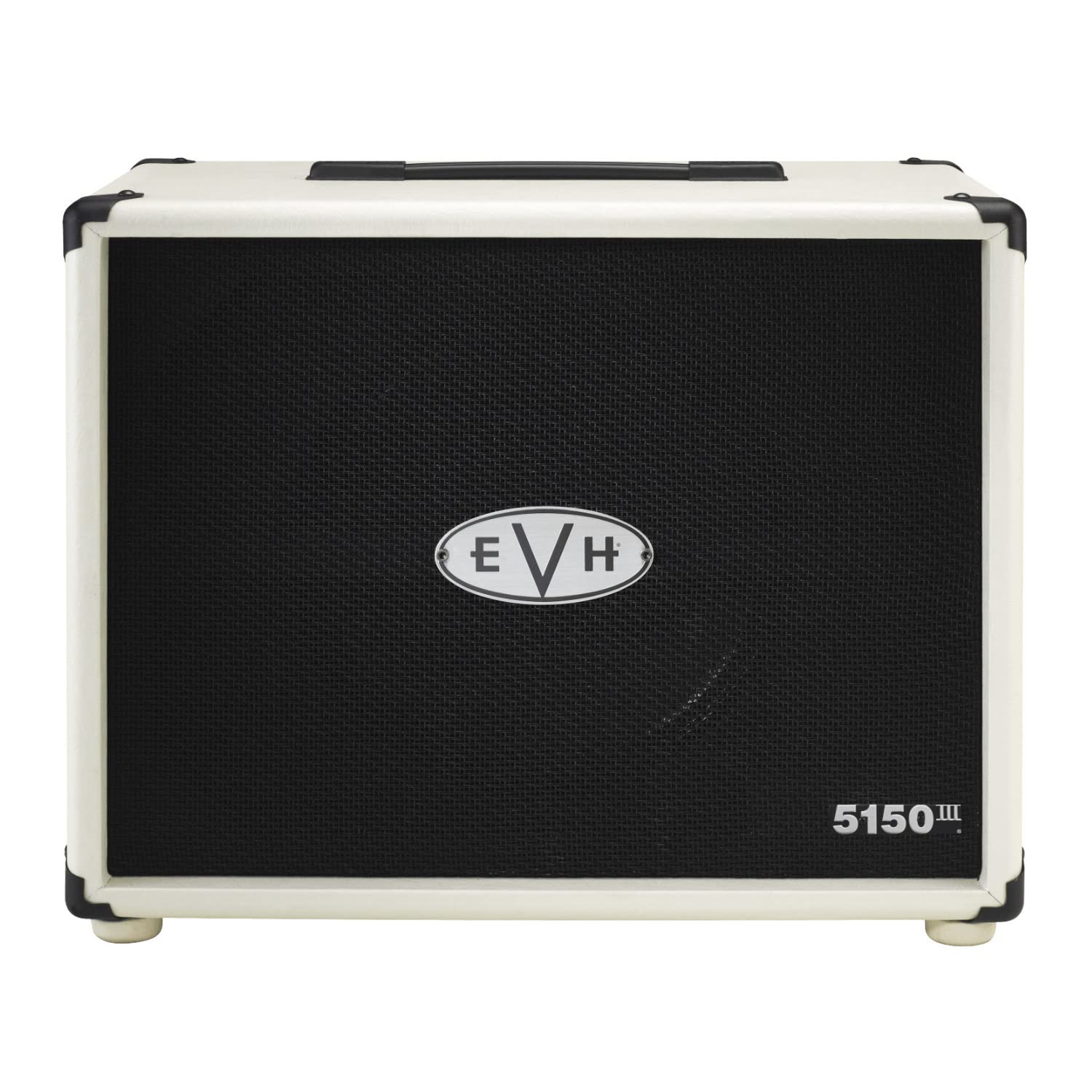
The closed-back beast that delivers thick chunky mids for high-gain heads.
If your world is high-gain rock, this EVH cab is built for you. It’s a 1×12″ closed-back cabinet rated at 30 watts and 16 ohms, designed to pair with the 5150III line but flexible enough for any head. The 12-inch dynamic driver delivers thick, chunky mids with good clarity—exactly the sound Eddie Van Halen’s rig is known for.
Buyers are emphatic: “My favorite cabinet by far. I’ve always been a Celestion Vintage 30 guy, but took a chance on this and fell in love!” Playing through a Randall Diablo, a JCM 800 clone, and Orange amps, reviewers point out it’s “absolutely dope” with unwavering lows and crisp highs.
Another owner calls it their “main gig cab now,” praising it as the perfect way to downsize without losing any tone. At 38 pounds and 25″D x 22″W x 17″H, it’s a portable powerhouse that holds its own at shows. It even holds a perfect score with the highest rating in this lineup.
Reach for this if: you play high-gain rock and want a compact closed-back cab that matches a full stack’s punch.
Skip if: you’re on a tight budget—this premium cab commands a premium price, even if the tone is worth it.
Understanding the Specs
Celestion Vintage 30 Speaker
The V30 is the most famous guitar speaker in rock history. It delivers aggressive mids and a tight bottom end that cuts through a mix, making it the go-to choice for metal and hard rock. You’ll find it in the Monoprice and Orange cabs, plus it’s a popular swap target for the Peavey.
Impedance (Ohms)
Impedance is how much electrical resistance the speaker presents to your amp head. A 16-ohm cab into a 16-ohm amp output is a perfect match. Mismatching—like plugging a 16-ohm cab into an 8-ohm output—stresses your amp and risks damage, so always check both ratings.
Wattage Rating
The cabinet’s wattage rating tells you how much power the speaker can handle. Your amp head’s output should not exceed the cab’s rating, or you risk blowing the speaker. A 60W cab handles a 50W head comfortably, but pairing a 100W head with a 30W cab is asking for trouble.
Open-Back vs. Closed-Back
Closed-back cabs (like the EVH, Peavey, and Sound Town) offer tight, focused low end with punchy response—ideal for rock and metal. Open-back cabs (like the Monoprice) let sound escape from the rear, creating a more airy, room-filling tone that many prefer for cleans and vintage sounds.
FAQ
Can I use a 1×12 cabinet with any guitar amp head?
What is the difference between an open-back and closed-back cabinet?
Is the Celestion Vintage 30 worth the upgrade?
How heavy are 1×12 guitar cabinets?
Can I replace the speaker in my 1×12 cabinet?
Will a 1×12 cabinet be loud enough for gigs?
What does the wattage rating on a cabinet mean?
What is a good 1×12 cabinet for a small practice amp?
Final Thoughts: The Verdict
For most players, the best 1×12 guitar cabinet is the Monoprice Stage Right—it packages a genuine Celestion V30 in a durable plywood box at a price that beats nearly everything else. Want the iconic Orange sound with premium build? Grab the Orange PPC112. And if you already know your favorite speaker and want to build your own rig, the Sound Town GUC112 gives you a quality closed-back cab ready for your choice.
How We Picked
We do not accept paid placement. Every pick is matched to a real buyer and a real use-case; we do not hands-on test units.
Sources & Methodology
Specifications: manufacturer listings and product documentation. Review insights: verified customer reviews, as of August 2026. Pricing: not shown on this page (it changes often); check the current price via the retailer link.
As an Amazon Associate, Gadgets Feed earns from qualifying purchases. This does not affect which products we feature.