
Our readers keep the lights on and my morning glass full of iced black tea. As an Amazon Associate, I earn from qualifying purchases.
Specs are compiled from manufacturer listings and verified buyer reviews and can change over time — please confirm the key details on the product page before buying.
An HDMI 2.1 TV eliminates screen tearing in games and delivers smooth motion in movies. You need a TV that handles high frame rates from a PS5, Xbox Series X, or gaming PC without hidden drawbacks. Focus on refresh rate, HDMI 2.1 port count, and panel type for your room’s lighting and budget.
I’m Min — the founder and writer behind Gadgets Feed. This guide is built by comparing the manufacturers’ published specifications and the patterns across verified customer reviews, so you get each pick’s real strengths and trade-offs instead of marketing spin.
Whether you are a serious console gamer or a home theater enthusiast, this breakdown of the 2.1 hdmi tv market will show you exactly where your money is best spent and where the hidden software issues lurk.
Our Picks at a Glance


How To Choose The Best 2.1 HDMI TV
An HDMI 2.1 port open up 4K gaming at high frame rates, but the panel, processor, and smart platform must all work together.
Refresh Rate and VRR (Variable Refresh Rate)
A 120Hz panel is the baseline for smooth motion in fast-paced games, but you will also want Variable Refresh Rate (VRR) support to eliminate screen tearing when the frame rate fluctuates. Some TVs, like the Hisense 85″ U8, push this to a native 165Hz with a VRR range up to 288, which gives you a buffer for future titles and ensures you never miss a frame. Without VRR, you might still see stutter during intense action sequences on a console.
Panel Technology and Brightness
Your room’s lighting determines what panel type you should chase. Mini LED TVs, like the Sony BRAVIA 5, use thousands of tiny LEDs to deliver high brightness and deep blacks without the risk of burn-in, making them a safe choice for mixed-use rooms. OLED panels, like the LG G5 Series, offer perfect black levels and infinite contrast, but they are best suited for a dark or dimly lit space. If you watch a lot of sports during the day, look for a TV with an anti-reflective coating and high nits—the TCL QM8K and Hisense U8 both shine here.
HDMI 2.1 Port Count and eARC
You need at least two HDMI 2.1 inputs if you plan to connect both a soundbar (via eARC) and a gaming console simultaneously. Budget-friendly models often include just one full-bandwidth HDMI 2.1 port, which forces you to swap cables. Premium options like the LG G5 and Sony BRAVIA 8 give you four HDMI 2.1 inputs, so you can plug in a PS5, Xbox Series X, PC, and soundbar without any compromises. Also, confirm the TV supports eARC (Enhanced Audio Return Channel) so you can pass Dolby Atmos from the TV to your soundbar without losing audio quality.
Quick Comparison
| Model | Best For | Refresh Rate | Panel Type | Bluetooth Version | Amazon |
|---|---|---|---|---|---|
| Hisense U8 85″★ Best Overall | Gaming speed + huge screen | 165Hz (VRR 288) | Mini-LED ULED | 5.3 | $1,649.99$1,997.99Amazon |
| Sony BRAVIA 5 85″Top Performer | Cinematic brightness + PS5 | 120Hz | Mini LED | 5.3 | $2,199.99Amazon |
| LG G5 77″ OLED evoBest Value OLED | Perfect blacks + multi-device | 120Hz | OLED evo | 5.3 | $3,299.99Amazon |
| Samsung S90F 65″ OLED | Deep contrast for dark rooms | 144Hz | OLED | 5.3 | $1,397.99$1,697.99Amazon |
| Roku Pro Series 55″ | Best out-of-box audio | 120Hz | QLED | 5.2 | $699.99$899.99Amazon |
| TCL QM8K 65″ | Bright room + anti-glare | 120Hz (VRR 288) | QD-Mini LED | 5.4 | $1,297.99$1,499.99Amazon |
| Samsung QN70F 65″ Neo QLED | AI upscaling + smart hub | 144Hz | Neo QLED Mini LED | 5.3 | $897.99Amazon |
| Sony BRAVIA 8 77″ OLED | Pure black + cinematic quality | 120Hz | OLED | 5.3 | $2,998.00Amazon |
| Panasonic W70 65″ | Budget entry to HDMI 2.1 | 60Hz | LED | 5.0 | from $297.99Amazon |
In‑Depth Reviews
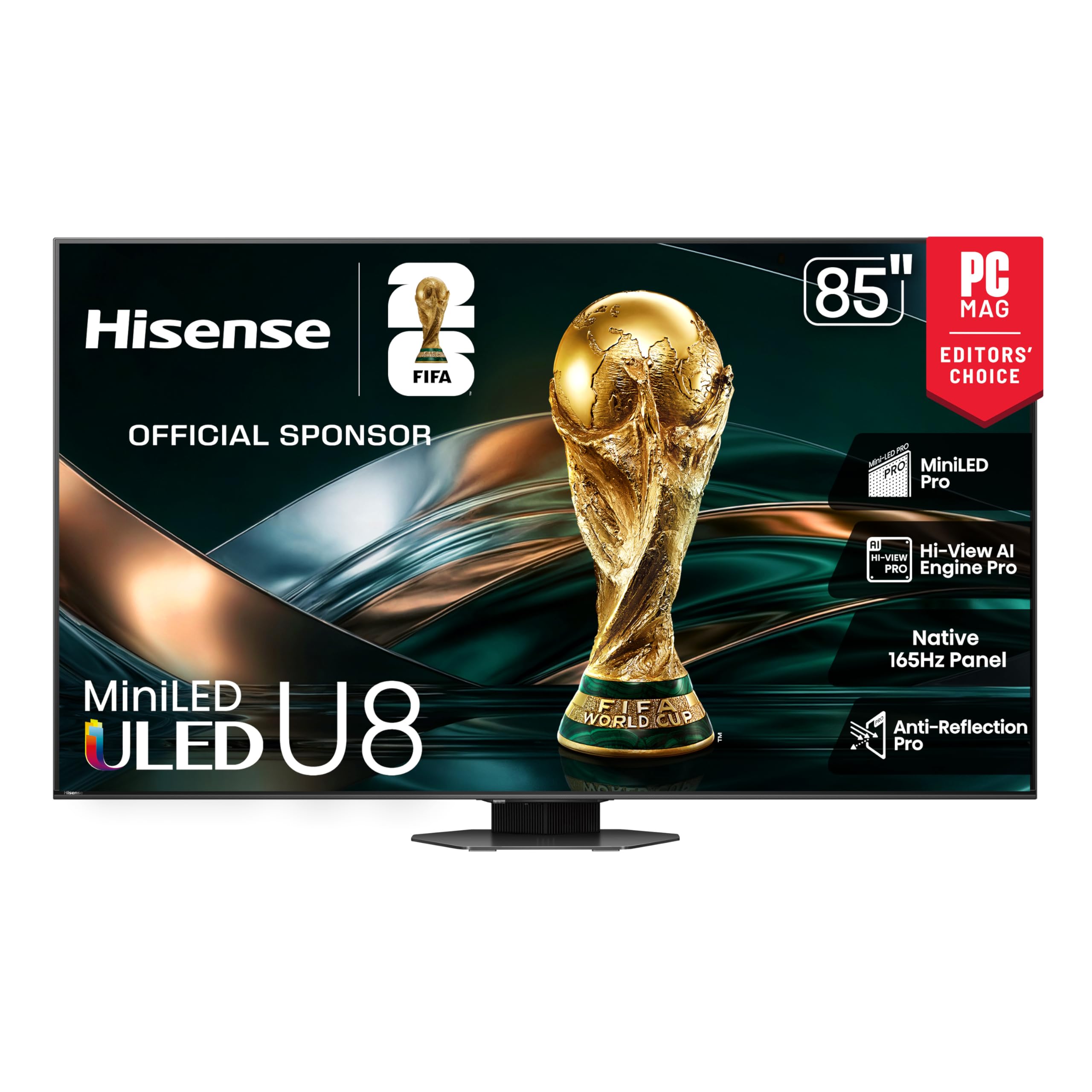
1. Hisense 85″ U8 Series ULED Mini-LED 4K UHD Smart Google TV (85U8QG) – QLED, Native 165Hz, VRR 288, Up to LD5600, 5000 Nits, HDR10+, Dolby Vision IQ · Atmos, IMAX Enhanced, 4.1.2 Ch Audio
Our pick — over 4★ from 600+ verified ratings; the strongest balance of quality and price.
The 85-inch behemoth that shatters brightness records with a native 165Hz panel for competitive gaming.
This is the TV for the performance chaser who wants the fastest refresh rate and the brightest screen money can buy. The Mini-LED Pro backlight hits up to 5000 Nits peak brightness with up to 5600 local dimming zones, which means specular highlights in HDR content look like real light sources, and shadows remain deep and detailed without halo effects. The Native 165Hz Panel with VRR up to 288 (Game Booster 288) is nearly as fast as your reaction time, making it a top pick for competitive PC gaming.
Reviewers point out that the picture quality rivals OLED, with “clear and vibrant” colors that look “great for sports and movies.” The Anti-Reflection Pro coating minimizes glare, so you can watch daytime sports without closing the curtains. The 4.1.2 channel audio with Dolby Atmos includes two up-firing speakers that project sound above you, giving you a more rich experience without an external soundbar—though some shoppers say the built-in sound is “weak” and that a Hisense soundbar solves the issue at low cost.
The biggest caveat from several buyers is software reliability. One reviewer described “frequent software issues: TV gets stuck, requires unplugging or factory reset after vacation; Google password problems.” This pattern of intermittent freezes and crashes is a real risk, and Hisense support reportedly blames Google software and offers no help. However, for the price, the hardware specs are class-leading—you get a 165Hz panel, 5000 Nits, and an 85-inch screen for a fraction of the cost of competitors.
Raw hardware champion: 5000 Nits brightness, 5600 dimming zones, and native 165Hz make this a technical marvel for the price.
The software lottery: Frequent software bugs mean you might need to unplug the TV occasionally, and Hisense support may not help.
Go for it if: You prioritize raw specs (brightness, refresh rate, screen size) over perfect day-one software and are comfortable managing occasional OS freezes.
Avoid if: You rely on a stable, low-maintenance smart TV experience or expect responsive customer support for glitches.
2. Sony BRAVIA 5 85 Inch TV, Mini LED, 4K Smart Google TV, XR Processor with AI Technology, 120hz Television with Dolby Vision/Atmos, Exclusive Features for PlayStation®5, K-85XR50
The powerhouse that turns a PS5 into a true 4K 120Hz spectacle without compromise.
This TV is built for the console gamer who also wants a cinema-class room. The XR Processor with AI technology intelligently enhances every scene in real-time, boosting color, contrast, and clarity—which means you get a sharp, vibrant picture whether you are playing a fast-paced shooter or watching a dimly lit drama. The Mini LED array, controlled by the XR Backlight Master Drive, delivers captivating brightness and authentic contrast that keeps details visible even in bright highlights.
Buyers report the picture quality is fantastic, with deep blacks that rival OLED in most scenes, and the 120Hz panel ensures blur-free action during sports and movies. The Google TV interface is smooth and responsive, and the TV includes exclusive features for PlayStation 5, like Auto HDR Tone Mapping and Auto Genre Picture Mode, which tune picture quality for gaming and streaming automatically. A reviewer also noted that the upscaling for older DVDs and video games is “superb,” making older content look cleaner than expected.
The main trade-off is the sound, which is good but not great for a premium set—many buyers recommend pairing it with a soundbar. Additionally, the remote lacks backlighting, which one reviewer pointed out would make it “the perfect bedroom TV” if it had that feature. The TV also consumes 546 Kilowatt Hours per 1000 hours, so expect higher energy bills than smaller or more efficient models.
What stands out
- XR Processor with AI delivers stunning real-time picture enhancement
- 85 inches versus the Panasonic W70 65 inches, offering a much larger viewing area for rich movie nights
- Exclusive PS5 features (Auto HDR Tone Mapping) streamline gaming setup
Where it cuts corners
- Built-in audio is only “good, not great” per reviewers, who recommend a soundbar
- Remote control lacks backlighting, making it hard to use in a dark room
- High energy consumption at 546 Kilowatt Hours per 1000 hours
Pick this if: You own a PlayStation 5 and want a massive 85-inch Mini LED screen with an AI-powered processor that improve everything you watch or play.
Think twice if: You are on a tight energy budget or expect cinema-grade built-in speakers; plan to add a soundbar for the best audio.
3. LG 77-Inch Class OLED evo AI Super Upscaling 4K G5 Series Smart TV w/Dolby Atmos, Vision, HDR10, Filmmaker Mode, Wow Orchestra, Alexa Built-in (OLED77G5WUA, 2025)
Perfect black levels and blinding brightness that redefine what an OLED can do in a bright room.
If you want the gold standard in contrast—perfect blacks next to ultra-bright highlights—this 77-inch OLED evo is the benchmark. The Brightness Booster Max technology amplifies each pixel, and the set is UL-verified for Discomfort Glare Free (UGR less than 22), so you can use it even in a living room with big windows without washing out the picture. The Alpha 11 AI Processor Gen2 handles AI Super Upscaling, meaning even 1080p content looks sharp on the large screen.
For gamers, this is a dream setup: a 0.1ms response time, a 120Hz refresh rate, and four HDMI 2.1 inputs that let you plug in a PS5, Xbox Series X, PC, and soundbar all at once. Owners mention the visuals are “stunning” and the colors are “super vibrant,” making it a significant upgrade even from the LG C1. The Dolby Vision and Dolby Atmos support deliver movie magic right from the start, and the webOS smart platform is responsive and intuitive.
The most common gripe among reviewers is the remote, which lacks backlit buttons; you may find yourself using a phone flashlight to navigate in the dark. Another buyer noted that the TV does not come with a stand, only a wall bracket, so you will need to buy a separate mount if you prefer tabletop placement.
Gamer’s paradise: Four HDMI 2.1 ports, 0.1ms response time, and support for NVIDIA G-Sync and AMD FreeSync Premium.
The hidden cost: No stand included (wall-mount only) and a non-backlit remote that frustrates in dark rooms.
Your pick if: You are an enthusiast who wants the best possible picture quality with perfect blacks, high brightness, and the flexibility of four HDMI 2.1 inputs for multiple devices.
Pass on it if: You want a TV that arrives ready to sit on a table stand from the start or if you prefer a remote that glows in the dark.
4. Sony 77 Inch OLED 4K Ultra HD TV BRAVIA 8 Smart Google TV with Dolby Vision HDR and Exclusive Features for PlayStation® 5 (K-77XR80)

The studio-calibrated OLED for film purists who demand accurate colors and deep blacks.
This 77-inch OLED is for the person who watches movies in a dark room and notices the subtle details in shadows. Over 8 million self-lit pixels produce pure black with high brightness, and the XR Contrast Booster 15 enhances contrast for dazzling highlights without washing out the dark areas. The XR Processor uses AI to intelligently boost color, contrast, and clarity in real time, making every scene feel three-dimensional.
The TV comes with studio calibrated picture modes specially designed for Netflix, Prime Video, and Sony Pictures CORE, plus it supports Dolby Vision and Atmos, IMAX Enhanced, and DTS:X. For PlayStation 5 owners, exclusive features like Auto HDR Tone Mapping and Game Menu put all your gaming picture settings in one place. Customers note the picture quality is “fantastic” and the deep blacks are “wonderful” for gaming and movies, but the Google TV operating system drew complaints from one reviewer who found it “terrible” due to sound dropouts and privacy agreements—he returned the TV for an LG C4.
At 42lbs, it is surprisingly lightweight for a 77-inch OLED, which makes wall-mounting easier, but buyers strongly recommend having two people handle the setup. The sound is better than most TVs, but you will still get much better audio with a dedicated soundbar or home theater system. The 120Hz panel with VRR ensures smooth gameplay, but ATSC 3.0 brightness issues were noted by some reviewers.
Film-grade credentials
- Studio calibrated picture modes for Netflix and Prime Video deliver creator-intended accuracy
- Lightweight at 42lbs makes wall-mounting manageable with a helper
- Dolby Vision + Atmos + IMAX Enhanced support for a movie theater experience
Software snags
- Google TV software can have sound dropouts and require multiple privacy agreements
- ATSC 3.0 brightness issues reported by some users
- No dumb monitor mode; always runs the Google OS
Ideal for: The film enthusiast who values accurate, director-intended colors and contrast in a low-light room, and PS5 owners who want smooth integration.
Not for you if: You dislike complicated smart TV interfaces (Google OS) or need a very bright display for a sunlit living room.
5. Samsung 65-Inch Class OLED S90F 4K Smart TV (2025 Model) NQ4 AI Gen3 Processor Upscaling Pro HDR +, Motion Xcelerator 144Hz, Vision Alexa Built-in

A 144Hz OLED that delivers vivid HDR and deep black contrast for the price-conscious premium buyer.
If you want the deep blacks of OLED but also need a 144Hz refresh rate for gaming on a PC or console, this Samsung is a compelling middle ground. The NQ4 AI Gen3 Processor, powered by 128 neural networks, upscales everything you watch to 4K and analyzes each scene to boost brightness, revealing hidden details even in dark scenes. The Motion Xcelerator 144Hz ensures smooth visuals and tear-free gaming at up to 4K 144Hz, making it excellent for fast-paced shooters and racing games.
Buyers are overwhelmingly positive, with one reviewer saying the “colors are brilliant and very sharp” and noting that the 120Hz refresh rate (for 4K) reduces eye strain compared to a slower panel. Another reviewer upgraded from an LG C4 and found this QD-OLED to be “brighter” with “liquid blacks.” The TV is surprisingly heavy for its thin profile, so plan for a two-person setup. The built-in sound is decent but not exceptional, and one reviewer who uses a Denon 5.1 system said the TV speakers are “not bad” but not a replacement for a proper setup.
Reflections are more noticeable on this glossy screen in bright rooms, so it is best suited for a controlled lighting environment (like a basement or dark media room). The Tizen interface operates almost identically to LG’s WebOS, which one reviewer described as a system they “despise,” so if you have strong opinions about smart TV platforms, consider how much you will interact with it. The remote is well-liked, and the 144Hz panel at this price point is rare and highly valued by gamers.
Standout features
- 144Hz refresh rate for smooth PC and console gameplay
- 128 neural networks in the AI processor for excellent 4K upscaling
- QD-OLED panel delivers bright highlights and black levels that rival W-OLED
Room for improvement
- Glossy screen reflects bright room light, best in controlled lighting
- Heavy for its thin profile, requiring a two-person setup
- Tizen interface may frustrate users who prefer a different smart platform
Your best bet if: You want a 144Hz OLED for gaming at a reasonable price and can place it in a darker room to avoid reflections.
Look elsewhere if: You watch TV in a very bright living room or strongly dislike the Tizen smart TV platform.
6. Roku Smart TV – 55-Inch Pro Series 4K QLED RokuTV with Backlit Roku Voice Remote Pro, Dolby Vision IQ, 120Hz Refresh Rate – Live Local News, Sports, Gaming
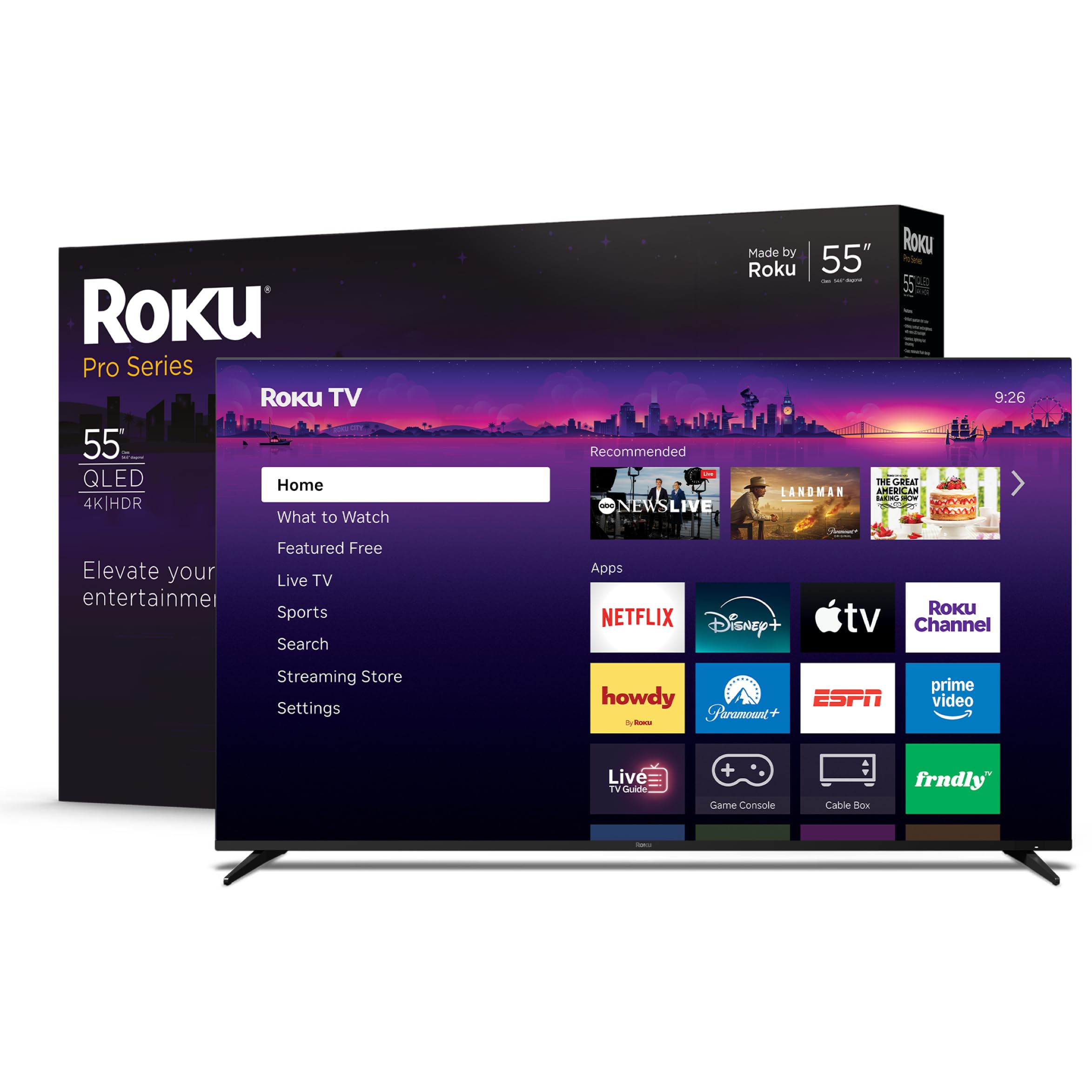
The QLED that sounds as good as it looks, making a soundbar feel optional rather than mandatory.
This 55-inch Roku TV is built for the person who values simplicity, great sound, and a stunning picture while staying affordable. The QLED screen delivers rich, accurate hues with Dolby Vision IQ, and the 120Hz refresh rate is perfect for watching live sports and gaming. The mini-LED backlight sends light to the right places, creating vivid highlights and deeper darks with realistic depth.
What sets this TV apart is the built-in audio. Buyers consistently praise the side-firing speakers, with one reviewer noting that “the speakers that come with the TV are incredible all by themselves, so buying surround is completely optional.” The Dolby Atmos support and new side-firing speakers put you in the action without needing an external system. Another reviewer who owned the Samsung The Frame found the built-in sound on the Roku to have “noticeable bass,” while the Frame had “almost no bass.”
The Roku interface is widely regarded as one of the easiest smart TV platforms to use, and the backlit Voice Remote Pro with hands-free controls is a nice touch for dark rooms. One buyer did mention a negative experience with brown spots and a long refund wait, but these appear to be isolated quality control issues. The TV uses 162 Kilowatt Hours Per Year, compared to 259 Kilowatt Hours Per Year for the Panasonic W70, making it a more power-efficient choice.
Sound quality surprise: Side-firing speakers and Dolby Atmos provide rich, room-filling audio that rivals a budget soundbar.
Simple, fast OS: The Roku platform is intuitive, and the backlit remote makes dark-room navigation easy.
Reach for this if: You want a TV with excellent built-in sound and a simple, user-friendly interface—no external soundbar needed.
skip it if: You need a very large screen (65-inch or larger) or are concerned about isolated reports of display quality control issues.
7. TCL 65 Inch Class QM8K Series | Mini LED QLED 4K HDR | 65QM8K, 2025 Model | 120HZ-144HZ Anti Reflective Wide Angle Screen Smart Google TV Dolby Atmos | Voice Remote Alexa Gaming Streaming Television
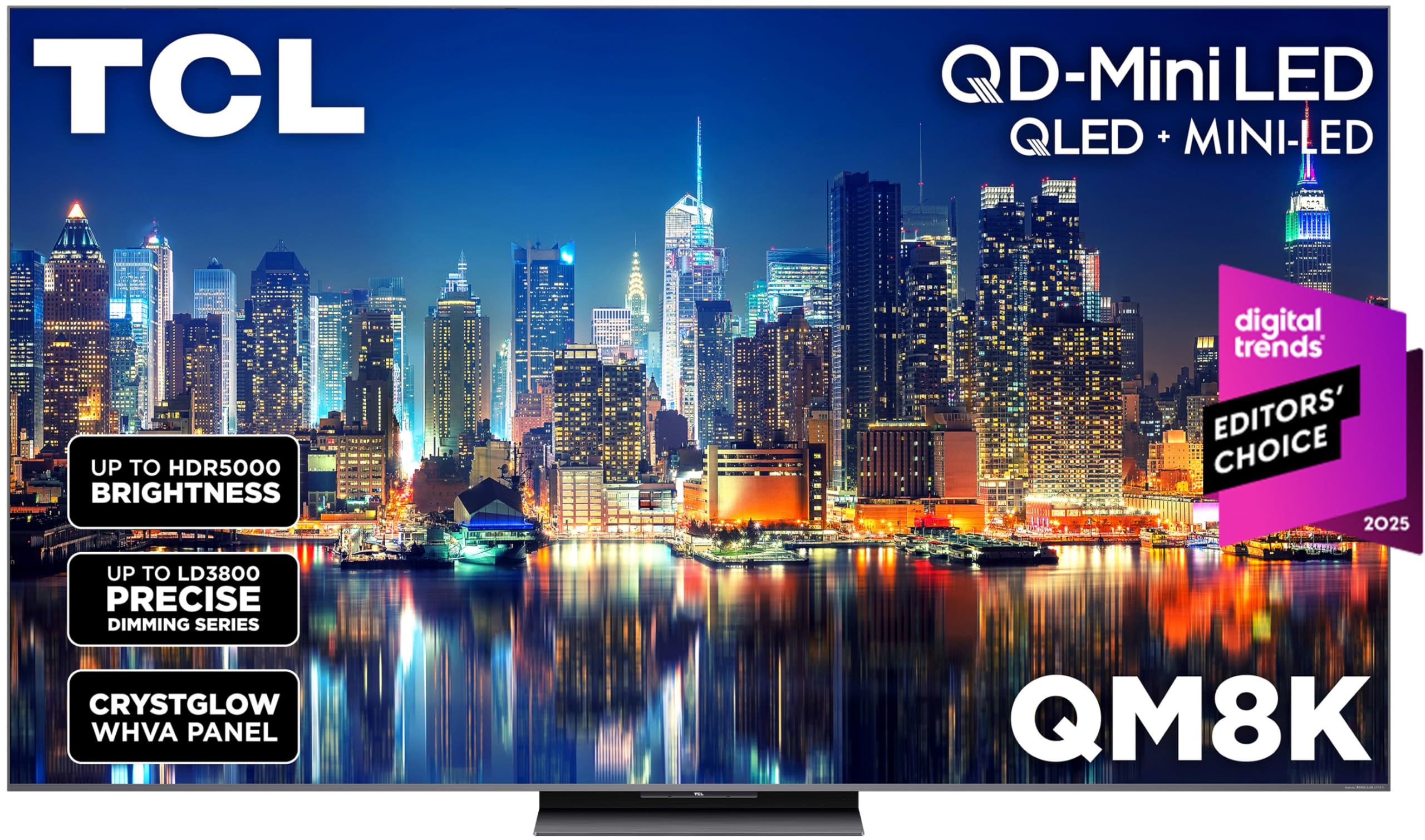
An anti-reflective Mini LED monster that kills glare without sacrificing brightness or black depth.
If your living room has big windows that flood the screen with light during the day, this TCL QM8K is the answer. The CrystGlow WHVA panel is anti-reflective and edge-to-edge, designed to deliver vibrant colors and crisp detail from every seat without the annoying mirror-like reflections common on other TVs. The QD-Mini LED technology, controlled by the TCL Halo Control System, ensures a stunning viewing experience with deep blacks and rich colors.
For gamers, the Game Accelerator 288 delivers up to 288 VRR, creating lag-free gaming at high refresh rates. Buyers report the picture is “superior” in brightness, with “many dimming zones” that reduce blooming. One reviewer who owns the TV noted it is “the best TV owned, surpassing mid-range OLEDs,” and was impressed that whites stay white while blacks are near OLED quality. The Bang & Olufsen audio design is decent, with clear dialogue and some bass, but a reviewer mentioned the audio “lacks bass” and that the Hulu app has slow menu navigation and audio/video sync issues.
The Google TV interface is responsive and easy to navigate, and the backlit premium voice remote is a hit with users. The 120Hz (up to 144Hz) refresh rate works well with both Nvidia and AMD graphics cards. At a budget-friendly price point in the premium segment, this TV offers an exceptional value, especially if you struggle with glare in your room.
Glare-free gaming
- Anti-reflective CrystGlow WHVA panel eliminates glare from bright windows
- Game Accelerator 288 VRR ensures tear-free, smooth gameplay
- QD-Mini LED delivers near-OLED black levels with high brightness
Small compromises
- Built-in audio lacks deep bass; a subwoofer or soundbar improves the experience
- Hulu app has reported slow menu navigation and audio/video sync issues
- Some Bluetooth audio delay reported by users
Perfect for: Anyone with a bright room, especially gamers who need high VRR and hate screen glare.
Not ideal if: You watch a lot of Hulu or need a TV with strong bass from the start without a soundbar.
8. Samsung 65-Inch Class Neo QLED QN70F 4K Mini LED Smart TV (2025 Model) NQ4 AI Gen2 Processor, Quantum Matrix Technology Slim, Motion Xcelerator 144Hz, Samsung Vision AI, Alexa Built-in

An AI-powered Mini LED that upscales old HD content to 4K with stunning accuracy and detail.
This Neo QLED is for the viewer who watches a mix of old and new content—DVDs, live sports, and streaming. The NQ4 AI Gen2 Processor uses 20 neural networks to upscale your content to 4K, ensuring that even 1080p streams look sharp and smooth. The Quantum Matrix Technology with precision-controlled Mini LEDs delivers sharp and accurate contrast, so every scene has stunning clarity with bright highlights and deep blacks.
The Motion Xcelerator 144Hz brings smooth motion to sports and tear-free gaming at up to 4K 144Hz, making it a versatile choice for both movie nights and gaming sessions. Owners mention the picture is “very clear” and the “display looks fantastic,” with deep blacks, bright highlights, and “very vibrant colors with little to no blooming.” The slim design looks great mounted on the wall, and the Samsung Vision AI platform is intuitive with thousands of free channels through Samsung TV Plus.
One minor complaint is that the remote is “a little small,” but customers note they got used to it. The 144Hz refresh rate is excellent for PC gaming, and the Alexa built-in adds convenient voice control. The TV uses 317.55 Kilowatt Hours annually, which is slightly higher than some competitors, but the upscaling quality may justify the extra cost for those with older media libraries.
AI upscaling expert: 20 neural networks transform HD content into sharp 4K-like quality.
All-rounder performance: 144Hz gaming + Quantum Matrix Mini LED contrast + a smart hub with free channels.
Ideal for: People who watch a lot of older HD content and want it to look great on a 4K TV, plus gamers who want 144Hz.
Consider alternatives if: You dislike small remotes or are on a strict energy budget (317.55 kWh/year).
9. Panasonic W70 Series (2025 Model) 65″ LED 4K Ultra HD Smart Fire TV, Press & Ask Alexa, Apple AirPlay, HDR10+, HDMI 2.1, and Bluetooth Support – 65W70BP

The cheapest ticket into the HDMI 2.1 club, but be ready for a sluggish smart platform.
If your budget is tight but you still want to hook up a PS5 or Xbox Series X to an HDMI 2.1 port, this Panasonic W70 is the entry point. The 65-inch LED 4K panel supports HDR10+ and uses a 4K Studio Color Engine to deliver stunning 4K UHD resolution. It has four HDMI ports, including one HDMI 2.1 port, plus Bluetooth 5.0 support for wireless headphones and speakers.
The HDR Bright Panel with MEMC technology ensures smooth motion during action scenes, and the built-in Fire TV platform gives you access to all your apps, Alexa voice control, and Apple AirPlay support. Some reviewers point out that the picture quality is “excellent” and that the TV is “easy to set up” with a “great picture,” representing good value for the price.
The trade-offs are significant: multiple reviewers describe the Fire TV operating system as “extremely slow” and “sluggish,” with one buyer reporting “extremely slow Fire TV OS (30+ min update, frequent buffering/freezing)” and that the TV “turns on randomly” and “scrolls guide automatically.” Another reviewer noted the TV is “kinda slow for a smart TV” and “limited because it’s locked into Amazon Fire software.” The annual energy consumption is 259 Kilowatt Hours Per Year, which is higher than the Roku Pro Series (162 kWh/year). A strong recommendation from reviewers is to use an external streaming device (like a Roku or Apple TV) to bypass the sluggish software while keeping the TV as a display.
Low-cost entry
- One HDMI 2.1 port allows next-gen console connection on a tight budget
- HDR10+ support and 4K Studio Color Engine deliver solid picture quality
- Apple AirPlay and Alexa voice control built in
Software struggles
- Fire TV OS is notoriously slow, with 30-minute updates and frequent buffering
- Some units have random on/off behavior and navigation crashing
- Higher energy consumption than the Roku Pro Series (259 vs 162 kWh/year)
Buy it for: The lowest-cost way to get a 65-inch 4K TV with an HDMI 2.1 port for a console—plan on using an external streaming stick for the smart features.
Look elsewhere if: You expect a snappy smart TV experience or need more than one HDMI 2.1 port for multiple devices.
Understanding the Specs
HDMI 2.1 Bandwidth
The HDMI 2.1 standard (48Gbps) is the high-speed data pipe that lets your TV handle 4K resolution at up to 120Hz (or higher) with HDR. Older HDMI 2.0 ports max out at 4K 60Hz, which is fine for movies but will limit the fluidity of games on a PS5 or Xbox Series X. Without HDMI 2.1, you will miss out on features like Variable Refresh Rate (VRR) and Auto Low Latency Mode (ALLM) that eliminate screen tearing and cut input lag.
Refresh Rate and VRR
The refresh rate (measured in Hz) tells you how many times per second the TV updates the image. A 120Hz panel means the screen refreshes 120 times per second, which is twice as smooth as a standard 60Hz panel for fast-moving games and sports. Variable Refresh Rate (VRR) syncs the TV’s refresh rate to the game’s frame rate, so you see no stutter or tearing when the frame rate fluctuates—critical for open-world games that dip below the target frame rate.
Panel Types: Mini LED, QLED, and OLED
Mini LED uses thousands of tiny LEDs behind the screen to precisely control brightness and black levels, offering excellent contrast without the risk of burn-in—ideal for bright rooms. QLED uses a quantum dot filter on top of an LED backlight to produce a wide range of vibrant colors at high brightness. OLED uses self-lit pixels that turn off completely to produce perfect black levels, but the set is best suited for a dark or dimly lit room because the brightness is lower than Mini LED and the panel can suffer from burn-in over time with static elements.
VRR Range and Game Accelerator
Not all VRR is created equal. A VRR range of 48Hz to 120Hz is standard, but premium gaming TVs (like the Hisense U8 and TCL QM8K) offer a Game Booster or Accelerator that extends VRR up to 288Hz. This wider range works best with high-end PC graphics cards, allowing you to push frame rates well beyond 120fps in less demanding titles. If you only use a console, a standard 48-120Hz VRR range is sufficient.
FAQ
What is the difference between HDMI 2.0 and HDMI 2.1 on a TV?
How many HDMI 2.1 ports do I need?
Will a 60Hz TV work with HDMI 2.1?
What is the difference between VRR and FreeSync?
Is OLED or Mini LED better for a bright room?
Do I need a new HDMI cable for HDMI 2.1?
What is eARC and why does it matter for my soundbar?
How long does an OLED TV last before burn-in?
Can I use a 2.1 HDMI TV with a PC for 4K 120Hz gaming?
Does HDMI 2.1 bandwidth affect upscaling quality?
Final Thoughts: The Verdict
For most people, the 2.1 hdmi tv winner is the Sony BRAVIA 5 85-inch because it combines a massive Mini LED screen, AI-powered picture processing, and exclusive PS5 features into a single powerful package that excels in bright rooms without burn-in concerns. If you want the deepest blacks and perfect contrast in a dark room, grab the LG G5 77-inch OLED evo. And for the budget-conscious gamer who just wants that single HDMI 2.1 port to hook up a console, the Panasonic W70 65-inch gets you in the door—just plan on using an external streaming device to skip the sluggish smart TV experience.
How We Picked
We do not accept paid placement. Every pick is matched to a real buyer and a real use-case; we do not hands-on test units.
Sources & Methodology
Specifications: manufacturer listings and product documentation. Review insights: verified customer reviews, as of July 2026. Pricing: not shown on this page (it changes often); check the current price via the retailer link.
As an Amazon Associate, Gadgets Feed earns from qualifying purchases. This does not affect which products we feature.
Related Guides
Product prices and availability are accurate as of the date/time indicated and are subject to change. Any price and availability information displayed on Amazon at the time of purchase will apply to the purchase of this product. As an Amazon Associate I earn from qualifying purchases.
CERTAIN CONTENT THAT APPEARS ON THIS SITE COMES FROM AMAZON. THIS CONTENT IS PROVIDED "AS IS" AND IS SUBJECT TO CHANGE OR REMOVAL AT ANY TIME.
Amazon and the Amazon logo are trademarks of Amazon.com, Inc. or its affiliates.