
Our readers keep the lights on and my morning glass full of iced black tea. As an Amazon Associate, I earn from qualifying purchases.
Specs are compiled from manufacturer listings and verified buyer reviews and can change over time — please confirm the key details on the product page before buying.
Your old laptop or desktop feels sluggish, and swapping its spinning hard drive for a 2.5-inch SATA solid-state drive is Swapping a spinning hard drive for a 2.5-inch SATA SSD is the single biggest performance lift you can make.. You don’t need to be an engineer to drop one in. The real question is which drive delivers the speed and reliability you need without paying for specs you won’t notice..
I’m Min — the founder and writer behind Gadgets Feed. This guide is built by comparing the manufacturers’ published specifications and the patterns across verified customer reviews, so you get each pick’s real strengths and trade-offs instead of marketing spin.
Here is a shortlist of the most reliable and best-value options right now, covering the top-rated 240GB, 128GB, and 500GB models that owners consistently praise for day-one ease and long-term trust with the 2.5 sata ssd.
Our Picks at a Glance


How To Choose The Best 2.5 SATA SSD
Picking a 2.5-inch SATA SSD is simpler than choosing a new phone, but a few terms can trip you up. You want a drive that You want a drive that makes your computer feel new while staying affordable.. Here are the three things that actually matter.
Capacity vs Budget
128GB and 240GB drives are great for booting your operating system and a handful of applications. They are often 128GB and 240GB drives are often the cheapest way to revive a very old laptop.. A 500GB drive gives you room for a small game library or media files alongside your OS. Go larger only if you store lots of photos, videos, or modern games — but for most system upgrades, 240GB to 500GB is For most system upgrades, 240GB to 500GB is the balance..
DRAM Cache
DRAM (a small amount of high-speed memory on the SSD itself) helps the drive keep a map of where your data is stored. A drive with DRAM stays fast during heavy file transfers and multi-tasking. Drives without DRAM (often called DRAM-less) are cheaper and still much faster than any hard drive, but they can slow down during long write jobs. For a boot drive in a daily-use laptop, DRAM is a nice bonus. For a secondary storage drive, For a secondary storage drive, you will barely feel the difference..
NAND Type and Endurance
The memory cells inside an SSD come in a few types. TLC (Triple-Level Cell) NAND holds three bits per cell and is a good balance of speed and lifespan. QLC (Quad-Level Cell) holds four bits per cell, making it cheaper, but it wears out faster under heavy writing. Most popular drives use TLC, which is Most popular drives use TLC, which is perfectly fine for home and office use.. The manufacturer will list a TBW (Total Bytes Written) rating — this is the guaranteed amount of data you can write to the drive before it might fail. For everyday use, any TBW above 60TB is usually more than enough.
Quick Comparison
| Model | Best For | Capacity | Sequential Read | DRAM Cache | Amazon |
|---|---|---|---|---|---|
| Kingston A400★ Best Overall | Reliable Boot Drive | 240 GB | 500 MB/s | 2 MB | Amazon |
| Crucial MX500Premium Pick | Performance System Drive | 500 GB | 560 MB/s | 256 MB | Amazon |
| Silicon Power A55 | Budget Boot Drive | 128 GB | 500 MB/s | 128 MB | Amazon |
| Crucial BX500 | Fast Everyday Upgrade | 240 GB | 540 MB/s | None | Amazon |
| SanDisk SSD Plus | Console & Retro Gaming | 500 GB | 545 MB/s | None | Amazon |
| Samsung 870 EVO | Premium All-Rounder | 500 GB | 560 MB/s | 512 MB | Amazon |
In‑Depth Reviews
1. Kingston 240GB A400 SATA 3 2.5″ Internal SSD
Our pick — over 4.5★ from 205,000+ verified ratings; the strongest balance of quality and price.
The crowd-pleaser that revived thousands of old computers while staying affordable.
People who used to wait minutes for Windows to load now see their desktop in seconds. The Kingston A400 has a reported read speed of 500 MB/s and comes with a 2 MB DRAM cache (a small amount of high-speed memory that helps the drive keep track of data). For a boot drive in a standard desktop or older laptop, this is exactly the right recipe. Buyers report that it is reliable and affordable, with one noting it “revived an aging PC; faster boot and file loading, no lag.” The stainless steel enclosure also fits standard 2.5-inch bays in desktops and laptops without needing extra adapters.
Its 240GB capacity holds Windows or Linux comfortably plus your most-used programs. The thing everyone raves about is reliability — by a wide margin, owners mention it the most, calling it a “great option to revive and old laptop.”
Why It Wins People Over
- Extremely reliable — the most-praised aspect across thousands of owners
- Simple drop-in installation for any 2.5-inch SATA bay
- Great value for a 240GB capacity with a 500 MB/s read speed
Reach for this if: you want the safest, most-proven 240GB boot drive for reviving an old laptop or desktop.
Think twice if: you plan on constant large file writes, like video editing or server caching, where a drive with DRAM would hold its speed better.
2. Crucial MX500 500GB 3D NAND SATA 2.5 Inch Internal SSD
The DRAM-equipped performer that makes any system feel genuinely quick again.
This is the drive you pick when you want the full SATA speed limit without compromise. The MX500 comes with a 256 MB DRAM cache and a data transfer rate of 560 MB/s over a SATA connection (the fastest a SATA III port can go). That extra memory keeps the drive mapping your data efficiently during heavy multitasking. One owner who installed it in a slow Dell G3 laptop reported it “revived a completely unusable notebook,” with boot times and app loads transforming instantly. The drive also includes a 7mm to 9.5mm spacer so it fits both slim ultrabooks and standard laptop bays.
While performance and speed are praised the most among owners, reliability has mixed feedback — some units have failed within six months of use. This is rare but note if you need a rock-solid drive for critical data. The MX500 leads on performance where it matters: a 500GB capacity with a 560 MB/s read speed gives you storage for a sizable game library or media collection while still making your OS feel snappy. It includes Acronis True Image cloning software (a tool that copies your old hard drive’s data to the new SSD) for an easy migration.
The Standout Strengths
- 256 MB DRAM cache for consistent write speeds during big file transfers
- Included 7mm to 9.5mm spacer for perfect fit in any laptop or desktop
- 560 MB/s read speed pushes SATA III to its ceiling
Honest Risk to Know
- Reliability is the most-mixed aspect — a small number of units fail early
Go for this if: you want the best balance of speed, capacity, and DRAM performance for a primary system drive.
Look elsewhere if: you need absolute bulletproof reliability for server or NAS duty — the Samsung 870 EVO has a stronger long-term track record there.
3. SAMSUNG 870 EVO SATA SSD 500GB 2.5” Internal Solid State Drive

The SATA champion that Samsung built to handle anything from a basic PC to an 8K video workstation.
When you hear “Samsung SSD,” the 870 EVO is the gold standard people mean. It packs a 512 MB LPDDR4 DRAM cache (a larger cache compared to the Crucial MX500’s 256 MB), sequential read speeds of 560 MB/s, and write speeds of 530 MB/s. The big story here is endurance: Samsung rates this drive for up to 600 TBW (Total Bytes Written — the total amount of data you can write over its life). That is enough to write 300 GB of data daily for over five years, backed by a 5-year limited warranty. Owners who have used the drive for two years report zero failures, with one calling it “an excellent drive. PERIOD.”
Where the MX500 and 870 EVO diverge is on mixed feedback. The MX500’s reliability is a point of caution, while the 870 EVO’s reliability is the absolute most-praised aspect across nearly two thousand mentions. It also runs cooler — owners mention a 15°C drop compared to an HDD — and uses less power. The Samsung Magician software (a free utility) lets you monitor drive health, update firmware, and tune performance. Its SATA 6 Gbps interface works with any desktop, laptop, Mac, or PC, plus NAS and video recording devices. The only catch is that the 500GB model is pricey, but for proven longevity, you are paying for confidence.
What Owners Rave About
- Reliability is the most-mentioned positive by a massive margin — nearly 1,800 owners cite it
- 600 TBW endurance rating with a 5-year warranty
- Includes Samsung Magician software for easy drive management
The Price to Weigh
- The premium cost may not justify the upgrade if you only need a basic boot drive
Best for: users who demand maximum reliability and a long warranty for their primary system or server drive.
skip it if: your budget is tight and you are upgrading a secondary machine — the Kingston A400 will give you similar daily speed for less.
4. SANDISK SSD Plus 500GB Internal Solid State Drive
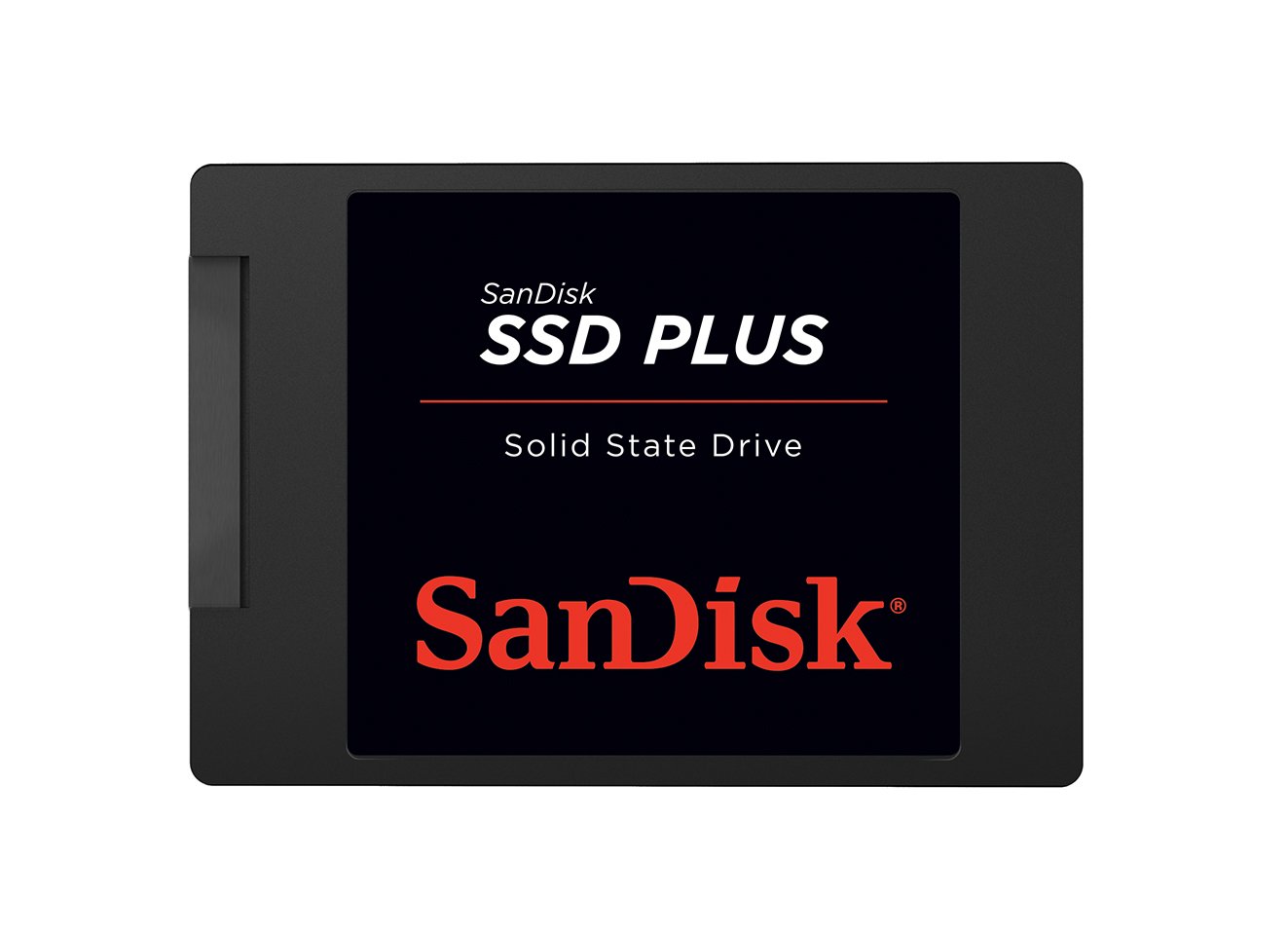
The quiet, shock-resistant 500GB drive that fits perfectly in a retro console or a security system.
Not every 2.5 SATA SSD is destined for a laptop. This SanDisk hits 545 MB/s sequential reads and 505 MB/s sequential writes, but its real a neat extra is where buyers are actually using it. The most common praise is for modding a PlayStation 2 — owners say it is “silent, cool, reliable, no clicking” and that a 500GB capacity holds a huge game library. It also works flawlessly in security camera DVRs and as a simple desktop drive replacement. The shock-resistant design (which helps protect data if you drop your computer) is a nice safety net, and the 7mm thickness fits any standard bay.
The SanDisk SSD Plus does not include a DRAM cache, so sustained write speeds in heavy workloads will not match the Samsung 870 EVO. But for booting an operating system, loading games, or storing video files, you will not notice the difference.
Where It Shines
- Owners consistently praise its silence and cool operation in consoles and DVRs
- 500GB capacity fits a large game library or media storage
- Shock-resistant construction adds durability for portable use
One Limitation
- No DRAM cache means heavy file transfers will be slower than with a premium drive
Grab it for: a retro gaming console, security system, or any secondary storage where silence and reliability matter more than peak write speed.
Consider the Crucial MX500 instead if: you need the DRAM cache for sustained workstation-level workloads.
5. Crucial BX500 240GB 3D NAND SATA 2.5-Inch Internal SSD

The affordable 240GB drive that revives a 15-year-old laptop faster than you expect.
Crucial is one of the biggest names in memory, and the BX500 is their entry-level workhorse. It delivers up to 540 MB/s read speeds Owners have installed it in machines as old as a 15-year-old Dell D620, and they report boot speeds that drop from five to ten minutes down to roughly 30 seconds. It uses TLC NAND (a type of flash memory that offers a good balance of speed and lifespan), and Crucial backs it with a 3-year limited warranty. The 240GB capacity is enough for Windows or Linux plus your essential programs.
The BX500 does not have DRAM cache, and some owners note that write speeds can drop to single-digit MB/s for small files during heavy writing. As one put it, it is “decent for storage if you only care about read speed.” That makes it less ideal as a boot drive in a modern gaming PC but perfect for reviving an older laptop where the CPU is the real bottleneck. What wins people over is reliability and speed — nearly 90 owners single out reliability as the drive’s best feature. For the price of a family dinner, you get a drive that makes a slow computer feel brand new.
Why It Is a Smart Buy
- 540 MB/s read speed — Crucial rates the BX500 at 540 MB/s sequential reads, roughly three times the speed of a typical HDD.
- TLC NAND provides a good balance of speed and endurance
- Owners call it reliable and easy to install — ideal for an HDD swap
The Caveat
- No DRAM and slow write speeds make it unsuitable for heavy workstation use
Best for: reviving an aging laptop or desktop on a tight budget — this is the cheapest way to get fast boot times.
Look at the Kingston A400 if: you want a similar capacity with even stronger long-term reliability reviews.
6. Silicon Power 128GB SSD 3D NAND A55 SLC Cache Internal Solid State Drive

The bare-bones 128GB drive that turns a struggling PC into a usable machine for the smallest spend.
When you just need an operating system drive and nothing else, the Silicon Power A55 fits the bill. It uses SLC cache technology (a method where the drive temporarily writes data in a faster single-layer mode before moving it to the main storage, which boosts write speeds) and delivers 500 MB/s reads. At 128GB, it is tight — you can fit Windows or a Linux OS plus a few tools, but movies or large games are out. Owners call it a “budget-friendly SATA SSD” that delivers a significant speed upgrade for an old PC. It also comes with a free SP Toolbox software for monitoring drive health, temperature, and total bytes written.
The durability aspect is where the A55 gets a mixed reception. Several customers note failures after less than eight months of use, which is a higher failure rate than the more established brands. The overall verdict from experienced users is that it is “my budget go to” for tight-budget builds or secondary drives, but if you can stretch your budget, they recommend moving to a Samsung EVO or a WD Blue. Its 128GB capacity also lags behind the Kingston’s 240GB by a long shot — 88% less storage for a similar price point. This is the drive you pick when the only other option is a failing hard drive and you have no budget to spare.
The Strong Points
- Cheapest SATA SSD option that still gives you 500 MB/s read speeds
- SLC cache technology boosts write performance for daily tasks
- Free SP Toolbox software for monitoring drive health
The Real Downside
- Durability is the most-negatively mentioned aspect — some fail within months
- 128GB is too small for anything beyond the OS and a few programs
Reach for this if: you need the lowest possible price to create a boot drive for an old laptop that will only run one or two applications.
Do not buy it for: a daily driver or any system where data safety matters — spend a little more on the Kingston A400 for proven reliability.
Understanding the Specs
Sequential Read / Write Speeds
These are the most advertised numbers — typically 500-560 MB/s for modern SATA SSDs. Sequential speed matters when you are moving large single files, like a movie or a big game install. For everyday boot times and opening applications, random read/write speeds matter more, but manufacturers rarely publish those. Anything above 500 MB/s sustained will feel identical in daily use.
DRAM vs DRAM-less
DRAM is a small pool of fast memory on the SSD that stores the mapping table for your data. Drives with DRAM (like the Crucial MX500 and Samsung 870 EVO) maintain consistent write speeds during heavy multitasking or large file transfers. DRAM-less drives (like the Crucial BX500 and Kingston A400) are cheaper but can drop to slow speeds during long write jobs. For a basic boot drive, DRAM is a bonus, not a necessity.
FAQ
Can I use a 2.5 SATA SSD in any laptop or desktop?
How long does a 2.5 SATA SSD last?
Will I notice the difference between 500 MB/s and 560 MB/s?
Is 128GB enough for a boot drive?
What is the difference between SATA and NVMe SSDs?
How do I clone my old hard drive to the new SSD?
Does a 2.5 SATA SSD improve gaming performance?
What does TRIM do on an SSD?
Are SATA SSDs going obsolete?
Do I need to format a new SSD before using it?
Final Thoughts: The Verdict
For most people, the 2.5 sata ssd winner is the Kingston A400 because it delivers proven reliability and a 500 MB/s read speed at a capacity that actually works for a modern operating system. If raw performance and a longer warranty are your priorities, grab the Crucial MX500 with its DRAM cache and 560 MB/s read speed. And if you are on the tightest possible budget or reviving a secondary machine, the Silicon Power A55 will get the job done — just know it is very light on capacity and has a shorter average lifespan.
How We Picked
We do not accept paid placement. Every pick is matched to a real buyer and a real use-case; we do not hands-on test units.
Sources & Methodology
Specifications: manufacturer listings and product documentation. Review insights: verified customer reviews, as of July 2026. Pricing: not shown on this page (it changes often); check the current price via the retailer link.
As an Amazon Associate, Gadgets Feed earns from qualifying purchases. This does not affect which products we feature.