
Our readers keep the lights on and my morning glass full of iced black tea. As an Amazon Associate, I earn from qualifying purchases.
Specs are compiled from manufacturer listings and verified buyer reviews and can change over time — please confirm the key details on the product page before buying.
A 2-7/8″ hole saw is a single-purpose tool with a single, usually frustrating job: making a large, clean hole in something hard. The right one cuts a clean 73mm circle through steel in seconds; the wrong one smokes, wobbles, and leaves a burned, ragged edge. This guide focuses on the exact 73mm (2-7/8″) size, so you get a precise circle for a deadbolt, tachometer, pipe, or vent without guesswork.
I’m Min — the founder and writer behind Gadgets Feed. This guide is built by comparing the manufacturers’ published specifications and the patterns across verified customer reviews, so you get each pick’s real strengths and trade-offs instead of marketing spin.
To find your best 2-7/8″ hole saw, we matched every pick to that exact 73mm cutting diameter and weighed the materials it actually handles, from thin sheet metal to thick steel and concrete.
Our Picks at a Glance

How To Choose The Best 2-7/8″ Hole Saw
Before you pick, know what you are cutting. A saw that glides through wood can shatter its teeth on stainless steel, and a concrete cutter is useless on a metal pipe. Match the saw to the material, then check the arbor and the pilot drill.
Match the tooth material to the job
Bi-metal saws, made with high-speed steel teeth welded to a steel body, are the everyday workhorse for wood, plastic, and softer metals. For hardened or abrasive metal, a tungsten carbide-tipped (TCT) saw holds its edge far longer, but demands gentle pressure and patience. If you are drilling masonry or concrete, you need a dedicated carbide-rimmed cutter for an SDS Plus drill, not a metal saw.
Check the arbor and pilot drill setup
The arbor is the shaft that connects the saw to your drill, and the pilot drill is the small bit at the center that starts the hole. A standard 5/8-18UNF thread fits most mandrels, while some heavy-duty cutters use a direct 3/8″ 3-flatted shank that grips straight into the chuck. A sharp, split-point pilot drill stops the saw from walking across the surface before the teeth bite.
Depth and ejection matter for thick materials
Cutting depth tells you the thickest material the saw can pass through in one go. Deeper saws, around 1.75 inches, handle thick pipe or stacked sheet metal. After the cut, the plug of material sits inside the saw, so look for a speed slot or an ejection spring that pushes the slug out easily, saving you from prying it out by hand.
Quick Comparison
| Model | Best For | Tooth Material | Max Depth | Mount Type | Amazon |
|---|---|---|---|---|---|
| LENOX Bi-Metal★ Best Overall | Everyday steel & metal | Alloy Steel Bi-Metal | — | Arbored | Amazon |
| MaxTool M42 CobaltBest Value | Hard metal, single holes | M42 Cobalt | 1.75″ | 5/8-18 Thread | Amazon |
| DKIBBITH TCTSteel Door Slayer | Steel door & stainless | Tungsten Carbide | 1″ (25mm) | Arbor & pilot | Amazon |
| DECKRKAT TCT | Hard steel, fast cuts | Tungsten Carbide | — | 3/8″ 3-Flat Shank | Amazon |
| Mollom Concrete | Brick, block & cement | YG8 Carbide | 25mm (1″) | SDS Plus Shank | Amazon |
| Wolfcraft CT | Installation boxes | Tungsten Carbide | 55mm | Arbor (sold sep.) | Amazon |
| AB Tools HSS | Electricians & plumbers | HSS Bi-Metal | 45mm | Included Arbor | Amazon |
| McJ Tools HSS M2 | High-volume steel | HSS M2 | — | Included Arbor | Amazon |
| Drill America CT | Heavy plate steel | Carbide-Tipped | 1″ | Hex Shank | Amazon |
In-Depth Reviews
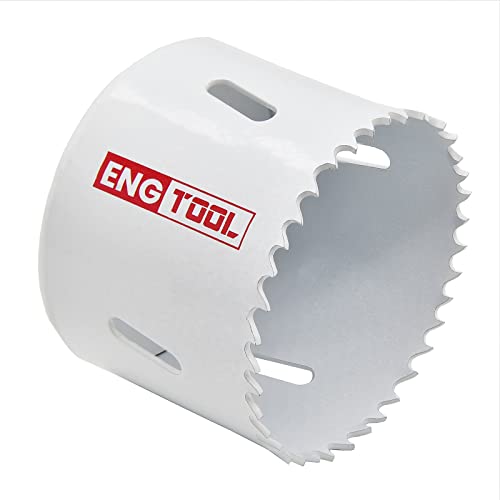
1. LENOX Tools Hole Saw, Bi-Metal, Speed Slot, Arbored, 2-7/8-Inch (1772962)
Our pick — over 4.5★ from 150+ verified ratings; the strongest balance of quality and price.
The everyday steel slicer that treats a van panel like softened butter.
The LENOX is the pick most owners reach for when a clean hole in sheet metal or a door frame matters more than bragging rights. LENOX claims 2X more durability and 50% longer life than its previous saws., and the thicker wall is there to reduce tooth loss on impact. You feel that confidence the moment the teeth bite, because the tune design penetrates metal with ease rather than screeching across it.
What wins people over is the SPEED SLOT staircase design, which ejects the cut slug quickly so you are not stopping to dig a disc out of the body. Buyers report that without any lube it cut through slightly curved sheet metal on the side of a van like a hot knife going through butter, with zero cracking or deformities. For multiple holes, it is the recurring advice to reach for cutting oil and let the saw cool.
The one reality check is tolerance. It is a welded sheet metal construction, so the hole is not dead-nuts precise the way a carbide cutter would be. If you are chasing perfect tolerance for a critical fit, this is not that tool.
speed slot arbored
- SPEED SLOT ejects plugs fast so you keep working
- Thicker wall boosts durability and limits tooth loss
- Built-in arbor means zero extra parts to buy
pilot bit sold
- Welded build is less accurate than carbide cutters
- Best handled with cutting oil for repeat cuts
the daily driver: If you cut metal often and want a dependable arbor-ready saw, this is the one to keep in the box.
tolerance check: Reach for a carbide cutter instead if the hole fit has to be dead precise.
2. MaxTool 2-7/8″ Bi-Metal Hole Saw 73mm Cobalt High Speed Steel M42
A patient cutter for hard metal that rewards a steady hand and a spray bottle.
The MaxTool earns its keep on tough jobs thanks to M42 high speed steel with 8% cobalt content, which shrugs off heat and wear far better than plain steel. The 4/6 varied teeth per inch pattern cuts vibration, and the 1.75 inch cutting depth drives through thicker material in a single pass. This is a saw you can lean on for a demanding afternoon.
The standard 5/8-18UNF thread arbor fits most existing mandrels, so you are not locked into a proprietary system. On a real-world test, a patient user cut through 3/16 aluminum with heat reflecting backing by keeping it wet with water from a spray bottle, and it did the job cleanly. Another owner used it to drill his boat dash for an Evinrude/Johnson/BRP Tachometer, which is the exact 73mm circle this size exists for.
The honest catch is quality control. A single buyer found the center threaded adapter not centered for the pilot drill bit, which produced oversized, out-of-round cuts. It is the kind of defect that can slip through, so check the pilot alignment on arrival.
cobalt edge: For a mid-range price, this cobalt build outlasts basic bi-metal saws and handles aluminum, metal, and plastics with confidence — just verify the pilot is centered before your first hole.
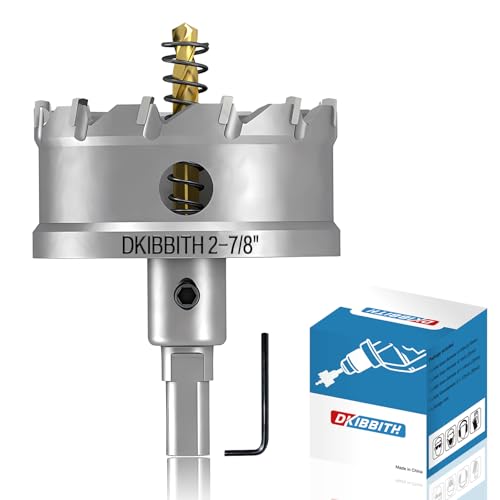
3. DKIBBITH TCT Hole Saw Set, 2-7/8″(73mm) Heavy Duty Tungsten Carbide Tipped
The blade that powers through a steel door in seconds when cheaper saws refuse.
DKIBBITH targets the hardest common jobs: stainless steel, mild steel, copper, brass, and plastic up to 1-Inch (25mm) thick. The high-grade cemented carbide teeth carry professional hardness, while a split point pilot drill bit prevents walking so the hole starts exactly where you aimed. The ejection spring pushes the slug out for easy removal on every cut.
The standout moment in the review history is a deadbolt upgrade. After a hardware-store saw refused to cut, this one sliced through the steel door in seconds. That experience is repeated by owners who cut 3/16 gauge metal with no problem and praise the speed when you go slow and let the tool do the work.
The trade-off is sensitivity. Because the TCT teeth are hard, dropping the saw or sudden impact can chip them, and lower speed is recommended for harder material. Some owners mention bits breaking on first use, so treat it gently and add oil after each project before storing it in the included rust-proof case.
reach for it if: your job is one clean hole through a steel door or stainless, and speed matters more than fussing over the cut.
look elsewhere if: you need a saw that survives drops, knocks, and rough handling on a busy site.
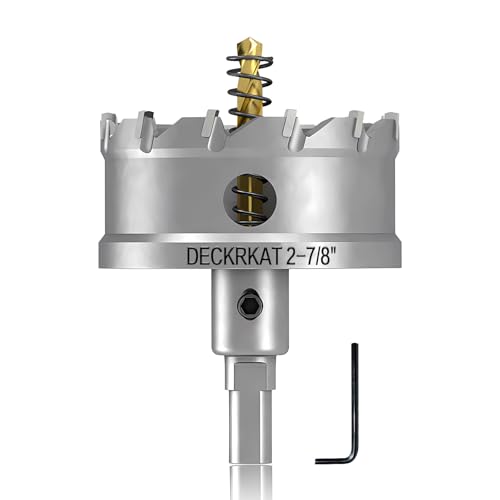
4. DECKRKAT 2-7/8″ TCT Hole Saws for Hard Metal, Heavy Duty 73mm Tungsten Carbide Tipped
A tungsten-carbide brute that cuts steel twice as fast at a friendlier price than the big brands.
The DECKRKAT is built for tough jobs and a wide chuck range, with a 3/8″ 3-Flatted Shank that grips firmly in most drills and CNC machines without slipping. It targets stainless steel, aluminum, high alloy steel, copper, plastic, FRP, and PVC, and the direct-shank design means there is no separate arbor to lose. Owners get clean results on anything they throw at it.
The verdict from the review history is a speed comparison that matters: one buyer found these cutters handled 1-3/8″ holes in 5/16″ steel with lube at twice the speed of a competitor costing more for a single saw. The recurring tip is to start with lower torque and speed on the pilot, then increase as the teeth make contact, and to use cutting oil to prevent overheating.
Durability gets a mixed reception. Some report carbide tips breaking off easily or pilot bits snapping, while others say the saw lasts a long time. One owner fixed a loosening pilot bit set screw with Teflon tape and kept cutting.
hard metal bite: If your priority is fast, clean holes in metal without paying premium prices, this carbide cutter earns its place — just keep spare pilot bits on hand.
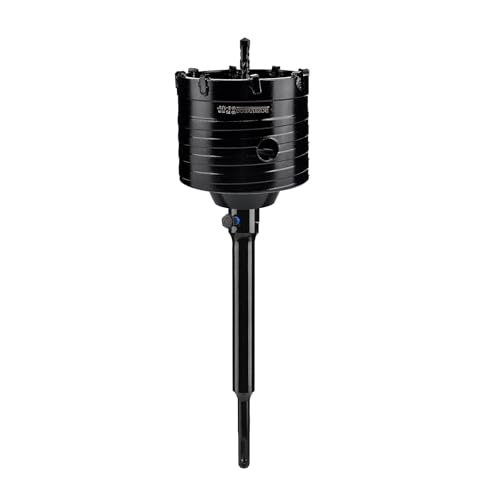
5. Mollom 73mm (2-7/8″) Concrete Hole Saw with 220mm SDS Plus Shank
The masonry hole punch that hooks straight into your SDS Plus drill and stays put.
This is a completely different beast from the metal saws above, because it is made for concrete, brick, block, cement, and stucco. The YG8 carbide tips hold their edge even after dozens of holes, and the 220mm SDS Plus rod shank is long enough to reach into deep or awkward positions on a wall. At 25mm (1″) cutting depth, it is pitched at single-pass masonry penetrations.
The design choices show real thought. Anti-loosening adhesive on the fixing screws stops vibration from shaking them out, and the flat connecting rod can be unscrewed with a wrench even if the bit jams. The cross-shaped center drill upgrades stability so the saw does not wander before it bites.
Owners treating it as a budget alternative to premium brands found it perfect for one-time jobs, and one drilled several penetrations through a 6″ non-reinforced slab by swapping between three saws to keep temperatures down. The practical tip is to drill a pilot hole first to prevent wandering.
the masonry pick: If you are chasing a clean hole in concrete or block without paying premium prices, this SDS Plus cutter delivers.
adequate, not industrial: For continuous production drilling in masonry, spend more on a heavier-duty brand.
6. Wolfcraft 3475000 73mm CT Hole Saw with 55mm Cutting Depth
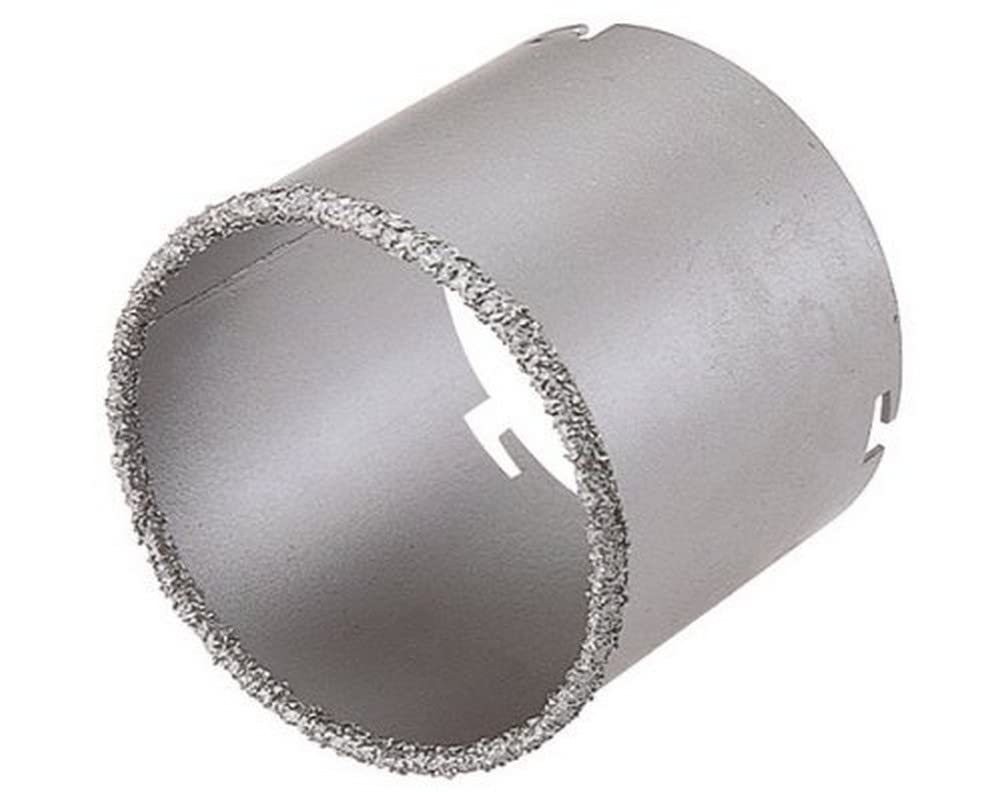
The installer’s favorite for sockets and boxes, with a deep 55mm bite through tile and block.
Wolfcraft builds this CT hole saw specifically for installation work, meaning sockets, distribution boxes, and tubes in brick walls, breeze blocks, and gypsum plaster boards. The tungsten carbide coated edge cuts through soft wall tiles and stone cleanly, and the 55mm cutting depth is generous enough to reach through a standard wall build-up in one pass.
Owners who survived a full house renovation report the saw handled the entire build without wearing out, and it drilled perfectly through a wall that even included azulejos (ceramic tiles). The main gripe is availability, since this 73mm size is not included in the common Wolfcraft sets, so you have to buy it individually even though the dimension is not unusual.
Where it hits a limit is hard floor tiles — the same buyers who praise its performance on soft wall tiles note it comes up against its limits on hard porcelain floor tile.
box socket fit: If you install electrical boxes or run conduit through plaster and soft tile, the deep 55mm cut and tungsten edge make this a reliable partner.
7. 73mm HSS Hole Saw with Drill Adaptor Arbor

A ready-to-run HSS combo that shows up with the arbor already included and cuts across a huge range of materials.
This AB Tools set is aimed squarely at electricians, plumbers, and mechanics who need a dependable hole and do not want to hunt for a loose arbor. The 73mm hole saw comes matched with its own arbor, and the total arbor length of 125mm gives you reach without a wobble. The HSS blade takes on alloy steel, aluminum, brass, bronze, cast iron, copper, glass, and stainless steel, plus wood and plastic.
The 45mm depth of the hole saw is enough for standard metal and wood stock, and the included arbor means it is ready to chuck up the moment the box opens. Customers note it arrived quickly and did the job well, with one calling it perfect for the job and nice and sharp.
hss with arbor: If you want one package that includes the saw and its arbor for varied metal and wood work, this is the no-fuss option.
8. McJ Tools 2-7/8 Inch HSS M2 Drill Bit Hole Saw for Metal, Steel, Iron, Alloy

Extreme accuracy in a rugged case: sharp teeth that claim over 100 holes per blade in steel.
McJ Tools claims cutting accuracy under 0.1mm., and the build backs it up with premium high speed steel M2 that cuts steel, cast iron, sheet metal, and copper, plus abrasive materials like high density resin and metal plates. It ships in a rugged plastic box with an extra pilot bit, a set screw, and an allen wrench, so the two most lost parts are already covered.
The performance story is strong. With liquid coolant, McJ Tools claims over 100 holes in steel plate under 1/4″ thick with liquid coolant., and owners back that up by boring 1″ holes in six 3/4″ thick steel pieces on a drill press with cutting fluid. Another described it cutting through 1/4″ diamond plate steel like wood and praised the clean, fast result with no deburring needed.
The durability divide shows up here too — some say it lasts forever, while a few report it breaking instantly on first use. The included spare pilot bit helps absorb some of that risk.
the volume pick: If you are doing many holes in steel plate and want accuracy with a spare pilot bit on hand, this earns its keep.
go slow: Keep a coolant or oil handy and monitor the guide bit after breakthrough to avoid snapping it.
9. Drill America 2-7/8″ Carbide Tipped Hole Saw/Cutter with 1″ Depth of Cut, CTH Series
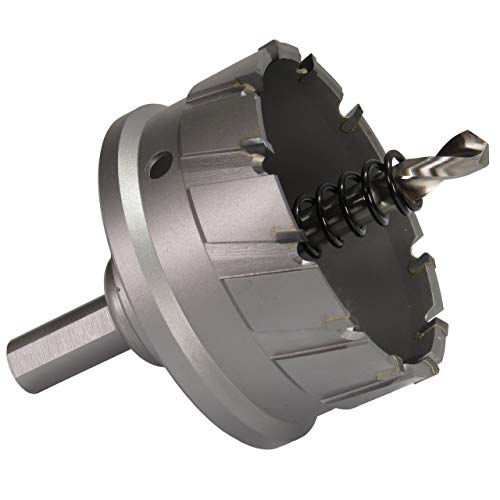
A top-shelf carbide cutter that survives 100 holes in half-inch steel and still looks new.
Drill America pitches this as the serious metalworker’s cutter, handling stainless steel, cast iron, iron, sheet metal, copper, high density resin, and metal plates. It comes with an auto ejecting slug, a pilot drill, and a hex key, all in a 1-inch depth of cut body with a hex shank for a solid chuck grip. The lip at the top prevents the slug from bursting or falling through the hole.
The endurance figures are remarkable. One owner cut over 100 holes in half-inch steel with no performance drop., and Another drilled 10+ holes in 3/8″ plate steel with zero issues after a quick fix.. The secret to that longevity is technique: low RPMs, plenty of cutting oil, and flipping the metal for anything over 1/2″ thick rather than forcing the saw through.
The recurring caveat is the set screw, which one long-term user found fell out after a single hole. A relief cut and Loctite solved it permanently, and it is the only real gripe in an otherwise clean performance record.
heavy metal hero: For serious plate-steel work where 100 clean holes in half-inch stock matter, this carbide cutter is worth the premium.
treat the screw: Loctite the set screw on arrival and it will reward you with a very long working life.
Understanding the Specs
Cobalt vs Carbide Teeth
M42 cobalt is high-speed steel with 8% cobalt content, which resists heat and wear better than plain steel — ideal for aluminum, wood, and general metal. Tungsten carbide-tipped (TCT) teeth are far harder, so they chew through stainless and hardened steel longer, but they are brittle and crack if dropped. Match the tooth to what you cut most.
Arbor, Shank, and Pilot
The arbor is the shaft connecting the saw to your drill, often on a standard 5/8-18UNF thread that fits most mandrels. Some heavy cutters instead use a 3/8″ 3-flatted shank that grips straight into the chuck. The pilot drill is the small center bit that starts the hole; a split-point or cross-shaped pilot prevents the saw from wandering across the surface.
FAQ
Will a 2-7/8 inch hole saw fit my standard drill?
What is the difference between a bi-metal and a carbide-tipped hole saw?
Can I use a metal hole saw on concrete or brick?
How do I get a clean hole without the saw wandering?
Why does my hole saw burn the wood instead of cutting it?
How do I remove the plug stuck inside the hole saw?
How thick a material can a 2-7/8 inch hole saw cut through?
What is an arbor and do I need one for every hole saw?
Is the 2-7/8″ size the same as 73mm?
Can I drill a 2-7/8″ hole with a hand drill or do I need a drill press?
Final Thoughts: The Verdict
If you want one dependable pick, the 2-7/8″ hole saw winner is the LENOX Bi-Metal because it pairs reliable steel cutting with a speed slot that keeps you working and a built-in arbor for instant use. If you are cutting hard metal or stainless, grab the DKIBBITH TCT for its carbide teeth and quick deadbolt-sized holes. And for masonry, the Mollom Concrete Saw with its SDS Plus shank is the one to reach for. The review pages across this list sum it up: a patient hand, cutting oil, and the right tooth material turn any 73mm saw from a frustration into a clean, fast circle.
How We Picked
We do not accept paid placement. Every pick is matched to a real buyer and a real use-case; we do not hands-on test units.
Sources & Methodology
Specifications: manufacturer listings and product documentation. Review insights: verified customer reviews, as of August 2026. Pricing: not shown on this page (it changes often); check the current price via the retailer link.
As an Amazon Associate, Gadgets Feed earns from qualifying purchases. This does not affect which products we feature.