
Our readers keep the lights on and my morning glass full of iced black tea. As an Amazon Associate, I earn from qualifying purchases.
Specs are compiled from manufacturer listings and verified buyer reviews and can change over time — please confirm the key details on the product page before buying.
Tiny dash and door speakers don’t get much respect. They hide behind grilles, often made of paper and magnets barely larger than a quarter. That is where the soundstage of your entire vehicle lives — the place where voices, vocals, and high notes come from. A good set of 2.75-inch speakers pulls the music up to ear level, turns muffled conversations into clarity, and makes you hear details your factory setup simply hid.
I’m Min — the founder and writer behind Gadgets Feed. This guide is built by comparing the manufacturers’ published specifications and the patterns across verified customer reviews, so you get each pick’s real strengths and trade-offs instead of marketing spin.
We have matched nine pairs of the best 2.75 inch speakers against their real-world competition — looking at power handling, measured frequency response, and which cars each set slips into without filing or fighting the factory pod.
Our Picks at a Glance


How To Choose The Best 2.75 Inch Speakers
Upgrading these small speakers can transform your car’s entire sound, but the wrong choice means wasted money and a return to that muffled dashboard. The three things that trip up most buyers are power handling, physical fit, and driver type.
Power Handling — RMS is the only number that matters
Peak power numbers (the big one on the box) are marketing bursts. The real spec is RMS — the wattage the speaker can handle continuously without distorting. If your factory head unit puts out 15 watts RMS, a speaker rated for 50 watts RMS will sound fine. The reverse is where trouble starts: a low-RMS speaker fed by a high-power aftermarket amplifier will melt its voice coil fast.
Impedance — match this to your stereo
A 4-ohm speaker is the standard for most factory and aftermarket stereos. A 3-ohm speaker (like the Alphasonik option) pulls more power from the same amplifier at 3 ohms versus 4 ohms — which can give you extra volume but stresses circuits not designed for it. Always check your vehicle’s factory impedance before buying.
Coaxial vs Component vs Midrange
A coaxial speaker has a tweeter built into the center of the main cone — one hole, full-range sound, easy install. A component speaker separates the tweeter from the woofer for better staging but needs more work. A dedicated midrange (like the single-cone Kicker KS models) handles vocals and mids but needs a separate tweeter (already elsewhere in the vehicle or one you add) for high frequencies above about 4kHz.
Quick Comparison
| Model | Best For | Impedance | RMS Power | Driver Type | Amazon |
|---|---|---|---|---|---|
| KICKER 47KSC2704★ Best Overall | Best Overall | 4 ohm | 15-50W recommended | Midrange/Tweeter | Amazon |
| Powerbass 2.75″Best Value | Best Budget Replacement | 4 ohm | 30W RMS | Full-Range | Amazon |
| Alphasonik NS275Most Powerful Pair | Most Power for the Pair | 3 ohm | 30W RMS each (90W max each) | Full-Range | Amazon |
| MB Quart XK2-106 | Best Frequency Range | 4 ohm | 70W RMS | Coaxial 2-Way | Amazon |
| AudioControl Altitude | Best Component System | 4 ohm | 50W RMS | Component Midrange | Amazon |
| Memphis PRX27 | Crowd Favorite for Sound | 4 ohm (2 ohm stable) | — | Coaxial with pivoting tweeter | Amazon |
| Pioneer TS-A709 | Best High-Frequency Response | 4 ohm | 100W RMS | 2-Way Coaxial | Amazon |
| KICKER 51KSC2704 | Best for Concert-Like Volume | 4 ohm | 15-50W recommended | Midrange | Amazon |
| Sundown Audio SA-2.75 FR | Best for Vocals and Clarity | 4 ohm | 30W RMS | Full-Range | Amazon |
In‑Depth Reviews
1. KICKER 47KSC2704 2.75″ Mid-Range Speakers
Our pick — over 4.5★ from 600+ verified ratings; the strongest balance of quality and price.
The benchmark 2.75-inch upgrade that delivers concert-like clarity without forcing you to modify your factory dash.
This is the crowd favorite for a simple reason — it includes three custom bracketing options that fit GM, Chrysler, Subaru, Toyota, and Jeep factory spots with zero drilling. What wins people over is the sound quality (the most-mentioned aspect by far, with over sixty owners singling it out). The KSC2704 works best with 15 to 50 watts of recommended power, so it plays nicely with most factory head units and entry-level aftermarket amps alike. One buyer called it an “excellent upgrade for Mazda 3” — a car where dash space is notoriously tight.
The confidence around this pick runs deep: four-point-seven stars across the owner community puts it at the very top of the 2.75-inch category. The only hang-up is the soldering connection — a few note the wires may need re-soldering during install, an easy job if you have a basic iron.
What makes it a winner
- Three included mounting brackets cover the widest range of vehicles in this group — no adapter hunting
- Sound quality praised by more than 60 owners as noticeably clearer and more detailed than factory
- Rated 4.7 stars — highest score in the entire guide — across 600+ ratings
- Handles 15-50W smoothly, making it a safe match for stock stereos and modest amps
The honest trade-offs
- Wires may need re-soldering for a solid connection
- Brackets are plastic — treat them gently during tightening
- Sound quality depends on the rest of your system; a weak head unit limits what you hear
Reach for this if: you own a compatible GM, Chrysler, Subaru, Toyota, or Jeep and want a near-guaranteed fit with sound quality that owners consistently call superb.
Look elsewhere if: your vehicle isn’t on that list and you don’t want to re-solder wires — the universal-fit options below may be faster to install.
2. Powerbass 2.75″ Dash Speakers (for Jeep/Chrysler/Dodge)
The shallow-drop replacement that brings clear high-volume sound to older Jeeps and Chryslers while staying affordable.
This pair targets a very specific group — owners of 1999-2005 Jeep Grand Cherokees, Chrysler, and Dodge vehicles with Infinity systems. The mounting depth is a slim 1.25 inches, which slides into those tight factory dash pods where deeper magnets simply won’t go. Buyers report replacing 45W-rated factory dash speakers and handling 55W stereo output with no distortion at high volume. That’s a real-world test with real numbers.
Sound quality is the top positive aspect (nearly fifty owners call it clear). A few note the overall sound quality is slightly less refined than the originals — an honest trade-off at this entry-level tier. Reliability draws mixed feedback, with some reporting failures inside six months. Buy it for the fit and the price, not for long-haul duty in a demanding system.
Who it saves money for: anyone with a 99-05 Grand Cherokee or compatible Chrysler product — the fit is proven and the 60W peak / 30W RMS rating handles a modest aftermarket head unit.
Grab this for: a quick, cheap replacement in a Jeep/Dodge dash where mounting depth is measured in inches, not centimeters.
Skip if: you plan to push high power or keep the car another decade — the reliability track record suggests occasional early failure.
3. Alphasonik NS275 Neuron Series 2.75″ Speakers
The 3-ohm contender that pulls more wattage from your amp at 3 ohms versus the typical 4 ohms for noticeably louder output.
You get more volume from the same amp with the Alphasonik NS275 because it runs at 3 ohms, while almost every other speaker in this guide is 4 ohms. The 3-ohm versus 4-ohm difference means it draws more power from the same amplifier voltage — so if you have an amp that is stable at 3 ohms, this pair gets louder on the same volume knob. Each speaker handles 90 watts max, 180 watts for the pair. Owners running 30 watts RMS to each call the sound “extremely good for this size.”
The build uses a paper cone with a steel basket and cloth surround. The honest note from some owners: this is not a true full-range speaker — it leans toward mid-bass, so you will still need dedicated tweeters for that airy top end. The mounting hardware (surface/angled mounts and screws) is included, making it a decent universal option for custom builds.
The amp-note here: A 3-ohm load is rare in factory stereos. Verify your amplifier is rated for 3 ohms before buying, or accept the extra current draw may strain a standard 4-ohm-only head unit.
Best for: the sound-system builder running an aftermarket amplifier stable at 3 ohms who wants every decibel from a 2.75-inch footprint.
Not for: anyone plugging straight into a factory 4-ohm stereo harness — you will lose the power advantage and risk overheating.
4. MB Quart XK2-106 2.75″ Coaxial 2-Way

A 2.75-inch coaxial that reaches down to 55Hz — unusually deep for its size — thanks to a black aluminum dome tweeter.
Most speakers this small roll off around 100-150Hz. The XK2-106 pulls deeper with a 55Hz-22kHz frequency response, which means you get a fuller mid-bass punch from the dash. The 92dB sensitivity rating also means it produces louder sound per watt than many rivals, a real advantage with a low-power head unit. Owners praise it as a “great replacement for factory Bose speakers” in 2025 Chevy Silverados, where it outperformed DD Audio and Pioneer competitors.
The 70W RMS and 140W peak handling give you headroom for aftermarket amps. The aluminum dome tweeter handles the top octaves cleanly. A couple of owners note the midrange can sound slightly muddy compared to older MB Quart reference series — so this is very good for the price, but not quite the brand’s audiophile heritage level. The 3-inch mounting depth requires checking clearance before you commit.
Perfect for: Bose system upgrades and vehicles where dash space is tight but you want deeper frequency coverage than a standard midrange offers.
Reach for this if: you want a coaxial that does not give up low-end — 55Hz from a 2.75-inch driver is rare.
Think twice if: you are an MB Quart purist expecting the house sound of their older reference line — the midrange is slightly warmer here.
5. AudioControl Altitude Series 2.75″ Component Speakers
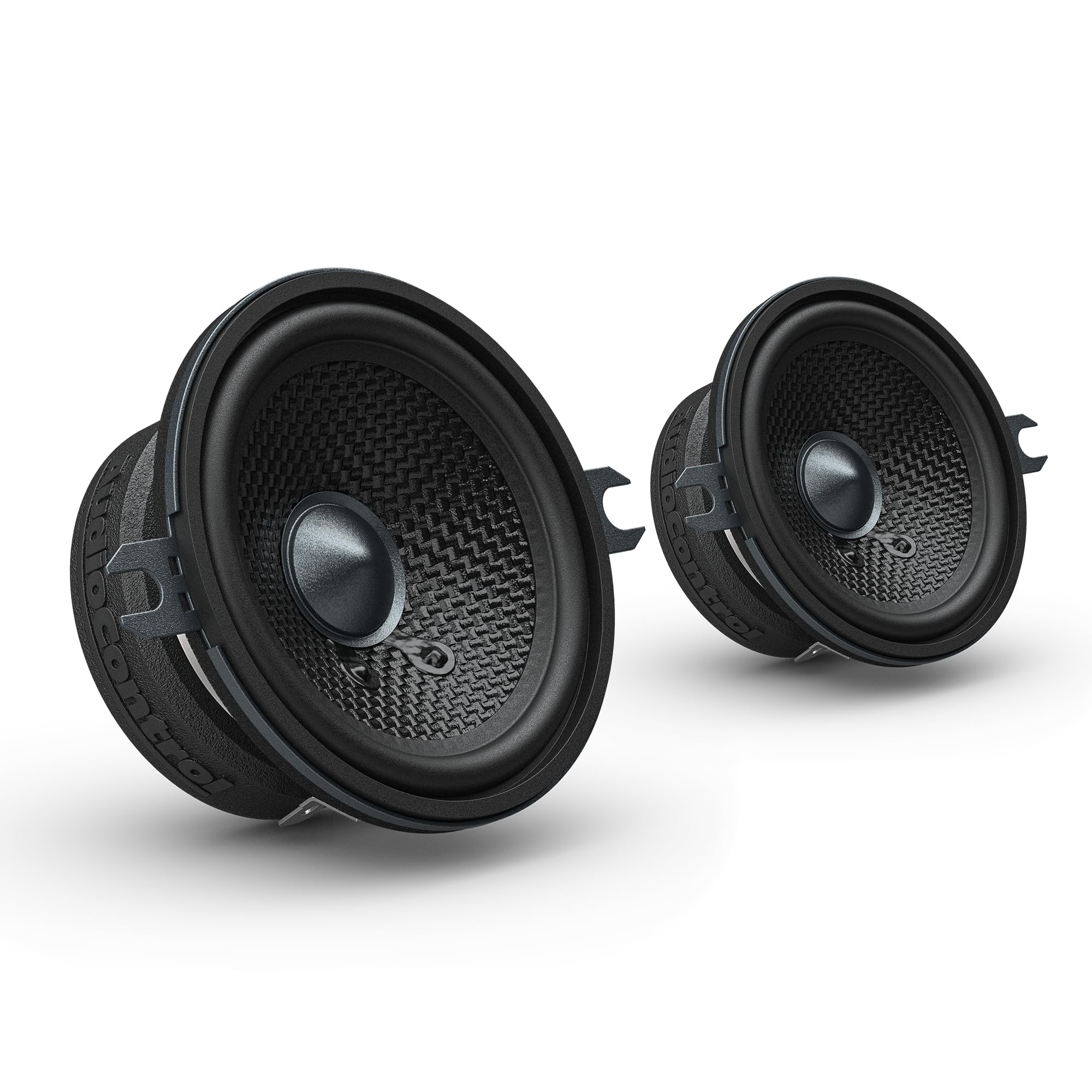
The studio-grade component path for those who plan to use a DSP or active crossover — the included high-pass filter is a bonus.
This is a midrange unit meant for a multi-speaker system, not a standalone replacement. The precision-molded glass fiber cone and butyl rubber surround are what you find in speakers three times the price. The 50W RMS rating (4 ohms) plays beautifully with a clean amp signal, and the in-line crossover is included to block bass frequencies it was never meant to reproduce. One owner replaced an Audi B&O center channel and found the AudioControl “handles power better than stock” with excellent clarity.
A single 3-star review calls the sound quality mediocre compared to Kickers — which is a reminder that even a premium component needs the right tuning. The overall diameter is 2.85 inches with a cut-out of 2.55 inches and mounting depth of just 1.28 inches, making it among the most compact options for tight custom locations. This is a tool for the enthusiast building a two-way or three-way front stage, not a dash-dump replacement.
The system-builder’s choice: Buy these if you already have or plan to add a DSP, amplifier, and separate tweeters. They are not a standalone car-audio fix.
Ideal for: the audio enthusiast piecing together a component system with active processing and an external crossover.
Skip if: you just want to swap out a factory dash speaker and go — you will be underwhelmed without the rest of the system.
6. Memphis PRX27 Power Reference Series 2.75″ Full Range Speakers

Nearly a thousand owners have made this the most-reviewed 2.75-inch speaker — and the consensus is that it is leagues better than factory.
The sound quality gets over one hundred mentions (more than any other single aspect in this guide), and owners routinely describe it as “loud and clear” even with a convertible top down at 70 mph. The secret weapon is the multi-direction pivot tweeter system, which lets you aim the high-frequency driver toward your ears for better staging. A stitched butyl rubber surround and a polypropylene cone handle the mechanical demands of daily driving.
The honest reality: fit is mixed. Some owners mention a perfect drop-in for their car; others need to trim plastic tabs for a 2005 Toyota Tundra. Durability and reliability also get mixed owner feedback — a small number of units arrive broken. For the sheer volume of happy owners (4.5 stars from 900+ ratings), this is a safe bet for most, but check your specific vehicle’s fitment reports before buying.
The street-cred note: a 2024 Camry owner found these delivered “quality sound with nice mid and high range” — almost every buyer reports an immediate, obvious improvement over factory.
Grab these for: a proven, widely-tested upgrade that delivers the most owner feedback in the category — you are buying into a 900+ owner consensus.
Check fit first if: you drive a less common vehicle — a few require minor trimming of the pod or bracket.
7. Pioneer A-Series Plus TS-A709 2.75″ 2-Way Coaxial

The 100-watt RMS power champion that reaches up to 34kHz — beyond human hearing, but you will feel the air and headroom.
Pioneer packs serious continuous power into this tiny 2.75-inch coaxial. 100 watts RMS gives you huge dynamic headroom for loud, clean passages. The frequency response of 101 Hz to 34 kHz means the top end extends well into ultra-high frequencies (beyond the roughly 20kHz human limit), which translates to easy, unstrained treble reproduction. The 82dB sensitivity is lower than some — it needs a decent amplifier to wake up, not a basic factory head unit.
The crowd is emphatic: 4.7 stars from over 550 owners. One buyer called them “fantastic” for dash speakers, saying “we did not know what we were missing until we hooked these up.” Another warned the only downside is they are coaxial (tweeter and woofer in one unit) — so if you want a dedicated midrange for a separate tweeter system, look at the Kicker KS-series instead. They drop into a 2018 Chevy Cruze dash and a 2014 Silverado 1500 with fit reported as perfect.
The amplifier note: At 82dB sensitivity, these will sound weak on a stock 15W head unit. Feed them a real amp (50-100W RMS per channel) and they reward you with clean power no other 2.75-inch can match.
Best for: the buyer with an aftermarket amplifier who wants the maximum continuous power handling available in the 2.75-inch size — 100W RMS is the top of this category.
Not for: stock head units alone — the low sensitivity demands amplifier power to deliver its potential.
8. KICKER 51KSC2704 KS-Series 2.75″ Midrange (Pair)

The same KICKER KS formula as the top pick, but sold as a pair of midrange-only drivers for those building a separate-tweeter system.
If the 47KSC2704 (our top pick) is a midrange-plus-tweeter combo, this 51KSC2704 is the midrange-only sibling for setups where you already have tweeters in the sail panels or A-pillars. The same 15-50W recommended power range applies, and the same concert-like volume character holds. The key difference: this is treated paper cone territory (UV-resistant), which some owners argue gives a warmer, more natural vocal tone than the polypropylene competition.
Sound quality is the stand-out aspect, with over 140 owners praising it in their reviews. Fit is also excellent — the three-bracket system covers GM, Chrysler, Subaru, Toyota, and Jeep. The honest gripe: one owner reported a broken unit, and the treated paper cone may be less tolerant of moisture than polymer alternatives. But with 4.6 stars from nearly seven hundred owners, this is a seriously popular midrange that works beautifully in a Subaru Crosstrek or a Jeep Wrangler JL.
The system-matching note: Because these are pure midrange (no built-in tweeter), you need a separate tweeter or a subwoofer to handle high frequencies and deep bass — they shine in a 3-way system.
Reach for these if: you are building a 3-way system with separate tweeters and want the most-loved midrange in the 2.75-inch category, backed by 700+ owner experiences.
Pick the 47KSC2704 instead if: you want a single-speaker solution that covers midrange and treble in one drop-in unit.
9. Sundown Audio SA-2.75 FR V2 Ferrite 2.75″ Dash Speakers

The audiophile’s vocal specialist — an inverted surround design aimed at off-axis response for clear dialogue even from the dash.
Sundown Audio is a respected name in subwoofers, and they bring the same engineering rigor to this tiny full-range driver. The 30W RMS rating is certified through an 8-hour strenuous test. The inverted rubber surround is a smart detail: it’s designed to improve response when the speaker is aimed away from your ears (as dash speakers often are). Owners say it is “excellent for vocals and delicate sounds” and call the clarity “phenomenal.” The frequency response is 160Hz to 20kHz — a full-range spec that pairs well with a subwoofer.
The fit is solid for Chrysler and many others as a direct replacement, but a buyer fitting it into a Lexus GX470 noted the need for an adapter. A minority found it “not impressive” even with amping — so expectations matter. The ferrite magnet and vented spider plateau help keep the voice coil cool during extended play. Four-point-five stars from 179 owners confirms this is a solid, specialized choice for the listener who values vocal clarity above raw volume.
The vocal clarity note: The inverted surround is not marketing fluff — it measurably improves off-axis response, which is exactly what you need from a speaker firing toward the windshield, not directly at your ears.
Buy this for: vocal-forward listening where dialogue and instrument separation matter more than earth-shaking volume — the Sundown delivers nuance.
Pass if: you want maximum output and don’t plan to add a subwoofer for the low end — this driver starts rolling off around 160Hz.
Understanding the Specs
RMS vs Peak Power
RMS (Root Mean Square) is the continuous wattage a speaker can handle indefinitely. Peak/Max power is a fraction-of-a-second burst — essentially useless for real-world matching. When selecting an amplifier, match its RMS output per channel to the speaker’s RMS rating. A 50W RMS speaker fed 25W RMS sounds fine; a 25W RMS speaker fed 50W RMS will distort and burn up.
Impedance (Ohms)
Impedance is the electrical resistance the speaker presents to the amplifier. A 4-ohm speaker is standard and safe for nearly all car stereos. A 3-ohm speaker draws more current than a 4-ohm speaker — louder but stressful for amps not rated for it. Always match: if your car’s factory system is 4 ohms, stick with 4-ohm speakers unless you are bypassing the factory amp.
Frequency Response
Measured in Hertz (Hz) to Kilohertz (kHz), this tells you the range of pitches a speaker can reproduce. Human hearing is roughly 20Hz-20kHz. For a 2.75-inch speaker, a lower number like 55Hz means deeper bass ability; a higher number like 34kHz means extended treble headroom (inaudible but reduces strain on the tweeter). Expect a dash speaker to roll off below 100Hz — a subwoofer is still needed for real bass.
Sensitivity
Measured in decibels (dB), this tells you how loud a speaker plays from 1 watt of power measured at 1 meter distance. A higher number (92dB) means louder per watt — ideal for weak factory head units. A lower number (82dB) means the speaker needs more amplifier power to reach the same volume — fine with an aftermarket amp, disappointing with a basic stereo.
FAQ
Will every 2.75-inch speaker fit my car’s dash location?
Can I use a 3-ohm speaker with my factory 4-ohm stereo?
What is the difference between a coaxial speaker and a midrange speaker?
Do I need bass blockers for my new 2.75-inch dash speakers?
How do I know if my car needs a wiring adapter or bracket for 2.75-inch speakers?
Can I run 2.75-inch speakers without an external amplifier?
How long do 2.75-inch car speakers typically last?
Can I install 2.75-inch speakers in a powersports vehicle like a side-by-side or boat?
What is the advantage of a multi-direction pivot tweeter?
Final Thoughts: The Verdict
For most people, the best 2.75 inch speakers are the KICKER 47KSC2704 because they combine the highest owner rating (4.7 stars) with versatile bracketing that fits the most popular vehicle brands, delivering concert-level sound without custom fabrication. If you want maximum continuous power handling for an amplified system, the Pioneer TS-A709 (100W RMS) is your speaker. And for the budget-conscious driver with a 1999-2005 Jeep, the Powerbass 2.75-inch set offers clear sound and proven fit at the most accessible entry point — just keep expectations realistic about long-term durability.
How We Picked
We do not accept paid placement. Every pick is matched to a real buyer and a real use-case; we do not hands-on test units.
Sources & Methodology
Specifications: manufacturer listings and product documentation. Review insights: verified customer reviews, as of July 2026. Pricing: not shown on this page (it changes often); check the current price via the retailer link.
As an Amazon Associate, Gadgets Feed earns from qualifying purchases. This does not affect which products we feature.