
Our readers keep the lights on and my morning glass full of iced black tea. As an Amazon Associate, I earn from qualifying purchases.
Specs are compiled from manufacturer listings and verified buyer reviews and can change over time — please confirm the key details on the product page before buying.
If you are staring at two broken pipe ends and dreading the smell of primer and solvent cement, the fix is simpler than you think. A 2″ coupling (a fitting that joins two pipes in a straight line) is the part you need — but the real choice is if you want a rigid glued joint or a flexible, no-mess sleeve. You will pick based on your actual job: repairing a buried sprinkler line, connecting old cast iron to new PVC, or threading a steel gas line.
I’m Min — the founder and writer behind Gadgets Feed. This guide is built by comparing the manufacturers’ published specifications and the patterns across verified customer reviews, so you get each pick’s real strengths and trade-offs instead of marketing spin.
if you need a glue-in socket for a furniture project or a rubber sleeve for a drain repair, the right 2″ pipe coupling saves you a second trip to the hardware store. Match the fitting type to your pipe material before you buy, and you will get the job done in one go.
Our Picks at a Glance


How To Choose The Best 2″ Coupling
A coupling is a simple part, but choosing the wrong type wastes a trip and can leak. The first thing to know is that “2 inch” refers to the nominal pipe size, not the actual opening — you must measure the outside diameter (OD) of your pipe to match the fitting correctly.
Know Your Pipe Material First
PVC, cast iron, copper, and steel all need different joining methods. A rigid PVC slip coupling requires primer and solvent cement to weld the joint permanently. A flexible rubber coupling, by contrast, slides over the pipe and clamps down with stainless steel bands — no glue, no odor, and it can bridge slightly misaligned pipes.
Match the Connection Type
Look at how your pipe ends are finished. A slip socket accepts a smooth pipe end for gluing. An NPT female thread screws onto a male-threaded pipe and needs thread sealant tape. A camlock is a quick-disconnect fitting for hoses, not a permanent pipe joint. Choosing the wrong connection type is the most common beginner mistake in this category.
Quick Comparison
| Model | Best For | Type | Material | Pipe Fit (OD) | Amazon |
|---|---|---|---|---|---|
| 6-Pack PVC Slip Coupling★ Best Overall | Bulk DIY furniture & irrigation | Slip Socket | PVC | 2.374″ | Amazon |
| Fernco 1056-22Top Performer | Cast iron to PVC transitions | Flexible Sleeve | Elastomeric PVC | 2.15″ – 2.50″ | Amazon |
| Fitvell Slip x NPTSmart Hybrid | Threading into a female port | Slip x NPT | PVC | 2″ NPT | Amazon |
| FangKingNo Coupler | Cold water & sprinkler systems | Slip Socket | PVC | 2″ | Amazon |
| Aluminum Camlock D | Quick hose disconnect | Camlock | Aluminum | 2″ NPT | Amazon |
| Quickun 304 SS | High-temp & pressure applications | NPT Thread | 304 Stainless Steel | 2″ NPT | Amazon |
| Fernco XL 1056-222 | Offset & hard-to-reach repairs | Flexible Sleeve | Elastomeric PVC | 2.15″ – 2.50″ | Amazon |
| NDS Pro-Span | Buried irrigation pipe repair | Expansion Repair | PVC | 2″ Sch. 40 | Amazon |
| Anvil Steel Coupling | Steel & gas line extensions | NPT Thread | Alloy Steel | 2″ NPT | Amazon |
In-Depth Reviews
1. Lswteiz 6-Pack 2″ PVC Coupling (Slip x Slip)
Our pick — over 4.5★ from 600+ verified ratings; the strongest balance of quality and price.
The six-pack that turns one repair into a whole shelf of projects.
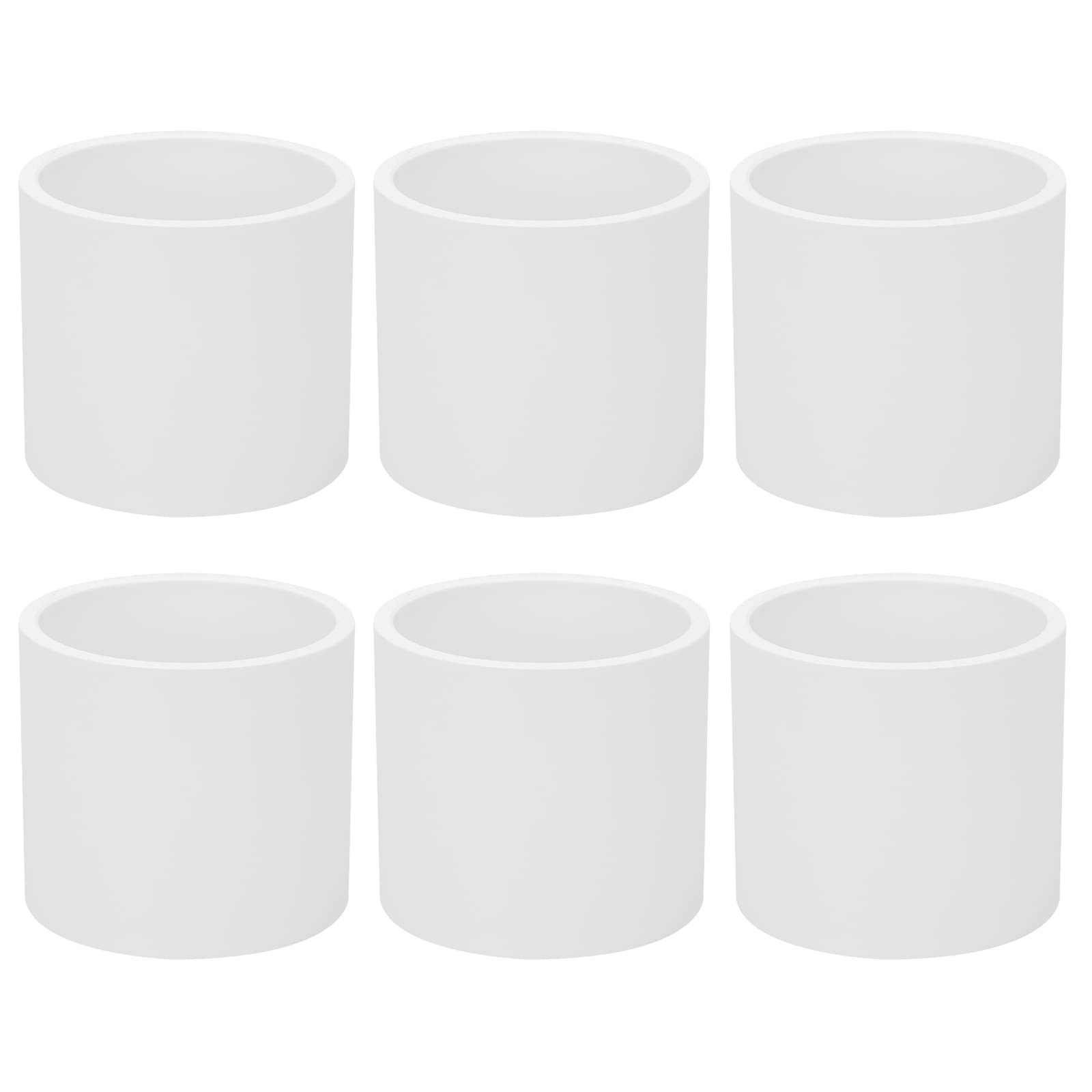
This is the bulk pick for anyone who needs more than one joint. You get six 2″ slip couplings that fit a 2.374″ outside diameter PVC pipe, which makes them the right match for standard schedule 40 pipe. Rated for systems up to 140° F, use it on cold water supply lines, irrigation, and pool plumbing, not hot lines.
The crowd favorite here is the fit — 17 owners single it out as the thing that wins them over. Buyers repeatedly note the perfect fit and a price about 20% below Lowe’s. One buyer even glued four of these together to create a custom 12-inch pipe section, which shows how flexible a simple socket can be for DIY builds.
You will need primer and solvent cement for these, since they are slip sockets, not threaded. They meet ASTM D2466 and D1784 standards and comply with NSF requirements, so the material quality is documented rather than just claimed.
Why the six-pack wins
- Six pieces in one order — enough for multiple joints or a furniture frame
- Frost and corrosion resistant PVC holds up outdoors
- Non-toxic and lightweight for easy handling
The trade-off to know
- No threads — you must glue these with primer and solvent cement
- Rated only to 140° F, so not for hot water lines
Reach for it if you are building furniture, garden supports, or need several joints at once without paying per fitting.
Look elsewhere if you need a no-glue quick repair — this is a permanent solvent-weld joint.
2. Fernco 1056-22 Flexible Coupling (2-Pack)
The rubber sleeve that bridges old cast iron to new PVC without a single drop of glue.
This is the repair hero for anyone transitioning between pipe materials. The Fernco 1056-22 has an internal diameter of 2.41″ and fits pipe ODs between 2.15″ and 2.50″, which covers cast iron, PVC, ABS, CPVC, copper, steel, and lead. You slide it over both pipe ends, tighten the two stainless steel clamps with a screwdriver, and you are done.
Buyers report the material is heavy and thick enough to go from old cast iron pipe to sch40 PVC without any problems. The manufacturer rates it for a 50-year service life, and the install is mess-free with no primers, glues, or solvent odors. The 300 stainless steel clamps resist corrosion and make the connection watertight for sewer and drain, waste, and vent piping.
The main trade-off is that this is a two-pack, so you get two couplings, not a bulk supply. Quality is the thing owners praise most, and the material gets mixed feedback only because some buyers expected a harder plastic rather than the thick flexible rubber it actually is.
Perfect for transitions: If you are joining a century-old cast iron stack to modern PVC, this is the part that makes it work — the rubber is thick enough to span the difference.
A fair caveat: It is a flexible coupling, so it is not meant to hold rigid pressure like a glued joint; use it for drain and vent lines where it shines.
Who it beats: Any glued connection when you are working with mismatched pipe materials or awkward angles.
Who it doesn’t: High-pressure supply lines that need a rigid solvent-welded joint.
3. Fitvell 2″ PVC Slip x NPT Female Coupling (Pack of 2)
One end glues, the other threads — the bridge between a pipe and a threaded port.
This two-pack solves a specific problem: you have a smooth PVC pipe on one side and a threaded female port on the other. The slip socket end takes your glued pipe, and the NPT female thread end screws onto a male National Pipe Thread connection. Note that only one side is threaded, so do not buy this expecting a full-thread union.
The installation needs primer, solvent cement, and PTFE industrial sealant tape — none of which are included. This is a running-water fitting, commonly used in commercial plumbing, residential systems, and RV setups. The PVC is frost and corrosion resistant, matching the durability of other schedule 40 picks.
Owners mention the fittings “worked just as they should,” which is exactly the quiet endorsement you want from a workhorse part. At 0.24 kg for the pair, this is noticeably lighter than the six-pack from Lswteiz (0.53 kg), which makes sense given the smaller quantity and the absence of a heavy thread collar.
Built for transitions: This is the only pick here that pairs a glued joint with a threaded one, making it the go-to for connecting PVC pipe to a threaded valve or pump inlet.
Know before you buy: It is not a true union, so you cannot unscrew it later — the slip side is a permanent glue joint.
Choose this if you are tying a PVC line into a threaded fitting like a pump or filter housing.
skip it if you need both ends to accept threaded pipe — you want a full NPT coupling instead.
4. FangKingNo 2-Inch PVC Coupling Adapter (2-Pack)

A simple glue-on coupler that handles sprinkler zones and rainwater barrels on the cheap.
This two-pack is for cold water systems only — the listing is explicit that it is not for drinking water installation and not for hot water. That makes it a strong fit for underground sprinkler systems, irrigation, pools, and rainwater collection bucket setups. The socket openings on both ends accept two male pipes in a straight run.
One buyer used these to redo sprinkler control valves, while another creatively glued four together to build a 12-inch pipe section. That DIY flexibility is the quiet strength of a simple slip coupling. The PVC resists corrosion, weighs less than metal, and its smooth interior reduces friction and buildup.
The specs meet ASTM D2466, the standard for PVC drainage fittings. The main caveat is the same as any slip coupling: you need primer and solvent cement, and you are committing to a permanent joint. This is the entry-level option compared to the Lswteiz six-pack, which gives you three times the pieces for a similar outlay.
Simple and cheap: For sprinkler repairs and cold water runs, this does the job without frills — owners say it fits well and did what it was supposed to do.
Not for drinking: The manufacturer explicitly says to avoid potable water and hot lines, so keep it to irrigation and outdoor use.
Best for the budget-conscious irrigator who needs a couple of joints for a weekend sprinkler fix.
Think twice if you need a full pack of six — the Lswteiz option gives you more pieces for your money.
5. Quafwia Aluminum Camlock D (2″ x 2, 2-Piece)

The tool-free hose fitting that snaps together in seconds, built for transfer work.
This is a completely different animal from the glued PVC couplings above. A camlock D fitting is a quick-disconnect coupler for hoses — you get one female cam coupler end that connects to a male groove adapter, plus a female NPT thread to attach to a male threaded pipe. No wrenches, no glue, just snap the arms down and you are connected.
The aluminum body keeps weight down while the NBR gasket and steel-plated pins handle the sealing. It meets the MIL A-A-59326 standard, the US military spec for cam and groove couplings. Owners have used these on 250-gallon liquid totes and report they are “every bit as good as the expensive ones at work,” which is high praise for a hobbyist part.
The honest trade-off: some buyers find the closure mechanism hard to latch, and thread quality gets mixed notes. If you need a quick-disconnect for a transfer setup, this is the pick — just expect a firm push when connecting for the first few uses until the gasket seats.
What owners love
- Tool-free connection — snap and go for liquid transfer
- Aluminum build is light but sturdy, matching pricier brands
- Female NPT thread works with standard US male pipe
What to expect
- Closure can be stiff on the first connections — needs some force
- Thread quality is mixed, so check your male threads for fit
Reach for this if you move liquids regularly and want a hose setup that disconnects in seconds, not with a wrench.
Look elsewhere if you need a permanent glued joint — this is a reusable disconnect, not a permanent splice.
6. Quickun 304 Stainless Steel Coupling (2″ Female x 2″ Female)

The stainless steel workhorse rated up to 360 PSI for serious pressure and temperature demands.
When your application involves heat or pressure beyond what PVC can handle, this is the coupling to grab. The Quickun is made from 304 stainless steel with a temperature rating of -20 to 460 degrees Fahrenheit and a working pressure of 0-360 PSI. That is a different league from the 140° F limit on the PVC slip couplings above.
The manufacturer’s note is blunt: stainless steel 304 for strength, because brass is too flimsy and will break in use. The 2″ female x 2″ female NPT threads connect to copper, brass, plastic, aluminum, and welded steel. One owner used it for a shower extension and reported no leaks when sealed with teflon on the pipe nipples.
The part is black-finished and sits at 1.4 inches in length (exactly 36mm), which is compact enough for tight spaces. Quality is the thing owners praise most. The fit gets mixed feedback — while most say it is a great fit, a few report that neither end seals properly without generous thread tape, so budget for PTFE tape.
Built for extremes: Gas, refrigeration, vacuum, and high-temp plumbing are where this steel coupling earns its place.
One caution: It is a single-piece purchase, so if you need multiple joints, the cost adds up quickly compared to the PVC multi-packs.
Choose this if you are joining steel or copper lines that see real pressure or heat.
pass on it if you are doing a simple cold-water drain repair — the PVC options are cheaper and easier to cut.
7. Fernco XL 1056-222 Extra-Long Coupling (2″ to 2″)

The extra-long 7.75-inch sleeve that finally bridges pipes that refuse to align.
This is the answer when a standard-length coupling comes up short. The Fernco XL stretches 7.75 inches long, giving you far more room to work with misaligned pipes, offset connections, or tight repairs where you cannot get both pipes perfectly square. It fits the same OD range as the standard Fernco — 2.15″ to 2.50″ — so it handles cast iron, PVC, ABS, steel, copper, and lead.
One owner switched to this XL version after five years of struggling with a short connector and finally got a solid seal. That captures the real value: the extra length means you can cut your pipe less precisely and still get a solid seal. It is rated to a max of 4.3 psi, so it is for drain, waste, and sewer applications, not pressurized supply lines.
The stainless steel worm-gear clamps let you tighten with a screwdriver, and the whole thing is manufactured in Michigan. Quality is what owners praise most, with functionality close behind. The fit gets mixed notes — some find it snug around 2-inch PVC, others find it slightly large — so measure your pipe OD first.
For stubborn alignments: The extra length is the difference between a successful repair and a frustrating afternoon of re-cutting pipe.
Not for pressure: At 4.3 psi max, keep it to gravity-fed drain and sewer lines.
Reach for it if your pipes are slightly off-angle and a short coupling will not reach both ends cleanly.
Look elsewhere if you need a pressurized joint — the standard Fernco or a glued fitting handles pressure better.
8. NDS Pro-Span Expansion Repair Coupling (2″ IPS)

The expandable coupler that saves you from digging a massive trench to fix a sprinkler line.
This is the specialist pick for underground irrigation repairs. The Pro-Span is an expandable coupling: you cut out the damaged pipe section, glue the repair coupling to one end, press the piston onto the other pipe, and extend it into place with a quarter turn. This lets you repair a buried break without excavating a wide trench around the pipe.
The True-Cut feature automatically positions the piston seals and prevents joint-separation stress. Grip-Lock stops the piston from spinning as you insert it, and the Easy-Grip handle keeps a firm hold even with wet, muddy hands. The dual-seal safety design stops leaks before they start. The PVC is treated with UV inhibitors to prevent fading and cracking.
Customers note it has held up for over three years underground, even under tractor traffic. The main complaint pattern is leakage — some users experience leaks while others report none, so the install demands careful gluing. The manufacturer backs it with a 1-year warranty, which is a concrete safety net.
Why it saves the day
- Extends into place — no need to excavate a wide area around the break
- UV inhibitors stop the plastic from becoming brittle in sunlight
- 1-year manufacturer warranty covers defects
The tricky part
- Leak reports are mixed — the glue joints must be done carefully
- Requires a separate 2″ Sch. 40 coupling (sold separately) to connect both ends
Best for fixing a crack in a buried sprinkler or irrigation line without turning your yard into a construction site.
Think twice if you are on a tight budget — it is the priciest PVC option here and needs an extra coupling to work.
9. Anvil Steel Pipe Coupling (2″ NPT Female, Black)
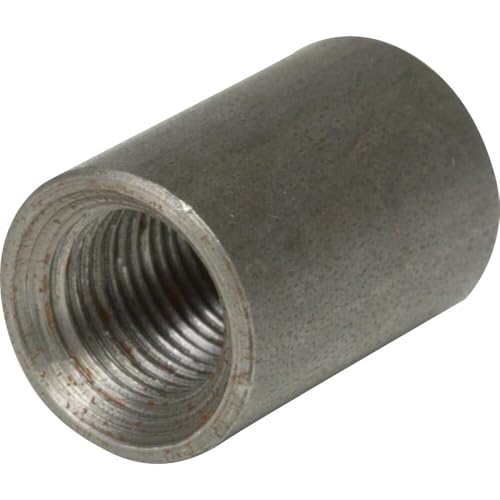
The black steel coupler with burr-free threads that plumbers trust for gas and steam lines.
When you need a threaded steel connection that will not rust like iron, the Anvil coupling is the professional-grade answer. It has female NPT threads on both ends to connect two male threaded pipes, and it is made from alloy steel for greater rust resistance than cast iron. The NPT threads create tighter seals than straight threads, which matters for pressurized systems.
Owners specifically praise that it is weldable, unlike cast products, and that the threads arrive precise and burr-free with USA stamped on the body. The black finish arrives free of rust, and the steel meets ASTM A53 and ASME B 1.20.1 specifications. The recurring note is that this is the part you buy when your local hardware store does not stock 2″ steel couplers.
The honest caveat: this is a single-piece purchase at a premium price point, and one buyer found the actual diameter slightly larger than 2 inches, so it did not fit their specific application. Measure your pipe threads before ordering, since steel fittings have less tolerance than flexible rubber couplings.
Professional build: Burr-free, precisely cut threads and a weldable body make this a favorite for gas, steam, and high-pressure steel lines.
One size note: The actual diameter runs slightly large for some buyers, so check your male thread fit — this is not a flexible fitting that forgives mismatches.
Choose this if you need a code-compliant steel joint for gas or steam and want threads that seat cleanly the first time.
it’s not for you if you are joining PVC or cast iron — this only mates with threaded steel pipe.
Understanding the Specs
Slip Socket vs. Threaded (NPT)
The most important distinction is how the coupling attaches. A slip socket slides over a smooth pipe end and is permanently welded with primer and solvent cement — it cannot be removed. An NPT (National Pipe Taper) thread screws onto a male-threaded pipe and can be unscrewed later, but it requires thread sealant tape or pipe dope to create a watertight seal. Choose based on if you want a permanent joint or a serviceable one.
Outside Diameter (OD) Match
The nominal “2 inch” size does not equal the actual pipe measurement. Different pipe materials have different ODs at the same nominal size, which is why flexible couplings list an OD range (like 2.15″ to 2.50″). Always measure the outside diameter of your pipe with a caliper before buying — this one step prevents most returns and leaks in this category.
FAQ
Will a 2-inch coupling fit my 2-inch PVC pipe?
What is the difference between a slip coupling and a threaded coupling?
Can I use a flexible rubber coupling for pressurized water lines?
Do I need primer and solvent cement for every PVC coupling?
How do I connect a 2-inch coupling to cast iron pipe?
What is the working pressure of a standard PVC coupling?
Can I use a 2-inch camlock fitting for permanent pipe connections?
Is the NDS Pro-Span coupling a standard glue-in fitting?
Final Thoughts: The Verdict
For most people, the 2″ coupling winner is the Lswteiz six-pack because it gives you six fittings at a value price for all your DIY and irrigation projects. If you are transitioning from old cast iron to new PVC and want a no-glue repair, grab the Fernco 1056-22. And for high-pressure steel or gas lines, the Quickun stainless steel coupling is the one to reach for.
How We Picked
We do not accept paid placement. Every pick is matched to a real buyer and a real use-case; we do not hands-on test units.
Sources & Methodology
Specifications: manufacturer listings and product documentation. Review insights: verified customer reviews, as of August 2026. Pricing: not shown on this page (it changes often); check the current price via the retailer link.
As an Amazon Associate, Gadgets Feed earns from qualifying purchases. This does not affect which products we feature.