
Snowmobiling in deep powder demands an engine that pulls hard without hesitation. The wrong 2-cycle oil lets carbon build up on the piston crown, fouls plugs mid-ride, and turns your exhaust into a smoke screen that ruins the trail behind you. Choosing the correct lubricant for your 2-stroke sled is about burn cleanliness, cold-flow protection in subzero temps, and film strength that keeps the top end happy at full throttle.
I’m Min — the co-founder and writer behind Gadgets Feed. I dig into proprietary additive chemistries, flash points, and viscosity grades to separate the synthetic blends that truly protect your crank from those that just claim to.
Whether you ride an injected or pre-mix sled, finding the right formula keeps your engine running cleaner and longer. Here is the 2-cycle snowmobile oil that serious riders trust to keep their sleds screaming season after season.
How To Choose The Best 2-Cycle Snowmobile Oil
Picking the wrong bottle can cause pre-ignition, piston scoring, or injector clogging. The best 2-cycle snowmobile oil balances burn temperature, viscosity, and detergents for your specific riding style and engine type.
Synthetic vs. Conventional: Know Your Base Stock
Full synthetic and synthetic blend oils flow better in subzero temperatures, meaning your oil pump or pre-mix reaches the crank immediately on a cold morning. Conventional mineral oils thicken faster below 0°F, which risks a dry start that scuffs your cylinder walls.
Pre-Mix vs. Injection Compatibility
Oil injection systems (like Polaris VES or Yamaha’s autolube) require an oil that stays thin enough to pump through small lines yet holds its viscosity under heat. Pre-mix riders can use virtually any quality 2-cycle oil, but injection users must check that the bottle specifically states injection-safe — a heavy conventional oil can cause pump cavitation.
Flash Point and Burn Cleanliness
A higher flash point (typically above 90°C) reduces the chance of the oil burning off before it reaches the combustion chamber. Oils with a lower flash point leave more carbon deposits on the power valves and exhaust ports, killing peak power over a season.
Quick Comparison
On smaller screens, swipe sideways to see the full table.
| Model | Category | Best For | Key Spec | Amazon |
|---|---|---|---|---|
| AMSOIL Dominator | Full Synthetic | High-RPM track sleds | 32 oz bottle: 1.96 lb weight | Amazon |
| Husqvarna XP 12-Pack | Synthetic Blend | Convenience pre-measured cups | 2.6 oz bottles x 12 | Amazon |
| Lucas Oil Synthetic | Full Synthetic | Value gallon for trail use | 1 gallon: special snowmobile blend | Amazon |
| Maxima Formula K2 | Full Synthetic | Racing premix performance | 0.5 gallon: 62 oz bottle | Amazon |
| Yamaha Yamalube 2W | Synthetic Blend | Yamaha watercraft or sleds | 1 gallon: 60°C flash point | Amazon |
| Yamaha Yamalube 2S | Synthetic Blend | All-purpose ATV/motorcycle/sled | 1 gallon: anti-gel subzero formula | Amazon |
| Polaris Blue Synthetic Blend | Synthetic Blend | Polaris non-exhaust valve engines | 1 gallon: 5W viscosity grade | Amazon |
In‑Depth Reviews
1. AMSOIL FULL SYNTHETIC Dominator 2-Cycle Oil 1 Quart

AMSOIL Dominator is a full synthetic ester-based oil engineered for extreme high-rpm 2-stroke engines. At 1.96 pounds per quart, the formulation delivers a higher film strength than standard mineral blends, which prevents piston scuffing even when you hold the throttle wide open across a frozen lake. The ester base also resists thermal breakdown better than cheaper hydrocracked synthetics, meaning the oil film stays intact at the top of the cylinder wall where temps spike.
Track-day riders on Aprilia RS125s and snowmobilers alike report zero fouled plugs after switching to Dominator, which points to a clean-burn profile that leaves minimal carbon on the power valves. The quart size is ideal for pre-mix riders who want to test the oil before committing to a gallon, but injection pump users should confirm their system delivers the thicker ester oil without cavitation.
The scent — often described as sweet and unmistakable — is a side effect of the proprietary additive package. While no official flash point is published, the consensus from dyno runs indicates it handles sustained 8,000+ RPM loads without losing viscosity. This is the go-to choice for anyone pushing their engine past the factory redline.
Why it’s great
- Ester full synthetic resists thermal breakdown at high RPM
- Extremely clean burn with minimal plug fouling
- Thick film strength protects against piston scuffing
Good to know
- Quart size is small — heavy riders will need multiple bottles
- Not explicitly labeled injection-safe for all pump systems
- Higher price per ounce compared to synthetic blends
2. Lucas Oil 10847 Synthetic 2-Cycle Snowmobile Oil – 1 Gallon

Lucas Oil formulated this gallon-sized synthetic specifically for snowmobile applications, which sets it apart from generic 2-cycle oils that merely claim multi-use compatibility. The special blend of synthetic base stocks, combined with proprietary detergents, targets the cold-start and carbon-control demands unique to snowmobiles — namely, reducing ring sticking when the engine cycles between full-throttle pulls and idling in deep powder.
Riders with 2017 ZR 8000 LXR sleds report 1,500 miles of trouble-free riding, with zero issues related to piston deposits or exhaust valve sticking. The oil burns with noticeably less visible smoke compared to conventional blends, which trail etiquette demands when you are leading a group through fresh snow. The gallon jug works out to a lower per-ounce cost than boutique ester oils, making it practical for riders who burn through several gallons per season.
While not a full ester like Dominator, Lucas’s synthetic handles sustained high-RPM trail riding without pre-ignition or knock. The formulation meets the strictest air-cooled 2-cycle oil standards, so vintage fan-cooled sleds also benefit from the same clean-burn protection. Just note that some injection systems with very tight clearances may prefer a thinner blend — but for pre-mix and standard pumps, this is a reliable gallon that keeps your engine clean over multiple seasons.
Why it’s great
- Specifically designed for snowmobile engines
- Burns very cleanly with low visible smoke
- Excellent value for a gallon of full synthetic
Good to know
- Not an ester-based oil — slightly lower thermal limits than Dominator
- May be too thick for some precision injection pumps
- No flash point published on the bottle
3. Maxima Formula K2 100% Synthetic Racing Premix – 0.5 Gallon

Formula K2 is track-developed synthetic oil built with race teams for maximum hardware protection in aggressive riding scenarios. The surface-active chemistry uses ester and additive compounds that cling to engine surfaces even when the throttle is snapped shut, preventing ring flutter and scuffing during deceleration — a common failure point on high-compression 2-stroke engines. The proprietary formulation also ensures optimal ring seal, which directly translates to more trapped combustion pressure and higher peak power output on a dyno.
Riders note a noticeable improvement in low-end throttle response and snappiness after switching, along with a sweeter exhaust smell compared to earlier synthetic blends. The 0.5-gallon (62 oz) jug is perfect for pre-mix riders who mix by the tank rather than injector users who prefer larger containers. It works equally well in chainsaws, weed trimmers, dirt bikes, and snowmobiles, though the higher-RPM optimization makes it overkill for casual cruising or fan-cooled vintage sleds.
The oil takes slightly more pulls to start when cold due to its heavier ester base, and runtime can be shorter per tank because the engine spins at higher RPMs with the improved ring seal. For riders chasing every last horsepower on a modded sled, K2 is a legitimate performance upgrade — not just a lubrication purchase.
Why it’s great
- Surface-active esters cling to metal under deceleration
- Noticeable increase in low-RPM throttle snappiness
- Burns clean with a sweet exhaust scent
Good to know
- Heavier ester makes cold starts require more pulls
- 0.5 gallon size is small for heavy use
- Overkill for casual trail riding
4. Yamaha Yamalube 2W 2-Stroke PWC Engine Oil – 1 Gallon

Yamalube 2W is the OEM-spec blend engineered specifically for watercraft engines, but its formulation translates directly to Yamaha snowmobiles that share the same 2-stroke architecture. The synthetic blend provides excellent anti-wear protection and catalyst compatibility, while notably reducing visible smoke compared to conventional 2-stroke oils — a huge plus for riders who want to keep the trail clean and avoid leaving an oily haze behind them.
The 60°C flash point indicates a moderate burn temperature that keeps carbon deposits in check without the extreme high-temp profile of full ester synthetics. Yamaha WaveRunner and SuperJet owners report no abnormal wear after seasons of use, with the oil delivering smooth idling and crisp throttle response even in cooler conditions. The gallon container is adequate for a single season of moderate riding, though high-mileage sleds will need multiple jugs to get through a winter.
One key advantage: because it is the factory-spec oil, using Yamalube 2W keeps your warranty intact and matches the injection pump calibration that Yamaha engineers designed around. The anti-wear package also provides cold-start protection for the crank bearings, which is critical when temperatures drop below zero and thicker oils gel up in the pump lines.
Why it’s great
- Factory-spec for Yamaha sleds and watercraft — warranty safe
- Reduces visible smoke compared to conventional oils
- Excellent cold flow for injection systems
Good to know
- 60°C flash point is lower than some full synthetics
- Not ideal for high-RPM racing applications
- PWC-specific branding may cause confusion for sled owners
5. Yamaha Yamalube 2 Stroke Hi Performance All Purpose 2S Engine Oil – 1 Gallon
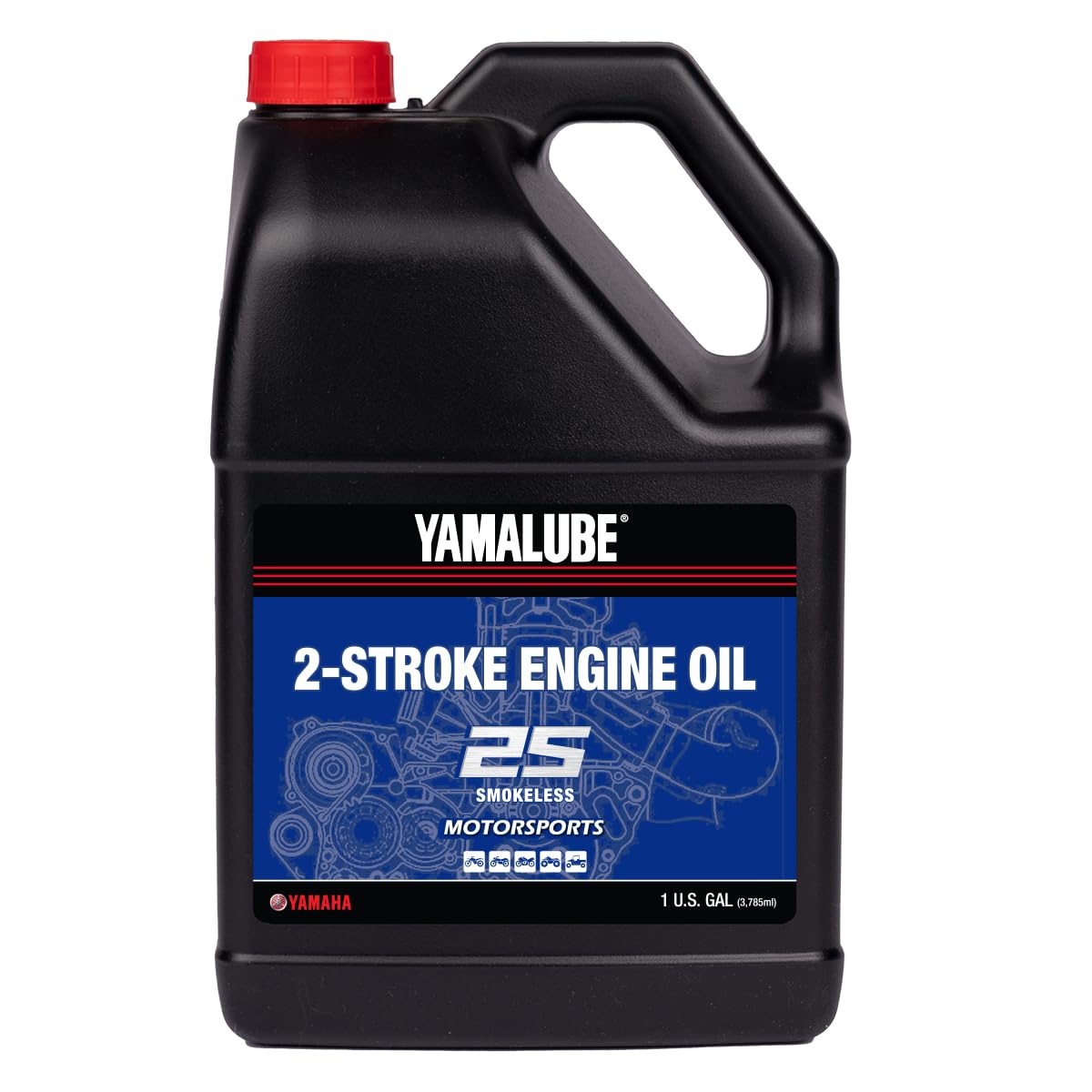
Yamalube 2S is the all-purpose sibling to the 2W, formulated for motorcycles, ATVs, and snowmobiles with a focus on low-deposit combustion and reduced carbon varnish in the crankcase. The key differentiator over the 2W is the addition of a special anti-gelling additive that maintains flow in subzero temperatures — a direct response to the gelling issues some riders face when conventional oil sits in an exposed injection tank overnight.
The synthetic blend keeps the piston and ring lands cleaner than conventional 2-stroke oil, which translates to longer time between top-end rebuilds. Riders who use it in both their sled and their ATV report consistent performance across both platforms, with no varnish buildup in the carburetor or reed valve assemblies. The 128-ounce gallon jug is the standard size for power-sports applications, and the pour spout design minimizes mess when refilling the oil tank or mixing a gas can.
The 2S is not a full synthetic, so it does not offer the extreme thermal margin of an ester oil like Dominator. For aggressive racing or sustained high-RPM operation, the 2W or a full synthetic alternative would be a better fit. However, for the vast majority of trail riders who ride at moderate speeds in cold conditions, the 2S delivers reliable protection without the premium price tag of ester-based oils.
Why it’s great
- Anti-gelling additive ensures cold flow in subzero temps
- Low carbon and varnish deposits extend engine life
- Versatile — works in sleds, ATVs, and motorcycles
Good to know
- Not a full synthetic — less thermal tolerance than ester oils
- Not specifically formulated for snowmobile engines
- May produce slightly more smoke than dedicated sled oils
6. Husqvarna XP 2 Stroke Oil 2.6 oz. Bottle 12-Pack

Husqvarna XP is a synthetic blend designed for professional-grade chainsaws and trimmers, but its formulation translates well to snowmobile pre-mix use, especially for riders who carry spare oil on long backcountry trips. The 2.6-ounce pre-measured bottles eliminate the need for a measuring cup or mixing syringe — just pour one bottle into a gallon of gas for the standard 50:1 ratio and you are ready to ride. The fuel stabilizer included in the blend also helps prevent ethanol-induced phase separation, which is a real concern for sleds that sit in the garage between snowfalls.
The XP formula lowers engine operating temperatures by reducing friction in the ring pack, which directly fights the heat that causes detonation in air-cooled engines. Riders who do not like measuring report that the simplicity of tearing open a bottle and pouring it into the gas can makes pre-mixing a one-handed operation. The 12-pack is enough for twelve gallons of pre-mix, which covers several weekend trips if you ride a moderate amount.
Because these are small 2.6-ounce bottles, the per-ounce cost is higher than buying a gallon jug of the same oil. For heavy riders who mix twenty or more gallons per season, the plastic waste also accumulates quickly. This pack is best for riders who value convenience over bulk savings, or for those who want to stash a few bottles in their tunnel bag as emergency reserve oil.
Why it’s great
- Pre-measured bottles — no measuring required for 50:1
- Includes fuel stabilizer that fights ethanol separation
- Lowers engine operating temperatures
Good to know
- Higher per-ounce cost than gallon jugs
- Generates plastic bottle waste compared to a single container
- Not injection-system compatible
7. Polaris Blue Synthetic Blend 2-Cycle Oil – 1 Gallon
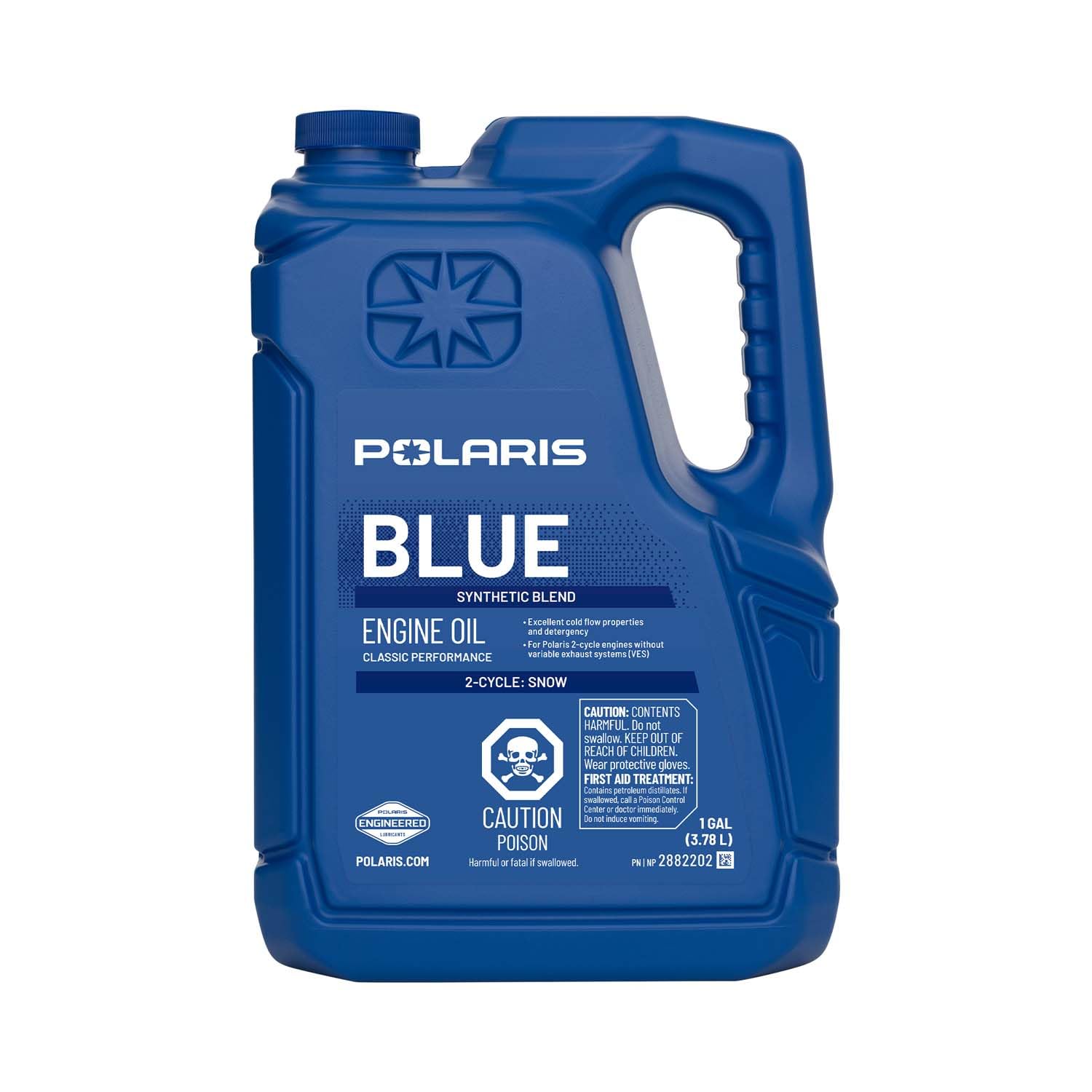
Polaris Blue is the OEM-spec synthetic blend for all non-exhaust-valve Polaris snowmobile engines, including fan-cooled, vintage, injector, and pre-mix applications. The 5W viscosity grade is deliberately thin for rapid circulation in subzero conditions, ensuring the crank bearings are lubricated before the engine fires on a cold morning. The proprietary additive system includes enhanced detergents that burn away carbon deposits rather than letting them accumulate on the piston ring grooves or exhaust port roof.
Riders report that Polaris Blue keeps their sleds running clean across multiple platforms — from 1998 XC700s to 1995 XLT triples to 1997 Explorer 400 ATVs. The low-smoke formulation is a marked improvement over earlier Polaris oil, which could leave a blue haze behind the sled on long pulls. The gallon container uses a standard pour spout that fits securely into the oil tank, and the blue dye helps you spot any leaks on snow or in the sled’s storage area.
The oil’s cold-flow properties also provide rust and corrosion protection during off-season storage, minimizing the effects of ethanol-blended fuel that can absorb moisture and pit cylinder surfaces. This is especially critical for riders who let their sled sit for months between seasons. The only trade-off: the synthetic blend falls short of full ester oils in peak thermal tolerance, so highly modified engines running aggressive timing may still need a stronger oil like AMSOIL Dominator.
Why it’s great
- 5W viscosity ensures instant subzero flow in injection systems
- Enhanced detergents keep carbon deposits minimal
- Corrosion protection during off-season storage
Good to know
- Synthetic blend, not full ester — lower thermal tolerance
- Not recommended for exhaust-valve engines
- Bottle may leak slightly during shipping if not sealed tight
FAQ
Can I use chainsaw oil in my snowmobile injection system?
What happens if I mix full synthetic with synthetic blend oil?
Does low-smoke oil actually reduce visible exhaust cloud?
How often should I change 2-cycle oil in an injection sled?
Final Thoughts: The Verdict
For most riders, the 2-cycle snowmobile oil winner is the AMSOIL Dominator because its full-ester synthetic formula provides the highest thermal protection and cleanest burn for high-RPM sleds. If you want a budget-friendly gallon that delivers solid protection season after season, grab the Lucas Oil Synthetic. And for OEM-specific reliability on Polaris sleds with non-exhaust-valve engines, nothing beats the Polaris Blue Synthetic Blend.