
Our readers keep the lights on and my morning glass full of iced black tea. As an Amazon Associate, I earn from qualifying purchases.
Specs are compiled from manufacturer listings and verified buyer reviews and can change over time — please confirm the key details on the product page before buying.
Breaking new ground for a vegetable patch or flower bed usually means renting a heavy machine, fighting with a rental schedule, and wrestling something that feels like it belongs on a farm. A 2-cycle tiller changes that by putting the power in your hands — a compact gas engine that turns over soil, mixes in fertilizer, and clears weeds right where you need it, all without an extension cord or a trip to the hardware store.
I’m Min — the founder and writer behind Gadgets Feed. This guide is built by comparing the manufacturers’ published specifications and the patterns across verified customer reviews, so you get each pick’s real strengths and trade-offs instead of marketing spin.
For small plots and established beds, a 2-cycle tiller delivers the best balance of maneuverability, power, and easy storage for home gardeners.
Our Picks at a Glance


How To Choose The Best 2-Cycle Tiller
Matching the tiller to your soil type and garden size matters more than picking the biggest engine. A lightweight cultivator glides through loose, worked ground but skips over hard-packed clay, while a heavier model with more cc digs in but can be tiring to steer. Think about what you are actually breaking up most days.
Match the engine to the job
Engine size, measured in cubic centimeters (cc), is the first decision. A 25cc to 33cc engine suits weeding between rows, mixing fertilizer, and aerating established beds. Jump to a 43cc or 52CC motor and you gain the torque to chew through sod and rough ground, at the cost of a heavier frame and more vibration in your hands.
Check the adjustable width and depth
A tiller that only digs one width forces you into awkward angles near plants. Look for adjustable tines that narrow the cut for tight spots and a drag stake that sets the depth. Wider cuts finish open ground faster, while a narrow setting protects delicate root systems.
Weigh the starting system and maintenance
Every 2-stroke runs on a gas-and-oil mix, so check whether the brand includes a fuel bottle or oil in the box. Pull-start ease varies widely — some use a spring assist or a prime system to cut the effort. Also look at the warranty length as a hint of how much the maker trusts the build.
Quick Comparison
| Model | Best For | Engine (cc) | Tilling Width | Tilling Depth | Amazon |
|---|---|---|---|---|---|
| TAZZ 35351★ Best Overall | Established gardens & value | 33cc | — | — | Amazon |
| Earthquake MC43Top Performer | Precise control & durability | 43cc | 6–10” | 8” | Amazon |
| VEVOR 43CC | Stand-up ergonomics | 43CC | 11.8” | 3.9” | Amazon |
| GardenTrax 33cc | Small spaces & beginners | 33cc | 10” | 4” | Amazon |
| YIYIBYUS 52CC | Fast, deep tilling | 52CC | 11.81” | 1.18–3.94” | Amazon |
| Wild Badger 53cc | Lightweight power on rows | 53cc | 15” | 8” | Amazon |
| Troy-Bilt TB225 | Easy starts for light work | 25cc | — | 5” | Amazon |
In‑Depth Reviews
1. TAZZ 35351 Garden Cultivator
Our pick — over 4★ from 500+ verified ratings; the strongest balance of quality and price.
The small workhorse that turns a whole garden plot over in about an hour
The 33cc Viper engine in this TAZZ is the kind of power you feel the moment the tines bite. It is built to weed, mix, aerate, and mulch in one pass, and the gear drive transmission keeps the motion smooth instead of jerky. On-board wheels and overhand controls make it easy to steer between rows and around plants without fighting the machine.
Assembly is genuinely quick — tool-free in around five minutes, with a few bolts holding the uprights. It runs on a 40:1 or 50:1 gas-and-oil mix and typically fires up within a few pulls. Buyers report finishing an 18’x32′ garden in about an hour, which is the kind of speed that makes a rental unnecessary. A 3-year limited warranty and U.S.-based support add a layer of confidence that budget machines rarely offer.
The honest trade-off shows up in the soil. The TAZZ shines in loose, established beds but skips over hard-packed earth or gravel, so do not expect it to break virgin clay on the first pass. A 5’10” user found the handle height a bit awkward, so test the stance before committing to a full morning of tilling.
rugged soil breaker
- Light, maneuverable design that is easy on the arms
- Strong 2-stroke pull for its compact frame
- Fast, tool-free assembly from the start
heavy to handle
- Loose, worked soil only — hard ground makes it skip
- Handle angle feels low for taller users
- Durability over years is still unproven
garden prep: you have an established garden and want a beginner-friendly cultivator that is easy to assemble and fun to run.
small plots: your land is hard-packed clay or gravel that has never been turned.
2. Earthquake MC43 Cultivator
The 43cc precision tool that walks the line between power and delicate control
The Earthquake MC43 is the cultivator for gardeners who care about accuracy. Its 43cc 2-cycle Viper engine gives it real muscle, but the standout feature is the adjustable width — you can narrow the tines from 10” down to 6” to slip between plants, then widen them for open ground. The drag stake adjusts tilling depth up to 8”, so you control exactly how deep the machine bites.
It is a featherweight at only 30 lb., and the rigid handlebar with overhand grips plus a variable-speed throttle lets you feather the power around delicate roots. Stow-away transport wheels make it simple to move between beds. Bronze gears deliver a smoother operation and a longer transmission life, which is why the brand backs it with an industry-leading 5-year limited warranty.
Praise centers on performance and compact size — it powers through tough dirt and maneuvers neatly in flower beds. The recurring gripes are a confusing choke and on-off label, plus vibration that can loosen screws over time; a dab of thread-locker solves the latter. A few units needed warranty support, and the company stepped up with free parts or reimbursements.
steel tine torque: the 5-year warranty and bronze gears signal a maker confident in the long haul.
vibration heavy: label the choke clearly and expect to re-tighten screws after heavy use.
tough soil: row gardeners and flower-bed enthusiasts who want adjustable width and a machine that refuses to quit.
light work: those who want zero maintenance — vibration will keep you near a wrench.
3. VEVOR Tiller Cultivator Gas Powered

A stand-up 43CC tiller that keeps your back straight and your budget intact
The VEVOR 43CC takes a different stance than most cultivators — you operate it standing upright, which spares your lower back during longer sessions. It is EPA-certified, so the 2-stroke engine meets emissions standards while still delivering solid power for vegetable gardens and flower beds. Four steel tines chew a path 11.8” wide and 3.9” deep.
Large 5.8” drive wheels cut rolling resistance, and the adjustable skid assembly lets you set height or depth on the fly. A protective shield above the tines keeps soil and rocks from spraying up at you. Assembly takes just three steps, and the unit ships without separate packages so no parts get lost in transit. At 33.1 pounds, it is heavy enough to stay planted but light enough to manage.
Owners find it powerful for its size — it tills through sod impressively — and ideal for small gardens. The instructions are a weak point, with some units arriving with the wrong manual entirely, though assembly is simple enough to figure out. A few buyers hit issues with wheel nuts missing and, more seriously, blades breaking off after repeated use.
large areas: the ergonomic stand-up stance and a tiller that handles small beds without a big price tag.
quick jobs: you want a polished manual or a machine built for years of weekly abuse.
4. GardenTrax Mini Tiller Cultivator

The featherweight that breaks ground into finer soil than a 5 hp rear-tine machine
The GardenTrax proves that displacement is not everything. Its 33cc 2-cycle engine pairs with a heavy-duty worm-drive transmission to deliver smooth, bouncing-free operation that breaks virgin ground without the usual bucking. The cultivating width is 10” with a max depth of 4” — enough for a new flower bed or a wildlife food plot.
A sturdy U-turn handlebar design dampens vibration, and the small, light frame makes it easy to transport and simple for anyone in the house to handle. Starting is quick, and the machine actually breaks soil into finer pieces than heavier equipment, which means less raking after you finish. It slots neatly into a shed corner when the job is done.
The size earns the loudest praise — it is perfect for small garden spaces and getting between plants. The main risk is durability: a small number of owners found the tines stopped turning after seasonal storage. This is a machine for regular light use, not a multi-acre plot, and raw never-worked dirt will slow it down.
raised beds: beginners and smaller gardeners who want an easy-to-handle tiller for established beds and tight rows.
hard ground: you plan to break new, rock-hard ground season after season.
5. YIYIBYUS 52CC Hand Rotary Cultivator

The 52CC engine that spins up to 7000r/min for fast, deep digging
When speed matters, the YIYIBYUS leads the pack. Its 52CC engine delivers 1.65kW of power and spins at up to 6500-7000r/min (revolutions per minute), letting you till a wide 11.81” path per pass and plow to a depth of 1.18-3.94 inches. The 0.95L fuel tank holds 0.25 gallons (US), so you can work longer between fill-ups.
One-button start and stop puts the throttle and off switch on a single handle with the clutch on the other, giving you dual-hand control. The manganese steel ripper uses a narrow knife design that slices through fieldwork more efficiently. Enlarged cooling holes on the shell keep heat down so the engine does not stall even after long working hours.
The power is undeniable — owners throwing it at rough, large ground say it keeps outperforming expectations and digs deep for its size. However, assembly instructions drew sharp criticism, and reliability is the real question mark. There are reports of bolts working loose and parts falling off within a couple uses, so plan on checking every fastener before each outing.
tight rows: you want the fastest, deepest cuts and are comfortable tightening hardware regularly.
deep tilling: you expect a set-and-forget machine straight from the start without checking bolts.
6. Wild Badger Power 53cc Mini Cultivator
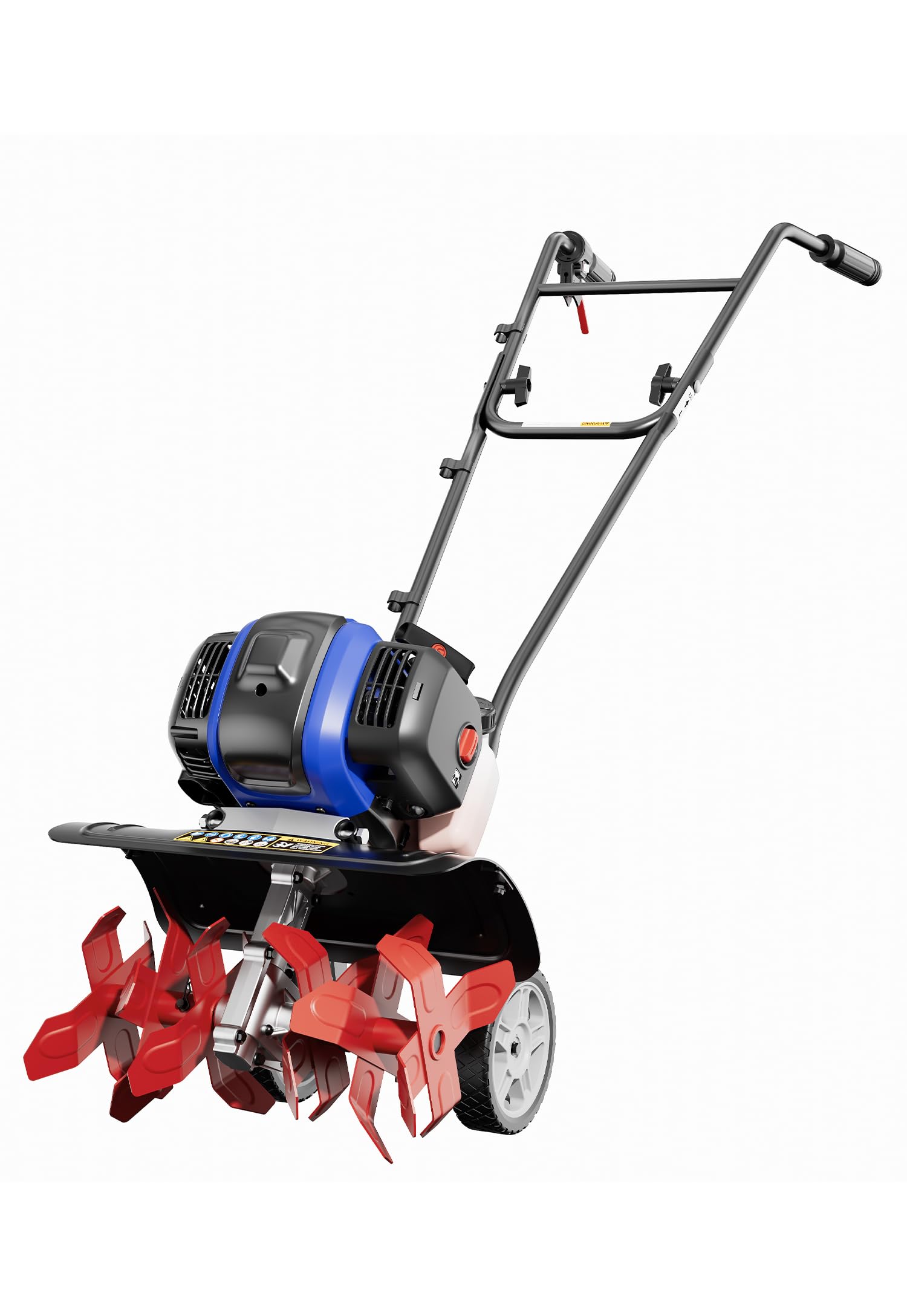
The lightest 53cc option that still carves a 15-inch-wide path
The Wild Badger packs the biggest engine-to-weight ratio on this list. A 53cc motor producing 1.9kW of power lives in a frame that weighs just 21.9 pounds, giving you a wide 15” cutting width and an 8” cutting depth without the heavy frame. The detachable hand push bar folds away for easy storage in a car trunk or shed.
Starting is easy — the maker claims it fires within five pulls of the starter — and a soft rubber wheel smooths the ride. A dual-layer filter keeps engine-damaging dirt out, which should extend the machine’s life. On garden rows it powers through easily, pulling weeds and grinding dirt into a fine tilth that farmers on small patches appreciate.
The quality and power earn consistent praise, but durability is the sticking point. Several owners mention the starter pull breaking off and the gearbox freezing up, with one noting the worm gear stripped after just two hours. It is a lightweight tool for light-to-moderate duty — treat the tines gently around rocks and it will reward you.
urban yards: 15” of cutting width in a 21.9-pound frame — the widest cut per pound here.
long runs: the brass worm gear is the weak link; avoid buried rocks to keep it alive.
7. Troy-Bilt TB225 Gas Garden Tiller
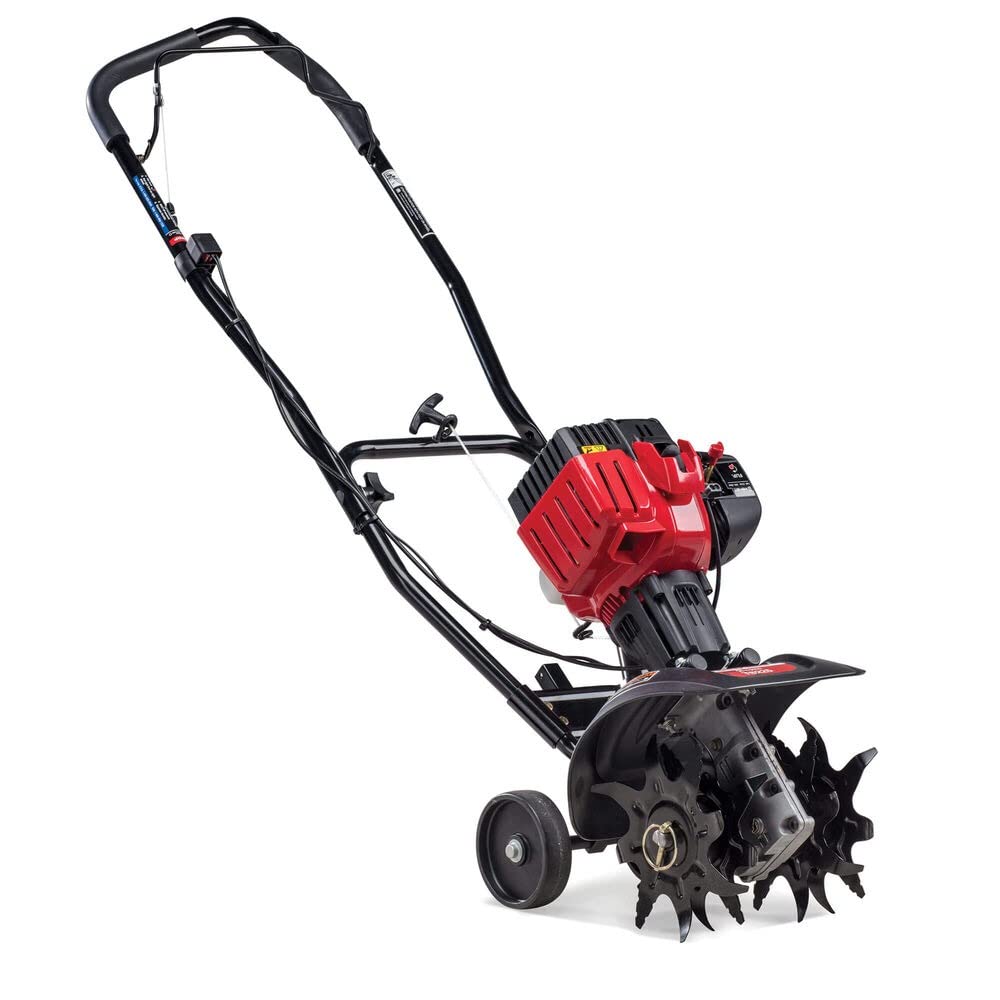
The lightest pull-start system in the lineup, built for comfortable all-day use
The Troy-Bilt TB225 focuses on the part of tilling most people dread: starting. A 25cc light 2-cycle engine pairs with SpringAssist technology to make pull starts noticeably easier, and the Prime, Flip and Go system gets you running with minimal fuss. It is the most approachable engine here for anyone with less upper-body strength.
Four patented steel tines cultivate up to 5” deep, and adjustable tilling width and depth let you switch between open beds and tight rows. The box includes a bottle of 2-cycle engine oil, so you do not need a separate trip to mix fuel. Assembly takes about three minutes, and for homestead use the machine starts easily and works through beds without complaint.
The compact 25cc engine means lighter duty — this is a cultivator, not a ground-breaker. The recurring complaint targets the pull cord, with a couple of owners reporting it snapping after the second use, plus an awkward throttle placement that forces full throttle. Warranty service also drew frustration, so buy from a retailer with a solid return policy.
smooth forward drive: the SpringAssist start and 25cc engine make this the least intimidating tiller for new gardeners.
limited depth: the pull cord quality and handle design are the weak spots to watch.
established beds: light cultivating and weeding where easy starts matter more than raw torque.
new ground: breaking new ground or tackling heavy sod with a single machine.
Understanding the Specs
Engine displacement (cc)
This is the size of the engine’s combustion chamber, measured in cubic centimeters. A higher cc number means more power and generally a heavier machine. For small beds and weeding, 25cc to 33cc is plenty; for sod and rough ground, look at 43cc and up. The trade-off is always weight — a bigger engine tires your arms faster.
Tilling width and depth
Width is how wide a path the tines chew per pass; depth is how far down they dig. Adjustable width lets you narrow the cut for tight rows and widen it for open ground. Depth is set by a drag stake that tilts the machine. A wider cut finishes faster but a narrow one protects plants — match it to your garden layout.
FAQ
What gas-oil mix does a 2-cycle tiller use?
How deep can a 2-cycle tiller actually dig?
Will a small 33cc tiller break up hard-packed clay?
Is a 2-cycle tiller better than a 4-cycle model?
How long should a tiller engine last with regular care?
What does the tilling width setting actually change?
Why does my tiller stall in thick weeds or tall grass?
Are the tines on these cultivators replaceable?
Final Thoughts: The Verdict
Across the board, the 2-cycle tiller winner is the TAZZ 35351 because it pairs a strong 33cc engine, gear drive smoothness, and a 3-year warranty at a price that undercuts the premium tier. If you want adjustable width and 8” of digging depth for row gardens, grab the Earthquake MC43. And for the ergonomic stand-up stance that spares your back, the VEVOR 43CC is the one to reach for. The TAZZ also leads on owner enthusiasm, with the highest satisfaction across hundreds of reviews, making it the safest bet for a first-time buyer.
How We Picked
We do not accept paid placement. Every pick is matched to a real buyer and a real use-case; we do not hands-on test units.
Sources & Methodology
Specifications: manufacturer listings and product documentation. Review insights: verified customer reviews, as of August 2026. Pricing: not shown on this page (it changes often); check the current price via the retailer link.
As an Amazon Associate, Gadgets Feed earns from qualifying purchases. This does not affect which products we feature.