
Our readers keep the lights on and my morning glass full of iced black tea. As an Amazon Associate, I earn from qualifying purchases.
A lawn sprinkler system is only as good as the pump pushing water through it. When that 2 HP motor struggles to lift water from a lake, well, or cistern, your sprinkler heads dribble instead of spray, and the whole zone turns into a mud puddle. The right 2 HP sprinkler pump delivers the sustained pressure and flow needed to keep every rotor and spray head popping at full arc, season after season.
I’m Min — the co-founder and writer behind Gadgets Feed. I’ve spent countless hours analyzing pump specifications, parsing customer durability reports, and cross-referencing impeller materials, amp draw, and self-priming capabilities to separate the real workhorses from the ones that fail after a few months.
Whether you are drawing from a shallow well or pulling lake water across a large property, finding the right 2 hp sprinkler pump comes down to matching flow rate, impeller durability, and voltage compatibility to your specific irrigation layout.
How To Choose The Best 2 HP Sprinkler Pump
Selecting a 2 HP sprinkler pump is not about picking the cheapest or the most expensive option. You need to match the pump’s flow curve, impeller durability, and priming style to your specific water source and sprinkler system layout. A pump that works great for a shallow well on a half-acre lot may falter when pulling from a deep lake across a large property. Here are the key factors to prioritize.
Impeller Material — Plastic vs. Brass
The impeller is the component that spins to move water. Thermoplastic impellers are common in mid-range pumps and handle clear well water just fine. But if your water source carries sand, silt, or debris — common in lake or ditch water — a plastic impeller can erode or crack within a season. Brass impellers resist abrasion far better and maintain their shape under constant particulate wear. For heavy-use irrigation or abrasive water, paying extra for a brass impeller saves you from replacing the pump every year.
Flow Rate (GPM) and Pressure (PSI) Curves
A 2 HP pump can deliver anywhere from 37 GPM to 86 GPM depending on the model and the pressure it is running against. More flow is not always better — you need to match the pump’s output to your sprinkler head count and pipe diameter. A pump rated for 76 GPM at 10 PSI will handle roughly 20 to 30 sprinkler heads, while a pump that peaks at 37 GPM is better suited for smaller zones or deep-well applications. Check the pump’s performance chart at your target pressure, not just the maximum free-flow GPM.
Suction Lift and Self-Priming Capability
Centrifugal sprinkler pumps are typically installed above ground and use suction to pull water from a lake, pond, or shallow well. Self-priming models can evacuate air from the suction line automatically after the initial fill, which saves time and prevents dry-running damage. Maximum suction lift for most 2 HP centrifugal pumps is around 20 to 25 feet. If your water level sits deeper than that, you need a submersible pump instead. Always verify the pump’s maximum lift height against your installation depth.
Voltage and Electrical Requirements
The majority of 2 HP sprinkler pumps run on 230-volt single-phase power, which requires a dedicated double-pole breaker and proper gauge wiring. Some pumps offer dual-voltage motors that can be rewired for 115-volt operation, but running a 2 HP motor on 115V draws high amperage and reduces efficiency. Most installers prefer 230V for the lower current draw and longer motor life. Verify your existing electrical service before buying, and factor in the cost of running new 230V wiring if needed.
Housing Material — Cast Iron vs. Thermoplastic
The pump housing or volute holds the impeller and directs water flow. Cast iron housings are standard for heavy-duty sprinkler pumps because they dampen vibration, resist cracking from pressure spikes, and dissipate heat better than plastic. Thermoplastic or fiberglass-reinforced plastic housings are lighter and resist corrosion in acidic water, but they can crack under freezing conditions or from the startup pressure surge common in large sprinkler systems. For outdoor installations exposed to the elements, cast iron is generally the safer choice.
Quick Comparison
On smaller screens, swipe sideways to see the full table.
| Model | Category | Best For | Key Spec | Amazon |
|---|---|---|---|---|
| AQUASTRONG SPRK200 | Centrifugal | High-flow lawn irrigation | 86 GPM / 108 ft head | $399.00Amazon |
| Star HSP20P1 | Self-Priming | Continuous duty on sprinkler systems | 78 GPM / dual voltage motor | $455.00Amazon |
| Sta-Rite FP5182 | Self-Priming | Long-lasting shallow well use | 69 GPM / corrosion-resistant housing | $456.31Amazon |
| Wayne WLS200 | Centrifugal | Underground sprinkler systems | 72 GPM / cast iron volute | $459.99Amazon |
| Red Lion RL-SPRK200 | Self-Priming | Balanced price and performance | 76 GPM / thermoplastic impeller | $469.99Amazon |
| VEVOR Deep Well | Submersible | Deep well extraction (up to 427 ft) | 37 GPM / stainless steel body | from $102.19Amazon |
| HSPJ20P1 | Self-Priming | Heavy-duty lake-fed irrigation | Cast iron diffusers / dual voltage | $638.72Amazon |
| Goulds GT20 | Self-Priming | Pro-grade reliability over decades | 88 GPM / 230V overload protection | $815.00Amazon |
| Red Lion RL-SPRK-200-BR | Self-Priming | Abrasive water conditions | 77 GPM / brass impeller | $809.99Amazon |
In‑Depth Reviews
1. AQUASTRONG SPRK200 2 HP Centrifugal Pump

The AQUASTRONG SPRK200 delivers 86 GPM at a max head of 108 feet, making it one of the highest-flow 2 HP centrifugal pumps in this comparison. Its 2-inch NPT suction and 1.5-inch NPT discharge ports allow unrestricted water movement for large irrigation zones, and the cast iron volute provides the thermal mass needed for continuous summer operation without overheating. The 230-volt motor draws 86 GPM efficiently, and the thermal overload protector automatically shuts the motor down before winding damage occurs.
Multiple users report that this pump runs significantly quieter than the Red Lion and Wayne models they replaced, which matters if the pump is installed close to the house. The reinforced impeller and diffuser design maintains flow even under moderate head pressure — critical for keeping the far-end sprinkler heads in a zone fully pressurized. The self-priming action works reliably after the initial casing fill, so you do not need to babysit the prime cycle each time the system starts.
The primary risk is the thermoplastic impeller: in water with heavy sediment, it may wear faster than a brass impeller. One customer experienced a motor burnout after eight hours of daily operation in 100°F heat, though AQUASTRONG’s service team refunded and replaced the unit. For standard residential irrigation with reasonably clean water, this pump offers the best GPM-per-dollar ratio in the category.
Why it’s great
- Highest flow rate at 86 GPM powers up to 30 sprinkler heads per zone
- Cast iron volute and motor frame dampen vibration and dissipate heat
- Thermal overload protection prevents motor damage during extended runs
Good to know
- Thermoplastic impeller may wear faster in abrasive water conditions
- Requires a dedicated 230V circuit — not convertible to 115V
2. Red Lion RL-SPRK-200-BR Brass Impeller Pump

This is the premium version of the standard Red Lion RL-SPRK200, swapping the thermoplastic impeller for a machined brass impeller that handles sandy, silty, and debris-laden water without eroding. The 77 GPM flow at 10 PSI and 64 GPM at 30 PSI is nearly identical to the standard model, but the brass impeller means the pump maintains that flow over years of use in lake and ditch water scenarios where plastic impellers would lose efficiency and eventually seize.
The all-metal construction — cast iron pump housing and brass impeller — also handles the startup pressure surge better. One reviewer noted that their previous plastic-cased pumps cracked from the initial 90 PSI spike at startup, while this Red Lion metal case absorbs the shock without issue. The 230-volt PSC motor draws 10.9 running amps and includes thermal protection, and the self-priming design needs only an initial fill before it can evacuate air from the suction line automatically.
At a significantly higher price than the thermoplastic model, the brass impeller upgrade is worth it only if your water source contains measurable sediment. For clear well water, the standard RL-SPRK200 delivers the same pressure curve for less. The 2-inch NPT intake and 1.5-inch NPT discharge are standard, so retrofitting into an existing system is straightforward.
Why it’s great
- Brass impeller withstands abrasive sand and silt far longer than plastic
- All-metal cast iron housing absorbs startup pressure spikes without cracking
- Reliable self-priming after initial fill — no repeated manual priming
Good to know
- Premium price — not cost-effective for clean well water applications
- Single-speed motor with no variable speed control option
3. Goulds GT20 IRRI-Gator 2 HP Pump
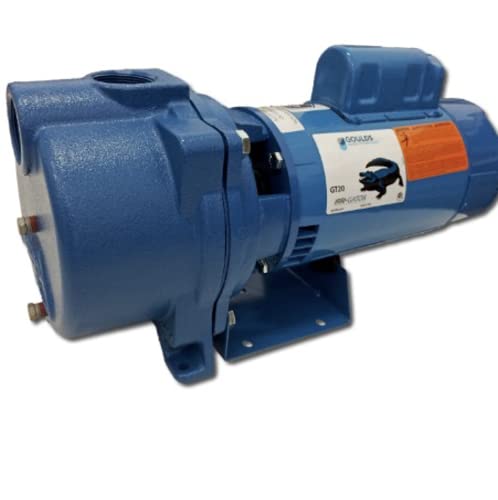
The Goulds GT20 is the professional-grade choice in the 2 HP sprinkler pump category, with a flow rate up to 88 GPM and a reputation for lasting 15 to 20 years with only minor maintenance. The cast iron housing and stainless steel hardware resist corrosion, while the self-priming centrifugal design lifts water from up to 20 feet below the pump. The 230-volt motor includes a built-in overload protector with automatic reset, so a temporary jam or voltage dip does not burn out the windings.
The 1.5-inch NPT suction and discharge ports are standard for this class, and the pump can handle up to eight zones or 50 sprinkler heads at full pressure — well beyond typical residential needs. The self-priming function works consistently after the initial prime, even with long horizontal suction runs.
The main drawback is the plastic impeller. For a pump in this price tier, a brass or stainless impeller would be expected, but Goulds uses a glass-filled thermoplastic that can separate from the shaft after a year if the water contains persistent grit. A brass impeller retrofit kit is available separately but adds cost and labor. If your water is reasonably clean, the GT20’s build quality and longevity make it the best long-term investment.
Why it’s great
- Proven 15-20 year lifespan with minimal maintenance — capacitor replacement only
- 88 GPM flow handles extensive multi-zone irrigation systems
- Built-in overload protector with automatic reset for motor protection
Good to know
- Thermoplastic impeller is a weak point in abrasive water — upgrade to brass recommended
4. Star HSP20P1 2 HP Self-Priming Pump

The Star HSP20P1 is a 2 HP self-priming centrifugal pump made in the USA with a majority of domestic content. It delivers 78 GPM and features a heavy-duty cast iron housing with a dual-voltage motor that ships wired for 230V but can be converted to 115V — useful if your existing electrical service is not yet set up for 230V. The capacitor-start ball bearing motor is designed for continuous duty, and the self-priming action works reliably after the initial casing fill.
Users praise the HSP20P1 for its solid build quality and consistent pressure. The 2-inch NPT suction and 1.5-inch NPT discharge match standard irrigation plumbing, and the easy-access drain plug simplifies winterization. The motor runs quietly for a 2 HP cast iron unit, and the thermal overload protection provides safety against accidental dry-running.
The main concern is the plastic impeller and bearings. Some users report the impeller seizing after three months of heavy use — around eight hours per week. The manufacturer’s two-year warranty covers defects, but the replacement process can be slow. For moderate irrigation duty with clean water, this pump offers excellent value, but heavy-duty users may want to budget for an eventual impeller replacement.
Why it’s great
- Made in the USA with a majority of US content and factory tested
- Dual-voltage motor (115V/230V) offers wiring flexibility
- Continuous-duty ball bearing motor with capacitor start for reliable cold-weather startup
Good to know
- Plastic impeller and bearings may fail under heavy continuous use
- Electrical connections are cramped inside the junction box
5. Sta-Rite FP5182-08 2 HP Sprinkler Pump

The Sta-Rite FP5182 is a legend in the residential sprinkler pump world — customers routinely report 14 to 22 years of service from a single unit. It uses a fiberglass-reinforced thermoplastic housing that resists corrosion better than cast iron in acidic water conditions, and the self-priming design operates at depths up to 20 feet. The 230-volt motor delivers 69 GPM, which is enough to run up to 30 sprinkler heads per zone.
What makes this pump stand out is the build consistency. Multiple long-term owners note that their FP5182 outlasted more expensive competitors by a wide margin. The thermoplastic housing stays cool and resists mineral buildup, and the motor’s thermal protection handles occasional voltage fluctuations without burning out. The pump is also noticeably lighter than cast iron models at 41 pounds, making installation and service easier.
The maximum lift height is listed at just 5 feet, which means this pump is designed for situations where the water source is very close to the pump elevation — it is not suitable for deep wells or long vertical suction lifts. The thermoplastic housing, while corrosion-resistant, is more vulnerable to cracking if water freezes inside the volute. Proper winterization is mandatory.
Why it’s great
- Proven 14-22 year lifespan documented by multiple long-term owners
- Fiberglass-reinforced thermoplastic housing resists corrosion and mineral scale
- Lighter weight at 41 pounds simplifies installation and maintenance
Good to know
- Low maximum lift height — not suitable for deep well applications
- Thermoplastic housing can crack if water freezes inside the pump
6. Wayne WLS200 2 HP Cast Iron Pump

The Wayne WLS200 is a classic 2 HP centrifugal sprinkler pump with a heavy-duty cast iron volute, 2-inch NPT suction, and 1.5-inch NPT discharge. It delivers up to 4,310 GPH at 30 PSI, which translates to roughly 72 GPM — enough to supply a substantial underground sprinkler system across multiple zones. The motor is factory-set to 230 volts and includes built-in thermal overload protection to prevent damage during prolonged summer heat.
Assembled in the USA, the WLS200 has a strong reputation among users who draw water from lakes, ponds, or shallow wells. One reviewer reported that the 2 HP model replaced their 1 HP pump and runs all three zones simultaneously without pressure drop. The cast iron construction dampens vibration effectively, and users consistently describe the pump as quieter than expected for a 2 HP unit. The auto-temperature-sensing heater rope prevents freezing in cold climates, though some users note that draining is safer to avoid cracks.
The pump lacks a dedicated priming port, which complicates the initial setup slightly — several users add a 3/4-inch ball valve on the discharge side to facilitate priming. Also, the plastic components (such as the handle and drain plugs) can feel less robust than the cast iron body. For the price, the WLS200 offers a solid balance of performance and durability for typical residential irrigation.
Why it’s great
- Cast iron volute with 4,310 GPH flow handles large multi-zone systems
- Assembled in the USA with thermal overload protection standard
- Quieter operation than many competing 2 HP pumps in this price range
Good to know
- No priming plug — requires an added ball valve for initial prime
- Some plastic components feel less durable than the cast iron housing
7. HSPJ20P1 Do It Best 2 HP Pump
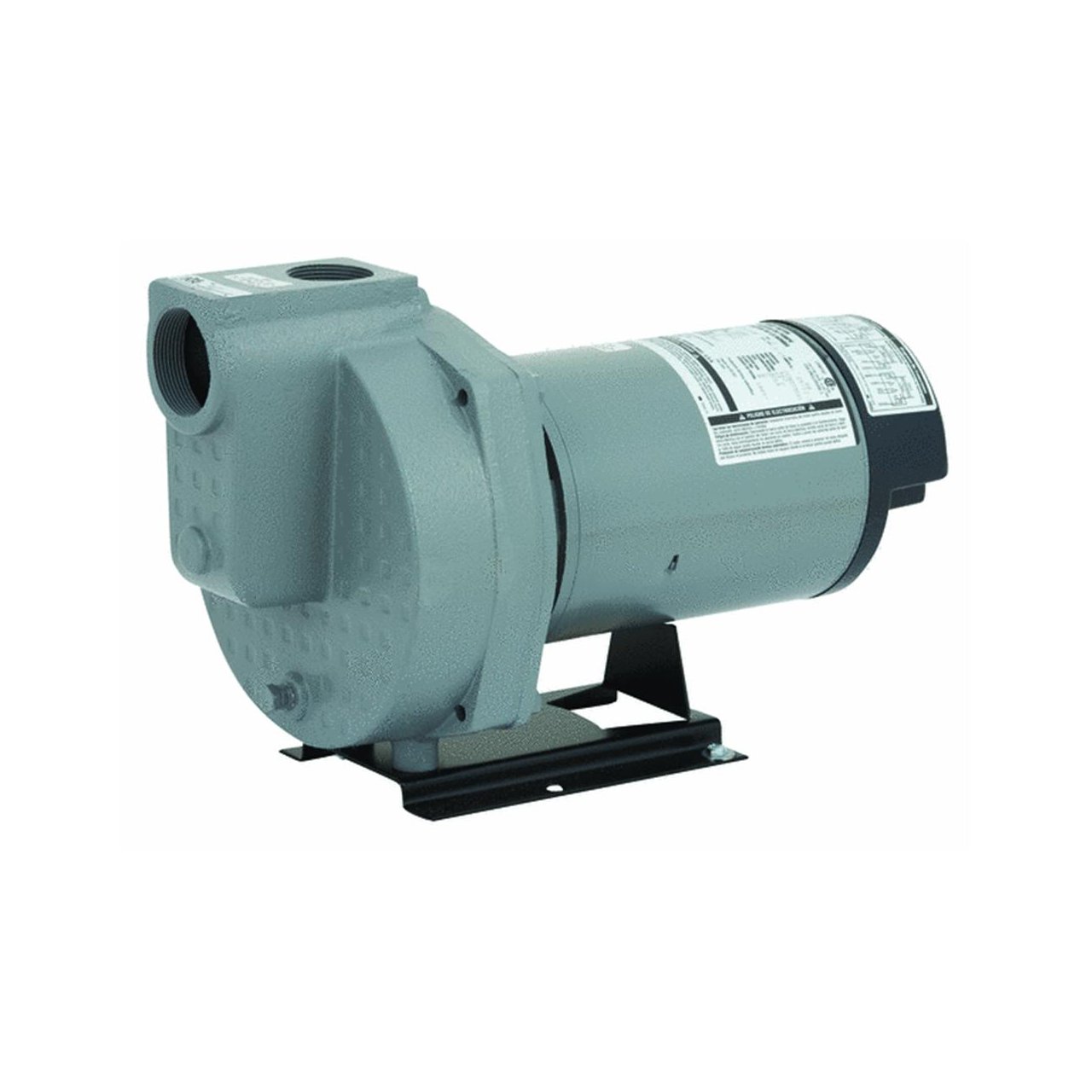
The HSPJ20P1 is a rebranded Flint & Walling pump, a name that has been trusted in agricultural irrigation for decades. It features a cast iron pump case and diffusers with a heavy-duty dual-voltage motor (115V or 230V) that handles continuous duty on underground and above-ground sprinkler systems. The self-priming design works rapidly after initial fill, and the sealed ball bearings on the motor provide long service life without maintenance.
Long-term users report that Flint & Walling pumps routinely last 10 to 20 years in lake-fed irrigation applications. The cast iron construction adds significant weight at 65.3 pounds, which helps stabilize the pump and reduce noise transmission. The easy-access drain plug simplifies seasonal winterization, and the motor’s thermal protection prevents burnouts from overload or voltage sags.
The main complaint is that the 5-year extended warranty has a confusing activation process — some users struggle to get the form processed. A few units have failed early, though this appears to be an outlier. For buyers who want a premium pump built to professional standards and are willing to navigate the warranty paperwork, this is a top-tier option that outperforms most budget models.
Why it’s great
- Flint & Walling heritage with documented 10-20 year service life in irrigation
- Cast iron diffusers and case for maximum durability and heat dissipation
- Dual-voltage motor (115V/230V) provides wiring flexibility
Good to know
- Extended warranty activation process is confusing and inconsistently supported
- Heavy unit at 65 lbs may require two-person installation
8. Red Lion RL-SPRK200 2 HP Pump (Thermoplastic)
The standard Red Lion RL-SPRK200 is a 2 HP self-priming centrifugal pump with a cast iron housing and a glass-filled thermoplastic impeller. It delivers 76 GPM at 10 PSI and 64 GPM at 30 PSI, which is enough to power up to 21 sprinkler heads with 1/2-inch fittings or 10 heads with 3/4-inch fittings per zone. The 230-volt PSC motor draws 10.9 running amps and includes thermal protection.
Users consistently praise this pump for its quiet operation and reliable self-priming. One reviewer replaced a 15-year-old 2 HP pump that cost three times as much and reported that the Red Lion performs identically. The one-time priming feature works well after the initial fill — you do not need to re-prime between cycles. The 2-inch NPT intake and 1.5-inch NPT discharge match standard irrigation fittings, making installation straightforward.
The thermoplastic impeller is the weak point. A few users report that the impeller threads stripped shortly after installation, causing the pump to seize. This seems to affect a small percentage of units and may be related to manufacturing tolerance issues or prior returns. For clear water applications, this pump offers excellent value; for abrasive conditions, the brass impeller version is the safer choice.
Why it’s great
- Excellent price-to-performance ratio for clean water residential irrigation
- Very low noise operation — notably quieter than many competitors
- Reliable one-time self-priming after initial casing fill
Good to know
- Thermoplastic impeller may strip or fail in abrasive water or heavy use
- Some reports of receiving previously returned units in less-than-new condition
9. VEVOR Deep Well Submersible Pump 2 HP

The VEVOR Deep Well Submersible Pump is fundamentally different from the other pumps on this list — it is a submersible unit designed to sit inside a 4-inch or larger well casing, not above ground. It delivers 37 GPM at a maximum head of 427 feet, which means it can push water from very deep wells that no above-ground centrifugal pump can reach. The 230-volt motor is sealed in a stainless steel housing with IP68 waterproof rating, and the 33-foot power cord provides flexibility in installation depth.
The 12-stage thermoplastic impeller design allows the pump to generate high pressure at depth, making it suitable for large properties that rely on deep well water for sprinkler systems. The built-in check valve prevents water from backflowing into the well when the pump stops, and the stainless steel filtration mesh catches larger sediment before it enters the impeller. Users report that with proper installation, the pump delivers excellent water pressure for both household and irrigation use.
Because this is a submersible pump, installation is more complex than a centrifugal pump — you need to lower it into the well casing, attach the drop pipe, and wire the external control box. The pump must never run dry, as there is no thermal protection against idling. If your well is deeper than 33 feet, you will need to splice additional power cable. For deep well applications, this pump offers exceptional value, but it is not a replacement for a standard above-ground sprinkler pump.
Why it’s great
- 427-foot max head capability — reaches depths no centrifugal pump can
- IP68 stainless steel construction resists corrosion and water ingress
- Built-in check valve and filtration mesh protect the impeller from debris
Good to know
- Submersible installation is more complex than above-ground centrifugal pumps
- No thermal protection against dry running — must never be operated empty
FAQ
Can I use a 2 HP sprinkler pump for a deep well deeper than 25 feet?
What size breaker do I need for a 2 HP 230V sprinkler pump?
How many sprinkler heads can a 2 HP pump support?
Should I buy a pump with a brass impeller or a thermoplastic impeller?
Do I need to prime a self-priming sprinkler pump every time I use it?
Final Thoughts: The Verdict
For most users, the best 2 hp sprinkler pump winner is the AQUASTRONG SPRK200 because it delivers the highest flow rate (86 GPM) in the mid-range price tier with the cast iron durability needed for continuous summer operation. If your water source has sand or silt, grab the Red Lion RL-SPRK-200-BR for its brass impeller that will not erode. And for deep well installations where no above-ground pump can reach the water level, nothing beats the VEVOR Deep Well Submersible Pump with its 427-foot head capability.
Product prices and availability are accurate as of the date/time indicated and are subject to change. Any price and availability information displayed on Amazon at the time of purchase will apply to the purchase of this product. As an Amazon Associate I earn from qualifying purchases.
CERTAIN CONTENT THAT APPEARS ON THIS SITE COMES FROM AMAZON. THIS CONTENT IS PROVIDED "AS IS" AND IS SUBJECT TO CHANGE OR REMOVAL AT ANY TIME.
Amazon and the Amazon logo are trademarks of Amazon.com, Inc. or its affiliates.